TL;DR
- Three different things are sold as employee engagement training: manager skills training, employee sessions, and training for whoever has to run the survey and its follow-up. Only the first reliably changes anything on its own.
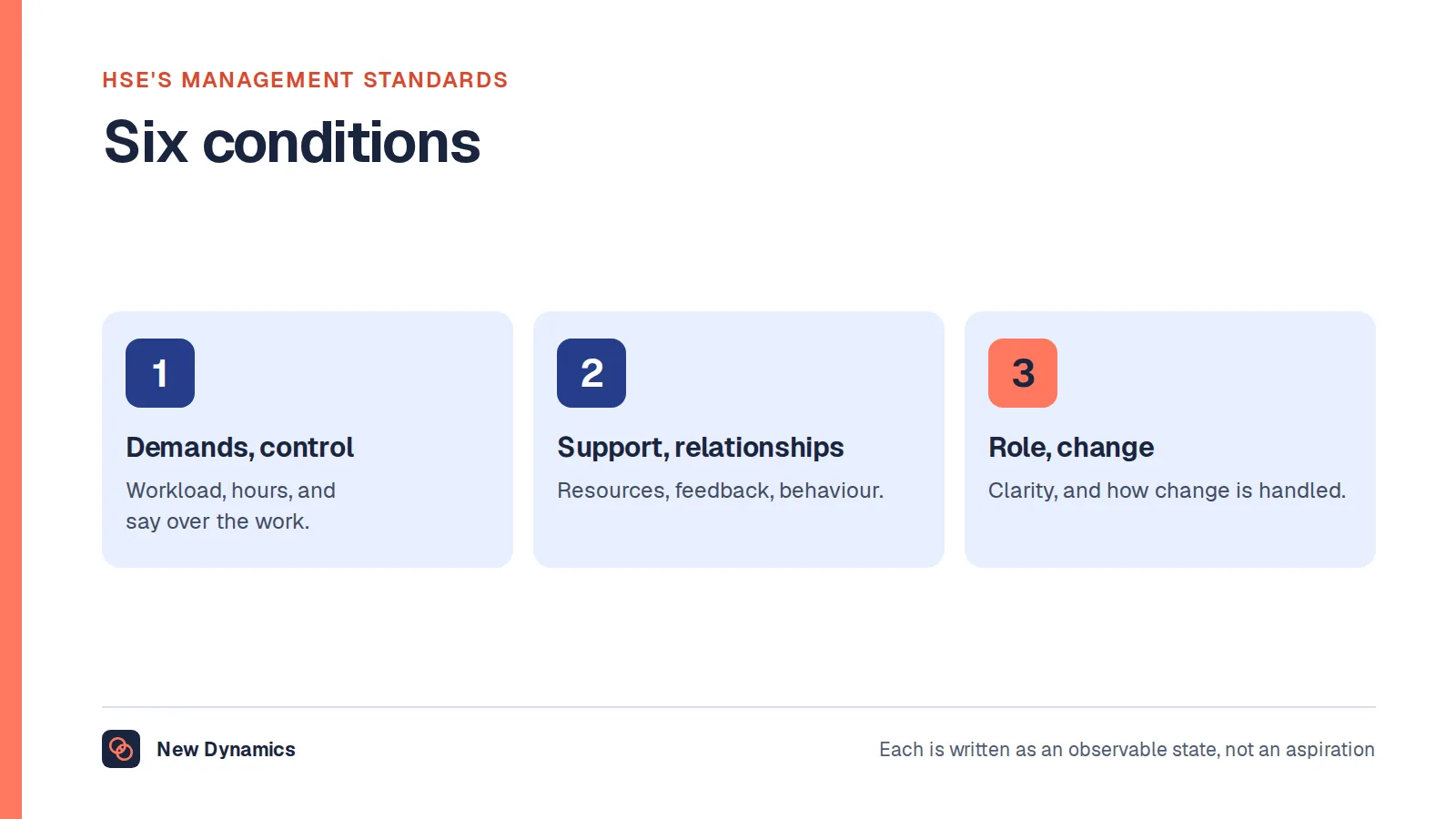
- Engagement mostly comes from working conditions. HSE's Management Standards describe demands as covering “workload, work patterns, and the work environment”, with the expectation that jobs are “designed to be within the capabilities of employees” and that “people's skills and abilities are matched to the job demands”.
- The trainable half is real, though. The Support standard expects that “systems are in place to enable and encourage managers to support their staff” and that “employees receive regular and constructive feedback”, both manager habits, and both teachable.
A survey comes back with a low score on workload. Six weeks later, the whole management team is in a room learning about motivation. Nobody's workload has changed, and the next survey will say so.
This article covers employee engagement training: the three things sold under that name, what training can and cannot fix, how to design the part that works, the right order to do it in, and how to tell whether it worked.
Engagement lives in ordinary conversations rather than in an annual event. See how New Dynamics feedback keeps those conversations in one record instead of in people's heads.
Three things sold as engagement training

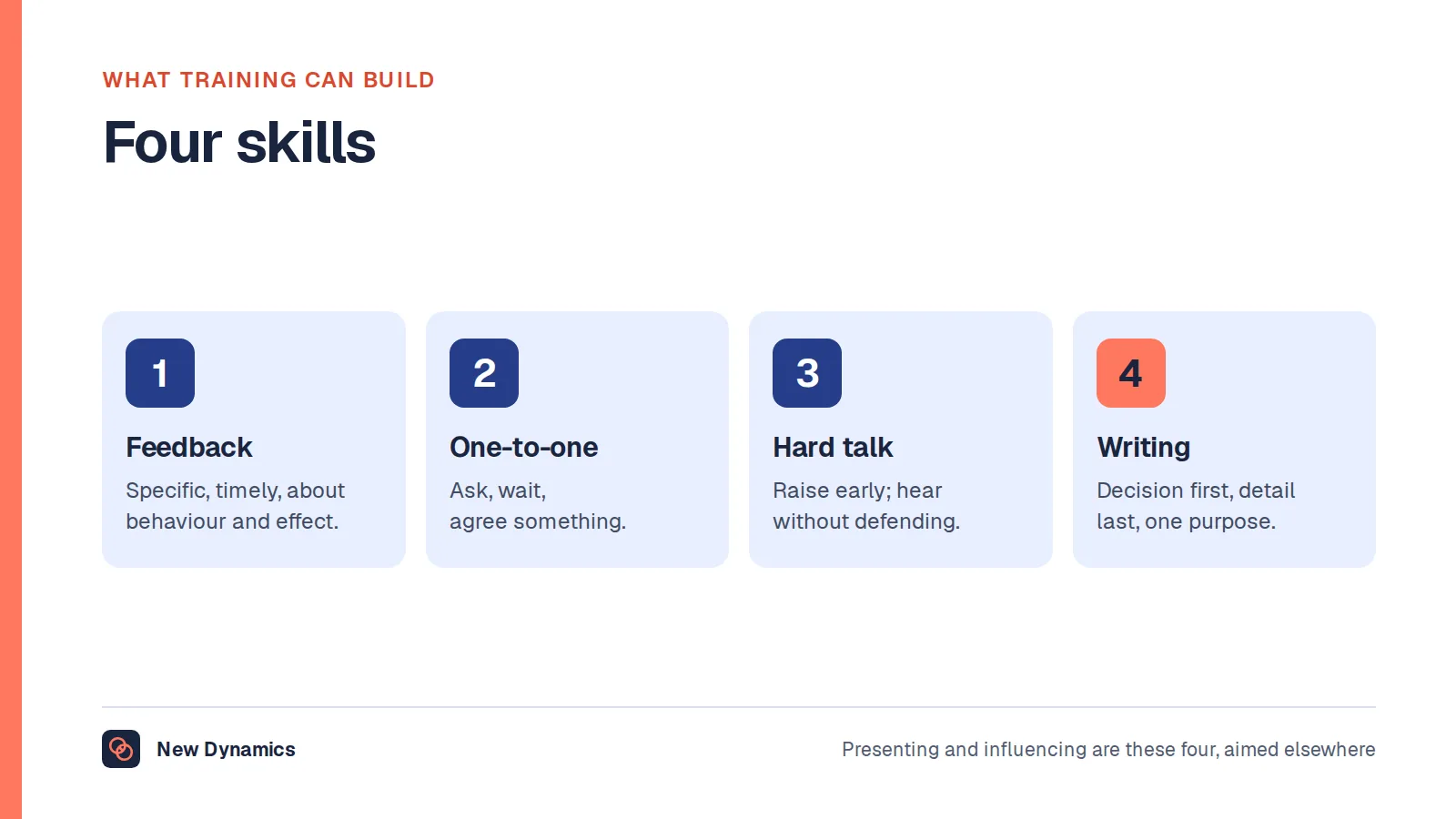
- Manager skills training. One-to-ones, feedback, objective setting, difficult conversations, recognition. The most useful of the three, because it changes what happens weekly.
- Employee sessions. Workshops on resilience, wellbeing, communication or "being engaged". Sometimes valuable in themselves; rarely a response to an engagement problem, and easily read as blaming the people who answered the survey.
- Survey and action training. Teaching managers how to read results, run a team conversation and agree actions. Cheap, unglamorous, and the one most often skipped.
Decide which you are buying before you buy it, and say which problem it is meant to address.
What training cannot fix

HSE's Management Standards set out the conditions behind how people experience work, and several of them are organisational rather than personal.
- Demands. The Demands standard "includes issues such as workload, work patterns, and the work environment". What should be happening includes the organisation providing "adequate and achievable demands in relation to the agreed hours of work", people's "skills and abilities matched to the job demands", and jobs "designed to be within the capabilities of employees". No course delivers any of that.
- Support. The Support standard covers "the encouragement, sponsorship and resources provided by the organisation, line management and colleagues", including that "employees know how to access the required resources to do their job". Half organisational, half manager behaviour.
- Role clarity and change. People need to know what their job is and what is happening to it. Both are decisions rather than skills.
If the survey comment is "there are not enough of us", training the manager to have better conversations will improve the conversations about being short-staffed. That is worth something, and it is not the same as fixing it.
The half that is trainable
The Support standard is unusually concrete about what managers should actually do, and every item on its list is teachable:
- "Systems are in place to enable and encourage managers to support their staff."
- "Systems are in place to enable and encourage employees to support their colleagues."
- "Employees know what support is available and how and when to access it."
- "Employees receive regular and constructive feedback."
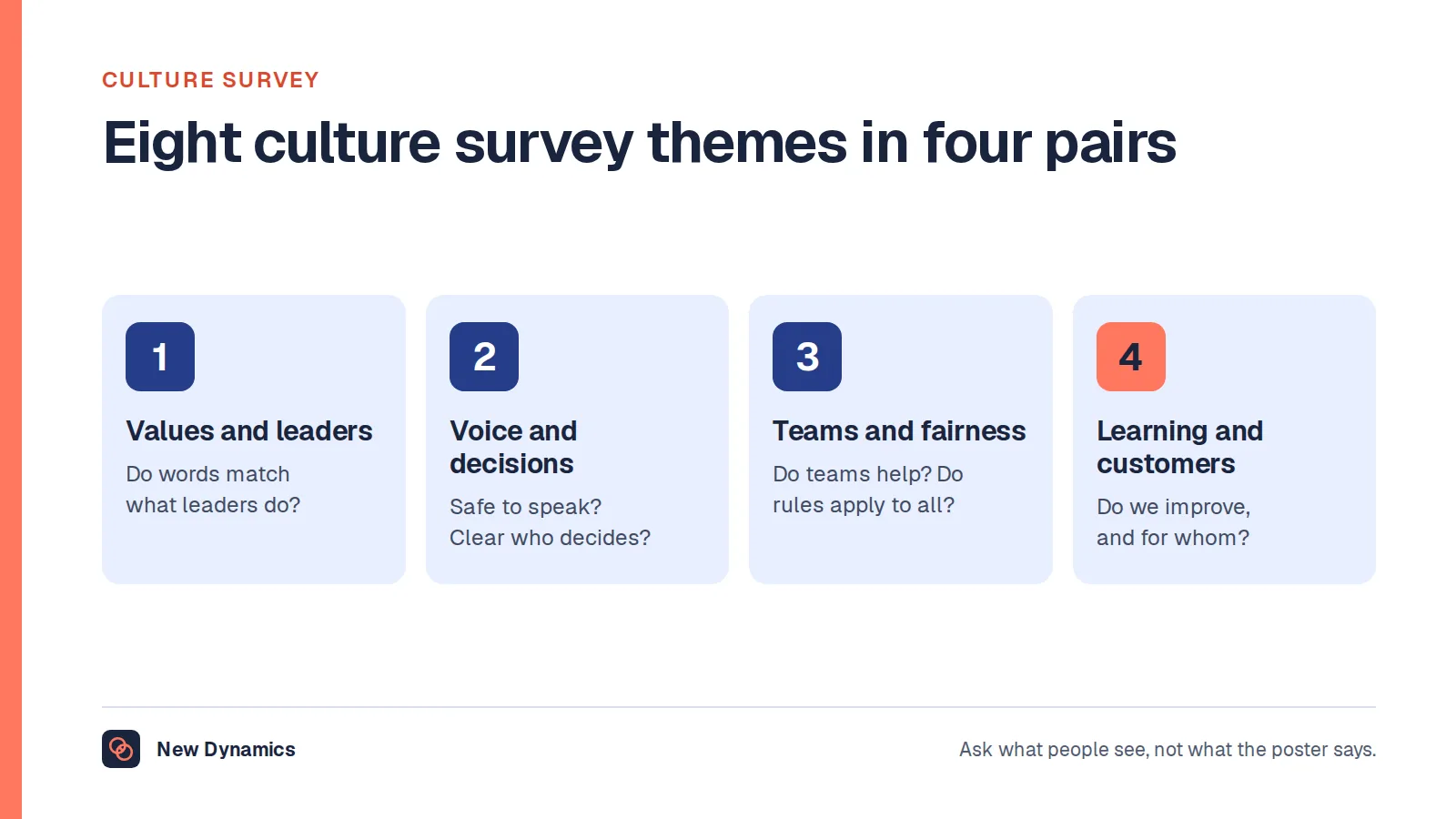
That last line is the whole case for manager training. Regular, specific feedback is a habit, it is learnable, and most managers have never been taught it. Our post on workplace engagement surveys covers what to ask; the training question is what managers do with the answers.
The voice half
Engagement is also about whether people are asked before decisions are made. Acas describes consultation as "when an employer talks and listens about organisational issues and changes which affect employees or workers", trade union representatives or other employee representatives, with the aim of working "together to reach an agreement on a change" and finding "a solution to an issue". It notes that "listening to the views of employees and their representatives can help employers make a fully-informed, effective final decision", having considered "their employee's thoughts, concerns and issues".
Acas distinguishes "good practice consultation", useful for fact-finding or "exploring whether to introduce a new way of managing performance", from "consultation under the law" and "collective consultation", which have their own processes. Training managers to consult well is worth doing, provided the organisation actually intends to listen. Where decisions are already made, consultation training teaches people to perform something everyone can see through.
Design the training so it survives the week
Five things separate training that changes behaviour from training that is enjoyed and forgotten:
- Use the organisation's own data. Real survey comments, anonymised, beat invented case studies.
- Teach one habit at a time, with a date when it starts: a monthly one-to-one, a weekly note of something specific, a quarterly objective review.
- Practise the hard bit. Managers do not need a definition of feedback; they need to say a difficult sentence out loud in front of a peer.
- Give them the tools they will actually use, including where the record goes.
- Book the follow-up before the session, because the second conversation six weeks later is where the change sticks.
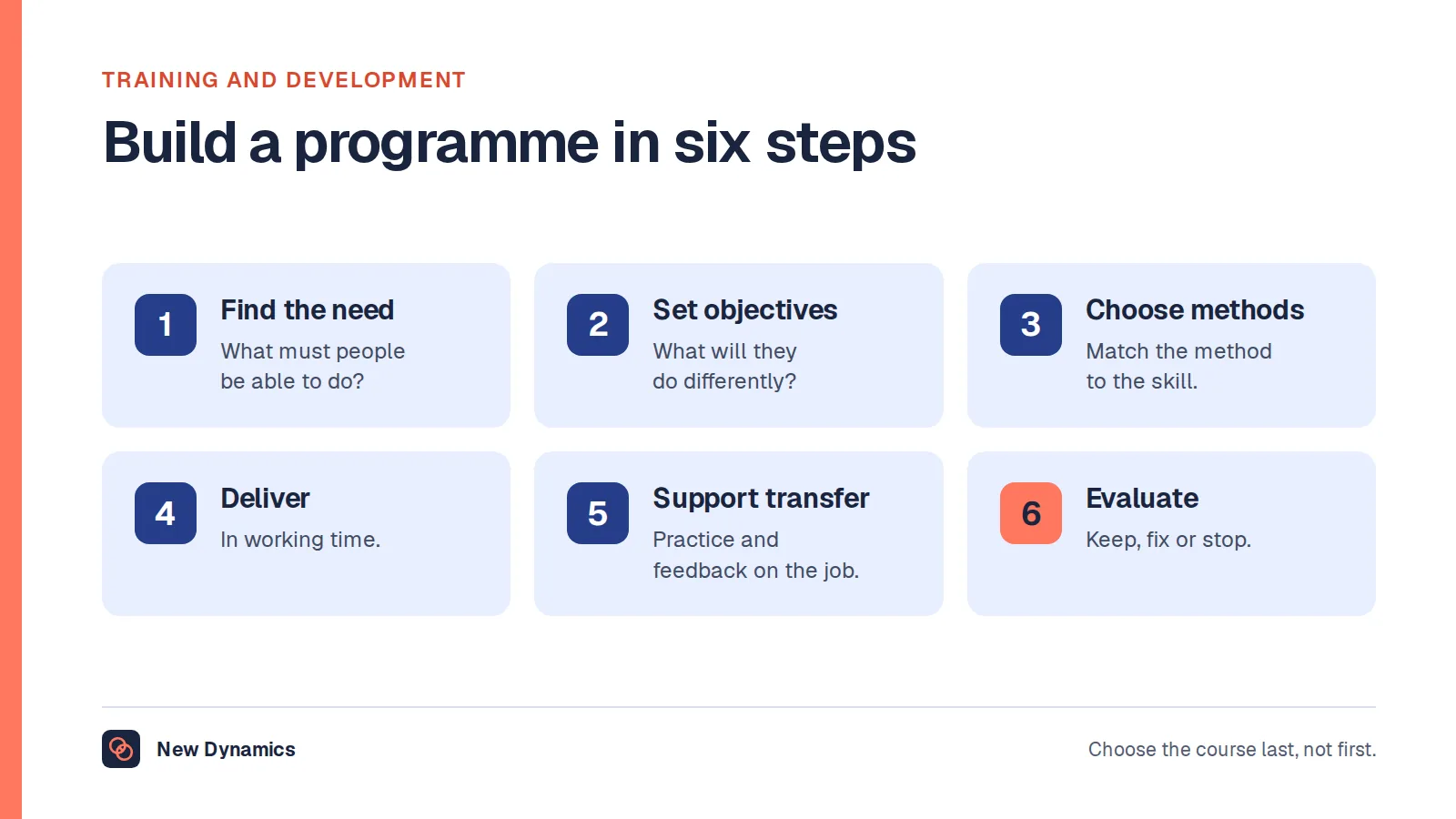
Our employee training and development programmes post covers building this into something wider than a one-off.
The right order

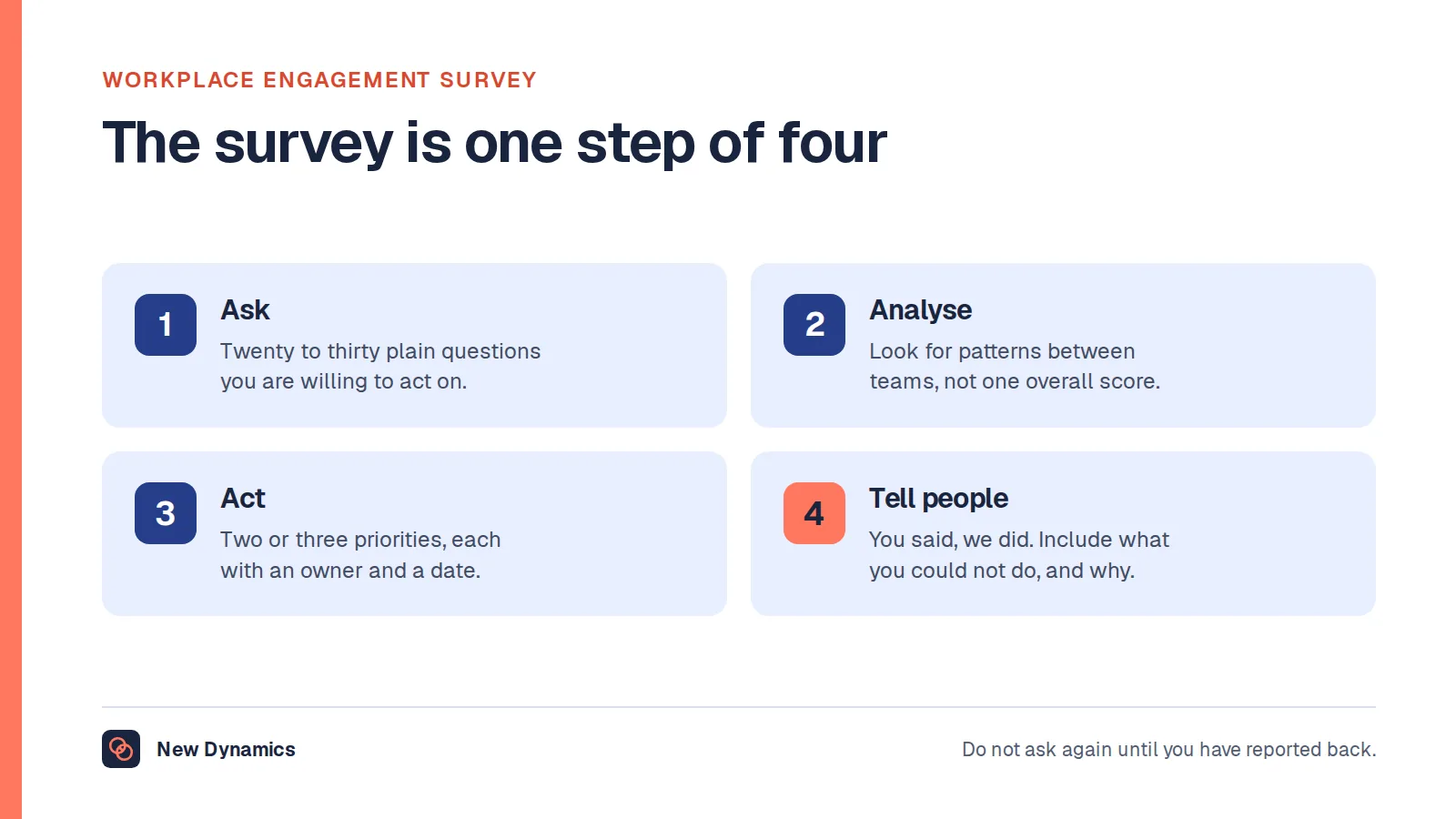
- Measure, with questions you are willing to act on.
- Diagnose. Separate what is about conditions (workload, resources, role, change) from what is about manager behaviour.
- Fix the conditions you can, and say honestly which ones you cannot yet.
- Then train, on the behaviours the diagnosis actually identified.
Doing step four first is the most common and most expensive mistake in this area. It also damages the next survey, because people conclude that the exercise produces workshops rather than change.
Measuring whether it worked
- Behaviour first: are one-to-ones happening, at the frequency agreed, with notes that exist?
- Team-level survey items tied to what the training covered, not the overall engagement score.
- Manager self-report and team report on the same items, which is more revealing than either alone.
- Retention and absence read cautiously and over a long enough period.
- Whether anything visible changed as a result of the last survey, which is the single best predictor of whether people answer the next one honestly.
Avoid measuring satisfaction at the end of the course. Everybody enjoys a day out of the inbox.
Frequently asked questions
What is employee engagement training?
Training intended to improve how engaged people feel at work. In practice it covers three different things: manager skills such as one-to-ones, feedback and objectives; employee-facing sessions on topics like resilience or communication; and training for those running engagement surveys and the follow-up conversations.
Does engagement training work?
Manager skills training changes what happens weekly and can move the things managers control. Training cannot change workload, staffing, role clarity or a decision already taken, and buying it as a response to those problems tends to make the next survey worse.
What should manager engagement training cover?
One-to-ones and their frequency, specific feedback, setting and reviewing objectives, recognising work properly, difficult conversations, and how to run a team conversation about survey results and agree actions that get done.
When should you run engagement training?
After measuring and diagnosing, not before. Separate the issues that come from working conditions from those that come from manager behaviour, fix what you can in the first group, and then train on the behaviours the diagnosis identified.
How do you measure whether engagement training worked?
Look at behaviour first (whether one-to-ones are happening and recorded) then at the specific survey items the training addressed, at both manager and team reports of the same behaviours, and cautiously at retention and absence. End-of-course satisfaction measures the day, not the effect.
What if the engagement problem is workload?
Then it is a resourcing and job design problem. HSE's Management Standards expect demands to be adequate and achievable in relation to agreed hours, jobs designed within employees' capabilities, and skills matched to the job. Say so honestly rather than sending managers on a course about motivation.
Your next step: diagnose before you buy
- Split the survey results into conditions and behaviours.
- Fix or explain the conditions, publicly.
- Train managers on the behaviours that came out of the diagnosis, one habit at a time.
- Measure the behaviour, then the scores.
For running the whole cycle rather than the training alone, read and download our employee engagement guide. The guide is free to read, and the PDF uses our short download form.
Want one-to-ones, feedback and actions from the last survey visible in one place? Book a New Dynamics demo and bring your latest results. You can also email contact@new-dynamics.com.