TL;DR
- A self-introduction for a hotel management interview should take about 90 seconds and cover four things: who you are, what you have run, what you bring that this hotel needs, and why this hotel.
- Interviewers listen for the things the job needs: leadership of front-of-house, housekeeping and food and beverage teams, commercial results, calm under pressure and genuine care for guests. Say them with a number or an example, not an adjective.
- Prepare it, say it aloud, and cut it until it is short. Then let the interview do the rest; the introduction opens the conversation, it does not replace it.
“Tell me about yourself.” It is the first thing most hotel management interviewers say, and it is the question candidates prepare least, because it does not sound like a question. Ninety seconds later the interviewer has decided whether you sound like someone who could run a floor, a department or a whole property.
This article gives a self-introduction for a hotel management interview that you can adapt: a four-part structure, three worked examples for different levels, a list of what interviewers are listening for, drawn from published job profiles, and the mistakes that lose people the room before the second question.
The interview is also where you learn how the hotel treats its managers. See how New Dynamics continuous feedback helps people to ask for it and act on it.
What the introduction is for
The introduction is not your CV read aloud. The interviewer has your CV. Its job is to do three things in under two minutes.
- Set the frame. Tell the interviewer what kind of manager you are, so that everything they hear afterwards fits a picture.
- Show the skills the job needs, in passing, with evidence.
- Open a door. End with something the interviewer will want to ask about.
Ninety seconds spoken is around 200 to 230 words. Write it, time it, then cut.
The four-part structure
1. Who you are (15 seconds)
Your current role, the type and size of property, and how long you have been in hospitality. One sentence, two at most.
2. What you have run (30 seconds)
The departments, teams and numbers you have been responsible for. The UK National Careers Service profile of a hotel manager says that hotel managers “are responsible for running operations like guest services, housekeeping, bar and restaurant facilities, and conferencing and events”. Name the ones you have led, and give a scale: rooms, covers, team size, budget.
3. What you bring that this hotel needs (30 seconds)
Two strengths, each with a result. Choose them from what the job advert asks for. Prospects, the UK graduate careers service, says in its hotel manager profile that a hotel manager needs “the ability to balance customer service with commercial priorities”. An introduction that shows one of each, a guest result and a commercial result, covers the ground.
4. Why this hotel (15 seconds)
One specific reason, showing that you have looked: the property's market, a recent change, its reputation for something. End with a sentence that invites the next question.

Three example introductions
The three examples below are written by us for illustration. Replace every detail with your own, and never claim a result you cannot back up in the next question.
Example 1: first management role (duty manager or assistant front-office manager)
“I'm a front-office supervisor at a 120-room city-centre hotel, where I've worked for three years, starting on reception. For the last 18 months I've run the front desk on late shifts, leading a team of five and handling everything from overbookings to guest complaints when no other manager is on site. Two things I'd bring here. First, I'm calm when things go wrong: last winter a boiler failure took out hot water on two floors, and I relocated 26 rooms, briefed housekeeping and kept every guest informed, and we had no formal complaints. Second, I'm good with numbers for a front-office person; I took over our upsell tracking and we lifted room-upgrade revenue by a quarter over a year. I'm applying here because you're opening a second property and I'd like to grow with a company that's growing. I'd be glad to talk about how I'd approach the duty manager role.”
Example 2: department head (food and beverage or rooms division manager)
“I'm the food and beverage manager at a 200-room resort hotel, responsible for two restaurants, a bar and banqueting for up to 300, with a team of 45 and a revenue budget of about £3 million. I've been in hospitality for 11 years, from waiter to department head. I bring commercial discipline: over three years we grew F&B revenue per available room by 18 percent, mostly by rebuilding the breakfast and events offer, while holding staff costs at budget. I also bring stable teams: turnover in my department fell from over 60 percent to under 30 after we introduced structured inductions and weekly one-to-ones. I've followed your group's move into conferencing, and that's where I think I could contribute most. I'm happy to start with the numbers or with the people, whichever is more useful.”
Example 3: general manager
“I'm general manager of a 150-room four-star hotel with a spa and conference centre, which I've run for four years; before that I was deputy GM at a larger airport property. I'm accountable for the full P&L, a team of 110 and the owner relationship. Under my management the hotel moved from mid-table in its competitive set to first on revenue per available room, and guest review scores rose from 8.1 to 8.9. I did that by investing in heads of department, holding a weekly commercial meeting that actually changes prices, and being on the floor at breakfast most days. I'm interested in this role because the property is due a repositioning and I've done one. I'd welcome your questions on any of that.”
What interviewers are listening for
The published job profiles are a good guide to the skills a hotel management interviewer is trying to hear. The National Careers Service lists, among others, customer service skills, “the ability to motivate and manage staff”, being thorough and paying attention to detail, “patience and the ability to remain calm in stressful situations”, excellent verbal communication skills and business management skills. Prospects adds “a friendly personality, with a genuine desire to help others”, “the ability to think clearly and make decisions under pressure” and “an awareness of different cultures”.
Turn each into evidence.
| What they listen for | How to show it in 90 seconds |
|---|---|
| Leadership of teams | Team size, turnover, a named change you made |
| Commercial results | Revenue, occupancy, rate, cost, with a before and after |
| Calm under pressure | One incident, handled, in two sentences |
| Care for guests | A review score, a recovered complaint, a habit such as being on the floor |
| Operational breadth | The departments you have run, named |
| Fit with this property | One specific reason for applying |
The NCS profile notes that in a small hotel you may manage all of its operations, while in a larger hotel you may have more specific responsibilities. Say which kind of property you have run, and which kind this is.

Mistakes that lose the room
- Reciting the CV. Dates and job titles in order. The interviewer stops listening by the third one.
- Adjectives without evidence. “I'm passionate, hard-working and a people person.” Everyone says it; nobody can check it.
- Going long. Three minutes feels like ten to the listener. Time yourself.
- Nothing about this hotel. An introduction that could be given anywhere suggests you are applying everywhere.
- Overclaiming. Results you cannot explain in the follow-up. Interviewers will ask how.
- Skipping the people. Prospects describes the manager's reliance on their people skills and calm, professional manner. An introduction that is all numbers misses half the job.
How to prepare
- Read the advert and the property. Note the three things they most want, and the property's size, market and recent news.
- Draft the four parts. Keep to 230 words.
- Add one number and one story. A result you can defend, and an incident you handled.
- Say it aloud, five times. Not to memorise word for word, but to know the shape so that you can say it naturally.
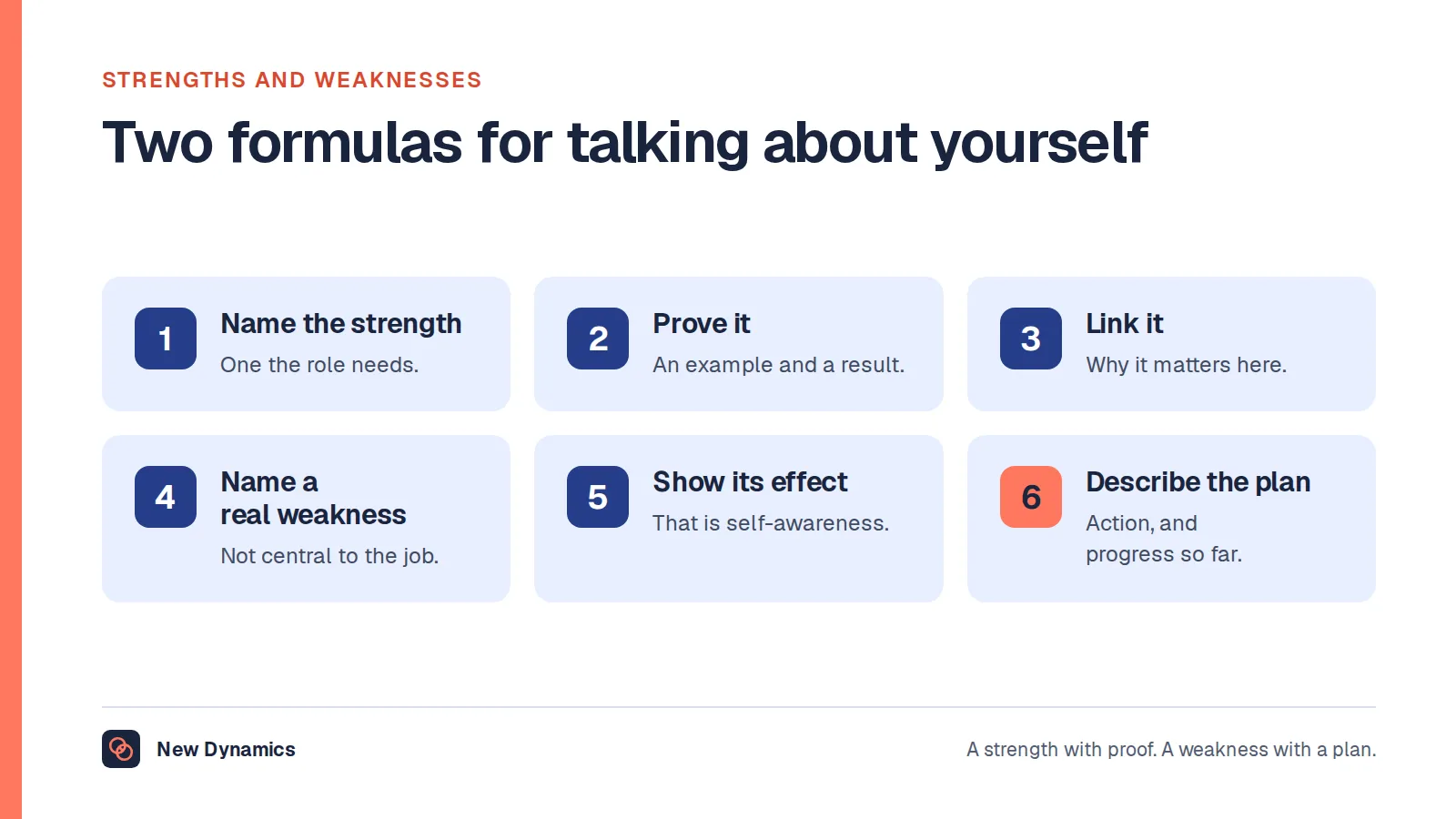
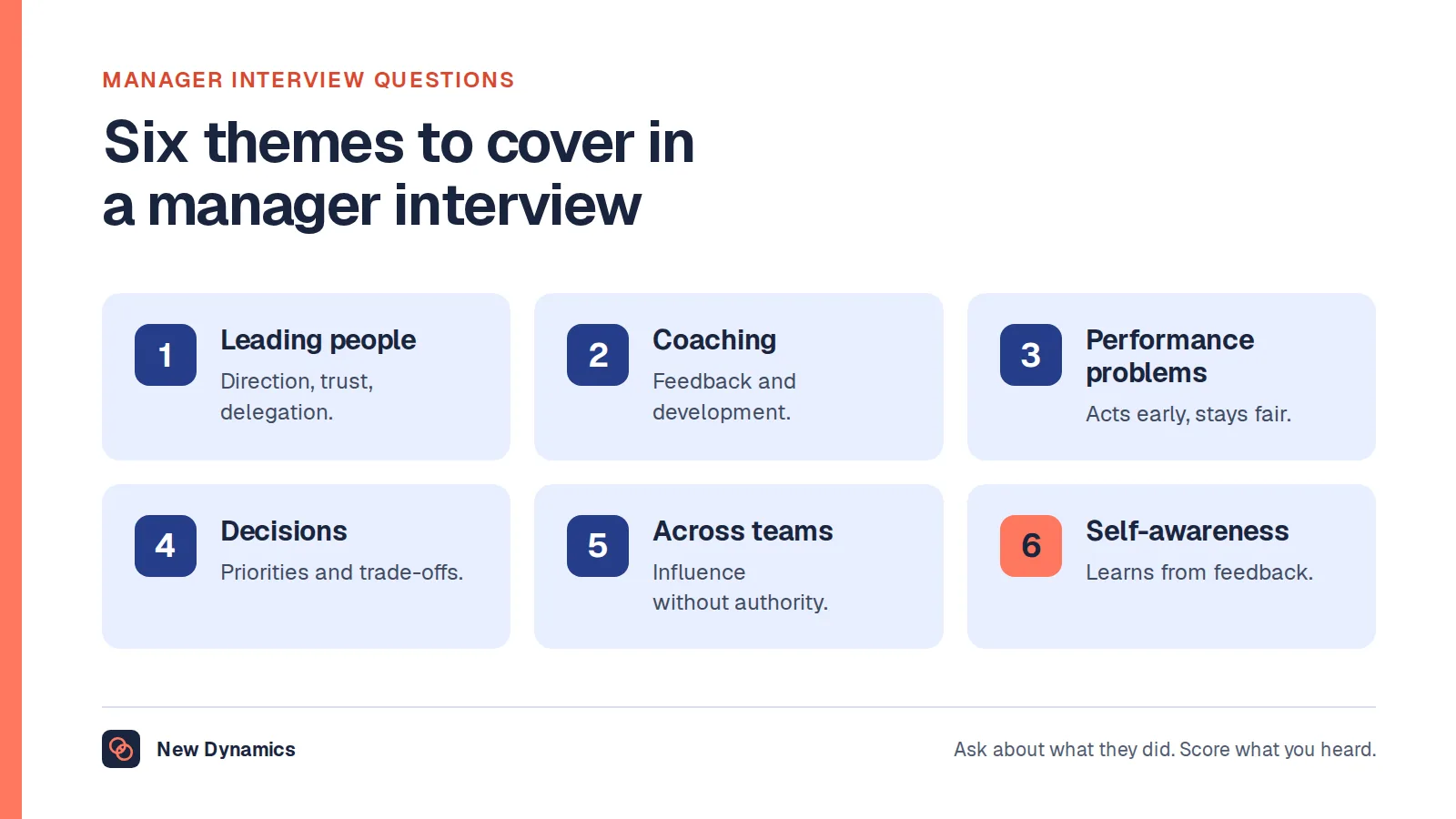
- Prepare the follow-ups. For every claim in the introduction, be ready for “tell me more about that”. Our guide to strengths and weaknesses examples helps with the question that usually comes next, and our manager interview questions show what is asked of managers generally.
The route into hotel management is wide. The NCS notes entry through university courses, through the hospitality supervisor level 3 and hospitality manager level 4 apprenticeships, or through work as a deputy manager in front of house, guest services or catering operations. Whatever your route, the introduction should make it sound deliberate.

For interviewers: what a good introduction tells you
If you are on the other side of the table, the self-introduction is a fair first test, provided you listen for the same evidence you would want from any structured question: scale, results, incidents and a reason for applying. Follow it with the same questions for every candidate, and score against the job's requirements rather than the polish of the delivery. Our recruitment and selection guide sets out a fair process.
Frequently asked questions
How do I introduce myself in a hotel management interview?
In about 90 seconds, cover four things: who you are and your current role and property, what you have run with numbers, two strengths with results that match what the hotel needs, and one specific reason for applying to this hotel. End with a sentence that invites the next question.
How long should a self-introduction be in an interview?
Around 90 seconds, or 200 to 230 spoken words. Longer introductions feel like monologues, and the interviewer will interrupt or stop listening. Shorter is fine if it covers the four parts.
What should I say about myself in a hospitality interview?
Say what you have run, in numbers: rooms, covers, team size, budget. Give one guest-facing result and one commercial result, an example of staying calm under pressure, and why this property. Avoid adjectives that you cannot back up with an example.
What do hotel management interviewers look for?
Published job profiles list customer service skills, the ability to motivate and manage staff, attention to detail, calm under pressure, communication and business management skills, and the ability to balance customer service with commercial priorities. Show each with evidence.
Should I mention my weaknesses in the introduction?
No. The introduction is for the frame and the evidence. If asked about weaknesses later, be honest and specific, and say what you are doing about it.
Can I use one of the examples in this article?
Use the structure, not the words. Every detail in the examples is invented for illustration, and an interviewer will ask you to explain each claim. Replace them with your own numbers and stories.
Your next step: write your 90 seconds
- Draft the four parts in 230 words.
- Add one defensible number and one incident.
- Time it aloud, and cut until it is under 90 seconds.
- Write down the follow-up question each claim invites, and prepare the answer.
If you are hiring managers rather than applying, read and download our recruitment and selection guide. The guide is free to read, and the PDF uses our short download form.
Want managers to get regular feedback once they are in post? Book a New Dynamics demo and bring your current approach. You can also email contact@new-dynamics.com.