TL;DR
- A law clerk is a lawyer, usually a recent law graduate, who works for a judge: researching the law, preparing memos on cases before the court, drafting and checking orders and opinions and helping in court. In the United States the job is called a judicial clerkship and is usually a fixed term.
- The same title is used in some law firms for a junior assistant, where the work overlaps with a paralegal's. In England and Wales the judge's equivalent is the judicial assistant, and the term law clerk is rarely used.
- US federal law clerks must be law school graduates with one of four attributes, such as standing in the upper third of their class. Clerks are bound by the judiciary's code of conduct and must be discreet.
Every judgment you read was drafted, checked, cited and proofread by someone before the judge signed it. In the United States that someone is very often a law clerk: a new lawyer spending a year at the judge's elbow before starting a career in practice. For many law students it is the first job they aim for, and outside the law it is little understood.
This article explains what a law clerk is, the six duties of a judicial clerk, what US federal courts require of applicants, how the title is used in law firms and how it compares with a paralegal, and what the equivalent role is called in England and Wales.
A clerk has weeks, not months, to become useful to a judge, and every chambers runs an induction of its own. See how New Dynamics onboarding brings tasks, early goals and manager conversations into a clear path for a new starter.
What is a law clerk?
A law clerk is a lawyer, usually a recent law graduate, employed to assist a judge. The clerk researches the law, prepares written analyses of the cases before the court, drafts and checks the judge's orders and opinions, and helps in the courtroom. In the United States the position is called a judicial clerkship, and it is usually held for a fixed term.
The Online System for Clerkship Application and Review, OSCAR, is the federal judiciary's hiring system. Its page on the duties of federal law clerks says that “The duties and functions of a federal judicial law clerk are determined by the employing judge.” It adds: “In most chambers, law clerks concentrate on legal research and writing.”
Three things define the job.
- The clerk works for one judge. The relationship is close, and the judge sets the clerk's duties.
- The work is confidential. OSCAR states that “A law clerk is bound by the ethical standards established by the judge and the Code of Conduct for Judicial Employees.”
- It is usually a fixed term. Most clerkships are a stepping stone, taken between law school and practice.
The same title is also used for a junior employee in a law firm who supports lawyers with research, documents and administration. That work overlaps with a paralegal's, and the section below explains the difference.
What does a law clerk do? Six duties
OSCAR describes the broad range of duties typically assigned to a federal law clerk. Grouped, they come to six.
- Legal research. Finding and analysing the statutes, cases and rules that bear on a question before the court.
- Bench memos. Preparing written summaries of a case for the judge before a hearing: the facts, the arguments on each side, the law and a recommended approach.
- Drafting orders and opinions. Writing first drafts for the judge to revise, in the judge's voice.
- Checking and citations. Proofreading the judge's orders and opinions and verifying every citation.
- Communicating with counsel. Dealing with lawyers on case management and procedural requirements. OSCAR says the judge “must be confident in the law clerk's professionalism in interacting with counsel, litigants and the public.”
- Assisting in court. Supporting the judge during courtroom proceedings.
OSCAR notes that some judges also assign maintaining the chambers library and other administrative duties, and that clerks “are expected to work cooperatively with chambers staff and court personnel”.

How to become a US federal law clerk
OSCAR's page on qualifications, salary and benefits sets out the general requirements. By the time of appointment, a law clerk must be a law school graduate, or certified as having completed all law school studies and merely awaiting the degree, and must have one or more of four attributes.
- Class standing. “Standing within the upper third of the law school class from a law school on the approved list of either the American Bar Association or the Association of American Law Schools”.
- Law review. “Experience on the editorial board of a law review of such a school”.
- An LLM. “Graduation from such a school with an LLM degree”.
- Equivalent proficiency. “Demonstrated proficiency in legal studies, which in the opinion of the judge, is equivalent of one of the above.”
Pay is set on the judiciary's salary scale and depends on legal work experience after law school, bar membership and locality. We do not quote figures, because they change each year. State courts have their own requirements, and many judges hire through their own processes rather than through OSCAR.
Judges often hire well in advance under their own hiring plans, which OSCAR publishes, and applications rest on transcripts, writing samples and recommendations. Treat the writing sample as the interview.

Law clerk, paralegal and judicial assistant
- Judicial law clerk (United States). A law graduate working for a judge for a fixed term, concentrating on research and writing. Confidential, prestigious and a step towards practice.
- Law firm clerk or paralegal. A member of a law firm's team who supports lawyers. Prospects, the UK graduate careers service, says in its paralegal job profile that a paralegal will “carry out certain legal tasks and services, such as undertaking legal research, drafting and preparing legal documents, and giving some legal advice”. It notes that paralegals can work in a firm of solicitors, a set of chambers, the public sector, industry or charities, and that the role may be advertised under titles such as legal assistant or caseworker.
- Judicial assistant (England and Wales). The judge's research assistant in the senior courts. The Court of Appeal's notice for judicial assistants explains that they help members of the court “by analysing appeal papers and doing legal research to clarify issues in advance of an appeal, as well as sorting out the shape and nature of applications for permission to appeal and appeals in less well-presented cases”. The post “is intended to provide entrants to the legal profession with a unique opportunity to work at close quarters with judicial members of the court”, and the period of service in the 2026 round is ten months.
So the US law clerk and the English judicial assistant are close cousins. The law firm clerk and the paralegal are a different job, in a different building, with clients rather than a court.

Skills a law clerk needs
- Research. Fast, accurate and thorough, with the judgement to know when to stop.
- Writing. Clear, precise and in another person's voice. Most of a clerk's output is a draft for someone else.
- Attention to detail. A wrong citation in a published opinion is remembered.
- Discretion. Clerks see deliberations, draft judgments and unpublished views. What happens in chambers stays there.
- Composure. Courts run to deadlines that do not move.
- Working with others. The Court of Appeal notice says a judicial assistant must show “incisiveness and an ability to work well under pressure”, alongside high intellectual ability.
Hiring a clerk or judicial assistant well
Judges and chambers managers who get the most from clerks tend to do four things.
- Induct properly. A written guide to the chambers' style, procedures and files saves weeks.
- Give feedback on drafts. A clerk learns from the judge's revisions. Explaining them doubles the value.
- Set expectations on confidentiality on day one, in writing.
- Plan the handover. Clerkships end. A departing clerk should leave a file that the next one can use.
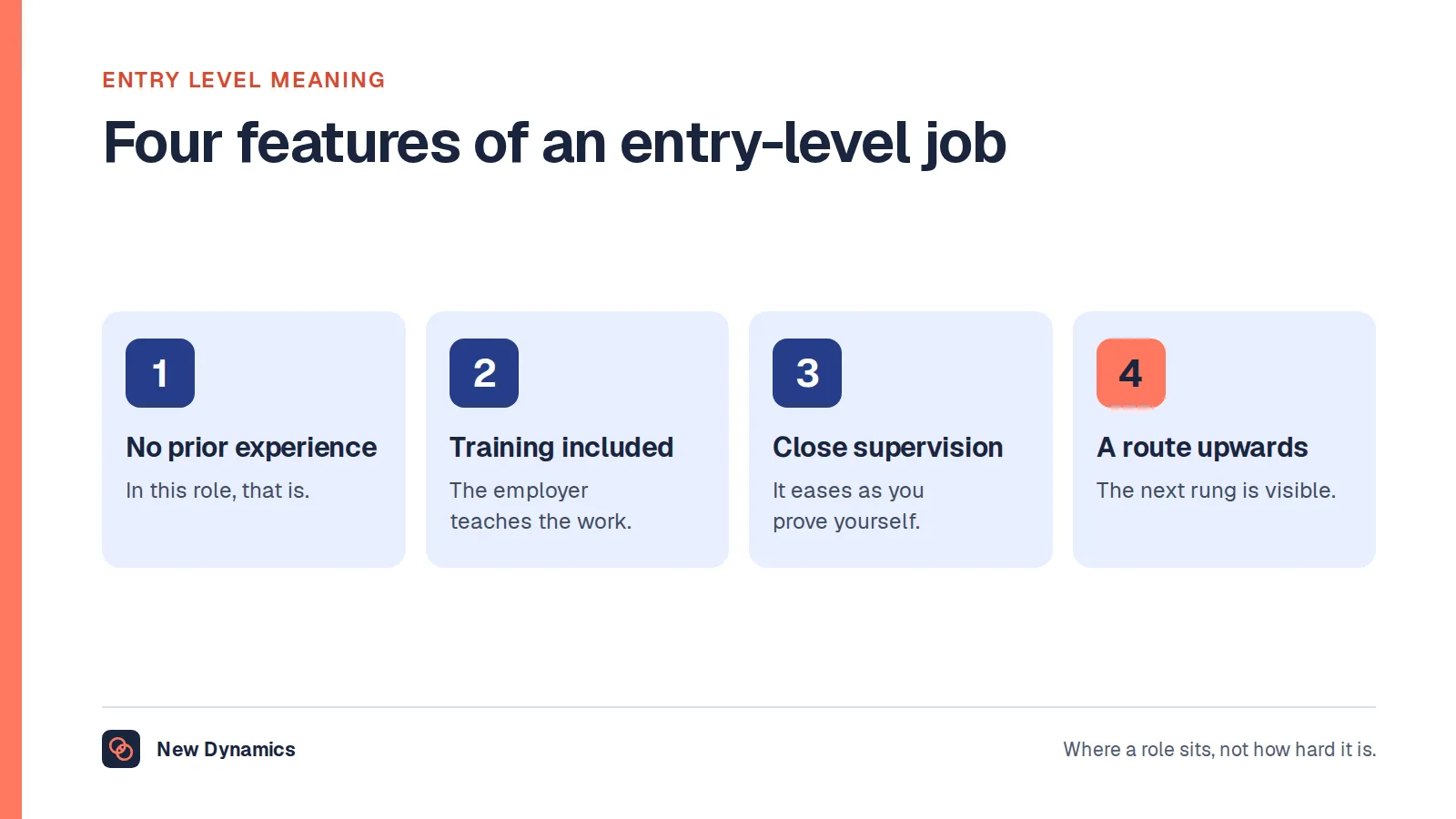
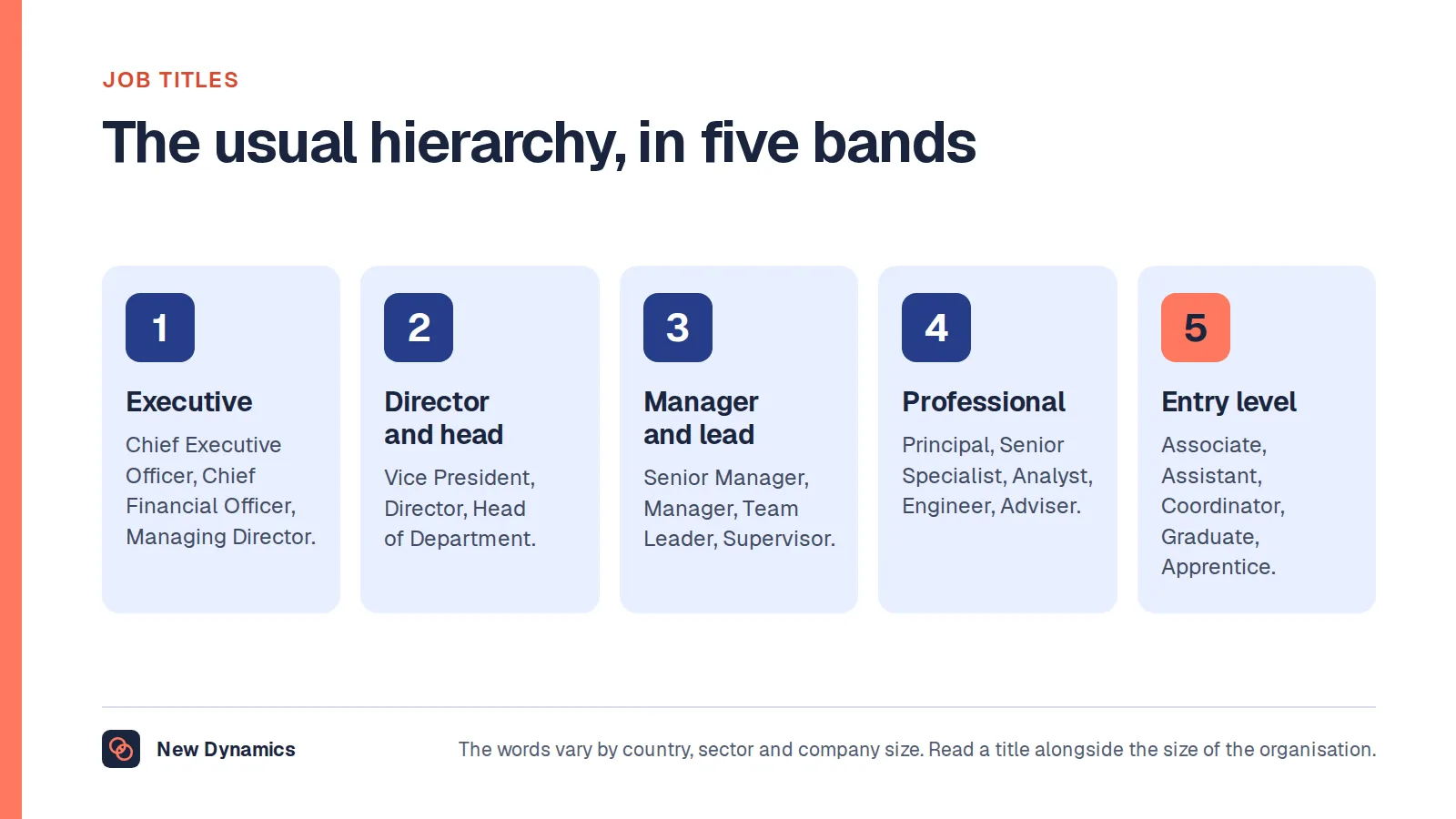
For the general pattern of first jobs, see our guide to the meaning of entry level, and for how titles signal seniority, our guide to job titles.
Frequently asked questions
What is a law clerk?
A law clerk is a lawyer, usually a recent law graduate, who works for a judge: researching the law, preparing bench memos, drafting and checking orders and opinions and assisting in court. In the United States the role is called a judicial clerkship and is usually a fixed term. Some law firms use the same title for a junior assistant.
What does a law clerk do?
According to the US federal judiciary's OSCAR system, the typical duties are legal research, preparing bench memos, drafting orders and opinions, proofreading the judge's orders and opinions, verifying citations, communicating with counsel on case management and procedure, and assisting the judge in court.
Is a law clerk a lawyer?
A judicial law clerk is usually a law school graduate and often, though not always, admitted to the bar. A law firm clerk may be a law student, a graduate or a paralegal, depending on the firm. Neither is the lawyer of record on a case.
What is the difference between a law clerk and a paralegal?
A judicial law clerk works for a judge on research and writing for a fixed term. A paralegal works for a law firm or other employer, supporting lawyers with research, documents, clients and case files. In a law firm, the titles law clerk, paralegal and legal assistant overlap and depend on the employer.
What is a law clerk called in the UK?
The closest equivalent in England and Wales is the judicial assistant, who supports judges in the senior courts with research and analysis of appeals. Barristers' clerks are a different role: they manage the business of a set of chambers rather than legal research.
How do you become a law clerk in the United States?
For federal courts, be a law school graduate with one of four attributes: upper-third class standing at an approved school, experience on a law review's editorial board, an LLM, or proficiency the judge considers equivalent. Apply through OSCAR or the judge's own process, in line with the judge's published hiring plan, with transcripts, a writing sample and recommendations.
Your next step
If you are a law student, find out this week when the judges you would want to clerk for open applications, and start the writing sample now. If you manage a chambers or a legal team, write the one-page induction guide that your next clerk will wish you had written.
For a plan that turns a clerk's first week into a productive first month, read and download our onboarding guide. The guide is free to read, and the PDF uses our short download form.
Want fixed-term starters to get goals, feedback and a proper handover? Book a New Dynamics demo and bring your current approach. You can also email contact@new-dynamics.com.