TL;DR
- Entry level describes the lowest level of an organisation or type of work. An entry-level job is one that you can start without previous experience in that role, and that expects you to learn as you go.
- It does not mean unskilled, unpaid or only for the young. Career changers and people returning to work take entry-level roles too.
- Employers make entry-level hiring work by asking only for what the job needs, selecting on potential, and giving new starters training, a clear plan and frequent feedback.
“Entry-level position. Three years' experience required.” Anyone who has looked for a first job has met an advert like this, and wondered whether the words mean anything at all.
They do. This article explains the meaning of entry level, gives examples by field, deals with the experience paradox, offers practical steps for candidates, and shows employers how to design entry-level roles that people can succeed in.
A first job can shape how someone works for years. See how New Dynamics onboarding brings tasks, early goals and manager conversations into a clear path for a new starter.
What does entry level mean?
The Cambridge Dictionary defines entry-level as “at or relating to the lowest level of an organization, type of work, etc.”, with the examples “entry-level jobs / workers / salaries”.
In practice, an entry-level job has four features.
- No previous experience in the role is needed. You may need a qualification or some general skills, but nobody expects you to have done this job before.
- Training comes with it. The employer expects to teach you the work.
- Supervision is close at first. Someone checks your work, and the checking eases as you prove yourself.
- There is a route upwards. The role is the first rung of a ladder, and the next rung is visible.
Entry level describes where a role sits, not how hard it is. Some entry-level jobs need a degree or a professional qualification, such as a graduate engineer or a newly qualified nurse. Others need no formal qualifications at all.
The same words have two other meanings, which can confuse a search.
- Products. Cambridge's second definition is a product “that is cheaper or simpler than other similar products, and therefore suitable for someone who has not used or bought one before”, such as an entry-level laptop.
- Qualifications in England, Wales and Northern Ireland. GOV.UK's list of qualification levels begins with “Entry level”, which sits below Level 1 and is available at three sub-levels. An entry-level qualification and an entry-level job are different things.

Entry-level job examples
| Field | Typical entry-level roles |
|---|---|
| Office and administration | Administrative assistant, receptionist, data entry clerk |
| Customer service and retail | Customer service adviser, sales assistant, call centre agent |
| Technology | Junior developer, IT support technician, test analyst |
| Finance | Accounts assistant, trainee accountant, payroll clerk |
| Marketing | Marketing assistant, content assistant, social media coordinator |
| HR | HR assistant, recruitment coordinator |
| Health and care | Care assistant, healthcare assistant, newly qualified nurse |
| Trades and engineering | Apprentice, trainee technician, graduate engineer |
| Hospitality | Kitchen porter, waiting staff, front-of-house assistant |
Words such as junior, trainee, assistant, associate, graduate and apprentice usually signal entry level. Our guide to job titles sets out the levels above.
Entry level, internship, apprenticeship and graduate scheme
| Route | What it is |
|---|---|
| Entry-level job | A permanent or fixed-term job at the first level, with normal pay and rights |
| Apprenticeship | A job with structured study towards a qualification |
| Graduate scheme | A structured programme for recent graduates, often with rotations |
| Internship | A short period of work experience, whose rights depend on the person's employment status |
For the UK, GOV.UK explains that apprenticeships “combine practical training in a job with study”, and that an apprentice is “an employee earning a wage and getting holiday pay”, with time for training of at least 20% of normal working hours.
Internships are less clear-cut. GOV.UK's page on employment rights for interns says that the terms internship, work placement and work experience “have no legal status on their own”, and that an intern “is entitled to the National Minimum Wage if they count as a worker”. This is general information, not legal advice.
The experience paradox
Why do entry-level adverts ask for experience?
- The advert was copied from a more senior role, and nobody removed the line.
- The employer means “some exposure”: a placement, a part-time job or a project, not three years in post.
- The list is a wish. Many requirements in adverts are preferences. Employers may well hire someone who meets most of them.
- The role is not really entry level. The title keeps the pay down, and the duties say otherwise.
If you meet most of the requirements and the role is truly a first step, apply. If the advert demands years of experience for entry-level pay, treat that as information about the employer.
Employers should take note of a legal point. GOV.UK's guidance on discrimination in job adverts says: “Only use phrases like ‘recent graduate’ or ‘highly experienced’ when these are actual requirements of the job. Otherwise you could discriminate against younger or older people”.
How to get an entry-level job: six steps
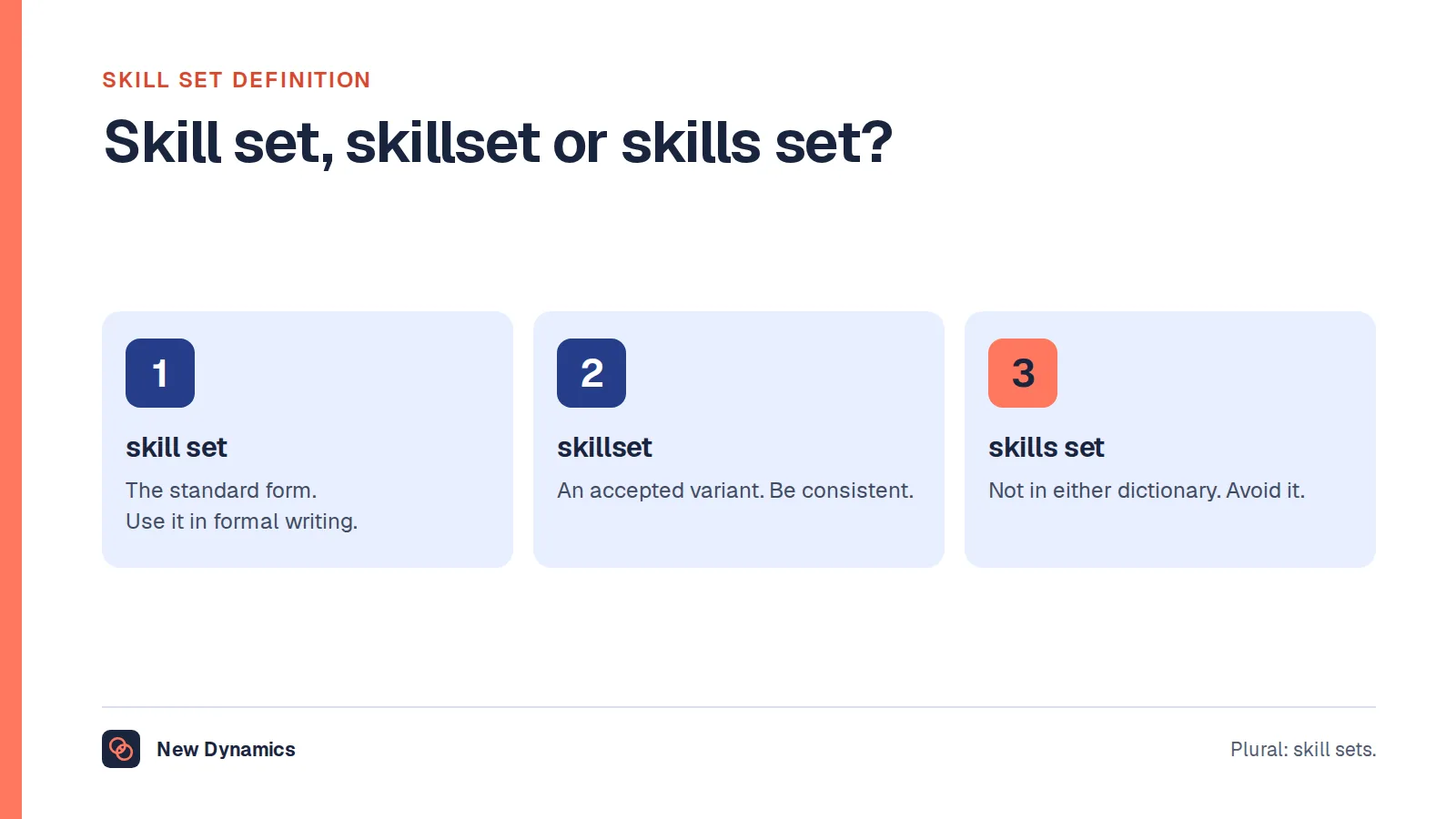
- Translate what you have done. Part-time work, volunteering, study projects, caring responsibilities and sport all build skills. Name them. Our guide to the definition of skill set shows how to map them.
- Show evidence, however small. A portfolio, a project, a course certificate or a reference from a placement counts.
- Apply when you meet most of the list. Do not rule yourself out over a “desirable” line.
- Tailor each application. Use the words of the advert, and put the most relevant thing first. See our guide to soft skills for a CV.
- Prepare for potential-based questions. Expect “tell me about a time you learned something quickly”, not questions about years in post.
- Ask about development. “What would I learn in the first year, and who would I learn it from?” tells you whether the job is a real first step.

How employers should design entry-level roles
An entry-level hire succeeds or fails on what happens after the offer. Five practices matter.
- Ask only for what the job needs. Remove experience requirements that you would waive for the right person. They can shrink and skew your pool.
- Select on potential. Use work samples, structured interviews and questions about learning, reliability and curiosity.
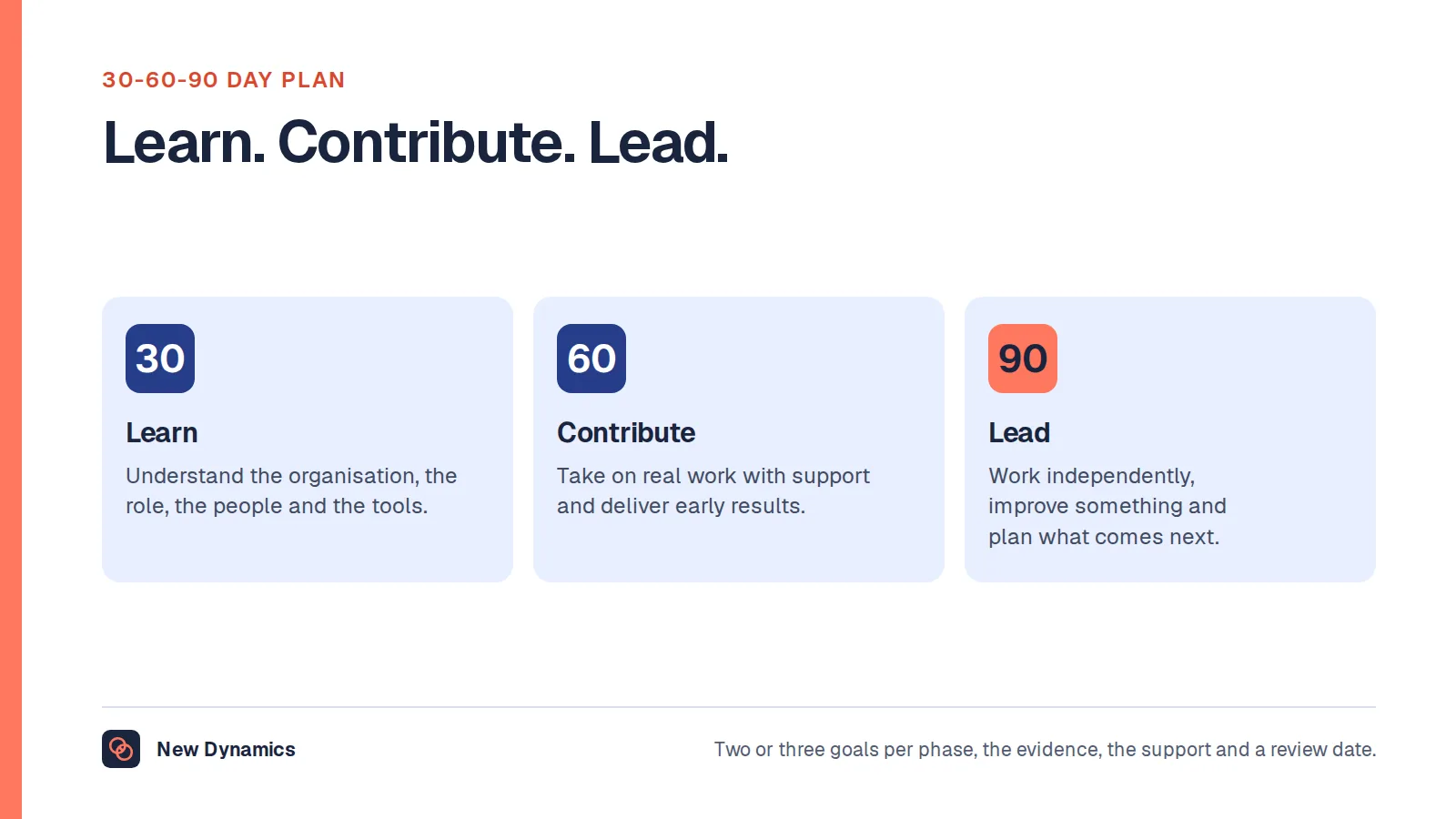
- Plan the first 90 days. Say what the person should know, do and deliver by each milestone. Our 30-60-90 day plan gives a template.
- Give a buddy and frequent feedback. New starters need to hear how they are doing weekly, not at a six-month review.
- Show the next rung. Say what the next level is, what it requires and roughly how long people take to reach it. Pay the rate for the job, including for interns who count as workers.
People in their first job cannot yet tell what good looks like. Tell them, often and specifically, and most will get there faster than you expect.

Frequently asked questions
What does entry level mean?
Entry level describes the lowest level of an organisation or type of work. An entry-level job is a starting role that you can take without having done that job before, and in which the employer expects to train you.
Does entry level mean no experience?
It means no experience in that role. Employers may still look for a qualification, general skills, or some exposure to work through placements, part-time jobs or projects. If an advert demands several years in a similar post, the role is not truly entry level.
What are examples of entry-level jobs?
Examples include administrative assistant, customer service adviser, junior developer, accounts assistant, marketing assistant, HR assistant, care assistant, apprentice technician and graduate engineer. Titles with junior, trainee, assistant or graduate usually signal entry level.
Is an entry-level job the same as an internship?
No. An entry-level job is normal employment at the first level. An internship is a short period of work experience. GOV.UK says that the term has no legal status on its own, and that an intern's rights depend on their employment status.
Can you get an entry-level job with no degree?
Yes, in many fields. Apprenticeships, trainee roles and assistant posts often need no degree. Some professions do require one, or a specific qualification, even at entry level, so check the requirements for the field you want.
Are entry-level jobs only for young people?
No. Career changers, people returning to work and people moving to a new country all take entry-level roles. Employers should avoid wording such as “recent graduate” unless it is a real requirement, because it can discriminate on grounds of age.
Your next step: read one advert closely
- If you are applying, take one entry-level advert and mark each requirement as essential or desirable. Apply if you meet most of the essentials.
- If you are hiring, take your last entry-level advert and delete every requirement that you would waive for the right person.
- Write down what a new starter should be able to do after 30, 60 and 90 days.
- Name the person who will give them feedback each week.
For a full plan for the first weeks and months, read and download our employee onboarding guide. The guide is free to read, and the PDF uses our short download form.
Want new starters to have clear goals and early feedback? Book a New Dynamics demo and bring your current onboarding plan. You can also email contact@new-dynamics.com.