TL;DR
- A pediatrician, spelled paediatrician in the UK, is a doctor with special training in medical care for children, managing conditions that affect infants, children and young people from birth to the late teens, in hospitals and in the community.
- The job has six duties: assess and treat acute illness on wards and in emergency departments, run outpatient clinics and manage long-term conditions, care for newborns, work with families and carers, advise other agencies such as schools and social services, and teach, audit and research.
- In the UK the route is medical school, the two-year foundation programme and specialty training of a minimum of eight years. The NHS asks for rapport with children and carers, compassion in emotionally charged situations, communication, teamwork and the ability to lead multidisciplinary teams.
A child is not a small adult, medically or in any other way, and the doctor who looks after children needs a different training, a different manner and a different relationship with the people in the room, because the patient is rarely the only one who needs the conversation.
This pediatrician job description explains what a paediatrician does, sets out six duties, describes the settings and sub-specialties, summarises the UK training route, lists the skills the NHS asks for and gives a job description template. It uses the British spelling, paediatrician, for the profession in the UK and the American spelling where the search term or the US context calls for it.
Consultants and trainees are appraised on evidence gathered through the year, and it should be easy to find. See how New Dynamics performance reviews bring goals, feedback and development into one fair discussion.
What is a pediatrician?
The Cambridge Dictionary defines a paediatrician as “a doctor who has special training in medical care for children”, and notes that pediatrician is the US spelling. Paediatrics is the specialty: “the science or study of medical care for children”.
NHS Health Careers describes the role in its paediatrician page: “Paediatricians manage medical conditions affecting infants, children and young people. You'll see a wide range of patients, from babies through to teenagers.” Its overview of paediatrics adds that a paediatrician “could be a general paediatrician working in a hospital or be based in the community looking after children with a physical disability or with developmental, social or behavioural issues”, or one of a smaller number of specialists looking after newborns in intensive care or treating children with heart conditions.
Pediatrician duties and responsibilities: six duties
- Assess and treat acute illness. Care for acute cases on the wards and in the emergency department: diagnose, treat, stabilise and decide who needs admission, transfer or discharge.
- Run clinics and manage long-term conditions. Outpatient consultations and the ongoing management of chronic conditions such as asthma, diabetes and epilepsy, and of disability and developmental needs. NHS Health Careers lists “caring for acute cases on wards and in A&E, as well as outpatient consultations and managing long-term conditions”.
- Care for newborns. Attend deliveries where needed, examine and treat newborn babies and, in neonatal roles, provide intensive care.
- Work with families and carers. Build rapport with the child and the adults, and, in the NHS's words, liaise closely with families and carers, “managing sensitive and sometimes emotional discussions about treatment”.
- Advise other agencies. Provide clinical advice to social services, education and other agencies, including in safeguarding, and work with primary care, child and adolescent psychiatry and public health.
- Teach, audit and research. Train junior doctors and students, audit the service, and take part in research and service development.

Settings and sub-specialties
| Setting or sub-specialty | What the work involves |
|---|---|
| General hospital paediatrics | Acute admissions, wards, the emergency department and general clinics |
| Community paediatrics | Children with disability, developmental, social or behavioural needs, often with schools and social services |
| Neonatal medicine | Newborns, including intensive care for premature and sick babies |
| Sub-specialties | Cardiology, oncology, emergency medicine, palliative medicine, child mental health, and others |
NHS Health Careers lists community paediatrics, child mental health, neonatal intensive care, paediatric emergency medicine, oncology and palliative medicine among the fields a paediatrician can specialise in, and says the work “could include anything from high-tech care for new born babies in a hospital through to managing care for children with disabilities in the community”. A job description should say which setting and, for a consultant post, which special interest. Some interests are shared with other specialties: paediatric dermatology, for example, sits in our dermatologist job description too.

Training and the route in
The UK route, as NHS Health Careers sets it out, starts with medical school: typically excellent GCSEs and three A or A* passes at A level including chemistry for the five-year undergraduate degree, or a four-year postgraduate degree for those who already hold a degree, with an interview and admissions test. After medical school comes the paid two-year foundation programme of six placements in different settings, then specialty training in paediatrics, “which will take a minimum of eight years”, with part-time training possible in some circumstances. The NHS notes that the specialty is competitive: in 2020, it reports, there were 712 applications for 461 specialty training places.
Other countries have their own routes, residencies and licensing, and a paediatrician moving between countries should expect to have their qualifications assessed. This is general information, not professional or regulatory advice.

Skills the NHS asks for
NHS Health Careers' overview of paediatrics puts the human skills first: “You'll need the ability to create rapport with children and their carers to diagnose and treat effectively. You will have to manage emotionally charged situations with compassion and focus.” It adds that “Excellent communication, teamwork and the ability to lead and work within multidisciplinary teams are skills common to all paediatric roles.”
Its must-have skills for the paediatrician role are:
- excellent communication skills to manage a wide range of relationships with colleagues, and patients and their families;
- emotional resilience, a calm temperament and the ability to work well under pressure;
- teamwork and the capacity to lead multidisciplinary teams;
- problem-solving and diagnostic skills;
- outstanding organisational ability and effective decision-making skills;
- first-class time and resource management for the benefit of patients.
Employers writing a job description usually add the safeguarding responsibilities of the post, the specific clinical competencies of the setting and a commitment to teaching and audit.
Pediatrician job description template
Adapt the setting, the special interest, the on-call commitment and the safeguarding role. Consultant posts in the NHS follow national terms and job planning; this template is the description, not the contract.
Job title: Consultant paediatrician [general / community / neonatal / with a special interest in ...]
Reports to: Clinical director, children's services
Sessions: [Number] programmed activities a week, including [on-call rota]
Purpose of the role: To provide high-quality medical care to infants, children and young people in [the hospital / the community], to work with families, colleagues and other agencies in their interests, and to contribute to the service's teaching, audit, safeguarding and development.
Main duties:
- Assess, diagnose and treat acute illness on the wards and in the emergency department, and take part in the on-call rota
- Run outpatient clinics and manage long-term conditions and developmental needs
- [Provide neonatal care, including attendance at deliveries and intensive care]
- Communicate with children, families and carers, including sensitive discussions about treatment and prognosis
- Provide clinical advice to social services, education and other agencies, and fulfil the post's safeguarding responsibilities
- Supervise and teach trainees and students, take part in audit, appraisal and revalidation, and contribute to service development
Qualifications and experience:
- Full registration and a licence to practise with the medical regulator, and entry on the specialist register for paediatrics or eligibility within six months
- Membership of the professional body for paediatrics and child health or equivalent
- Experience and competence in [the setting and special interest]
- Level [3] safeguarding children training
- The communication, resilience, teamwork and decision-making skills the specialty requires
The service provides: Job planning, study leave and support for continuing professional development, a named mentor for new consultants, and [the department's facilities and systems].
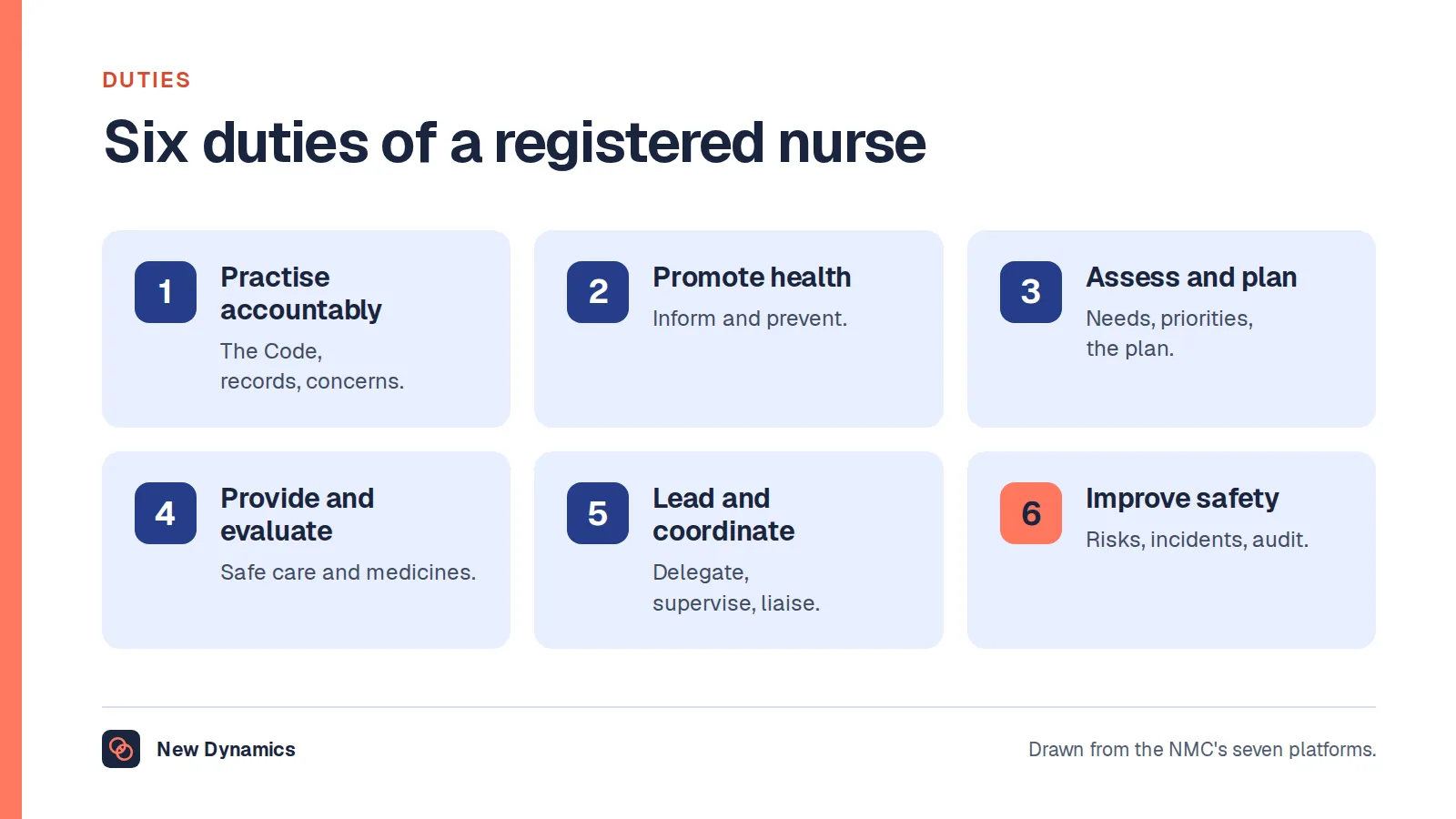
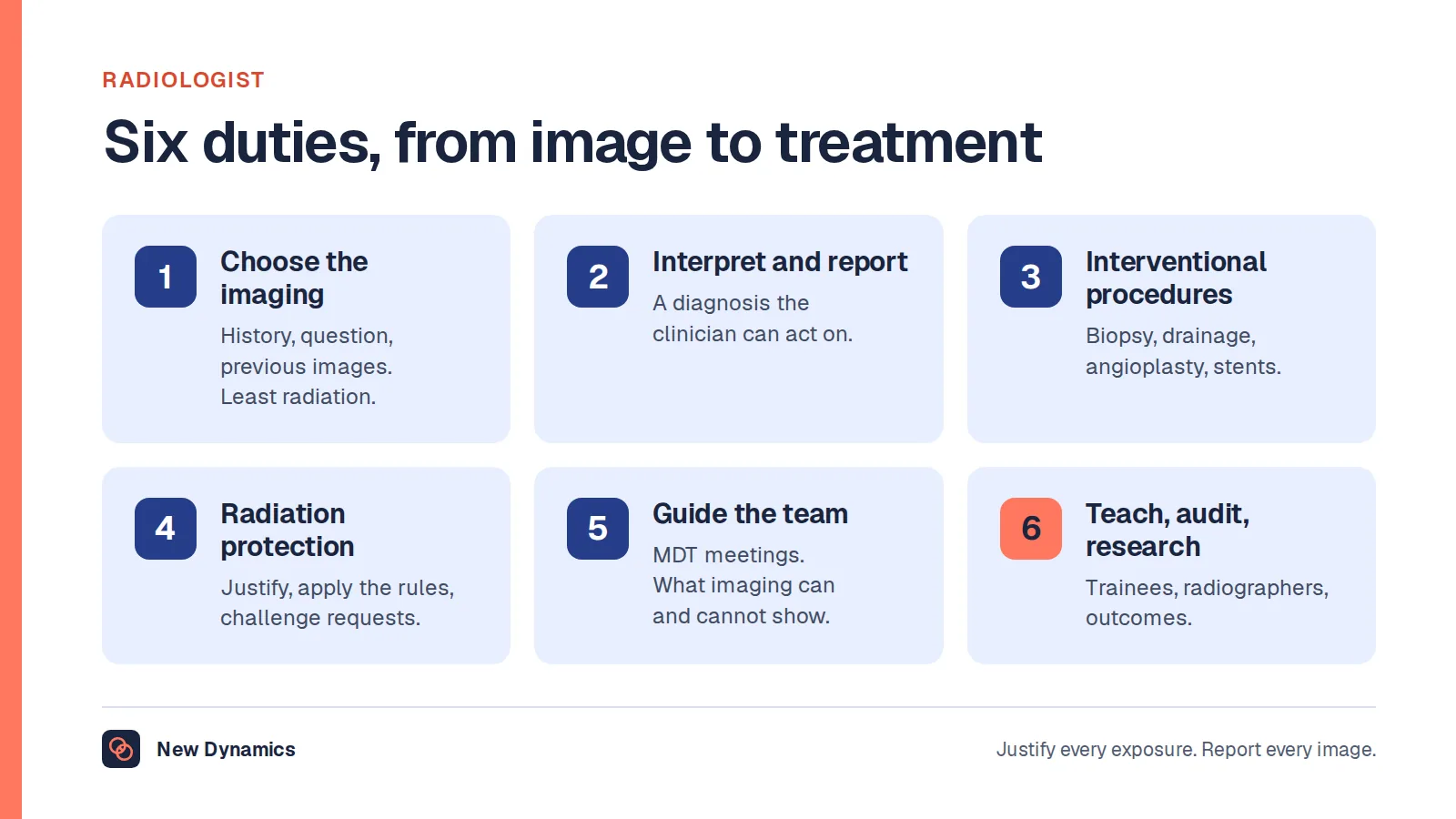
For the layout of the whole document, use our job description template. For the nursing colleagues on the wards, see our registered nurse job description, and for a specialty that supports every paediatric team, our radiologist job description. Our dentist job description shows the same approach for a clinician outside the hospital. For a colleague on the mental health side, see our psychiatrist job description, which includes child and adolescent psychiatry.
Common mistakes in paediatrician adverts
Setting unstated. Hospital, community and neonatal posts are different jobs with different candidates.
On-call hidden. The rota and the acute commitment belong in the first paragraph.
Safeguarding left out. Every paediatric post carries safeguarding responsibilities. Name the level and the named-doctor arrangements.
Families forgotten. The advert asks for clinical skills and never mentions the conversations with parents that fill the day.
Frequently asked questions
What does a pediatrician do?
A pediatrician, or paediatrician, manages medical conditions affecting infants, children and young people. They assess and treat acute illness on wards and in emergency departments, run clinics and manage long-term conditions, care for newborns, work closely with families and carers, advise agencies such as schools and social services, and teach, audit and research.
What are a pediatrician's duties and responsibilities?
Acute assessment and treatment, outpatient clinics and long-term condition management, newborn care, communication with families and carers including sensitive discussions about treatment, clinical advice to other agencies and safeguarding, and teaching, audit and research.
How long does it take to become a paediatrician in the UK?
Medical school takes five years, or four for a postgraduate entrant, followed by the two-year foundation programme and specialty training of a minimum of eight years, according to NHS Health Careers. Part-time training is possible in some circumstances.
What skills does a paediatrician need?
The NHS asks for the ability to create rapport with children and their carers, compassion and focus in emotionally charged situations, excellent communication, emotional resilience and calm under pressure, teamwork and the capacity to lead multidisciplinary teams, diagnostic and problem-solving skills, organisation and decision making.
What is the difference between a paediatrician and a pediatrician?
Only the spelling. Paediatrician is the British spelling and pediatrician the American; both describe a doctor with special training in medical care for children.
What should a paediatrician job description include?
The setting and special interest, the sessions and on-call rota, the six duties from acute care to teaching, the safeguarding responsibilities, the registration and membership required, and the service's support for development and appraisal.
Your next step: write the setting and the safeguarding into the advert
- State whether the post is hospital, community or neonatal, and any special interest.
- Put the sessions and the on-call rota in the first paragraph.
- Name the safeguarding level and the named-doctor arrangements.
- Ask for evidence of working with families and other agencies, not only clinical competence.
A new consultant's first months should cover the systems, the rota, the safeguarding procedures and the team. Read and download our employee onboarding guide. The guide is free to read, and the PDF uses our short download form.
Want appraisal evidence, objectives and development in one place for every clinician in children's services? Book a New Dynamics demo and bring your current appraisal process. You can also email contact@new-dynamics.com.