TL;DR
- A psychiatrist is a medically qualified doctor who diagnoses and treats patients with mental health disorders, from anxiety and depression to dementia, eating disorders and schizophrenia, using psychological, medical and social interventions and prescribing medication where needed.
- The job has seven duties: assess patients, plan treatment, prescribe and monitor, keep records, work with other agencies and sources, lead or work within the multidisciplinary team, and supervise, teach and research. Specialties include general adult, child and adolescent, old age, forensic, intellectual disability and medical psychotherapy.
- In the UK the route is a GMC-recognised medical degree, two years of foundation training and at least six years of specialist training in psychiatry, including the Royal College of Psychiatrists' MRCPsych examinations, before entry to the specialist register and consultant posts.
Psychiatry is the medical specialty most people know least about. Ask what a psychiatrist does and you get answers that belong to psychologists, counsellors and therapists, none of whom can prescribe, admit or assess under mental health law. A psychiatrist job description has to start by saying what makes the role a doctor's.
This article explains what a psychiatrist is, lists the six specialties, sets out seven duties, describes the skills employers and training bodies look for, summarises the UK training route from medical school to consultant, and gives a template and wording for a CV.
Consultants are appraised every year on evidence from patients, colleagues and outcomes. See how New Dynamics performance reviews bring goals, feedback and development into one fair discussion.
What is a psychiatrist?
Prospects, the UK graduate careers service, defines the role in its psychiatrist profile: psychiatrists “are medically qualified doctors specialising in the diagnosis and treatment of patients with mental health disorders”, such as addiction, anxiety, dementia, depression, bipolar disorder, eating disorders and schizophrenia. It makes the point that separates psychiatry from the talking professions: psychiatric disorders can be caused by physical illness and mental illness raises the risk of physical illness, so psychiatrists “are skilled in recognising mind and body symptoms to evaluate and assess risk and draw up treatment plans, which may include prescribing medication”.
The UK National Careers Service's psychiatrist profile says the same in fewer words: “Psychiatrists are doctors who diagnose and treat patients with mental health problems.” Typical hours are 40 to 43 a week on a rota including evenings, weekends and bank holidays, in NHS or private hospitals, the community, prisons or patients' homes, and the environment “may be emotionally demanding”. Enhanced background checks are required.
The six specialties
Prospects lists the areas a psychiatrist usually specialises in.
| Specialty | Who and where |
|---|---|
| General adult | Patients aged 18 to 65, inpatient and outpatient; sub-specialties in liaison, substance misuse and eating disorders |
| Child and adolescent | Children and young people up to 18, including autism spectrum disorder and eating disorders |
| Old age | Psychiatric illness in later life, including dementia |
| Forensic | Prisons, secure hospitals and the community; expert witness work in court |
| Psychiatry of intellectual disability | Patients with an intellectual or learning disability |
| Medical psychotherapy | Treating psychiatric disorders through forms of psychotherapy |
Prospects notes that specific tasks depend on the specialty: “the work of a forensic psychiatrist is very different from the work of a child psychiatrist”. A job description should name the specialty, the setting and the population in its first line. Forensic psychiatrists work alongside forensic psychologists, a separate profession described in our forensic psychology job description.
Psychiatrist duties: seven responsibilities
Prospects lists the responsibilities common to all specialties; the NCS adds the day-to-day tasks. Grouped into seven:
- Assess. Assess patients by reviewing their mental and physical health, background, current social situation, thoughts, past health issues and potential risk factors. The NCS lists asking patients about their thoughts, carrying out psychiatric tests and using blood tests or scans to rule out other conditions.
- Plan treatment. Decide on suitable treatment plans, which “often include a mix of psychological, medical and social interventions in collaboration with other health professionals”. The NCS mentions recommending counselling or cognitive behavioural therapy.
- Prescribe and monitor. Prescribe medication when necessary, and monitor and review treatment regularly.
- Keep records. Take notes and keep detailed records of interactions and decisions.
- Gather information from other sources. The NCS lists getting information from GPs, social workers or relatives; Prospects adds knowledge of mental health law and the social factors that influence mental health.
- Lead or work within the multidisciplinary team. Work closely within, or lead, a team including psychiatric nurses, psychologists and occupational therapists.
- Supervise, teach and research. Supervise and teach junior medical staff, depending on the post, and carry out research and keep up to date with the field.

Skills employers and training bodies look for
Prospects lists clinical expertise in the chosen specialty, excellent interpersonal and written and oral communication, “the ability to treat others with empathy, understanding and respect”, “emotional resilience to work in challenging situations”, analytical and problem-solving skills, an innovative approach, the ability to work under pressure and make informed decisions, leadership with the ability to organise, train and motivate others, flexibility in a multidisciplinary team, initiative, “the ability to affect change and manage clinical complexity and uncertainty”, an understanding of current developments in psychiatry and knowledge of relevant legislation. The NCS adds counselling skills including active listening and a non-judgemental approach, knowledge of psychology and medicine, and sensitivity and understanding.
For a job description, six things: clinical judgement, risk assessment, communication with patients and families, resilience, leadership of a multidisciplinary team, and knowledge of mental health law.

Training and registration in the UK
Medical degree. Prospects and the NCS both say the first step is a degree in medicine recognised by the General Medical Council, usually five years, or a four-year graduate entry programme for those with a prior degree, typically at 2:1 or above in a science-related subject. Many courses require the University Clinical Aptitude Test.
Foundation training. Two years of paid general training across placements, which the NCS notes may include psychiatry.
Specialist training. Prospects says specialist training in psychiatry “lasts a minimum of six years - typically three years of core training and a minimum of three years of higher training”, with core training placements across sub-specialties. Trainees must pass the Royal College of Psychiatrists' MRCPsych examinations and achieve the core competencies before higher training, and some specialties offer run-through training.
Consultant. The NCS says that with experience a psychiatrist could become a senior consultant once on the General Medical Council Specialist Register, lead a team or manage a unit or department, or move into teaching trainee doctors and other healthcare professionals.
Training and registration differ in other countries. Check the rules where you work.

Psychiatrist job description template
Adapt the template to your service. Keep every line true.
Job title: Consultant psychiatrist, [general adult / child and adolescent / old age / forensic] psychiatry
Reports to: Clinical director, [service]
Team: [Community mental health team / inpatient ward / secure unit] of [n] staff, including nursing, psychology and occupational therapy
Hours: [10] programmed activities a week; on-call [rota]
Purpose of the role: To provide expert assessment, treatment and care for [population] with [conditions] in [setting], to lead the multidisciplinary team's clinical work and to contribute to the service's teaching, research and development.
Main duties:
- Assess referred patients, including mental and physical health, social situation and risk
- Formulate and agree treatment plans combining psychological, medical and social interventions
- Prescribe and review medication; monitor outcomes
- Keep accurate clinical records and meet statutory and service requirements, including under mental health legislation
- Liaise with GPs, social care, families and other agencies
- Provide clinical leadership to the multidisciplinary team and supervise trainees
- Take part in appraisal, clinical governance, audit, teaching and research
Requirements:
- Full GMC registration with a licence to practise and inclusion on, or within six months of, the Specialist Register in [specialty]
- MRCPsych or equivalent
- [Approved clinician / section 12 approval, or willingness to obtain]
- Enhanced background check
- Experience in [setting or population]
We provide: Supporting professional activities, study leave and CPD, mentoring for new consultants, [relocation], and a route into clinical leadership or academic roles.
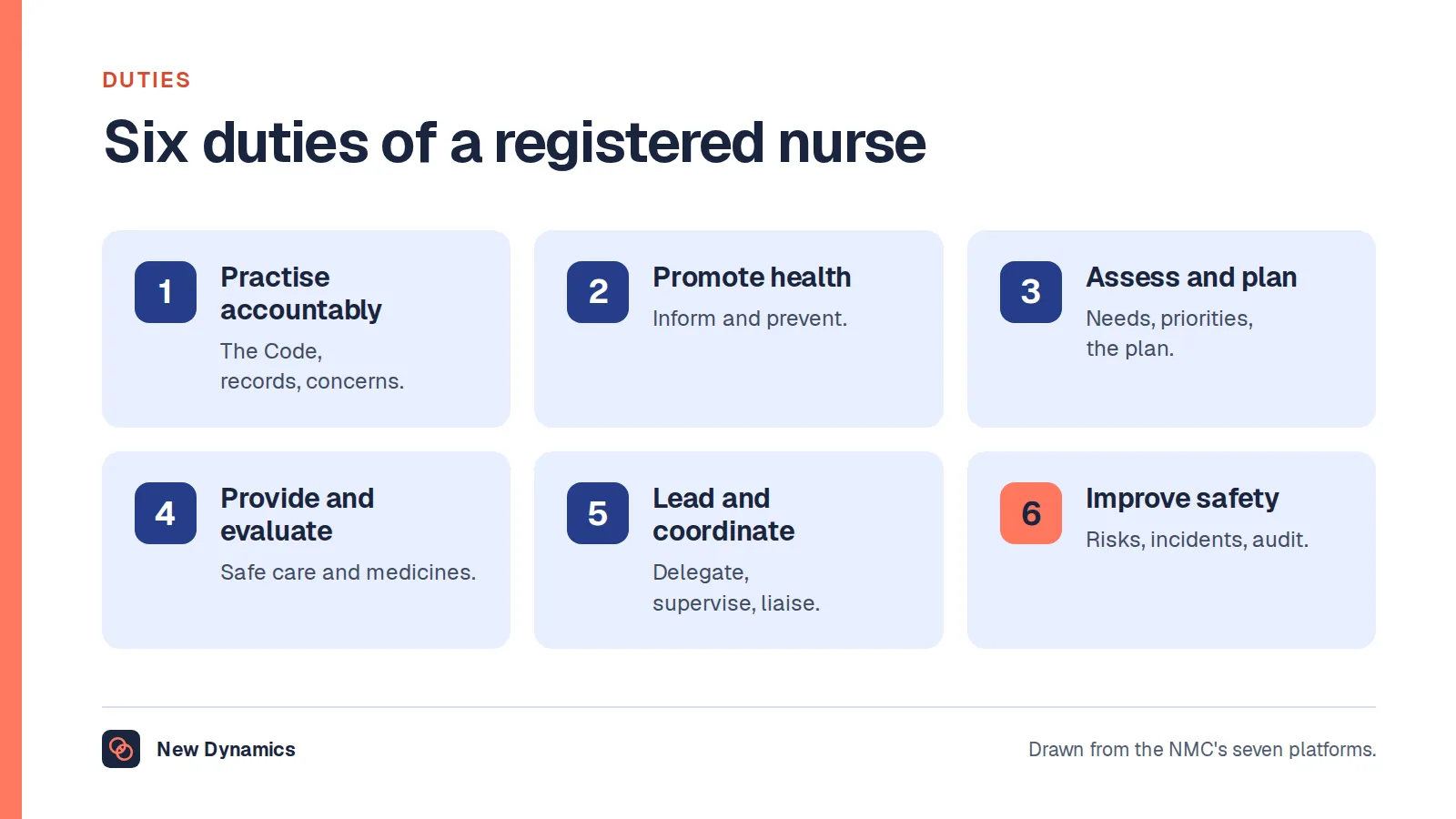
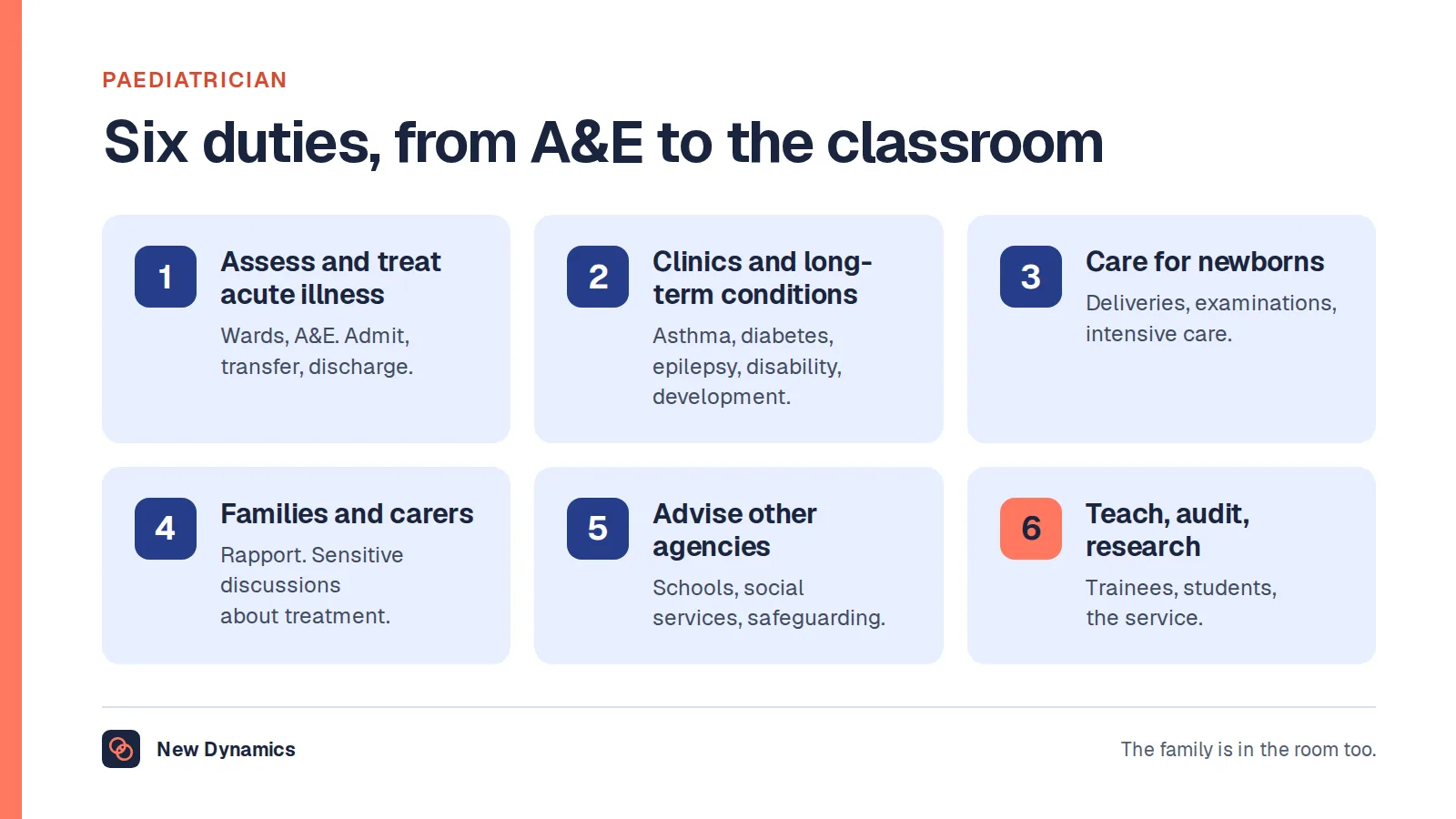
State the specialty, setting, population, team and on-call commitment. Our job description template explains the overall structure, and our pediatrician job description and registered nurse job description show the same approach for two colleagues on the ward.
How to describe psychiatry work on a CV
Write what you did and the scale. The lines below are our own examples.
- “Consultant in general adult psychiatry leading a community mental health team of [n] with a caseload of [n] patients.”
- “Assessed and treated [n] new referrals a month; led weekly multidisciplinary reviews.”
- “Section 12 approved and approved clinician; responsible for [n] detained patients on the ward.”
- “Supervised [three] core trainees; delivered teaching on risk assessment to foundation doctors.”
- “Led a service audit that reduced average time to first assessment.”
Common mistakes in psychiatry job adverts
Specialty and population missing. Forensic and child psychiatry are different jobs.
Team unstated. Whether the consultant leads a full multidisciplinary team or works alone changes everything.
On-call vague. State the rota and the frequency.
Approvals assumed. Mental health law approvals belong in the requirements or the support offered.
No mention of supervision or research time. Doctors choose posts by the time they get for the parts of the job beyond the clinic.
Frequently asked questions
What does a psychiatrist do?
A psychiatrist is a medically qualified doctor who diagnoses and treats mental health disorders. They assess patients' mental and physical health, social situation and risk, plan treatment combining psychological, medical and social interventions, prescribe and monitor medication, keep records, work with other agencies, lead or work within a multidisciplinary team and supervise, teach and research.
What is the difference between a psychiatrist and a psychologist?
A psychiatrist is a doctor with a medical degree and specialist training in psychiatry, able to prescribe medication and assess and treat physical as well as mental illness. A psychologist is not a medical doctor and does not prescribe; clinical psychologists assess and treat through psychological therapies, often in the same multidisciplinary team.
What are the specialties in psychiatry?
Prospects lists general adult, with sub-specialties in liaison, substance misuse and eating disorders; child and adolescent; old age; forensic; psychiatry of intellectual disability; and medical psychotherapy.
How long does it take to become a psychiatrist in the UK?
Usually a five-year medical degree, or four years by graduate entry, two years of foundation training and a minimum of six years of specialist training in psychiatry, including the MRCPsych examinations, before entry to the GMC Specialist Register and eligibility for consultant posts.
What skills does a psychiatrist need?
Clinical expertise, communication, empathy and respect, emotional resilience, analytical and problem-solving skills, decision-making under pressure, leadership of a multidisciplinary team, the ability to manage clinical complexity and uncertainty and knowledge of mental health legislation.
Where do psychiatrists work?
In NHS and private hospitals, community mental health services, prisons and secure hospitals, and patients' homes, according to the National Careers Service, on rotas that include evenings, weekends and bank holidays.
Your next step
- Write the first line: specialty, setting and population.
- State the team, the on-call rota and the approvals required or supported.
- Weight the seven duties to the post and say how much time goes to supervision, teaching and research.
- Plan the first months: induction, mentoring for a new consultant and a first appraisal.
For that induction, read and download our employee onboarding guide. The guide is free to read, and the PDF uses our short download form.
Want appraisal evidence, objectives and development in one place for every clinician? Book a New Dynamics demo and bring your current job description. You can also email contact@new-dynamics.com.