TL;DR
- People operations is a naming and emphasis choice rather than a distinct discipline. It has no statutory definition in the UK, and none of the employer's duties change with the sign on the door.
- What genuinely changes is where attention goes: measurement, automating administration, and treating internal processes as something to be designed rather than endured.
- What cannot change is the floor (PAYE, pensions, a safe workplace, records) and the requirement to follow a fair procedure in every disciplinary and grievance case.
Somebody proposes renaming HR to People Operations. Half the room thinks it is overdue and the other half thinks it is a new sign on the same door. Both are partly right, and the useful question is which parts.
This article covers what people ops means, the four things its advocates say are different, what genuinely changes, and the duties that do not move whatever you call the function.
Most of what people ops claims is process design. See how New Dynamics workflows make each step's owner and due date explicit.
What the term means
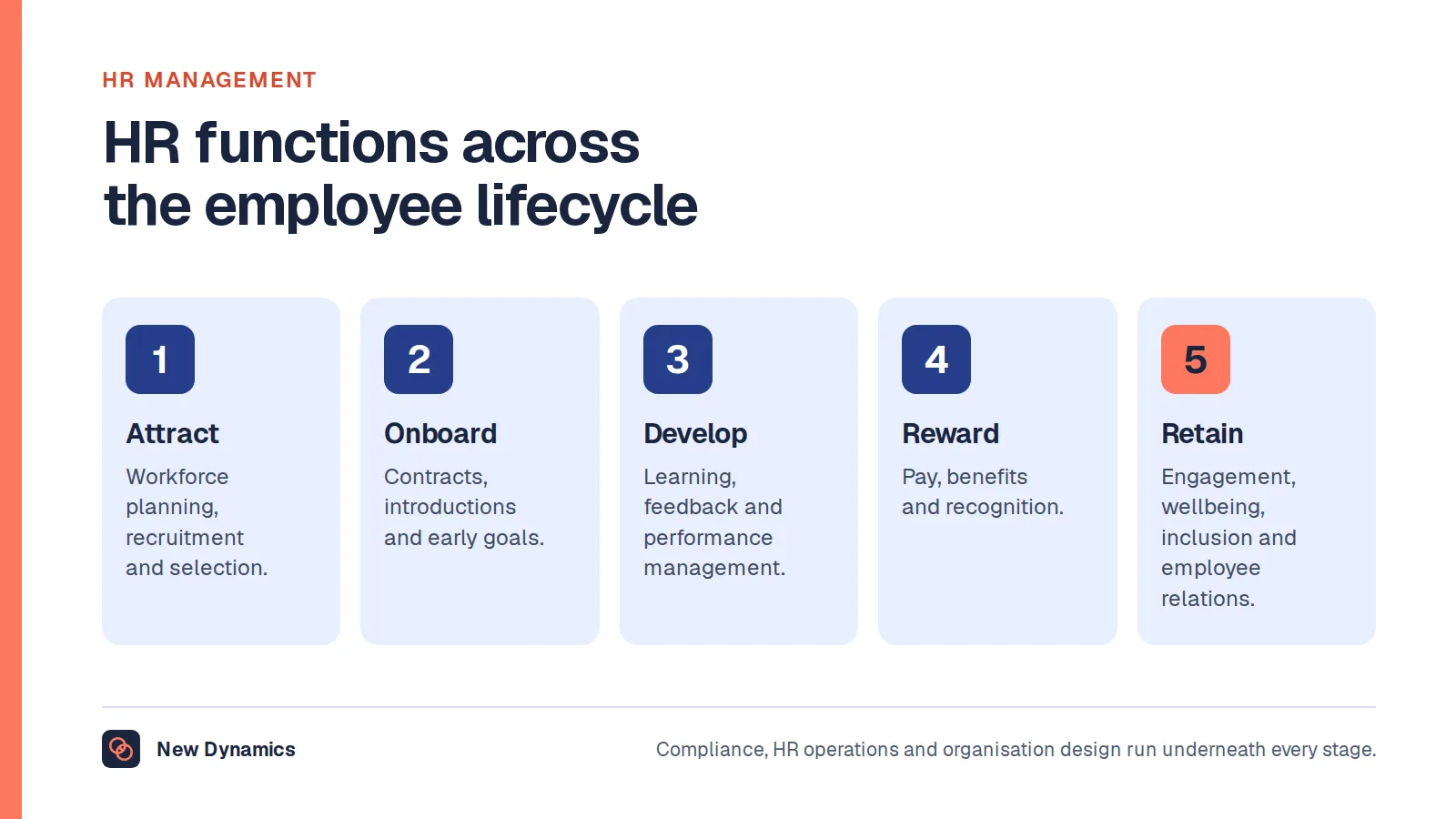
People operations is a name for the function that handles employment: hiring, pay, records, cases, development and the working environment. The label came out of technology companies and spread through startups.
It has no legal or statutory definition in the UK. Nothing in employment law, tax or health and safety refers to it, and nothing changes for an employer because the job titles changed. That is not a criticism; it is the necessary starting point for deciding whether the rename is worth making.
The four claims

What advocates usually say is different:
- Measurement. Decisions made from data rather than precedent or instinct.
- Automation. Administration handled by systems so people can do the work that needs judgement.
- An internal-product mindset. Processes treated as things designed for their users, with iteration, rather than inherited and endured.
- Experience focus. Attention on the whole arc of working somewhere rather than only on the transactions.
None of those is unique to a name, and plenty of functions called HR do all four. But as a statement of emphasis, they are reasonable and worth taking seriously.
What genuinely changes
Where attention goes. A function that measures its own service, how long cases take, how many people got a written statement on day one, where processes stall, behaves differently from one that measures nothing. Our HR metrics post covers doing that without producing a decorative dashboard.
How much administration a human touches. This is the most real of the four claims. Pre-filling forms, automating reminders and removing steps frees capacity, and capacity is the binding constraint in almost every small people function.
Who processes are designed for. Asking a new starter what was confusing, and changing the process because of the answer, is a genuine difference in method.
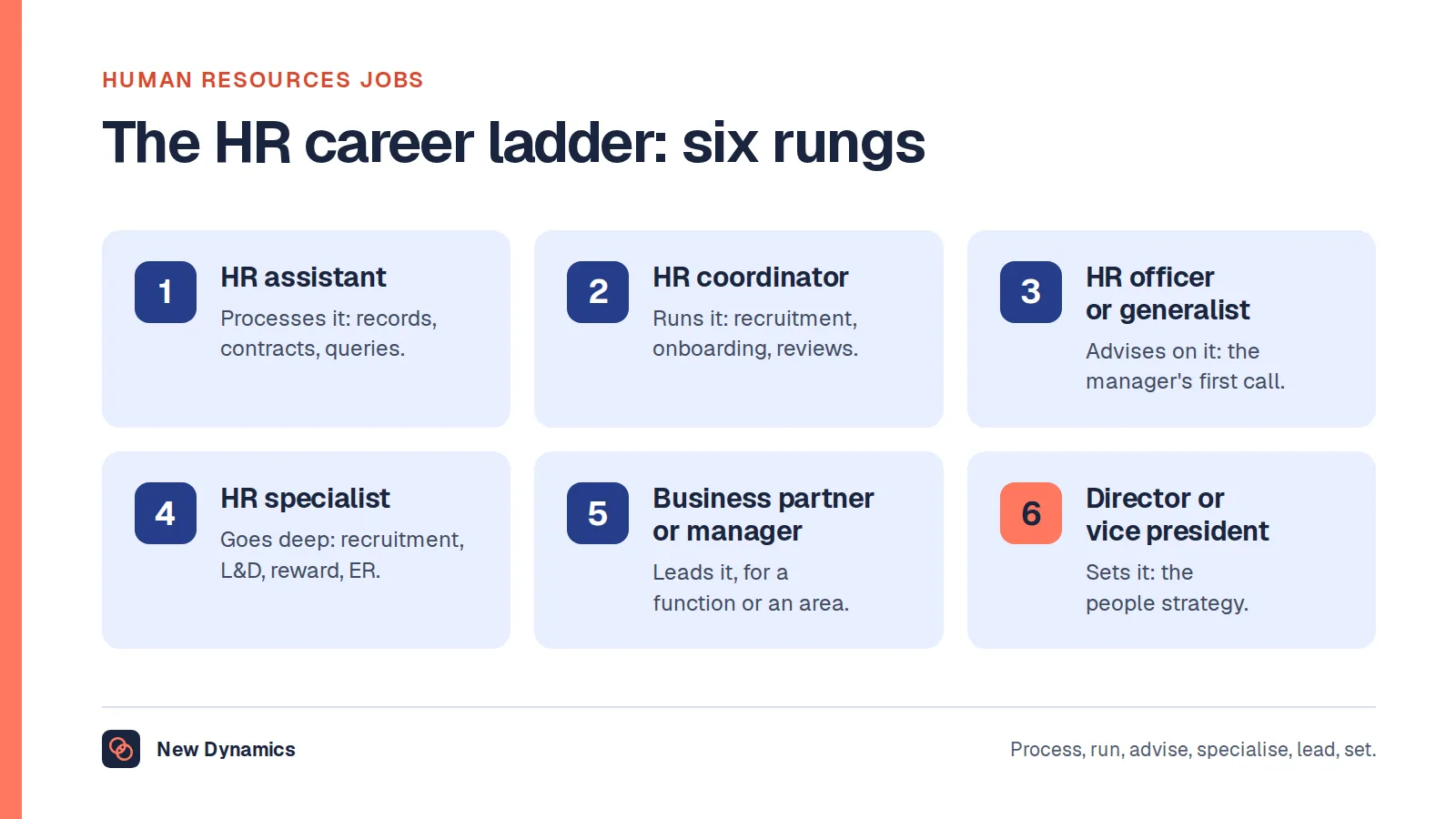
What the function is expected to be good at. A people ops role advertised today usually expects system fluency and data handling alongside the traditional skills. Our HR skills post covers which of those can be tested.
What cannot change

The floor. GOV.UK's guide to employing staff lists what every employer must do: check employment status, make the workplace "safe and accessible", keep "employee information and data safe", "register as an employer and set up PAYE", check "your responsibilities around workplace pensions", and get "Employers' Liability insurance". A people ops team carries exactly these. Our HR compliance post sets out the sequence.
The case procedure. The Acas Code of Practice "is the minimum an employer should follow for handling these issues at work", employers "should follow a fair procedure in line with the Acas Code of Practice for any discipline or grievance case", and "the procedure an employer follows and an employee's actions will be taken into account if the case reaches an employment tribunal". No amount of product thinking substitutes for that.
The outcomes people need. HSE's Support standard expects the organisation to have "policies and procedures to adequately support employees", systems "to enable and encourage managers to support their staff", employees who "know what support is available and how and when to access it", and employees who "receive regular and constructive feedback". These are the tests whatever the function is called.
This is general information rather than legal advice.
The failure mode
Renaming without resourcing. The same two people do the same work, the automation does not get built because nobody has time to build it, and the new name becomes a small ongoing irritation to everyone who noticed that nothing else moved.
A second failure mode is subtler: treating employees as users of a product in a way that makes difficult conversations harder. A redundancy is not a user experience problem, and a grievance is not a friction point in a journey. Where the metaphor stops fitting, drop it rather than stretching it.
When the rename is worth making

- When something is actually changing, new systems, a real automation programme, a different skill mix being hired.
- When the old name carries baggage you are deliberately moving away from, and you can say what you are doing differently.
- When the people doing the work want it, which matters more than what the market calls it.
- Not when it is the only change, because everyone can tell.
So what should you call it?
Whatever is clearest to the people who need to find it. "HR" is universally understood and carries a century of associations, some of them unhelpful. "People team" or "people operations" is warmer and occasionally sounds evasive when somebody needs a formal process followed.
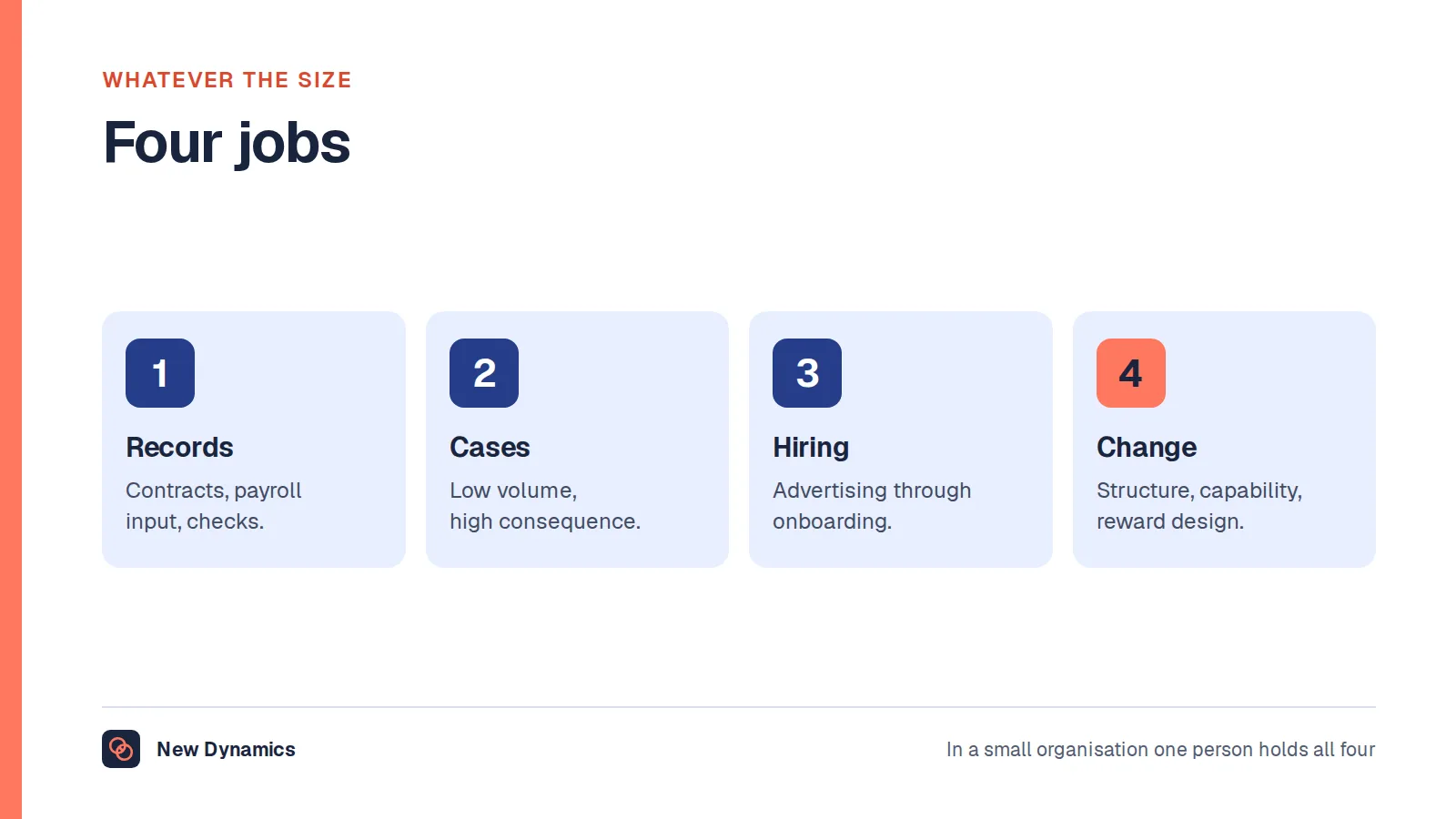
The functional answer: use a name people understand, and put the substance behind it. Our HR structure post covers the four jobs any such function has to cover regardless of its title.
Frequently asked questions
What is people ops?
A name for the function handling employment (hiring, pay, records, cases, development and the working environment) with an emphasis on measurement, automation and designing processes around the people who use them. It has no statutory definition in the UK.
What is the difference between people ops and HR?
Emphasis rather than duties. The legal obligations, the case procedures and the records requirements are identical. What tends to differ is how much administration is automated, whether the function measures its own service, and how processes are designed.
Is people operations just a rebrand of HR?
Sometimes, and that is the failure mode. It is a real change when it comes with new systems, automation that actually gets built, and a different skill mix. It is cosmetic when the name is the only thing that changed.
What does a people operations team do?
The same work as HR: recruitment, onboarding, pay and benefits administration, employee relations cases, development, records and compliance, usually with more emphasis on systems, data and reducing manual administration.
Does renaming HR change any legal duties?
No. PAYE registration, pension duties, a safe and accessible workplace, data protection, employers' liability insurance and the requirement to follow a fair procedure in disciplinary and grievance cases all apply regardless of the function's name.
What skills does a people ops role need?
The established HR skills (employment law knowledge, accuracy, written communication, judgement in cases) plus fluency with systems and comfort handling data well enough to produce reports that are actually correct.
Should a startup call its function people ops?
Call it whatever people will understand when they need help. At small scale the more important question is which of the core jobs (records, cases, hiring and change) is currently uncovered.
Your next step: check the substance, not the sign
- List what would genuinely be different after a rename.
- If the list is empty, keep the current name.
- Check the compliance floor is owned by somebody by name.
- Pick one administrative process to automate this quarter, and measure the time it saves.
For the wider function this describes, read and download our human resources management guide. The guide is free to read, and the PDF uses our short download form.
Want people processes with owners and due dates rather than good intentions? Book a New Dynamics demo and bring your current onboarding process. You can also email contact@new-dynamics.com.