TL;DR
- A restaurant host, or hostess, is the first person guests meet. The host greets and seats them, manages reservations and the waiting list, keeps the flow of tables even across the servers' sections and says goodbye as guests leave.
- The job has six duties: preparing the front of house, greeting and seating, managing bookings and waits, controlling the flow of the floor, handling calls and questions, and closing the front of house.
- The five skills that matter are composure under pressure, a clear friendly manner, attention to detail, fast fair judgement about tables and waits, and teamwork with servers and the kitchen.
A busy restaurant on a Friday night is a queue, a floor plan and a kitchen that can only cook so fast. The person who holds those three things together is the host. Guests remember the host's first thirty seconds, and servers depend on the host's judgement all evening.
This restaurant host job description explains what a host or hostess does, sets out six duties, shows how the role differs from a server's, lists the skills that make a good host, gives a template that you can adapt and suggests how to describe the work on a CV.
For many people, host is a first job in hospitality, and the first shifts decide whether they stay. See how New Dynamics onboarding brings tasks, early goals and manager conversations into a clear path for a new starter.
What is a host at a restaurant?
A restaurant host is the front-of-house team member who welcomes guests, manages reservations and the waiting list, seats people and controls the pace at which tables are filled. Some restaurants use the word hostess for a woman in the role. Job adverts increasingly use host for everyone, and some use titles such as front of house team member, greeter or reception.
The dictionaries do not yet give a restaurant-specific sense. The Cambridge Dictionary's general entry for host is “someone who has guests”, which is close enough. The host treats the restaurant as their home and the customers as their guests.
In England, the work sits inside the hospitality apprenticeship standards. The retired Hospitality team member standard, published by Skills England, says that the most important part of the role is developing hospitality skills such as recognising customer needs and working as part of a team to ensure that every customer “feels welcomed and looked after”. Its food and beverage service function lists the stages of service that must meet the business standard, “including, for example, customer arrival, provision of information, promoting menu and other items, taking and processing orders, serving food and drink and taking payments”. The host owns the first two stages.
Restaurant host duties: six responsibilities
- Prepare the front of house. Check the bookings for the shift, plan which tables go to which server, tidy the entrance and the host stand, print or load the floor plan, and brief the servers on large parties and special requests.
- Greet and seat guests. Welcome every arrival promptly, confirm the booking or the party size, walk guests to the table, hand over menus and let the server know the table is seated. Note needs such as a high chair, step-free access or an allergy.
- Manage bookings and the waiting list. Take reservations by phone, online and in person, quote honest waiting times, keep the list in order and call or text guests when their table is ready.
- Control the flow of the floor. Spread new tables evenly across sections so that no server or the kitchen is swamped, hold tables back when the kitchen is behind and turn tables promptly when the wait is long.
- Handle calls, questions and complaints. Answer the phone, explain opening hours, dietary options and access, take messages, deal with lost property and bring a complaint to the manager before it grows.
- Close the front of house. Thank guests as they leave, reconcile the bookings and no-shows, note any incidents for the manager and reset the entrance for the next shift.
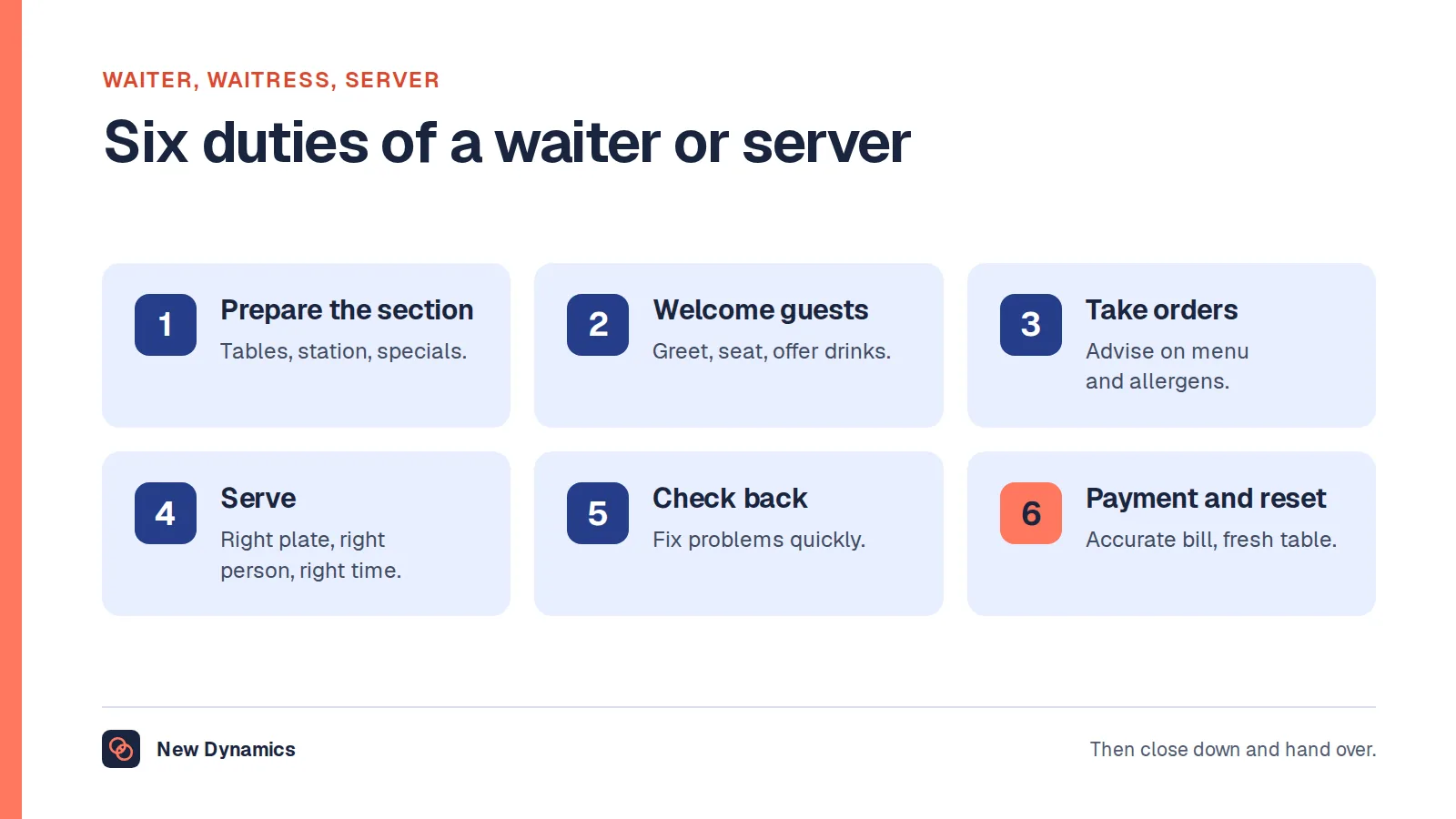
Our guide to the waiter and server job description covers the work that begins once the guest is seated.

Host and server: how the jobs differ
- Focus. The host looks after the whole room and the door. A server looks after a section of tables.
- Timing. The host's pressure peaks at arrival and in the queue. The server's peaks at ordering and service.
- Decisions. The host decides where and when guests sit. The server decides how each table is served.
- Food knowledge. The host needs enough to answer booking questions, including on allergens. The server needs the whole menu.
- Pay and tips. Hosts are often on hourly pay and may share in tips. In the UK, the rules on tips apply to them as to any worker.
Both jobs are entry points into hospitality, and many hosts move on to serving, supervising or reception work. The Skills England standard names concierge and guest services, reception and reservations among the specialist areas, all of which build on the same welcoming skills.

Five skills of a good host
- Composure. Ten people at the door, a phone ringing and a server asking for a table. The host who stays calm keeps everyone else calm.
- A clear, friendly manner. Warm without being over-familiar, and clear enough to be understood over noise, on the phone and by guests whose first language is not English.
- Attention to detail. Names, party sizes, booking times, high chairs, allergies and the note that says the table by the window is reserved.
- Fast, fair judgement. Which table, which section, how long to quote and when to say no. Guests notice favouritism at once.
- Teamwork. The host feeds work to the servers and the kitchen. A host who seats to suit the room, not the queue, is worth a great deal to the team.
The Skills England standard expects hospitality team members to “Put people at ease in all matters, adapt products and services as necessary, helping them to feel welcome and supported and provide them with information that is relevant to their needs”. That sentence is the host's job in one line.

UK rules that touch the host's work
Allergens. Hosts take bookings and answer the phone, so they field allergy questions before the guest arrives. The Food Standards Agency's allergen guidance for food businesses, which applies in England, Wales and Northern Ireland, states: “Food businesses must make sure that staff receive training on allergens.” The host should know where the allergen information is kept and whom to ask, and should never guess.
Tips. GOV.UK's page on tips at work explains that there is a statutory code of practice on the distribution of tips, covering how employers can distribute them fairly and transparently and the need for a written tipping policy. It states: “By law, all tips must be given to workers without deductions.” If hosts share in a tronc, the policy should say how.
Personal data. Bookings hold names, phone numbers and sometimes dietary and medical details. Keep the book where only staff can see it and follow the restaurant's data rules.
This is general information for the UK, not legal advice. Rules differ elsewhere.
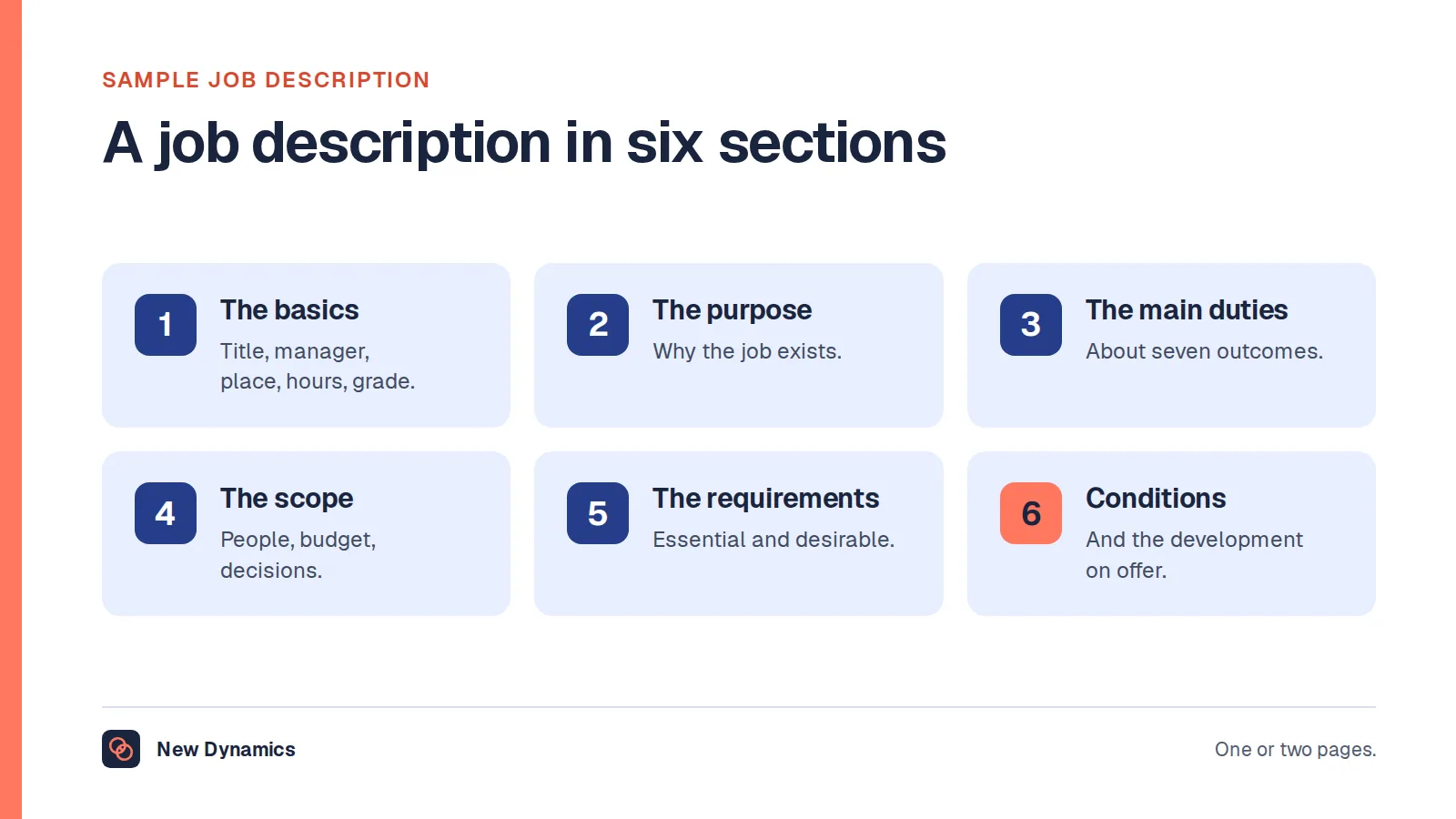
Restaurant host job description template
Adapt the template to your restaurant. Keep every line true.
Job title: Restaurant host
Reports to: Restaurant manager or front of house supervisor
Hours: [Part-time or full-time], including evenings and weekends
Purpose of the role: To give every guest a warm welcome, manage reservations and waiting times honestly, and seat guests so that the floor and the kitchen run smoothly.
Main duties:
- Prepare the host stand, the floor plan and the bookings before each shift
- Greet and seat guests, hand over menus and pass special requests to the server
- Take and confirm reservations by phone, online and in person
- Manage the waiting list and quote realistic waiting times
- Balance new tables across sections and pace seating with the kitchen
- Answer calls and questions about hours, access, menus and allergens
- Thank guests on departure and record no-shows and incidents
Skills and experience:
- Calm and friendly under pressure
- Clear spoken English, in person and on the phone
- Accurate with names, numbers and times
- Experience of a reservations system is helpful but not required
We provide: Training on the reservations system, allergens and service standards, a written tipping policy and regular one-to-ones.
Say plainly whether the role includes cleaning, bar cover or running food, and whether it is paid hourly with a share of tips. Our job description template explains the structure.
How to describe host work on a CV
Employers want evidence of pace, accuracy and manner. Write duties as results. The lines below are invented examples, to show the form.
- State the scale. “Managed reservations and a waiting list for a 90-cover restaurant, seating up to 300 guests on a Saturday.”
- Show judgement. “Balanced seating across five sections and paced arrivals with the kitchen during peak service.”
- Show accuracy. “Took bookings by phone and online with no double bookings across the season.”
- Show manner. “Handled complaints at the door and escalated to the manager where needed.”
- Name the systems. Reservations and till software you have used, without listing brands you only saw once.
If you have no host experience, describe any work that involved welcoming people, keeping a queue moving or handling a phone.
Common mistakes in host job adverts
Advertising for a personality. “Bubbly” and “outgoing” describe a type of person. Describe the work: greeting guests promptly, quoting waits honestly, staying calm at the door.
Hiding the extras. If the host also clears tables, polishes glasses and covers the bar, say so.
No training plan. The host handles bookings, allergy questions and complaints from the first shift. Train them before the first Friday, not after.
Treating the host as junior to the servers. The host's decisions shape every server's evening. Give the role authority, and back the host's calls at the door.
Ignoring safety at the door. Hosts deal with intoxicated guests, walk-outs and late-night queues. Agree what to do and who to call.
Frequently asked questions
What do hostesses do at restaurants?
A hostess or host greets guests, confirms bookings, manages the waiting list, seats people so that tables are spread evenly across the servers, answers the phone and questions about the menu and access, and thanks guests as they leave. Between arrivals the host keeps the entrance tidy and the bookings up to date.
What is the difference between a host and a server?
The host manages the door, the bookings and where and when guests sit. The server looks after a section of tables once guests are seated: taking orders, serving, checking back and taking payment. Both are front of house roles, and many hosts move on to serving.
What skills does a restaurant host need?
Composure under pressure, a clear and friendly manner in person and on the phone, attention to detail with names and times, fast and fair judgement about seating and waiting times, and teamwork with servers and the kitchen.
Do you need experience to be a host?
Usually not. Most restaurants train hosts on their reservations system and standards. Experience of any customer-facing work, such as retail or reception, helps, as does a calm manner and clear speech.
Is a hostess the same as a host?
Yes. Hostess is the older word for a woman in the role. Many restaurants now use host for everyone, and some use front of house team member or greeter. The duties are the same.
What should a host job description include?
The title, who the host reports to, hours including evenings and weekends, the purpose of the role, six or seven main duties, the skills needed, whether the role includes other tasks such as clearing or bar cover, how pay and tips work, and the training and support provided.
Your next step
If you are hiring, list what your host actually does on a Saturday night, including the extras, and turn that list into the advert. If you are applying, rewrite one line of your CV as a result with a number in it.
For a plan that turns a new host's first week into a confident first month, read and download our onboarding guide. The guide is free to read, and the PDF uses our short download form.
Want every new starter in your restaurant to get the same clear start? Book a New Dynamics demo and bring your current approach. You can also email contact@new-dynamics.com.