TL;DR
- A runner is the entry-level, general assistant on a TV or film production: the person who runs errands, drives, fetches, sets up, looks after cast and crew, and does whatever keeps the shoot moving. Prospects says the role is often seen as the first step on the ladder in broadcasting media.
- The work is fast, varied and long: the National Careers Service gives 40 to 55 hours a week, with evenings, weekends and time away from home, and Prospects says most runners are freelance on short-term contracts. Employers look for enthusiasm, initiative, organisation and timekeeping above formal qualifications; a driving licence is usually required.
- With experience, a runner can move to production assistant, production coordinator or assistant producer. Employers hiring runners should set written terms, real hours and a named person to learn from.
Every film credit list ends with a block of names under runners. They are the people who found the extension lead, drove the actor from the station, made the tea, moved the cones and photocopied the call sheet, all before lunch. It is where a large share of producers, directors and editors started.
This article explains what a runner is, what a TV or film production runner does, the skills, hours and terms as the National Careers Service and Prospects describe them, how to start a runner career and where it leads. It ends with what an employer should put in a runner job description. The routes described are for the UK.
A first job sets habits. See how New Dynamics onboarding brings tasks, early goals and manager conversations into a clear path for a new starter.
What is a runner?
The word has several meanings. The Cambridge Dictionary lists, alongside the athlete and the racehorse, a runner as “a person who works for someone by taking messages, collecting money, etc.”. That general sense of someone who runs errands is the one behind the job title.
In television and film the runner is the entry-level general assistant. The National Careers Service says TV or film production runners “work behind the scenes on sets and locations, doing lots of different tasks to help keep things running smoothly”. Prospects describes the runner in broadcasting, film and video as working “under the direction of the producer and other production staff to undertake whatever basic tasks are required to ensure the smooth running of the production process”, and adds that runners “may also be known as production assistants or production runners”.
Restaurants have runners too: food runners carry dishes from the pass to the table. That is a different job, in a different industry, and this article does not cover it.
What a production runner does
The National Careers Service lists the day-to-day tasks. In our words, a runner could answer calls and emails, pass on messages and run errands; file, photocopy and distribute the paperwork filming needs; check that actors and guests are available for shoots; help with script reports and read-throughs; drive vehicles around sets or between locations; keep stationery stocked and track day-to-day expenses; and look after cast, crew and guests, providing refreshments during filming.
Prospects adds hiring props, ordering stock, managing petty cash, transporting cast, crew, scripts and equipment between offices, studios and locations, helping to set up a location, keeping the set clean and tidy, being the first point of contact for talent and clients, picking up cast for make-up calls, checking kit bags, transcribing tapes, basic research and writing down shot lists.
Grouped, the job has six parts.
- Messages and errands. Calls, emails, deliveries, shopping.
- Paperwork and admin. Call sheets, scripts, filing, petty cash, expenses.
- Driving and transport. People, kit and scripts between office, studio and location.
- Setting up and tidying. Locations, meeting rooms, food orders, a clean set.
- Looking after people. Cast, crew, guests and clients, from refreshments to make-up calls.
- Research and records. Availability checks, basic research, shot lists, transcripts.
Prospects sums up the point of it: “Part of the job is to take the pressure off the person above you by doing things on their behalf and this can make the job quite challenging.”

Hours, pay terms and conditions
Be clear-eyed about the conditions before starting a runner career.
- Hours. The National Careers Service gives typical hours of 40 to 55 a week, variable, with evenings, weekends, bank holidays and time away from home. Prospects says hours “tend to be long and unpredictable, often up to six days a week during production”, with early mornings and late nights to make the most of daylight.
- Contracts. Prospects says most runners work on a freelance basis on short-term contracts, and advises lining up the next job while still on the current one.
- Pay terms. Prospects notes that work can be irregular and pay low, and that the union BECTU recommends runners negotiate rates above the minimum wage to reflect the unpredictable and temporary nature of the work. Its practical advice is to get a full set of terms in writing before starting: the daily rate, daily or weekly hours, overtime rates and sick leave and holiday terms, so that pay does not fall below the national minimum wage.
- Travel. Prospects says travel within a working day is common, and that filming on location can mean travel across the UK or overseas. The National Careers Service says a driving licence and access to a vehicle will usually be required.
- Where. Prospects notes that bigger production companies tend to be based in London and other large cities, and recruit runners who live locally or can be relied on at short notice.
Skills employers look for
The National Careers Service lists working well with others, active listening, thoroughness and attention to detail, knowledge of media production, flexibility, the ability to accept criticism and work under pressure, excellent verbal communication, new ways of doing things and competent computer use. It says that because the job is often a first step into the industry, “many employers will be looking for enthusiasm and initiative, above formal qualifications”, and will expect you to be well organised, able to prioritise and a good timekeeper.
Prospects lists much the same, and adds self-motivation, stamina and resilience for demanding schedules, a proactive and resourceful approach, confidence in networking with everyone from actors to caterers, and a good understanding of the industry. It notes that a current first aid certificate and health and safety training can help you stand out.
How to start a runner career
- Get experience before the job. Both sources say practical experience matters most: student film, TV or radio, community radio, work experience placements and insight days at the large broadcasters. The National Careers Service says competition can be tough.
- Consider, but do not depend on, a qualification. The National Careers Service says a degree is not essential; relevant subjects include creative media production and film and television production, and there is a T Level in media, broadcast and production. Prospects says there are no specific educational requirements, though a practical course with placements and industry links can help.
- Look at the apprenticeship. The National Careers Service points to the production assistant, screen and audio, level 3 apprenticeship, and to the broadcasters' own schemes.
- Apply directly, and network. Runners are recruited by production companies at short notice. Prospects says breaking in “often depends on networking, timing and persistence”. Follow production companies, use industry listings and keep in touch with everyone you work with.
- Get a driving licence. It is usually required.
- Agree written terms before each job, as Prospects advises.
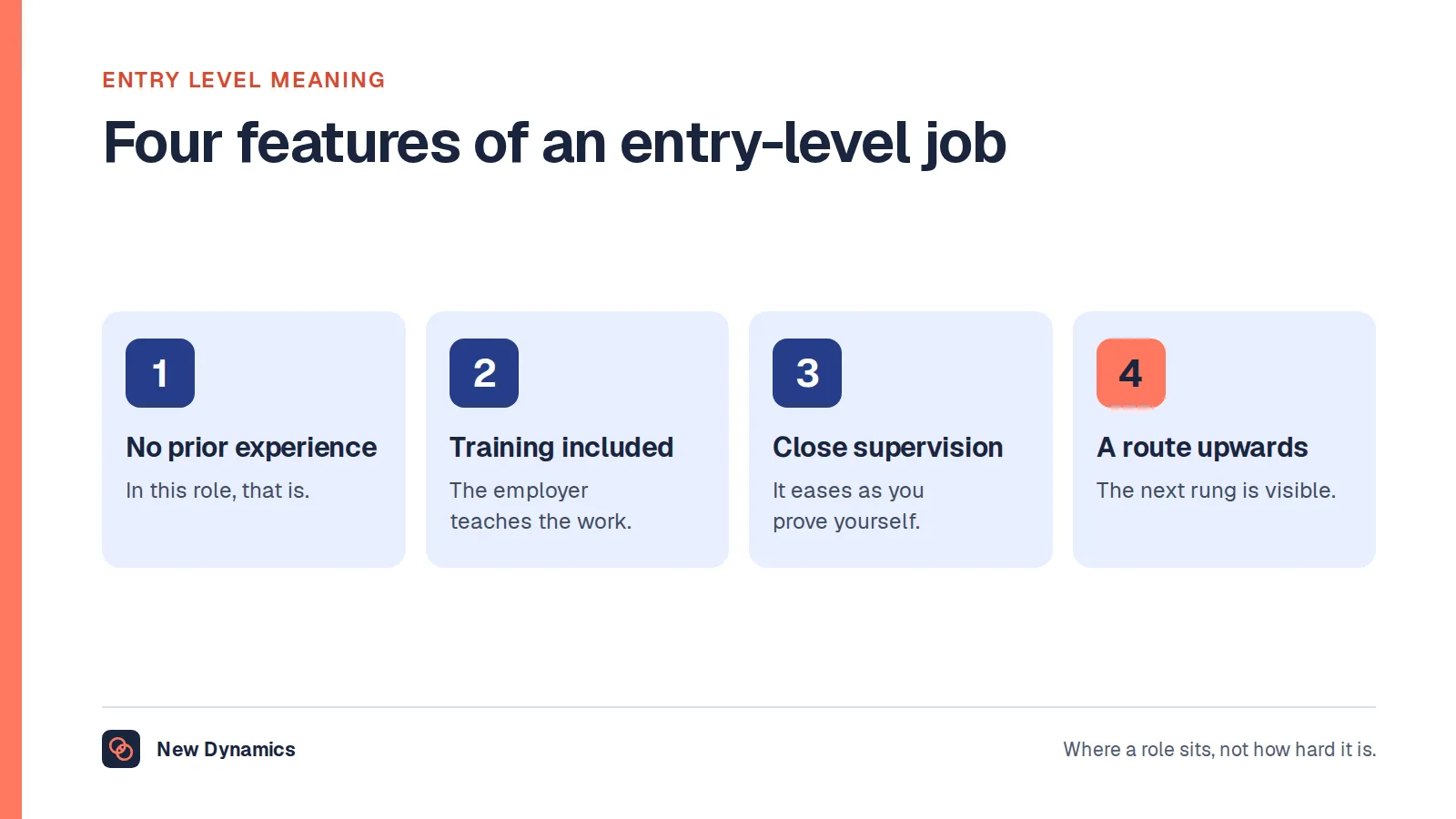
Our guide to the meaning of entry level covers the wider question of getting a first job without experience.

Where a runner career leads
The National Careers Service says that with experience a runner could become a production assistant, production coordinator or assistant producer, and that someone with some industry experience or training may be able to apply for a ScreenSkills trainee placement. Prospects describes the role as offering valuable networking opportunities and “the first step on the ladder for people aspiring to roles in broadcasting media”.
The path is not automatic. The runners who move up are usually the ones who did the small jobs well, asked what each department did, and were remembered when the next production crewed up.
What employers should put in a runner job description
Runners are often hired quickly and informally. A short written description protects both sides.
- The production and the dates. What it is, where, and how long the contract runs.
- The tasks. Use the lists above, and say which department the runner supports.
- Hours and the rate. Daily or weekly hours, the day rate, overtime, and holiday and sick terms, in writing, as Prospects advises.
- Requirements. Driving licence and vehicle, availability for early starts and location work, first aid if wanted.
- Who they report to, and who will show them how things work in the first week.
- What they will learn. Runners are hired on enthusiasm; say what they will get in return.
Our job description template explains each section, and our employee onboarding guide covers the first weeks, which on a shoot may be the whole contract.

Frequently asked questions
What is a runner?
In television and film, a runner is the entry-level general assistant on a production, who runs errands, drives, fetches and carries, sets up, looks after cast and crew and does whatever basic tasks keep the shoot moving. The Cambridge Dictionary's general sense is a person who works for someone by taking messages and running errands.
What does a production runner do?
According to the National Careers Service and Prospects, a runner answers calls and passes on messages, handles paperwork and petty cash, drives people and equipment between locations, helps set up and keeps the set tidy, looks after cast, crew and guests, checks availability, does basic research and writes shot lists.
Do you need qualifications to be a runner?
No. The National Careers Service says a degree is not essential and that employers look for enthusiasm and initiative above formal qualifications. Practical experience, a driving licence and good organisation matter more. A relevant course or the production assistant apprenticeship can help.
How many hours does a runner work?
The National Careers Service gives 40 to 55 hours a week, variable, including evenings, weekends and bank holidays. Prospects says hours are long and unpredictable, often up to six days a week during production, with early starts and late finishes.
Are runners paid?
Yes, but Prospects says most are freelance on short-term contracts, work can be irregular and pay low. It advises agreeing a written day rate, hours, overtime and leave terms before starting, so that pay does not fall below the national minimum wage, and notes that BECTU recommends rates above the minimum.
What can a runner become?
With experience, the National Careers Service says a runner could become a production assistant, production coordinator or assistant producer, or apply for a ScreenSkills trainee placement. Many senior people in film and television began as runners.
Your next step: start before you are hired
- Get involved in a student, community or volunteer production this term.
- Get a driving licence if you do not have one.
- Make a list of production companies near you and follow their channels.
- Before any job, ask for the day rate, hours and terms in writing.
For employers bringing a runner onto a production, read and download our employee onboarding guide. The guide is free to read, and the PDF uses our short download form.
Want every new starter, however short the contract, to have a clear first week and someone to learn from? Book a New Dynamics demo and bring your current onboarding checklist. You can also email contact@new-dynamics.com.