TL;DR
- A submittal is a document, sample or set of information formally sent to someone with the authority to review and approve it. The word is used mostly in North American construction, where contractors submit shop drawings, product data and samples for the designer's approval, and in staffing, where an agency submits a candidate to a client.
- Submission is the general word for the act of handing something in for a decision. Submittal is the trade word for the item itself, and it implies a formal review-and-approval loop with a log, a deadline and a status.
- Whatever the industry, a submittal process has six stages: identify what needs approval, prepare, submit, review, return with a status, and resubmit or close. Most delays sit in the handovers.
Two words, one letter apart, and people argue about which is correct. A submission is what everyone hands in. A submittal is what a contractor sends to an architect, or a recruiter sends to a client, and waits to have approved. The second word is rarer, more technical and, in the industries that use it, precise.
This article gives the meaning of submittal, explains the difference between a submittal and a submission, shows how the word is used in construction and in recruiting, sets out the six stages that every submittal process shares and offers advice on running one without the usual delays.
A submittal is an approval loop, and approval loops are where work waits. See how New Dynamics workflows let you shape forms, stages and approvals around the way you work, so that nothing sits in an inbox waiting for a decision nobody has been asked for.
What is a submittal?
A submittal is a document, sample or set of information formally sent to a person or organisation with the authority to review it and approve, reject or ask for changes. The word is not in the general dictionaries that we cite, and this is our definition. It is a noun formed from the verb submit, which the Cambridge Dictionary defines as “to give or offer something for a decision to be made by others”.
What distinguishes a submittal from an ordinary piece of paperwork is the loop. A submittal goes out, is logged, is reviewed against a standard, comes back with a status and, if that status is anything other than approved, goes out again. The word therefore carries three ideas with it.
- Authority. The reviewer can approve or refuse.
- A record. Submittals are numbered, logged and tracked.
- A cycle. Review, return, resubmit, until closed.
Submittal vs submission
Cambridge defines submission as “the act of giving something for a decision to be made by others, or a document formally given in this way”. That covers job applications, tenders, tax returns and conference papers. Submission is the general word, in use everywhere.
Submittal is the trade word. It is mainly North American, it is used within particular industries, and it names the item rather than the act. In practice:
| Word | Usual meaning | Example |
|---|---|---|
| Submission | The act of handing something in for a decision, or the thing handed in | “The deadline for submissions is Friday.” |
| Submittal | A specific item sent into a formal review-and-approval process | “Submittal 042, window shop drawings, is with the architect.” |
Neither is wrong. Outside construction and staffing, submission is the safer choice and will be understood by everyone. Inside them, submittal tells colleagues that a log, a review and a status are involved.

Submittals in construction
In North American construction, submittals are the documents and samples that a contractor sends to the design team to show how it intends to meet the specification before work is built. The usual kinds are:
- Shop drawings. The contractor's or fabricator's detailed drawings of how an element will actually be made and installed.
- Product data. Manufacturers' data sheets showing that a specified product, or a proposed substitute, meets the requirements.
- Samples. Physical pieces, such as brick, cladding, flooring or paint, for approval of appearance and quality.
- Certificates and test reports. Evidence that materials meet a standard.
- Schedules and method statements. How and when work will be done, where the contract asks for approval.
The design team reviews each one and returns it marked with a status, such as approved, approved as noted, revise and resubmit, or rejected. The submittal log, listing every item, its dates and its status, matters because work covered by a submittal usually cannot start until that submittal is approved. The specific terminology and the contractual rules vary between contracts and countries, so follow the contract you are working under.
Submittals in recruiting
Staffing agencies use the same word for a candidate. A candidate submittal is the package an agency sends to a client for a vacancy: the CV, a summary of why the person fits, availability, rate or salary expectation and confirmation that the candidate has agreed to be put forward. The client reviews it and responds: interview, decline or hold.
Agencies track submittals as a pipeline measure. Submittals per vacancy, the interview rate per submittal and the time from submittal to decision show whether the agency understands the brief and whether the client is responding. For the client, the useful discipline is to treat submittals like any other approval loop: acknowledge, review against the criteria, respond by a deadline and record the reason.
Two cautions apply. A candidate must have consented before being submitted, and a candidate submitted twice by two agencies to the same client causes a fee dispute that the client will be asked to settle. Ask agencies to confirm consent and to check for duplicates before submitting.
The six stages of a submittal process
Whatever the industry, a submittal process has the same shape.
- Identify. List everything that needs approval, who approves it and by when. In construction this is the submittal schedule; in recruiting it is the brief.
- Prepare. Assemble the item to the standard the reviewer expects, with a cover sheet, a number and a clear question: approve, or tell us what to change.
- Submit. Send it through the agreed channel, log it and start the clock.
- Review. The reviewer checks it against the specification or the brief, within the agreed time.
- Return with a status. Approved, approved with comments, revise and resubmit, or rejected, with reasons.
- Resubmit or close. Fix and resubmit, or close the item and release the work it was holding.

Running submittals without the delays
- Agree review times up front. A submittal with no deadline is a submittal that waits.
- One log, visible to both sides. Disputes about what was sent when disappear if everyone can see the same list.
- Number everything. Submittal 042 revision B is unambiguous. "The window drawings" is not.
- Ask a question, not for a reading. A cover note that says what is being asked for gets a faster answer than a bundle of documents.
- Track statuses, not emails. The status of every open submittal should be readable in one place at any moment.
- Review the log weekly. Overdue reviews are the earliest warning of a slipping programme, or of a client who has gone quiet on a vacancy.
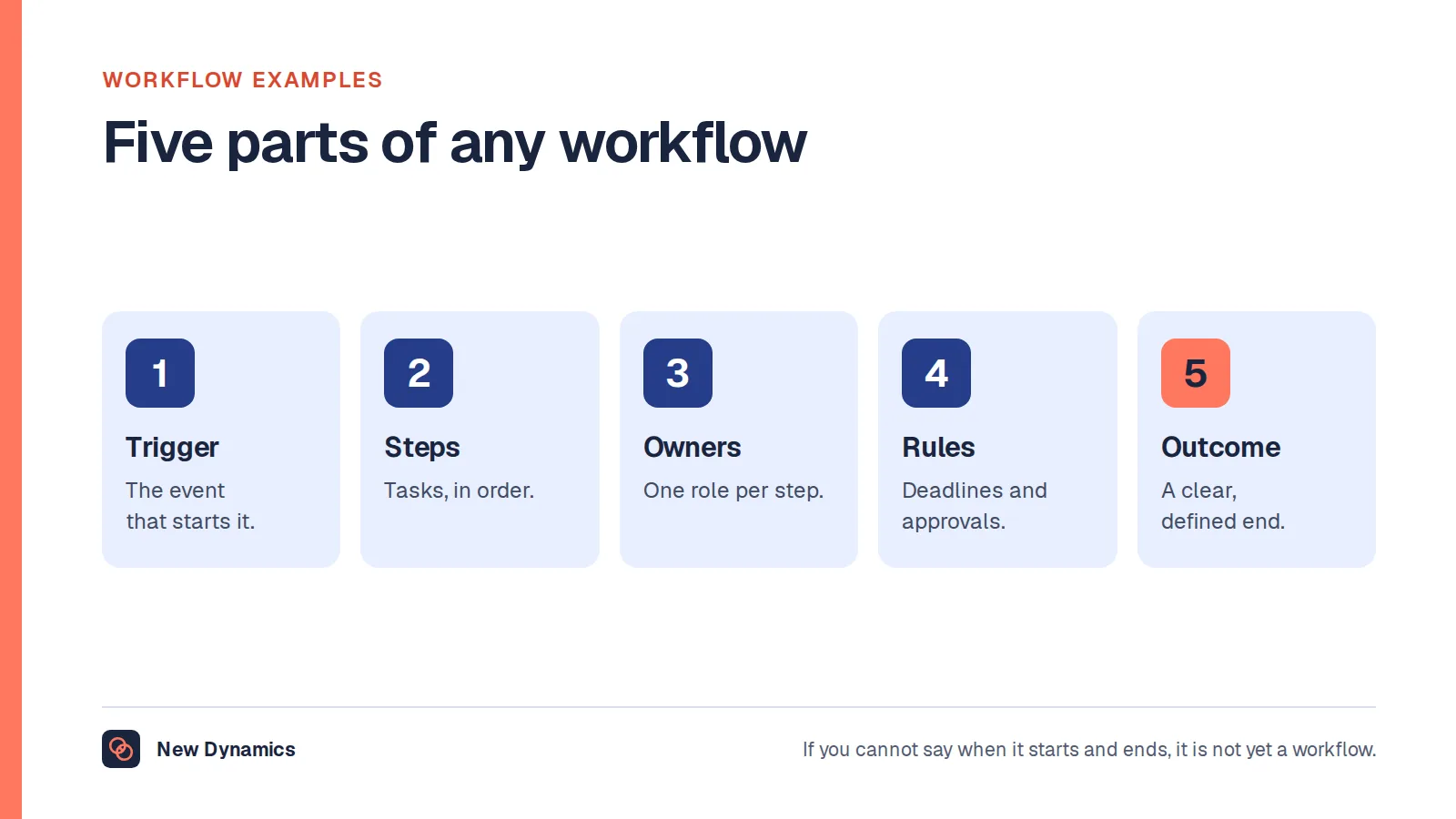
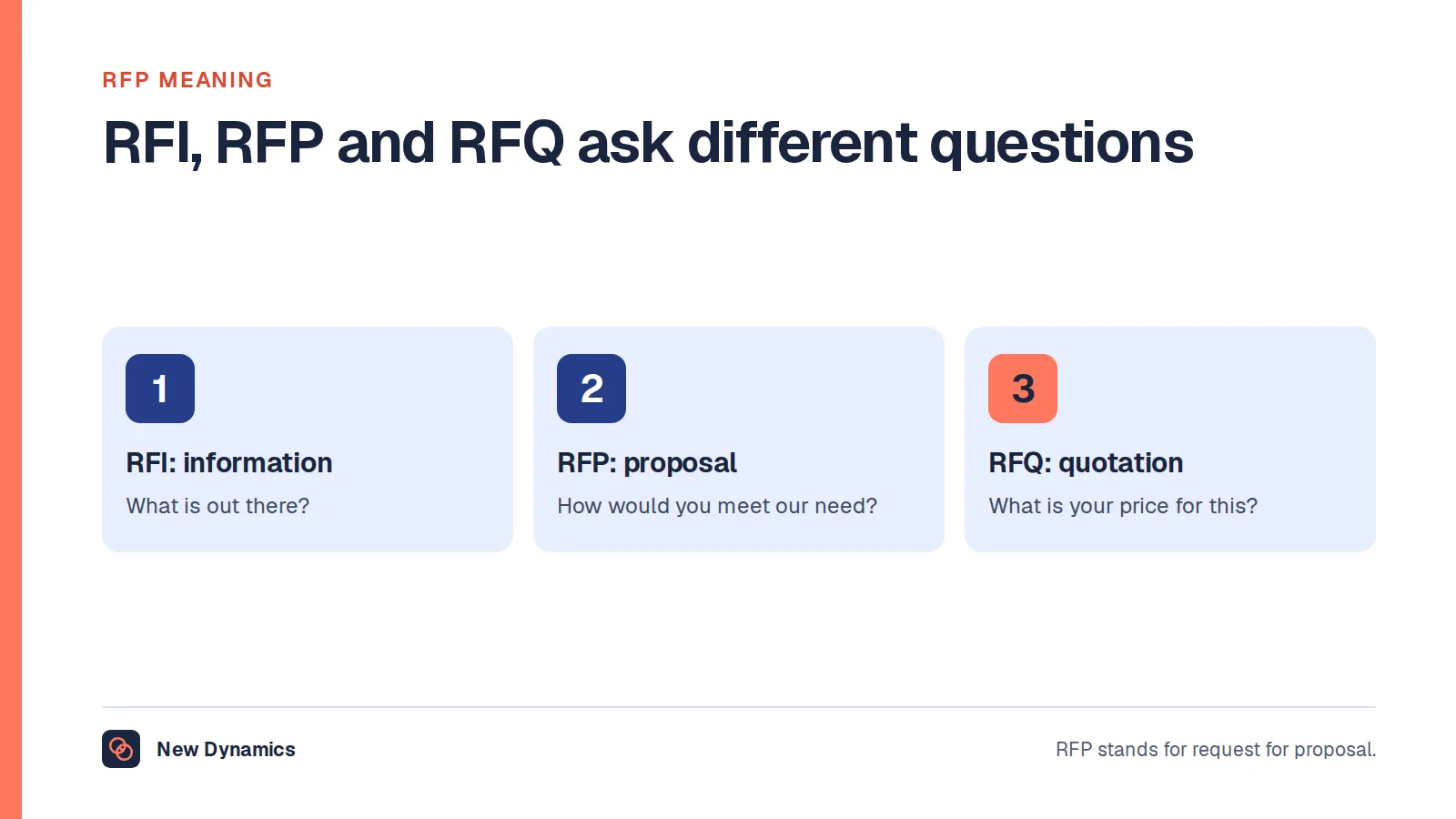
Our guide to workflow examples shows how approval loops of this kind are mapped and improved, and our guide to the meaning of RFP covers the related process of asking suppliers for proposals.

Frequently asked questions
What does submittal mean?
A submittal is a document, sample or set of information formally sent to a person or organisation with the authority to review and approve it. The word is used mainly in North American construction, for shop drawings, product data and samples sent to the design team, and in staffing, for a candidate put forward to a client.
What is the difference between a submittal and a submission?
Submission is the general word for the act of handing something in for a decision, or the thing handed in, and is used everywhere. Submittal is a trade word, mainly North American, for a specific item sent into a formal review-and-approval process, with a log, a status and the possibility of resubmission.
Is submittal a real word?
Yes, though it is rarer than submission and not in every dictionary. It is a noun formed from submit, and it is standard in the construction and staffing industries in North America. Outside those industries, submission is the safer choice.
What are the types of submittal in construction?
The usual kinds are shop drawings, product data, samples, certificates and test reports, and schedules or method statements where the contract requires approval. Each is reviewed by the design team and returned with a status before the work it covers can proceed.
What is a candidate submittal?
A candidate submittal is the package a staffing agency sends to a client for a vacancy: the CV, a summary of fit, availability, pay expectation and confirmation that the candidate has agreed to be put forward. The client reviews it and responds with an interview request, a decline or a hold.
What is a submittal log?
A submittal log is the register of every submittal on a project or account: its number, what it is, when it was sent, who is reviewing it, when it is due back and its current status. It is the main tool for spotting overdue reviews before they delay work.
Your next step
Pick one approval loop you run, in any industry, and write down its six stages, with the agreed review time for stage four. If there is no agreed time, that is the delay.
For a method that keeps approvals moving when you buy tools to manage them, read and download our AI procurement guide. The guide is free to read, and the PDF uses our short download form.
Want approval stages, forms and deadlines shaped around how your team works? Book a New Dynamics demo and bring your current approach. You can also email contact@new-dynamics.com.