TL;DR
- Suspension is when an employer tells an employee to stop carrying out work for a time, usually while it investigates a disciplinary or grievance matter. Acas says that it does not mean that the employee has done anything wrong.
- Acas advises employers to suspend only if they reasonably believe that it would protect the investigation, the business, other staff or the person under investigation, and to look for alternatives first.
- A suspended employee should normally keep their pay and benefits. The employer should keep the suspension short, review it, stay in touch and support the person's mental health.
Being told to go home and not come back until further notice is one of the most unsettling things that can happen to anyone at work. For the manager who has to say it, it is not much easier. Much of the distress comes from a misunderstanding of what suspension is.
This article explains what suspension means at work, when it is appropriate, the alternatives, what to say to the person, what happens to pay and holiday, how to support someone who is suspended and how a suspension ends. It follows UK guidance from Acas and GOV.UK.
Most workplace problems are better dealt with long before suspension is considered. See how New Dynamics continuous feedback supports check-ins between managers and their teams.
What does suspension mean?
Acas, the UK's public body for workplace advice, defines it in its guidance on suspension during a work investigation: “Suspension is when an employer tells an employee to temporarily stop carrying out work.” An employer can consider it while carrying out a disciplinary or grievance investigation. Acas notes that this is sometimes called suspension pending an investigation.
The most important sentence in the guidance is this one: “Suspension does not mean an employee has done anything wrong, and should not be used to discipline someone.”
That differs from everyday usage. The Cambridge Dictionary gives one meaning of suspension as “a punishment in which a person is temporarily not allowed to work, go to school, or take part in an activity”. In schools and in sport, suspension is a penalty. In UK employment practice, suspension during an investigation is a neutral, temporary step while the facts are found. If it is used as a punishment before any finding, something has gone wrong.
GOV.UK's guide for employees on suspension from work adds two reassurances: “This does not happen very often. If it does it should normally be with pay and you should be told why you're being suspended.”
This article summarises UK guidance. It is general information, not legal advice, and the law differs in other countries.
When is suspension appropriate? Four reasons
Acas is clear that an employer “should not use suspension automatically”. It should first gather some initial information about what has happened, who is involved and how serious it might be.
Acas then says that an employer should only consider suspension if it reasonably believes that it would protect any of the following.
- The investigation, for example if there is concern about someone damaging evidence or influencing witnesses.
- The business, for example if there is a genuine risk to customers, property or business interests.
- Other staff.
- The person under investigation.
Reasonableness matters legally. Acas warns: “If a decision to suspend is not reasonable, there's a risk you could be breaching the employment contract.” It suggests two tests: whether you took steps that led you to believe that suspension was reasonable, and whether other employers in a similar industry, with the same information, would see the decision as reasonable.
An outside investigation, by the police or a regulator, does not settle the question either. Acas says that it does not mean that you automatically need to suspend someone.

Alternatives to suspension
Acas advises: “In all circumstances, you should check if there is an alternative to suspending someone.” It lists temporary arrangements that may remove the risk while the person keeps working. You could arrange for someone to:
- change shifts;
- work in a different part of the organisation;
- work from home;
- work from a different office or site;
- stop doing part of their job, such as handling stock while missing stock is investigated;
- work with different customers, or away from customers;
- stop using a specific system or tool, such as the finance system.
Keep the reason for any change confidential wherever possible, agree with the employee what others will be told, and check that the change does not breach the contract.
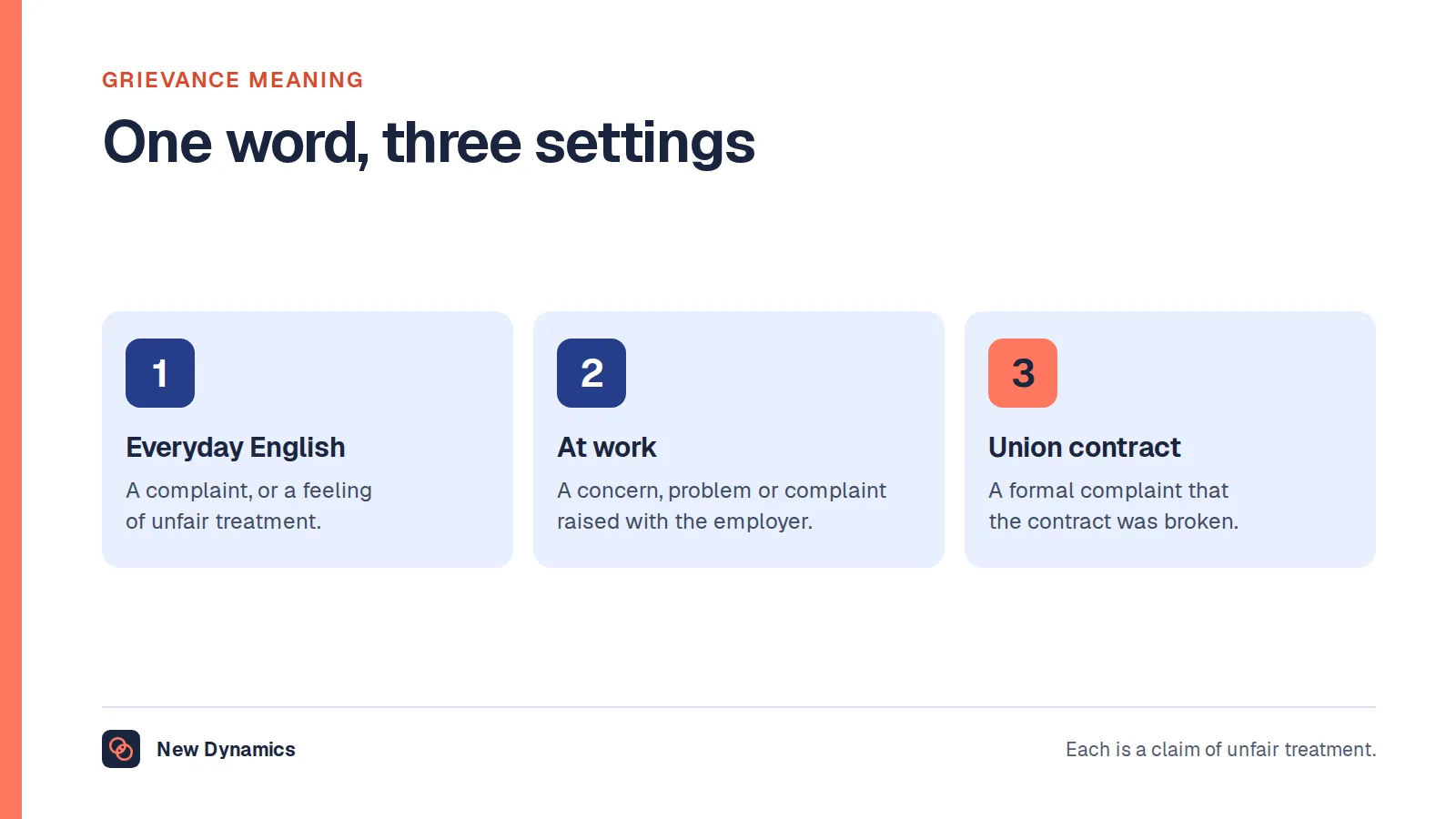
One warning from Acas deserves attention. If you need to separate two people after one of them has made a serious complaint, “usually you should not move the person who made the complaint”. It could look like a punishment, and lead to a legal claim. Our guide to the meaning of grievance explains how complaints should be handled.
Telling someone that they are suspended: six points
Acas recommends telling the person face to face if possible, as soon as you can after the decision, and following up in writing. It notes that there is no legal requirement to give written notice of suspension, but that “it's best to put it in writing to avoid misunderstandings”.
Acas lists a number of things that it is good practice to cover. We have grouped them into six points.
- The reason. Explain why they are being suspended, and as much about the investigation as you are able to.
- No judgement has been made. Make clear that suspension does not mean that you have decided that they have done something wrong, and that you will listen to their point of view before making any decisions.
- What happens next. Set out the next steps, and when you expect to be in touch.
- Pay and benefits. Confirm that they will continue to get their pay and benefits during suspension.
- What they can and cannot do. Explain their responsibilities during suspension, and give them a copy of the suspension policy if there is one.
- Contact and support. Name someone whom they can contact with concerns, check that you have up-to-date contact details, and tell them what support is available.
On confidentiality, GOV.UK tells employees that they might be told not to talk to other employees, customers or suppliers. It adds that if this means that they cannot defend themselves properly at a disciplinary hearing, they could make an appeal.

Pay and holiday during suspension
Acas's page on pay and holiday says that the suspended person should continue to get their pay and any benefits in their contract. It warns that if an employer reduces or stops pay during suspension, the employee could take legal action, and that there is “still a risk of this even if the contract appears to allow reduced or no pay during suspension”. It suggests that an employer who is considering not paying should get legal advice.
GOV.UK explains the contractual position to employees: “You can be suspended without pay if your employment contract says your employer can do this, but they must be acting reasonably.” It gives the reason for the normal practice: “To show that it's not a punishment the suspension will normally be on full pay.” It also states: “You keep your employment rights while suspended.”
On holiday, Acas says that an employee can take holiday during suspension if the employer agrees. An employer can refuse or cancel holiday, with the correct notice, but should bear in mind that this could upset the employee.
During the suspension: five duties for the employer
- Keep it brief. Acas says that there is no minimum or maximum time, but that you should keep suspension “as short a time as possible while you investigate”. A long suspension is more likely to affect health, to become unreasonable and to break down trust.
- Review it regularly, to make sure that it is still needed.
- Keep in touch. Agree how often you will contact the person, and update them on the progress of the investigation.
- Support their wellbeing. Acas says that an employer has a legal duty of care to support the person during suspension and to look out for their wellbeing. It points out that harm to mental health “might not be obvious if they're not at work”. Support may include an employee assistance programme, which our guide to the meaning of EAP explains, a trade union or outside helplines.
- Investigate fairly. Acas asks employers to carry out a fair investigation in line with its Code of Practice on disciplinary and grievance procedures.
If you invite the suspended person to an investigation meeting, give reasonable notice in writing. Acas notes that there is no legal right to be accompanied to an investigation meeting, but that it is good practice to allow it if they ask.

How suspension ends
Acas describes two outcomes.
- No further action. The employer should end the suspension as soon as possible, and discuss with the person when they will return, what to tell others, any concerns that they have and what support is available. Acas says that it is good practice to put in writing that no further action will be taken.
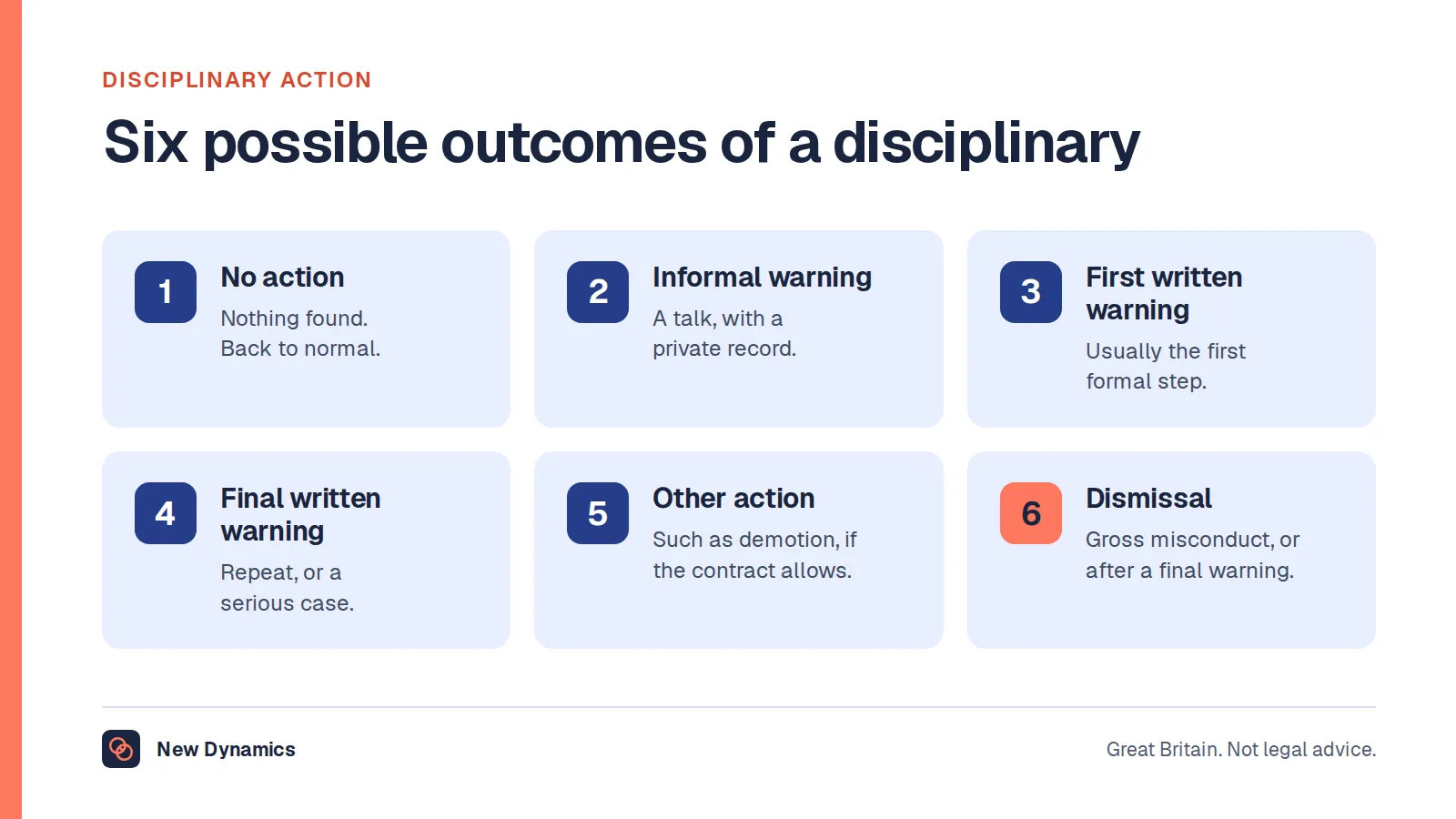
- A disciplinary procedure. The employer should decide whether to continue the suspension while the procedure runs. Our guide to disciplinary action explains the steps that follow.
Plan the return with care. Someone who has been cleared still has to walk back into a team that noticed their absence.
If you have been suspended
- Ask for the reason and the terms in writing, and check what your contract and any suspension policy say.
- Follow the instructions that you have been given, including any limits on contact. GOV.UK warns that breaking them could lead to further disciplinary action.
- Stay available, and attend meetings. Tell your employer promptly if you are unwell.
- Keep notes of dates, conversations and documents.
- Check your pay. GOV.UK says that if you do not get the right pay, you may be able to make a claim to an employment tribunal for unlawful deduction from wages.
- Get support: your trade union if you are a member, the Acas helpline, Citizens Advice, and your employee assistance programme if there is one.
Common mistakes
Suspending automatically. Acas says plainly that suspension should not be automatic.
Treating suspension as the first stage of discipline. It is a neutral step. Language such as “you are being suspended for misconduct” prejudges the outcome.
Ignoring alternatives. A change of site or duties may be enough.
Silence. Weeks without contact harm the person and the employer's position.
Letting it drift. Review dates should be in the diary from the first day.
Stopping pay without advice. Acas warns of legal risk even where the contract seems to allow it.
A careless return. Agree what colleagues will be told before the person comes back.
Frequently asked questions
What does suspension mean at work?
Acas defines suspension as when an employer tells an employee to temporarily stop carrying out work. It is usually used while the employer investigates a disciplinary or grievance matter. It does not mean that the employee has done anything wrong.
Is suspension a disciplinary action?
Not in UK guidance. Acas says that suspension should not be used to discipline someone. It is a temporary, neutral step to protect an investigation, the business, other staff or the person concerned while the facts are established.
Do you get paid while suspended?
Normally, yes. Acas says that a suspended person should continue to get their pay and contractual benefits. GOV.UK says that suspension without pay is possible only if the contract allows it and the employer acts reasonably, and that suspension will normally be on full pay.
How long can a suspension last?
Acas says that there is no minimum or maximum period, but that the employer should keep it as short as possible while it investigates, and should review it regularly. A long suspension may become unreasonable and may breach the employment contract.
Can I be suspended without being told why?
GOV.UK says that you should be told why you are being suspended. Acas notes that the law sets no rules on how much detail to give, but advises employers to tell the person as much as they are able to.
What happens after a suspension ends?
If there is no further action, the employer should end the suspension as soon as possible and plan the return to work with the employee. If the investigation leads to a disciplinary procedure, the employer decides whether suspension should continue.
Your next step: check your policy against five questions
- Does your policy say that suspension is neutral, and a last resort?
- Does it require managers to consider alternatives, and to record why they were not suitable?
- Does it confirm pay and benefits?
- Does it set review dates and a named contact?
- Does it cover support, and the return to work?
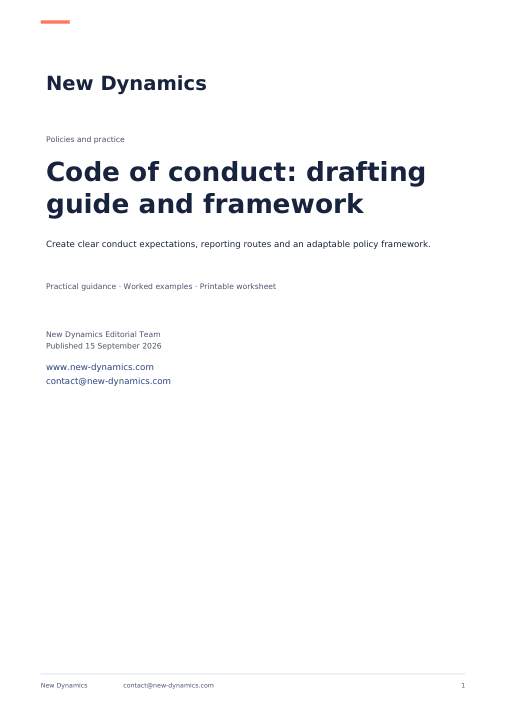
Clear conduct rules and reporting routes reduce the need for suspension. Read and download our code of conduct guide. The guide is free to read, and the PDF uses our short download form.
Want regular check-ins, so that concerns are raised and dealt with early? Book a New Dynamics demo and bring your current approach. You can also email contact@new-dynamics.com.