TL;DR
- Volunteerism is the practice of doing work for good causes without being paid for it. A volunteer gives their time willingly, without being forced or paid.
- Three tests separate volunteering from other activity: it is unpaid, it is a free choice, and it benefits people beyond your close friends and family. Payment beyond expenses can turn a volunteer into a worker.
- Employers can support volunteerism with paid time, a clear policy and a choice of causes. The programme works when it stays voluntary.
A colleague coaches a youth football team on Saturdays. Another is a school governor. A third spends one paid day a year painting a community centre with the rest of the finance team. All three are volunteers, and all three are part of what is called volunteerism.
This article gives a plain definition of volunteerism, explains what counts as volunteering and what does not, sets out the difference between a volunteer and an employee under UK guidance, gives examples, and shows employers how to support volunteering in a way that people welcome.
Volunteers rarely ask for thanks, which is one reason to offer it. See how New Dynamics employee recognition makes thanks specific and visible across the whole organisation.
What is volunteerism?
The Cambridge Dictionary defines volunteerism as “the practice of doing work for good causes, without being paid for it”.
It defines a volunteer as “a person who does something, especially helping other people, willingly and without being forced or paid to do it”.
So volunteerism is the practice, volunteering is the activity and a volunteer is the person. Cambridge labels volunteerism “mainly US”. In the UK people mostly say volunteering. “Volunteership” appears now and then with the same meaning, but it is rare, and volunteering is the safer word.
Three tests of volunteering
The National Council for Voluntary Organisations (NCVO), a charity sector body in England, gives a careful answer to the question what is volunteering: “Volunteering is when someone spends unpaid time doing something to benefit others.”
Three tests follow from its explanation.
- It is unpaid. A volunteer may have expenses repaid. They are not paid for their time.
- It is a free choice. NCVO says that volunteering “should always be a free choice made by the person giving up their time”.
- It benefits others. NCVO draws the line clearly: “Helping your close friends or relatives isn't volunteering.” Doing something to benefit the environment, and through that other people, does count.
NCVO adds that volunteering can be formal and organised by organisations, or informal within communities. Driving a neighbour to a hospital appointment is volunteering, although nobody has signed anything.

Examples of volunteerism
NCVO lists many things that volunteers do. For charities and voluntary organisations, they include:
- raising funds;
- being a trustee, which is a voluntary role with legal responsibility for a charity;
- supporting or running events;
- befriending;
- giving advice, guidance or information;
- monitoring and conserving wildlife;
- giving first aid;
- driving or transporting people;
- administrative support.
In the public sector, NCVO's examples include school governors, magistrates, parish councillors, special constables with the police, and volunteers who help the NHS or support library services.
NCVO also notes who volunteers are. They can be any age and from any background. They can be studying, working or retired. It adds: “They might be employees of a company given time off to volunteer.” That last group is the subject of the second half of this article.
Why people volunteer
NCVO lists the reasons that volunteers give. They include supporting a cause that is meaningful to them, meeting other people, contributing to the local community, using their skills or experience to help others, learning new skills, and getting experience to get into work or change career.
Two of those reasons matter to employers. Volunteering is a way to learn: chairing a committee, managing a budget or speaking in public are all skills that transfer to work. And volunteering is experience. Our guide to the meaning of entry level argues that employers should count it when they assess someone who is early in their career.
Volunteer or employee? What UK guidance says
The line between a volunteer and a worker matters, because workers have rights that volunteers do not.
GOV.UK's guide to volunteers' rights says: “You do not have a contract of employment as a volunteer, so you do not have the same rights as an employee or worker.” A volunteer will usually be given a volunteer agreement, which explains supervision and support, training, insurance cover, health and safety and expenses. GOV.UK says that the agreement is not compulsory, and that it “does not form a contract between you and the organisation”.
Its page on pay and expenses is direct: “You are not paid for your time as a volunteer, but you may get money to cover expenses.” Expenses are usually limited to food, drink, travel and any equipment that the volunteer needs to buy.
Then comes the warning. GOV.UK says: “You might be classed as an employee or worker rather than a volunteer if you get any other payment, reward or benefit in kind. This includes any promise of a contract or paid work in the future.” Employees and workers have certain employment rights, such as the minimum wage.
For organisations that involve volunteers, the lessons are practical.
- Repay real expenses, against receipts. Do not pay flat sums that exceed them.
- Do not promise paid work in return for volunteering.
- Use a volunteer agreement that sets out expectations. Do not write it like a contract.
- Look after volunteers' health and safety, and tell them what insurance covers them.
- Some roles with children or vulnerable adults may need a Disclosure and Barring Service check.
This section summarises guidance for the UK. It is general information, not legal advice. Other countries have their own rules, and an unpaid internship in a business is a different matter from volunteering for a charity.
How employers can support volunteerism
Employee volunteering, which is also called employer-supported volunteering or corporate volunteering, means that an employer helps its people to volunteer. The usual forms are:
- paid volunteering leave, often called volunteer time off, of a day or more a year;
- team volunteering days with a local charity;
- skills-based volunteering, in which people give their professional skills, for example an accountant who helps a small charity with its books;
- flexibility for civic roles, such as school governor or magistrate;
- matching, in which the employer adds a donation to the time or money that employees give.
Done well, it helps the cause, builds skills and brings colleagues together. Done badly, it becomes one more compulsory activity.
An employee volunteering programme in six steps
- Ask people first. Find out what employees already do, and which causes they care about. Some will already volunteer. Support that before you invent something new.
- Write a short policy. Say how much paid time is offered, who is eligible, how to book it and what counts.
- Offer choice. Let people choose their own cause, within sensible limits, as well as joining company events.
- Make it reach everyone. Shift workers, part-time staff and remote employees should be able to use the time. If only head office takes part, redesign it.
- Ask charities what they need. A day of unskilled labour from twenty people is not always useful. Skills and regular commitment often are.
- Thank people, and learn. Recognise what people did, in specific terms. Ask volunteers and charities what worked.

Keep it voluntary
The second of NCVO's tests is free choice. An employer can break it without meaning to. Five safeguards help.
- No scoring. Do not make volunteering a condition of promotion, or a line in the performance review that people are marked on.
- No rankings. Do not publish league tables of hours by person.
- Real choice. Let people pick the cause, and let them decline without giving a reason.
- Fair access. Do not assume that everyone can give evenings or weekends. People with caring responsibilities often cannot, so offer working time.
- Sincere thanks. Recognise what people did, without pressing others to match it.
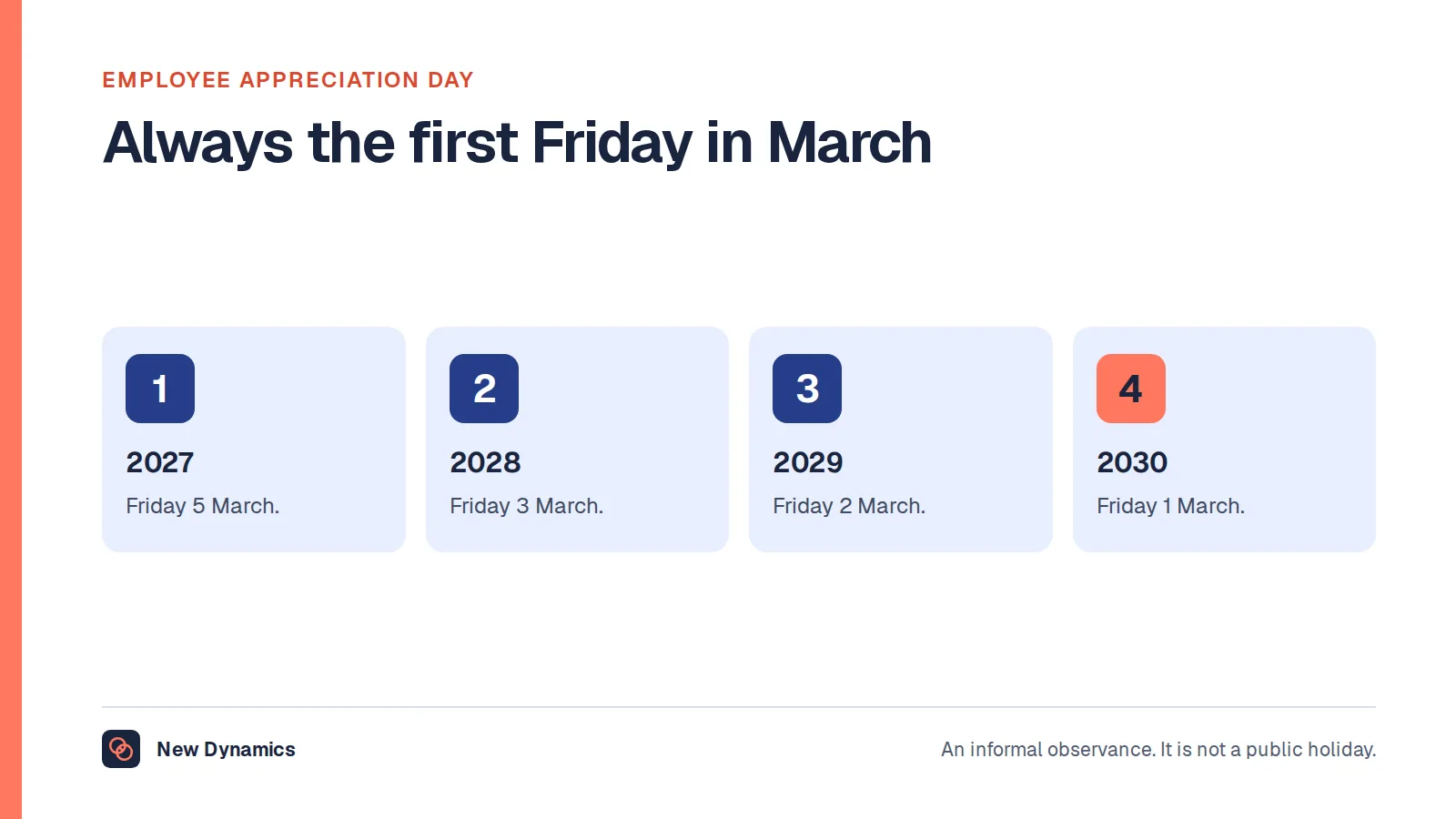
Do count the skills that people gain. If someone has learned to chair a meeting as a trustee, that belongs in a development conversation, if they want to raise it. Our article on employee appreciation day has ideas for thanking people sincerely.

How to measure an employee volunteering programme
- Take-up: the share of employees who used their volunteering time, by team, location and working pattern.
- Hours given, in total. Avoid individual rankings.
- Feedback from charities: was the help useful?
- Feedback from volunteers: what did they gain, and would they do it again?
- Skills: what people say they learned.
Low take-up usually points to workload or to managers who discourage time away. It rarely means that people do not care.
Common mistakes
Compulsory “volunteering”. If people cannot say no, it is not volunteering.
One big day, and nothing else. A photograph of a team in matching T-shirts is not a programme.
Choosing the cause from the top. The chief executive's favourite charity may not be anyone else's.
Leaving out the front line. If a warehouse team cannot be released, the benefit is for office staff only.
Treating volunteers as free labour. Within your own organisation, do not ask employees to “volunteer” for work that is part of the business. That is unpaid work.
No thanks. People notice.
Frequently asked questions
What is the definition of volunteerism?
Volunteerism is the practice of doing work for good causes without being paid for it. Cambridge labels the word as mainly American. In the UK, the same idea is usually called volunteering.
What are volunteers?
Volunteers are people who give their time willingly, without being forced or paid, to do something that benefits others. They may help a charity, a public body such as a school or hospital, or their community informally.
What is the difference between volunteerism and volunteering?
Volunteering is the activity. Volunteerism is the practice or principle of volunteering, often used when speaking about society as a whole. In everyday use the two words mean the same thing.
Do volunteers get paid?
No. GOV.UK says that volunteers are not paid for their time, but may get money to cover expenses such as food, drink, travel or equipment. Any other payment, reward or benefit in kind may mean that the person is classed as an employee or worker.
What is employee volunteering?
Employee volunteering is volunteering that an employer supports, for example by giving paid volunteering leave, organising team volunteering days, offering professional skills to charities or allowing flexibility for civic roles such as school governor.
Should volunteering count in a performance review?
It should not be required or scored, because volunteering must be a free choice. Skills gained through volunteering can be discussed in a development conversation, if the employee chooses to raise them.
Your next step: ask before you plan
- Ask your team what volunteering they already do, and what would make it easier.
- Write a one-page policy on volunteering time.
- Ask one local charity what help it needs.
- After the first year, look at who used the time and who did not, and find out why.
For wider ways to build commitment at work, read and download our employee engagement guide. The guide is free to read, and the PDF uses our short download form.
Want recognition that reaches every team, including the people who give their time quietly? Book a New Dynamics demo and bring your current approach. You can also email contact@new-dynamics.com.