TL;DR
- A hiring manager is the manager who has a vacancy to fill and who will manage the person hired. It is a role that someone plays for the length of a hire, not a job title.
- The hiring manager defines the need, takes part in selection, makes the decision and onboards the new starter. Recruiters and HR run the process and keep it fair and lawful.
- Good hiring managers prepare, ask every candidate the same questions, score against criteria agreed in advance, decide promptly and stay involved after the offer.
“The hiring manager will be in touch.” Candidates hear the phrase constantly, and many are not sure who that is. Plenty of managers are not sure either, until the day they have a vacancy and discover that the person in question is them.
This article explains what a hiring manager is, how the role differs from a recruiter and from HR, the six responsibilities, what a job description should say about hiring duties, and the habits that separate good hiring managers from poor ones.
The job does not end when the offer is signed. See how New Dynamics onboarding brings tasks, early goals and manager conversations into a clear path for a new starter.
What is a hiring manager?
A hiring manager is the manager who has a vacancy to fill, and who will usually be the new person's line manager. They asked for the role, they know the work, and they live with the result.
“Hiring manager” is therefore a role that someone plays for the length of a hire. It is rarely a job title. A finance director with an open analyst post is the hiring manager for that post. Next month, a team leader in customer support will be the hiring manager for another.
For candidates, the practical meaning is simple. The hiring manager is the person whose opinion counts most, and the person you would be working for.
Hiring manager, recruiter and HR: who does what
| Hiring manager | Recruiter or talent acquisition | HR | |
|---|---|---|---|
| Owns | The vacancy, the requirements and the decision | The search and the candidate's experience | The policy, the contract and fairness |
| Typical tasks | Defines the need, interviews, decides, onboards | Advertises, sources, screens, schedules, keeps candidates informed | Advises on law and pay, checks the offer, runs pre-employment checks |
| Judged on | Whether the hire succeeds in the job | Speed, quality of shortlist, candidate feedback | Compliance and consistency |
In a small organisation one person may wear two or all three hats. The responsibilities still exist. Our guide to talent acquisition describes the wider team.

The six responsibilities of a hiring manager
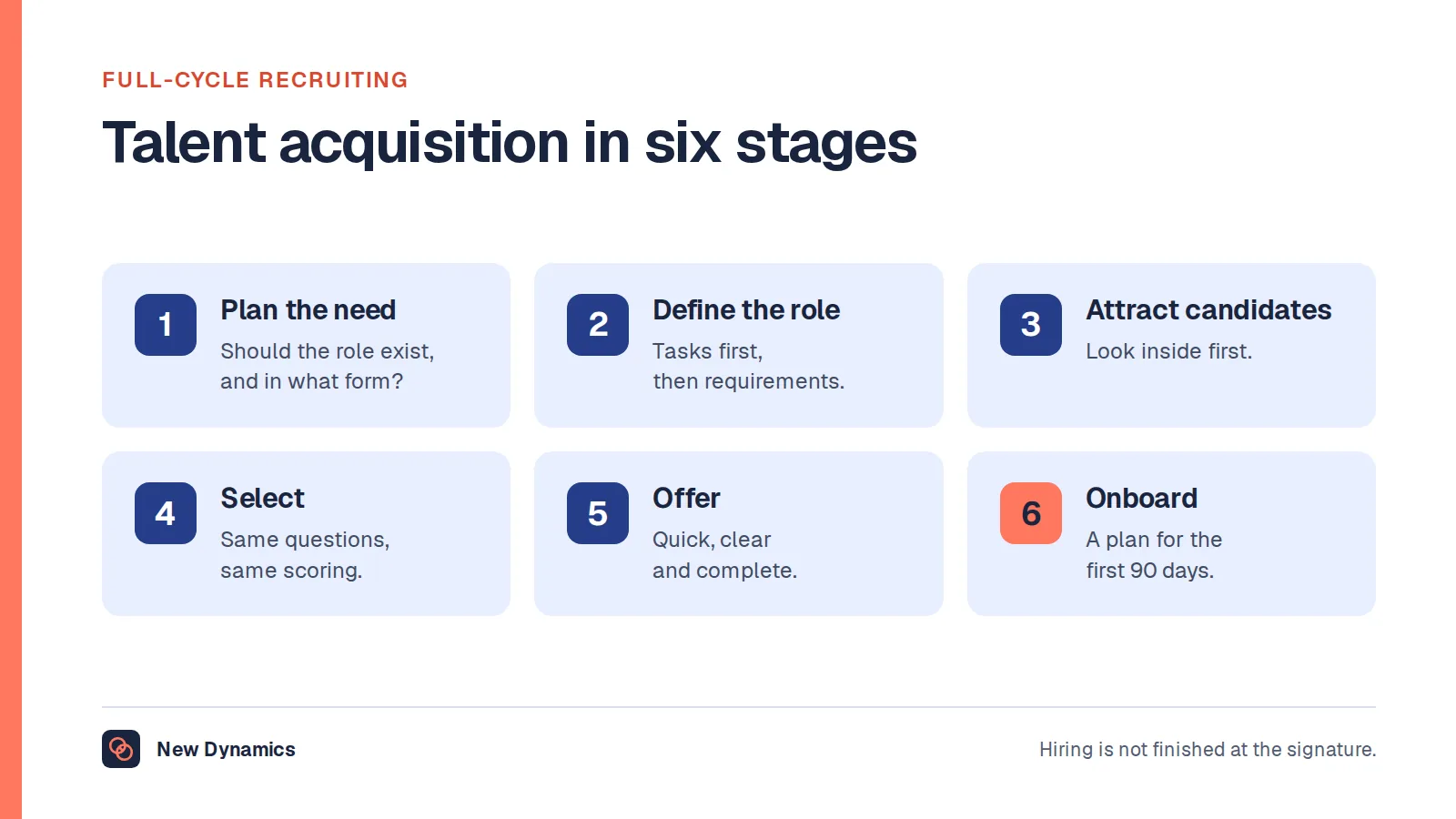
- Define the need. Decide whether the role should be filled as it was, changed or not filled at all. Get the budget approved.
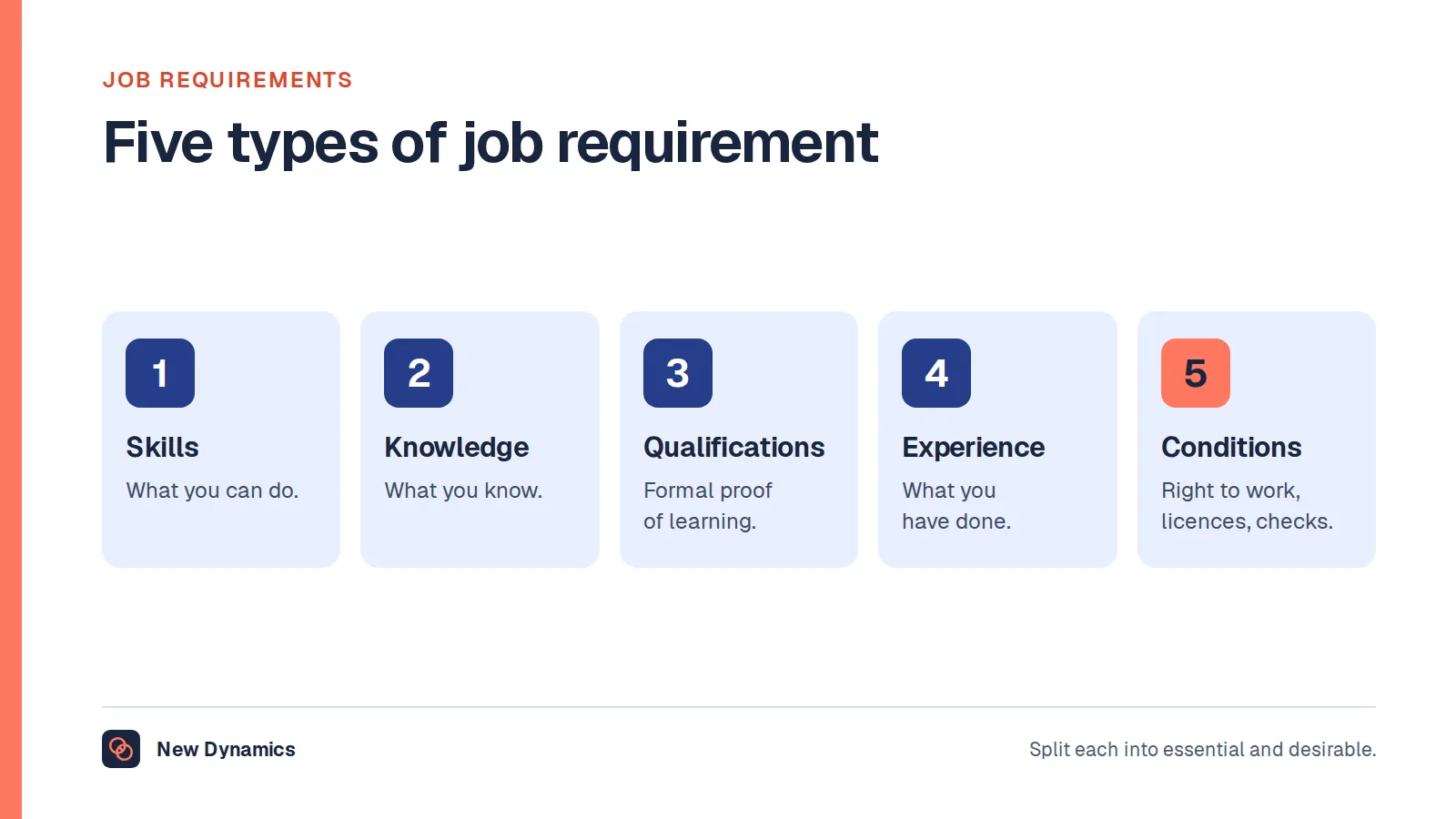
- Write the requirements. List the tasks, then the skills each task needs, split into essential and desirable. Our guide to job requirements shows how.
- Brief the recruiter. Explain the role, the team, the kind of person who succeeds and where such people might be found. Agree the timetable.
- Select fairly. Shortlist against the requirements, and interview with structure. Acas's guidance on interviewing job applicants says that “it's a good idea to ask each applicant the same questions where possible”, and that, if possible, each interview should be carried out by more than one person “to reduce the risk of discriminating”.
- Decide, and make the offer with HR. Score candidates against the agreed criteria, decide promptly and give feedback to those you interviewed.
- Onboard. Prepare the first week, set early goals and check in often. Our 30-60-90 day plan gives a structure.
The open textbook Introduction to Business, published by OpenStax, describes selection in its section on employee selection as “the process of determining which people in the applicant pool possess the qualifications necessary to be successful on the job”. The hiring manager is the person best placed to judge that, because they know the job.

What the law expects
Hiring managers make decisions that carry legal weight, often with little training. Three points from Acas are worth knowing. They describe Great Britain, and are general information, not legal advice.
- Questions must not discriminate. Acas advises checking before the interview that interviewers “understand the law on discrimination”.
- Ask about reasonable adjustments. Acas says: “By law you must ask anyone coming to an interview to tell you if they need reasonable adjustments so they can attend.”
- Be careful with social media. Acas's guidance on choosing who to interview says to avoid using information from someone's personal social media profile to decide whether to interview or hire them, and that you might be breaking the law if you looked at some applicants' profiles but not others.
Acas also recommends that the staff involved in selection “use a consistent decision-making process, such as a scoring system”.
Hiring manager job description: what to include
Because hiring manager is a role and not a post, you will rarely advertise for one. What you can do is write hiring duties into every manager's job description, so that they are expected, trained and assessed. A section might read like this. It is an illustration to adapt.
Hiring and onboarding. Defines staffing needs for the team and makes the case for new or replacement roles. Writes clear, justified job requirements. Works with the recruiter to attract a wide range of candidates. Interviews using agreed questions and scoring criteria. Makes timely, evidence-based hiring decisions and gives feedback to candidates. Plans and leads the onboarding of new team members, including goals for the first 90 days. Completes the organisation's training on fair recruitment before taking part in selection.
Useful measures for a manager's hiring are time from approval to offer, the share of offers accepted, new starters' feedback at 90 days, and first-year retention and performance.
Five habits of good hiring managers
- They prepare. They read the applications before the interview, and they know what each question is for.
- They ask everyone the same core questions. Consistency makes candidates comparable, and it is fairer. Our manager interview questions show the format.
- They score before they discuss. Each interviewer records scores against the criteria before hearing anyone else's view, which limits the pull of the loudest voice.
- They decide promptly. Good candidates have other options. A slow process can lose them, and tells them something about the employer.
- They own onboarding. The person who chose the candidate is responsible for giving them a fair chance to succeed.
Poor hiring managers do the opposite. They hire on instinct, look for someone like themselves, leave candidates waiting, and hand the new starter to someone else on day one.

Tips for candidates
- Find out who the hiring manager is. The recruiter will usually tell you. Look at their role, and think about what problem the vacancy solves for them.
- Answer their real question: “Can this person do the work, and will they be good to have in my team?” Bring examples that fit the tasks in the advert.
- Ask about the job, not only the benefits. “What would success look like in the first six months?” is a question that good hiring managers enjoy.
- Judge them too. How the hiring manager prepares, listens and follows up is a preview of being managed by them.
Frequently asked questions
What is a hiring manager?
A hiring manager is the manager who has a vacancy to fill and who will usually manage the person hired. They define the need, take part in selection, make the decision and onboard the new starter. It is a role, not a job title.
What is the difference between a hiring manager and a recruiter?
The hiring manager owns the vacancy and the decision, and will work with the person hired. The recruiter runs the search: advertising, sourcing, screening, scheduling and keeping candidates informed. The recruiter advises, and the hiring manager decides.
Is the hiring manager the same as HR?
Usually not. HR sets the policy, advises on law and pay, prepares the contract and runs checks. The hiring manager is the line manager of the team with the vacancy. In very small organisations one person may do both.
What are the responsibilities of a hiring manager?
There are six: define the need, write the requirements, brief the recruiter, select candidates fairly, decide and make the offer with HR, and onboard the new starter.
What should a hiring manager job description include?
Because it is a role within a management job, include a hiring and onboarding section in the manager's job description: defining needs, writing requirements, structured interviewing, timely decisions, candidate feedback, onboarding and completing fair recruitment training.
Who makes the final hiring decision?
Normally the hiring manager, within the budget and policy set by the organisation, and sometimes with approval from their own manager. HR checks that the process was fair and that the offer is consistent with pay policy.
Your next step: prepare before the vacancy
- If you manage people, find out what your organisation expects of you as a hiring manager, and whether there is training.
- Write down the three or four things that someone must be able to do to succeed in your team.
- Draft five core interview questions that test those things, and how you would score the answers.
- Plan the first week for a new starter now, before you need it.
For the full process, read and download our recruitment and selection guide. The guide is free to read, and the PDF uses our short download form.
Want new starters to have clear goals and regular check-ins from their first week? Book a New Dynamics demo and bring your onboarding plan. You can also email contact@new-dynamics.com.