TL;DR
- A critique weighs an article's strengths and weaknesses against what it set out to do: is the question clear, is the evidence sufficient and current, are the methods suitable, and does the conclusion follow?
- Read it three times: once for the structure, once for the argument and evidence, and once to reflect on assumptions, bias and what the work is useful for. University writing guides recommend the same approach.
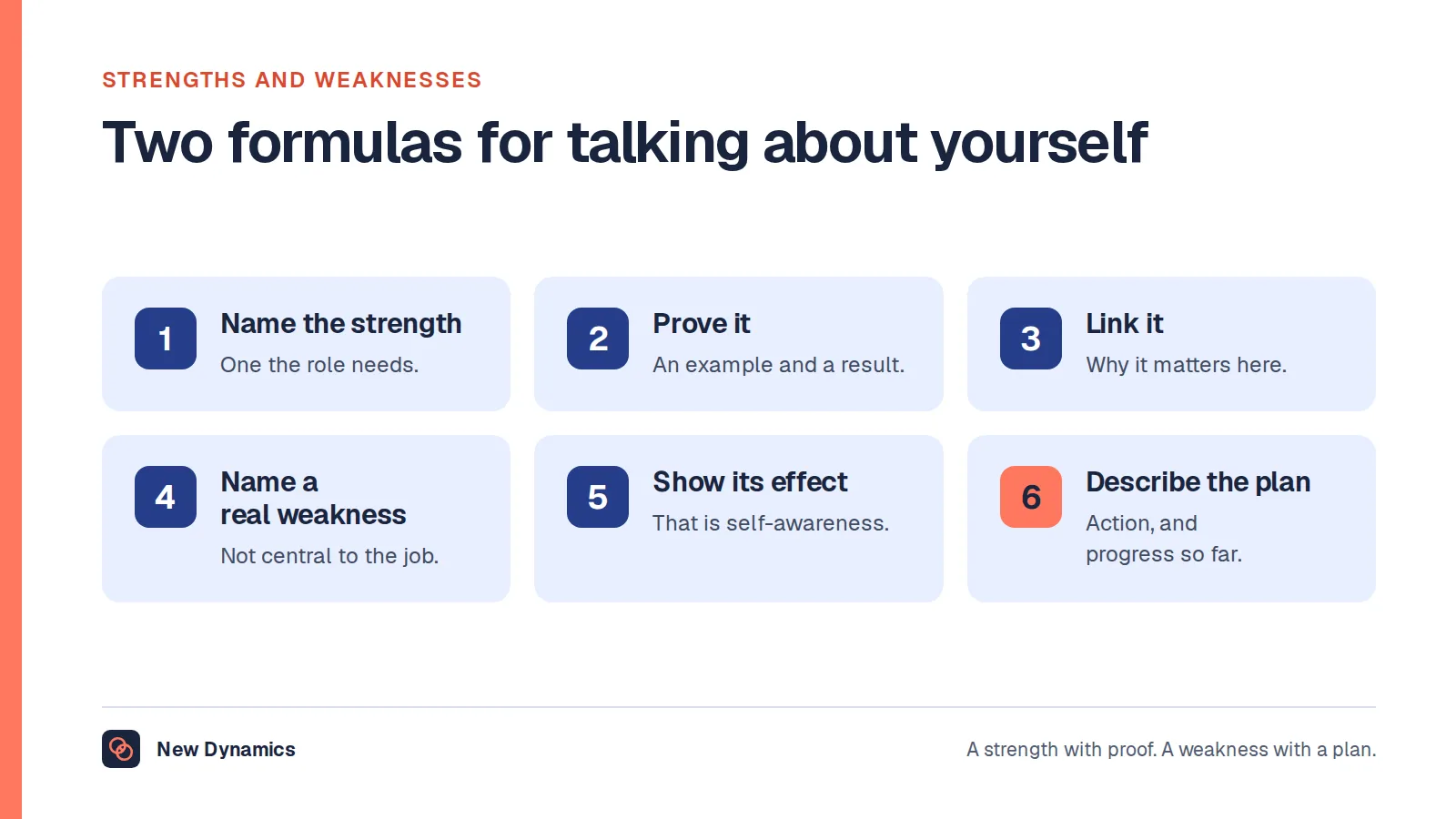
- Every strength or weakness should point to a specific part of the article and say why it matters. A balanced critique names both, and a weakness is most useful when it comes with what would have fixed it.
You have been asked to review an article: a journal paper for a course, a report a colleague wants a view on, or a white paper someone is using to justify a decision. You know it has strengths and weaknesses. The hard part is naming them specifically, fairly and in a way someone can use.
This article gives examples of strengths and weaknesses of an article that you can adapt, the questions to ask as you read, and a simple structure for writing the critique. It draws on guidance from university writing centres and applies just as well to a report at work as to an academic paper.
Reviewing someone's writing is a form of feedback, and the same habits apply: be specific, be balanced, and say what would make it better. See how New Dynamics feedback helps people give and record feedback that is specific enough to act on.
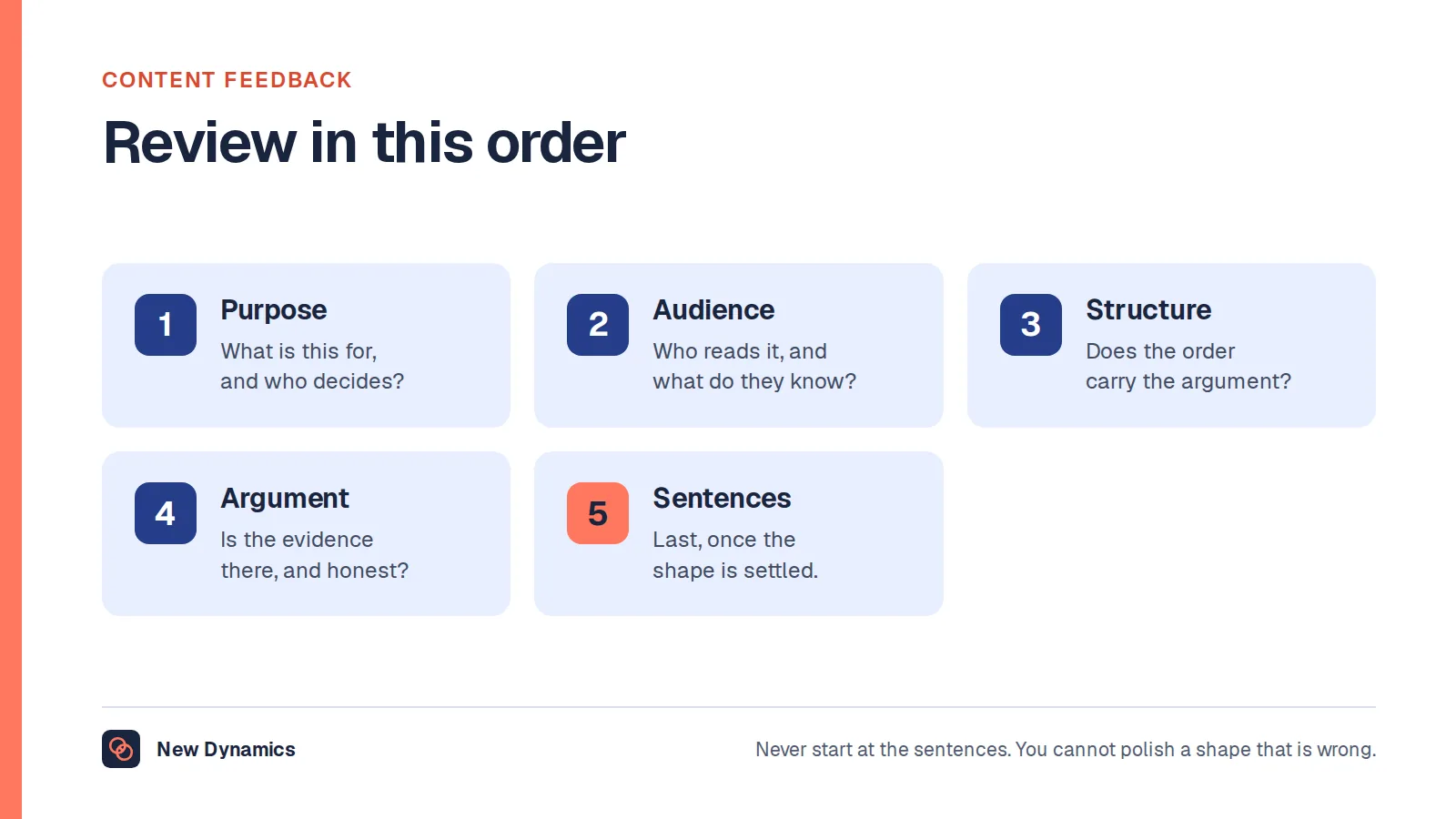
If the document you are reviewing is a colleague's draft rather than a published article, our post on content feedback examples covers how to review it without rewriting it.
What an article critique is
The University of Northern British Columbia's Academic Success Centre puts it simply: "A critical review evaluates the strengths and weaknesses of a particular source of information." It is not a summary, and it is not a verdict on whether you liked the article. It is a reasoned judgement of how well the article does what it set out to do.
That last point matters. An article that sets out to describe a small case study should not be criticised for failing to prove a general law. Judge it against its own aim first, then say whether that aim was worth pursuing.
Read it three times

The UNBC guide recommends reading an academic article in three passes, each with a different focus.
- The structure. Read the abstract, introduction, conclusion, headings and tables. Ask what the main point is and what the main arguments are.
- The argument. Read in depth. The guide's questions for this pass are: "Did the author(s) do what they set out to do?", whether the arguments are consistent, whether there is "sufficient evidence for each point", and whether there are other points of view the authors do not address.
- Reflection. Ask whether the methods are valid, what assumptions the authors made, whether there are obvious biases, and what can be done with the findings.
A guide to article critique published by Boston University's dental school, drawing on the University of Waterloo, adds two questions worth asking of any piece: whether the author has the expertise to be a reliable voice on the subject, and whether the sources the author relies on are "authentic and respectable".
Examples of strengths of an article
Adapt these to the article in front of you. Each one should be tied to a specific section, table or claim.
- A clear, focused question. "The article states its research question in the first paragraph and returns to it in the conclusion, so the reader always knows what is being tested."
- Suitable methods. "The authors use a comparison group, which lets them separate the effect of the training from changes that would have happened anyway."
- Sufficient, current evidence. "Each claim in the discussion is supported by a cited study, most of them published recently enough to reflect current practice."
- Transparency about limits. "The limitations section is candid about the small sample and explains how it affects the conclusions."
- Engagement with other views. "The article sets out the main competing explanation and explains why the data favour the authors' account."
- Clear writing and structure. "Headings follow the argument, and tables are labelled well enough to be read on their own."
- Practical value. "The final section turns the findings into steps a manager could apply, without overstating what the study shows."
Examples of weaknesses of an article
The same applies here: point to the specific place, and where you can, say what would have fixed it.
- An unclear aim. "The introduction raises three questions but the article only answers one, so it is hard to judge whether it succeeded."
- Too little evidence for a claim. "The conclusion that the policy improved retention rests on a single year of figures, with no comparison to earlier years."
- Methods that do not fit the question. "A self-reported survey is used to measure a behaviour that could have been observed directly."
- Outdated sources. "Several key claims rely on sources old enough that practice has since changed, and newer work is not discussed."
- Missing viewpoints. "The article does not address the obvious alternative explanation, that the improvement came from a change in management."
- Possible bias. "The study was funded by an organisation with an interest in the result, and this is not discussed."
- Conclusions that go further than the data. "The findings come from one sector, but the conclusion presents them as true for all employers."
- Hard to follow. "Terms are used before they are defined, and the main finding is buried in the middle of the discussion."
How to structure the critique

A short, reliable structure, following the Boston University guide:
- Introduction. Name the author, the title, where it was published and its main point or thesis.
- Brief summary. The author's purpose and the main evidence they use, in your own words. Keep it short; it is the foundation for the evaluation, not the evaluation itself.
- Strengths. Two or three, each tied to a specific part of the article.
- Weaknesses. Two or three, each with its effect on the conclusions and, where possible, what would have helped.
- Conclusion. Your overall judgement: whether the article achieved its aim, how far its conclusions can be relied on, and who would find it useful.
Using the same approach at work
The questions are not only for coursework. Reports, business cases, supplier white papers and research summaries cross most managers' desks, and the same tests apply:
- Did it do what it set out to do? A business case that promises savings should show where they come from.
- Is the evidence sufficient and current? One quarter's figures rarely justify a permanent change.
- Who wrote it, and why? A supplier's research about its own category deserves the same scrutiny as any funded study.
- What is missing? The option that was not considered is often the most important weakness.
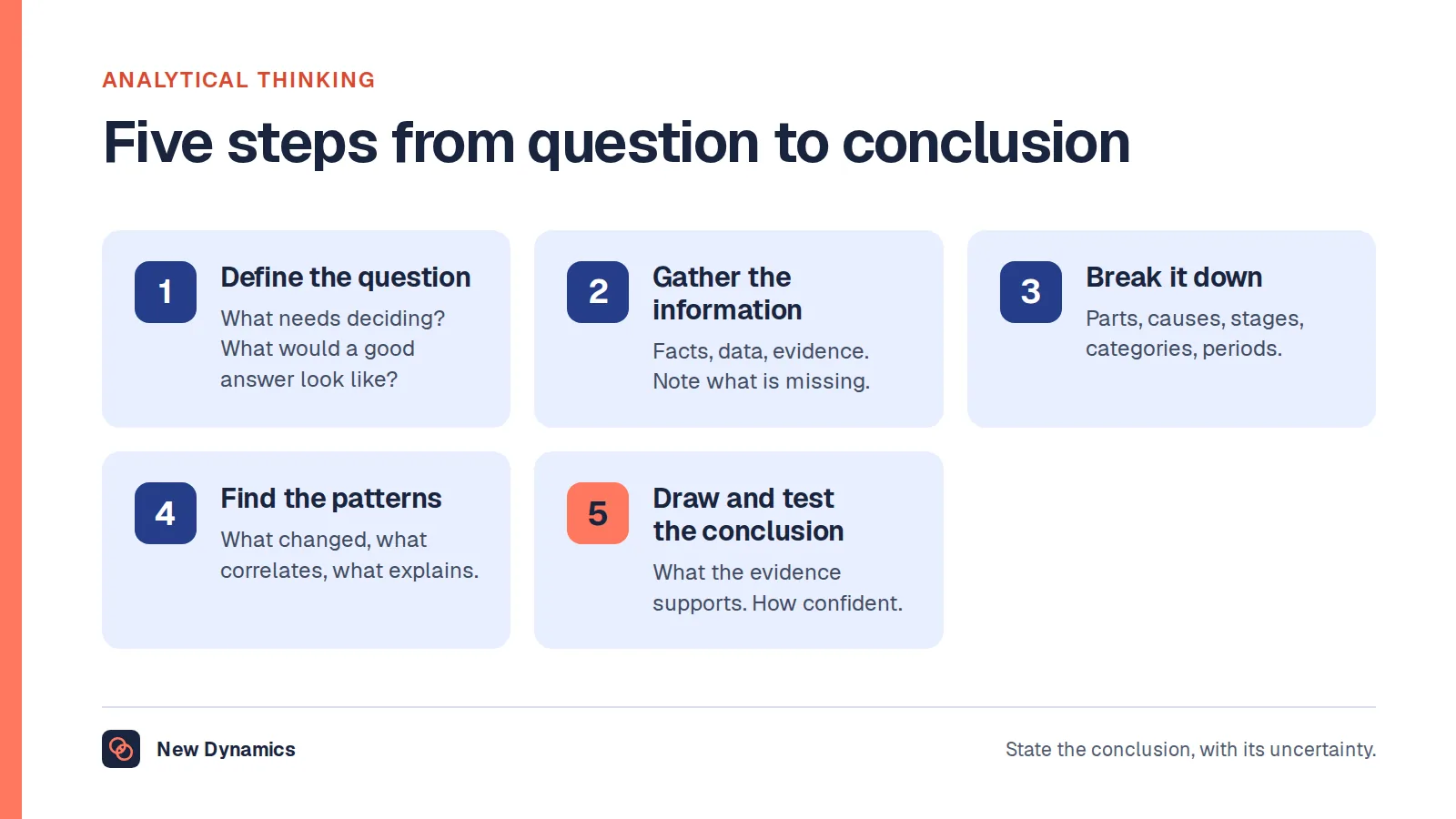
Our post on analytical thinking covers the wider skill of breaking a problem into parts and testing each one.
Common mistakes
- Summarising instead of evaluating. A long summary with a one-line opinion at the end is not a critique.
- Only listing weaknesses. A fair critique names what the article does well, too.
- Vague judgements. "The evidence is weak" helps nobody. Say which claim, and why.
- Criticising the article for not being a different article. Judge it against its own aim first.
- Attacking the author. Critique the argument and the evidence, not the person.
Frequently asked questions
What are the strengths and weaknesses of an article?
Strengths are the things an article does well, such as a clear question, suitable methods, sufficient and current evidence, honesty about limitations and clear writing. Weaknesses are where it falls short, such as an unclear aim, thin evidence, outdated sources, missing viewpoints, possible bias or conclusions that go beyond the data.
How do you write the strengths and weaknesses of an article?
Tie each one to a specific part of the article and say why it matters. For a weakness, add what would have fixed it. Aim for a balance of two or three strengths and two or three weaknesses, judged against what the article set out to do.
What should an article critique include?
An introduction naming the author, title, source and main point; a brief summary of the purpose and evidence; an evaluation of strengths and weaknesses; and a conclusion giving your overall judgement and who the article is useful for.
How many times should you read an article before critiquing it?
University writing guides recommend at least three readings: one for the structure and main point, one for the argument and evidence, and one to reflect on methods, assumptions and bias.
Is a critique the same as a summary?
No. A summary restates what the article says. A critique evaluates how well it says it: whether the evidence supports the claims and whether the conclusions follow. A short summary is usually part of a critique, but only as the starting point.
Your next step: critique one article in an hour
- Pick the article and write down, in one sentence, what it sets out to do.
- Do the three readings, noting a page or section reference for every strength and weakness.
- Draft the five-part structure, keeping the summary under a quarter of the length.
- Check that each weakness says what would have helped, and that the conclusion answers whether the article achieved its aim.
For more on giving feedback that is specific and usable, read and download our employee feedback guide. The guide is free to read, and the PDF uses our short download form.
Want feedback at work to be as specific as a good critique? Book a New Dynamics demo and see how feedback is recorded against goals. You can also email contact@new-dynamics.com.