TL;DR
- Capability is about whether someone can do the job; conduct is about behaviour. Acas says the kind of problem changes how an employer should respond, and the capability route starts with help rather than with a warning.
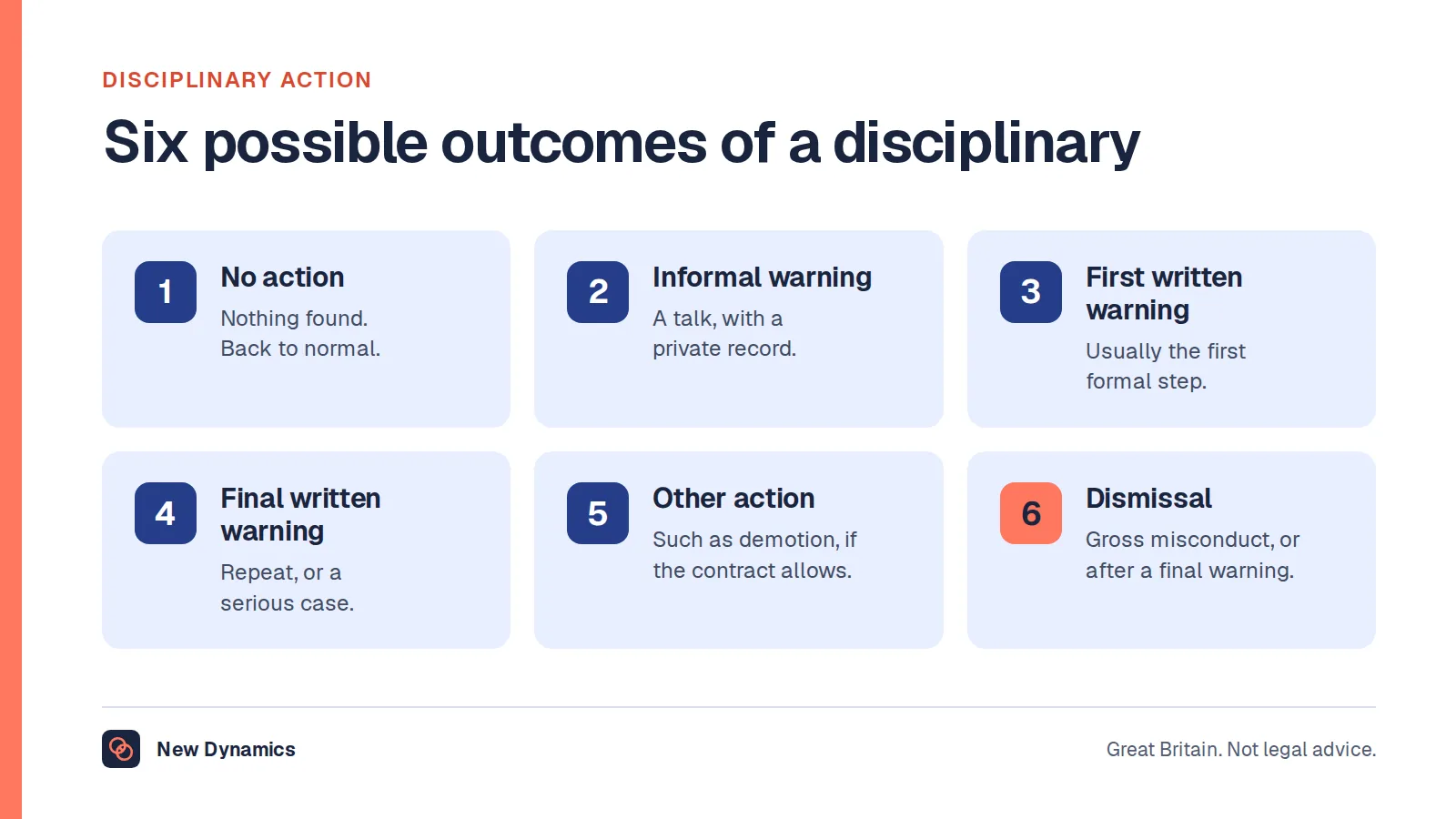
- There is no such thing as an informal warning. There is an informal conversation, which should be recorded, and a formal warning, which has a procedure attached. Describing the first as the second is a problem for everybody later.
- If a plan does not work, Acas sets out the options, including extending the timeline where someone improved but not to the agreed level. Before any of them, ask whether the support promised was actually delivered.
Someone's work is not good enough, two conversations have happened, and a manager asks HR whether they can give an informal warning. The question contains the confusion that causes most of the trouble in these cases, and unpicking it is the fastest route to handling the situation properly.
This article covers the capability route in order: what makes it different from the disciplinary route, what an informal conversation is and is not, what an improvement plan must contain, the support that actually decides the outcome, and the options when a plan has not worked. It describes the position in Great Britain and is general information, not legal advice. Take advice before any formal step.
Evidence gathered through the year is what makes a fair process possible. See how New Dynamics continuous feedback keeps the record of conversations as they happen.
Capability is not conduct
Acas separates capability, "someone's ability to do their job", from conduct, "someone's behaviour at work", and says "what kind of problem it is affects how employers should respond".
That distinction sets the direction. A conduct problem is about choices, and our post on disciplinary action covers that route. A capability problem is about ability, which means the first question is what the organisation has done to make the job possible. Acas is explicit: employers "must provide 'adequate resources' to enable an employee to do their job. This might include giving them training."
Where a disability may be involved, Acas adds that "sometimes, capability issues might be resolved by making reasonable adjustments. For example, giving someone more time to do written tasks, adjusting shift patterns or providing specialist equipment."
The steps, in order

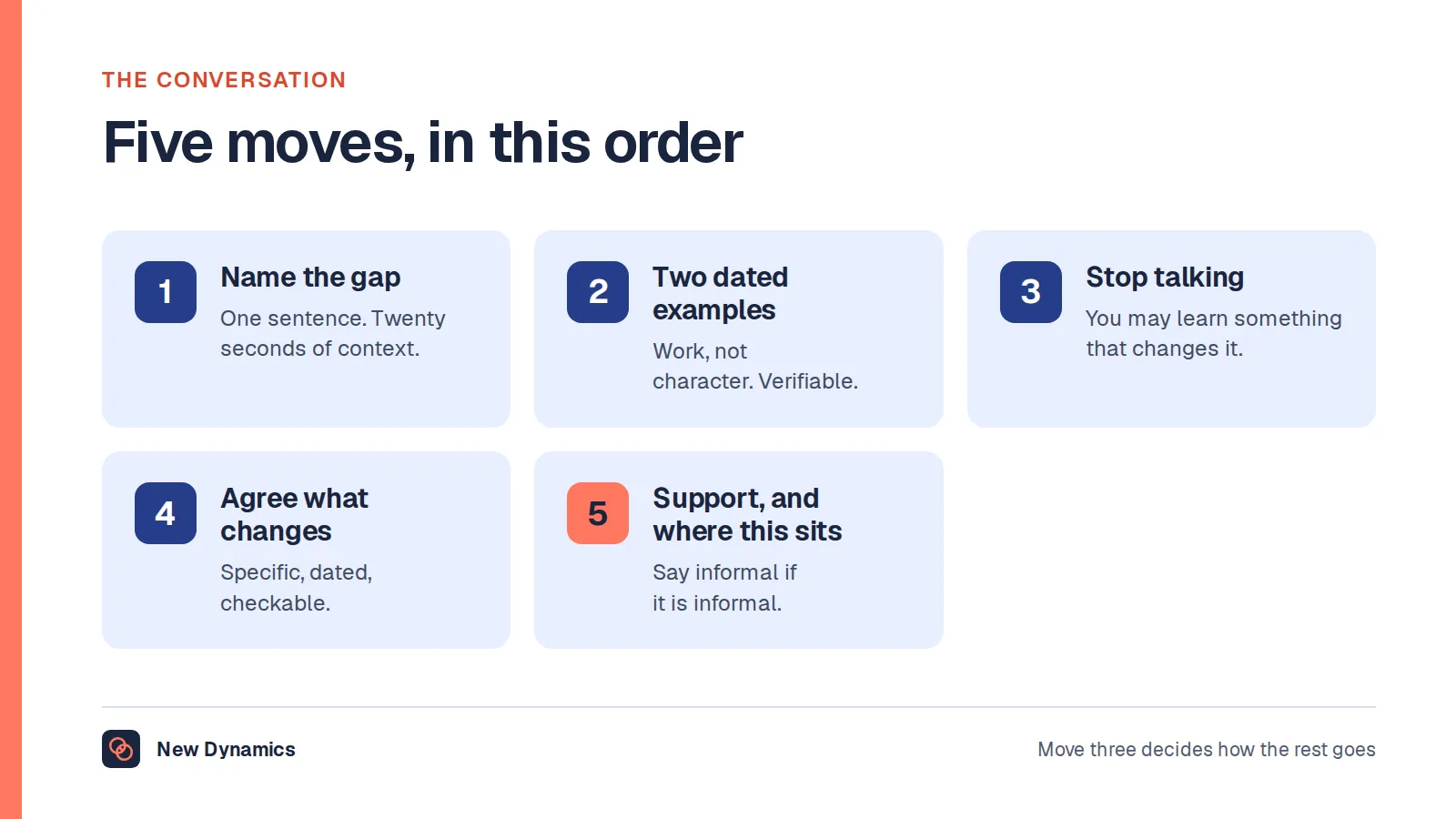
1. Informal conversation, with support. Acas says that before starting a disciplinary procedure, an employer should "first see whether the problem can be resolved in an informal way", by "privately talking with them", "listening to their point of view", "agreeing improvements to be made" and "setting up a training or development plan, if it's a performance issue". Our post on the underperformance conversation covers how to hold it.
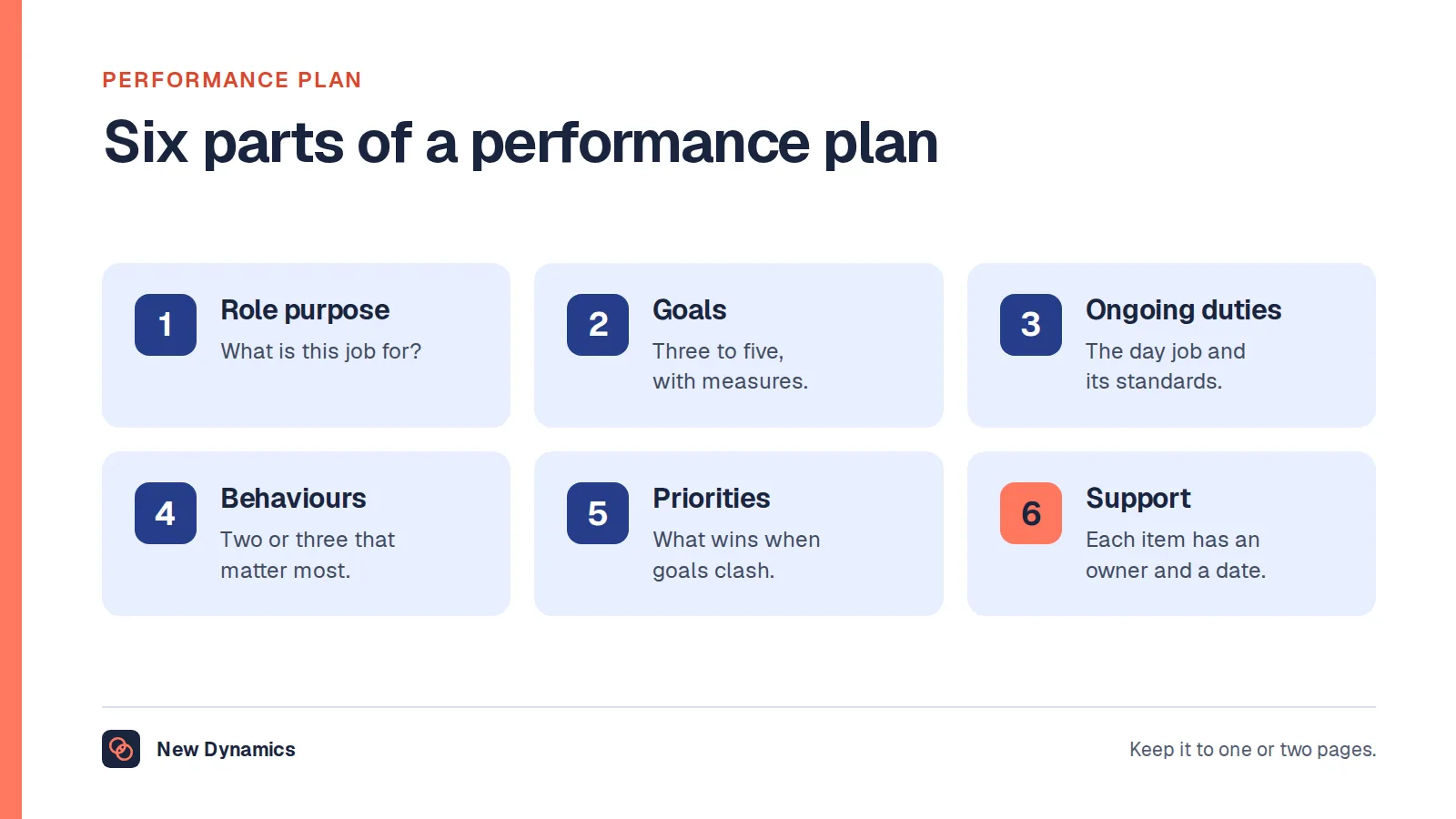
2. A written improvement plan, if that does not work. Acas says a plan should set out "specific objectives for the employee", "a reasonable timeline to meet them" and "any further support or training they need", should be explained so the employee understands it, and should be shared in writing.
3. Review meetings during the plan. Short, regular, written up. The point is to catch a problem in week two rather than discover it in week ten.
4. The outcome decision. Improved, improved but not to the agreed level, or not improved. Acas names the first two possibilities explicitly.
5. A formal stage, only if needed. Acas notes that "some employers might use a separate 'capability procedure' instead of a disciplinary procedure", and that this "must still be in line with the Acas Code of Practice on disciplinary and grievance procedures".
There is no such thing as an informal warning
The phrase does real damage. A warning is a formal step with a procedure attached. An informal conversation is not a warning, and calling it one creates two problems: the employee believes they are further into a process than they are, and the employer has produced something that looks formal without following any of the steps that make a formal stage fair.
What to do instead is simple. Hold the conversation, be plain that it is informal, and write it up. Acas says "it's important for employers to keep a record of any conversations they have with employees about performance". A dated note of what was discussed and agreed is not a warning, and it is exactly what you will want to have later, whichever way the situation goes.
The employer's half of an improvement plan

Most plans that fail, fail on this side of the table. Before a plan starts, HR should be able to tick all five.
- The standard is written down and measurable. What "improved" means, assessed how, by when. Vague plans produce disputes about whether they were met.
- The support is specified and dated. Training, mentoring, shadowing, a tool, more time on written tasks. Acas lists mentoring, coaching and training among the ways to help a capability issue.
- The workload is realistic during the plan. Asking someone to improve while carrying more than they can do is a test designed to fail.
- Adjustments have been considered, where a health condition or disability may be relevant, before rather than after.
- The review rhythm is agreed, with written notes shared each time.
During the plan, two rules. Do not add new objectives part-way through, because that moves the target. And do not withdraw the support quietly when the manager gets busy, because the plan then measures the organisation rather than the person.
A word about the human side: an improvement plan is stressful, and stress affects performance. Keep the conversations private, keep them short, say what is going well as well as what is not, and point the person at whatever wellbeing support exists. Someone who improves under a plan has to come back to being a normal member of the team afterwards, and how the process was run decides whether that is possible.
What happens if a plan fails

Four questions before any decision.
- Was the support actually delivered? The training that was booked and cancelled, the mentor who was reassigned, the tool that never arrived. If the employer's half did not happen, the plan has not been run.
- Was the standard realistic and the timeline reasonable? Compare it with what others in the role actually achieve.
- Has anything changed? A health condition, a caring responsibility, a reorganisation, a new system. New facts can change the right response.
- Is this capability at all? Sometimes a plan fails because the person does not want to be in the job. That is a different conversation, usually a shorter and kinder one.
If the answers hold, Acas sets out what can follow. Where someone has improved but not to the level agreed, this "could be: an extension to the timeline in the performance improvement plan". Where the issue continues, it may be "a final written warning, followed by a dismissal if the issue continues". It adds that "the employer can only dismiss them if they follow a fair procedure. Dismissal should be a last resort."
Other options are worth considering before that point: a different role where the person's strengths fit, a reduction in scope, or a change in how the work is organised. None of them is a defeat.
If it becomes formal
A formal meeting has requirements. Acas says the employer should put in writing, in good time, "the alleged misconduct or performance issue", the evidence, the date, time and location, "information on the employee's right to be accompanied" and "the possible outcomes". It also states that "by law, an employee or worker has 'the right to be accompanied' at a disciplinary hearing".
This is the point to involve HR properly and take advice. The procedure matters as much as the decision, and it is assessed afterwards on what was done rather than what was intended.
Six things to keep in the record
The informal conversation and its date. The plan, with objectives, timeline and support. Each review meeting note, shared with the employee. What support was delivered and when. Any adjustment considered or made. The reason for every decision, written at the time rather than reconstructed later. Our post on performance plans has a template for the plan itself.
Frequently asked questions
What are the steps of a capability procedure?
An informal conversation with support first, then a written improvement plan with specific objectives, a reasonable timeline and the support needed, regular review meetings, a decision at the end, and a formal stage only if the problem continues. Acas expects employers to try to help someone improve before starting any formal procedure.
Can you give an informal warning for performance?
Not as such. A warning is a formal step with a procedure attached; an informal conversation is not a warning and should not be described as one. Hold the conversation, say plainly that it is informal, agree what will change, and write it up, because Acas expects a record of performance conversations to be kept.
What should a performance improvement plan contain?
Acas says specific objectives, a reasonable timeline to meet them and any further support or training needed. It should be explained so the employee understands it and shared in writing. Add how improvement will be measured and when reviews will happen, and record what support was actually delivered.
How do you support an employee through a PIP?
Make the standard measurable, specify and date the support, keep the workload realistic, consider adjustments before the plan starts rather than after, and hold short written reviews. Do not add new objectives mid-plan or let the support lapse, and point the person towards wellbeing support, because the process itself is stressful.
What happens if a performance improvement plan fails?
First check whether the support was delivered, whether the standard and timeline were reasonable, and whether anything has changed. Acas says the outcome could be an extension to the timeline where someone improved but not to the agreed level, or a final written warning followed by dismissal if the issue continues, and that dismissal requires a fair procedure and should be a last resort.
Is capability the same as disciplinary?
No. Capability is about whether someone can do the job and starts with support; disciplinary deals with conduct, which is about behaviour. Some employers use a separate capability procedure, which Acas says must still follow the Acas Code of Practice on disciplinary and grievance procedures.
Your next step: check the employer's half
- Write down the standard in a measurable sentence before anything else happens.
- List the support you are committing to, with dates, and get it booked.
- Check whether any adjustment should be considered, and ask HR before the plan starts.
- Put the review meetings in the diary now, and write up each one the same day.
For the plan itself and how to run it, read and download our performance improvement guide. The guide is free to read, and the PDF uses our short download form.
Want the conversations and evidence in one place before any of this starts? Book a New Dynamics demo and bring your current procedure. You can also email contact@new-dynamics.com.