TL;DR
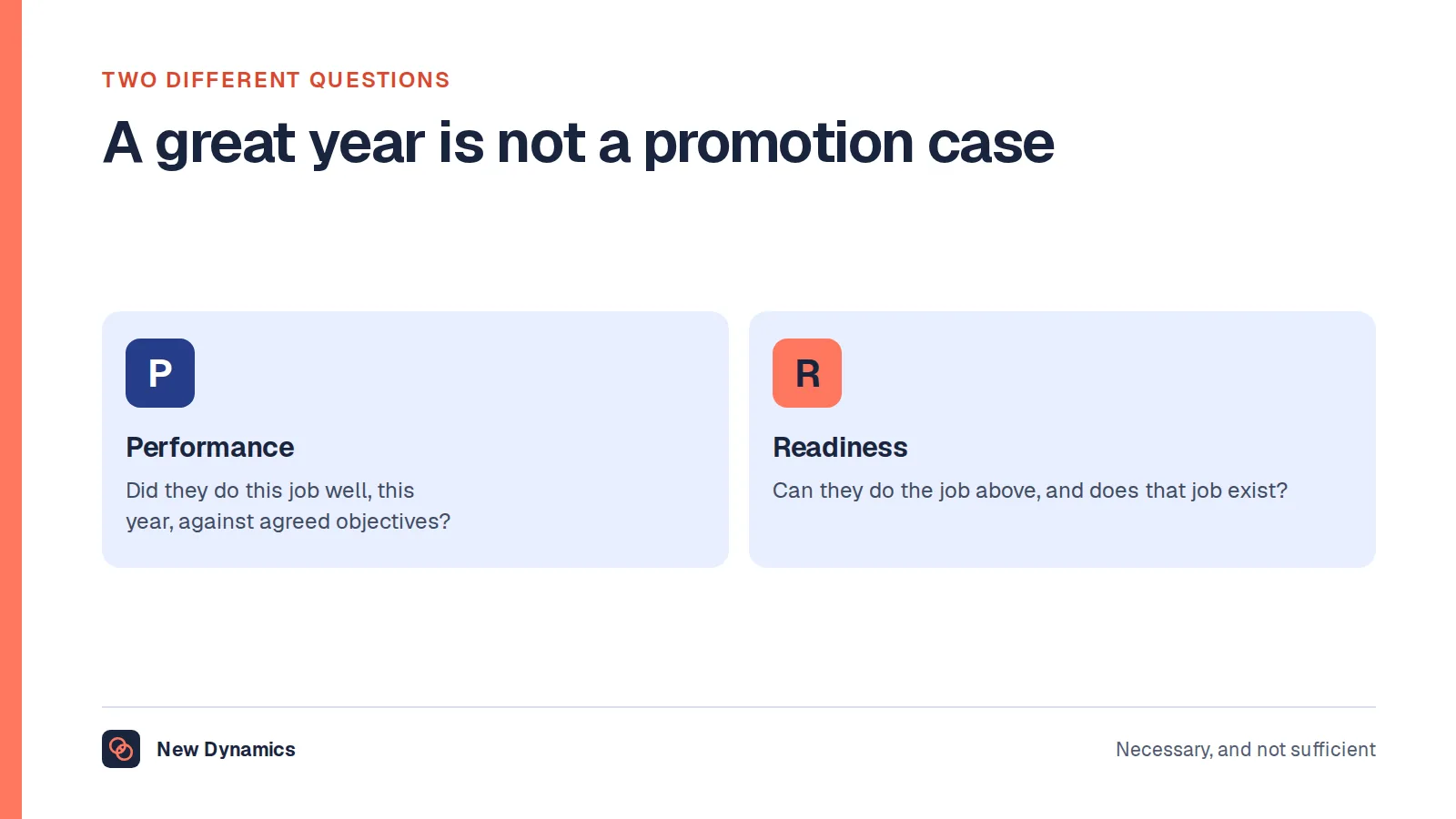
- A career conversation belongs in a different meeting from the performance review. One looks back and carries a judgement; the other looks forward and needs the person to say what they actually want, which they will not do while a rating is in the room.
- Five parts, forty minutes: where they are now, where they want to go, what is in the way, what the organisation can offer, and the first step with a date. Twenty questions, grouped by what each one is for.
- Naming someone as a successor is not a promise, and a succession conversation that implies otherwise does more harm than silence. Say what is true, say what is not decided, and never leave the people outside the plan to work it out from who gets invited to things.
"So, where do you see yourself in five years?" The answer is a polite fiction, because nobody is going to describe their real ambitions to someone who rated them an hour ago. Career conversations fail for ordinary reasons: wrong month, wrong questions, no follow-up.
This article gives the structure, the questions, what to write down afterwards, and the version of this conversation nobody prepares managers for, which is the one about succession.
Development agreed in a conversation needs somewhere to live afterwards. See how New Dynamics goals and OKRs keep development goals visible alongside the rest of the work.
Hold it separately from the review
Acas describes a review as covering what someone is doing well, areas for improvement, support or training and "their career and any development objectives", which is a lot for one meeting. In practice the backward-looking half crowds out the forward-looking half, and when a rating is attached the employee spends the hour defending their year.
Put the career conversation in a different month. Twice a year is plenty, and once a year is better than the zero most people get.
Five parts, forty minutes

- Where they are now. What they enjoy, what drains them, what they are better at than they were a year ago.
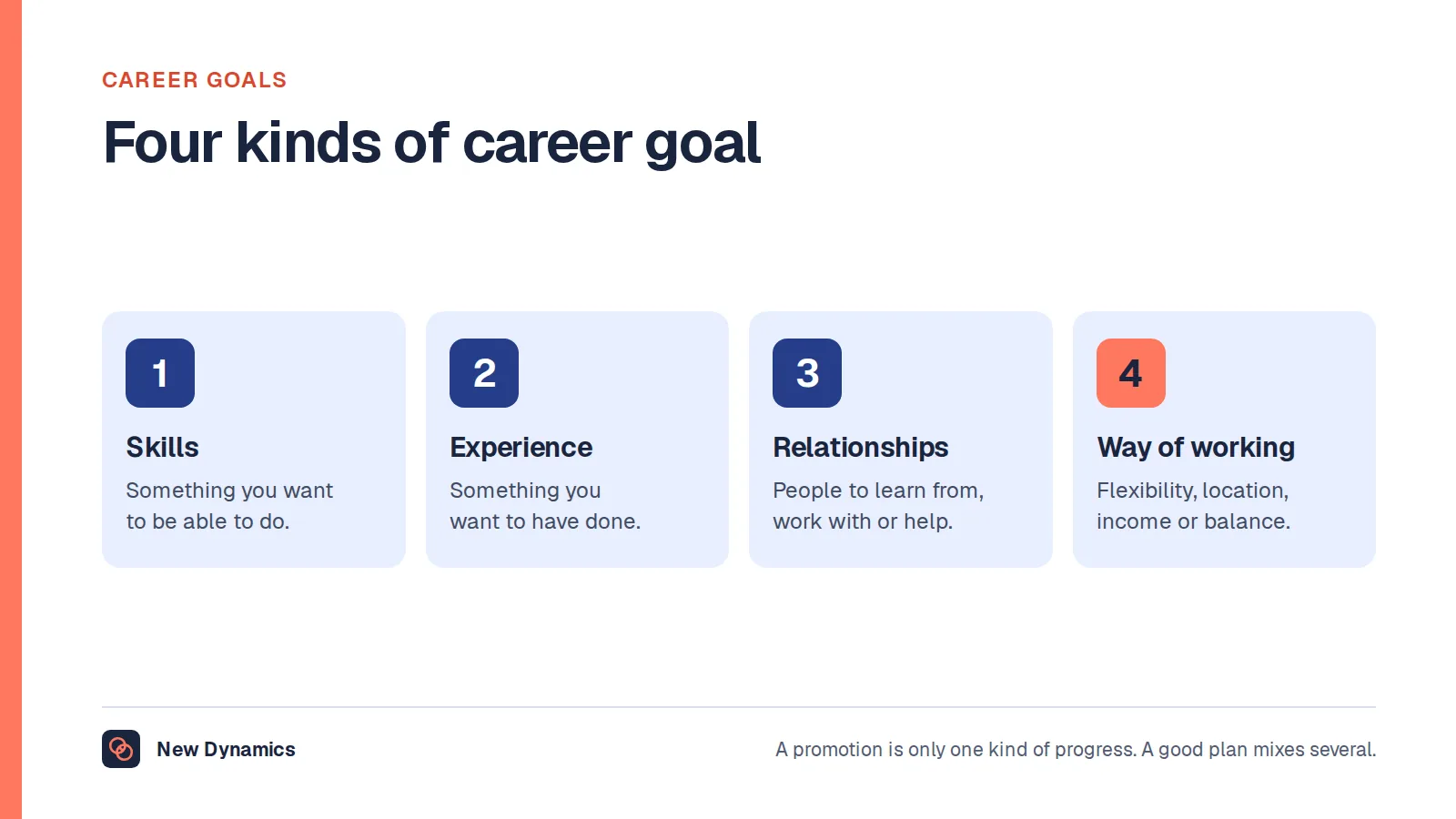
- Where they want to go. Direction, not job titles. "More responsibility for outcomes" is more useful than "head of department", and easier to act on.
- What is in the way. Skills, experience, visibility, confidence, or something structural like no vacancy or a working pattern that limits travel.
- What the organisation can offer. Concrete things: a project, a secondment, a mentor, a course, the chance to run a meeting you currently run.
- The first step, with a date. One thing, owned, scheduled. Five intentions produce nothing; one commitment produces evidence.
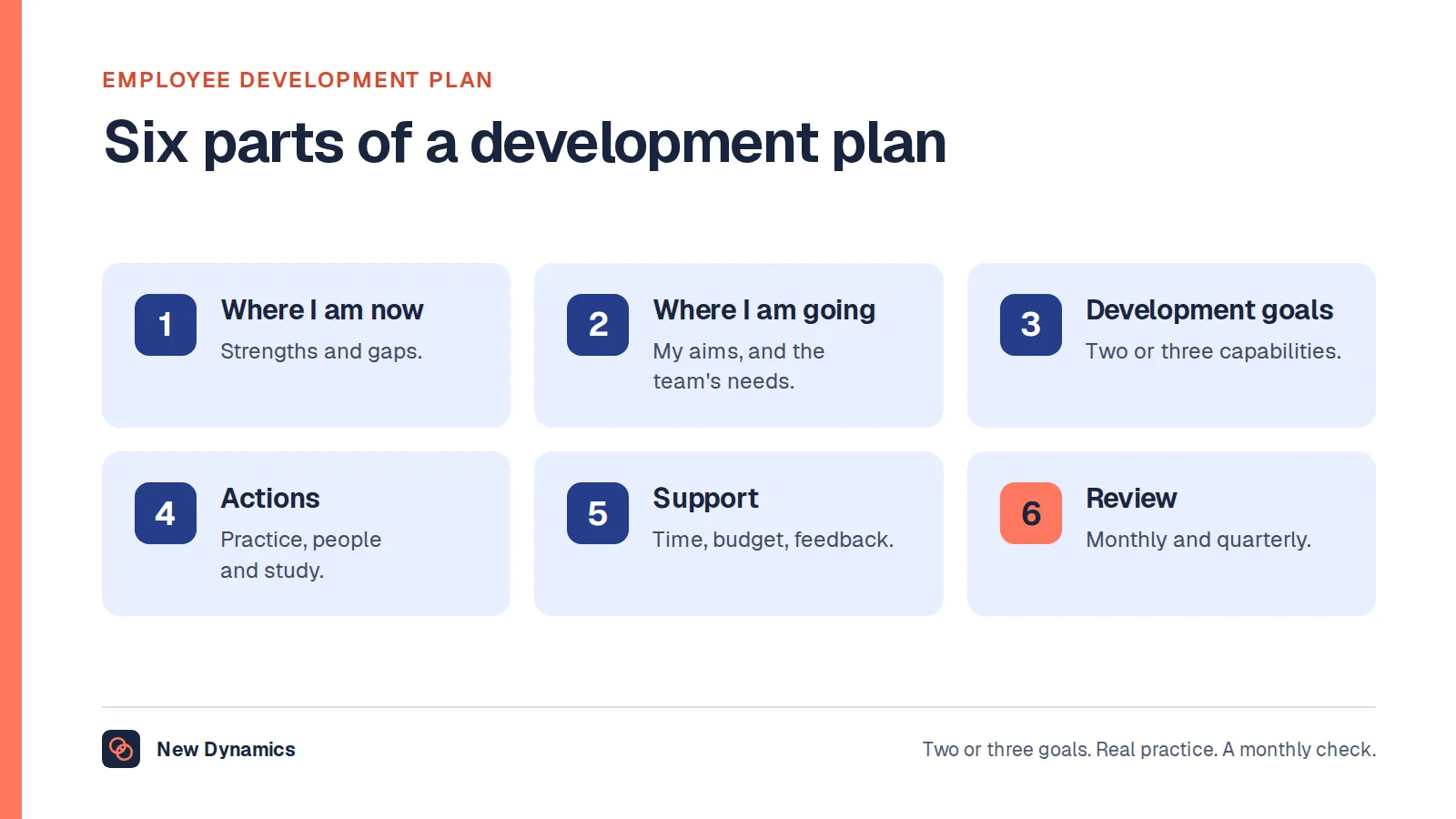
Finish by writing it down. Acas puts a written record at the centre of performance discussions, and the same applies here: four or five lines emailed afterwards, saying what was discussed, what was agreed and when you will revisit it. Then put the development goals into an actual plan, which our post on the employee development plan covers, with a template.
Twenty questions, grouped by purpose

Direction. What work would you do more of if you could? Which part of your job would you keep if you had to drop the rest? Whose job in this organisation looks interesting, and which part of it? If nothing here appealed in two years, what would you want to be doing instead? What would make you turn down a promotion?
Strengths and evidence. What went well this year that nobody noticed? What do people come to you for? Which piece of work are you most proud of, and why that one? What did you learn that you have not had a chance to use?
Obstacles. What is stopping you? What would you need to be ready for the next level? Is there anything about how we work that gets in your way? What have you asked for before and not got?
What we can offer. Would a project, a mentor or a course help most right now? Who should you be working with that you are not? What would you want to be involved in next quarter? Is there something I do that you could take over?
The commitment. What is the one thing to do before we talk again? When should we talk again? What do you need from me between now and then?
Two rules for using them: ask four or five, not twenty, and leave silence after each one. The useful answer usually arrives after the first pause.
The succession conversation

Succession planning identifies the people who could step into key roles. The moment it touches an individual, it becomes a conversation with four rules.
1. Naming someone is not a promise. Plans change, roles disappear, the incumbent stays four years longer than expected. Say what is true: that they are being developed with a particular kind of role in mind, that nothing is guaranteed, and that the development is worth having either way.
2. Say what is actually decided. "You are on a list" means nothing without specifics. What is decided is usually the development: the project, the exposure, the mentor. Give those, and the conversation becomes real rather than flattering.
3. Do not leave the people outside the plan to work it out. They will, from who gets invited to what. If someone is not currently in a plan, they should still get a career conversation, a development plan and honest feedback about what would change the picture, which our post on promotion decisions and readiness covers in detail.
4. Watch who gets the opportunities. Acas says less favourable treatment "might include: excluding someone from opportunities or benefits" and that it "can still be discrimination even if the less favourable treatment was not intended". Succession pools assembled informally tend to contain people who remind the decision makers of themselves, and the check is to look at the list against the wider workforce.
One more: people who are away still exist. Acas says employers should update employees who are off work "about: promotion or other job opportunities". A career conversation missed because someone was on leave is a year of development lost.
What to write down
Keep it to five fields, in whatever system you already use:
- The date, and when you will revisit it.
- The direction, in the employee's words.
- The obstacle you agreed matters most.
- The specific opportunity or support agreed, with an owner.
- The first step and its date.
Anything longer gets filed and forgotten. Anything shorter is not a record, and six months later nobody can remember what was agreed.
Three ways these conversations fail
The annual ambush. One conversation a year, with no follow-up, which teaches people that the answers do not matter.
The wish list. Twenty things discussed, nothing owned, no dates. Agree one.
The manager who promises. Never commit to a promotion, a role or a budget you do not control. Say who decides and when, which is the same rule that applies to pay, as our post on performance reviews and pay sets out.
Frequently asked questions
What questions should you ask in a career conversation?
Ask four or five, not twenty, grouped by purpose: what work they would do more of, where they want to get to in terms of responsibility rather than titles, what is in the way, what support would help most, and what one thing they will do before you talk again. Leave silence after each, because the useful answer usually comes after the pause.
Should career conversations be part of the performance review?
Better not. A review looks back and usually carries a rating, which makes people defend their year rather than describe their ambitions. Hold the career conversation in a different month, once or twice a year, and keep the written record separate.
What is a development conversation template?
Five parts: where the person is now, where they want to go, what is in the way, what the organisation can offer, and the first step with a date. Record five fields afterwards: the date and revisit date, the direction in their words, the main obstacle, the agreed support with an owner, and the first step.
How do you tell an employee they are a successor for a role?
Say what is true and what is not. They are being developed with a type of role in mind, nothing is guaranteed because plans and timings change, and the development is valuable regardless. Then name the specific things that are decided: the project, the exposure, the mentor.
What do you say to someone who is not in the succession plan?
Give them the same career conversation, a development plan and honest feedback about what would change the picture. Never let the answer be communicated by who gets invited to things, and check who is being given opportunities, because informal pools tend to reach the same people.
How often should career conversations happen?
Twice a year works for most teams, with a short check on the agreed step in between. Once a year is still far better than none, which is what most people currently get. What matters more than frequency is that something was agreed last time and somebody did it.
Your next step: book one, and ask four questions
- Put a forty-minute career conversation in the diary for each person, in a month that does not contain a review.
- Pick four questions, and plan to say nothing for five seconds after each.
- Agree one step with a date, and write the five fields the same day.
- Check who in your team has had a career conversation in the last year, including anyone who has been away.
For the wider development picture, read and download our career development guide. The guide is free to read, and the PDF uses our short download form.
Want development goals that stay visible between conversations? Book a New Dynamics demo and bring your current development plan. You can also email contact@new-dynamics.com.