TL;DR
- A handbook is not the statutory document. The written statement of employment particulars is a legal requirement: gov.uk says an employer must give employees and workers a document stating the main conditions of employment when they start work, with a wider written statement within 2 months.
- The handbook is usually non-contractual guidance. Acas warns that terms written in other documents, including employee handbooks, can become 'incorporated terms' that are still part of the employment contract, so the wording decides whether a change is a variation of contract.
- Write down the procedures you are expected to have. The Acas Code says disciplinary and grievance rules and procedures should be set down in writing, and the Health and Safety at Work etc. Act 1974 requires a written statement of general health and safety policy.
Somebody asks for the employee handbook, and three different things get sent: a welcome pack, a folder of policies, and a contract. They are not interchangeable. One of them is a statutory document with defined contents and a deadline, one of them binds both sides until it is varied by agreement, and one of them is usually guidance that an employer can update. Confusing them is how an employer ends up unable to change a sick pay scheme it never meant to promise.
This article explains what an employee handbook is, what it is not, what belongs in it, and how to keep it honest. It covers employment in England, Scotland and Wales, where gov.uk and Acas guidance applies; Northern Ireland has its own rules and its own guidance. It is general information rather than legal advice, and a handbook that touches pay, dismissal or immigration status is worth a professional read before it is issued.
A handbook earns its place at the start of someone's employment, which is also when nothing gets read. See how New Dynamics onboarding sequences policy reading into a new starter's first weeks instead of dropping all of it on day one.
What an employee handbook is
An employee handbook, sometimes called a staff handbook, an employee manual or an employees handbook manual, is a single document that collects an employer's rules, procedures and practical guidance in one place. It answers the questions people actually ask at work: how to book holiday, who to tell when they are ill, what the expenses limit is, what happens if a manager raises a concern about conduct, and where to go if they have a complaint.
Its purpose is consistency. If one manager allows something and another refuses it, the difference is usually that neither of them has a written rule to follow. The handbook is where that rule lives, and where a line manager can be pointed to when they ask what they are allowed to do.
That is its practical meaning. Its legal meaning is narrower, and that is where most handbook problems start.
What an employee handbook is not: the statutory written statement
The handbook is not the document the law requires you to issue. That document is the written statement of employment particulars, and gov.uk states that "An employer must give employees and workers a document stating the main conditions of employment when they start work".
It comes in two parts, with two different deadlines. The principal statement is due on the first day of employment. The remainder follows later: gov.uk says "Employers must give employees and workers a wider written statement within 2 months of the start of employment".
Acas is blunt about the confusion this causes. It notes that "Many people think this document is the employment contract. However legally the contract is much broader than the written statement". So there are three separate things in play, not two: a statutory statement, a contract that is wider than it, and a handbook that may or may not feed into either.

What goes in the principal statement on day one
Acas sets out the list. The principal statement must include "the employer's name", the employee or worker's name, the start date, the job title or a brief description of the job, the employer's address, the places they will work, "pay, including how often and when", "working hours, including which days the employee or worker must work", holiday and holiday pay, "the amount of sick leave and pay", any other paid leave, contractual and non-contractual benefits, the notice period either side must give, how long the job is expected to last if it is temporary, and "any probation period, including its conditions and how long it is".
Note who is entitled. Acas says employers must provide the statement to anyone with the legal status of employee and to "anyone with the legal status of worker, unless they started their job before 6 April 2020". Workers, not just employees. Many handbooks are written as though only permanent employees exist.
What can follow within two months
The items that can wait include "pension arrangements", "any 'collective agreements'", details of any non-compulsory training, and "disciplinary rules and disciplinary and grievance procedures".
That last line is the legitimate bridge between the statement and the handbook. Many employers satisfy it by referring the reader to the handbook, which is fine, provided the handbook actually contains those procedures and the person can reach the version that was current when they started.
Why "contractual or not" is the question that governs everything
A contract exists earlier than most people assume. gov.uk puts it simply: "As soon as someone accepts a job offer they have a contract with their employer", and a contract "is an agreement that sets out an employee's employment conditions, rights, responsibilities, duties".
Terms get into that contract by more than one route. Acas explains that "Express terms are usually put down in writing. This might be in the 'written statement of employment particulars' or a job offer letter", and that terms agreed verbally are usually still legally binding.
Then comes the route that catches handbooks. Acas says "Some employment contract terms might be written in other documents. These are called 'incorporated terms'", and lists employee handbooks, collective agreements and company policies among those documents. Crucially, "Incorporated terms might not have been agreed specifically between an individual worker and their employer. But they are still part of the employment contract".
So the practical test is not what you call the document. It is whether a particular clause has become a term. If it has, changing it is a variation of contract, and gov.uk describes the default position: "Employees and employers must stick to a contract until it ends (for example, by an employer or employee giving notice or an employee being dismissed) or until the terms are changed (usually by agreement between the employee and employer)".
Acas says the same thing about changes in one line: "Any changes must be agreed by both the worker and employer". And once agreement is reached, there is a deadline attached. Acas states that "By law, you must put a change in writing within 1 month of the change", and adds that "Employees do not have to sign a new contract for changes to take effect".
How to word a handbook so it stays guidance
Three habits keep the line visible. First, say on the front page which parts of the handbook form part of contractual terms and which do not, section by section, rather than with one vague disclaimer at the back. Second, keep genuinely contractual material, pay, hours, notice, holiday entitlement, in the contract or the written statement, and have the handbook point at it rather than restate it in different words. Third, watch the verbs. "We will pay" promises. "The company may, at its discretion, consider" does not, and staff should be told honestly which one they are reading.
A disclaimer alone will not save a clause that has been applied as a right for years. Custom and practice can incorporate a term by repetition, which is why a long-standing discretionary bonus paid every December without exception stops looking discretionary.
What belongs in an employee handbook, section by section

Welcome and status. What the handbook is for, who it applies to, which parts are contractual, who owns it, the version number and date, and how to find the current version. Two paragraphs, not ten pages of mission statement.
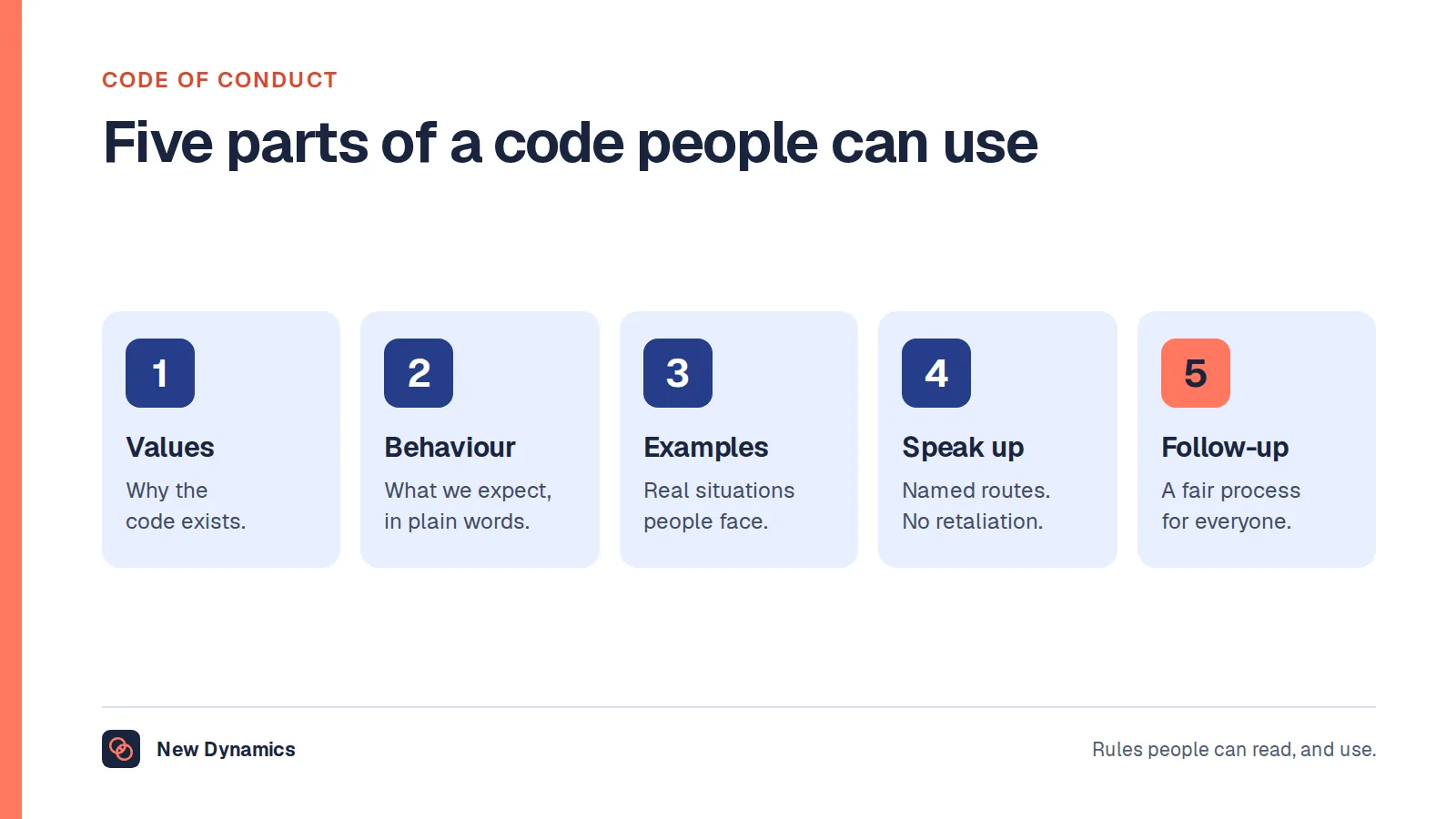
Conduct and standards. The code of conduct, dress and appearance where it genuinely matters, alcohol and drugs, gifts and hospitality, conflicts of interest, acceptable use of IT and email, social media, and personal use of company equipment. Our post on code of conduct examples covers how specific these need to be to be usable.
Equality, diversity and anti-harassment. The equal opportunities policy, a bullying and harassment policy that names the behaviour it prohibits, and how to report it, including a route that does not go through the person's own line manager.
Time, pay and leave. Working hours and patterns, overtime, time off in lieu, holiday booking rules, sickness absence reporting including who to call and by when, sick pay, family leave, bereavement leave, unpaid leave, jury service, and expenses with the approval route and limits.
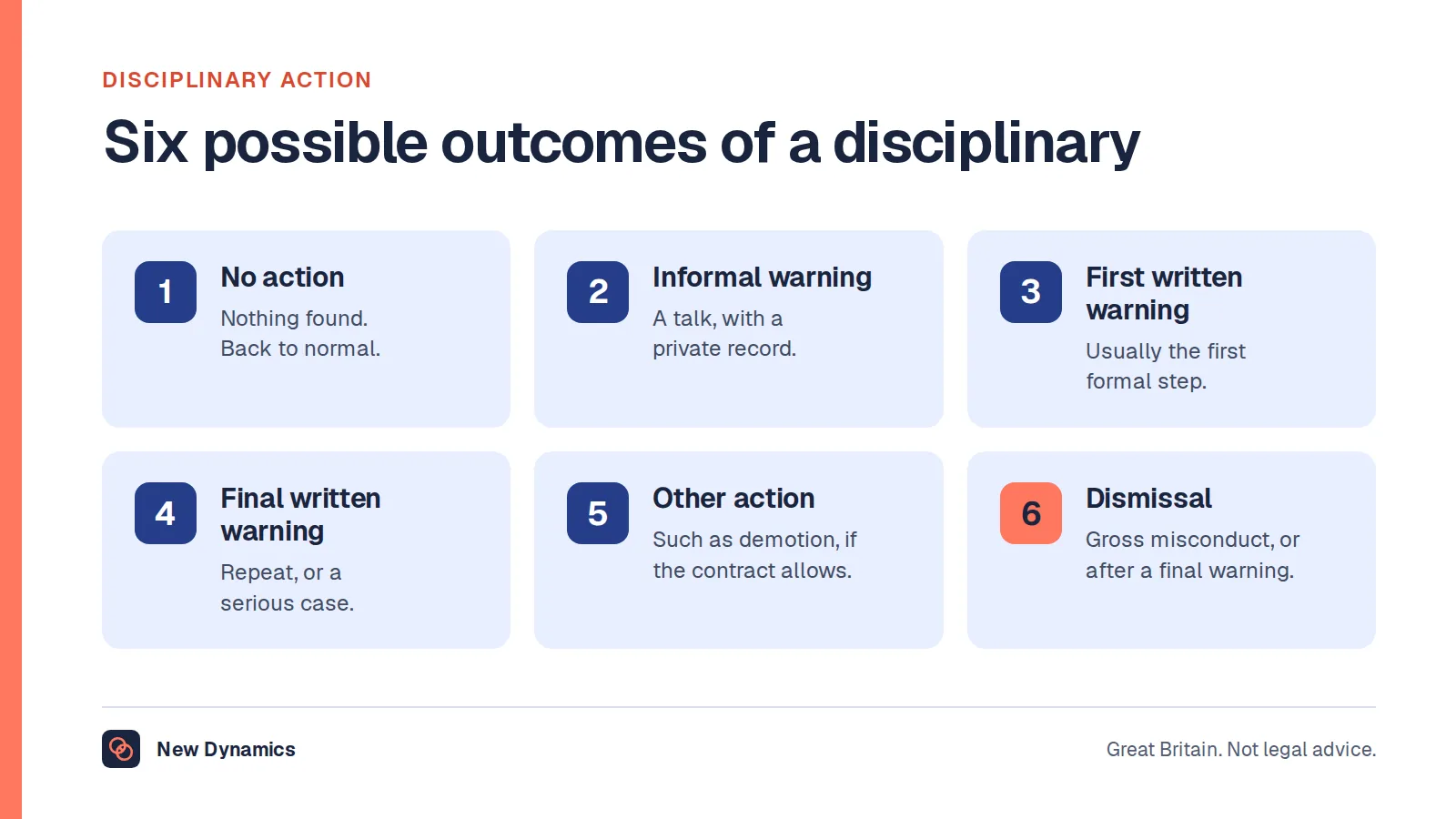
Process. Disciplinary rules and the disciplinary procedure, the grievance procedure, probation, performance management, capability, redundancy, and resignation and notice. These are the sections managers actually open under pressure, so write them as steps with timescales.
Health, safety and data. The health and safety policy and arrangements, accident and incident reporting, first aid, display screen equipment, lone working where relevant, data protection, confidentiality, and whistleblowing with a named route.
Working arrangements. Hybrid and remote working rules, bring your own device if you allow it, travel, and anything site-specific. Our post on a BYOD policy sets out the parts people forget.
Which policies a UK employer is in practice expected to have written down
Two of these are not a matter of taste.
Disciplinary and grievance procedures come first. The Acas Code of Practice on disciplinary and grievance procedures states that "Fairness and transparency are promoted by developing and using rules and procedures for handling disciplinary and grievance situations. These should be set down in writing, be specific and clear". The Code also says "It is also important to help employees and managers understand what the rules and procedures are, where they can be found and how they are to be used", which is a direct argument for the handbook as the place they live.
The Code is not itself a statute, and it says so: "A failure to follow the Code does not, in itself, make a person or organisation liable to proceedings. However, employment tribunals will take the Code into account when considering relevant cases". A tribunal can adjust an award by up to 25 per cent for an unreasonable failure to comply with any provision of the Code.
Health and safety comes second, and here the duty is statutory. Section 2(3) of the Health and Safety at Work etc. Act 1974 provides that "Except in such cases as may be prescribed, it shall be the duty of every employer to prepare and as often as may be appropriate revise a written statement of his general policy with respect to the health and safety at work of his employees and the organisation and arrangements for the time being in force for carrying out that policy, and to bring the statement and any revision of it to the notice of all of his employees".
Alongside it, regulation 5 of the Management of Health and Safety at Work Regulations 1999 requires every employer to make and give effect to appropriate arrangements for the effective planning, organisation, control, monitoring and review of preventive and protective measures, and adds that "Where the employer employs five or more employees, he shall record the arrangements referred to in paragraph (1)".
Read those two together with the statutory statement and the shape of a minimum handbook appears on its own: disciplinary rules, a disciplinary procedure, a grievance procedure, and a written health and safety policy with recorded arrangements. Everything else is there because it saves arguments.
How to keep it current and record that someone read it

A handbook decays quietly. Rates change, a process moves to a different system, a manager leaves and takes the real procedure with them. Four habits keep it alive.
Give every section a named owner and a review date, and review on the calendar rather than when something goes wrong. Re-check the underlying position at gov.uk and Acas before each reissue, because the handbook is a summary of rules that move.
Treat a change to a potentially contractual term as a separate exercise with consultation and agreement, not as a redraft. Acas is clear that consultation should be a genuine two-way discussion about whether a change is needed and what kind of change is appropriate, and that an employer should listen to concerns and consider them seriously before deciding.
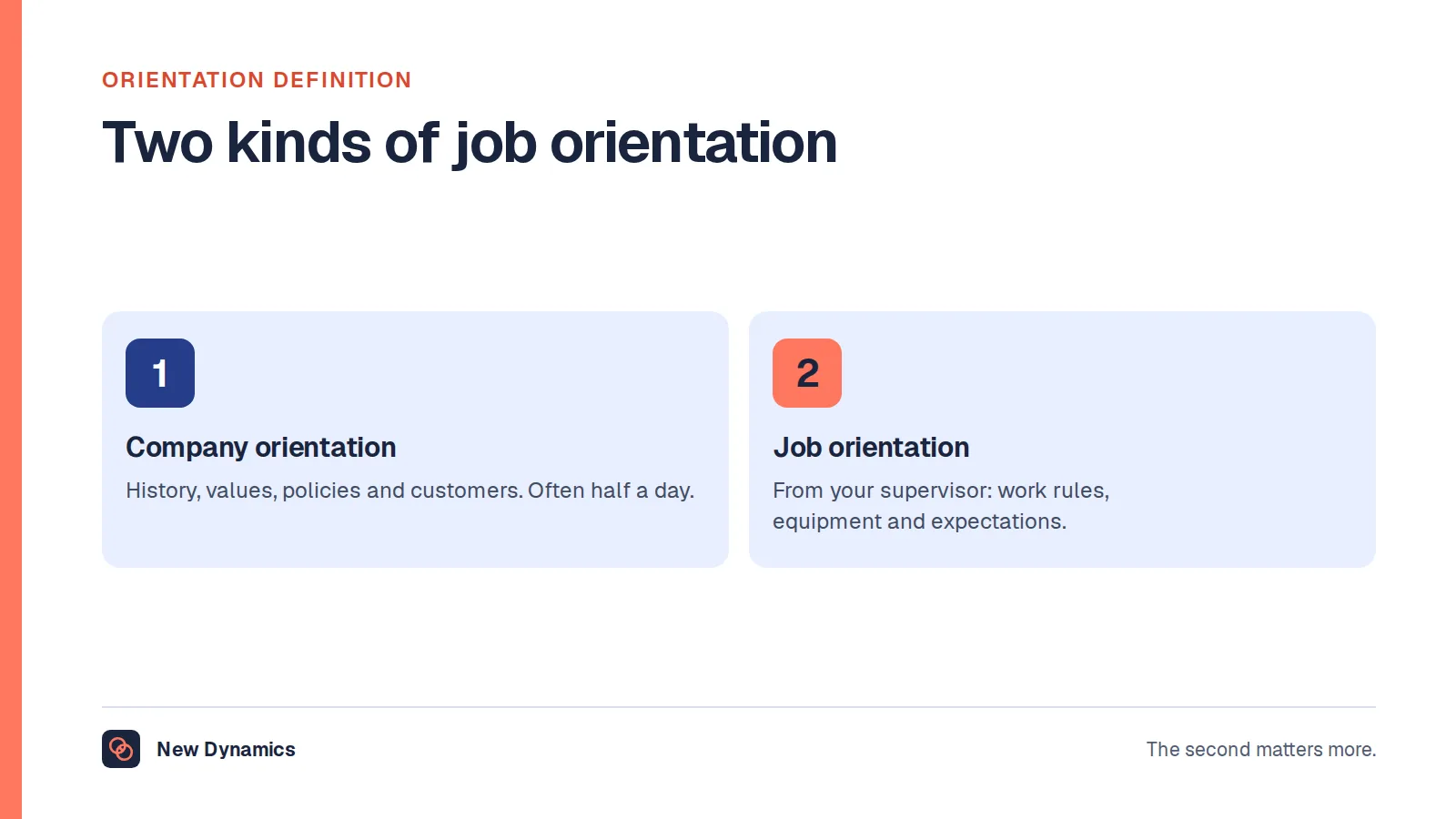
Finally, record the read. Store the version number, the date, and the fact that a named person confirmed they had read it. A tick box is weak evidence on its own, so pair it with something that shows comprehension: a short acknowledgement of the two or three sections that matter most for that role, signed at induction and refreshed when the section changes materially. That record is what you reach for when someone says they were never told, and our post on employee orientation covers sequencing it sensibly.
Keep superseded versions. If a dispute concerns something that happened two years ago, the question is what the handbook said then, not what it says now.
Accessibility for staff without a work email or a desk
Most handbook distribution assumes an office worker with a laptop. Plenty of workforces are nothing like that: care staff, drivers, kitchens, site crews, retail shifts, and anyone working through an agency arrangement.
Give the handbook a route that does not depend on a corporate login. A mobile-friendly page with a short link, a printed copy in the break room with the version number on the cover, and a named person who can answer a question by phone will reach more people than an intranet folder. Put the critical sections, sickness reporting, grievance, and safety reporting, on a single laminated page rather than at page 40 of a PDF.
Think about reading too. Plain language at a reasonable reading age, translations where a significant part of the workforce needs them, large print or screen-reader-friendly formats, and a structure where someone can find the sickness rule in under a minute. If the handbook is the employer's answer to "you were told", then the employer has to be able to show it was reachable.
What goes wrong
A handbook that accidentally creates contractual entitlements
The commonest expensive mistake. An enhanced redundancy formula, a sick pay scheme more generous than statutory, or a bonus described in definite terms gets written into the handbook as a statement of fact. Years later the employer wants to change it and finds it cannot, because the clause has become an incorporated term and changing it needs agreement. The fix is preventative: separate contractual from non-contractual material explicitly, keep discretion genuinely discretionary in both wording and practice, and take advice before drafting anything that promises money.
A handbook nobody has read
A 90-page PDF attached to an offer email is not communication. The symptoms are familiar: two managers running disciplinaries differently, absence reported by text to whoever is around, and nobody able to name the grievance route. Drip-feed the handbook across the first weeks, require acknowledgement of specific sections rather than the whole document, and train managers on the procedures they will have to operate. If the handbook is the only training the procedure gets, the procedure will not be followed.
A handbook that contradicts the contract
Two documents, two notice periods. Two holiday years. A probation length in the handbook that does not match the one in the written statement. Ambiguity in an employer's own documents is rarely resolved in the employer's favour, and the written statement is the one with a statutory list behind it. Run a simple reconciliation before you issue anything: list every term that appears in both documents, check the wording matches, and decide for each which document is the authoritative source. Then say so in the handbook.
A fourth failure deserves a mention because it is so tempting. A handbook copied from another company, including the famous ones that circulate online as PDFs, will not fit. It was written for a different jurisdiction, a different size, a different workforce and a different set of statutory duties, and it says nothing about your sickness reporting line or your disciplinary procedure. Use published handbooks for tone and structure if you like, then write your own contents from your own obligations.
Frequently asked questions
What is an employee handbook?
An employee handbook is one document that collects an employer's rules, procedures and practical guidance: hours, holiday, sickness reporting, conduct, IT use, health and safety, and the disciplinary and grievance procedures. Its job is to give managers and staff the same answer to the same question. It is also called a staff handbook, an employee manual or an employee handbook manual.
Is an employee handbook a legal requirement in the UK?
The handbook itself is not. The written statement of employment particulars is: gov.uk says an employer must give employees and workers a document stating the main conditions of employment when they start work, with a wider written statement within 2 months. Separately, the Acas Code says disciplinary and grievance rules and procedures should be set down in writing, and the Health and Safety at Work etc. Act 1974 requires a written statement of general health and safety policy. A handbook is simply the usual place those written items live.
Is an employee handbook part of the employment contract?
It can be, in part. Acas says terms written in other documents, including employee handbooks and company policies, are "incorporated terms" and are still part of the employment contract even though they were not agreed individually. Whether a given clause is contractual depends on how it is worded and how it has been applied, not on the label on the cover. That is why a handbook should state, section by section, which parts form part of contractual terms.
Can an employer change the employee handbook without agreement?
It depends on whether the clause is contractual. Non-contractual guidance can be updated, though staff should be told. A contractual term is different: gov.uk says the parties must stick to a contract until the terms are changed, usually by agreement, and Acas says any changes must be agreed by both the worker and employer. Once a change is agreed, Acas says you must put it in writing within 1 month.
What should an employee handbook contain?
Group it into welcome and status, conduct and standards, equality and anti-harassment, time, pay and leave, process, health, safety and data, and working arrangements. The sections you are expected to have written down are the disciplinary rules and procedure, the grievance procedure, and the health and safety policy and arrangements, which must be recorded where there are five or more employees.
Should you copy another company's employee handbook?
No. Handbooks that circulate online were written for a different jurisdiction, size and workforce, and they carry none of your statutory duties, your reporting lines or your procedures. Read them for tone and structure if they help, then build your contents from your own obligations: the statutory written statement, the Acas Code on disciplinary and grievance procedures, and your health and safety arrangements.
Your next step: build the handbook from your own obligations
- List every term that appears in both the written statement and the handbook, and decide which document is authoritative for each one.
- Mark each handbook section contractual or non-contractual, and rewrite any clause that promises money or an entitlement you did not intend to guarantee.
- Check you have the written items: disciplinary rules, a disciplinary procedure, a grievance procedure, and a written health and safety policy with recorded arrangements.
- Give every section an owner, a version number and a review date, and keep superseded versions.
- Fix distribution. Publish a route that works without a work email, and record the version, date and named confirmation for every person who reads it.
For the running order and the drafting questions in full, read and download our employee handbook framework. The guide is free to read, and the PDF uses our short download form.
Want policy acknowledgements and version history recorded against each person rather than in a spreadsheet? Book a New Dynamics demo and bring your current handbook. You can also email contact@new-dynamics.com.