TL;DR
- An employer brand is the reputation you have as a place to work. It is not the campaign, the careers page or the strapline. Those are recruitment marketing. The employee value proposition is the promise you make; the employer brand is the verdict people reach after living with it.
- The brand is made in five places: the hiring process, the first ninety days, how managers behave in an ordinary week, how people are treated on the way out, and what former employees say a year later. Nothing written in a campaign survives a contradiction in any of them.
- Overselling in recruitment buys applications and pays for them in early leavers. Ask for advocacy carefully: the ICO warns that consent from workers may not be freely given, and nobody should be required to post about work on a personal account.
Somebody in the business has decided the company needs a better employer brand. There is usually a budget, a photographer, a set of values and a plan for a careers page. What there usually is not is a plan to change anything that actually happens to a person who works here.
That is the whole problem. An employer brand is not what you say about yourself. It is what the people who work for you say when you are not in the room, and what the people who left say when nobody is paying them to be kind. You cannot write your way past that. The only durable way to improve an employer brand is to improve the experience it reports on.
This article defines employer branding against the two things it gets confused with, shows the five places the brand is actually made, sets out the honesty constraint that punishes overselling, covers employee advocacy and ambassadors without pretending the legal questions are not there, and ends with the handful of measures worth tracking.
The part of the experience that most often contradicts the promise is the first few weeks. See how New Dynamics onboarding keeps a new starter's tasks, early goals and first manager conversations on one visible path instead of in somebody's inbox.
What an employer brand is, and the two things it is not
Three terms get used as though they were one. Keeping them apart is most of the work.
Employer brand. The reputation you have as a place to work, held in other people's heads. It exists whether or not anyone manages it. It is built from first-hand experience, from what current and former employees tell their friends, and from public traces such as reviews, Glassdoor-style ratings, tribunal reports and press coverage. You influence it. You do not own it.
Employee value proposition. The promise: what a person gets in return for working here. Pay and progression, the work itself, flexibility, security, development, how managers are expected to behave, and the things you will not offer. An employee value proposition is a document and a decision. It is only worth writing if it is true on a Tuesday in February.
Recruitment marketing. How you tell candidates about both. Adverts, the careers site, job descriptions, events, outreach, the follow-up. This is the layer most "employer branding projects" actually change, because it is the only layer a marketing team can change on its own.
The relationship runs one way. Recruitment marketing can describe the employee value proposition. The employee value proposition can shape the experience. Only the experience moves the employer brand. Reverse the order and you get a strapline nobody inside the company recognises.

Where an employer brand actually comes from
Five moments do nearly all of the work, and none of them belongs to marketing.
The hiring process itself
Most people who form a view of you as an employer never work for you. They applied. So the process is the brand for the large majority of the audience, and the detail matters: whether the advert says what the job pays and what it involves, whether somebody replies, whether the interview is the same for everyone, whether adjustments are offered without being asked for twice.
Acas guidance on advertising a job is blunt about the fairness floor. On wording, "you must not ask for or exclude anyone with a certain protected characteristic". On reach, "It's a good idea to advertise in at least 2 different places. For example, in a newspaper and on a jobs website", because, as the same Acas guidance on how to advertise a job notes, "an online job advert might only be seen by specific groups of people". A narrow channel does not only risk unfairness, it narrows the pool of people who ever hear of you.
The first ninety days
The promise made at offer stage is tested immediately. Does the equipment exist. Does the manager know the person is starting. Is there work. Is there anyone to ask. Does the job resemble the advert. A new starter compares the two versions every day for about three months, and tells people which one was true.
How managers behave in an ordinary week
Not in the engagement campaign. In the week where a one-to-one is cancelled twice, or kept. Where feedback arrives as a surprise at appraisal, or continuously. Where a request to work differently is answered, or left. Employer brand at the team level is almost entirely the manager, which is why a values statement that managers ignore is worse than no values statement: it documents the gap.
How people leave
Resignations, redundancies, dismissals and the end of probation are the loudest brand events you will ever stage, because they are discussed. A leaver treated decently, with notice honoured, a straight reference and a proper handover, says something different from one walked to the door. Acas's guidance on discrimination and the law defines discrimination as treating someone “less favourably” than someone else because of a protected characteristic, and lists those characteristics as “Age, disability, gender reassignment, marriage and civil partnership, pregnancy and maternity, race, religion or belief, sex, sexual orientation.” Exits are where inconsistency between people becomes visible, and where it becomes legally interesting as well as reputationally expensive.
What former employees say a year later
The alumni verdict is the most honest version, because the person has nothing to gain. It is also the version that reaches candidates, through the friend who knows somebody who worked there. You get the alumni verdict you earned, roughly eighteen months late.

Three employer branding examples, written as ours
Published employer brand case studies tend to be the campaign, not the cause. The examples below are ours, written for this article as patterns to copy. They are not claims about anybody else's workplace.
The advert that costs applications and saves hires. State the salary band, the shift pattern, the travel, the on-call, and the one part of the job people dislike. Fewer people apply. The ones who do already accept the terms, so offer acceptance rises and the ninety-day drop-out falls.
The two-week outcome rule. Every applicant gets a decision within two weeks of the closing date, and everyone interviewed gets a short note on why. It is slow, unglamorous, and the single most commented-on thing an unsuccessful candidate experiences.
Managers assessed on the things the promise depends on. If the employee value proposition says people get regular feedback and a clear development path, then one-to-one completion and whether goals exist appear in the manager's own review. A promise nobody is accountable for is a slogan.
The honesty constraint: overselling buys early leavers
Recruitment marketing has an incentive to oversell, because applications are easy to count and early leavers arrive later and land on someone else's budget. The arithmetic does not work. A new starter who leaves in month three means the vacancy cost is paid twice, the manager's time is spent twice, the team absorbs two handovers, and the person now tells a specific, credible story about the gap between the advert and the job. That story is cheaper to prevent than to answer.
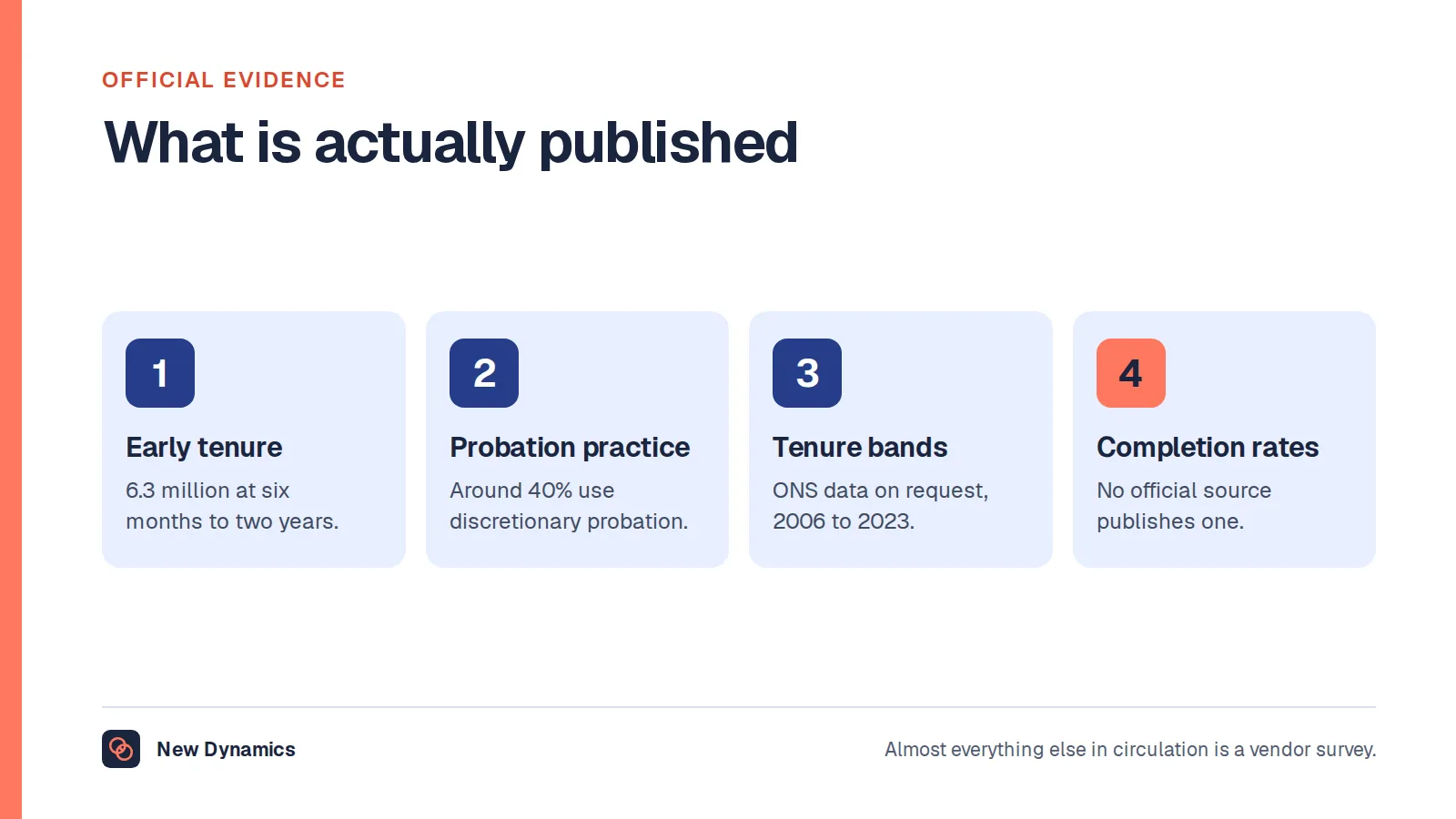
The honest version is less exciting and more effective: describe the job, including the hard parts, and then make the first ninety days match. Our post on onboarding statistics sets out what official United Kingdom sources actually publish about early tenure and what they do not, which matters here because most quoted figures about onboarding and first-year attrition come from vendor surveys with no stated method. Measure your own early leaver rate instead, and read it as a brand measure rather than an HR administration measure.
Employee advocacy and ambassadors, handled carefully
People believe employees more than they believe employers, so asking employees to talk about their work is reasonable. How you ask decides whether it helps.
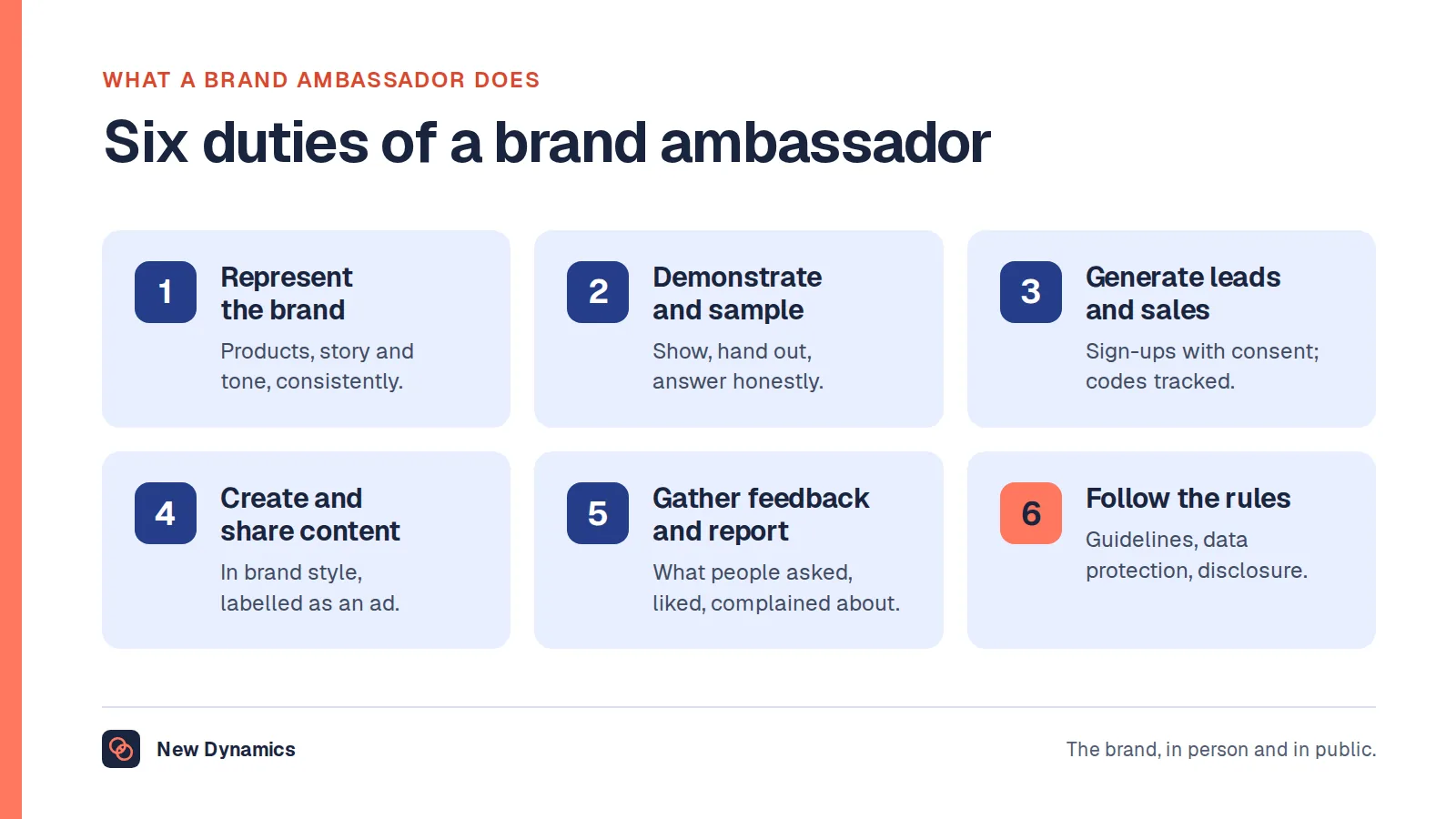
What an employer can do: tell people what is happening and why, make material easy to share, give credit, offer training to people who want to speak publicly, and build an opt-in group for those who are genuinely willing. Our post on the brand ambassador job description covers the role properly where ambassadorship is a paid job rather than a favour, including the United Kingdom rules on disclosing paid promotion.
What an employer should not do: make posting a condition of anything, count posts, imply that non-participation will be noticed, write the words for someone and ask them to publish them as their own, or require the use of a personal account. Pressured advocacy is obvious to the reader. Twenty identical posts on the same day with the same hashtag read as a campaign, and a campaign with employees' faces on it is less persuasive than one employee's unprompted sentence.
There is a data protection and consent problem too, and it is not a formality. The ICO's guidance on collecting and keeping employment records warns that "It may be difficult for you to rely on consent to keep records of personal information about your workers. This is because, as an employer, you will generally be in a position of power over your workers." It continues: "They may fear adverse consequences and may feel they have no choice but to agree to you collecting and using their information. In such circumstances, consent is not considered freely given."
Read that across to advocacy. If you use an employee's name, image or words in your marketing, that is their personal data, and consent given under a manager's gaze is weak consent. So ask in writing, make refusal visibly costless, keep a record of who agreed to what, allow withdrawal at any time with the content taken down, and never require a personal social account. Where people do post, a plain social media policy should say what cannot be shared, such as customer information, colleagues' details and anything confidential. Participation rates will be lower and the output will be worth more. This is general information, not legal advice.
Candidate experience is the most visible part of the brand
Because rejection is the normal outcome, candidate experience reaches more people than anything else you do. Acas's guidance on interviewing job applicants sets the baseline: "tell them when and how you will let them know whether they got the job or not", and "tell them what sort of feedback to expect". On interview notes, it says to "store them securely and confidentially" and to follow data protection rules. On fairness, "Questions must not discriminate", and you should "ask each applicant the same questions where possible".
Three practical rules follow. Reply to everyone, including the people you reject at sift, because silence is the most common complaint and the easiest to fix. Give the feedback you promised and promise only what you will deliver. Ask the same questions, so that two candidates comparing notes find a consistent process rather than two different companies.
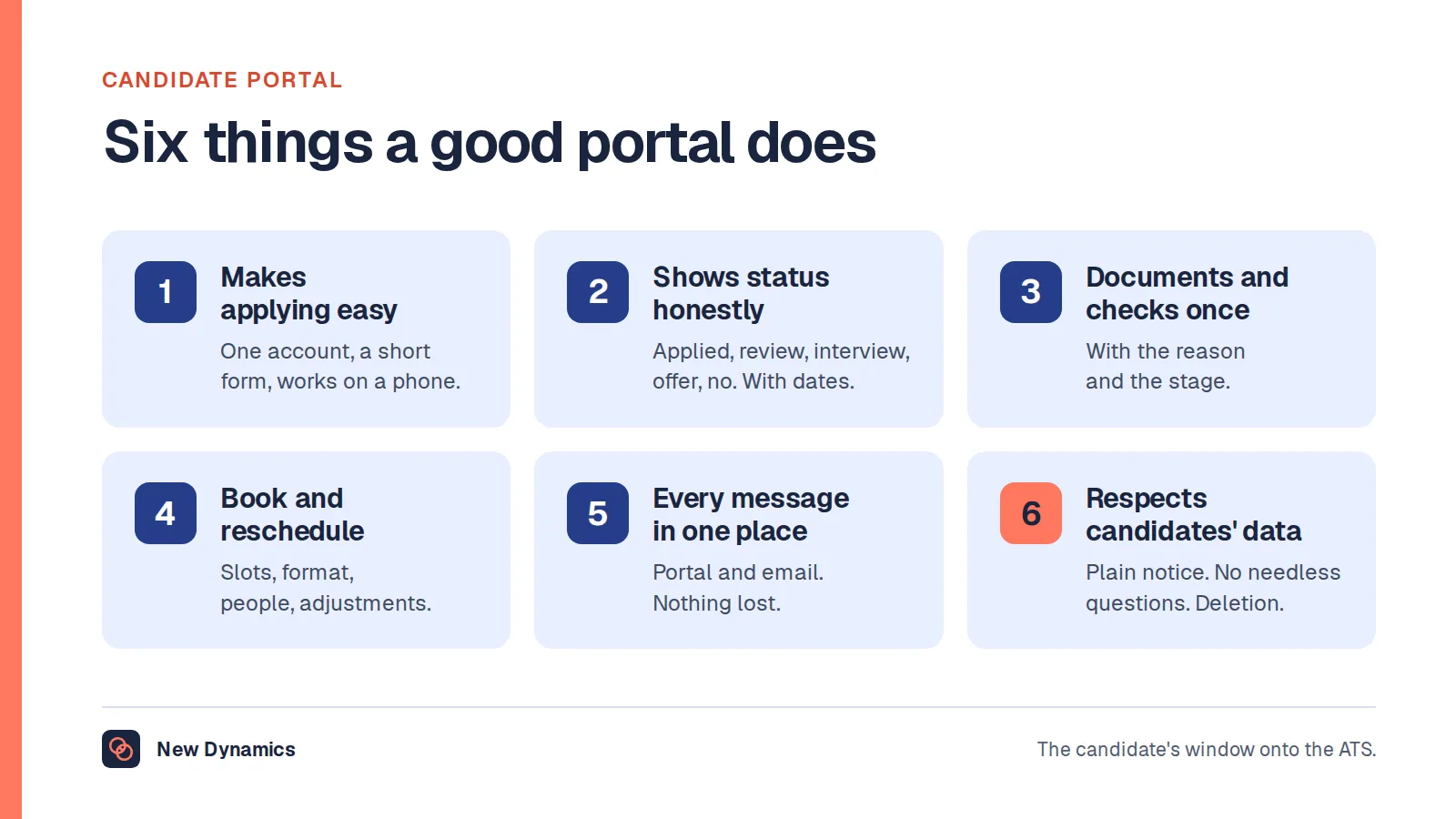
Data protection is part of the experience as well. The ICO's draft guidance on information provided by candidates states that "It is important that you are transparent with candidates about how you use their personal information", and that "You must only collect information that is proportionate and relevant to the role". Every unnecessary question on an application form is both a compliance risk and a reason somebody abandoned the form. For the mechanics of all this, our post on the candidate portal covers what applicants should be able to see and a survey template for asking them.
Reviews, and what to do about the bad ones
Employer review sites are a lagging indicator with a long memory. Two things are worth doing and one is not.
Worth doing: find the cause. A cluster of reviews about one department usually names a manager, a rota or a pay anomaly. Fix that, and the review flow changes within a year. Worth doing: respond briefly and publicly, thanking the reviewer, stating what has changed and where to raise it properly. Not worth doing: arguing, hinting at who wrote it, or encouraging a wave of positive reviews to dilute it. A five-star burst dated the same week is read correctly by everyone.
Never identify an individual in a public reply, even to correct a factual error. Confirming that a named person worked for you, in what role, or that they were dismissed, is processing their personal data in public, and the fact that they posted first does not transfer the obligation to them. Answer the issue, not the author.
Measuring an employer brand honestly
Four measures are worth having, and all four come from your own records.
- Offer acceptance rate. Offers accepted as a share of offers made. Falls when the promise and the market price diverge.
- Early turnover. Leavers inside ninety days and inside twelve months, by manager and by route of hire. The clearest signal that recruitment and reality disagree.
- Referral rate. Hires and applications from current employees as a share of the total. People refer friends to places they would defend.
- Application sources. Where applications come from, and which source produces hires who stay.
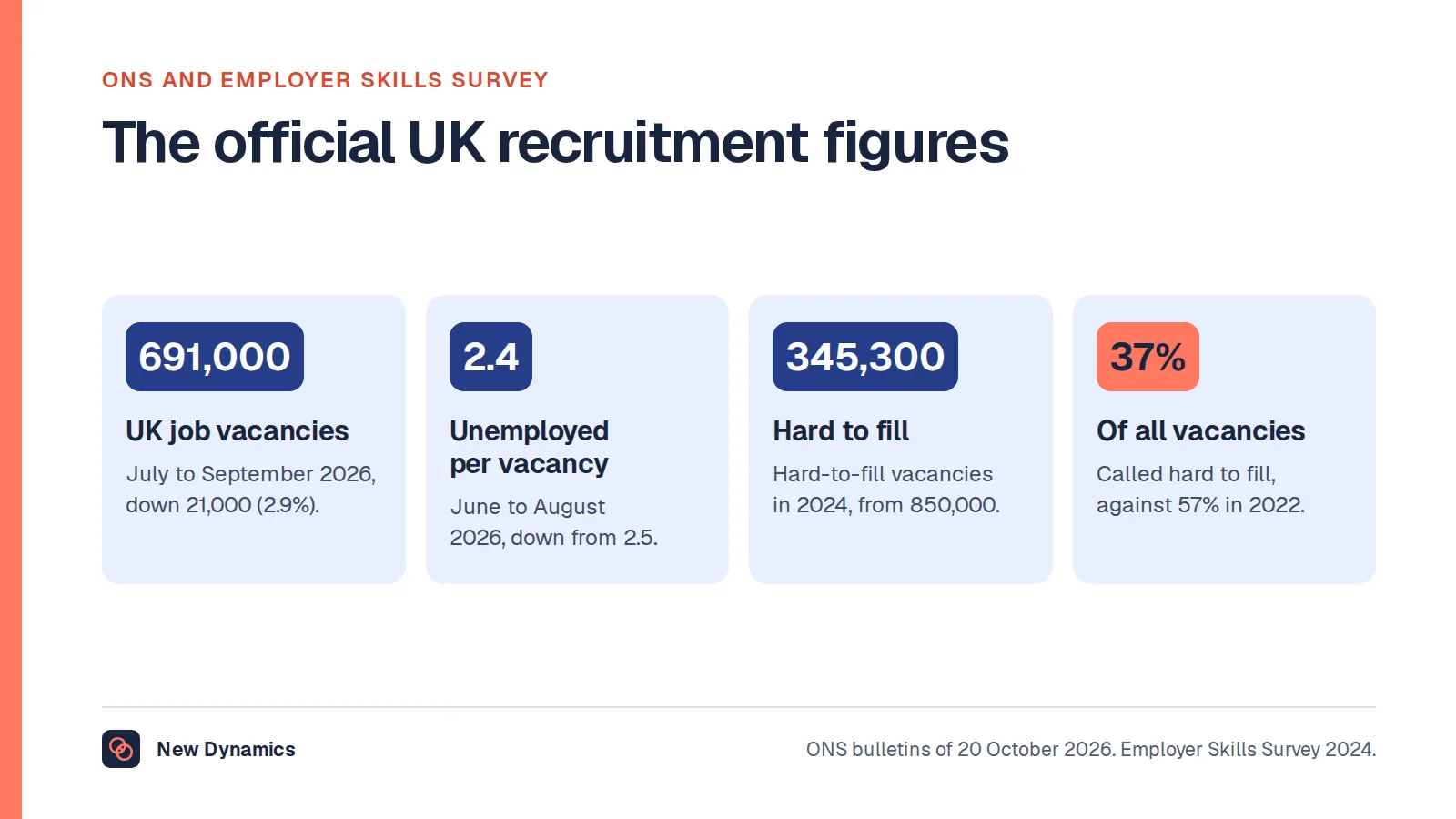
The honest caveat matters as much as the list. Our post on United Kingdom recruitment statistics explains that no official United Kingdom source publishes an offer acceptance rate, a cost per hire or a time to hire, so there is no national benchmark to compare yourself against for most of this. The circulating averages come from vendor and membership panels with undisclosed composition. Use your own trend on a written definition, and look at the statistics hub for the official figures that do exist. A brand measure you can audit beats a benchmark you cannot trace.

What goes wrong
A campaign with nothing behind it. New photography, a new careers page, a new line about people being the heart of the business, and an unchanged experience. The campaign raises expectations, applications rise, and the gap shows up as early leavers and worse reviews. You have paid to publicise the problem.
Values on a wall that managers ignore. If the values say candour and the organisation punishes it, employees learn which one is real in about a fortnight. Published values are a promise about manager behaviour. Either hold managers to them in their own reviews or take them down.
Treating it as a marketing project. Employer brand sits on pay, rotas, management capability, hiring practice, onboarding and exits. All of those are operations. A marketing team can describe the workplace accurately, which is useful, but it cannot make the workplace worth describing. Put the work where the causes are, and give the people who own hiring, onboarding and management the same scoreboard.
Frequently asked questions
What is employer branding?
Employer branding is the work of understanding and improving your reputation as a place to work. The brand itself is the reputation, held by current employees, former employees and candidates. Branding is everything you do to make that reputation accurate and better, which mostly means improving the experience rather than describing it differently.
What is the difference between an employer brand and an employee value proposition?
The employee value proposition is the promise you make about what a person gets for working here: pay, progression, the work, flexibility, development and how managers behave. The employer brand is the verdict people reach after testing that promise. One is a document you control, the other is a reputation you only influence.
What are some employer branding examples?
Useful examples are process changes, not campaigns. Publishing salary bands and the unglamorous parts of a job in the advert. Giving every applicant a decision within two weeks and everyone interviewed a reason. Making one-to-one completion part of a manager's own review. Each changes what people experience, so it changes what they say.
Can an employer require employees to post about work on social media?
No, and it is unwise to try. Posting should be voluntary, nobody should be required to use a personal account, and refusal must carry no consequence. The ICO warns that consent from workers may not be freely given because employers are in a position of power, so get agreement in writing, allow withdrawal and take content down when asked. This is general information, not legal advice.
How do you respond to a negative employer review?
Fix the cause first, then reply briefly in public: thank the reviewer, say what has changed and give a route to raise things properly. Do not argue, do not hint at who wrote it and do not confirm that any individual worked for you, because that is their personal data. Never run a wave of positive reviews to bury one.
How do you measure an employer brand?
Use four measures from your own records: offer acceptance rate, early turnover at ninety days and twelve months, referral rate and application sources. No official United Kingdom source publishes a benchmark for most of these, so track your own trend against a written definition and split the numbers by manager and route of hire.
Your next step: close the gap, then describe it
- Read your three most recent job adverts as a candidate. Mark every line you could not defend on day one.
- Pull early turnover for the last twelve months, split by manager and by route of hire. Read it as a brand measure.
- Check that every applicant in the last quarter received an outcome. Fix the silence before anything else.
- Put one-to-ones, early goals and manager behaviour into the manager's own review, so the promise has an owner.
For the hiring half of this, read and download our recruitment and selection guide. The guide is free to read, and the PDF uses our short download form.
Want the first ninety days to match what the advert promised? Book a New Dynamics demo and bring your current onboarding and review process. You can also email contact@new-dynamics.com.