TL;DR
- In US employment, the 9 form people mean is usually one of two: Form I-9, which verifies that a new hire may work in the United States, or Form W-9, which a contractor or other payee uses to give their taxpayer identification number.
- Form I-9 is for employees. USCIS says all US employers must complete it for every person they hire. The employee completes Section 1 by the first day of employment, and the employer completes Section 2 within three business days of the date of hire.
- Form W-9 is for payees such as independent contractors, so the payer can file an information return. It is not sent to the IRS. This article is general information about US federal forms, not legal or tax advice.
A new starter's paperwork pack says "complete the 9 form". A contractor is asked for "your 9" before their first invoice is paid. Both requests sound alike and are often confused, but they ask for different forms that do different jobs, and getting the wrong one is a common onboarding mistake.
This article explains the 9 form in US hiring: what Form I-9 and Form W-9 are, who completes each one, the deadlines and retention rules, and how to tell which one you need. It is general information about US federal forms, not legal or tax advice.
Onboarding paperwork goes wrong when nobody owns the deadline. See how New Dynamics onboarding gives each new-starter task an owner and a due date, so forms like these are not left until the first payroll run.
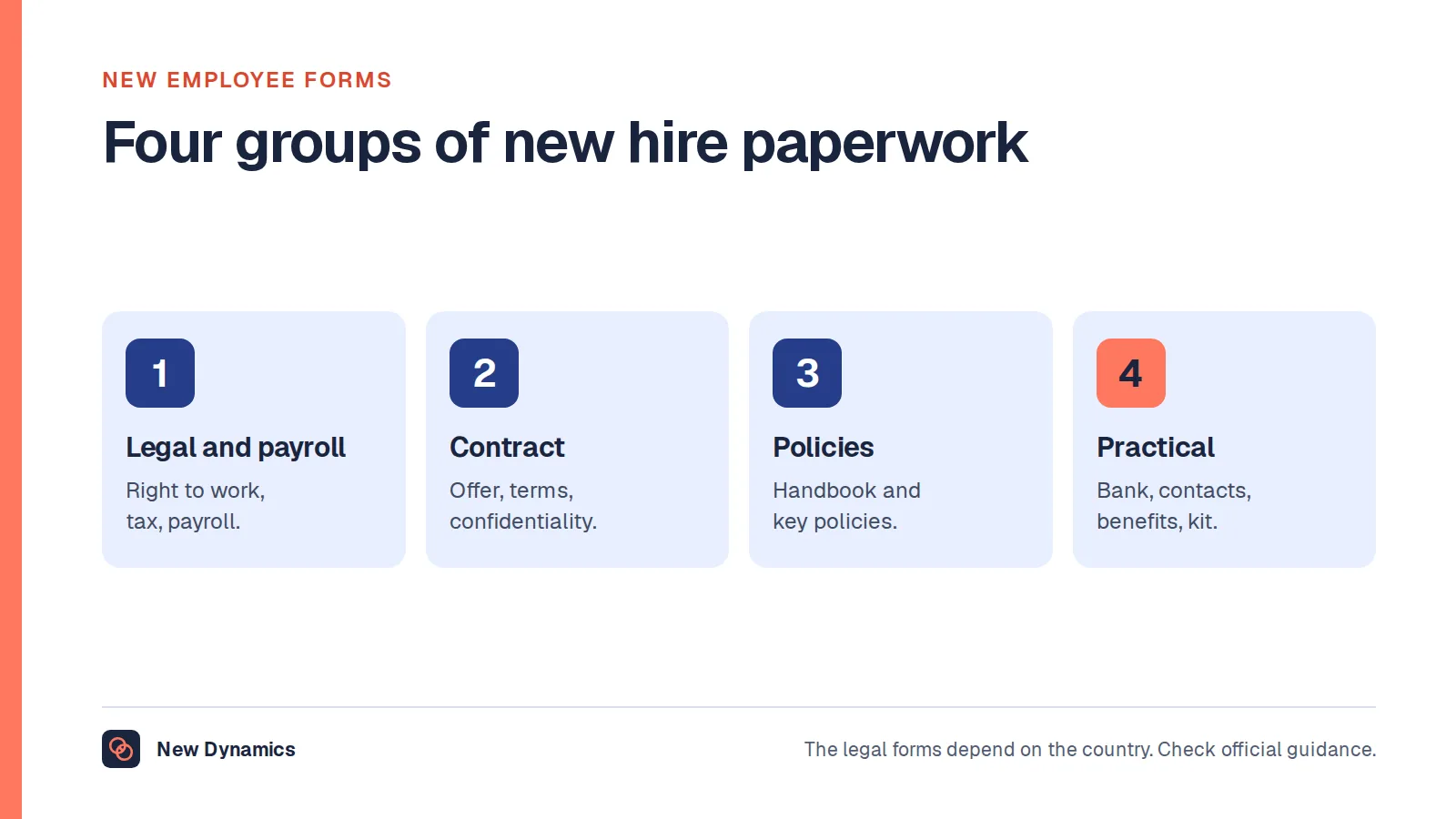
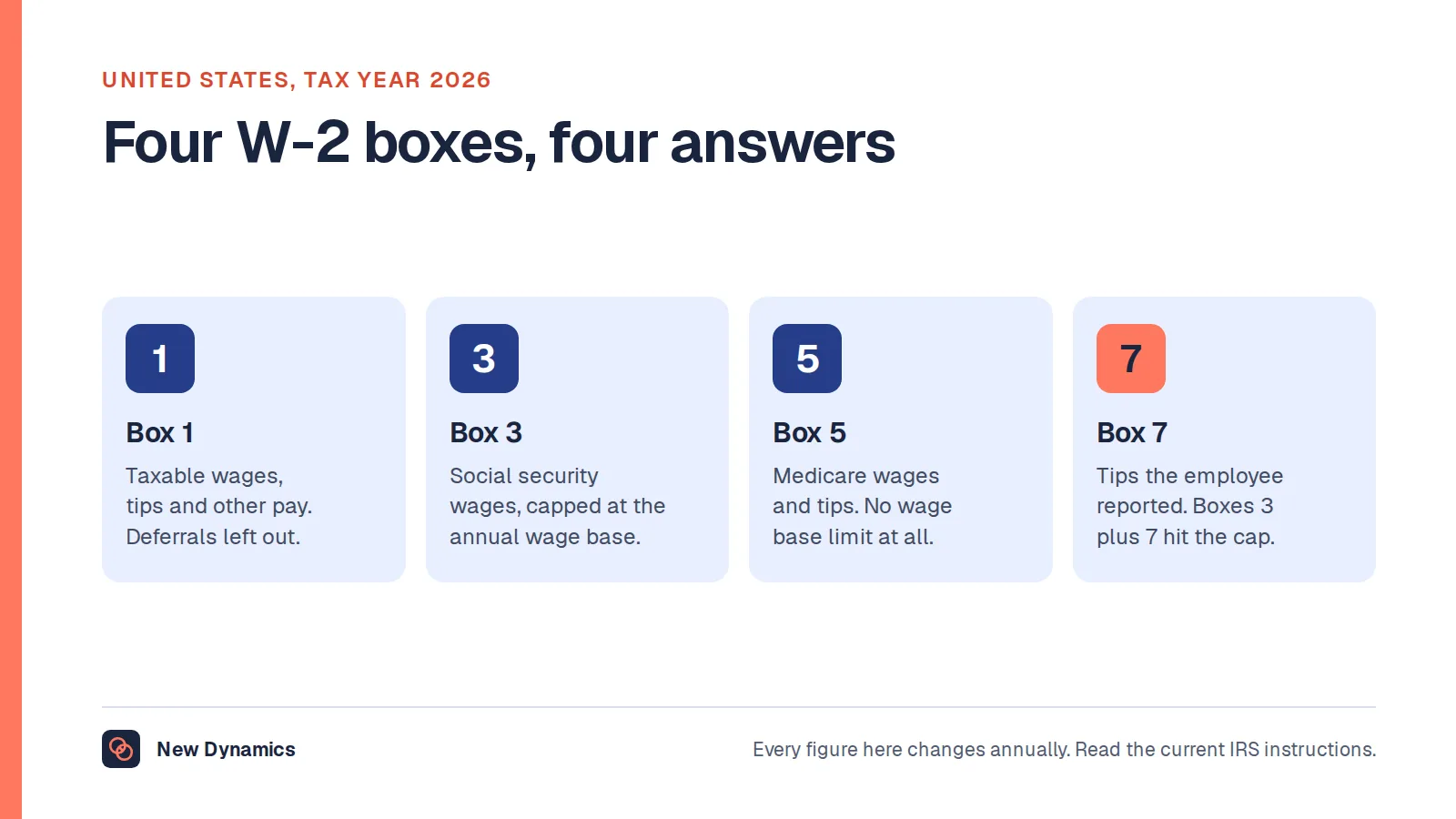
For the full set of paperwork a new hire needs, see our checklist of new employee forms. If you are dealing with year-end forms, our post on the W2 form covers what employers send to employees each January.
Which 9 form do you need?

The quickest way to decide is to ask what the relationship is.
- Hiring an employee? You need Form I-9, Employment Eligibility Verification. It confirms identity and permission to work in the United States.
- Paying a contractor, freelancer or other payee who is not an employee? You may need Form W-9, Request for Taxpayer Identification Number and Certification. It collects their taxpayer identification number so you can report what you paid them.
An employee does not normally complete a W-9 for their own pay, and a contractor does not complete an I-9. If someone is asked for both, check how the relationship has been classified.
Form I-9: employment eligibility verification
US Citizenship and Immigration Services describes the purpose plainly: employers "Use Form I-9, Employment Eligibility Verification, to verify the identity and employment authorization of individuals hired for employment in the United States." It also states that "All U.S. employers must properly complete Form I-9 for every individual they hire for employment in the United States."
Who completes which part
Both the employee and the employer complete the form:
- Section 1, by the employee. The employee gives their details and attests to their employment authorisation.
- Section 2, by the employer (or an authorised representative). The employer examines the employee's identity and work authorisation documents and records the document information.
I-9 deadlines

USCIS sets two deadlines:
- Section 1: USCIS's employer handbook states that "The employee must complete Section 1 no later than the employee's first day of employment."
- Section 2: the employer must complete it "within 3 business days of the date of hire of your employee". USCIS gives an example: if the employee began work for pay on Monday, Section 2 must be completed by Thursday of that week.
I-9 retention
The form is not sent to the government. The employer keeps it. USCIS says to "Retain and store Form I-9 for three years after the date of hire, or for one year after employment is terminated, whichever is later." Keep completed forms secure and separate from general personnel files, since they hold identity document details.
Form W-9: taxpayer identification number
The IRS describes the purpose of Form W-9 as being to "provide your correct Taxpayer Identification Number (TIN) to the person who is required to file an information return with the IRS". Its examples include income paid to the person, real estate transactions and contributions made to an IRA.
In a workplace setting, the usual case is a business paying an independent contractor. The business asks the contractor for a completed W-9 before paying them, so it has the correct name and TIN to report the payments on an information return at year end.
Two points are often missed:
- The W-9 is not sent to the IRS. The payee gives it to the payer, who keeps it on file.
- A W-9 does not make someone a contractor. Whether a worker is an employee or a contractor depends on the working relationship, not on which form was signed.
I-9 and W-9 compared
| Form I-9 | Form W-9 | |
|---|---|---|
| Issued by | USCIS | IRS |
| Purpose | Verify identity and work authorisation | Give a taxpayer identification number |
| Who completes it | New employee and employer | Payee, such as a contractor |
| Who keeps it | The employer | The payer |
| Sent to the government? | No | No |
| Typical moment | First days of a new job | Before the first payment |
Building the 9 form into onboarding
A few habits keep both forms on track:
- Separate the employee and contractor packs. An employee's pack includes the I-9; a contractor's includes the W-9. Mixing them causes most of the confusion.
- Put the I-9 deadlines in the onboarding plan. Section 1 by the first day, Section 2 within three business days, with a named owner for each.
- Store I-9s securely and set a retention date. Work out the later of three years after hire or one year after leaving, and review stored forms against it.
- Request the W-9 before the first payment, not at year end when the information return is due.
- Check classification, not paperwork. If a "contractor" works like an employee, the right form is the least of the problems.
Our employee onboarding guide covers the wider first-weeks plan.
Common mistakes
- Giving a new employee a W-9 instead of an I-9. Employees need an I-9 for eligibility, and their own tax withholding form for pay.
- Missing the three-business-day deadline for Section 2 because the paperwork waited for HR's next free afternoon.
- Filing I-9s in personnel files where too many people can see identity documents.
- Throwing I-9s away too early, or keeping them indefinitely.
- Treating a signed W-9 as proof of contractor status.
Frequently asked questions
What is the 9 form for a job?
For a new employee in the United States, the 9 form is usually Form I-9, Employment Eligibility Verification, which confirms identity and permission to work. For a contractor or other payee, it is usually Form W-9, which gives the payer a taxpayer identification number.
What is the difference between an I-9 and a W-9?
Form I-9 is a USCIS form that verifies a new employee's identity and work authorisation, completed by the employee and the employer. Form W-9 is an IRS form a payee such as a contractor uses to give their taxpayer identification number to the person paying them.
When must Form I-9 be completed?
USCIS says the employee must complete Section 1 no later than their first day of employment, and the employer must complete Section 2 within three business days of the date of hire. If the employee starts work for pay on a Monday, Section 2 is due by Thursday.
How long must an employer keep Form I-9?
USCIS says to keep Form I-9 for three years after the date of hire or one year after employment ends, whichever is later. The form is kept by the employer and is not sent to the government.
Does a W-9 get sent to the IRS?
No. The payee gives the completed W-9 to the person or business paying them, who keeps it and uses the details to file any required information return.
Your next step: check your onboarding packs
- Confirm that employee packs include Form I-9 and contractor packs include Form W-9, not the other way round.
- Add the Section 1 and Section 2 deadlines to your onboarding plan with an owner for each.
- Check where completed I-9s are stored and who can see them.
- Set a retention review using the later of three years after hire or one year after leaving.
For the full first-weeks plan, read and download our employee onboarding guide. The guide is free to read, and the PDF uses our short download form.
Want onboarding tasks with owners and due dates? Book a New Dynamics demo and bring your current new-starter checklist. You can also email contact@new-dynamics.com.