TL;DR
- New employee forms fall into four groups: legal and payroll forms, contract documents, policy acknowledgements and practical set-up forms. The exact legal forms depend on the country.
- In the UK, employers must check the right to work before employment starts, tell HMRC about the new employee and give a written statement of main terms on the first day. In the US, Form I-9 and Form W-4 are central.
- Send what you can before day one, collect only the information you need, store it securely and keep the first day for people. Paperwork is a small part of onboarding.
A new colleague arrives, keen to start. They are shown to a desk and handed a stack of forms. By lunchtime they have written their address six times and met nobody. It is a poor first impression, and an avoidable one.
This article gives you a plain checklist of new employee forms: what to collect before day one, on day one and during the first month. It includes examples for the UK and the US, a free checklist to download, and advice on handling the information safely.
Paperwork is the smallest part of a good start. See how New Dynamics onboarding helps managers to give every new starter clear expectations, check-ins and early feedback.
This is general information. It is not legal, tax or payroll advice. Requirements differ between countries and change over time, so check the official guidance for your location, or take professional advice.
The four groups of new hire forms
- Legal and payroll forms. Proof of the right to work, tax forms and payroll details. These are set by law, and they differ by country.
- Contract documents. The offer letter, the contract or written statement of terms, and any confidentiality or intellectual property agreement.
- Policy acknowledgements. Confirmation that the employee has received and read the handbook and key policies.
- Practical set-up forms. Bank details, emergency contacts, benefits and pension enrolment, equipment and system access.

New employee forms in the UK
GOV.UK sets out the employer's duties step by step. Three points matter most for paperwork.
Check the right to work. GOV.UK says: “You must check that a job applicant is allowed to work for you in the UK before you employ them.” Its guide to checking a job applicant's right to work explains the accepted ways of checking, and warns that an employer could face a civil penalty if it employs an illegal worker without having carried out a correct check.
Tell HMRC, and get tax details. GOV.UK's guide to telling HMRC about a new employee says: “You must tell HM Revenue and Customs (HMRC) when you take on a new employee.” To work out the tax code, the employer needs the employee's P45, or, if there is none, HMRC's “starter checklist”, which replaced the P46.
Give a written statement on day one. GOV.UK explains that an employer must give employees and workers a written statement of employment particulars. “The employer must provide the principal statement on the first day of employment and the wider written statement within 2 months of the start of employment.” The principal statement must include, among other things, names, job title, start date, pay, hours, holiday entitlement, place of work and any probation period.
Employers also have duties on workplace pensions, health and safety and insurance. GOV.UK's guide to employing staff for the first time lists them.
New employee forms in the US
Two federal forms apply to almost every new hire.
Form I-9, Employment Eligibility Verification. US Citizenship and Immigration Services describes Form I-9 as the form used “to verify the identity and employment authorization of individuals hired for employment in the United States”. It states that employers must complete it for every individual they hire, and that both the employee and the employer complete parts of the form.
Form W-4, Employee's Withholding Certificate. The Internal Revenue Service says that an employee completes Form W-4 “so that your employer can withhold the correct federal income tax from your pay”.
States add their own requirements, such as state tax withholding forms and new hire reporting. Check with your state agencies, or with a payroll provider.
Other countries have their own equivalents. The same four groups apply everywhere. Only the legal forms change.
The new hire paperwork checklist
You can download our free new employee forms checklist as an editable CSV that opens in Excel, Google Sheets or any spreadsheet tool. No form is required. Adapt it to your country and organisation.
Before day one
- Signed offer letter or contract of employment.
- Proof of the right to work, checked in the way that your country requires.
- Tax and payroll details. In the UK, a P45 or the HMRC starter checklist. In the US, Form W-4.
- Bank details for salary payments.
- Personal details and an emergency contact.
On day one
- The written statement of main terms, where the law requires one on the first day.
- Pension or retirement plan information.
- Benefits enrolment forms, with the deadlines explained.
- Equipment and system access.
In the first week
- Acknowledgement of the employee handbook.
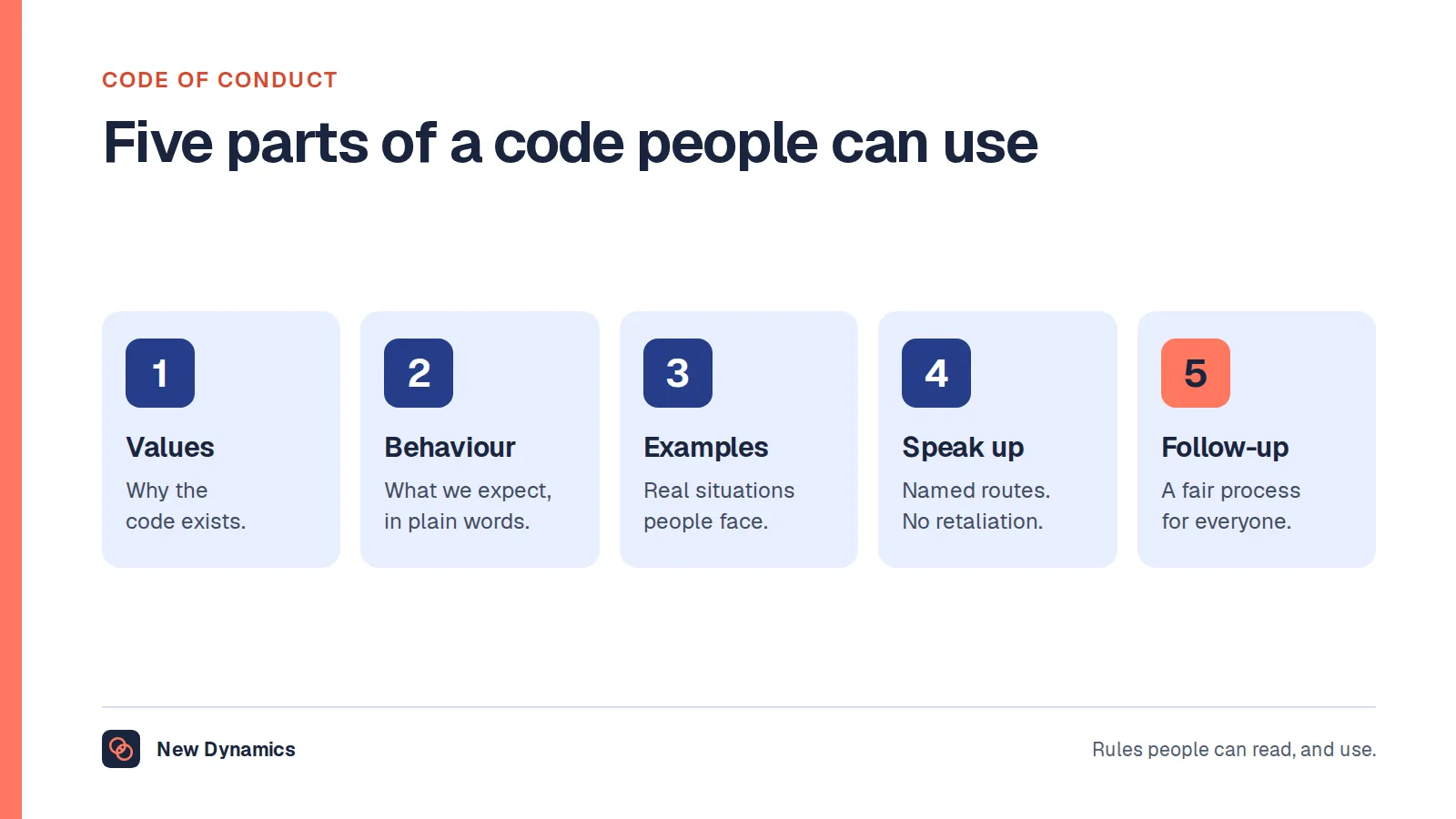
- Acknowledgements of key policies: code of conduct, data protection, IT and acceptable use, and health and safety. See our code of conduct examples.
- Confidentiality or intellectual property agreement, if the role needs one.
- A record of the health and safety induction.
- An equality monitoring form, if you use one. It should be voluntary, and stored separately from the personnel file.
In the first month
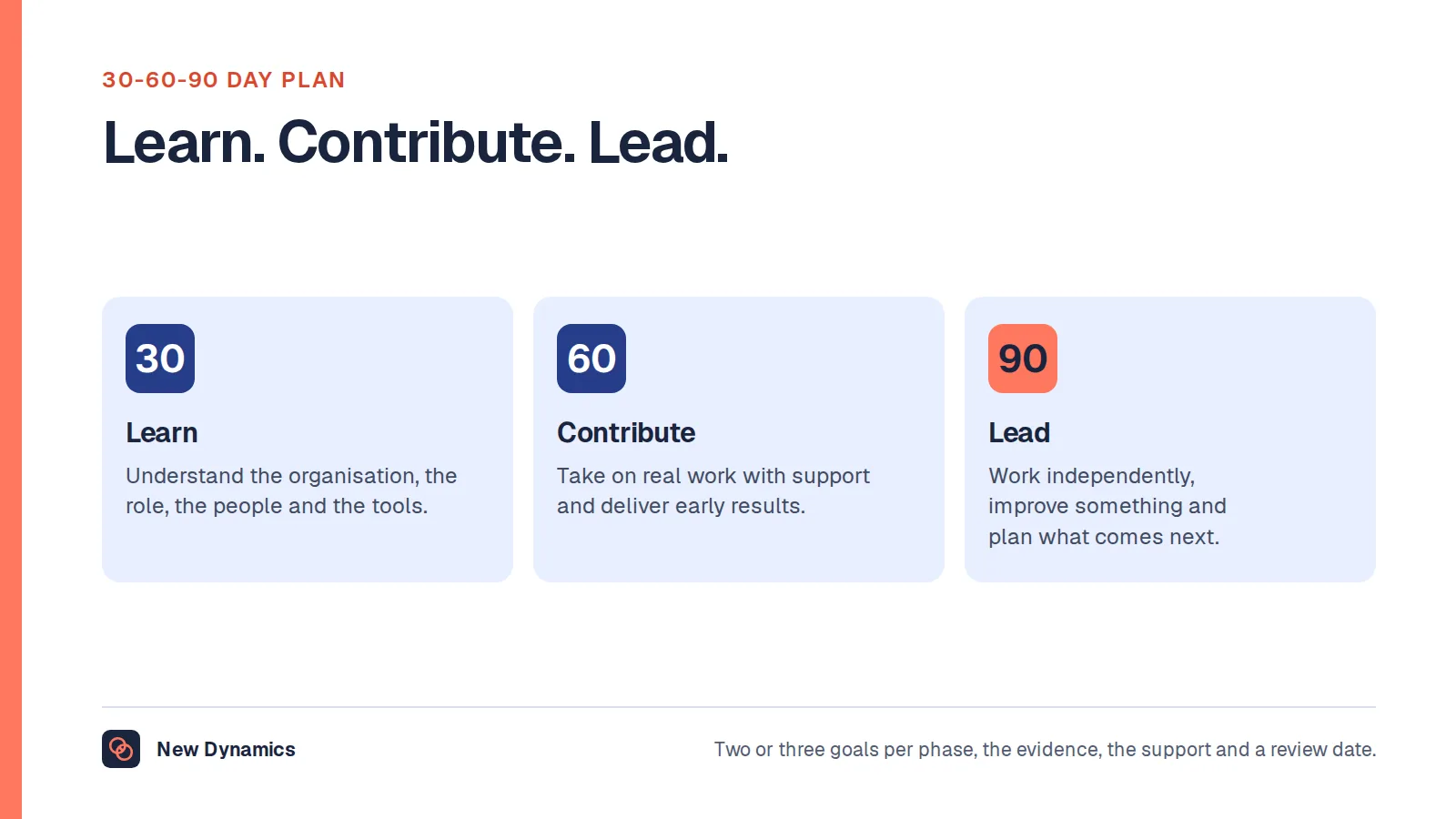
- Role expectations and first goals, agreed in writing. See our 30-60-90 day plan.
- A training plan, and a record of mandatory training.
- Probation review dates in both calendars.
Our open 90-day onboarding checklist covers the rest of the first three months.

Handle the information with care
New hire forms contain some of the most sensitive data that an organisation holds: identity documents, bank details, tax information and sometimes health information.
- Collect only what you need. If you cannot say why you need a piece of information, do not ask for it.
- Tell people why you are asking, and who will see it.
- Store it securely, with access limited to those who need it.
- Keep copies of identity documents only as the law requires, and for no longer.
- Separate sensitive information. Equality monitoring data and health information should not sit in the general personnel file.
- Set retention periods, and delete what you no longer need.
Our employee data protection guide goes into more detail.
Make the paperwork painless
- Send forms before the first day. Give people a week, and a named person to ask.
- Use electronic forms and signatures where the law allows. Ask for each piece of information once.
- Explain each form in a sentence. “We need this so that you are taxed correctly” removes anxiety.
- Give one checklist to the new starter, so that they can see what is done and what is left.
- Make the forms accessible. Offer help to anyone who needs it, and provide alternatives to online forms.
- Keep the first morning for people. A welcome from the manager, introductions and a tour matter more than any form.
- Audit the pack every year. Remove duplicate questions and forms that nobody uses.
Who does what
| Task | Usually owned by |
|---|---|
| Offer letter, contract, written statement | HR |
| Right to work check | HR |
| Tax forms, payroll set-up and bank details | Payroll |
| Policy acknowledgements | HR |
| Equipment and system access | Manager and IT |
| Goals, training plan and probation reviews | Manager |
In a small organisation, one person may do all of this. A checklist matters even more then.
Common mistakes
A pile of paper on day one. Send it ahead.
Asking for the same information several times. One form, used many times.
Collecting too much. Extra data is extra risk.
Identity documents left in email inboxes. Move them to secure storage, and delete the email.
Missing a legal deadline. Right to work checks and first-day documents have fixed timings. Put them at the top of the checklist.
Treating acknowledgements as understanding. A signature proves receipt. Discuss the policies that matter most.
Stopping at paperwork. Forms are compliance. Onboarding is helping someone to do good work and to feel that they belong.

Frequently asked questions
What forms do new employees need to fill out?
New employees usually provide proof of their right to work, tax and payroll details, bank details, personal and emergency contact details, and benefits or pension choices. They also sign the contract and acknowledge the handbook and key policies. The legal forms depend on the country.
What new employee forms are required in the UK?
Employers must check the right to work before employment starts, collect a P45 or an HMRC starter checklist for tax, register the employee with HMRC through payroll, and give a written statement of main terms on the first day. Pension and health and safety duties also apply.
What new hire forms are required in the US?
At federal level, employers complete Form I-9 to verify identity and employment authorisation, and employees complete Form W-4 so that the correct federal income tax is withheld. States add their own tax and reporting requirements.
When should new hire paperwork be completed?
Send as much as possible before the first day. Some items have legal timings. In the UK, the right to work check must be done before employment starts, and the principal written statement is due on the first day. Policy acknowledgements can follow in the first week.
Can new employee forms be completed online?
In many cases, yes. Electronic forms and signatures make the process quicker and reduce errors. Check that your method is accepted for each legal form in your country, that the system is secure, and that you offer an alternative to anyone who needs one.
How long should employers keep new hire forms?
It depends on the document and the country. Set a retention period for each type, based on legal requirements and genuine business need, and delete records when the period ends. Take advice if you are unsure.
Your next step: audit your new starter pack
- List every form that a new starter currently completes.
- Mark each as legal, contract, policy or practical, and delete any that nobody uses.
- Remove every duplicated question.
- Move everything that you can to before day one, and plan the first morning around people.
For a complete approach to the first 90 days, read and download our employee onboarding guide. The guide is free to read, and the PDF uses our short download form.
Want every new starter to have clear goals, regular check-ins and early feedback? Book a New Dynamics demo and bring your current onboarding process. You can also email contact@new-dynamics.com.