TL;DR
- At work, a placement is a temporary position or job in an organisation. The word is used in three ways: a work placement for a student or trainee, a job placement arranged by an agency or service, and placement as the HR step of putting a person into a role.
- In the UK, whether someone on a placement must be paid depends on whether they count as a worker. Students on a placement of up to a year that is a required part of a UK course are exempt from the minimum wage.
- A good placement has a purpose, a named supervisor, real tasks, feedback and a review at the end.
“I'm on placement this year.” “The agency found me a placement.” “Selection and placement.” The same word turns up in a student's timetable, a recruiter's email and an HR textbook, and it means something slightly different in each.
This article explains the meaning of placement at work, the three ways the word is used, how a placement differs from an internship and an apprenticeship, the UK rules on pay, and how to host a placement that is worth having.
A placement works when the person has clear goals and hears how they are doing. See how New Dynamics continuous feedback makes regular, specific feedback part of everyday work.
What does placement mean?
The Cambridge Dictionary's work-related definition of placement is “a temporary position or job in an organization”. Its examples show the usual contexts: “I think we can find a placement for you in the sales department” and “The trainee teachers do a school placement in the summer term.”
The dictionary lists other senses too. Placement can also mean officially putting someone in a particular home, institution or school class, as in a foster placement, and “the position of something, or the act of putting something in a particular position”, as in product placement. This article is about the first sense.
The plural, placements, simply means more than one such position, as in “the course includes two placements”.
Three meanings at work
1. A work placement. A period spent working in an organisation as part of a course or training programme. Students on “sandwich” degrees, trainee teachers, student nurses and social workers all do placements. The purpose is to learn by doing real work under supervision.
2. A job placement. The act of finding someone a job, or the job that results. Employment agencies, university careers services and government employment schemes all “place” people. A recruiter who says “we made twelve placements this month” means twelve people started jobs.
3. Placement as an HR step. In HR textbooks, placement is what follows selection: putting the chosen person into a specific job and team. The open textbook Introduction to Business, published by OpenStax, uses the word in this way in its section on human resources management, noting that employees cannot be trained and paid “until selected and placed in jobs”.
All three share an idea: matching a person to a position. The differences are who arranges it, how long it lasts and what it is for.

Placement, internship, apprenticeship and work experience
| Term | Typical meaning | Usual length |
|---|---|---|
| Work placement | A period of work that is part of a course | Weeks to a year |
| Internship | A short period of work experience, often for students or graduates | Weeks to months |
| Work experience | A short taster, often for school pupils | Days to weeks |
| Apprenticeship | A real job with structured study towards a qualification | One to several years |
| Job placement | A job found through an agency or service | Temporary or permanent |
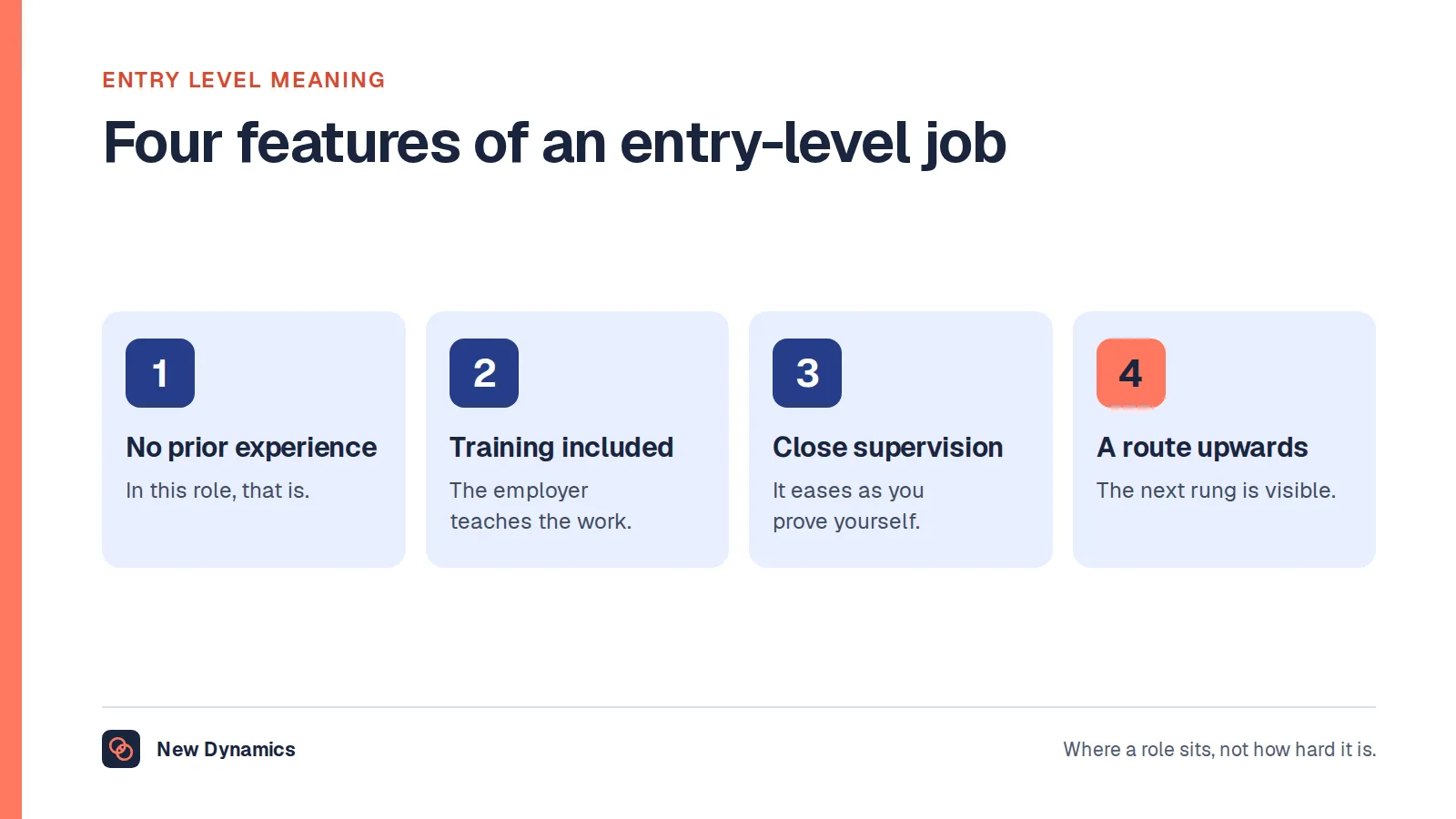
The labels overlap, and the law pays little attention to them. GOV.UK's guidance on work experience and internships says: “Work experience can be called a ‘placement’ or an ‘internship’.” It adds that entitlement to the minimum wage “does not depend on what someone is called”. Our guide to the meaning of entry level compares these routes into work.
Are placements paid? The UK position
This section describes the UK. It is general information, not legal advice.
The starting point is employment status. GOV.UK tells employers: “It is your responsibility to decide whether the person is a worker for minimum wage purposes and, if they are, whether an exemption applies to them.” It warns: “Failure to pay the minimum wage to someone who is entitled to it is against the law.”
The exemptions that matter for placements are these.
- Students on a required placement. GOV.UK says that students working as a required part of a UK-based further or higher education course do not qualify for the minimum wage if the placement “does not exceed 1 year”. The exemption does not cover work that is unrelated to the course, such as a job taken to help finance studies.
- School-age work experience. People of compulsory school age are not entitled to the minimum wage.
- Work shadowing. GOV.UK's page on employment rights for interns says that the minimum wage is not due if the person is only observing and “no work is carried out”.
- Voluntary workers for charities and similar bodies, who receive only limited expenses.
Outside those cases, someone doing real work under a placement is likely to be a worker, and must be paid at least the minimum wage. Some employers pay placement students whether or not the law requires it, which widens the pool of people who can afford to take part.
If an agency arranges the placement, separate rules apply. GOV.UK's guide for employment agencies and businesses says that an agency cannot “charge a fee to a work-seeker for work finding services”.
How to host a good placement: six steps
- Decide the purpose. Say what the person should learn, and what the team will gain. A placement with no purpose becomes photocopying.
- Name a supervisor. One person who plans the work, answers questions and gives feedback. Give them time to do it.
- Plan real tasks. Choose work that matters, sized to the person's experience, with at least one piece that they can own and finish.
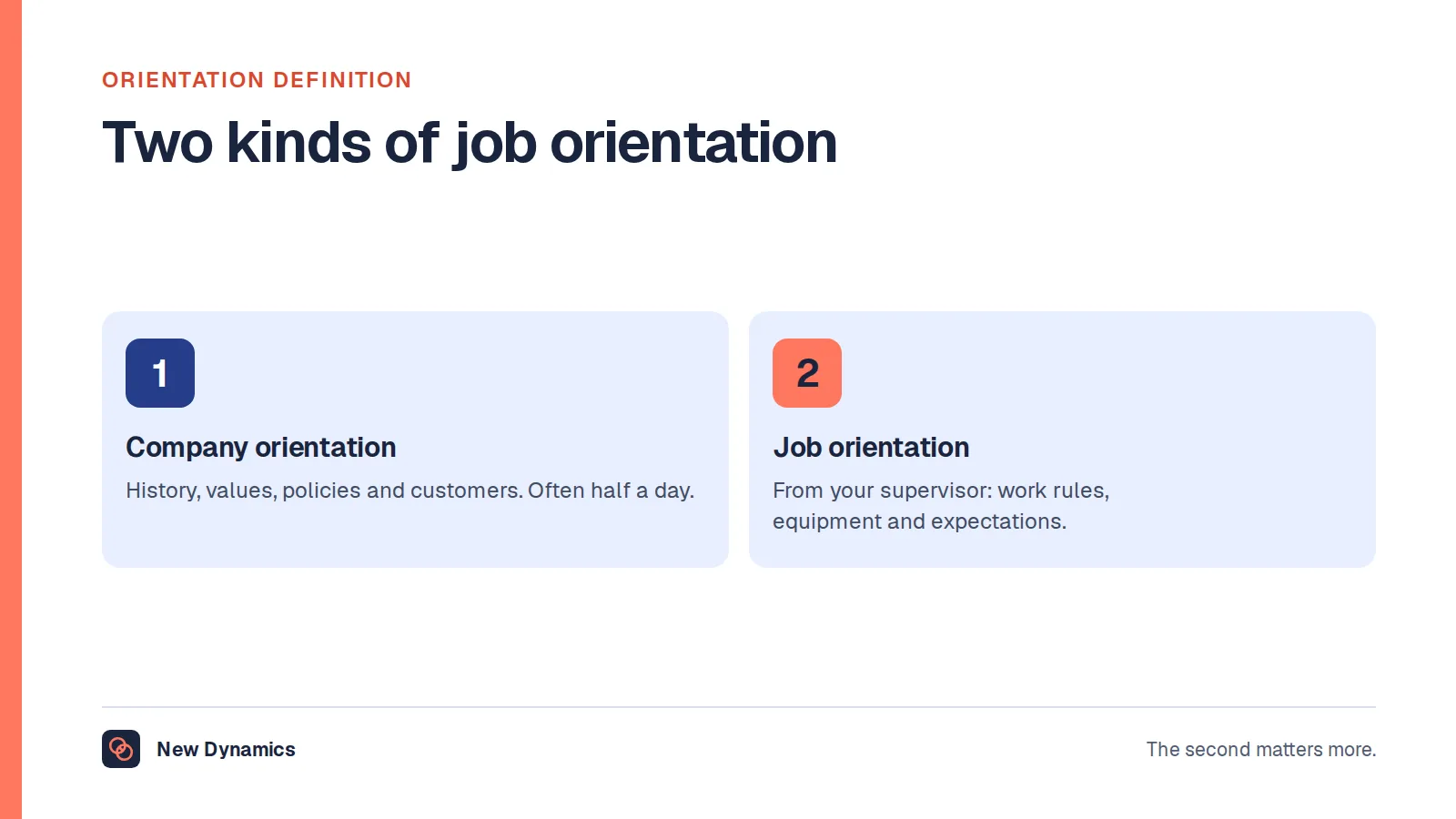
- Run a proper first day. Welcome, introductions, safety, systems and what the first week holds. Our guide to job orientation has a plan.
- Give feedback every week. Short, specific and two-way. Ask what they are learning, and what is unclear.
- Review at the end. Discuss what went well, give a reference or written feedback, and ask how the placement could be improved. If they were good, talk about what happens next.
Where a college or university is involved, agree the learning goals and any assessment with the tutor at the start, and keep in touch.

How to get the most from your placement
- Arrive with two or three learning goals, and share them with your supervisor in the first week.
- Ask for real work. Volunteer for tasks, and ask what would be most useful to the team.
- Keep a record. Note what you did, what you learned and any results. You will need it for your course, your CV and interviews. Our guide to the definition of skill set shows how to turn tasks into skills.
- Ask for feedback, and act on it visibly.
- Meet people. Ask colleagues in other teams about their jobs. A placement is the easiest time to do it.
- Finish well. Hand over your work, thank people and ask whether you may use your supervisor as a referee.
Common mistakes by hosts
No plan. The person arrives and nobody knows what they will do.
No real work. Weeks of observing and filing teach very little, and waste a willing pair of hands.
No supervisor. Responsibility is shared, so nobody takes it.
No feedback. The placement ends, and the person has no idea how they did.
Unpaid by default. Assuming that a placement is unpaid, without checking the person's status, is a legal risk, and it excludes people who cannot afford to work for nothing.

Frequently asked questions
What does placement mean?
At work, a placement is a temporary position or job in an organisation. The word is used for a work placement that is part of a course, for a job found through an agency or service, and for the HR step of putting a selected person into a role.
What is a work placement?
A work placement is a period spent working in an organisation as part of a course or training programme, such as a sandwich year, a teaching practice or a nursing placement. Its purpose is to learn through real, supervised work.
What is the difference between a placement and an internship?
A placement is usually part of a course. An internship is usually arranged by the individual, often in a holiday or after graduating. The law does not distinguish them. GOV.UK says that work experience can be called a placement or an internship.
Do you get paid on a placement?
In the UK it depends on your status. Students on a placement of up to one year that is a required part of a UK course are exempt from the minimum wage, although some employers pay anyway. Someone doing real work outside the exemptions must be paid at least the minimum wage.
What is job placement?
Job placement is the act of finding someone a job, or the job that results. Employment agencies, careers services and employment schemes place people with employers. In the UK, an agency cannot charge a work-seeker a fee for finding work.
How long does a placement last?
It varies from a few weeks to a year. A sandwich placement in a degree usually lasts most of an academic year. Shorter placements of several weeks are common in teaching, health and social care courses.
Your next step: plan before they arrive
- If you host placements, write one paragraph on the purpose of the next one, and name the supervisor.
- List three real tasks, including one that the person can own.
- Check the person's status and what, if anything, the law requires you to pay.
- Put a weekly feedback slot and an end-of-placement review in the diary now.
For a full plan for welcoming anyone new, read and download our employee onboarding guide. The guide is free to read, and the PDF uses our short download form.
Want placement students and new starters to get regular, useful feedback? Book a New Dynamics demo and bring your current plan. You can also email contact@new-dynamics.com.