TL;DR
- A probation review is a formal checkpoint, held one to one, and Acas says regular ones exist partly to make sure the outcome is not a surprise. Managers should prepare, share what they have gathered beforehand, allow time and keep records.
- An extension has a deadline of its own. Acas says an employer must confirm it before the original probation period ends, because failing to do so could be a breach of contract, and must update the written statement of employment particulars within one month.
- Dismissing someone during probation should be a last resort. Day-one rights apply throughout, including protection against discrimination, so a fair procedure, written reasons and the correct notice still matter.
Probation usually fails quietly. Somebody starts, the induction happens, a few weeks pass, and the end date arrives with nobody having held a conversation. The manager then has four days to decide whether to confirm, extend or end somebody's employment, with no record of anything.
This article covers how to run the review meetings, what an extension requires and by when, and what dismissal during probation actually involves. It describes the position in Great Britain and is general information, not legal advice.
Probation goes better when expectations and feedback are visible from the first week. See how New Dynamics performance reviews keep goals and check-ins in one place from day one.
What probation is
Acas describes it as "a time at the start of employment to check if someone is suitable for a job", useful in both directions: the employer assesses performance, skills and fit, and the employee checks whether the role and organisation are right for them.
Two facts surprise people. First, "there's no legal requirement to have a probation period. And they can be any length of time." Second, probation is not a rights-free zone: Acas says "'day one' employment rights apply during probation periods", listing minimum wage, paid holiday, "protection against discrimination", protection against detriment for whistleblowing and the right to join a trade union.
Acas also notes that the Employment Rights Act 2025 "does not affect probation periods", that from 1 January 2027 "protection from unfair dismissal will become a right after 6 months of being in a job", and that employers who want probation to end before that protection applies should understand this "does not avoid legal risks", because protections such as discrimination and whistleblowing apply regardless.
The review meeting

Acas calls probation reviews "formal checkpoints" and says they should "always involve meeting with an employee to discuss their progress", one to one. It recommends regular formal reviews through the period plus "a final review to discuss the outcome of probation", and is explicit about why: regular reviews help "make sure the probation outcome is not a surprise to the employee".
Its list for managers is short and worth following literally: be prepared, allow enough time, keep records, be honest and clear, support the employee's needs.
Preparing. Review what was expected and what the person has actually done, check whether any feedback has come from colleagues or customers, and gather the evidence. Acas adds a step most managers skip: share that information with the employee before the meeting, so they can prepare too.
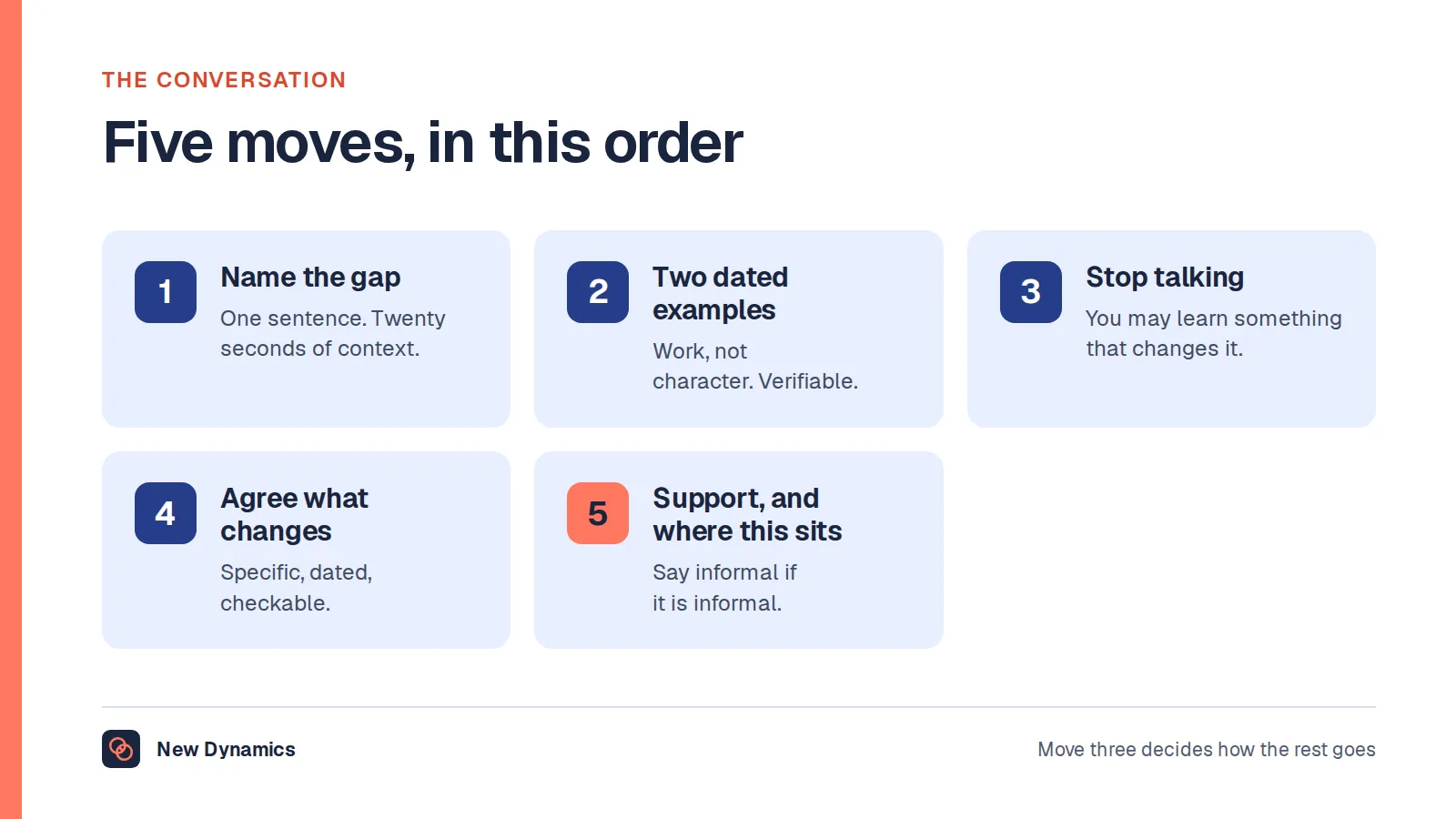
Running it. Make it two-way. The agenda that works: how it is going from their side, progress against what was expected, feedback with examples, what support or training would help, and anything they want to raise. Then say plainly where things stand.
Afterwards. Write it up and share it. By the final review there should be nothing in the outcome that has not already been said.
A note on tone: someone three weeks into a job does not know what they do not know. The purpose of an early review is to find out what is missing and supply it, not to build a case.
Extending probation

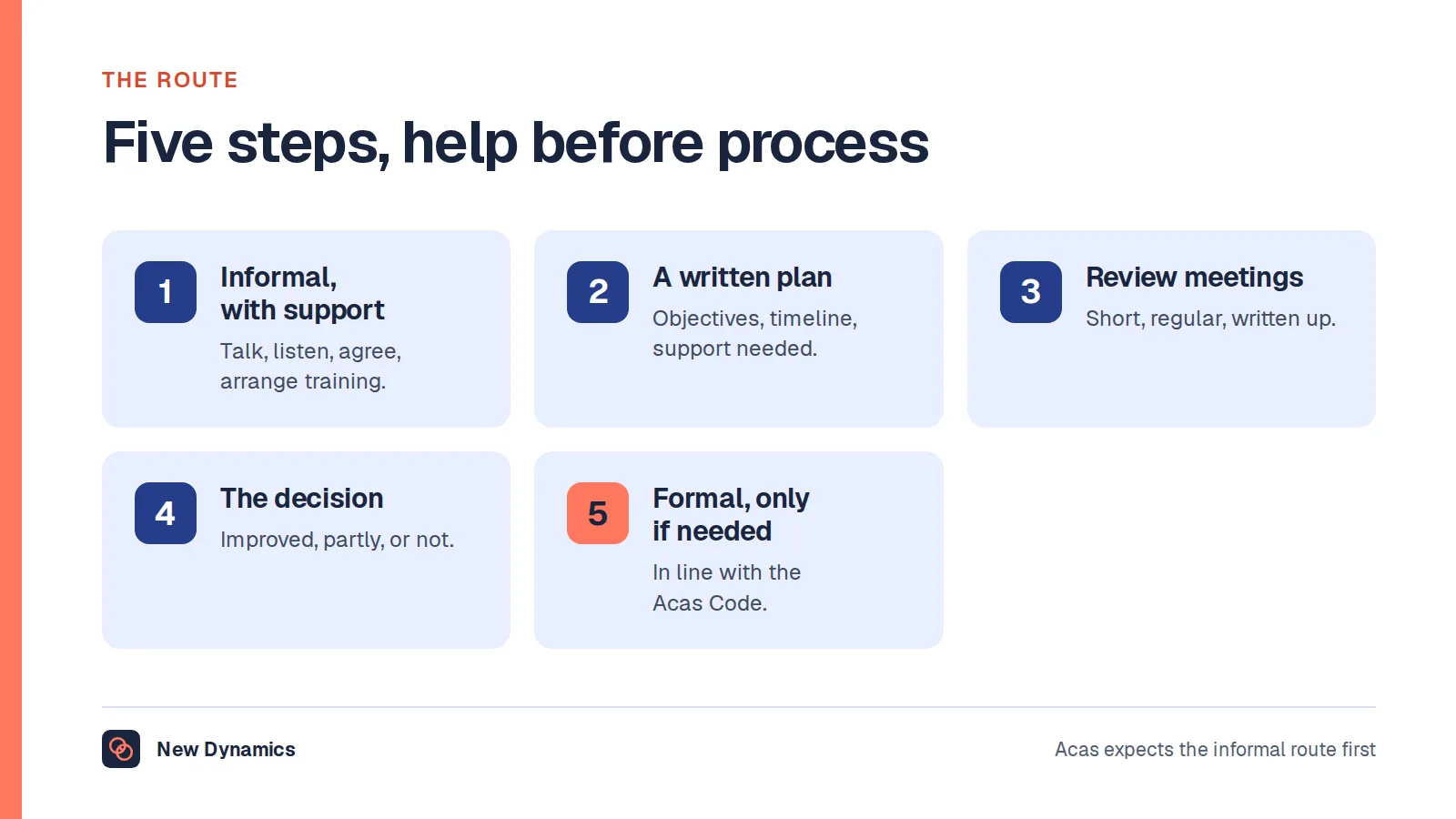
Acas says an employer might extend when performance "is not satisfactory at the end of probation" and the person is "likely to improve with more support or training". Both halves matter: an extension with no extra support is just a longer wait.
The timing trap is the thing to remember. Acas says an employer must "confirm an extension before the original probation period ends", and that "failing to do this could be a breach of contract". It also says the employer must "update the employee's written statement of employment particulars within one month".
What the letter or email should do, which is also what you should agree in the meeting first:
- Say the probation period is extended, and by how long. Acas says employers can decide the length, considering how long training takes, what is realistic for seeing improvement, and recovery time if someone has been off sick.
- Set out what has to improve, specifically, and what training or support comes with it.
- Name the review points during the extension, and the date of the final review.
- State the possible outcomes at the end of it, plainly.
- Be sent before the original end date, and follow the written statement update.
One more point from Acas, worth knowing where someone has been absent: an employee who has been off work "can still successfully complete their probation without extension", and an employer can use reasonable evidence of performance to decide.
Failing probation

Acas is direct: "dismissing an employee during probation should be a last resort", and employers should take steps to avoid it, such as performance management steps to help someone improve, or extending the period.
Where it does happen, four things apply:
- Follow a fair procedure. Acas says so explicitly, and a short probation does not remove the expectation.
- Give the reasons in writing, in a letter or email.
- Give the correct notice, either the statutory minimum or the contractual period, whichever applies.
- Allow the person to be accompanied. Acas says employees "have a right to request to be accompanied to meetings that could result in dismissal", by a colleague or a trade union representative, and that reasonable adjustments must be made for disabled employees.
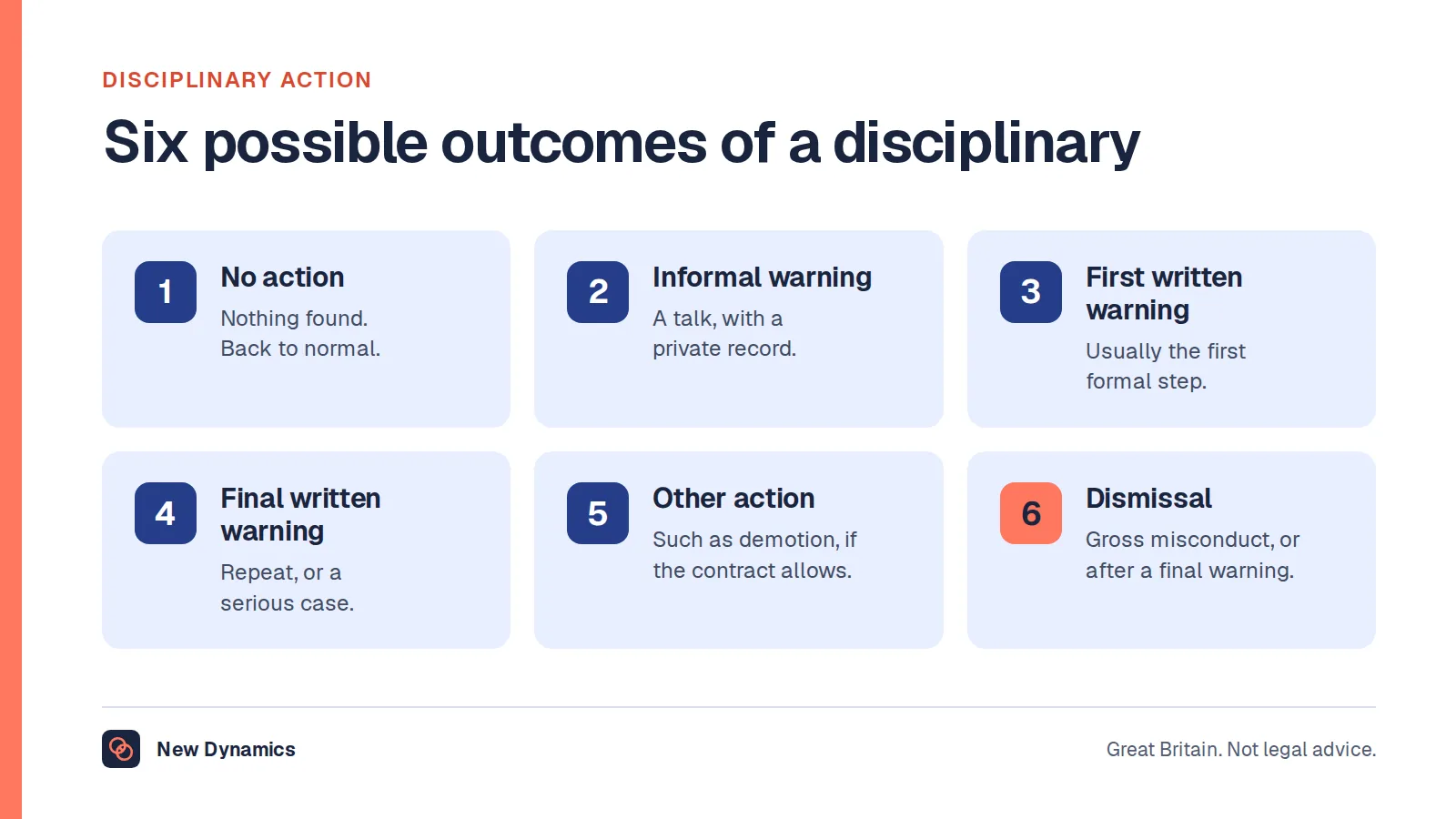
Before any of that, ask the same question a capability case asks: was the support actually provided? If the induction did not happen, the training was cancelled or nobody told the person what was expected, the organisation has tested itself rather than them. Our post on the capability procedure covers the equivalent route for an established employee, and disciplinary action covers conduct.
Set it up properly at the start
Acas says the terms and conditions of probation must be set out in "employees' written statements of employment particulars" or in their contract, and that a consistent process helps "explain how decisions are made - this reduces the risk of discrimination". It also recommends training managers in handling probation periods, which most organisations have never done.
Three things to fix if they are missing: written expectations for successfully completing probation, dates for the reviews in the diary on day one, and a named person who checks the end dates each month so no period lapses by accident.
Frequently asked questions
What happens in a probation review meeting?
It is a one-to-one formal checkpoint on progress, performance and wellbeing, with feedback, a chance for the employee to raise concerns and a discussion of what support would help. Acas says managers should prepare, share the information they have gathered beforehand, allow enough time, be honest and clear, and keep records.
How many probation reviews should there be?
Acas says employers should decide, and recommends regular formal reviews during the period plus a final review to discuss the outcome, with informal check-ins alongside. The practical reason for several is that the final outcome should not be a surprise.
When can an employer extend a probation period?
Where performance is not satisfactory at the end of probation and the person is likely to improve with more support or training. The extension must be confirmed before the original period ends, because Acas says failing to do so could be a breach of contract, and the written statement of employment particulars must be updated within one month.
What should a probation extension letter say?
How long the extension is, exactly what has to improve, what training or support will be provided, the review points and the date of the final review, and the possible outcomes at the end. Agree it in a meeting first, then confirm it in writing before the original end date.
Can you be dismissed during probation?
Yes, but Acas says it should be a last resort, after steps to help someone improve or an extension have been considered. The employer should follow a fair procedure, give the reasons in writing and give the correct statutory or contractual notice, and the employee can request to be accompanied to a meeting that could result in dismissal.
Do employment rights apply during probation?
Many do from day one. Acas lists minimum wage, paid holiday, protection against discrimination, protection against detriment for whistleblowing and the right to join a trade union among rights that apply as soon as someone starts. This is general information about the position in Great Britain, not legal advice.
Your next step: check the dates and the paperwork
- List everyone currently on probation with their end date, and put the final reviews in the diary now.
- Check that written expectations exist for each role. If they do not, write them this week.
- Find any probation that has already lapsed without a decision, and take advice before acting.
- Give managers the three sentences they need: what the review covers, what an extension requires, and when to involve HR.
For getting the first ninety days right so that probation is a formality, read and download our employee onboarding guide. The guide is free to read, and the PDF uses our short download form.
Want expectations, check-ins and evidence visible from the first week? Book a New Dynamics demo and bring your probation policy. You can also email contact@new-dynamics.com.