TL;DR
- Zero Discrimination Day is held every year on 1 March. UNAIDS, the United Nations programme on HIV and AIDS, called for the annual event, which was first celebrated on 1 March 2014.
- The day's aim, in UNAIDS' words, is to create a global movement of solidarity to end all forms of discrimination. It began in the HIV response and now covers discrimination of every kind.
- At work, the useful way to mark it is to check a process, not post a message: who gets hired, rated, promoted and paid. In Great Britain the main responsibility for discrimination at work lies with employers. This is general information, not legal advice.
Every year on 1 March, organisations post a logo, a hashtag and a message about equality. By 2 March, nothing about how people are hired, reviewed or paid has changed. A day of observance can be a useful prompt, but only if it leads somewhere.
This article explains zero discrimination as the idea behind Zero Discrimination Day: what the day is, who started it, what the law in Great Britain says about discrimination at work, and five practical ways to mark it that change something. It is general information, not legal advice.
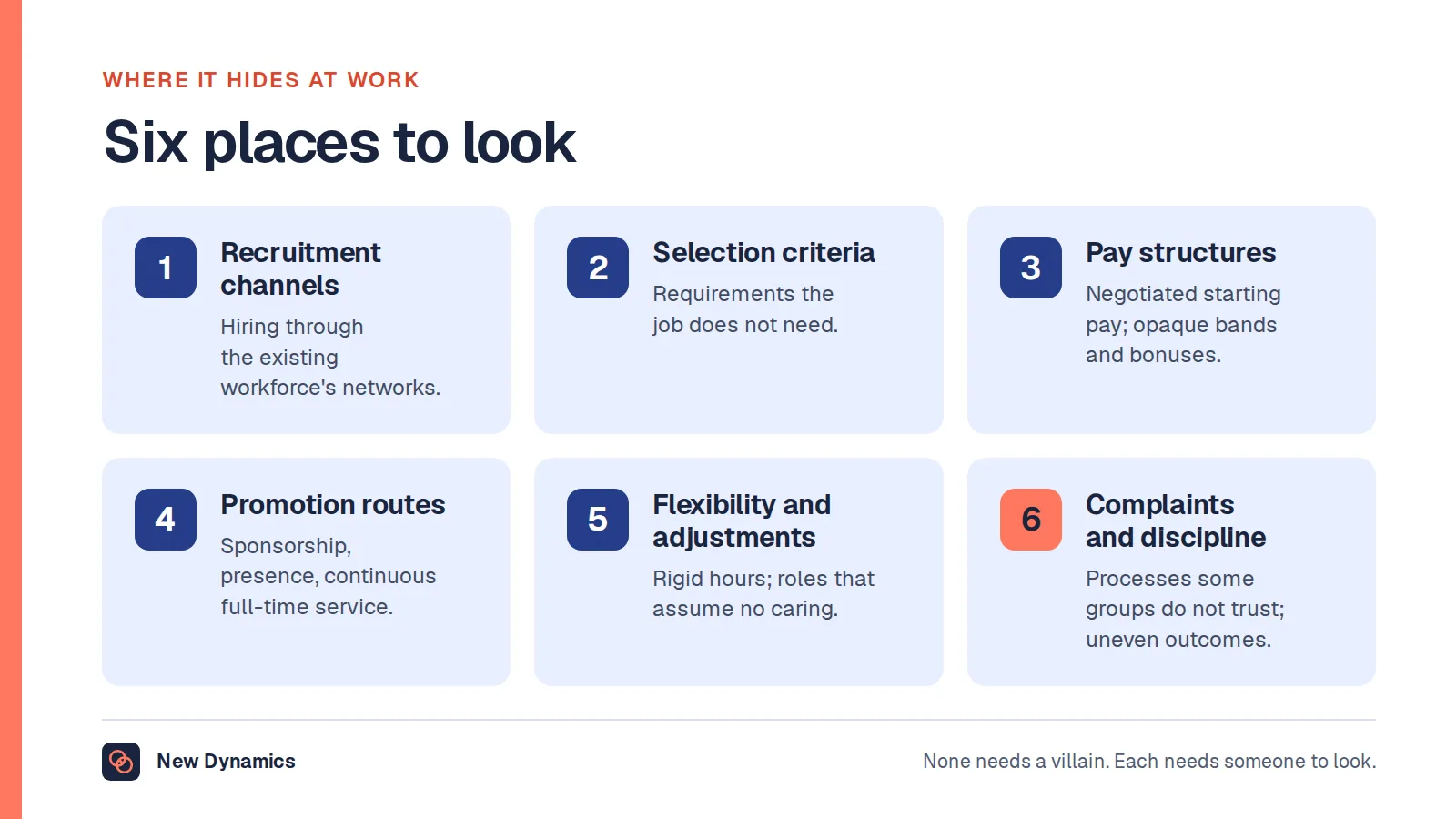
The decisions where discrimination most often hides are the routine ones: ratings, pay and promotion. See how New Dynamics performance reviews keep those decisions tied to recorded evidence that can be checked for fairness.
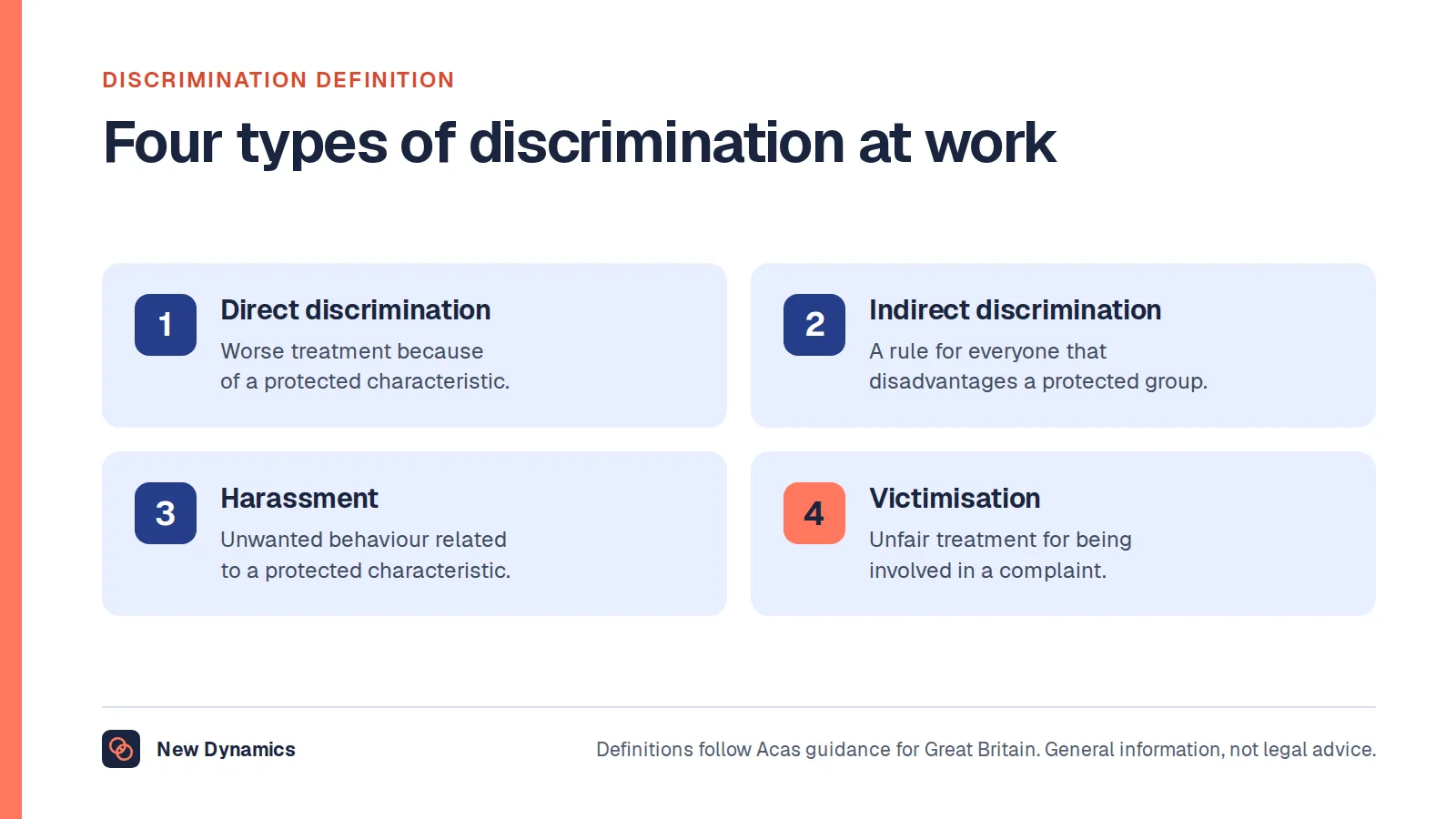
For the legal forms of discrimination in more depth, our post on the discrimination definition covers direct and indirect discrimination, harassment and victimisation.
What is Zero Discrimination Day?
Zero Discrimination Day is held every year on 1 March. It is promoted by UNAIDS, the Joint United Nations Programme on HIV and AIDS. UNAIDS describes the day's aim as to "create a global movement of solidarity to end all forms of discrimination", celebrating the right of everyone to live a full and productive life with dignity.
The day grew out of the HIV response, where stigma and discrimination have long kept people from testing, treatment and work. It now covers discrimination of every kind, whether because of health, sex, race, disability, sexuality, age or any other characteristic.
Where the day came from
The first Zero Discrimination Day was held in 2014. UNAIDS' press release from Geneva on that date records that "UNAIDS called for the annual event, which is being celebrated for the first time on 1 March." Each year since, UNAIDS has chosen a theme, and organisations around the world use the day to draw attention to laws, practices and attitudes that treat people unfairly.
What the law says about discrimination at work
Jurisdiction: Great Britain.
The government's guidance on discrimination and your rights states: "It is against the law to discriminate against anyone because of" a list of protected characteristics:
- age
- gender reassignment
- being married or in a civil partnership
- being pregnant or on maternity leave
- disability
- race, including colour, nationality, ethnic or national origin
- religion or belief
- sex
- sexual orientation
Responsibility sits with the employer. Acas puts it directly: "The main responsibility for discrimination at work lies with employers." It adds that "Employers can be held responsible for the actions of their workers." That is why policies, training and fair processes matter: they are how an employer shows it took discrimination seriously before anything went wrong.
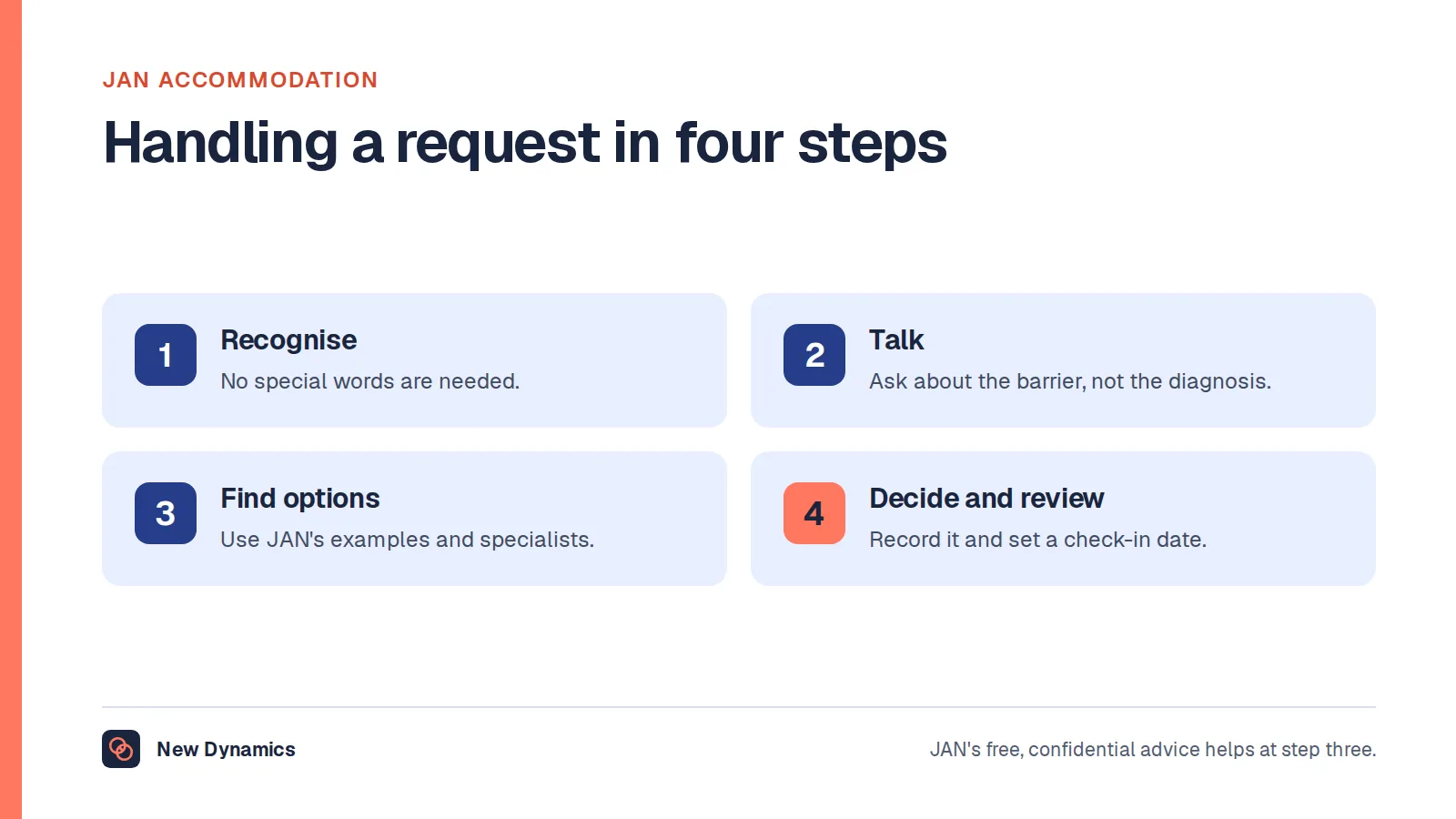
Northern Ireland has its own equality legislation, and other countries have their own laws. For US employers handling disability accommodation, our post on JAN accommodation covers the Job Accommodation Network.
Five ways to mark Zero Discrimination Day at work

1. Check one people process
Pick one decision that affects many people (last cycle's performance ratings, promotions, pay rises or shortlisting) and look at the outcomes by group, where you have the data and a lawful basis to use it. A gap is not proof of discrimination, but it is a reason to look closer.
2. Review the complaints route
Ask whether someone who experiences discrimination knows how to raise it, who they would tell, and what would happen next. If the answer depends on reporting to the person involved, there needs to be another route.
3. Refresh manager training on everyday decisions
Most unfair outcomes come from ordinary decisions made in a hurry: who gets the stretch project, how a rating is justified, what counts as "fit". Training is most useful when it works through real examples from your own processes.
4. Ask employees what gets in the way
A short, anonymous question about whether people feel treated fairly, and where they do not, tells you more than a poster. Share what you heard, even when it is uncomfortable.
5. Publish one change
Close the day by committing to one specific change and a date to report back. A single change that happens is worth more than a long statement that does not.
Avoiding tokenism

Observance days attract criticism when the message is louder than the action. A few checks help:
- Do not ask affected employees to do the work. Inviting people to share personal experiences should be optional and supported, not expected.
- Match the message to the record. If a public statement says one thing and internal data says another, staff will notice first.
- Keep it year-round. The day is a prompt to start or review work, not a substitute for it.
- Avoid empty claims. Do not describe the organisation as discrimination-free; describe what you are doing and how you check it.
Frequently asked questions
What is zero discrimination?
Zero discrimination is the aim of ending discrimination of every kind, so that everyone can live and work with dignity. It is the idea behind Zero Discrimination Day, which UNAIDS promotes every year on 1 March.
When is Zero Discrimination Day?
Zero Discrimination Day is held every year on 1 March. It was first celebrated on 1 March 2014, after UNAIDS called for an annual event.
Who started Zero Discrimination Day?
UNAIDS, the Joint United Nations Programme on HIV and AIDS, called for the annual event. Its press release of 1 March 2014 records the first celebration that day.
How can a workplace mark Zero Discrimination Day?
Check one people process such as ratings or pay for unfair outcomes, review how discrimination can be reported, refresh manager training on everyday decisions, ask employees what gets in the way, and publish one specific change with a date to report back.
Who is responsible for discrimination at work in the UK?
Acas says the main responsibility for discrimination at work lies with employers, and that employers can be held responsible for the actions of their workers. That is why fair processes, clear policies and training matter.
Your next step: pick one process before 1 March
- Choose one people decision to check, and the data you will need.
- Confirm how employees can raise discrimination, and that there is more than one route.
- Book a short manager session using real examples from that process.
- Decide the one change you will commit to, and when you will report on it.
For a structured approach to fairness across hiring, pay and progression, read and download our diversity and inclusion guide. The guide is free to read, and the PDF uses our short download form.
Want ratings and pay decisions you can check for fairness? Book a New Dynamics demo and see how review evidence is recorded. You can also email contact@new-dynamics.com.