TL;DR
- The headline relief has been cut. Finance Act 2026 section 35 rewrote TCGA 1992 section 236H so that, on a qualifying disposal, "only 50% of the gain is a chargeable gain", for disposals made on or after 26 November 2025. HMRC's helpsheet HS277 for 2026 agrees: "half of the gain on disposal is exempt", where before that date "the full gain is exempt".
- An EOT-controlled company can pay a qualifying bonus of up to £3,600 per employee per tax year with no income tax, under ITEPA 2003 section 312A. HMRC's manual is explicit that the exemption "does not extend to NICs, which follow the normal treatment for earnings".
- A disqualifying event in the first four tax years after the year of disposal revokes the seller's claim, and HMRC's own page heading calls that the "clawback from vendor period". After that window the charge lands on the trustees instead, as a deemed disposal at market value.
An employee ownership trust is how a business changes hands when the owner wants out and the staff stay in. It is not a bonus scheme, and it is not a way of handing a few people some shares. It is a trust that buys control of the company and holds it for everyone who works there, permanently.
The tax position has moved twice recently. Two sets of conditions were added for disposals from 30 October 2024, and the capital gains relief itself was halved for disposals from 26 November 2025. Anything written about EOTs before that date carries the wrong headline number, including one page still live on GOV.UK. This article covers the structure, the requirements as the statute frames them, what a seller receives today, the bonus an EOT-controlled company can pay, and who pays if the structure fails afterwards. It is general information about the position in the United Kingdom, not tax, legal or financial advice, and an EOT sale needs professional advice from the outset.
Once a company is employee owned, people expect to see how it is actually run. New Dynamics org charts make reporting lines and the working relationships around them visible, which is groundwork for the governance an EOT requires rather than a nice extra.
What an employee ownership trust is
An EOT is a settlement holding a controlling interest in a trading company for the benefit of its employees. The employees do not hold shares. The trust does, and they benefit through it. HMRC's helpsheet HS277 puts it this way: "An EOT is special type of trust that is set up to hold a controlling interest in a trading company, for the benefit of the employees of the company."
The regime came from Finance Act 2014, which inserted sections 236H to 236U into the Taxation of Chargeable Gains Act 1992. Relief is available for disposals made on or after 6 April 2014. HS277 adds that it "is available to individuals, and some trustees of settlements, but it is not available to companies", and the timing is tight: "relief is only available for disposals taking place during the tax year within which the trustees of the EOT acquire the controlling shareholding in the company".
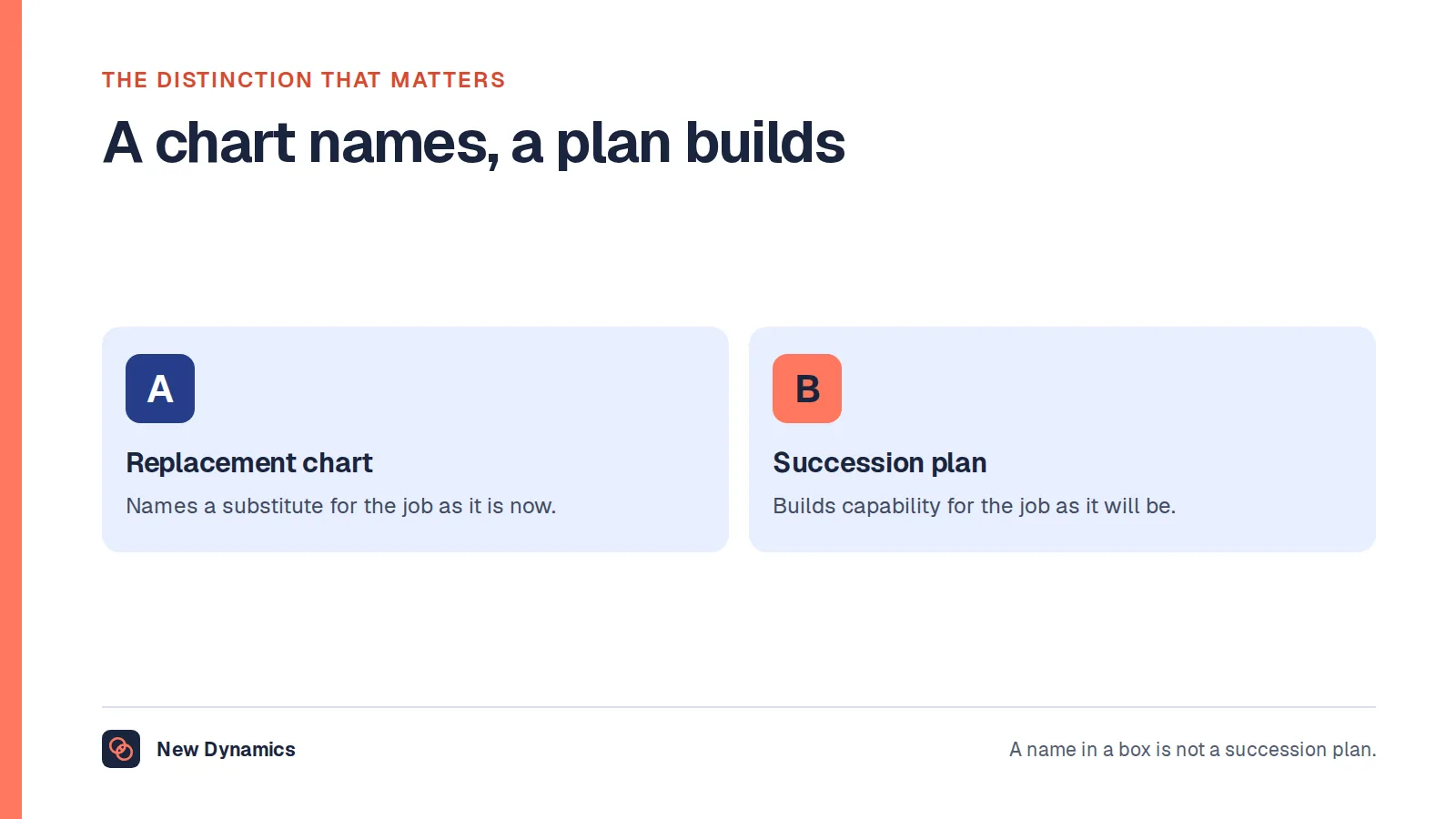
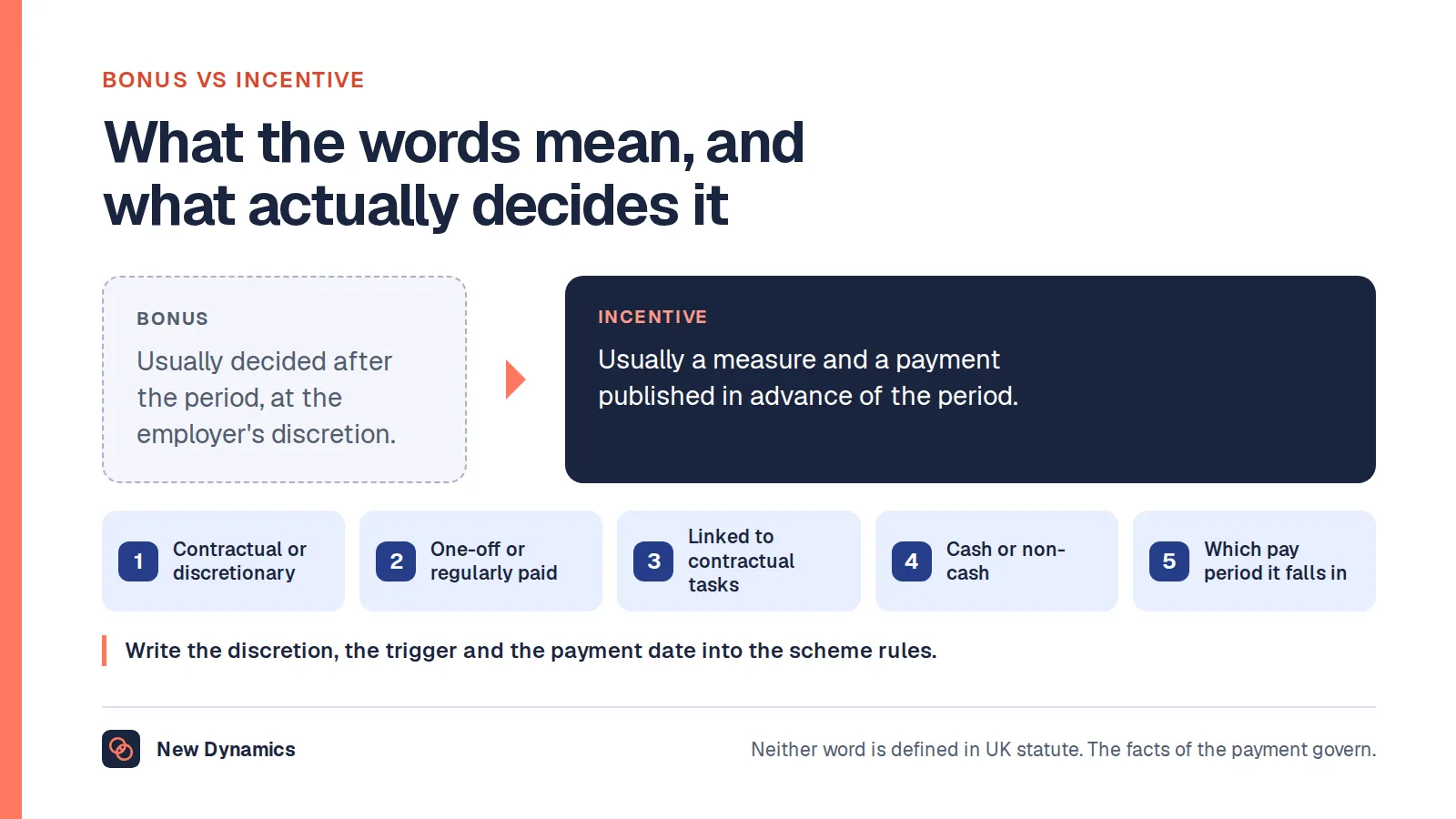
This is a succession route. Our post on succession planning covers the capability side of an owner's exit, and bonus against incentive covers the thing an EOT is most often confused with.
The relief requirements, as the statute frames them

HMRC's Capital Gains Manual at CG67820 counts eight relief requirements in section 236H(4). Four are the long-standing core.
The trading requirement (section 236I). The company must be "a trading company which is not a member of a group, or the principal company of a trading group", and a trading company is "a company carrying on trading activities whose activities do not include to a substantial extent activities other than trading activities". Watch section 236I(5)(b): a business carried on in partnership with other persons "is to be treated as not being a trading activity".
The all-employee benefit requirement (section 236J). The trusts must "not permit any of the settled property to be applied, at any time, otherwise than for the benefit of all the eligible employees on the same terms". They must also bar sub-trusts and transfers to another settlement except by an authorised transfer, bar loans to beneficiaries, and bar any amendment that would break those rules. Significant shareholders and people connected with them are excluded participators, and are not eligible employees.
The controlling interest requirement (section 236M). The trustees must hold more than 50% of the ordinary share capital, hold voting powers yielding a majority on all questions affecting the company as a whole, be entitled to more than 50% of the profits available for distribution to equity holders, and be entitled on a winding up to more than 50% of the assets available to equity holders. Paragraph (d) closes the gap: no agreement or instrument may allow any of that to cease to be satisfied "without the consent of the trustees".
The limited participation requirement (section 236N). This stops a company with few employees and many shareholders using the regime. Condition A is that there was no point in the 12 months ending immediately after the disposal when the seller was a participator and the participator fraction exceeded 2/5. Condition B is that the fraction does not exceed 2/5 at any time from the disposal to the end of that tax year. The fraction weighs participator employees and office-holders, plus employees connected with them, against total employees. A breach lasting up to six months "by reason of events outside the reasonable control of the trustees" is disregarded.
The eighth requirement, section 236H(4)(e), is that relief has not already applied to a related disposal by the seller or a connected person in an earlier tax year.
What changed, and from what date

Three requirements were added by Schedule 6 to the Finance Act 2025, and HMRC confirms they "only apply to disposals made on or after 30 October 2024".
Trustee residence. Section 236H(4)(za) requires "that the trustees of the settlement are resident in the United Kingdom at the time of the disposal and continue to be UK resident for the remainder of the tax year in which that time falls". Offshore trustees no longer work.
Trustee independence. New section 236LA is met if "less than 50% of the trustees are persons who are excluded participators" and "excluded participators do not have control of the settlement". Control covers powers to apply trust property, vary or terminate the settlement, change beneficiaries, appoint or remove trustees, or direct any of those. A seller cannot sell the company and keep the trustee board.
Valuation. Section 236H(4)(ca) requires "that the trustees have taken all reasonable steps to secure that (i) the consideration for the disposal does not exceed the market value of the ordinary share capital at the time of the disposal, and (ii) where some or all of the consideration for the disposal is deferred, that the rate of any interest payable in relation to the deferral does not exceed a reasonable commercial rate".
Then the bigger change. Section 35 of the Finance Act 2026, headed "Restriction of relief on disposals to employee-ownership trusts", substituted a new section 236H(2A) under which, where a gain accrues, "only 50% of the gain is a chargeable gain". Section 35(4) is unambiguous on timing: "The amendments made by this section have effect in relation to disposals made on or after 26 November 2025."
What a seller actually gets now
Half the gain is exempt and half is taxed as normal. HMRC's helpsheet HS277 for 2026, published on 6 April 2026, says it plainly: "For disposals on or after 26 November 2025 that meet the conditions for EOT relief, half of the gain on disposal is exempt from CGT. The remaining half of the gain is charged to CGT according to the normal rules." For disposals on or before 25 November 2025, "the full gain is exempt from CGT".
Section 236H(2A) also blocks stacking: the disposal is not a qualifying business disposal for Business Asset Disposal Relief, and the shares count as excluded shares for investors' relief.
Two official pages that do not agree
GOV.UK's publication Qualitative Evaluation of Employee Ownership Trusts, dated 22 May 2025, still lists "100% Capital Gains Tax (CGT) relief for company owners who transfer their company to an EOT model". That was correct when published and is wrong for a disposal now. The statute and HS277 govern. The same page lists two further reliefs, 100% Inheritance Tax relief on the transfer of assets to the EOT, and the bonus exemption below.
No official source publishes a count of how many employee ownership trusts exist in the United Kingdom, so we are not going to quote one. The nearest published evidence is HMRC Research Report 795, the Ipsos evaluation above, based on "30 in-depth qualitative interviews with trustees of companies that were operating under an EOT model". For official pay and reward figures, our HR statistics hub collects them with their reference periods.
The bonus, and the National Insurance that still applies
An EOT-controlled company can pay employees a bonus free of income tax. Section 312A(2) of the Income Tax (Earnings and Pensions) Act 2003 sets the limit: "No liability to income tax arises in respect of the qualifying bonus payments if, or to the extent that, the total chargeable amount in respect of those payments does not exceed £3,600 ('the exempt amount')."
National Insurance is still due. HMRC's Employment Income Manual at EIM03050 confirms the exemption applies to payments made after 1 October 2014 and adds: "Please note that this exemption does not extend to NICs, which follow the normal treatment for earnings." Budget the employer contributions as well as the employee's.
The conditions are strict. Section 312B(1)(a) requires that the payment "does not consist of regular salary or wages". Section 312C adds a participation requirement, that everyone in relevant employment when the award is determined is eligible, and an equality requirement, that "every employee who participates in an award under the scheme must do so on the same terms". Amounts may vary only by remuneration, length of service or hours worked, and the equality requirement is infringed "if an award is made on terms such that some (but not all) of the employees participating in the award receive nothing". A minimum service condition is allowed but "must not exceed 12 months". Finance Act 2025 added one easing: section 312C(2A) provides that "the participation requirement is not infringed by reason of the exclusion of directors of the company from participating in an award", for qualifying bonus payments made on or after 30 October 2024.
If a disqualifying event happens after the sale
The requirements do not stop at completion, and who pays depends on when the breach happens.
In the first four tax years following the year of disposal, section 236O applies, and HMRC's page heading says where the bill goes: "disqualifying events: clawback from vendor period". A disqualifying event includes the trustees ceasing to be UK resident, the company ceasing to meet the trading requirement, the settlement ceasing to meet the all-employee benefit, trustee independence or controlling interest requirements, the participator fraction exceeding 2/5, or the trustees acting in a way the trusts do not permit. On the first such event no claim may be made, and any claim already made "is revoked, and the chargeable gains and allowable losses of any person for any chargeable period are to be calculated as if that claim had never been made", with adjustments permitted "regardless of any limitation on the time within which any adjustment may be made". The four-year window is itself new: before 30 October 2024 it was one tax year.
After the end of that fourth tax year, section 236P applies and the charge moves. The trustees are treated as having disposed of and immediately reacquired the shares "at its market value at that time". As HMRC puts it at CG67861, "gains and losses latent in any shares held by the trustees immediately before the 'disqualifying event' will be treated as accruing to the trustees". The trust pays, which means the employees' asset pays.
One narrow let-off exists. If the residence or independence requirement fails only because a trustee, or a director of a corporate trustee, has died, and the position is restored within six months of that death, the disqualifying event is ignored.
Why the governance is the real work
Read the requirements together and the point is clear. Permanent majority ownership, equal benefit for all eligible employees, a trustee board the former owner does not control, and a four-year tail in which a governance slip costs the seller their relief. A scheme document does not maintain that. How the trustees and the board behave, year after year, does.
The Ipsos evaluation for HMRC named a gap worth repeating: "The key characteristics and attributes of trustee boards were not purposefully screened for at the point of recruitment." A trust holding the company for everyone needs trustees chosen for the job, employee representation that is real rather than nominal, and a decision record that stands up later.
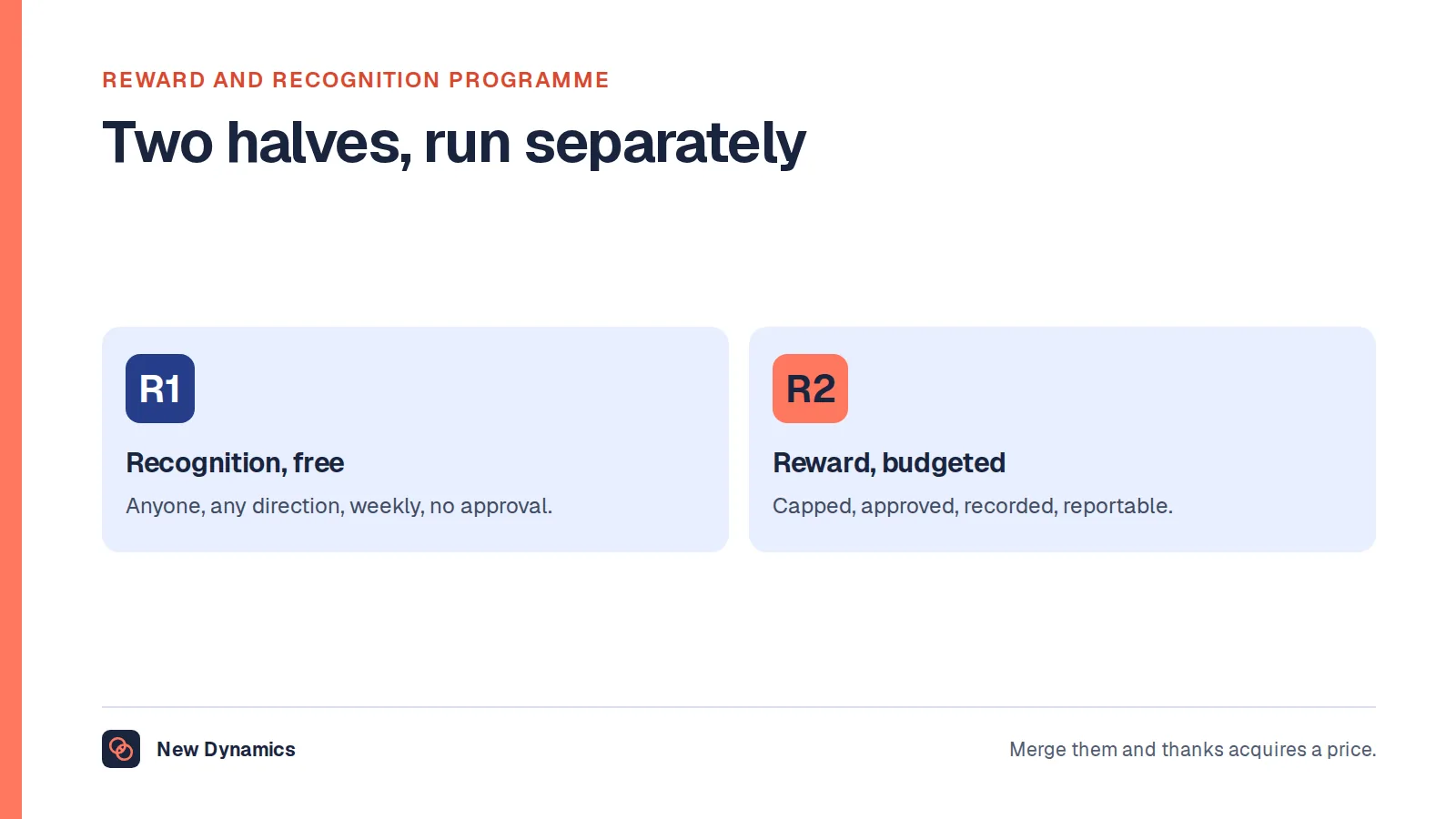
For an HR team that means two things. The bonus has to be administered on genuinely equal terms, so your reward rules need writing down and applying consistently, which is what our compensation policy guide sets out. And leadership handover inside an employee-owned company is still ordinary succession work, covered by our succession planning guide. Both are free to read, and the PDFs use our short download form. For the layer above the statutory bonus, see reward and recognition programmes.
Frequently asked questions
What is an employee ownership trust?
It is a trust holding a controlling interest in a trading company for the benefit of that company's employees, who benefit through the trust rather than holding shares. The rules sit in sections 236H to 236U of the Taxation of Chargeable Gains Act 1992, inserted by Finance Act 2014.
How much capital gains tax relief does a seller get?
For a disposal made on or after 26 November 2025, half the gain is exempt and the other half is charged to capital gains tax under the normal rules, under section 236H(2A) of TCGA 1992 as substituted by Finance Act 2026 section 35. For a disposal on or before 25 November 2025, HMRC's helpsheet HS277 states that the full gain was exempt. Business Asset Disposal Relief and investors' relief are not available where EOT relief is claimed.
Can an EOT-controlled company pay a tax free bonus?
It can pay a qualifying bonus of up to £3,600 per employee per tax year with no income tax, under section 312A of ITEPA 2003. National Insurance contributions are still due, because HMRC's Employment Income Manual says the exemption "does not extend to NICs, which follow the normal treatment for earnings". The bonus cannot consist of regular salary or wages, and every participating employee must take part on the same terms.
What are the main conditions for EOT relief?
HMRC counts eight in section 236H(4). The core four are the trading requirement, the all-employee benefit requirement, the controlling interest requirement and the limited participation requirement. Three more apply to disposals from 30 October 2024: trustee residence in the United Kingdom, trustee independence, and reasonable steps on the price and on any deferred interest rate. The eighth concerns related disposals in earlier tax years.
Can the seller stay a trustee of the EOT?
Not in control of the board. Section 236LA requires that less than 50% of the trustees are excluded participators, and that excluded participators do not have control of the settlement, which covers powers to apply trust property, vary or terminate the trust, change beneficiaries, or appoint or remove trustees. It applies to disposals made on or after 30 October 2024.
What happens if the company stops qualifying after the sale?
If a disqualifying event occurs in any of the first four tax years following the tax year of the disposal, the seller's claim is revoked and their gains are recalculated as if it had never been made, with no normal time limit on the adjustment. If the event occurs after that period, the trustees are instead treated as disposing of and immediately reacquiring the shares at market value, so the charge falls on the trust.
Is an employee ownership trust the same as a share scheme?
No. A tax-advantaged share plan gives employees an interest in shares while the existing owners keep control. An EOT changes who owns the company: the trust must hold more than 50% permanently and benefit all eligible employees on the same terms. One is a reward mechanism, the other a succession structure.
Your next steps
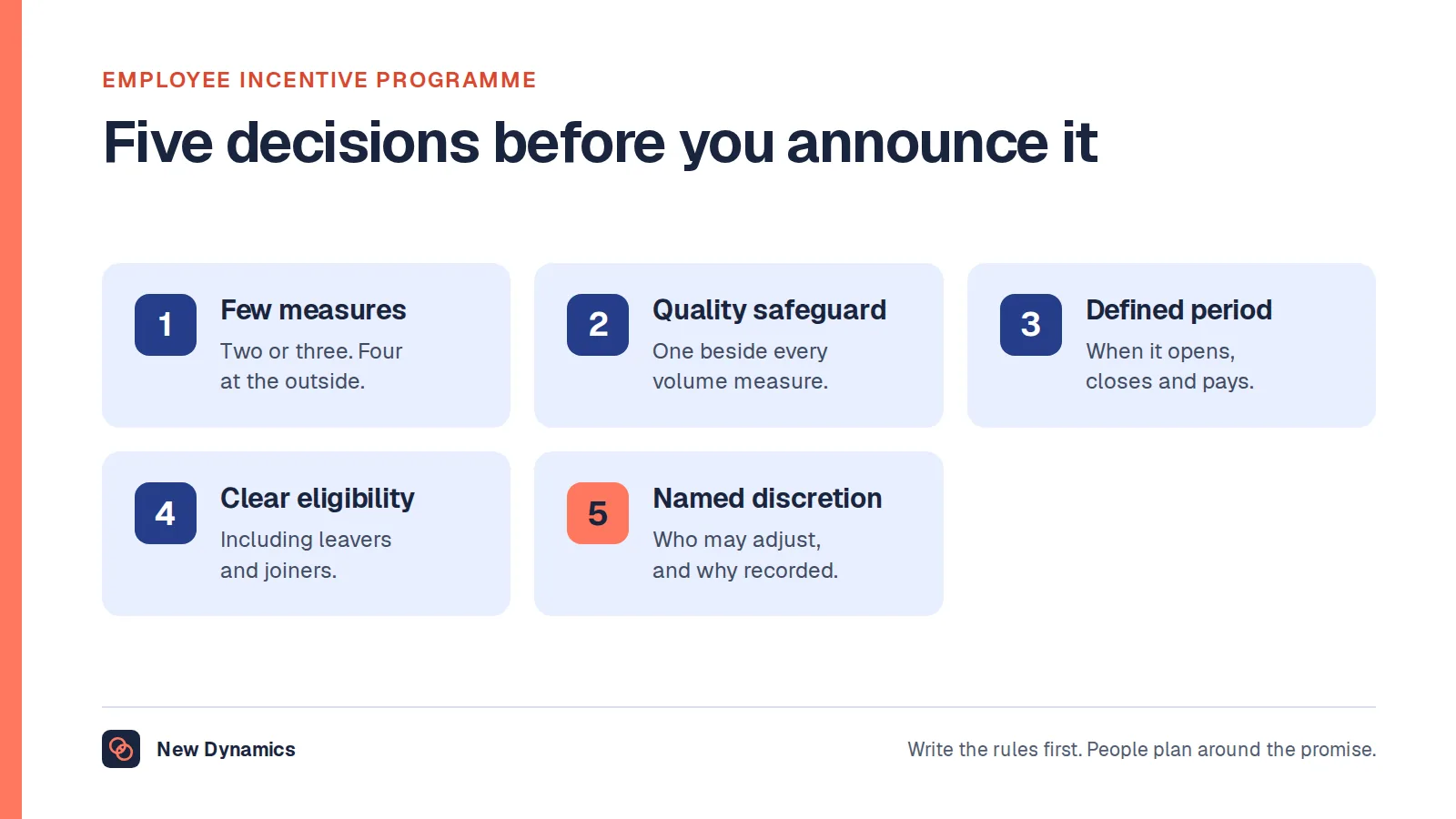
- Fix the date first. Check whether the disposal falls on or after 26 November 2025, because the relief is half what it was before.
- Test the company against the trading requirement, including any business carried on in partnership, which section 236I(5)(b) treats as not a trading activity.
- Draft the trustee board against section 236LA before anything else, counting excluded participators and listing every power they would hold.
- Document the valuation and any deferred consideration interest rate as reasonable steps under section 236H(4)(ca), and keep the evidence.
- Plan the four-year tail: name who monitors the trading, all-employee benefit, controlling interest, independence and participator tests, and how often.
- Take professional tax and legal advice on your own company before committing to any of this.
Need the goals, feedback and review evidence in one place before an ownership change, so decisions about people can be explained afterwards? Book a New Dynamics demo and bring your current structure. You can also email contact@new-dynamics.com.