TL;DR
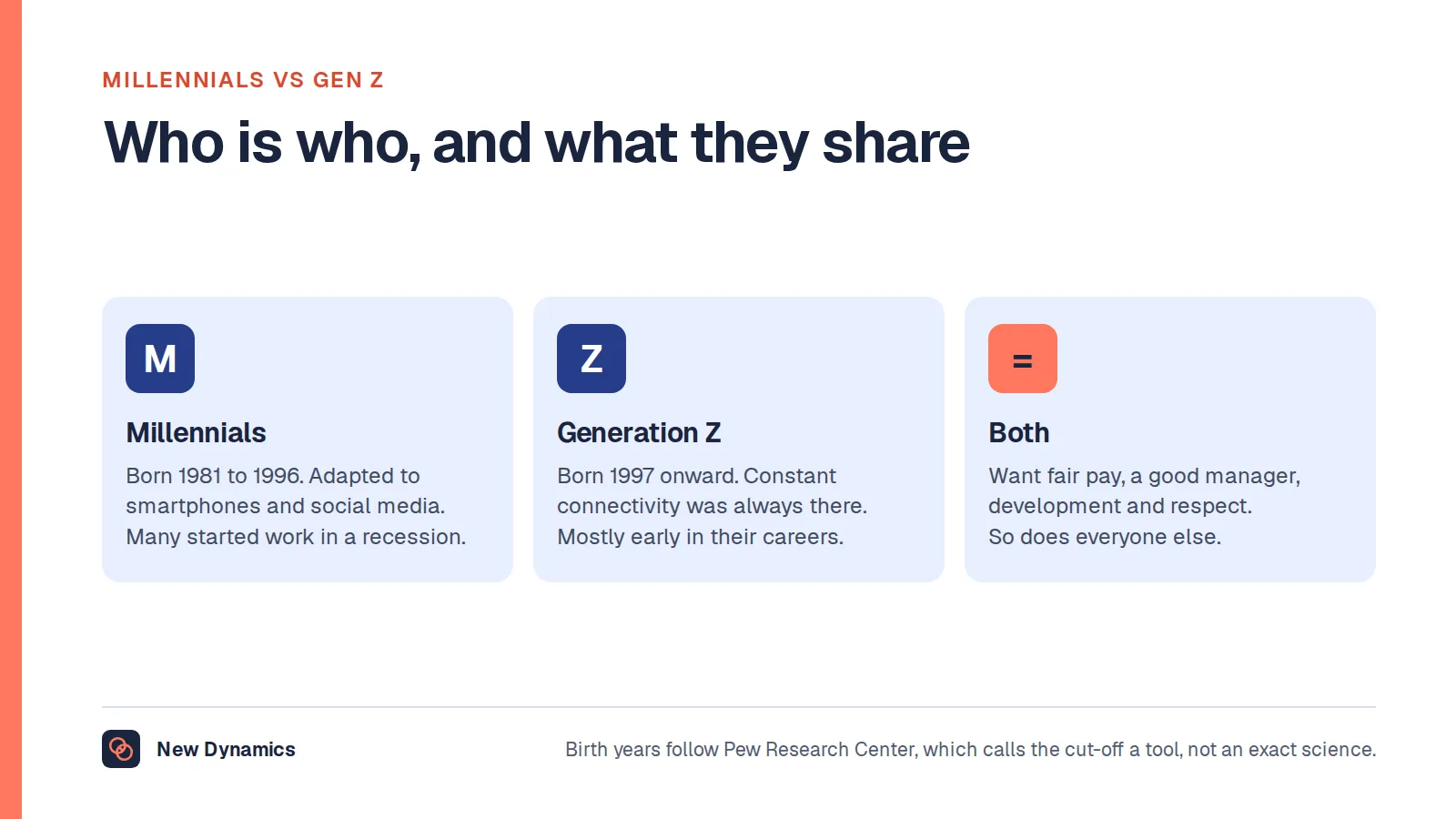
- Generation Y is another name for millennials. Pew Research Center, whose definition is the most widely used, counts anyone born between 1981 and 1996.
- What members of Generation Y share is a set of formative experiences: they came of age during the rise of the internet and entered work around a deep recession. Claims about a shared personality are much weaker.
- Pew itself warns that there is great diversity within any generation and that labels can reinforce stereotypes. At work, manage the person in front of you, and remember that age is a protected characteristic.
“Generation Y” sounds like a mystery cohort that arrived between the generations everyone has heard of. It is not. Generation Y and the millennials are the same people. Today they are roughly between 30 and 45, which makes them the core of most workforces and a large share of its managers.
This article explains who Generation Y is, which birth years are used and why they vary, what shaped the generation, which of its supposed characteristics have evidence behind them and how to manage without falling back on stereotypes.
Whatever someone's age, what they need from work is best learned by asking. See how New Dynamics continuous feedback makes that conversation routine.
What is Generation Y?
Generation Y is the cohort that follows Generation X and comes before Generation Z. The letter simply follows X in the alphabet. The Cambridge Dictionary defines Generation Y as “a way of referring to the group of people who were born in the 1980s and early 1990s”, and lists “Gen Y” and “millennial” as synonyms.
“Millennial” has largely replaced “Generation Y” in everyday use. It refers to the fact that the oldest members of the group reached adulthood around the turn of the millennium.
So the answers to three common questions are short. Is there a Gen Y? Yes. Who is Gen Y? The millennials. Is a millennial the same as Generation Y? Yes.
When is Gen Y? The birth years
The most widely used definition comes from Pew Research Center. In Defining generations: where Millennials end and Generation Z begins, Pew's president Michael Dimock wrote that “anyone born between 1981 and 1996 (ages 23 to 38 in 2019) is considered a Millennial, and anyone born from 1997 onward is part of a new generation”.
| Generation | Birth years used by Pew |
|---|---|
| Baby Boomers | 1946 to 1964 |
| Generation X | 1965 to 1980 |
| Millennials (Generation Y) | 1981 to 1996 |
| Generation Z | 1997 onwards |
Other researchers and dictionaries draw the lines a little differently, which is why you will see start dates from the late 1970s to the early 1980s and end dates anywhere in the 1990s. Pew is candid about this: “Generational cutoff points aren't an exact science.” It says that they “should be viewed primarily as tools”. It notes that the Baby Boomers are the only generation officially designated by the US Census Bureau, and that for later generations “there are no comparably definitive thresholds”.
Someone born in 1980 or 1997 did not wake up in a different generation from a friend a year older. The edges are blurred, and people born near them often identify with both sides.

What shaped Generation Y
Pew explains its boundaries by pointing to the events that people lived through at a formative age. These are its main points, and they describe the United States in particular.
- The 9/11 attacks. Most millennials were between 5 and 20 years old, and many were “old enough to comprehend the historical significance of that moment”.
- The wars in Iraq and Afghanistan, which formed the backdrop to their early adulthood.
- The recession of 2008. Pew writes that most millennials “came of age and entered the workforce facing the height of an economic recession”, and that many of their life choices and future earnings have been shaped by that “slow start”.
- The internet. Generation X grew up as the computer revolution was taking hold, and millennials “came of age during the internet explosion”. Social media and constant connectivity are things that millennials “adapted to as they came of age”, whereas those born later largely assume them.
Pew also describes millennials as “the most racially and ethnically diverse adult generation in the nation's history” at the time of writing, with Generation Z more diverse still.
Outside the US, the details differ. The financial crisis and the arrival of the internet were global. Other formative events were local. A millennial who grew up in Warsaw, Lagos or Mumbai shared some of this story and not all of it.

Generation Y characteristics: claims and evidence
Search for “Generation Y characteristics” and you will find confident lists: tech-savvy, purpose-driven, job-hopping, entitled, collaborative, hungry for feedback. Treat them with caution. Here is a fairer reading.
| Common claim | What can fairly be said |
|---|---|
| “They are digital natives.” | Closer to digital adopters. Pew says that millennials adapted to social media and constant connectivity as they came of age. Most remember life before smartphones. |
| “They job-hop.” | Young workers in every generation change jobs more often than older ones. That is a life stage. Pew stresses that comparisons must look at each generation at the same age. |
| “They want purpose, not pay.” | Most people of every age want both. Many millennials started work in a weak labour market, which makes pay and security matter a great deal. |
| “They need constant feedback.” | Frequent, specific feedback helps people of all ages to perform. It is good management, and it was never a generational quirk. |
| “They are entitled.” | This has been said about the young by the old for as long as there are records. It is a stereotype, and we know of no sound evidence for it. |
| “They value flexibility.” | So do parents, carers and most other people, as the spread of hybrid working shows. Millennials are now the age group most likely to have young children. |
The pattern in the right-hand column is consistent. Most supposed generational traits are better explained by age and life stage, by the period everyone is living through or by ordinary differences between individuals.
Pew reached a similar view about its own work. In 2023, in How Pew Research Center will report on generations moving forward, it said that it will only do generational analysis when it has historical data that allows it to compare generations at similar stages of life. It noted that “there is great diversity of thought, experience and behavior within generations”, and that avoiding generational labels where they are not appropriate helps to “avoid reinforcing harmful stereotypes”. It also observed that the field “has been flooded with content that's often sold as research but is more like clickbait or marketing mythology”.
We compare the two youngest working generations, with the same caution, in millennials vs Gen Z in the workplace.
Generation Y at work today
Whatever the debates about traits, some facts follow from arithmetic.
- They are mid-career. On Pew's definition, the oldest members of Generation Y are in their mid-forties and the youngest are around thirty.
- Many are managers. The generation once discussed as “the new graduates” now runs teams, departments and companies.
- Many are in the most stretched years of life, with young children, ageing parents or both, and with housing costs to meet.
- They have worked through a great deal of change: a financial crisis, the arrival of smartphones, a pandemic, the shift to hybrid work and now artificial intelligence.
What helps people at this stage is unremarkable, and it matters: clear goals, a manager who gives honest feedback, development that leads somewhere, fair pay and real flexibility. Our guides to good manager qualities and work-life integration cover these.
How to manage without generational stereotypes
- Ask, do not assume. “How do you prefer to get feedback?” works at any age.
- Manage life stage, not birth year. A new parent of 28 and a new parent of 41 have more in common than two 35-year-olds with different lives.
- Offer choice. Different channels, working patterns and kinds of recognition suit different people.
- Mix ages deliberately in teams, projects and mentoring, in both directions.
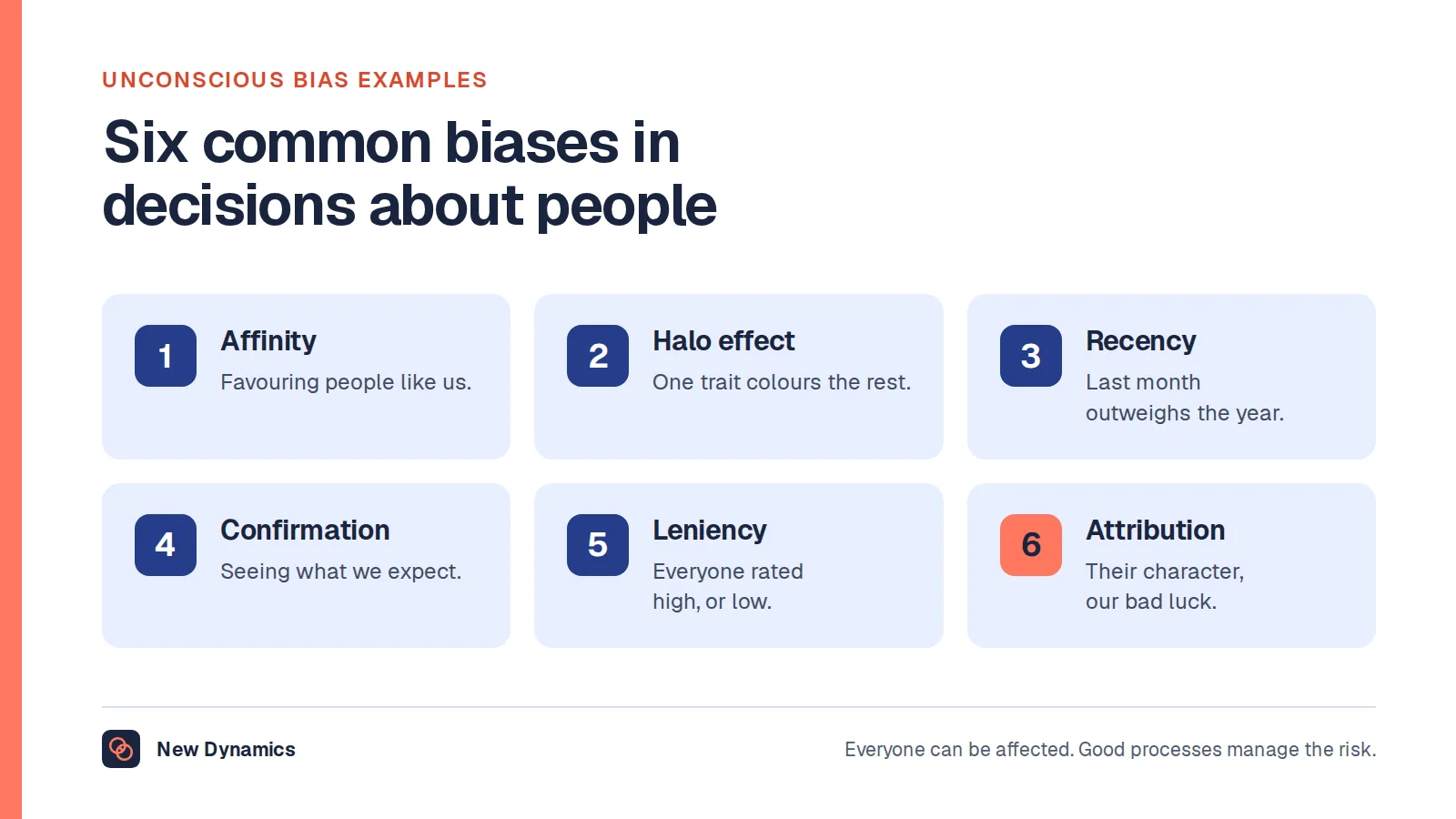
- Check your processes. Look at hiring, promotion and training by age group, and ask about any gap that you cannot explain. See our unconscious bias examples.
Challenge the jokes as well. “Typical millennial” and “OK boomer” are stereotypes about age, however lightly meant.
A legal caution about age
Treating someone differently because of their generation means treating them differently because of their age. In Great Britain, age is one of the protected characteristics listed in the GOV.UK guide Discrimination: your rights. Assuming that a candidate in their late thirties will not fit a “young team”, or that an older one cannot learn a system, can be unlawful as well as wrong. Our plain guide to the definition of discrimination at work explains the terms. This is general information, not legal advice.

Frequently asked questions
What is Generation Y?
Generation Y is the cohort that follows Generation X and comes before Generation Z. It is another name for millennials. The Cambridge Dictionary describes it as the group of people born in the 1980s and early 1990s.
What years are Generation Y?
Pew Research Center, whose definition is the most widely used, counts anyone born between 1981 and 1996. Other sources use slightly different start and end years, because generational boundaries are tools for analysis and not an exact science.
Are millennials and Generation Y the same?
Yes. Generation Y was the earlier name, chosen because it follows Generation X. Millennial has largely replaced it, and refers to the oldest members reaching adulthood around the year 2000. Dictionaries list the two terms as synonyms.
What are the characteristics of Generation Y?
The best-supported shared features are formative experiences. Millennials came of age during the rise of the internet, and many entered work around the 2008 recession. Claims about a shared personality, such as entitlement or job-hopping, have weak evidence.
How old is Generation Y now?
Using Pew's birth years of 1981 to 1996, members of Generation Y turn between 30 and 45 during 2026. They are mid-career, and many are managers, parents or both.
What comes after Generation Y?
Generation Z follows, which Pew defines as people born from 1997 onwards. The cohort born from the early 2010s is often called Generation Alpha, although its boundaries are not yet settled.
Your next step: replace one label with a question
- Notice the next time someone explains a colleague's behaviour by their generation.
- Ask what else might explain it: their role, their life stage, their manager or the situation.
- Ask the person what they need.
- Act on the answer, not on the label.
For a practical approach to fairness at work, read and download our diversity and inclusion guide. The guide is free to read, and the PDF uses our short download form.
Want feedback and goals that fit each person, whatever their age? Book a New Dynamics demo and bring your current approach. You can also email contact@new-dynamics.com.