TL;DR
- A good manager gets results through other people, and leaves those people better for it. The job rests on clarity, regular conversation, fairness and follow-through.
- Google's research into its own managers found ten behaviours of the most effective ones. The list begins with being a good coach. Technical skill is on it, but well down.
- Good management shows in routines more than in personality: a weekly one-to-one, clear priorities, prompt feedback, named recognition and blockers removed.
Most people become managers because they were good at something else. The best engineer, nurse or salesperson is promoted, and on Monday morning finds that the job has changed completely. Success now depends on what other people do.
So what makes a good manager? This article sets out ten qualities, each with behaviours you can see, along with ten signs of a bad manager, a weekly routine and ways to find out how well you are doing.
Good management runs on regular conversation. See how New Dynamics continuous feedback makes coaching, recognition and check-ins part of everyday work.
What does a manager actually do?
A manager is responsible for getting results through other people. In practice that means five jobs.
- Set direction. Make sure that everyone knows what matters and why.
- Organise the work. Match people to tasks, and agree who decides what.
- Support and develop people. Coach, give feedback and remove obstacles.
- Hold the standard. Notice good work and deal with poor work.
- Connect the team to the rest of the organisation, in both directions.
A good manager does these in a way that leaves people more capable and more willing than before.
What the evidence says
Google's people analytics team once set out to test whether managers mattered at all. Its guide to the research behind great managers reports that they do, and lists ten behaviours of the company's most effective managers. The list begins with “Be a good coach” and “Empower the team without micromanaging”. “Have key technical skills” appears eighth. This is evidence from one company, but it challenges the common habit of promoting on technical skill alone.
In Great Britain, the Health and Safety Executive's Management Standards describe what good support looks like. The Support standard says that “systems are in place to enable and encourage managers to support their staff” and that “employees receive regular and constructive feedback”.
Acas makes a similar point in its guidance on performance reviews: alongside formal reviews, “managers should still talk to employees informally about their performance on a regular basis”, through feedback, coaching and regular check-ins.
The three sources agree on the core: coach, trust, support and talk often.

10 qualities of a good manager
1. They make expectations clear
People know what they are responsible for, what good looks like and which priorities come first.
- Agrees three or fewer priorities with each person, in writing.
- Explains the reason behind a task, as well as the task.
- Says clearly when priorities change.
Our 50 SMART goal examples show how to word expectations.
2. They coach
They help people to think, where a weaker manager would simply supply answers.
- Asks “What do you think we should do?” before giving a view.
- Makes time for a regular one-to-one, and protects it.
- Treats a mistake as something to learn from.
3. They trust people with decisions
They delegate authority along with the task, and resist the urge to check everything.
- States what the person can decide without asking.
- Agrees check-in points in advance, and does not hover between them.
- Accepts a different method if the result is good.
How much to direct and how much to delegate depends on the person and the task. See our guide to leadership styles for managers.
4. They give honest, regular feedback
People never have to wait for the annual review to find out how they are doing.
- Gives praise and criticism within days of the event.
- Describes what happened and its effect, without labelling the person.
- Asks for feedback in return.
See our negative feedback examples for wording.
5. They are fair
They apply the same standards to everyone, and are seen to do so.
- Shares interesting work and opportunities evenly.
- Bases judgements on evidence from the whole period.
- Deals with poor behaviour from high performers as well.
6. They communicate openly
They share context early, including bad news, and they listen.
- Passes on information promptly, and says so when they do not know.
- Listens without interrupting, and sums up what they heard.
- Makes it safe to disagree. See how to make an open door policy real.
7. They develop people
They care about where each person is heading, even if it means losing them from the team.
- Knows each person's career aims.
- Offers stretch work and introductions.
- Discusses development at least every quarter. Our personal development goals examples can help.
8. They recognise good work
They notice effort and results, and they say so by name.
- Thanks people specifically, soon after the event.
- Gives credit to the person who did the work when talking to senior colleagues.
- Notices the quiet contributors as well as the visible ones.
9. They decide and follow through
They make decisions in good time, explain them and do what they said they would.
- Decides with the information available, and records the reasoning.
- Keeps promises, or says early when they cannot.
- Deals with poor performance promptly and humanely.
10. They know the work, and their own limits
They understand the work well enough to help and to judge quality, and they are honest about what they do not know.
- Can explain what good work looks like in their area.
- Asks the experts in the team, and does not pretend.
- Admits their own mistakes.
10 qualities of a bad manager
Bad management is rarely about villainy. It is more often neglect, anxiety or lack of training. These are the warning signs.
| Sign | What it looks like |
|---|---|
| Micromanages | Checks every detail, redoes work and must approve everything |
| Disappears | Cancels one-to-ones and is unavailable when decisions are needed |
| Unclear priorities | Everything is urgent, and the goalposts keep moving |
| Avoids hard conversations | Poor performance and bad behaviour go unaddressed |
| Takes the credit | Presents the team's work as their own |
| Blames | Looks for a culprit when things go wrong |
| Has favourites | The best work and the benefit of the doubt go to the same few people |
| Hoards information | Shares only what people “need to know” |
| Feedback once a year | The annual review is full of surprises |
| Breaks promises | Commitments about pay, development or support are quietly forgotten |
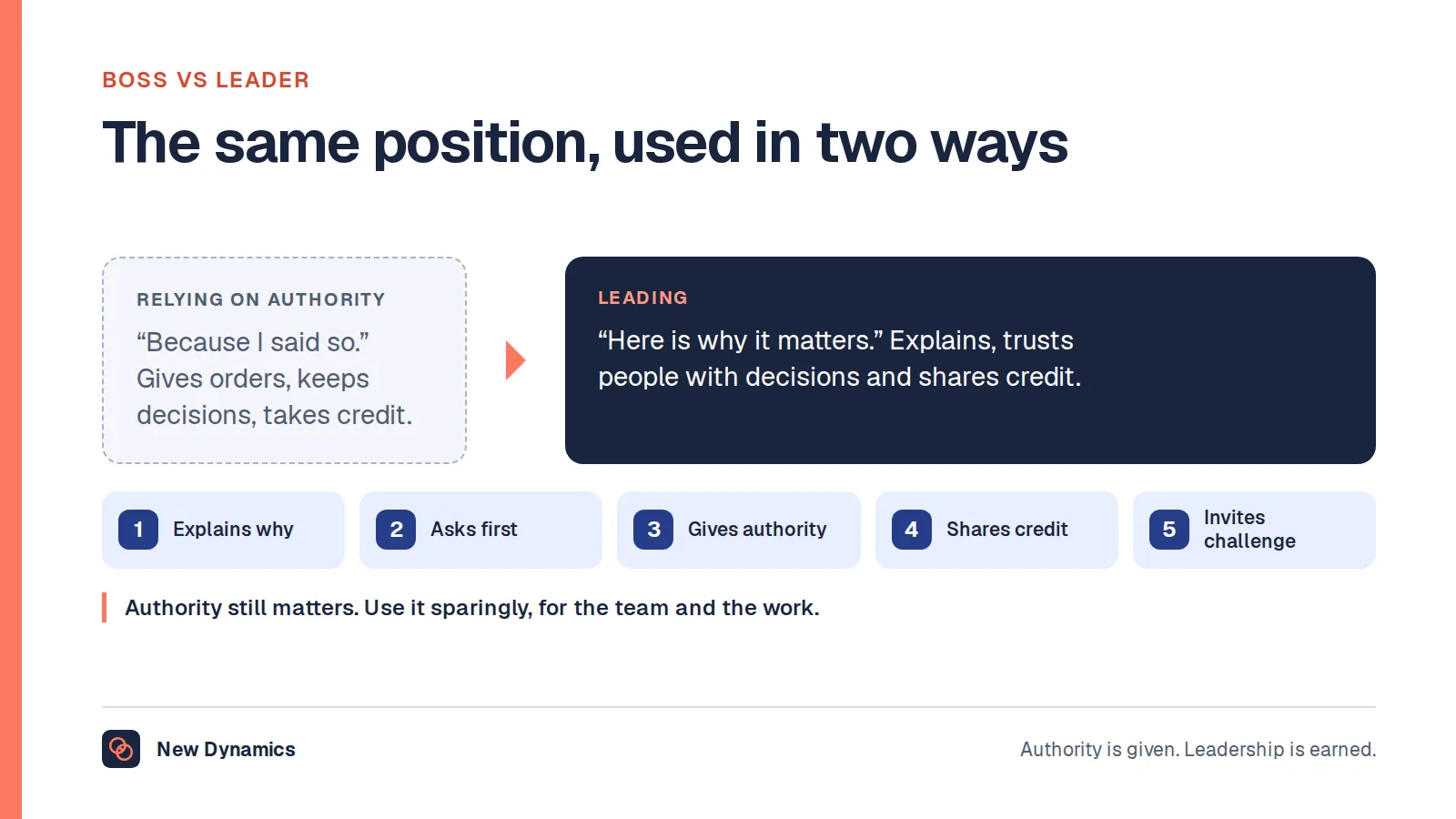
Most of these can be fixed with awareness, support and practice. If you recognise yourself in one or two, you are in good company. Pick one and start there. For the wider contrast, see boss vs leader: 12 differences.

A good manager's weekly routine
Qualities become real through routine. Here is a simple weekly pattern.
- Monday: priorities. Confirm the week's top priorities with the team, in ten minutes or in writing.
- Through the week: one-to-ones. Meet each person weekly or fortnightly for 30 minutes. Their agenda comes first.
- Every day: notice. Give one piece of specific feedback or thanks each day.
- Midweek: blockers. Ask what is in the way, and remove one obstacle.
- Friday: look back. What did the team finish? Whom should you thank? What did you promise and not yet do?
Every month, add a conversation with each person about development. Every quarter, review goals and ask for feedback on yourself.
Our one-to-one meeting guide gives an agenda and prompts for the conversation at the centre of this routine.

How to find out whether you are a good manager
- Ask your team. “What is one thing I could do differently that would make your work easier?” Ask regularly, and act on what you hear.
- Use upward or 360 feedback, if your organisation offers it. The HSE publishes a line manager competency indicator tool that lets managers assess their own behaviour.
- Watch the signals. Do people bring you bad news early? Do they disagree with you openly? Do good people stay and grow? How does the team perform when you are away?
- Look at results and wellbeing together. Strong results with exhausted people will not last. A happy team that does not deliver is not well managed either.
How organisations can help managers to be good
Individual effort is not enough. Organisations make good management more likely when they:
- select managers for their interest in people, using structured manager interview questions, and offer a respected route for experts who do not want to manage;
- train new managers before or soon after promotion;
- keep teams small enough for regular one-to-ones;
- measure and recognise how managers manage, as well as what their teams deliver;
- give managers a good manager of their own.
Frequently asked questions
What makes a good manager?
A good manager gets results through other people and leaves them more capable. The core qualities are clear expectations, coaching, trust, honest and regular feedback, fairness, open communication, developing people, recognition, decisiveness and enough knowledge of the work to help.
What are the best qualities of a manager?
Google's list of ten behaviours of its most effective managers begins with being a good coach, empowering the team without micromanaging and creating an environment that values everyone. Communication, support for career development and clear vision also feature. Technical skill is eighth on the list.
What are the qualities of a bad manager?
Common signs include micromanaging, being unavailable, unclear or shifting priorities, avoiding difficult conversations, taking credit, blaming, having favourites, hoarding information, giving feedback only once a year and breaking promises.
Can you learn to be a good manager?
Yes. The qualities of good managers are behaviours, such as holding regular one-to-ones, asking before telling and giving prompt feedback. Behaviours can be practised. Training, a good role model and feedback from your team all help.
What is the most important skill for a manager?
If you must pick one, choose the regular one-to-one conversation. It is where expectations are made clear, feedback is given, obstacles surface and trust is built. Most other management skills are practised there.
How do you know if you are a good manager?
Ask your team what you could do differently, and watch the signals. People bring you bad news early, disagree with you openly, grow into bigger roles and perform well when you are away. Results and wellbeing are both healthy.
Your next step: start one routine this week
- Put a recurring one-to-one in the calendar with each person in your team.
- At the first one, ask what they need from you.
- Give one piece of specific thanks or feedback every day this week.
- On Friday, note what you promised and have not yet done.
For an agenda and conversation prompts, read and download our one-to-one meeting guide. The guide is free to read, and the PDF uses our short download form.
Want every manager to coach, recognise and check in as a habit? Book a New Dynamics demo and bring your current management routines. You can also email contact@new-dynamics.com.