TL;DR
- You cannot refuse it. GOV.UK's guidance for employers opens with “You must allow an employee time off if they’re called up to serve on a jury”, and its public duties guidance adds that employers “cannot refuse their staff time off to do jury service”.
- You do not have to pay for it. GOV.UK states “You do not have to pay staff while they’re doing jury service, but many employers do.” If you do not pay, the employee claims a capped allowance from the court and you complete the certificate of loss of earnings.
- The caps differ by nation. In England and Wales the loss of earnings maximum is £64.95 a day for the first 10 days and £129.91 after that. Scotland adds a £230 whole day rate after 100 days. Northern Ireland gives jurors 14 days to claim.
A jury summons lands on a manager's desk and two questions follow within the hour. Can we say no, and do we have to pay? The first has a shorter answer than people expect, the second a longer one, and most policies get it half right. This is general information about the position in the United Kingdom, not legal advice.
Jury service leave arrives without notice and has to be recorded, approved and sent to payroll in the same week. See how New Dynamics workflows set the stages, participants and reminders for an absence process, so a summons does not sit in an inbox.
Jury service leave is not a discretionary absence
GOV.UK's guidance for employers, Giving staff time off for jury service, opens with one sentence: "You must allow an employee time off if they're called up to serve on a jury." Its guidance on time off work for public duties is blunter. Employers "cannot refuse their staff time off to do jury service", and "All workers can ask for time off to do jury service."
Most policies state the source of that duty incorrectly. It does not come from the public duties provision in employment law: section 50 of the Employment Rights Act 1996 grants time off to justices of the peace, local authority members, members of a statutory tribunal and others, and does not mention jury service once.
The compulsion sits on the juror, from the court. Under section 20 of the Juries Act 1974, a person duly summoned who "fails to attend" is "liable to a fine not exceeding level 3 on the standard scale", punishable "either on summary conviction or as if it were criminal contempt of court". An employee with a summons is under a court order, so the employer's duty is not to grant leave, it is not to obstruct it. In Northern Ireland, nidirect spells out the exposure: refuse the time off and "they could be in contempt of court".
Two results follow. There is no statutory limit on how many jury days you must absorb, and no statutory right to pay for any of them.

Asking for a deferral, and how many times it can be done
You cannot refuse the leave, but you can ask the employee to move it. GOV.UK's employer guidance is precise about how: "You can ask your employee to try to delay their jury service if their absence would seriously harm your business. They'll need a letter from you explaining why."
Note who does the asking. The employee applies, not the employer, and the court decides. Section 9A of the Juries Act 1974 gives the officer a discretion, not a duty: where the person summoned "shows to the satisfaction of the appropriate officer that there is good reason why his attendance in pursuance of the summons should be deferred, the appropriate officer may" defer it.
On how often, the two GOV.UK pages word it differently and both come to once. The employer guidance says staff "can only delay jury service once in a 12-month period". The page on asking to change the date or be excused says the new date must be "within the next 12 months" and that "You can only ask to change the date once". Its list of good reasons includes "your employer will not give you time off work".
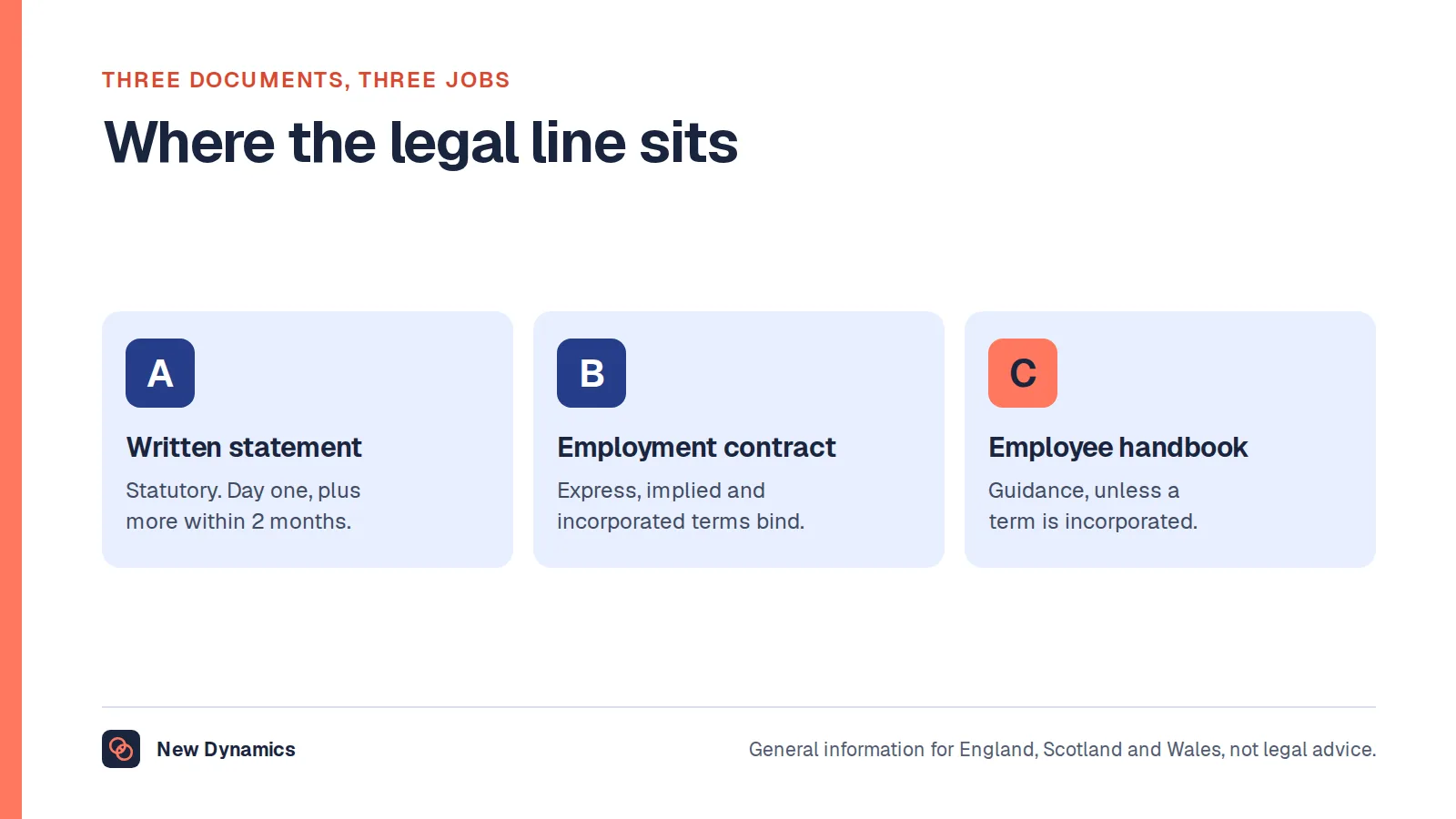
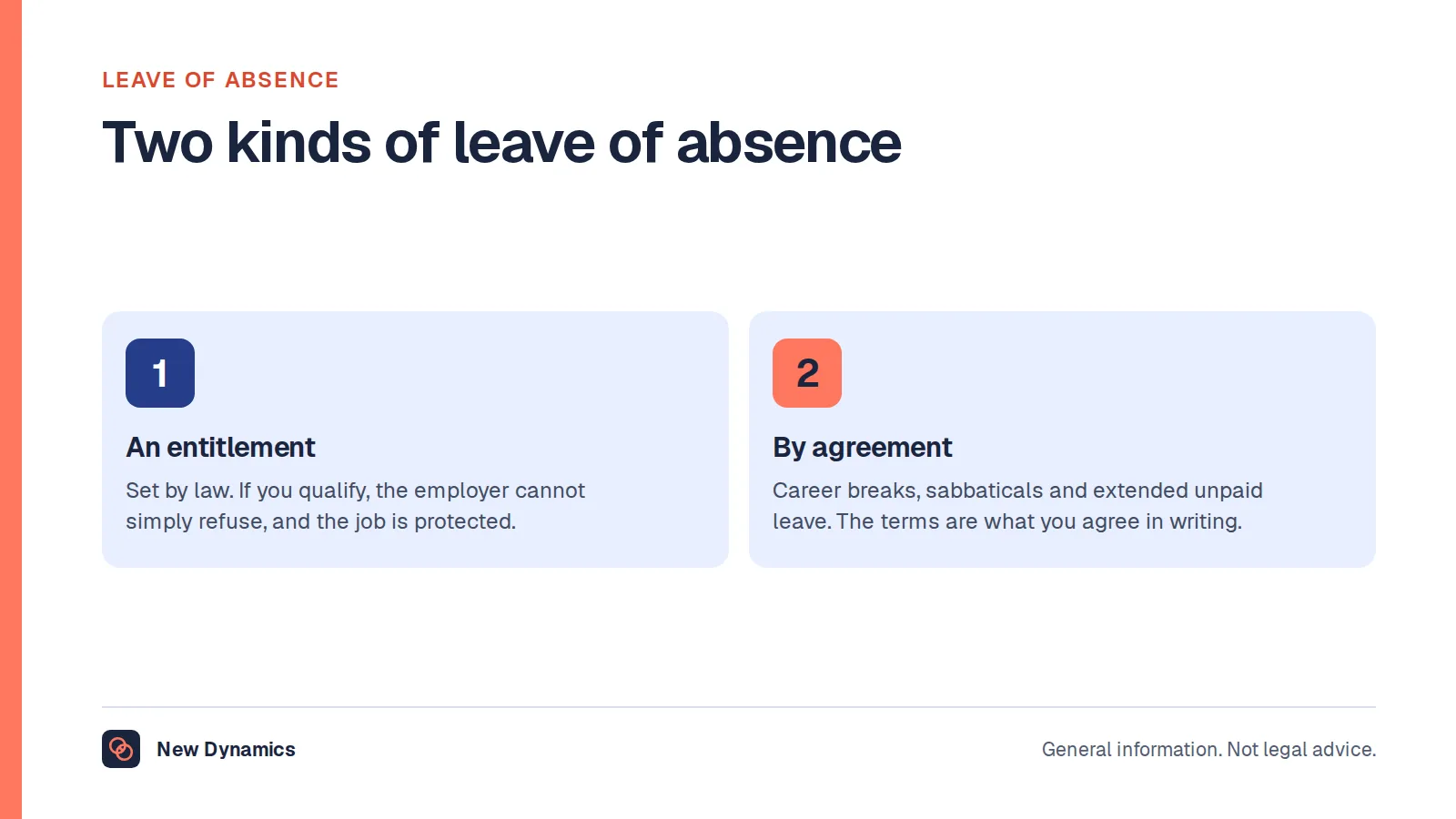
Excusal is narrower, allowed "only in exceptional circumstances", with serious illness, full time caring and a new parent among the examples, plus anyone who has served in the last two years. A refusal of either can be appealed to the Jury Central Summoning Bureau. Our article on a leave of absence covers the wider distinction between leave you must give and leave you may grant.
Jury service pay, and what the court will reimburse
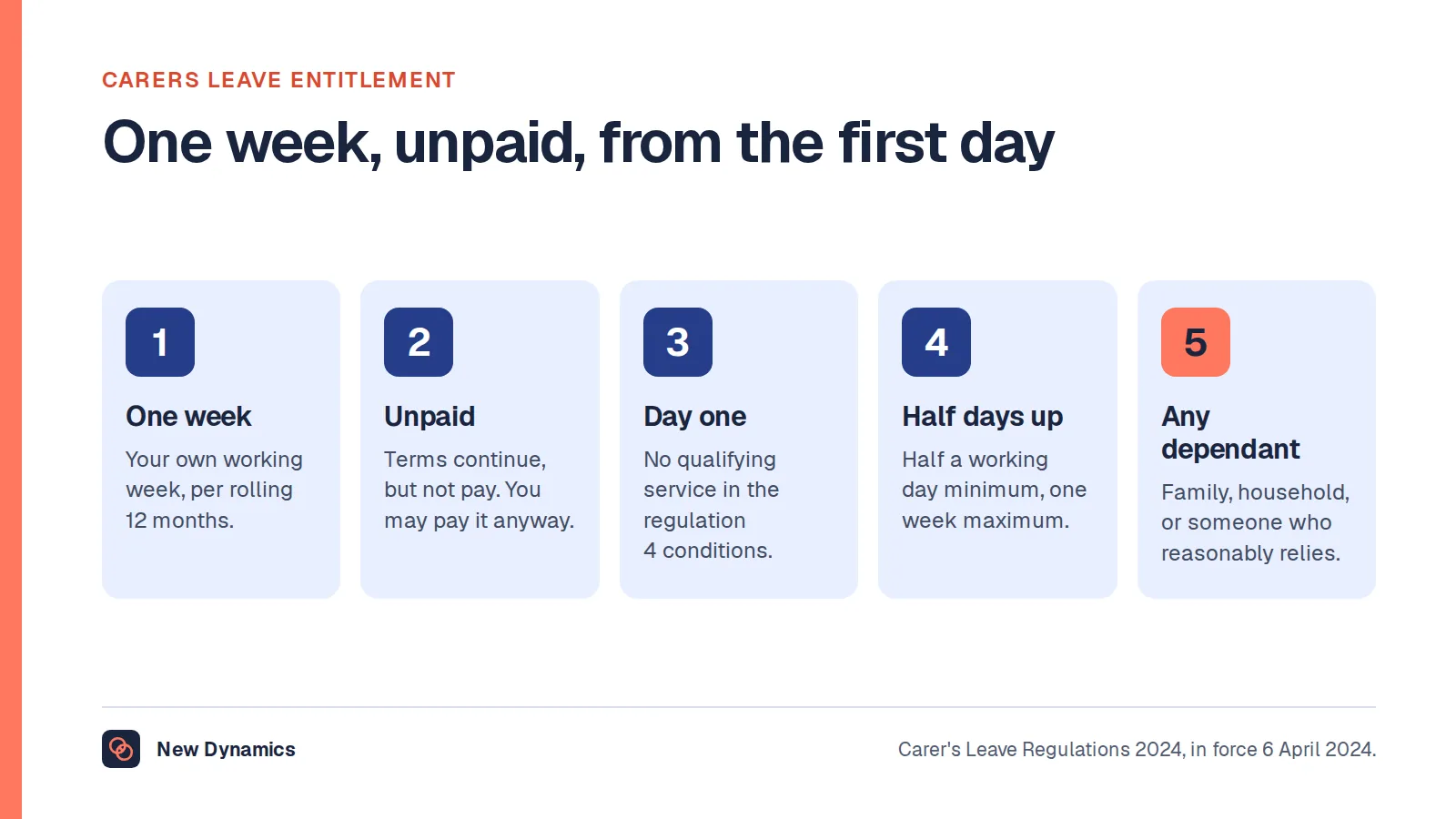
GOV.UK's page on paying staff on jury service gives the rule and the convention in one line: "You do not have to pay staff while they're doing jury service, but many employers do."
Employment law is consistent with that rather than silent on it. Section 43M of the Employment Rights Act 1996 protects a juror from detriment, but subsection (3) carves out pay: an employee "is not to be regarded as having been subjected to a detriment by a failure to pay remuneration" for the absence "unless under his contract of employment he is entitled to be paid that remuneration".
So the money comes from the court, and it is capped. GOV.UK's page on what you can claim if you're an employee sets the England and Wales maxima. For the first 10 days, a juror can claim up to £64.95 a day for more than four hours at court, or £32.47 for four hours or less. "If your jury service lasts longer than 10 working days, the amount you can claim increases", to £129.91 and £64.95 on the same four hour split. Food and drink is £5.71 a day up to and including 10 hours at court and £12.17 over 10 hours, car and motorcycle mileage is 31.4p per mile, and accommodation cannot be claimed at all.
Three cautions. The cap is shared, described as "up to £64.95 to help cover your loss of earnings and the cost of any care or childcare outside of your usual arrangements", so childcare sits inside the ceiling. The step up comes after 10 working days, not after a number of weeks: the eight week figure in circulation belongs to benefit claimants, who "will continue to get financial support and benefits (such as Universal Credit) for the first 8 weeks". And the page shows no last updated date while its metadata predates the current rates, so these are the figures published and checked on 7 November 2026. Section 19 of the Juries Act 1974 sets them at rates "determined by the Lord Chancellor with the consent of the Minister for the Civil Service", not by statutory instrument, so there is no dated regulation to cite instead.
If you keep paying, GOV.UK says to work out tax and National Insurance "in the normal way" and warns that "You cannot claim back money you've paid the employee or that the business has lost during the jury service". If you top up, "subtract the court allowance from your employee's usual take-home pay", then use payroll software for the net to gross figure. No official UK source publishes how many employees are summoned in a year, so a policy cannot be benchmarked against one; the workforce figures that do exist are in our HR statistics hub.

The certificate of loss of earnings, and your part in it
If you are not paying, or are topping up, you have one form to complete. GOV.UK: "If you do not pay your employee, they can claim a loss of earnings allowance from the court. You'll need to fill in a certificate of loss of earnings for your employee." The juror is told to bring it "to court on your first day of jury service".
The form is HMCTS Form 5223D, Certificate of Loss of Earnings (Employee), version 01.25, on a publication page last updated 5 February 2026. The employee supplies their own name, juror number and job title. Your part is narrower than most employers expect:
- Net daily earnings, day by day, over a typical two week period. The form defines the term: "Net daily earnings means the amount they take home after income tax, National Insurance and all other deductions." Weekends and bank holidays are excluded, because "the court is closed".
- Whether they could work when not needed at court. Three yes or no answers: a full day, a half day, or before the end of the two weeks.
- A declaration. "I confirm that the information I've given is correct. I also understand that I may be prosecuted if I've given false or misleading information." Then a signature, job title, phone and email, because the court "may contact you to check details about your employee's earnings".
A self-employed juror or company director uses a different form, and a benefits claimant uses Form 5223C after eight weeks. Claims go in at the end of service and "no more than 12 months after your jury service started". The usual failure is a slow return, not a wrong one: the certificate has to exist before the first sitting day.
Dismissal and detriment: the protection, and its one exception
Two sections of the Employment Rights Act 1996 do the work, both in force from 6 April 2005.
Section 43M gives an employee "the right not to be subjected to any detriment by any act, or any deliberate failure to act, by his employer" on the ground that they were summoned as a juror, or "has been absent from work because he attended at any place in pursuance of being so summoned". Withdrawing a promotion, moving someone off a project or marking the absence down in a review are all candidates. Not paying, as above, is not, unless the contract promised it.
Section 98B makes a dismissal automatically unfair where the principal reason is the summons or the absence, and section 108(3) removes the qualifying period, so a new starter is protected from day one. There is a defence, with four limbs that all have to be met: that the absence "was likely to cause substantial injury to the employer's undertaking", that the employer "brought those circumstances to the attention of the employee", that the employee "refused or failed to apply to the appropriate officer for excusal from or a deferral of the obligation to attend", and that "the refusal or failure was not reasonable". That is a process instruction, not an escape route. An employer who simply refused the leave can satisfy none of it.
Both sections extend to England, Wales and Scotland. Northern Ireland has its own employment legislation, and nidirect states both the unfair dismissal right and the same qualification about a failure to seek deferral or excusal.
Continuity, holiday and pension during jury service
Continuity of employment is unaffected, because jury service is an authorised absence inside employment rather than a break in it. GOV.UK's page on continuous employment lists the breaks that still count, including sickness, family leave, annual leave and "military service, for example with a reserve force", and does not mention jury service at all. It does not need to: the contract runs throughout, so there is nothing to bridge.
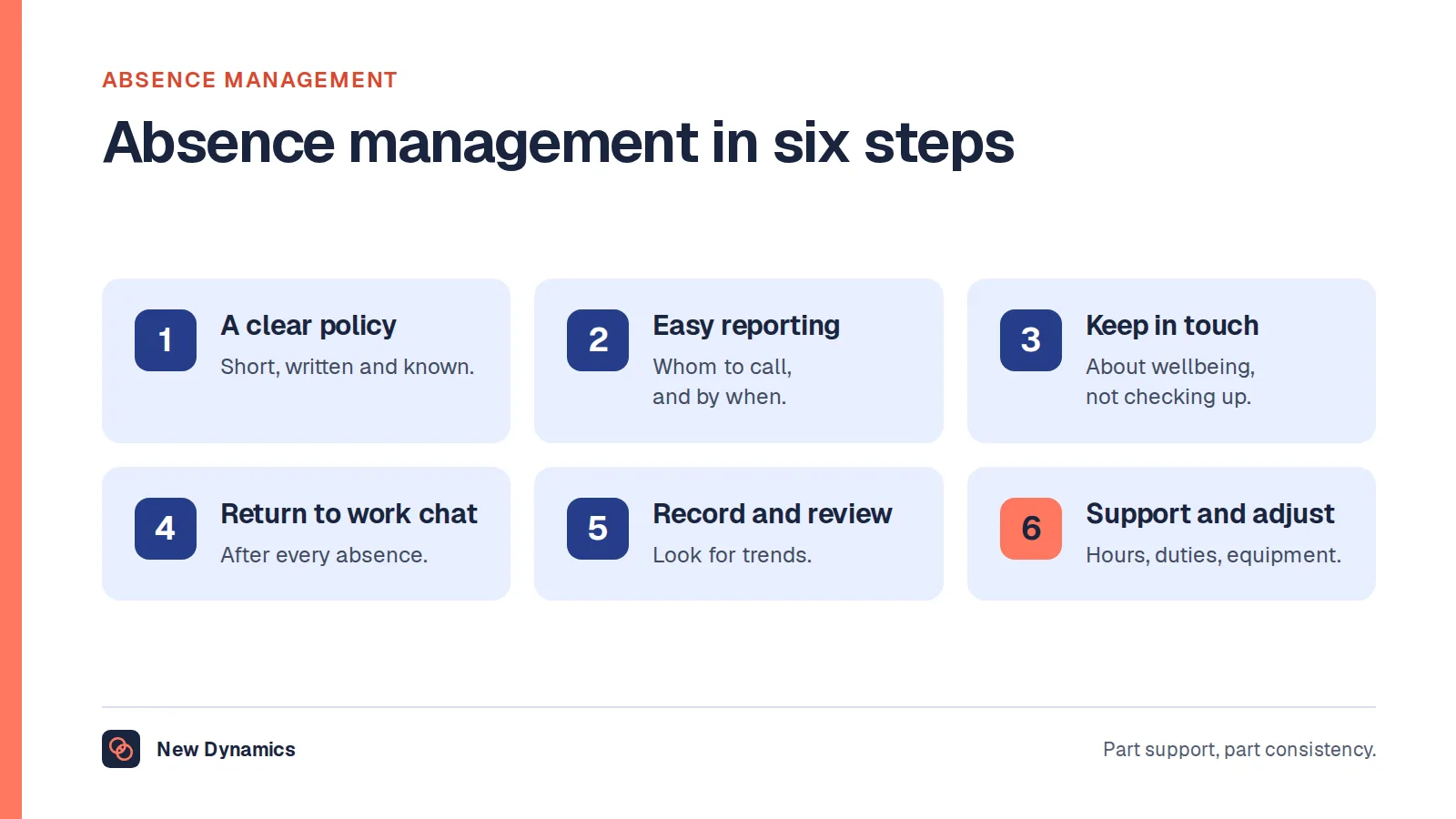
Holiday keeps accruing, and jury days are not holiday. GOV.UK's public duties guidance says the time off is given "as well as their normal holiday entitlement", and statutory annual leave continues to build because the person remains a worker under a subsisting contract. GOV.UK's holiday entitlement guidance does not address jury service at all, so deducting jury days from an allowance has no basis in it. Our article on absence management covers recording an absence like this properly.
Pension is the gap in the official guidance. No official UK source publishes a jury service rule for pension contributions. Where pay stops, automatic enrolment contributions follow the qualifying earnings actually paid, and the court's allowance is not earnings from the employer. Northern Ireland is the exception that proves it: nidirect's list of what the financial loss allowance can include names "National Insurance contributions" and "pension contributions", so a juror in Belfast can claim them inside the same daily maximum. GOV.UK's England and Wales pages do not.
England and Wales, Scotland and Northern Ireland are three systems
The duty to release the employee is effectively the same everywhere. Almost nothing else is.
England and Wales. The Juries Act 1974, administered by HM Courts and Tribunals Service. Jurors respond to the summons within seven days, serve for "usually up to 10 working days", and claim the allowances above.
Scotland. The Scottish Courts and Tribunals Service states that "You are not paid for jury service, but you are allowed to claim expenses", with maxima "decided by Scottish Ministers". Its juror expenses page sets four loss of earnings bands rather than two: £32.47 for four hours or less at court, £64.95 for more than four hours from day 1 up to and including day 5, a £129.91 whole day rate from day 6 up to day 100, and £230 for each day after 100 days. It adds that "To claim loss of earnings, you and your employer should complete the Certificate of Loss of Earnings". Relief is framed as excusal rather than deferral, and anyone aged 71 or over may apply as of right.
Northern Ireland. The claim window catches employers out: a juror has "14 days from the date your jury service ends" to submit the form, against 12 months in England and Wales. Financial loss maxima are £32.47 and £64.95 for the first 10 days on the four hour split, rising to £64.95 and £129.91 from day 11 onwards, and mileage is "£0.257 a mile". A jury panel "is usually in place for about four weeks", and if the loss exceeds the cap, "the difference cannot be paid by the court".
Write the nation into the policy. One UK paragraph quoting the England and Wales caps will be wrong for a juror in Glasgow on day 7 and will mislead a juror in Belfast about a two week deadline.
Frequently asked questions
Do employers have to give time off for jury service?
Yes. GOV.UK states that you must allow an employee time off if they are called up to serve on a jury, and that employers cannot refuse staff time off to do jury service. The obligation on the juror comes from the court: under section 20 of the Juries Act 1974, failing to attend is punishable by a fine or as a contempt of court.
Do employers have to pay for jury service?
No. GOV.UK states that you do not have to pay staff while they are doing jury service, but that many employers do. If you do not pay, the employee claims a capped loss of earnings allowance from the court and you complete the certificate of loss of earnings. Not paying is a detriment in law only if the contract entitles the employee to that pay.
How much is the jury service loss of earnings allowance?
In England and Wales, up to £64.95 a day for more than four hours at court during the first 10 days, or £32.47 for four hours or less. Beyond 10 working days it rises to £129.91 and £64.95. The cap also covers care and childcare. Scotland and Northern Ireland publish their own bands, and Scotland adds a £230 whole day rate after 100 days.
Can jury service be deferred, and how many times?
Once. GOV.UK tells jurors they can only ask to change the date once, to a date within the next 12 months, and tells employers that staff can only delay jury service once in a 12-month period. The employee applies, not the employer, and you supply the letter explaining why the absence would seriously harm the business.
Can an employee be dismissed for jury service?
Only in a narrow case. Section 98B of the Employment Rights Act 1996 makes such a dismissal automatically unfair, with no qualifying period of service. The employer's defence requires all four of substantial injury to the business, telling the employee about it, the employee failing to apply for deferral or excusal, and that failure being unreasonable.
Does jury service come out of someone's holiday?
No. GOV.UK's public duties guidance says the time off is given as well as normal holiday entitlement. Statutory annual leave keeps accruing because the contract of employment continues, and continuity of employment is unaffected. Deducting jury days from an allowance has no basis in the guidance.
Your next step: the four lines most policies are missing
- Name the trigger. The employee gives you the summons the day it arrives, because a deferral request and a certificate both have to reach the court before the first sitting day.
- Decide your pay position and write it down. Full pay, the court allowance alone, or a top up. If you top up, record that you will subtract the allowance from usual take-home pay and gross it up in payroll.
- Name who completes Form 5223D, or the Scottish or Northern Irish equivalent, and give them two working days. It needs net daily earnings over a typical two week period and a signed declaration.
- Say that jury days are not holiday, that continuity and leave accrual are unaffected, and which nation's allowance table applies to each site.
For the handbook section that holds all four, read and download our employee handbook guide. The guide is free to read, and the PDF uses our short download form.
Want absences like this to arrive as a tracked request with the right form attached, rather than an email to a manager who is on leave? Book a New Dynamics demo and bring your current absence policy. You can also email contact@new-dynamics.com.