TL;DR
- A buddy is a peer who answers the small questions nobody wants to take to their manager: where things are, who to ask, whether that meeting matters. It is short, practical and deliberately not a development relationship.
- Pick for availability and attitude rather than seniority or performance. The best buddy is someone who joined recently enough to remember being lost, has the time, and will answer the same question twice without sighing.
- Keep four things away from the role: assessing the new starter, reporting back on them, delivering the training the organisation owes, and covering for an absent manager. Each one ends the usefulness of the relationship.
Every new starter has a list of questions they will not ask their manager. Where is the good coffee, is that meeting optional, did I just send a reply to four hundred people, is it normal for this to take three weeks. A buddy exists to answer those, and it is among the cheapest things an organisation can add to its onboarding.
This article covers how a buddy differs from a manager and a mentor, who to pick, what the role covers week by week, how much time it really takes, what to keep well away from it, and what changes when the new starter is remote. It describes the position in Great Britain and is general information, not legal advice.
A buddy works best when the rest of onboarding is organised around them. See how New Dynamics onboarding keeps tasks, early goals and conversations in one path.
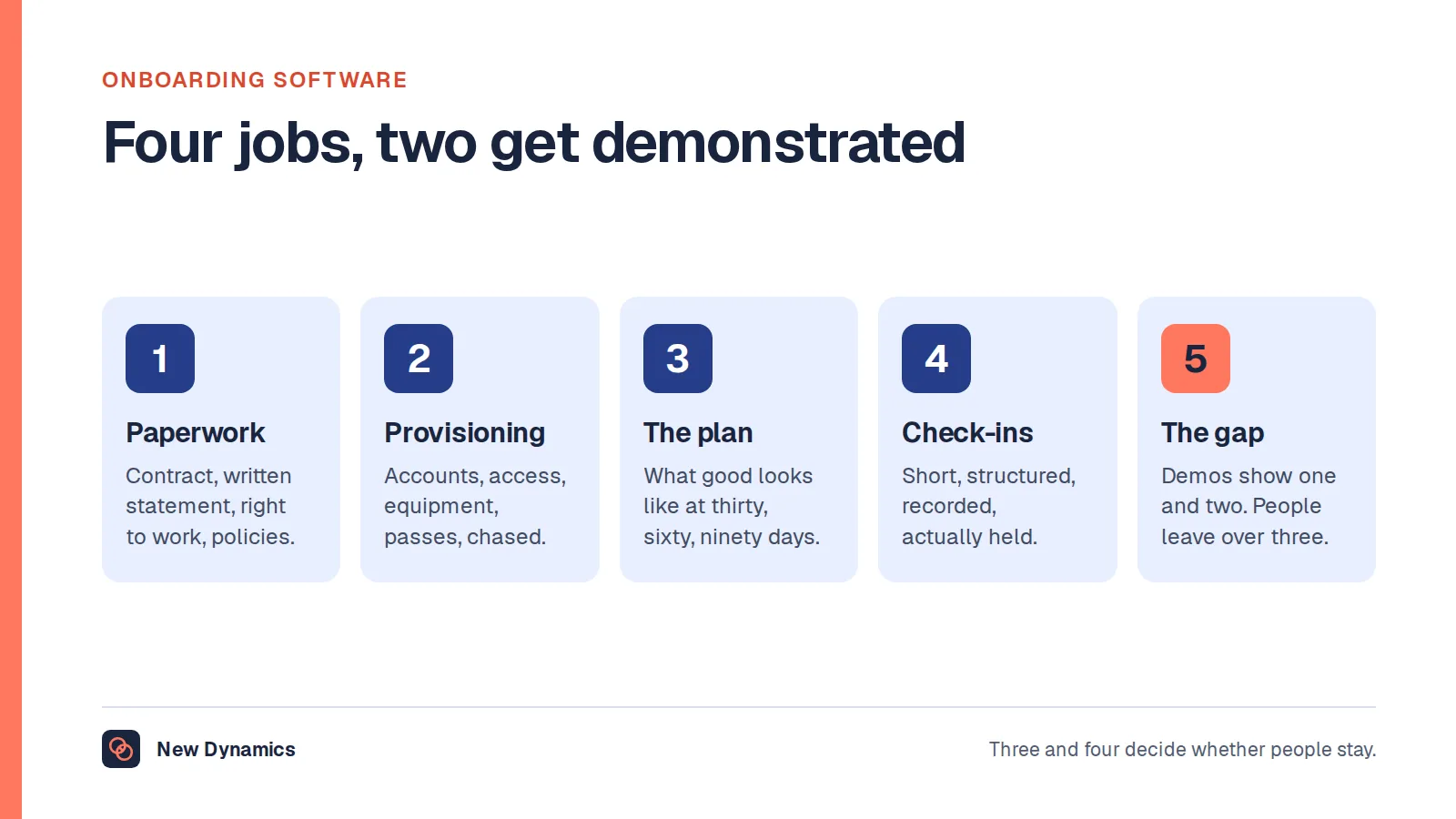
If you are choosing a system to hold that path, our guide to onboarding software covers the four jobs it has to do and the two that demos skip.
Buddy, manager, mentor

The buddy is a peer, for the first weeks, answering practical questions and offering company. No assessment, no authority, no agenda.
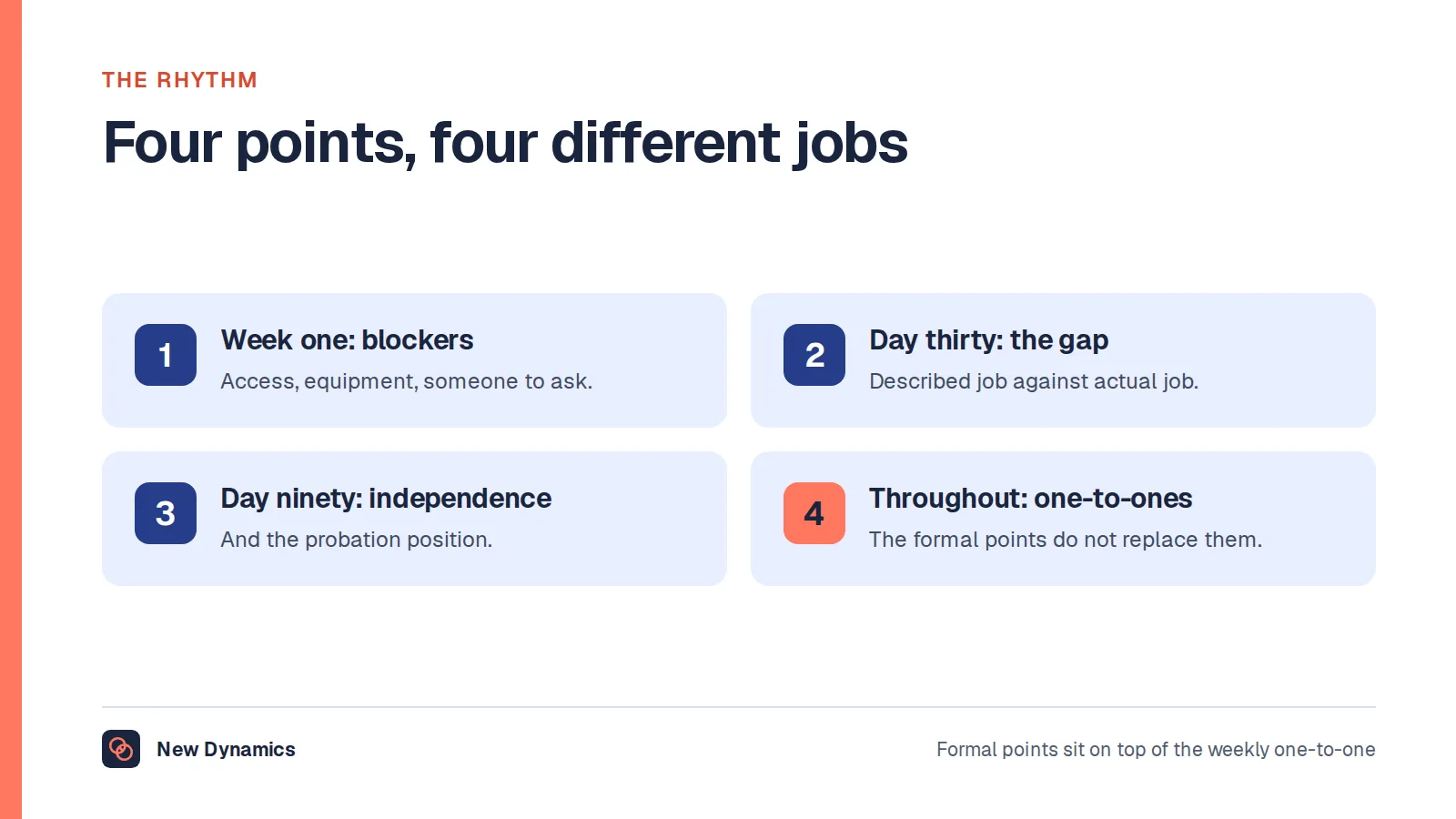
The manager owns expectations, feedback, the check-ins and the probation decision. Our post on onboarding check-ins covers what those conversations should contain.
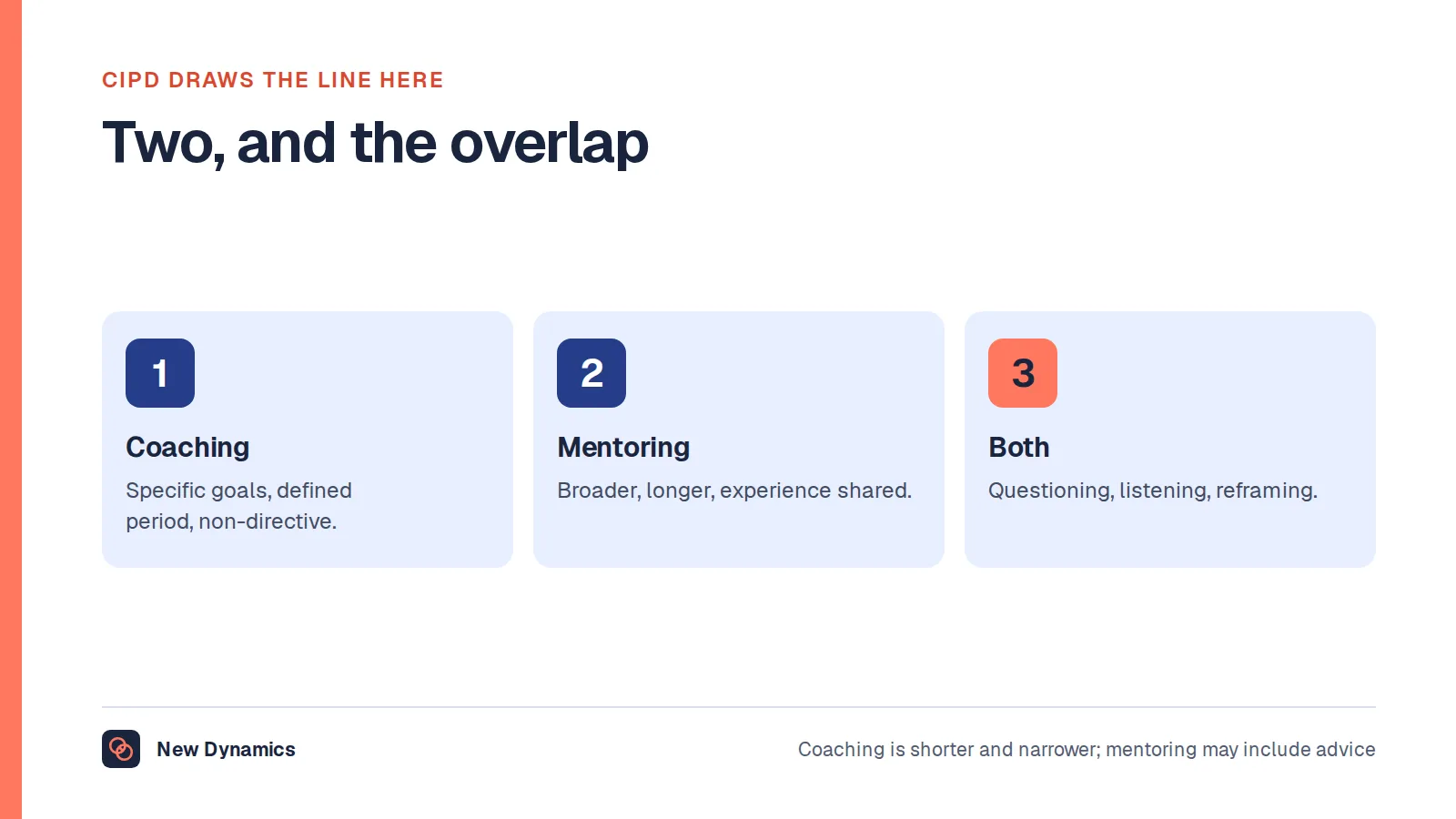
A mentor is a longer, developmental relationship, usually more senior and often outside the person's own team. Our post on mentoring programmes covers how that differs from coaching and sponsorship.
The roles fail when they merge. A buddy who is also assessing is not somebody you ask a stupid question. A mentor assigned on day one is usually a buddy with a grander title and a vaguer purpose.
There is a wider reason to take the peer relationship seriously. HSE names Support, "the encouragement, sponsorship and resources provided by the organisation, line management and colleagues", and Relationships among six areas of work design that affect health and productivity when they are managed badly. Colleagues are part of the support structure, not an optional extra.
Who to pick
Not the highest performer, and not whoever has the most capacity because their work is quiet. Use four tests:
- Recent enough to remember. Someone who joined in the last year or two still knows which parts were confusing. A fifteen-year veteran has forgotten that any of it was ever strange.
- Actually available. Ten minutes most days for a fortnight. If their calendar is solid, the scheme fails quietly and the new starter concludes they are an imposition.
- Patient with repetition. The same question twice is normal. A buddy who sighs is worse than no buddy.
- Close enough to be useful, far enough to be safe. Same team or an adjacent one, not the person's own manager and not someone who will be assessing their work.
Ask the person rather than assigning them, say how long it lasts, and let them decline without consequence. A reluctant buddy produces a worse first month than none.
What the buddy does

Week one. Meet on day one. Show the practical geography: the building or the tools, where things are kept, which channels matter. Have lunch or a call. Be reachable for small questions.
Weeks two and three. A short check-in every couple of days. Introduce two or three people the new starter would not meet otherwise. Explain the unwritten rules: which meetings need preparation, how decisions actually get made, who to ask about what.
Weeks four to six. Weekly. By now the questions are more interesting, usually about how things work rather than where they are. Keep answering.
Weeks seven to twelve. Fortnightly, then taper. Agree an end point rather than letting it fade, and mark it, because an unended arrangement leaves both people unsure whether they are still in it.
The honest time cost is about twenty minutes a day in week one, falling to a short conversation a week by the end. Say that number out loud when you ask someone, because a vague commitment is how schemes die.
Four things never to ask a buddy to do

Assess the new starter. The moment the buddy's opinion counts towards probation, the new starter stops asking the questions that make the role work.
Report back on them. Including the gentle version, "how are they getting on, between us". If a buddy tells you something unprompted that matters, that is different. Soliciting it is not.
Deliver the training. The organisation owes an induction. Handing it to a peer with no time and no materials is how a new starter ends up learning the job from somebody else's shortcuts.
Cover for an absent manager. If the manager is away for the first fortnight, that needs a named stand-in with authority, not a buddy carrying questions they cannot answer.
Acas expects a probation process to work "together with their induction and performance management processes" and to be consistent across the organisation, noting that consistency helps explain how decisions are made, which "reduces the risk of discrimination". A buddy sits alongside that structure rather than replacing any part of it.
Remote and hybrid
Nothing about a buddy happens by accident when nobody shares a room, so schedule it: a short call on day one, two fifteen-minute calls a week for the first fortnight, and an open channel for questions. Ask the buddy to send the occasional unprompted message, because a remote new starter will not interrupt someone they have never met. If the team has in-person days, make sure the buddy is there for the new starter's first one.
Telling whether it worked
Ask both people at the thirty-day check-in, which Acas describes as a chance to discuss "what the employee needs to perform well at work" and how they are feeling in the role. Three questions do it: did you have someone to ask, what did you end up working out alone that somebody could have told you, and for the buddy, how much time did this actually take?
Then fix the induction with what you learn, rather than asking the next buddy to cover the same gap again.
Frequently asked questions
What does an onboarding buddy do?
They answer the practical questions a new starter will not take to their manager, introduce them to people, explain the unwritten rules and provide company in the first weeks. It is short, peer-level and informal: no assessment, no authority and no development agenda.
What is the difference between a buddy and a mentor?
A buddy is a peer helping with the first weeks and the practical questions. A mentor is a longer developmental relationship, usually more senior and often outside the person's team. Assigning a mentor on day one usually produces a buddy with a grander title and a vaguer purpose.
Who should be an onboarding buddy?
Someone who joined recently enough to remember being lost, has ten minutes most days, will answer the same question twice without sighing, and is close enough to the work to be useful without assessing it. Ask rather than assign, and let people decline.
How long should a buddy relationship last?
Around twelve weeks, tapering from daily contact in week one to fortnightly by the end, with an agreed end point. Ending it deliberately is better than letting it fade, because an unended arrangement leaves both people unsure whether it is still running.
How much time does being a buddy take?
About twenty minutes a day in the first week, falling to a short weekly conversation by the end of the first quarter. Say the number when you ask someone, because a vague commitment is the most common reason these schemes quietly stop happening.
Should a buddy report back on the new starter?
No. Asking a buddy how someone is getting on, even informally, turns the relationship into assessment and the new starter stops asking the questions that make it valuable. Progress is the manager's conversation, through the normal check-ins and probation reviews.
Your next step: set one up properly
- Write a half-page brief: what the role is, what it is not, how long it lasts and how much time it takes.
- Ask one person for the next starter, and let them say no.
- Book the day one meeting and the first fortnight of check-ins before the start date.
- At thirty days, ask both people what the new starter had to work out alone, and fix the induction.
For the rest of the first ninety days, read and download our employee onboarding guide. The guide is free to read, and the PDF uses our short download form.
Want onboarding tasks, early goals and conversations in one place? Book a New Dynamics demo and bring your current induction plan. You can also email contact@new-dynamics.com.