TL;DR
- Each check-in can find out something the others cannot. Week one catches blockers, day thirty catches the gap between the job described and the job that exists, and day ninety tests whether someone can now do it without help.
- Ask induction questions at thirty days. Earlier and the person has nothing to compare it with; later and they have forgotten what confused them, which is exactly the information that improves the induction.
- Tie the ninety day conversation to the probation decision. Acas says regular reviews exist partly to make sure the probation outcome is not a surprise to the employee.
Onboarding in most organisations is a week of accounts and introductions followed by silence. The new starter works out the rest from context, and the first real conversation about how it is going happens when somebody notices the probation date.
This article sets out the rhythm that prevents that: what each check-in can find out, the questions to ask at week one, thirty days and ninety days, and how to collect feedback on the induction while the person can still remember it. It describes the position in Great Britain and the UK and is general information, not legal advice.
Tasks, early goals and the first conversations belong in one path. See how New Dynamics onboarding keeps them together rather than in three systems.
The rhythm, and why these points

Week one: blockers. Can they actually do anything yet? Access, equipment, a desk, somebody to ask. Nothing else matters until this is true.
Day thirty: the gap. This is the only moment when someone can see both the job that was described and the job that exists, and is still willing to say so. Ask later and they will have adjusted to it without noticing.
Day ninety: independence. Can they do the work without the support that got them through month two, and is the probation outcome in sight? Acas says regular reviews help "make sure the probation outcome is not a surprise to the employee", which is the whole argument for doing any of this.
Throughout: ordinary one-to-ones. Acas adds that employees "should also have regular informal check-ins throughout their probation period". The formal points do not replace the weekly conversation, they sit on top of it.
Acas also makes the join explicit: a probation process should have "clear expectations from the start" and work "together with their induction and performance management processes".
Week one

The checklist first, because it is mostly logistics.
- The paperwork is done. GOV.UK says an employer must give employees and workers a document stating the main conditions of employment when they start work, and that "the employer must provide the principal statement on the first day of employment", with the wider written statement following within two months.
- Access works. Systems, building, email, the tools of the actual job rather than the generic set.
- Someone to ask. A named person for the daily questions people are embarrassed to ask a manager.
- The first piece of real work. Small, finishable, useful. Nothing teaches a job like doing a bit of it.
- The map. Who does what, which meetings matter, how decisions get made here.
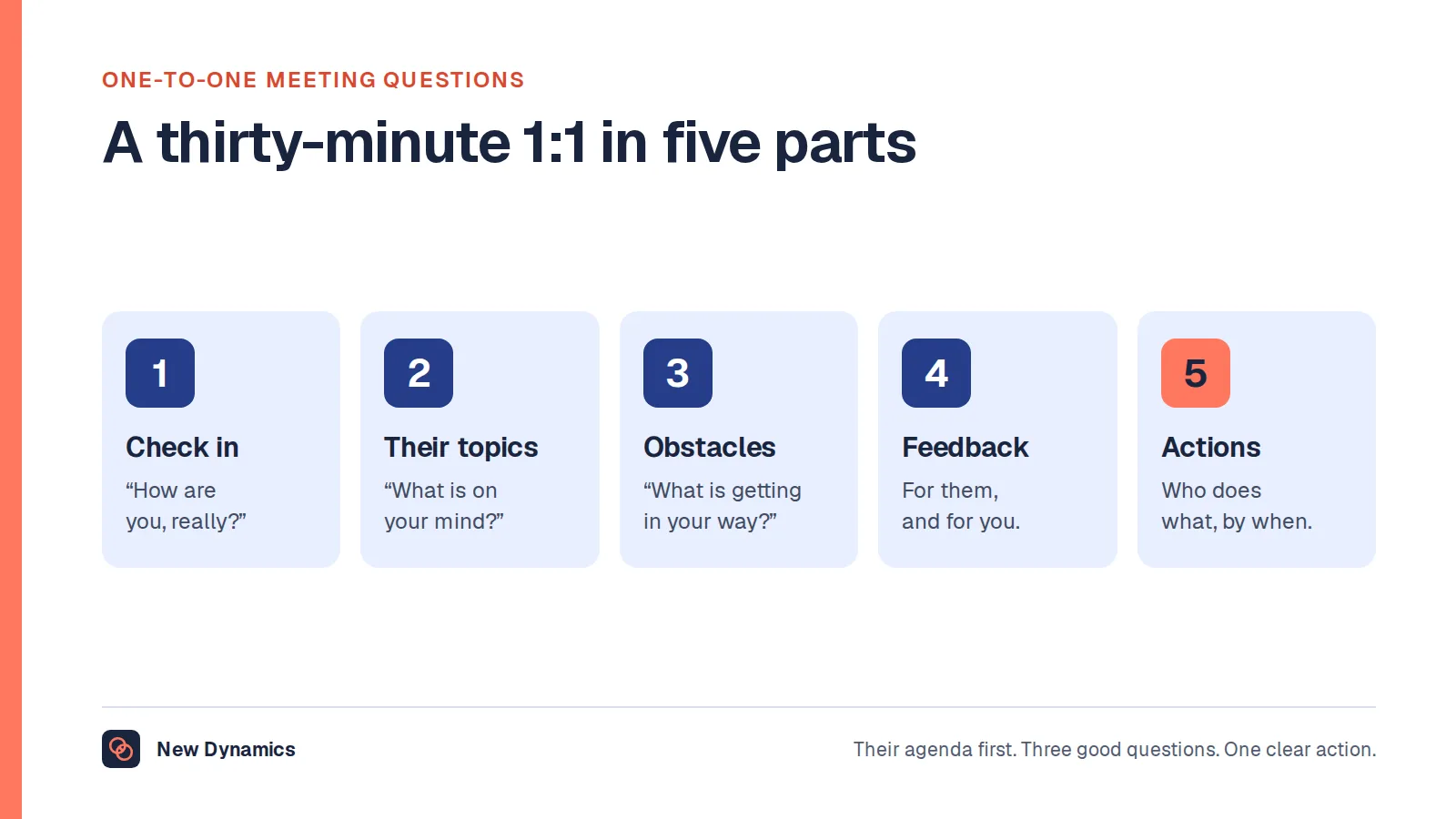
Then five questions, at the end of the week:
- What has stopped you doing something this week?
- What is still missing: access, equipment, information, a person?
- Who have you not met yet that you need to?
- What surprised you?
- What would have made this week easier?
Fix the answers inside a day where you can. Week one is when a new starter decides whether raising things here is worth the effort.
Day thirty

Thirty minutes, informal, and the most informative conversation in the whole process.
- How does the job compare with what you expected from the advert and the interview?
- What do you still not understand? What are you doing without really knowing why?
- Where are you spending time that seems wasteful?
- Who have you found most helpful, and who should I introduce you to next?
- What would you change about your first month if we hired someone else tomorrow?
- Is there anything you are worried about?
- What do you need from me to be useful by month three?
The fifth question is where induction feedback belongs, and thirty days is the right moment for it: recent enough to remember what confused them, long enough to judge whether it worked. If you run a form instead, keep it to three open questions and read the answers rather than counting them. A satisfaction score from one person tells you nothing; "nobody explained how escalations work and I guessed for two weeks" tells you what to fix on Monday.
Two rules. Write down what you will change, and tell the next starter what changed because of the last one. An induction that improves visibly is the strongest signal a new team can get.
Day ninety
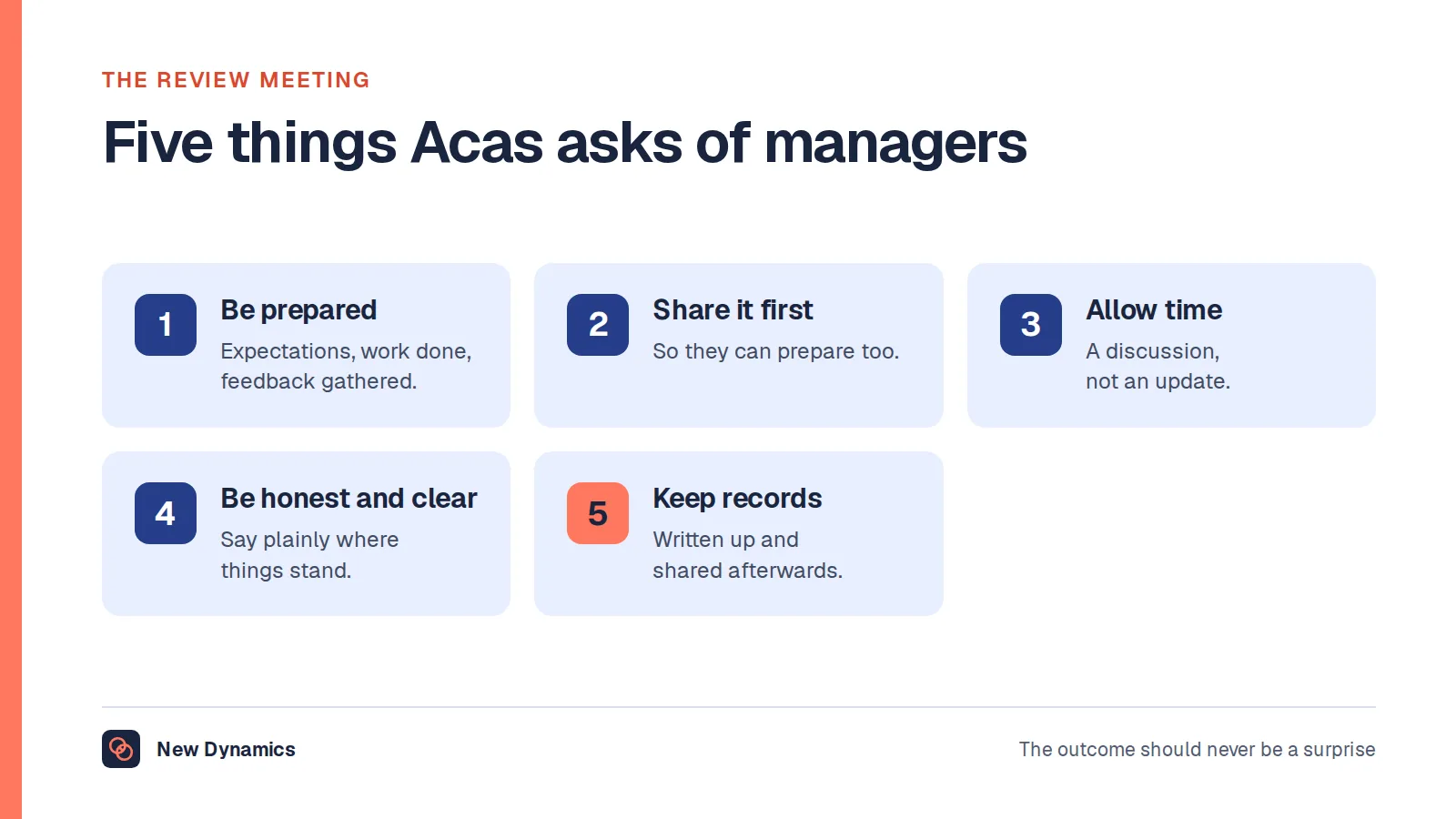
This one is more structured, because something is being decided. Acas describes probation reviews as formal checkpoints covering progress and performance, wellbeing, constructive feedback, the employee's own questions and "what the employee needs to perform well at work".
Cover five things:
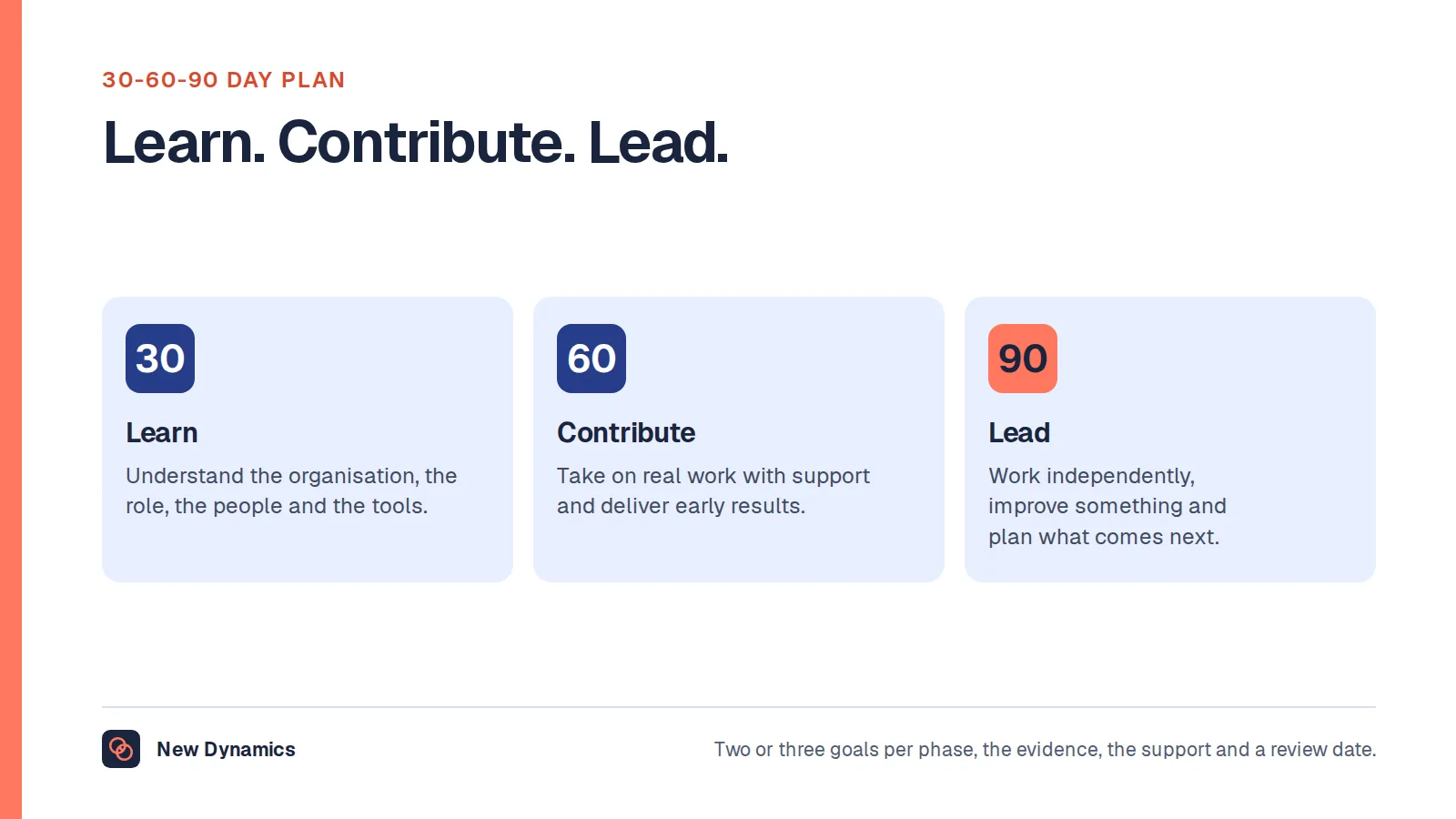
- Against expectations. What was agreed for the first three months, and where it stands. Our post on the 30-60-90 day plan covers setting those expectations before day one.
- Independence. What can they now do alone that needed help in month one, and what still needs support.
- Evidence. Specific examples, including anything from colleagues or customers.
- The probation position, stated plainly, with nothing in it they have not heard before. Our post on probation reviews covers the decision, the extension rules and what a dismissal requires.
- What comes next. Objectives for the next period, and the move from onboarding to the normal cycle.
Then write it up and share it, which is the habit that makes every later conversation easier.
Who does what
The manager owns the conversations. HR owns the rhythm, the reminders and the induction improvements. A buddy, where there is one, owns the questions people do not want to ask their manager, and is the single cheapest thing most organisations could add.
Where a new starter is remote, all of this needs scheduling deliberately, because none of it happens by accident in a corridor: our post on remote performance reviews makes the same argument for the main cycle.
What goes wrong
The check-ins get cancelled. The first month is the busiest for the manager, which is exactly why these go in the diary before day one.
Only the logistics get asked about. Access and equipment are necessary and tell you nothing about whether the person is going to stay.
The answers go nowhere. If nothing changes after two new starters say the same thing, people stop answering honestly.
Day ninety produces a surprise. If the first difficult feedback arrives at the probation review, the earlier conversations did not do their job.
Frequently asked questions
What should a 30 day check-in with a new starter cover?
How the job compares with what was described, what they still do not understand, where their time is going, who else they need to meet, what they would change about the first month, anything worrying them, and what they need from you. Thirty minutes, informal, and write down what you will change as a result.
What questions should you ask in a first week check-in?
Keep them practical: what stopped you doing something, what is still missing, who have you not met, what surprised you, and what would have made the week easier. Fix what you can within a day, because week one is when someone decides whether raising problems here is worth it.
What should a 90 day review include?
Progress against what was agreed, what the person can now do independently, specific evidence including feedback from others, the probation position stated plainly, and objectives for the next period. Acas describes probation reviews as formal checkpoints and says regular ones help make sure the outcome is not a surprise.
When should you ask for feedback on the induction?
At about thirty days. Earlier, the person has nothing to compare it with; later, they have forgotten what confused them, and that confusion is the useful part. Three open questions, read rather than scored, and tell the next starter what changed.
Do onboarding check-ins replace probation reviews?
No. Probation reviews are formal checkpoints with an outcome attached, while check-ins are how the information gets gathered beforehand. Acas also expects regular informal check-ins throughout probation, so the two run together rather than one replacing the other.
What has to be given to a new starter on their first day?
GOV.UK says an employer must give employees and workers a written statement of the main conditions of employment when they start work, with the principal statement provided on the first day of employment and the wider written statement within two months. Changes must be notified within a month. This is general information, not legal advice.
Your next step: put three meetings in the diary
- Before the next start date, book the week one, thirty day and ninety day conversations.
- Write the five questions for week one into the manager checklist so nobody improvises.
- At thirty days, ask the induction question and write down one thing you will change.
- Tell the following starter what changed because of the last one.
For the whole first ninety days, including the induction itself, read and download our employee onboarding guide. The guide is free to read, and the PDF uses our short download form.
Want onboarding tasks, early goals and these conversations in one path? Book a New Dynamics demo and bring your current induction plan. You can also email contact@new-dynamics.com.