TL;DR
- There is no Secondment Act. No UK statute defines a secondment, sets a maximum length or gives anybody a right to one, so almost every question a secondee asks is answered by the agreement rather than by law.
- The law does bite in three places: the employee has to agree to the change, a written statement of that change is due within one month under section 4 of the Employment Rights Act 1996, and moving a whole function out can be a service provision change under TUPE.
- HMRC treats a plain recharge of salary to the host as consideration for a supply of staff. Its secondment relief in VAT Notice 700/34 applies only where the host pays the employee directly and discharges the PAYE and National Insurance obligations.
A secondment is easy to agree and hard to unwind. Somebody is needed somewhere else, everybody says yes, and the arrangement runs on goodwill until the day it has to end. Then the questions arrive at once. Whose budget pays for the pay rise. Who writes the appraisal. Which job does the secondee come back to, if the team has been reorganised twice since they left.
This article covers the United Kingdom. It sets out the few points where employment law decides the answer, and the longer list where the position depends entirely on what the secondment agreement says. It is general information and not legal advice.
A secondee is usually directed by one manager and reviewed by another, which is the situation most review processes handle worst. See how New Dynamics multi-manager reviews record each relationship separately, so the home manager and the host manager both contribute and neither perspective is lost.
There is no Secondment Act
No United Kingdom statute defines a secondment, sets a maximum duration or gives an employee a right to one. The word appears in official guidance, not in a statutory definition of its own. Acas has no page devoted to secondment; its guidance on changing contracts is the nearest official source that applies.
GOV.UK does address it directly. Its guidance on Civil Service secondments and loans, published on 30 April 2014, draws the distinction that matters most. An interchange means either "a secondment to an external organisation - the Civil Service continues to pay your salary" or "a loan to a different government department or agency (the host department) - you're usually paid by the host department and are subject to its terms and conditions". Before the placement starts, it says, "you, the host organisation and your home department will agree the terms of the secondment", and it lists "how the secondment agreement will be created" among the things to settle first. Three parties, one written agreement, and a home employer that normally keeps paying. Everything else is negotiable, which is why it has to be written down.
Who stays the employer, and why continuity depends on it
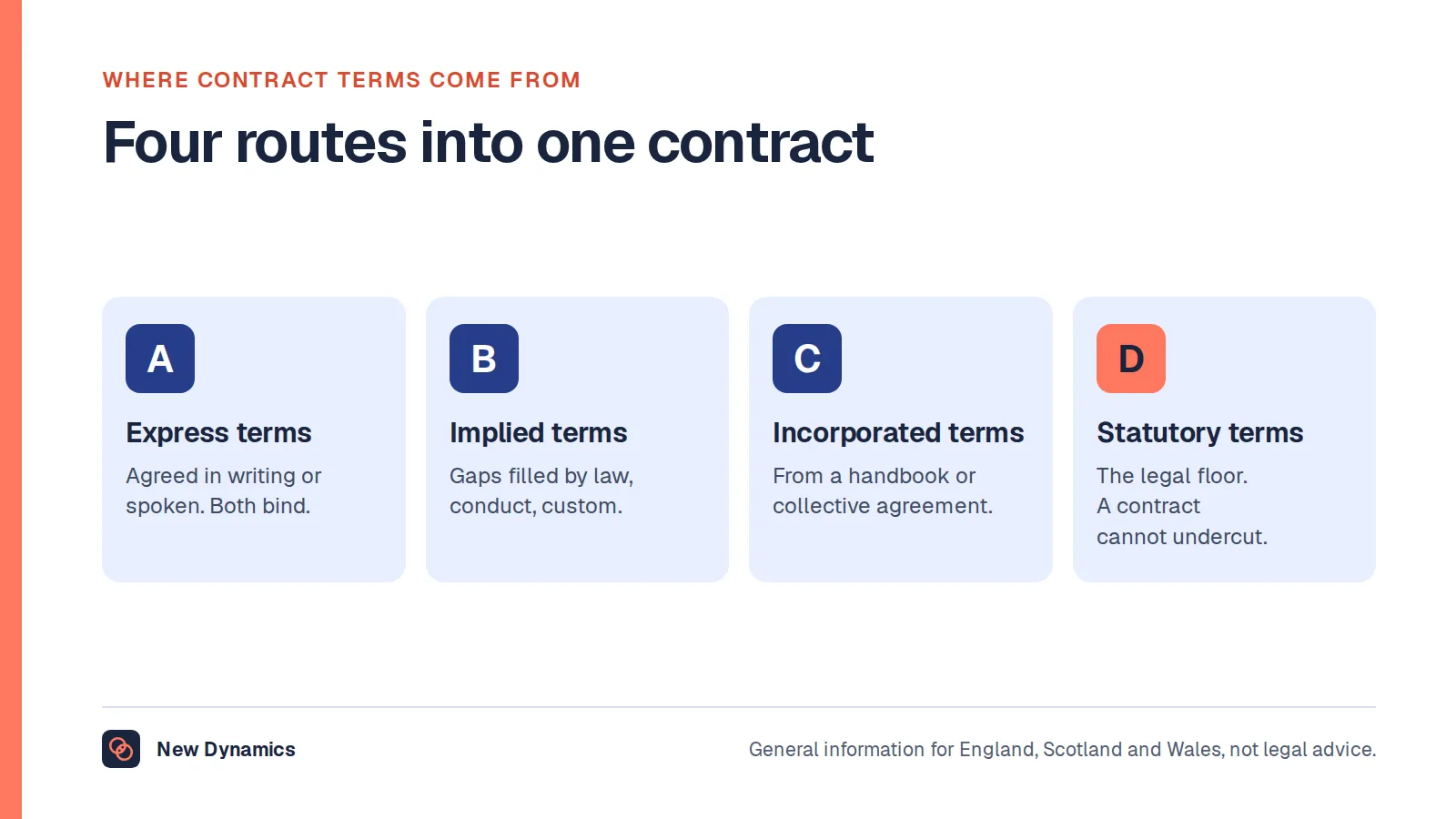
In a typical secondment the home employer remains the employer and the contract continues. The secondee is lent, not transferred. That is not a technicality, because continuity of employment is what qualifies someone for unfair dismissal protection, statutory redundancy pay and family leave. Section 218(1) of the Employment Rights Act 1996 is blunt about the default: "Subject to the provisions of this section, this Chapter relates only to employment by the one employer." If the home employer stays the employer throughout, none of the exceptions in the rest of that section is needed, because nothing was broken.
Turn the same arrangement into a resignation and a fresh contract with the host and the picture changes, unless the host is an associated employer within section 218(6). The agreement should say, in one sentence, who the employer is for the whole period.
A secondment is a change to the contract, so it needs agreement
A secondment usually changes the duties, the place of work and the reporting line. Those are contractual terms. On its guidance for employers on changing your employees' contracts, last updated on 27 October 2026, Acas states: "Both you and the employee can propose changes to the agreed terms and conditions. You must both agree to the changes. This is unless there's a clause in the contract that allows you to make a change without agreement."
So the employee can refuse, and refusing is not misconduct. Acas lists what an employer risks by imposing a change instead: "legal claims from employees, for example claims of breach of contract or constructive dismissal". Its advice is to keep negotiating, and to consider offering something that makes the proposal easier to accept, which it calls "buying out" a term. A mobility or flexibility clause may already permit the move, but whether a particular clause stretches far enough depends on its wording and on how it is used, and no official source settles that in advance. Our post on the employment contract covers those clauses.
The written statement, and the one month deadline
Once the change is agreed, a written statement is legally due. Section 4(1) of the Employment Rights Act 1996 requires that where there is a change in any matter that must appear in the section 1 statement, "the employer shall give to the worker a written statement containing particulars of the change", and section 4(3) sets the deadline at the earliest opportunity and in any event "not later than one month after the change in question". Acas puts it plainly: "By law, you must put a change in writing within 1 month of the change."
Secondments routinely touch three of the particulars listed in section 1: the job title or "a brief description of the work for which he is employed" at subsection (4)(f), the place of work at subsection (4)(h), and the rate of remuneration at subsection (4)(a) if there is an allowance. Acas adds that the record should make clear "whether the change is temporary or permanent" and "for how long it will last".
An overseas secondment adds more. Where the worker must work outside the United Kingdom for more than a month, section 1(4)(k) requires the period abroad, the currency, any extra pay or benefits for being abroad, and "any terms and conditions relating to his return to the United Kingdom". Section 4(3)(b) then brings the deadline forward to the moment the worker leaves the country, if that is earlier.

When a secondment can trigger TUPE
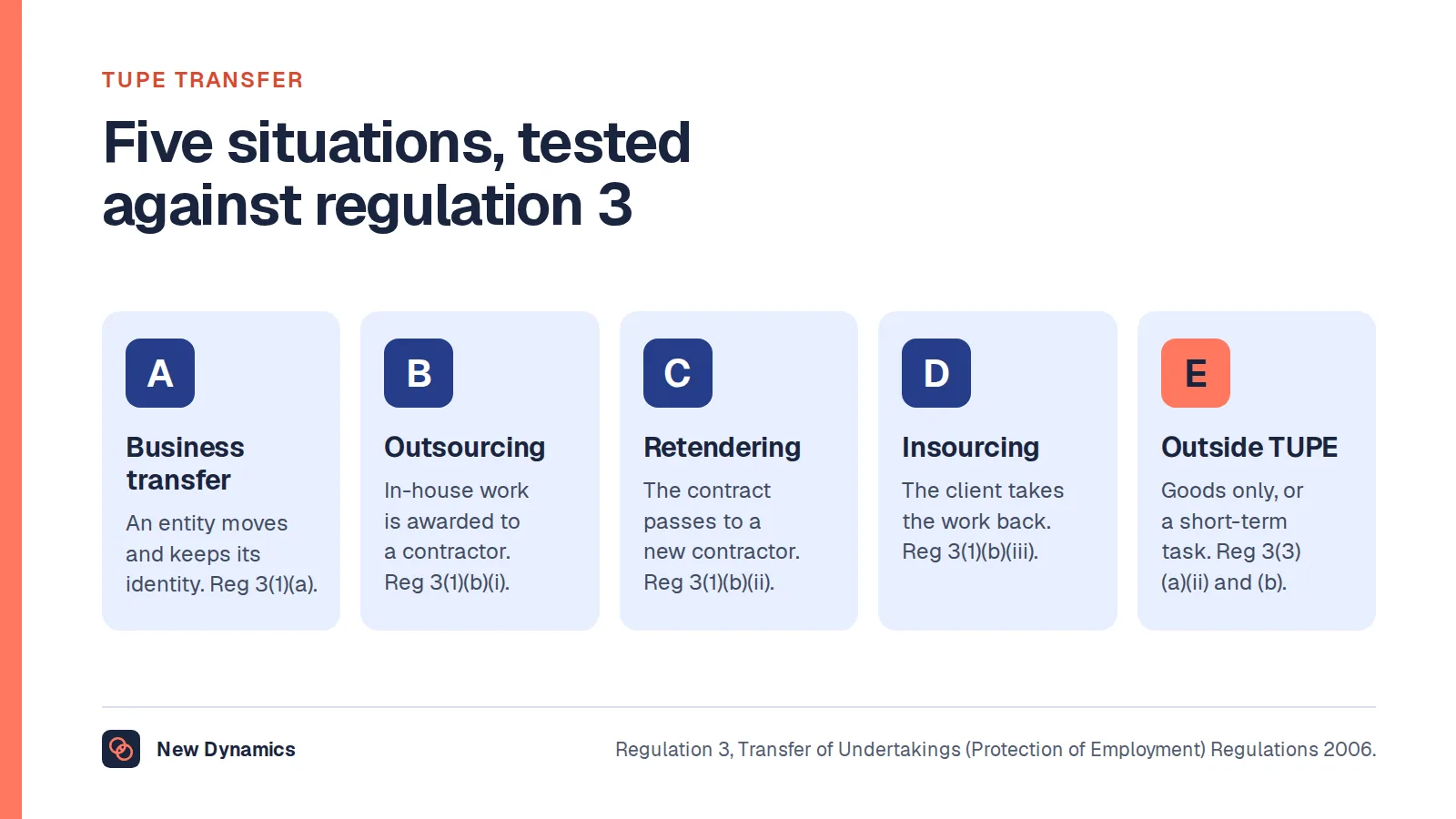
Lending one person does not transfer their employment, so TUPE is usually not in play. Moving a whole function out, with the team that performs it, is a different matter.
Regulation 3(1)(b) of the Transfer of Undertakings (Protection of Employment) Regulations 2006 covers a "service provision change", which includes activities ceasing to be carried out by a client on its own behalf and being "carried out instead by another person on the client's behalf". Regulation 3(3) then requires "an organised grouping of employees situated in Great Britain which has as its principal purpose the carrying out of the activities concerned on behalf of the client", and that the client intends the work to continue with the transferee "other than in connection with a single specific event or task of short-term duration".
One secondee helping with one project is a long way from either condition. A whole team moved across to run a service indefinitely is not. Our post on a TUPE transfer sets out what happens when the regulations do apply.
Paid by one party, working for another
The agency question. Section 13(3A) of the Employment Agencies Act 1973, as in force on 6 November 2026, defines "employment arrangements" as "arrangements under which persons who are, or are intended to be, in the employment of a person are, or are intended to be, supplied to act for, and under the control of, another person in any capacity". That is wide enough to deserve a look. Whether a given secondment brings the home employer inside the regime for employment businesses turns on the facts, and no official page answers it generically.
VAT on the recharge. HMRC's Supply of staff and staff bureaux (VAT Notice 700/34), last updated on 31 December 2020, is the source that catches people out. Paragraph 2.1 says you make a supply of staff "if, for a consideration, you provide another person with the use of an individual who is contractually employed or otherwise engaged by you", and paragraph 2.3 says the value includes "any staff costs you recover from the recipient of your supply such as salary, National Insurance, pension contributions", with "VAT is due on the full consideration." There is a secondment relief at paragraph 6.1, and its conditions are narrow: the host must exercise "exclusive control over the allocation and performance of the employee's duties during the period of secondment", be "responsible for paying the employee's remuneration directly to the employee", and discharge the employer's obligations to pay PAYE, National Insurance, pension and similar payments to third parties. The common arrangement, where the home employer keeps running payroll and invoices the host, is not the one paragraph 6.1 describes. Take advice on your own facts before assuming a recharge is free of VAT.
Inward secondments and PAYE. Where a secondee comes to the United Kingdom, the UK organisation's duty does not depend on who pays. GOV.UK's guidance on a new employee coming to work from abroad, last updated on 10 December 2025, states: "If the employee is still employed by an overseas business and you do not actually pay them, you're still treated as their employer and are responsible for recording and reporting their earnings and PAYE deductions to HMRC. These are called 'seconded employees'." The immigration route has a hard limit: GOV.UK's Secondment Worker visa page, checked on 7 November 2026, states that "the maximum time you can stay in the UK on a Secondment Worker visa is 2 years".
What the secondment agreement has to settle
None of the following is decided by statute. All of it is decided by the document, and a gap in the document becomes an argument later.
- Duration and review points. A start date, an end date and a named date for deciding whether to extend. No official source sets a maximum length.
- Duties and the brief. GOV.UK advises checking with the host that there is "a clear brief on the role, a full induction programme in place to support your entry into the organisation".
- Who directs the work, and who reviews it. Direction usually sits with the host and the appraisal with the home employer, which means the host has to supply evidence. Say who does which, and when.
- Pay, benefits and pension. Who pays, through which payroll, and what happens to a pay review, bonus or share plan falling inside the period.
- Expenses. Travel, accommodation and equipment, with a limit and an approver named on the host side.
- Confidentiality and intellectual property. The secondee will see the host's confidential information and may create work for it. Both need express terms, because an employment contract's default position is drafted for the home employer.
- Conduct and safety. Whose policies apply on site, and which grievance procedure the secondee uses.
- Early termination. How much notice ends the secondment, who can give it, and what triggers an immediate end.
- The return. The role, the location and the terms the secondee comes back to.

The role that quietly disappears
The most common failure is not legal. The substantive role is backfilled, then reshaped, then absorbed, and nobody tells the secondee.
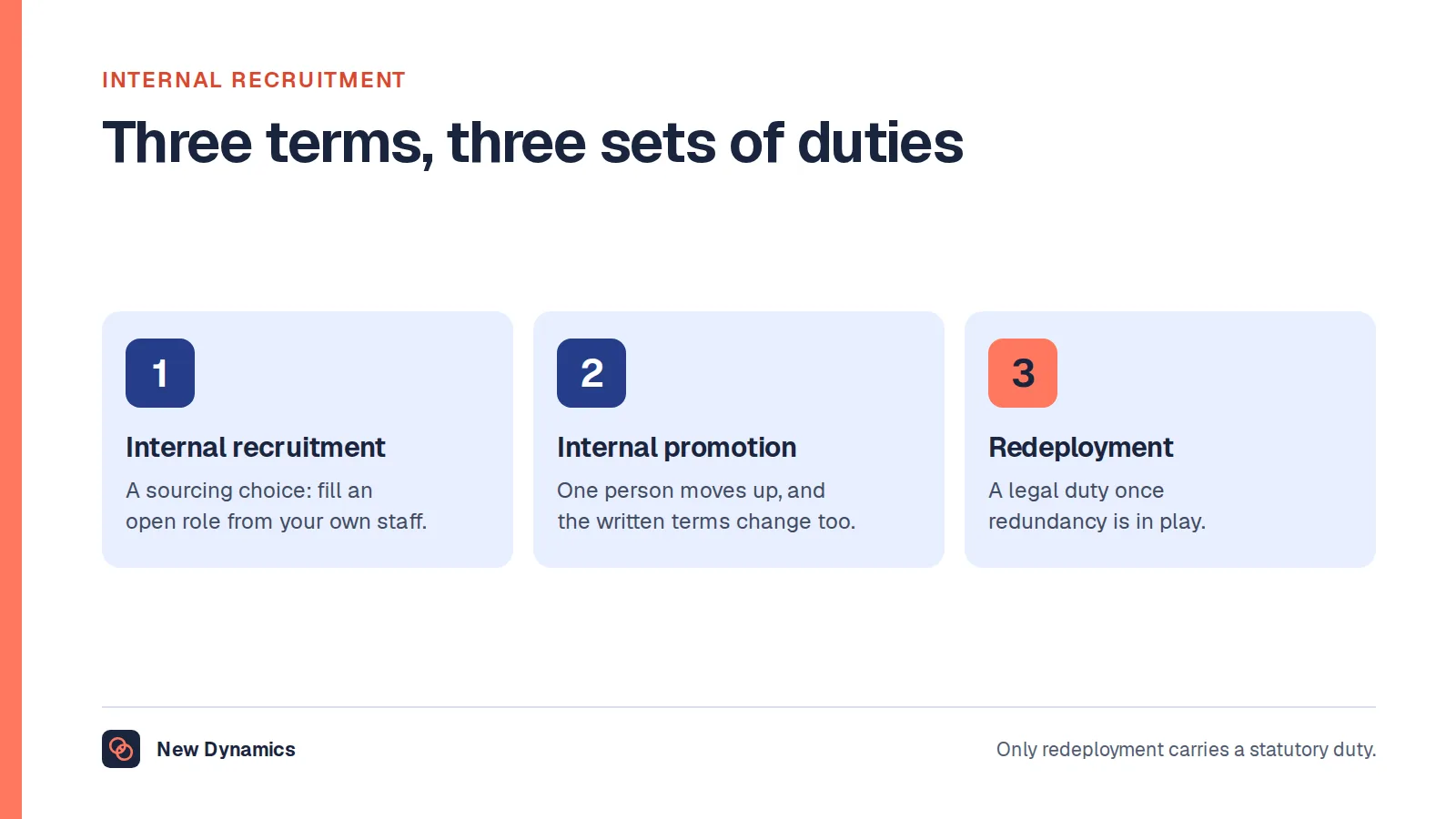
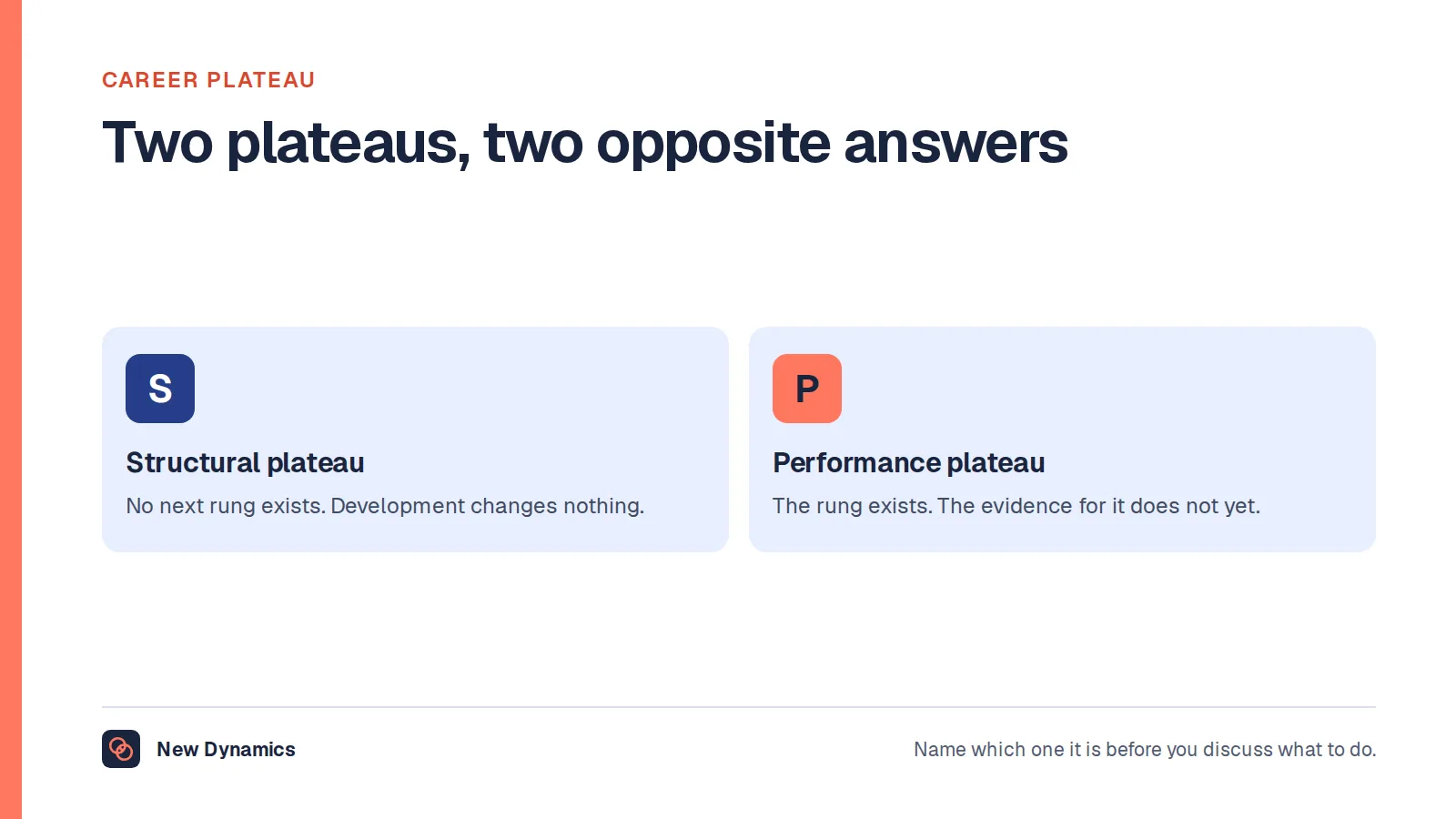
Protect the return in the agreement rather than in good intentions. Name the post the secondee returns to, or state the level and terms if the post itself may not survive. Say what happens if the role is made redundant while they are away, which is a redundancy situation governed by the usual process and not by the secondment. Keep the secondee inside the home employer's vacancy notifications, performance cycle and pay review, and keep a named contact at home who holds the arrangement. Our post on internal recruitment covers why people on secondment are missed when a job is advertised, and our post on a career plateau places a secondment among a manager's options when no promotion is available.
No official United Kingdom source publishes how many employees are on secondment at any time, so treat any figure on that with suspicion. The published labour market series are in our HR statistics hub.
Frequently asked questions
What is a secondment?
A secondment is a temporary arrangement under which an employee works for another organisation, or another part of the same one, and then returns to their substantive role. In the usual form the home employer remains the employer and keeps paying, while the host directs the work. GOV.UK describes a Civil Service secondment as a placement where "the Civil Service continues to pay your salary".
Is a secondment agreement legally required?
No statute requires a document called a secondment agreement, and no UK statute defines a secondment. A written statement is required for the contractual change it involves, within one month, under section 4 of the Employment Rights Act 1996. Because so little is fixed by law, the agreement decides pay, duties, direction, expenses and the return.
Can an employee refuse a secondment?
Yes, unless the contract contains a clause allowing the change without agreement. Acas states that both parties can propose changes to terms and conditions and that "you must both agree to the changes", unless such a clause exists. Imposing the move risks claims of breach of contract or constructive dismissal.
What is the difference between a secondment and a transfer?
A secondment is temporary and the employer normally does not change, so continuity of employment runs on unbroken. A transfer is permanent, and where it moves the employment to a different employer it raises the section 218 question of whether continuity is preserved. GOV.UK draws a comparable line between a Civil Service secondment, where the home organisation keeps paying, and a loan, where the host pays and applies its own terms.
Does TUPE apply to a secondment?
Usually not, because lending one employee does not transfer the employment. It can apply where a whole activity moves out with the team that performs it, which may be a service provision change under regulation 3(1)(b) of the TUPE Regulations 2006. Regulation 3(3) requires an organised grouping of employees whose principal purpose is that work, and that the work is not a single event or task of short-term duration.
How long can a secondment last?
No official UK source sets a limit for a domestic secondment, so the length is whatever the agreement says. Six to twelve months is common practice rather than a rule. The one hard statutory limit is on the immigration route: GOV.UK states that the maximum stay on a Secondment Worker visa is 2 years.
Your next step: write the agreement before the start date
- Write down who the employer is for the whole period, in one sentence.
- Get the employee's agreement in writing, and check whether any mobility clause you are relying on actually covers this move.
- Issue the written statement of the change within one month, covering job title or description, place of work and any change to pay. If the secondment is overseas for more than a month, issue it before the secondee leaves and include the return terms.
- Settle the money with the host before the start date: who runs payroll, what is recharged, and the VAT treatment of that recharge on your facts.
- Name the role, level and terms the secondee returns to, and put the return date in the home employer's calendar, not only the host's.
- Agree who collects evidence about the secondee's work for the appraisal, and how often.
For the wider framework this sits inside, read and download our career development guide. The guide is free to read, and the PDF uses our short download form.
Want the home manager and the host manager to contribute to one review without either being left out? Book a New Dynamics demo and bring a current secondment arrangement. You can also email contact@new-dynamics.com.