TL;DR
- There are only two routes into a transfer. Regulation 3 of the 2006 regulations covers a transfer of an undertaking where an economic entity "retains its identity", and a service provision change, which is outsourcing, retendering or insourcing where an organised grouping of employees had the activities as its "principal purpose".
- Employee liability information has a hard deadline. Regulation 11(6) requires notification "not less than 28 days before the relevant transfer", and regulation 12(5) sets compensation at "not less than £500 per employee" unless the tribunal thinks a lesser sum just and equitable.
- The remedy for failing to inform and consult is not a protective award. Regulation 16(3) caps "appropriate compensation" at thirteen weeks' pay per employee, and since 1 October 2026 a claim under regulation 15 must be presented within six months of the transfer.
A contract moves to a new supplier, and on the Monday somebody asks whether the cleaners come too. By then the two duties the law puts a date on, information in time and employee liability information in time, may already be late. The deadlines in the Transfer of Undertakings (Protection of Employment) Regulations 2006 run backwards from the transfer date, so the work starts well before completion.
This post sets out what the regulations say, with the regulation numbers so you can read them yourself: the two routes into a transfer, what moves across, when terms can be changed afterwards, when a dismissal is automatically unfair, the duty to inform and consult, employee liability information, and what a failure costs. It is general information about the law in the United Kingdom and it is not legal advice. Take advice on your own facts.
Whether someone transfers turns on who is assigned to the grouping that does the work, which is a question about structure rather than headcount. New Dynamics org charts show formal reporting lines and the working relationships around them, so the list of people in scope is read off a current picture instead of being rebuilt from memory.
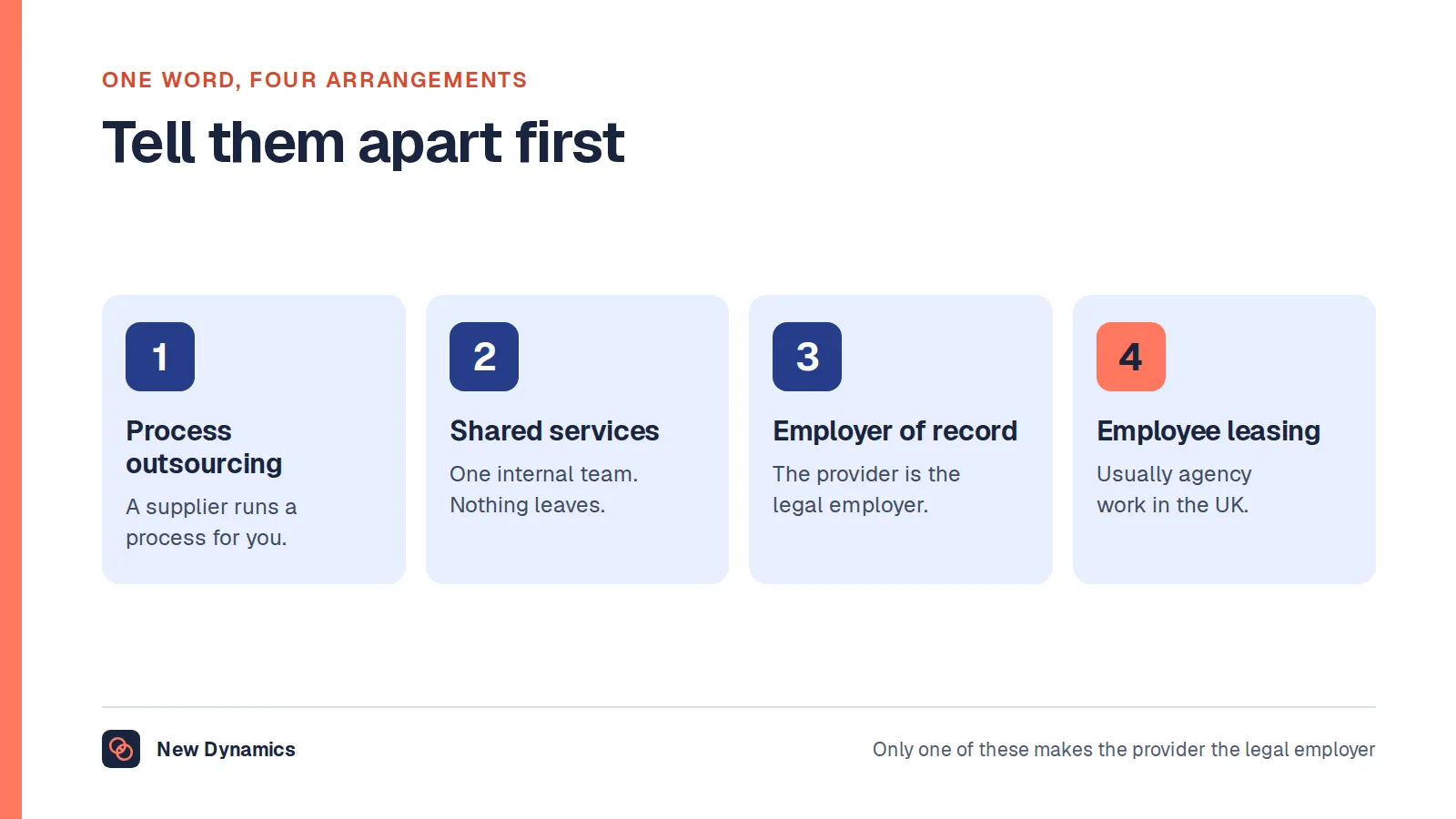
Two routes into a TUPE transfer, and only two
Regulation 3(1) of the 2006 regulations sets out both. The instrument came into force on 6 April 2006 and, on legislation.gov.uk, is "up to date with all changes known to be in force on or before 06 November 2026".
A business transfer. Regulation 3(1)(a) covers "a transfer of an undertaking, business or part of an undertaking or business situated immediately before the transfer in the United Kingdom to another person where there is a transfer of an economic entity which retains its identity". Regulation 3(2) defines an economic entity as "an organised grouping of resources which has the objective of pursuing an economic activity". GOV.UK adds the practical test in its guide to business transfers, takeovers and TUPE: the "identity of the employer must change" for a business transfer to be protected.
A service provision change. Regulation 3(1)(b) covers three shapes: activities that stop being done by a client on its own behalf and are done instead by a contractor, activities that pass from one contractor to a subsequent contractor, and activities that come back in-house. Acas calls these outsourcing, retendering and insourcing on its guidance about what a TUPE transfer is, last updated 23 February 2026.
Regulation 3(3) adds conditions. Immediately before the change there must be "an organised grouping of employees situated in Great Britain which has as its principal purpose the carrying out of the activities concerned on behalf of the client", the client must intend the activities to continue "other than in connection with a single specific event or task of short-term duration", and they must not consist "wholly or mainly of the supply of goods for the client's use". Regulation 3(2A) requires the activities afterwards to be "fundamentally the same".
GOV.UK states that "the size of the business does not matter", so a transfer of one employee still counts, and that "Only the employees who can be clearly identified as providing the service being transferred are protected". A dedicated team moves; a shared or occasional resource often does not.

The regulations extend to the whole United Kingdom, with Schedule 1 applying them to Northern Ireland subject to modifications. Several rules below were added by amendments extending to England, Wales and Scotland only, so a Northern Ireland transfer needs checking separately.
What transfers: the contract, the service and the liabilities
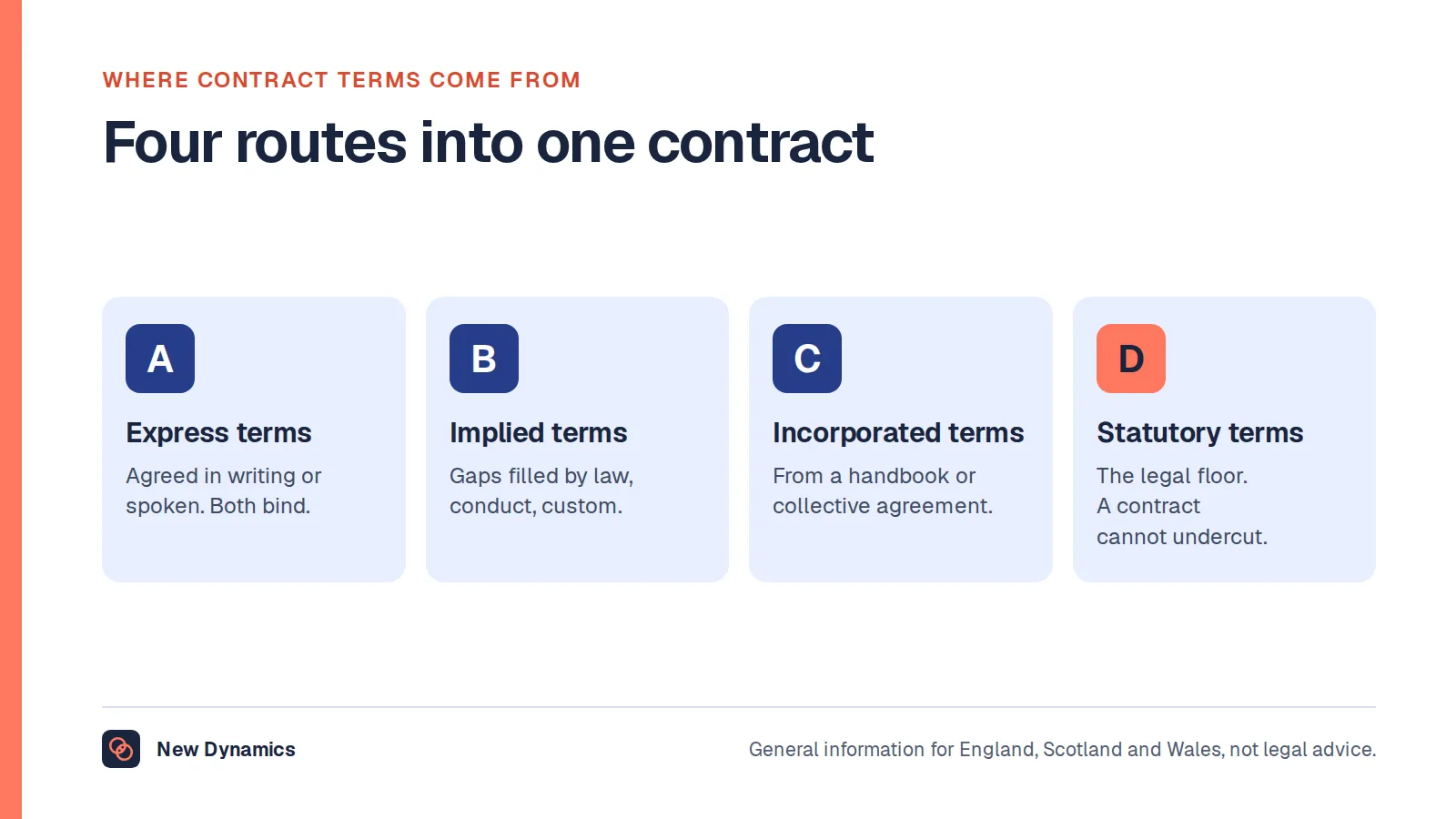
Regulation 4(1) does the central work. A relevant transfer "shall not operate so as to terminate the contract of employment" of a person assigned to the grouping; the contract instead "shall have effect after the transfer as if originally made between the person so employed and the transferee". Nobody is re-hired.
Regulation 4(2) moves everything attached to it. "all the transferor's rights, powers, duties and liabilities under or in connection with any such contract shall be transferred by virtue of this regulation to the transferee", and any act or omission of the transferor before completion "shall be deemed to have been an act or omission of or in relation to the transferee". An unresolved grievance, an underpayment or a claim in the post arrives with the people. The exception in regulation 4(6) is narrow: the transfer does not affect "the liability of any person to be prosecuted for, convicted of and sentenced for any offence".
GOV.UK states that where TUPE applies "their employment terms and conditions transfer" and "continuity of employment is maintained". Acas puts the selection point bluntly: "An employer cannot choose which employees they want to transfer."
An employee can refuse. Under regulation 4(7) the contract does not transfer if the employee "informs the transferor or the transferee that he objects to becoming employed by the transferee", and regulation 4(8) says the transfer then terminates the contract but the employee "shall not be treated, for any purpose, as having been dismissed". Separately, regulation 4(9) lets an employee facing "a substantial change in working conditions to the material detriment" of their position treat the contract as terminated and be treated as dismissed.
Changing terms after a transfer, and the ETO reason
Regulation 4(4) voids a change if the transfer is the reason for it: "any purported variation of a contract of employment that is, or will be, transferred by paragraph (1), is void if the sole or principal reason for the variation is the transfer."
Regulation 4(5) gives two exits. The first is where "the sole or principal reason for the variation is an economic, technical, or organisational reason entailing changes in the workforce, provided that the employer and employee agree that variation". That is the ETO reason, and it sets two conditions people routinely drop: the reason must entail changes in the workforce, and the employee must agree. The second exit is where "the terms of that contract permit the employer to make such a variation". Regulation 4(5A) confirms that "changes in the workforce" includes a change to the place where employees are employed.
Harmonisation alone does not qualify. Acas's guidance on changing a contract after TUPE gives the case of a college with six sets of terms from past transfers that dismisses an employee and rehires them on lower pay to simplify administration: "The college does not have a valid ETO reason because the contract changes do not involve a change in the workforce." Acas also records that "There's no limit on how long TUPE regulations protect employees' terms and conditions."
Terms taken from a collective agreement have their own route. Regulation 4(5B) allows variation if the change takes effect "more than one year after the date of the transfer" and the contract, "when considered together", is "no less favourable to the employee" than before.
Dismissal connected with a transfer
Regulation 7(1), in the form substituted for England, Wales and Scotland on 31 January 2014, makes a dismissal automatically unfair "if the sole or principal reason for the dismissal is the transfer". Regulation 7(2) carves out an ETO reason entailing changes in the workforce, and regulation 7(3) then treats the dismissal as being for redundancy or "for a substantial reason of a kind such as to justify the dismissal of an employee holding the position which that employee held". Regulation 7(4) applies all of this "irrespective of whether the employee in question is assigned to the organised grouping" that transfers.
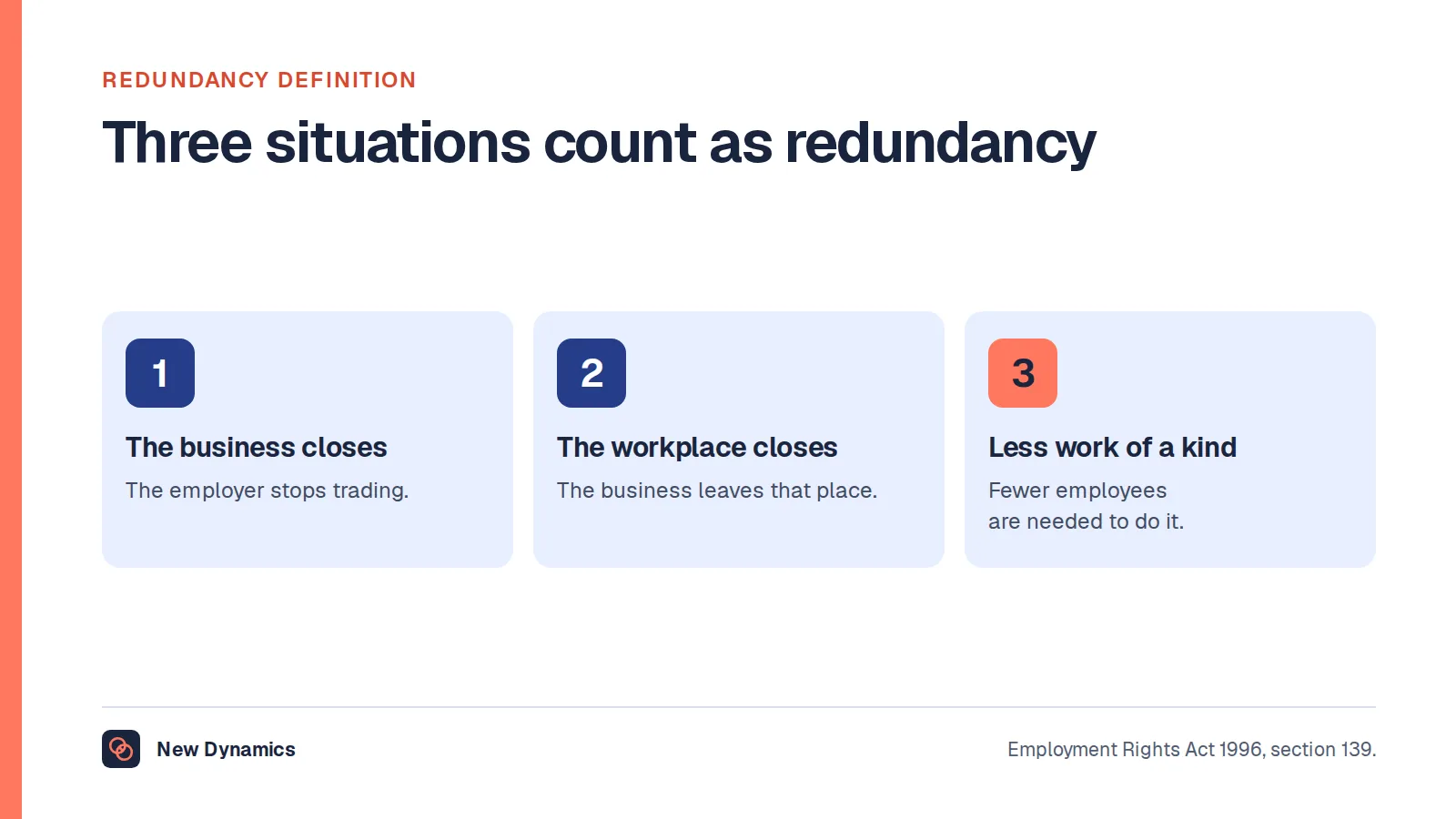
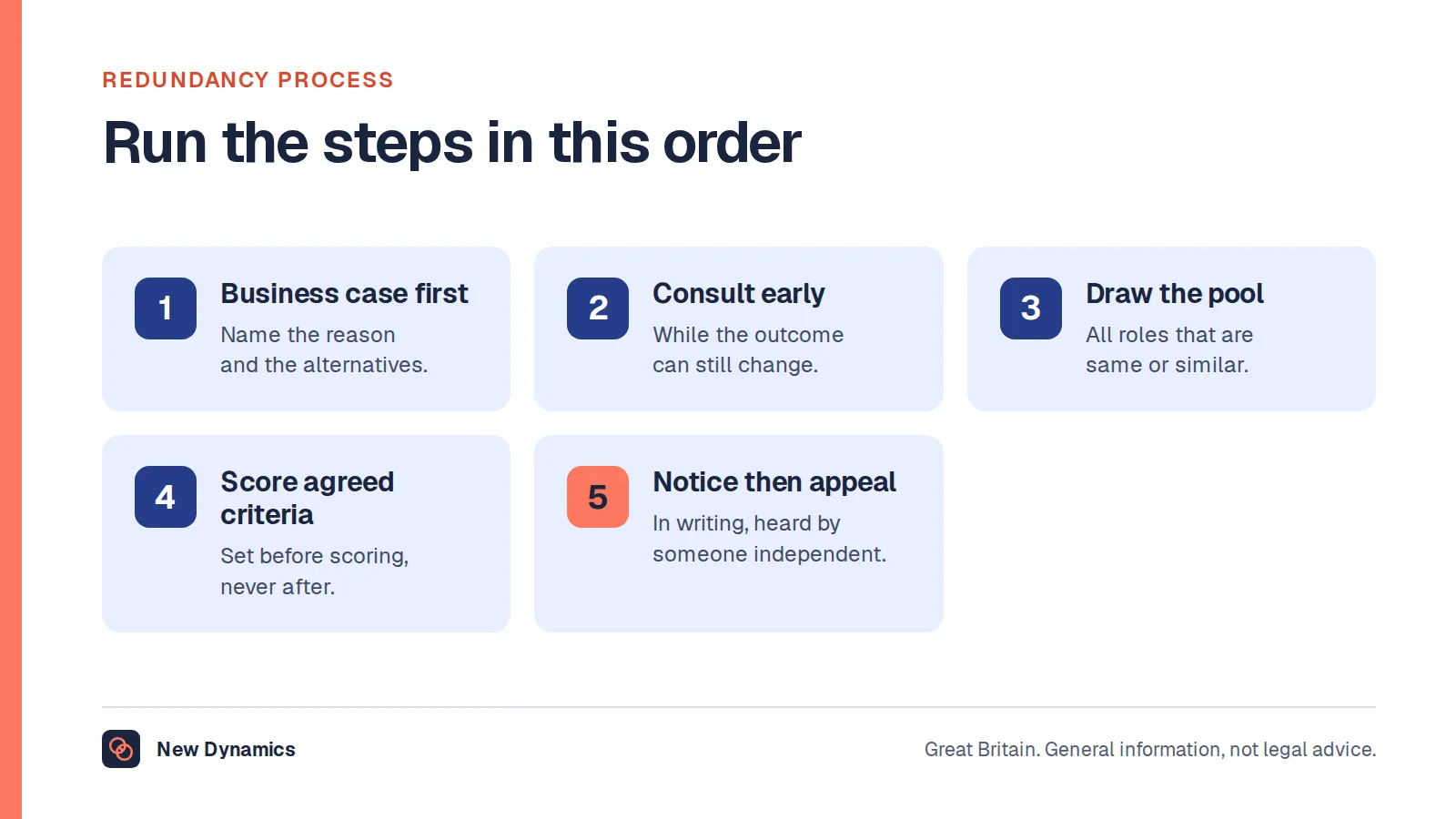
Being outside regulation 7(1) is not the end of it, because regulation 7(3)(b) is expressly "without prejudice to the application of section 98(4) of the 1996 Act", the ordinary test of fairness. Our post on the redundancy process covers that procedure and the separate collective consultation rules.
TUPE employee liability information and the 28 day deadline
Regulation 11 is the duty transferees chase and transferors miss. The transferor must notify the transferee of "employee liability information" for everyone assigned to the grouping, "in writing" or "by making it available to him in a readily accessible form".
Regulation 11(2) lists it: the identity and age of the employee; the particulars required under section 1 of the Employment Rights Act 1996; disciplinary and grievance information from "within the previous two years" where the relevant Code of Practice applies; cases or claims brought in the previous two years, or that the transferor "has reasonable grounds to believe that an employee may bring against the transferee"; and any collective agreement with effect after the transfer. Regulation 11(3) requires the information to be current "as at a specified date not more than fourteen days before" it is notified, and regulation 11(5) requires written notice of any later change.
The deadline is in regulation 11(6). Notification must be given not less than 28 days before the relevant transfer or, where "special circumstances make this not reasonably practicable", as soon as reasonably practicable afterwards. That figure replaced fourteen days on 31 January 2014, for England, Wales and Scotland. Acas says the same thing plainly on its guidance about employee liability information: "The old employer must give employee liability information to the new employer at least 28 days before the transfer date."
If it does not arrive, regulation 12 lets the transferee complain to a tribunal. Compensation under regulation 12(5) "shall be not less than £500 per employee in respect of whom the transferor has failed to comply", unless a lesser sum is "just and equitable, in all the circumstances". The claim must be presented within six months of the transfer under regulation 12(2)(a), a limit substituted on 1 October 2026 by Schedule 12 to the Employment Rights Act 2025 through S.I. 2026/954.

The duty to inform and consult, and the small employer route
Regulation 13(2) requires the employer of any affected employees, "long enough before a relevant transfer" to allow consultation, to inform the appropriate representatives of the fact and date of the transfer and the reasons for it, "the legal, economic and social implications of the transfer", the measures it envisages taking, and, if it is the transferor, the measures it envisages the transferee will take. Regulation 13(2A) adds "suitable information relating to the use of agency workers", meaning their number, where they work and the type of work they do.
Consultation is narrower than information. Regulation 13(6) requires it only from an employer "who envisages that he will take measures in relation to an affected employee", and then "with a view to seeking their agreement to the intended measures". Regulation 13(7) requires the employer to consider representations and, if it rejects any, to "state his reasons". Regulation 13(12) closes the usual excuse: the duties apply "irrespective of whether the decision resulting in the relevant transfer is taken by the employer or a person controlling the employer".
The small employer route is the rule most often quoted out of date. Regulation 13A lets an employer treat each affected employee as a representative, and consult them directly, where there are no appropriate representatives, no election has been invited, and at least one of two conditions is met: "the employer employs fewer than 50 employees" or "there are fewer than 10 transferring employees".
The older "fewer than 10 employees" wording was the whole test until 2023, and regulation 8 of S.I. 2023/1426 is why both versions circulate: "The amendments made by regulation 9 apply in relation to a TUPE transfer which takes place on or after 1st July 2024." GOV.UK's page on consulting and informing carries both, giving the old test and then, "For transfers completing on or after 1 July 2024", the two newer conditions. Under regulation 15(3A) the burden of showing that regulation 13A applied sits with the employer.

What a "TUPE measures letter" is, and what the law calls it
The phrase appears nowhere in the regulations, on GOV.UK or in the Acas guidance. It is the trade's name for the information a transferee has to supply so the transferor can do its job.
The duty behind it is regulation 13(4): "The transferee shall give the transferor such information at such a time as will enable the transferor to perform the duty imposed on him by virtue of paragraph (2)(d)." Acas describes measures as changes the new employer is "thinking of taking after the transfer", which "are usually changes to working practices. For example, changes to employees' pay dates or working patterns", and notes that "The old employer must inform affected employees about these proposed changes."
Write it as a statement of measures, then, not a formality. If no measures are envisaged, say so: regulation 13(2)(c) and (d) both require the employer to state that fact expressly.
What a failure costs, and why it is not a protective award
The TUPE remedy is not the protective award that applies to collective redundancy consultation, and the two get confused. Regulation 15 allows a complaint by affected employees, employee representatives or a recognised trade union, and regulation 16(3) fixes the amount: "appropriate compensation" means "such sum not exceeding thirteen weeks' pay for the employee in question as the tribunal considers just and equitable having regard to the seriousness of the failure of the employer to comply with his duty".
Three features matter more than the headline. The award is per employee across a description of affected employees specified by the tribunal, so it scales with the group. Under regulation 15(9) "the transferee shall be jointly and severally liable with the transferor", so a buyer can be pursued for a seller's failure. And under regulation 15(2) the employer carries the burden of proving the "special circumstances" defence.
Regulation 15(12) now requires a complaint within six months of the date the transfer is completed, substituted on 1 October 2026 by the Employment Rights Act 2025 through S.I. 2026/954. It was three months before that, and early conciliation extends the limit under regulation 16A.
No official UK publication counts how many employees transfer under TUPE in a year, so treat any such figure as an estimate rather than a statistic. The numbers that come from the law are the ones above. For figures we can source on the wider employment picture, see our HR statistics hub.
Frequently asked questions
What is a TUPE transfer?
A TUPE transfer is one of two situations in the Transfer of Undertakings (Protection of Employment) Regulations 2006. Regulation 3(1)(a) covers a business transfer, where an economic entity moves to another employer and "retains its identity". Regulation 3(1)(b) covers a service provision change, where activities move between a client and a contractor. GOV.UK says the jobs usually transfer, "their employment terms and conditions transfer" and "continuity of employment is maintained".
How long before a transfer must employees be told?
The regulations set no number of days. Regulation 13(2) requires information "long enough before a relevant transfer" to let the employer consult the appropriate representatives, which depends on the size of the group and the measures involved. The only fixed deadline in the regulations is for employee liability information, which regulation 11(6) sets at not less than 28 days before the relevant transfer.
What is employee liability information under TUPE?
It is the dataset regulation 11(2) requires the old employer to pass to the new one: identity and age, the written particulars required by section 1 of the Employment Rights Act 1996, disciplinary and grievance information from the previous two years, claims brought in the previous two years or reasonably expected, and any collective agreement continuing after the transfer. Regulation 11(3) requires it to be accurate as at a date no more than fourteen days before it is sent.
Can an employer change terms and conditions after a TUPE transfer?
Only on narrow grounds. Regulation 4(4) makes a variation void where the transfer is the sole or principal reason. Regulation 4(5) permits one where the reason is "an economic, technical, or organisational reason entailing changes in the workforce" and the employee agrees, or where the contract already allows the change. Acas records that there is no time limit on this protection, and that harmonising terms for administrative convenience is not a valid ETO reason.
Can a small employer consult employees directly?
Yes, in defined circumstances. Regulation 13A allows direct consultation where there are no appropriate representatives, no election has been invited, and either the employer "employs fewer than 50 employees" or "there are fewer than 10 transferring employees". That two-limbed test applies to transfers taking place on or after 1 July 2024 under regulation 8 of S.I. 2023/1426. Before that the test was fewer than 10 employees in total.
What happens if an employer fails to inform and consult?
A tribunal can order "appropriate compensation", which regulation 16(3) defines as a sum not exceeding thirteen weeks' pay per employee, judged by the seriousness of the failure. Regulation 15(9) makes the transferee jointly and severally liable with the transferor for it. A complaint must be presented within six months of the transfer being completed, a limit substituted on 1 October 2026 by the Employment Rights Act 2025.
Your next step: build the calendar backwards
- Fix the transfer date, put regulation 11(6) on the calendar at 28 days before it, and set the first information meeting far enough ahead of that to allow real consultation.
- Write down who is assigned to the grouping, and why, before anyone asks.
- Count twice for regulation 13A: total employees, and employees transferring. Either limb can open the direct consultation route, and the employer has to prove it applied.
- Ask the transferee for its measures in writing early. The transferor cannot complete its regulation 13(2)(d) duty without them, and a nil answer still has to be given.
- Collect the liability information at source. Open grievances, live disciplinary matters and current written particulars are the hardest items to assemble in the last week.
For the planning that sits around a transfer or a restructure, read and download our redundancy and workforce change guide. The guide is free to read, and the PDF uses our short download form.
Want the structure, the assignments and the open items in one place before the dates start biting? Book a New Dynamics demo and bring the transfer you are planning. You can also email contact@new-dynamics.com.