TL;DR
- A senior manager, often abbreviated to sr manager, is a manager who leads several teams or a whole function or region, usually through other managers, with responsibility for its plan, budget and results. The title sits above manager and below director or head of, and its exact meaning depends on the organisation.
- The job has six responsibilities: deliver the area's plan and targets, manage the budget and resources, lead and develop the managers, run projects and change, represent the area upwards and outwards, and build the pipeline of talent. In England the level 5 operations or departmental manager standard describes the level, and the level 7 senior leader standard the level above.
- In UK financial services, senior manager is also a regulatory term under the Senior Managers and Certification Regime, with defined responsibilities and personal accountability. A job description should say which meaning applies, what the senior manager decides and who they report to.
Senior manager is one of the most common titles in organisations and one of the least defined. In one company it is a manager with a few more years' service. In another it is the person running a region, three departments and a budget that would be a director's elsewhere. In a bank it is a legal category with personal accountability attached.
This article explains what senior manager means, where the title sits between manager and director, sets out six responsibilities, maps the level to the UK management standards, explains the regulatory sense of the term in financial services, and gives a job description template.
Senior managers are judged on the results of teams they do not manage directly, so the goals need to be visible at every level. See how New Dynamics Goals & OKRs keep targets and progress in one place.
What is a senior manager?
The Cambridge Dictionary defines senior management as “managers at the highest level of a company or organization, considered as a group”. That is the collective sense, in which senior management means the leadership team. The individual title, senior manager, usually means something more specific and more modest: a manager who leads several teams, or a whole function, department or region, usually through other managers, and who is accountable to a director or head of for its plan, budget and results.
Three features separate the senior manager from the manager below.
- Scope. Several teams, a function or a region, rather than one team.
- Layer. Managers or team leaders report to them; they manage through others.
- Accountability. They own a budget and a plan, and answer for the area's results to a director.
And one feature separates them from the director above: the director sets the strategy for the function and sits on, or reports directly to, the executive team; the senior manager delivers a defined part of it.
Where the title sits
| Level | Typical titles | What they own |
|---|---|---|
| First line | Team leader, supervisor | One team and its daily work |
| Middle | Manager | A team or department, its budget and its people |
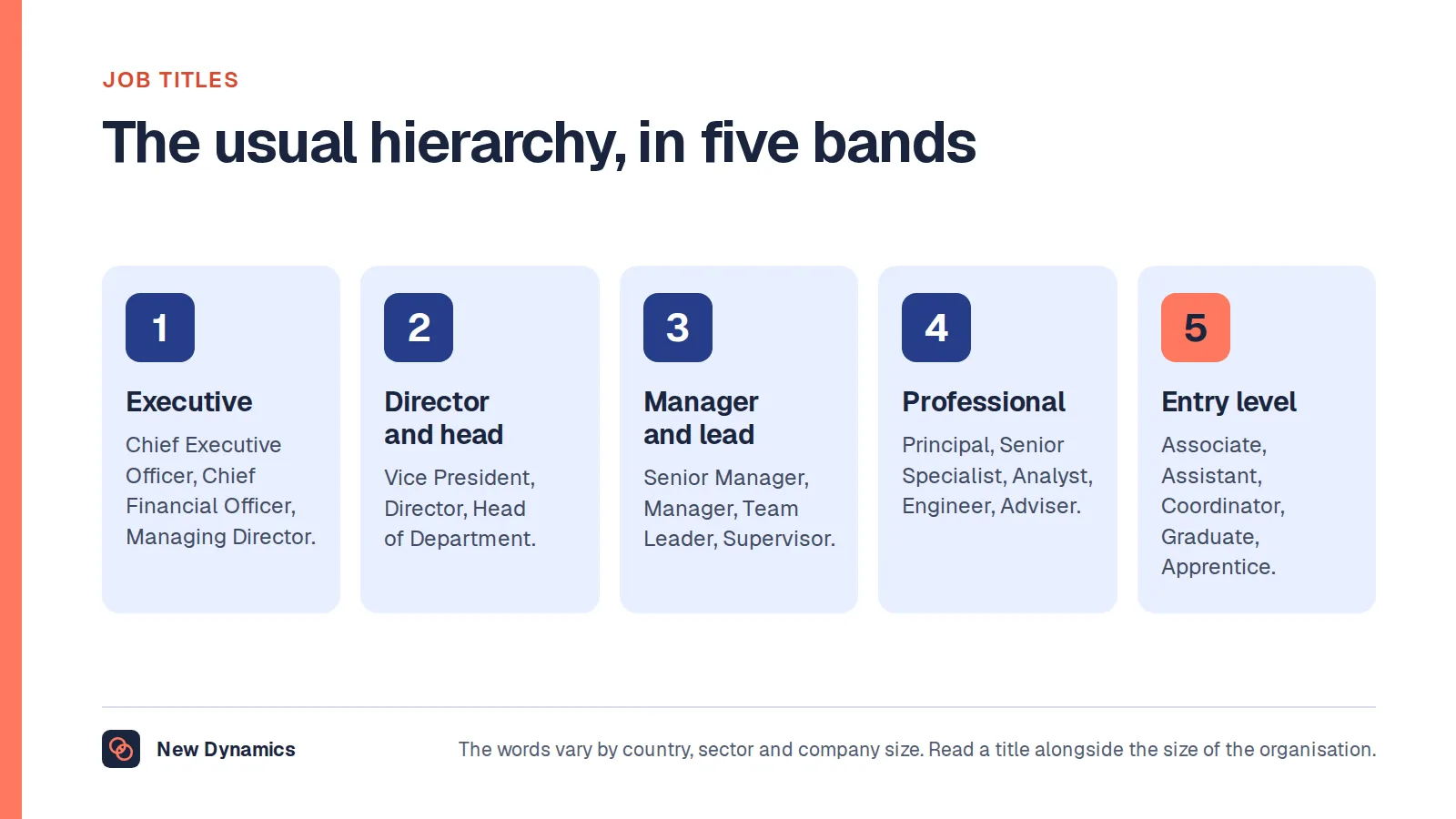
| Senior middle | Senior manager, head of, regional manager | Several teams or a whole function or region, through other managers |
| Senior | Director, vice president | The function's strategy, its place in the organisation and the executive agenda |
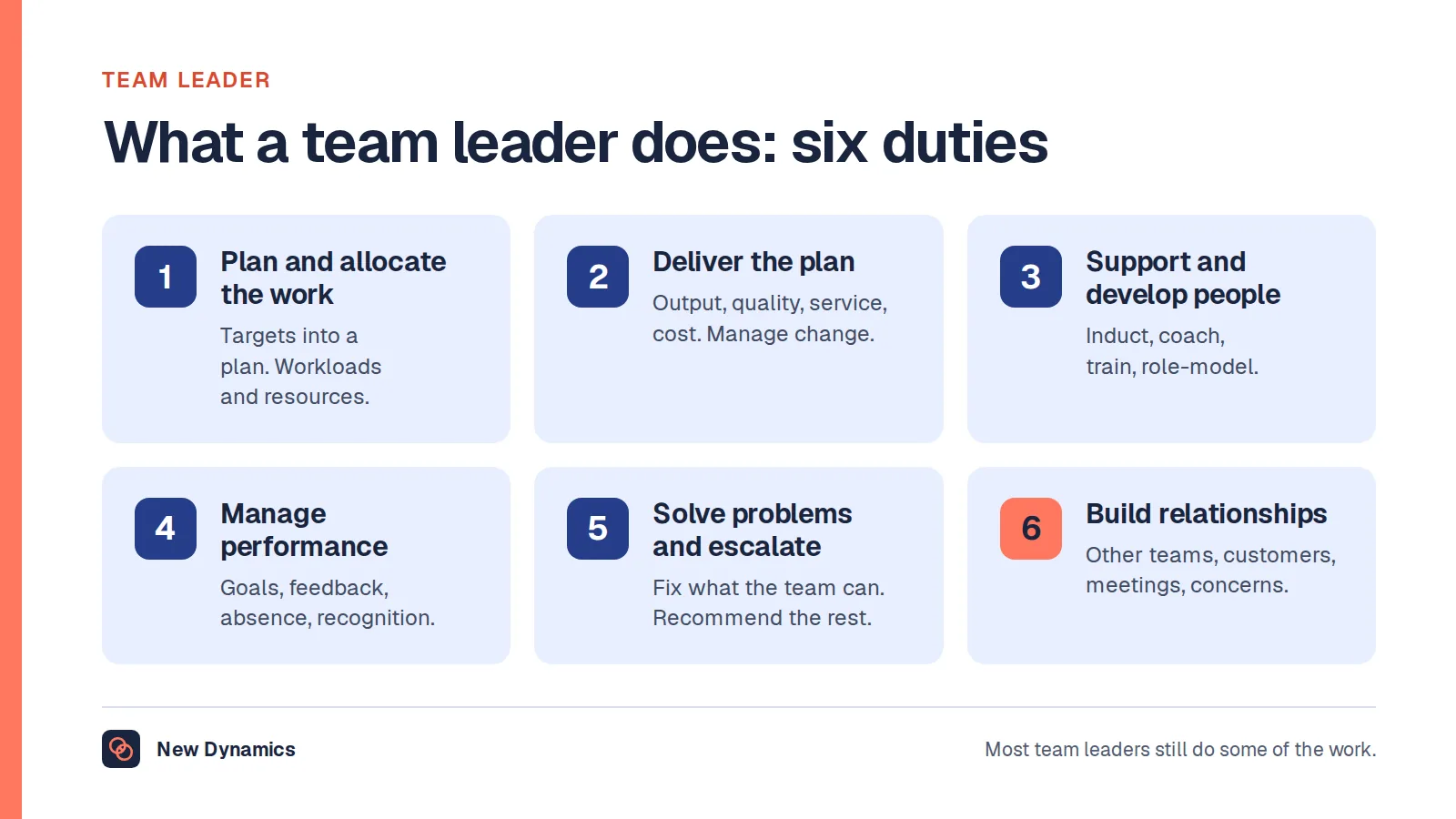
The table describes a large organisation. In a small one, senior manager may be the most senior operational role below the owner. In professional services firms, senior manager is a fixed grade between manager and director or partner. In the United States, the same level is often titled senior manager or director, and vice president sits above. Our guide to job titles explains the hierarchies and the warnings that go with them. For the first rung of the ladder, see our team leader job description.

Senior manager responsibilities: six duties
- Deliver the area's plan and targets. Turn the director's strategy into an operational plan for the area, set the targets for each team and deliver them.
- Manage the budget and resources. Own the area's budget, forecast, staffing and equipment, and make the trade-offs when they do not stretch.
- Lead and develop the managers. Hire, coach, review and, when necessary, replace the managers and team leaders who report to them, and set the standard for how their teams are led.
- Run projects and change. Lead the area's projects and the changes that come down from above or up from the teams, including the ones nobody welcomes.
- Represent the area upwards and outwards. Report to the director, argue the area's case for resources, and deal with customers, partners, regulators and other functions.
- Build the pipeline. Identify and develop the people who could become managers, and plan who could succeed each key role, including their own.
Skills England's operations or departmental manager standard, a level 5 standard whose successor is listed as operations manager, describes the level: someone who “manages teams and/or projects, and achieving operational or departmental goals and objectives, as part of the delivery of the organisations strategy”, and who is “accountable to a more senior manager or business owner”. Its key responsibilities “may include creating and delivering operational plans, managing projects, leading and managing teams, managing change, financial and resource management, talent management, coaching and mentoring”, and its typical titles are operations manager, regional manager, divisional manager, department manager and specialist managers. Our operations manager job description covers the operational version in detail.

Senior manager or senior leader?
The level above is described by Skills England's senior leader standard, at level 7: “A leader is someone who has senior management responsibility, and this can include formal governance/director responsibilities. They are responsible for direction and vision, providing a clear sense of purpose and driving strategic intent.” Its example roles run from senior leader and section leader to director, chief operating officer and chief executive.
The contrast is the clearest available definition of the senior manager's place. The senior leader is responsible for direction and vision; the senior manager is responsible for delivering a defined part of it, with the budget, the managers and the plan that go with it. A senior manager who is being asked to set direction is being asked to do a senior leader's job, and the title and pay should follow.
The regulatory meaning in UK financial services
In UK banks, insurers and other regulated firms, senior manager has a second, legal meaning. Under the Senior Managers and Certification Regime, which the Financial Conduct Authority describes on its Senior Managers and Certification Regime pages, the most senior people in a firm hold defined senior management functions, need regulatory approval to hold them, and carry personal accountability for the responsibilities set out in their statement of responsibilities. In that setting, a senior manager is a person the regulator holds individually responsible, whatever their job title.
The practical point for anyone writing or reading a job description in financial services is that the two meanings can coincide or not. A person titled senior manager may hold no senior management function; a person titled head of compliance may hold one. This is general information about the UK, not legal advice; the firm's compliance team will know which functions apply.
Skills employers look for
- Managing through managers. Setting standards and holding managers to them without doing their jobs.
- Planning and finance. Building a plan and a budget for a whole area and keeping both on track.
- Judgement. Deciding what to escalate, what to absorb and what to stop.
- Change leadership. Delivering changes the area did not choose, with the managers on side.
- Influence upwards and sideways. Winning resources and cooperation without authority over the people who hold them.
- Developing people. A record of managers who grew under them.
Qualifications
None are required. Most senior managers are promoted from manager on the strength of results and of the managers they developed. In England the level 5 operations manager apprenticeship describes the level and the level 7 senior leader apprenticeship the level above; professional bodies offer management qualifications at both. Our guide to management skills covers what the skills are and how they are learned.
Senior manager job description template
Adapt the area, the reporting line and the reserved decisions to your structure.
Job title: Senior manager, [area]
Reports to: Director of [function]
Direct reports: [Number] managers and team leaders; [number] staff in total
Purpose of the role: To lead [the area] so that it delivers its plan, its targets and its budget, through a team of capable managers, and to represent the area to the director and to other functions.
Main responsibilities:
- Build and deliver the area's annual operational plan and targets in line with the function's strategy
- Own the area's budget, forecast and resources, and manage the trade-offs
- Lead, develop, review and where necessary replace the managers and team leaders
- Lead the area's projects and change programmes
- Report to the director, represent the area to other functions and to external parties, and secure the resources it needs
- Develop the pipeline of future managers and a succession plan for key roles
Decisions reserved for the director: [Changes to the plan, spending above £X, hiring at manager level, structural change]
Skills and experience:
- A record of managing a team or department and delivering its results
- Experience of leading other managers, or clear evidence of readiness to
- Budget and planning experience at department level
- Experience of leading change
- [Sector or regulatory experience, if essential]
Measures of success: Delivery of the area's plan and targets, budget performance, the performance and development of the managers, and succession readiness.
For the layout of the whole document, use our job description template.
Common mistakes with the senior manager title
A pay grade, not a job. Senior manager awarded for length of service, with no change in scope, devalues the title for everyone who earns it.
Director duties on senior manager pay. If the post sets direction and sits on the leadership team, it is a senior leader's job.
No reserved decisions. Say what the senior manager decides and what the director keeps, or both will assume.
Ignoring the regulatory meaning. In financial services, say whether the role holds a senior management function.

Frequently asked questions
What does senior manager mean?
A senior manager is a manager who leads several teams, or a whole function, department or region, usually through other managers, and who owns its plan, budget and results. The title sits above manager and below director or head of, and its exact scope depends on the organisation.
What does sr manager stand for?
Sr manager is the abbreviation of senior manager, common in job adverts, email signatures and organisation charts, especially in the United States. It means the same as senior manager.
What is the difference between a manager and a senior manager?
A manager leads one team or department and its people directly. A senior manager leads several teams or a whole area through other managers, owns a larger budget and plan, and answers to a director. The distinguishing feature is managing through managers.
What is the difference between a senior manager and a director?
The director sets the function's strategy and sits on, or reports directly to, the executive team. The senior manager delivers a defined part of that strategy with the budget, managers and plan that go with it. Skills England's standards draw the line between managing teams and projects, at level 5, and being responsible for direction and vision, at level 7.
What is a senior manager in UK financial services?
Under the Senior Managers and Certification Regime, a senior manager is a person who holds a defined senior management function in a regulated firm, needs regulatory approval to hold it and is personally accountable for the responsibilities in their statement of responsibilities. The regulatory meaning and the job title do not always coincide. This is general information, not legal advice.
What should a senior manager job description include?
The area and its size, the reporting line and the managers who report in, six responsibilities covering plan, budget, managers, change, representation and pipeline, the decisions reserved for the director, the skills and experience required and the measures of success.
Your next step: define the scope before you use the title
- Write down the teams, budget and managers the senior manager will own.
- List the decisions they take and the ones the director keeps.
- Check whether the role sets direction; if so, it is a senior leader's job.
- In financial services, say whether it holds a senior management function.
To plan who could step into each senior role, read and download our succession planning guide. The guide is free to read, and the PDF uses our short download form.
Want every area's plan, targets and managers' goals visible from the director down? Book a New Dynamics demo and bring your current structure. You can also email contact@new-dynamics.com.