TL;DR
- A team leader is a first-line manager: the person in charge of a team who provides direction, instructions and guidance so that the team delivers a defined outcome. The UK apprenticeship standard groups team leaders with supervisors, shift supervisors, forepersons and shift managers.
- The job has six duties: plan and allocate the work, deliver the operational plan and its targets, support and develop team members, manage performance and give feedback, solve problems and escalate, and build relationships across the organisation. Most team leaders still do some of the work themselves.
- Employers look for people who can communicate a team's purpose, motivate and coach, hold difficult conversations, manage time and priorities, and make decisions from data. In England the team leader apprenticeship is a level 3 standard, typically 15 months.
Most people's experience of management is their team leader. The director sets the strategy and the manager runs the department, but the person who allocates the shift, notices the mistake, explains the change and says thank you is the team leader. The job is the most common first step into management and one of the least well described.
This team leader job description explains what the role is, sets out six duties, separates the team leader from the supervisor and the manager, lists the knowledge, skills and behaviours the UK standard expects, gives a template that you can adapt and suggests how to interview for the role.
Team leaders manage through conversation, and the conversations should not depend on memory. See how New Dynamics continuous feedback supports check-ins, coaching and recognition.
What is a team leader?
The Cambridge Dictionary defines a team leader as “the person in charge of a team”. Skills England's team leader or supervisor apprenticeship standard, a level 3 standard whose current version is listed as team leader, typically 15 months, gives the fuller occupational definition: “A Team leader or supervisor is a first line management role, with operational and project responsibilities or responsibility for managing a team to deliver a clearly defined outcome. They provide direction, instructions and guidance to ensure the achievement of set goals.”
The standard says the job exists in the private, public and third sectors and in all sizes of organisation, that specific responsibilities vary but the knowledge, skills and behaviours are the same whatever the role, and that key responsibilities “are likely to include supporting, managing and developing team members, managing projects, planning and monitoring workloads and resources, delivering operational plans, resolving problems, and building relationships internally and externally”. Its typical job titles are supervisor, team leader, project officer, shift supervisor, foreperson and shift manager.
Two things follow. First, a team leader is a manager, with a manager's responsibilities for people, even where the title avoids the word. Second, the same job description serves a call centre team leader, a warehouse shift supervisor and a manufacturing supervisor, once the operational details are filled in.
Team leader duties: six responsibilities
- Plan and allocate the work. Turn the week's or the shift's targets into a plan, allocate tasks to people and monitor workloads and resources. The standard calls this planning and monitoring workloads and resources.
- Deliver the operational plan. Meet the team's targets for output, quality, service and cost, and manage change within the team when the plan changes.
- Support and develop team members. Induct new starters, coach, train and give people the chance to grow. The standard asks team leaders to support the development of the team through coaching and to role-model values and behaviours.
- Manage performance and give feedback. Set operational and personal goals, monitor progress, give clear guidance and feedback, review performance, manage absence and recognise achievement. The standard lists all of these under managing people.
- Solve problems and escalate. Deal with the day's problems, from a missing delivery to a customer complaint, decide what the team can fix and take the rest to the manager with a recommendation.
- Build relationships. Work with other teams, customers and stakeholders, chair meetings, hold challenging conversations and raise concerns.

Team leader, supervisor, shift manager and manager
The standard treats team leader and supervisor as one occupation, and in practice the titles are chosen by sector and habit. The useful distinction is with the manager above.
| Title | Where it is used | What separates it |
|---|---|---|
| Team leader | Offices, contact centres, retail, care, professional services | Leads a team; usually still does some of the work; often no budget or hiring authority |
| Supervisor, shift supervisor, foreperson | Manufacturing, logistics, construction, hospitality | The same role with a stronger emphasis on the shift, safety and output |
| Shift manager | Hospitality, retail, operations running extended hours | The most senior person on site during the shift |
| Manager | Everywhere | Owns the department: budget, hiring, several teams or team leaders, and the plan itself |
A manufacturing supervisor job description, for example, is this article's template with the safety duties, the machines and the shift pattern filled in. Our machine operator job description describes the people such a supervisor leads, and our operations manager job description the manager they report to.

Knowledge, skills and behaviours
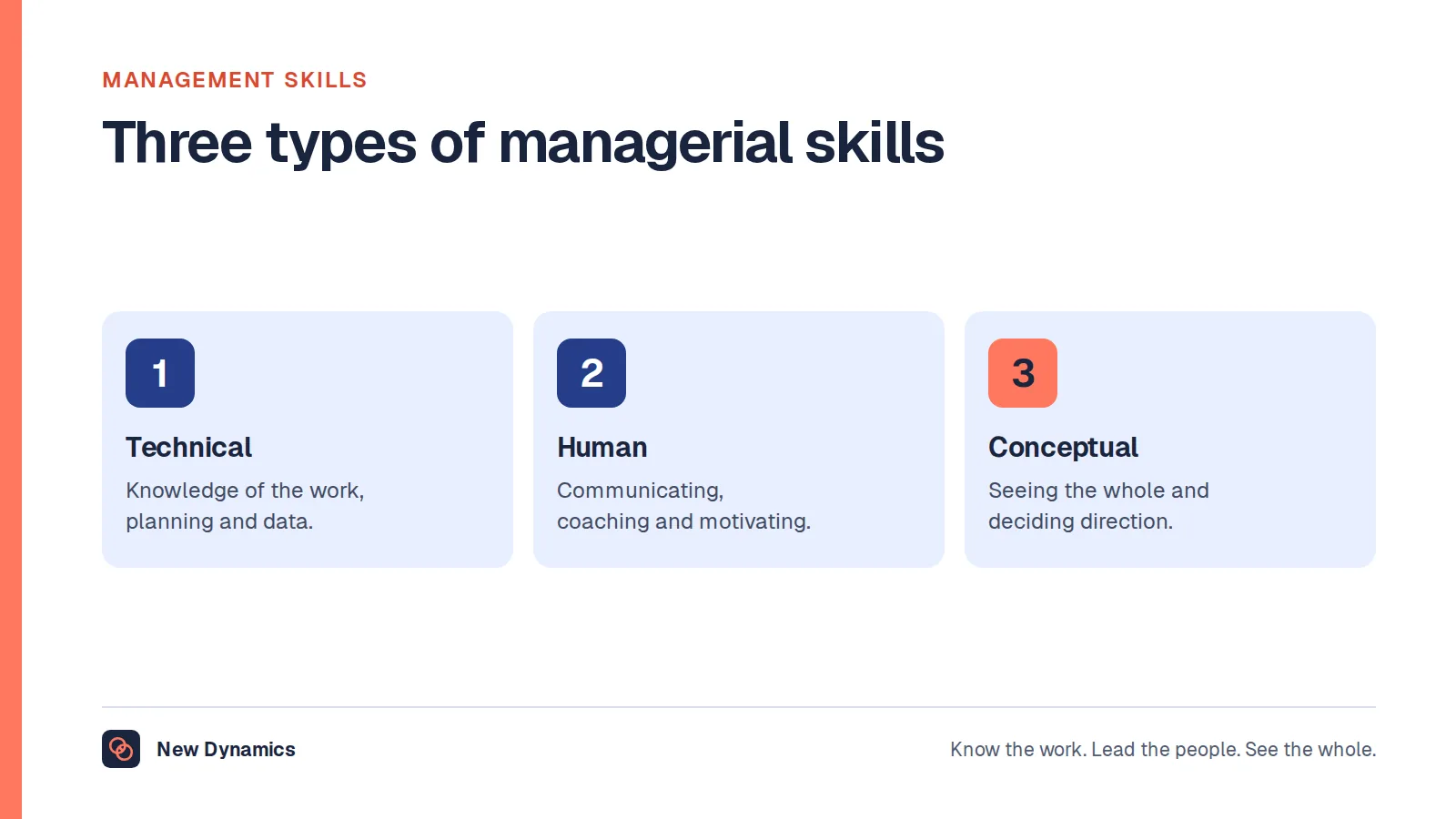
The standard groups what a team leader needs under three headings, and they make a good person specification.
Interpersonal excellence: managing people and developing relationships. Leadership styles and coaching; team dynamics and motivation; HR systems and legal requirements; performance management techniques including setting goals, conducting appraisals, managing absence, giving constructive feedback and recognising achievement; customer and stakeholder relationships; managing conflict; and communication, including how to chair meetings and hold challenging conversations.
Organisational performance: delivering results. How strategy is developed and how to implement operational and team plans; managing resources and change; data and technology; the project lifecycle and project tools; governance, compliance and value for money; and monitoring budgets so that costs do not overrun.
Personal effectiveness: managing self. Self-awareness, unconscious bias and inclusivity; learning styles and emotional intelligence; time management and prioritisation; problem solving, decision making and analysing data to support decisions.
The standard's skills list adds what a team leader must be able to do: “communicate organisation strategy and team purpose, and adapt style to suit the audience”, “build a high-performing team by supporting and developing individuals, and motivating them to achieve”, and set goals and monitor progress “providing clear guidance and feedback”. Our guide to management skills explains how those skills are learned.
Qualifications
No qualification is required by law. Most team leaders are promoted from the team on the strength of their work and their conduct, and learn the management on the job. In England the level 3 team leader apprenticeship is the usual formal route, and the standard notes that employers set their own entry requirements. What matters more than the certificate is evidence: the shift that ran well, the new starter who stayed, the problem that was solved before it reached the manager.
Team leader job description template
Adapt the team, the targets and the shifts to your operation.
Job title: Team leader
Reports to: [Department] manager
Direct reports: [Number] team members
Hours: Full time, [shift pattern if any]
Purpose of the role: To lead the [customer service, production, care] team so that it meets its targets for [output, quality, service], and to support and develop each member of the team.
Main duties:
- Plan and allocate the team's work each [day, shift, week] and monitor workloads and resources
- Deliver the team's operational plan and targets, and lead the team through changes to it
- Induct, coach and develop team members, and role-model the organisation's values
- Set goals, review performance, manage absence, give feedback and recognise good work
- Resolve day-to-day problems and escalate the rest with a recommendation
- Work with other teams, customers and stakeholders, and chair the team's meetings
- [Carry out a share of the team's work, as agreed]
Skills and experience:
- Experience of the team's work and a record of doing it well
- Clear communication, including the ability to hold difficult conversations
- Organised, calm under pressure and fair
- Comfortable with the team's systems and data
- Level 3 team leader apprenticeship or equivalent [desirable]
We provide: Management training and a mentor, support for the level 3 apprenticeship, regular one-to-ones with your manager, and a route to [manager] roles.
For the layout of the whole document, use our job description template.
Interviewing for a team leader
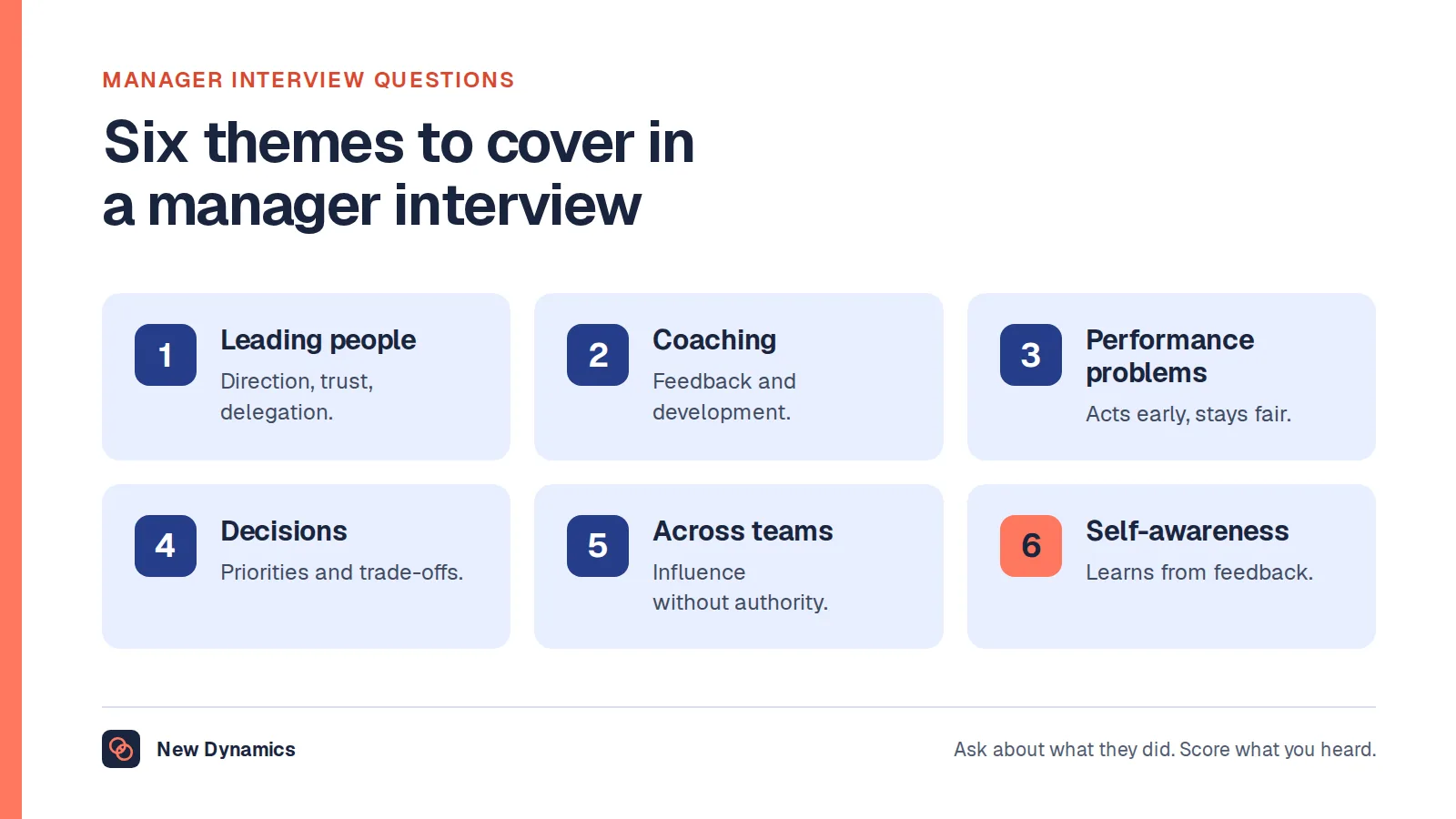
Because most candidates are internal and have never managed, interview for the behaviours the standard names rather than for management experience. Ask for a time they gave difficult feedback to a colleague, a time they organised other people's work, a time they handled a conflict, and what they would stop doing themselves once they led the team. Our manager interview questions include a set for first-time managers.
Common mistakes in team leader adverts
Best worker, not best leader. The advert asks for excellence at the work and nothing about people. Ask for both.
Manager duties without manager authority. If the team leader must manage performance, say what they can decide and what the manager keeps.
No time to lead. A team leader with a full workload of their own has no time for the six duties. Say how much of the week is for leading.
No support. First-time managers fail alone. Name the training, the mentor and the one-to-ones.

Frequently asked questions
What does a team leader do?
A team leader is a first-line manager who plans and allocates the team's work, delivers its operational plan and targets, supports and develops team members, manages performance and gives feedback, solves problems and escalates the rest, and builds relationships with other teams and stakeholders. Most team leaders still do some of the team's work.
What is the difference between a team leader and a supervisor?
Very little. The UK apprenticeship standard treats team leader and supervisor as one occupation, and lists supervisor, shift supervisor, foreperson and shift manager among its typical titles. Supervisor is more common in manufacturing, logistics and construction, team leader in offices, contact centres, retail and care.
What is the difference between a team leader and a manager?
The manager owns the department: its budget, hiring, plan and usually several teams or team leaders. The team leader leads one team within it, usually without a budget or hiring authority, and often still does part of the work.
What skills does a team leader need?
Communicating the team's purpose, motivating and coaching people, setting goals and giving feedback, holding difficult conversations, managing time and priorities, solving problems and making decisions from data, and building relationships across the organisation.
What qualifications does a team leader need?
None are required by law. Most team leaders are promoted from the team and trained on the job. In England the level 3 team leader apprenticeship, typically 15 months, is the usual formal route.
What should a team leader job description include?
The team, its size and its targets, the reporting line, the six main duties, how much of the week is for leading rather than doing, what the team leader can decide, the skills and experience required, the training and support provided and the route to manager roles.
Your next step: give the team leader time to lead
- Decide how much of the week is for leading, and write it into the job.
- State what the team leader can decide about people, and what the manager keeps.
- Name the training, the mentor and the one-to-ones.
- Interview for feedback, organising and conflict, not only for the work.
To give new team leaders a method for the hardest part of the job, read and download our employee feedback guide. The guide is free to read, and the PDF uses our short download form.
Want every team leader's check-ins, goals and recognition in one place? Book a New Dynamics demo and bring your current approach. You can also email contact@new-dynamics.com.