TL;DR
- A skills matrix is a grid: people down the side, skills across the top, a level in each cell. Its value is not the grid but the three decisions it drives, which are cover risk, training priorities and who works on what.
- The levels have to be defined or the matrix becomes an opinion poll. Five levels work: none, learning, can do it with help, can do it alone, can teach it. Anyone assessing has to be able to say what evidence moves someone up.
- It holds personal data about named individuals, so keep it accurate, keep it to what you need and control who can see it. A matrix left on a shared drive for three years is a ranking of people that nobody has checked.
Most skills matrices are built in the fortnight after somebody resigns, when it turns out that one person knew how the billing export worked. The grid gets made, everyone is relieved, and eighteen months later it is a spreadsheet nobody has opened, with two people on it who left.
This article covers how to build one that gets used: the grid, a five-level scale with definitions, a worked example, the three decisions it should drive, and the mistakes that turn it into a secret ranking. It describes the position in Great Britain and the UK and is general information, not legal advice.
A matrix is only current if the development it triggers is visible. See how New Dynamics goals and OKRs keep development goals beside the rest of the work.
What it is, in one line
People down the side, skills across the top, a level in each cell, and a date on the whole thing. That is the artefact. Everything useful comes from reading it in three directions: down a column to see cover risk, across a row to see one person's range, and over time to see whether anything is improving.
Define the levels first

A matrix with undefined levels is an opinion poll with a grid around it. Five levels is enough for most teams.
| Level | Name | What it means |
|---|---|---|
| 0 | None | Has not done this. No expectation that they can. |
| 1 | Learning | Has done it under supervision, with mistakes that someone else caught. |
| 2 | Can do it with help | Does it independently for routine cases, asks for help on anything unusual. |
| 3 | Can do it alone | Handles the routine and the awkward cases, including when something goes wrong. |
| 4 | Can teach it | Trains others, writes the documentation, and is who the level 3s ask. |
The test for any level: what evidence moved this person here? If nobody can answer, the number is a guess, and guesses are what turn a matrix into an argument.
Two refinements worth adding: a target level per role per skill, so gaps are visible rather than implied, and a date next to each assessment, because a level recorded two years ago is history rather than information.
A worked grid
A small support team, five skills, five people. Target level for the role is 3 for the first three skills and 2 for the rest.
| Person | Billing export | Refunds | Escalation calls | Reporting | Onboarding setup |
|---|---|---|---|---|---|
| A | 4 | 3 | 3 | 2 | 3 |
| B | 1 | 3 | 4 | 1 | 2 |
| C | 0 | 2 | 2 | 3 | 2 |
| D | 0 | 3 | 2 | 1 | 1 |
| E | 1 | 2 | 3 | 0 | 2 |
Read down the first column and the resignation risk is obvious: one person at level 4, nobody else above 1. Read across row C and you see someone whose reporting is the team's second strongest and whose billing knowledge is nil. Read the whole thing and you have next quarter's training plan without needing a survey.
The three decisions it should drive

Cover risk. Any skill where only one person is at level 3 or above is a single point of failure. Decide whether that is acceptable, and if it is not, name who is learning it and by when.
Training priority. Gaps against target levels, ranked by how much the work depends on them. Acas is clear that employers "must provide 'adequate resources' to enable an employee to do their job. This might include giving them training", so a matrix that identifies a gap and then does nothing about it is evidence against you rather than for you.
Who works on what. Staffing a project or a rota from the grid rather than from habit is how the level 1s become level 2s. It is also how the same three people stop doing everything.
A fourth, quieter use: when someone is struggling, the matrix says whether the organisation ever gave them the training. That is the first question in any capability conversation, and our post on the underperformance conversation covers the rest of it.
Five mistakes

Undefined levels. Covered above, and the most common by a distance.
Too many skills. Twelve to twenty for a team is plenty. A matrix with sixty columns is never filled in twice.
Self-assessment alone. People differ in how they rate themselves, and the differences are not random. Have the manager and the person agree the level, and keep the evidence question in front of both.
No target levels. Without them, every gap looks equally urgent and nothing gets prioritised.
Letting it go stale. Review it quarterly, which takes twenty minutes once it exists, and delete leavers. The ICO expects personal information to be kept "accurate and up-to-date", which is a legal reason to do the thing you should be doing anyway.
Two cautions
It is personal data. The grid holds assessments of named individuals. The ICO's data minimisation principle requires what you hold to be "adequate, relevant, and limited to what you need for your purposes", and its security guidance expects records to be accessible only to those authorised, with managers having "access to the information they need to meet their obligations". A matrix on an open shared drive fails both.
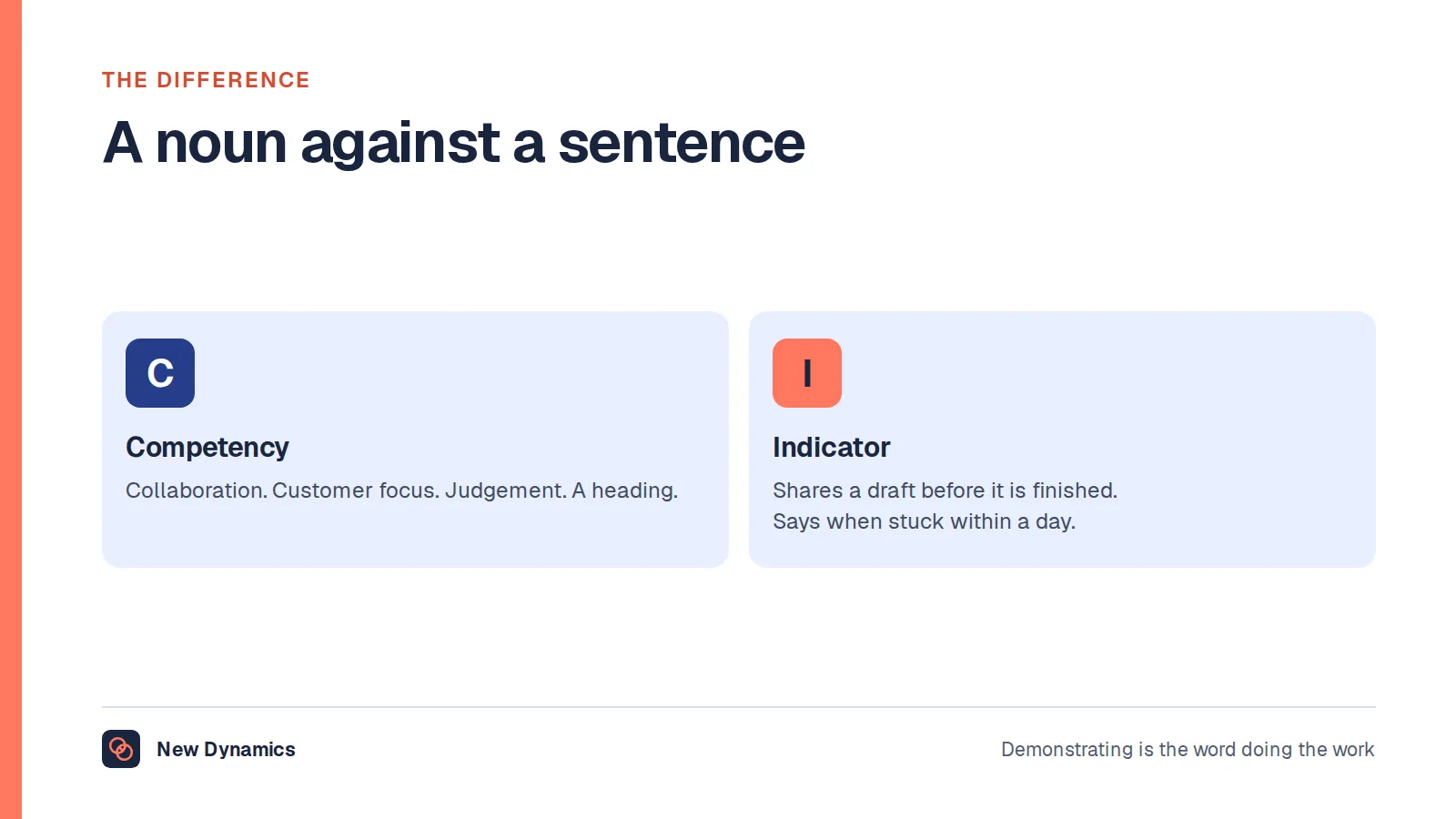
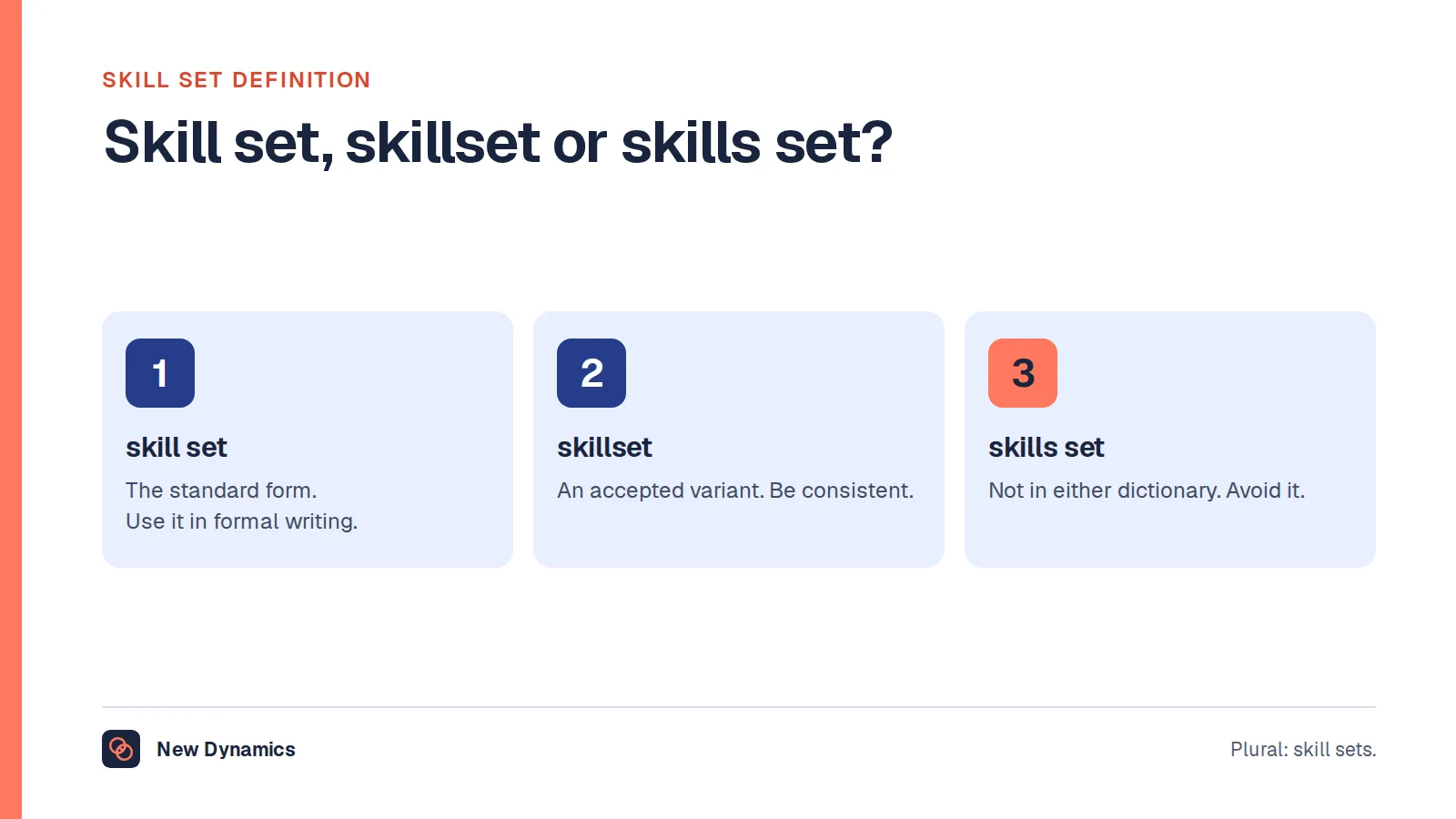
It is not a ranking of people. A skills matrix describes capability against named tasks at a point in time. It is not a performance rating, it should not feed pay, and a level 2 is not a worse employee than a level 4. If people believe otherwise, they will inflate their own levels and the grid becomes useless, which is also why the levels and the purpose should be published alongside it. Our post on behavioural indicators covers the related discipline for competencies, and skill set covers mapping one person's own range.
Frequently asked questions
What is a skills matrix?
A grid with people down one side, skills across the top and a level in each cell, dated. It shows where cover is thin, where training is needed and who could do which work, and it is read in three directions: down a column for risk, across a row for one person's range, and over time for progress.
What levels should a skills matrix use?
Five work well: none, learning, can do it with help, can do it alone, and can teach it. Define each one in writing and ask what evidence moved someone up. Add a target level per role so that gaps are explicit rather than assumed.
How many skills should be in a skills matrix?
Twelve to twenty for a team. Beyond that the grid stops being maintained, which makes it worse than nothing because decisions get made from stale data. Choose the skills the work actually depends on rather than everything anyone can do.
How often should a skills matrix be updated?
Quarterly is enough once it exists, and it takes about twenty minutes. Remove leavers promptly, because the ICO expects personal information about workers to be kept accurate and up to date, and an out-of-date matrix hides exactly the risks it was built to show.
Should employees see their own skills matrix entry?
Yes. They can ask for the personal information held about them in any case, so write every entry on the assumption they will read it. Agreeing levels between the manager and the person, with the evidence question in front of both, produces more accurate data than either assessing alone.
Is a skills matrix the same as a performance rating?
No. It assesses capability against named tasks at a point in time, not how someone performed against objectives. Mixing the two makes people inflate their levels and destroys the data. Keep the matrix separate from ratings and out of pay decisions.
Your next step: build the first version in an hour
- List the ten to twenty skills your work actually depends on, not everything your team can do.
- Write the five level definitions and the target level for each role.
- Fill it in with each person in a fifteen-minute conversation, asking for evidence at each level.
- Read down the columns, circle every skill with only one person at level 3 or above, and name who is learning it next.
To take the same analysis across a whole team or function, read and download our skills gap analysis guide. The guide is free to read, and the PDF uses our short download form.
Want the development that comes out of the grid to stay visible? Book a New Dynamics demo and bring your current spreadsheet. You can also email contact@new-dynamics.com.