TL;DR
- Union check-off is the arrangement in which an employer deducts trade union subscriptions from a worker's pay and passes them to the union. Running it is the employer's choice unless it has agreed to it, for example in workers' contracts.
- The law sets two rules. An employer must not make a subscription deduction unless the worker has authorised it in writing and has not withdrawn that authorisation, and a written notice withdrawing it must be acted on as soon as reasonably practicable.
- Two recent changes matter. The restriction on check-off in the public sector was removed on 18 February 2026, and from 1 October 2026 the time limit for a tribunal complaint about an unauthorised deduction is six months. This is general information about Great Britain, not legal advice.
A new starter ticks "union member" on a form, and payroll starts deducting their subscription the next month. Nobody asked them to sign anything. A year later they leave the union, the deductions carry on, and the employer, not the union, is the one facing a tribunal claim.
This article explains union check-off: what it is, the written authorisation the law requires, how a worker stops it, who is responsible for getting it right, and what changed in 2026. It covers Great Britain and is general information, not legal advice.
Check-off goes wrong in the handovers between HR, payroll and the union. See how New Dynamics workflows give each step an owner and a due date, from collecting consent to acting on a withdrawal.
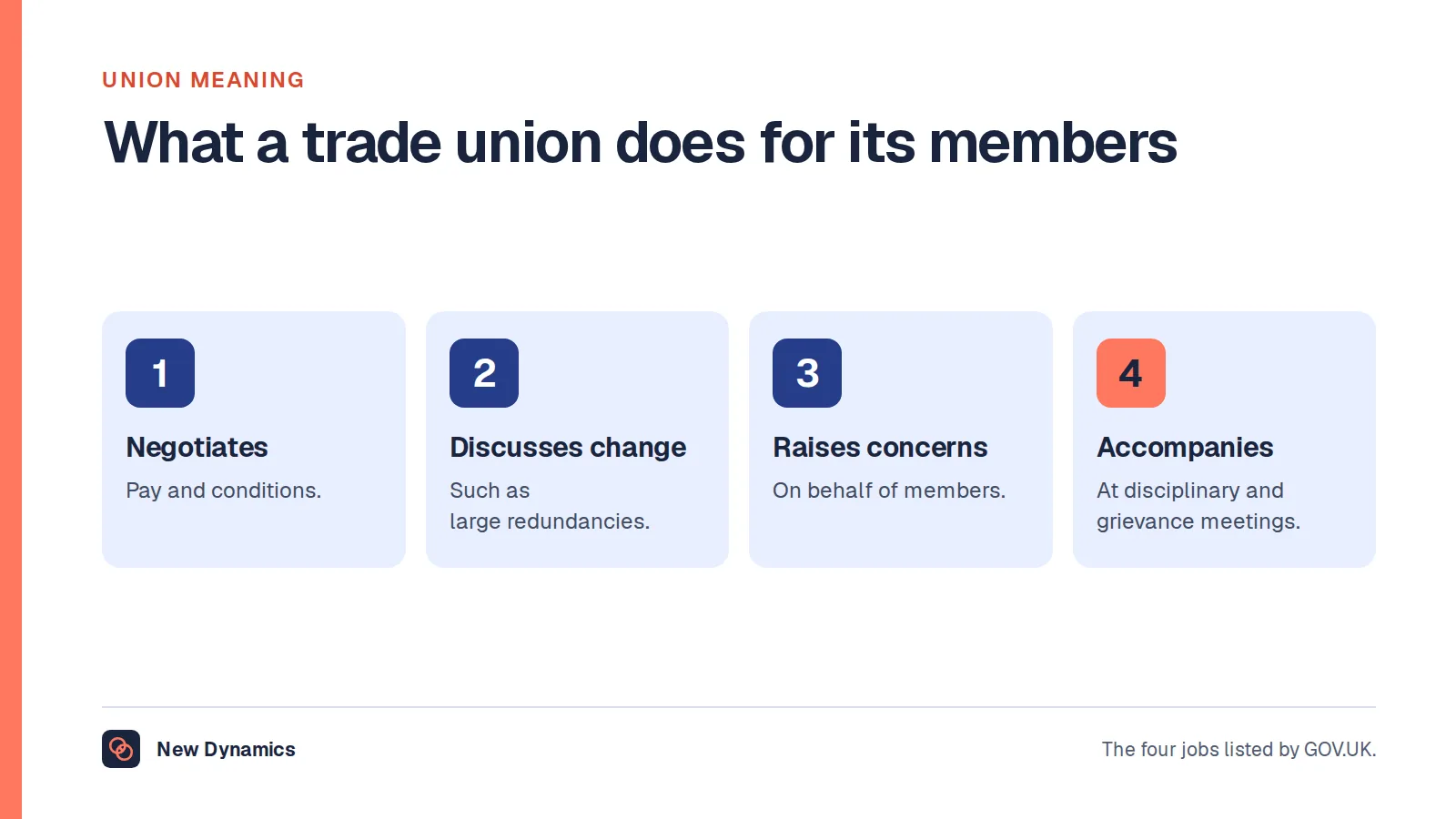
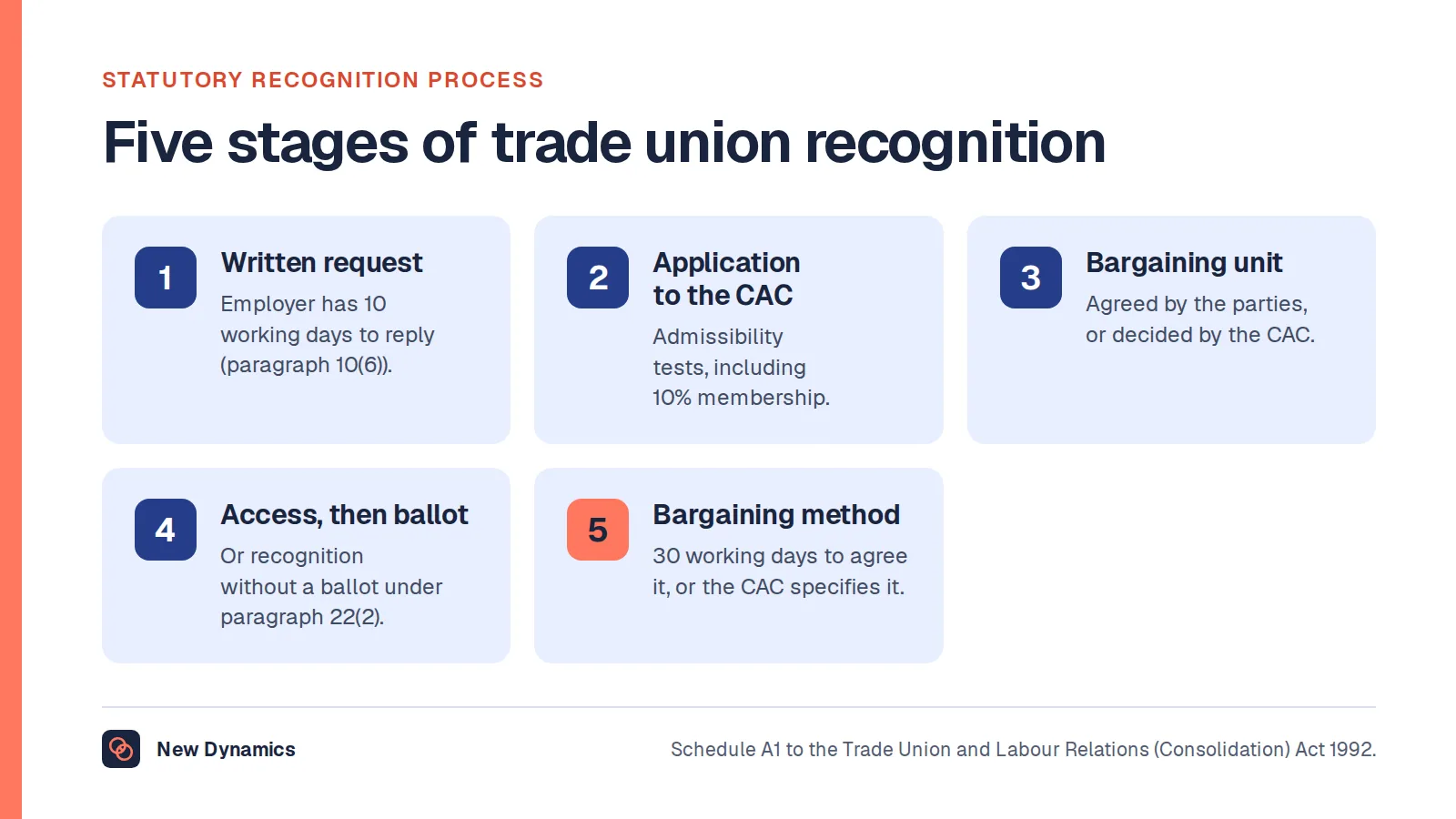
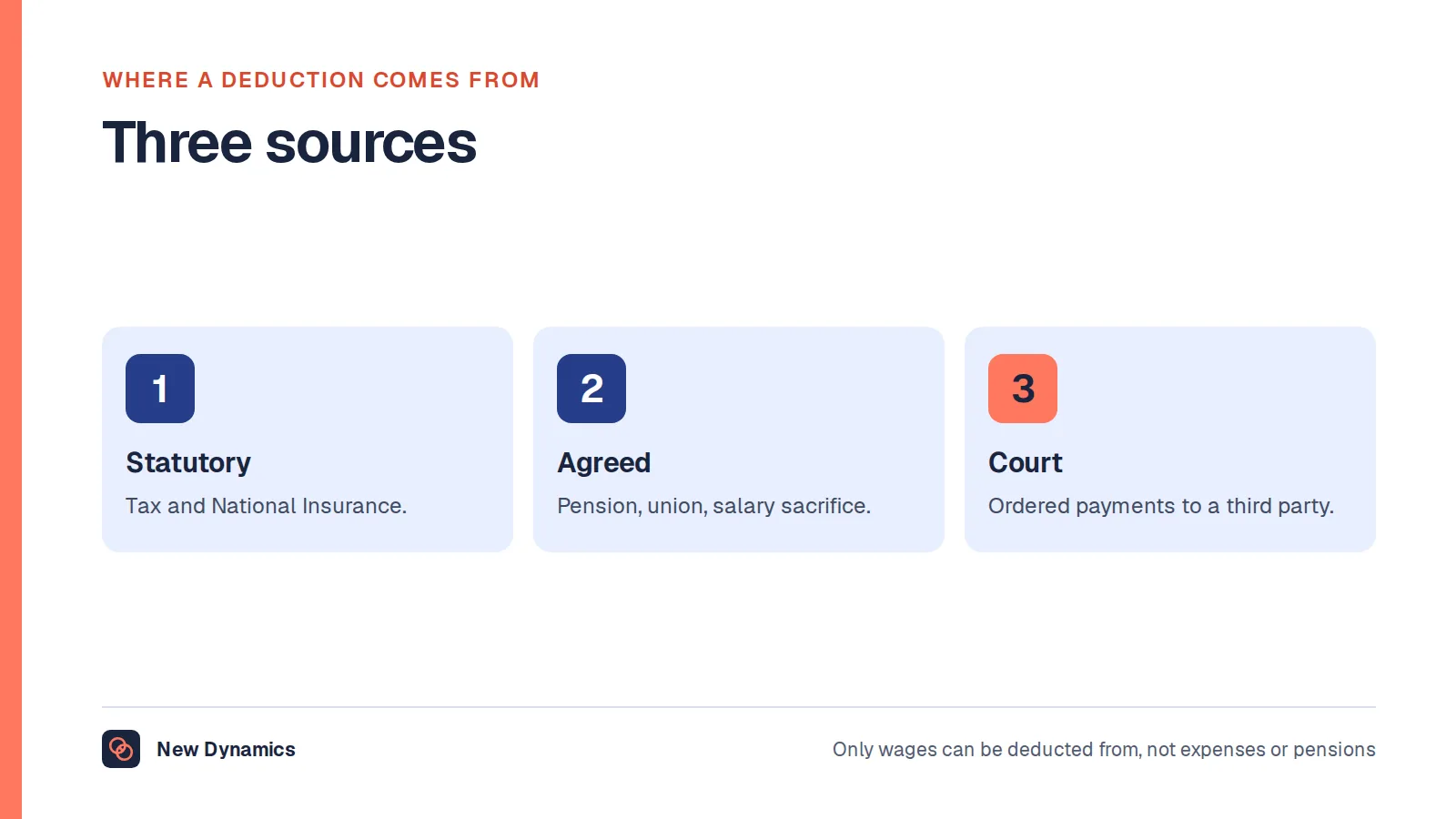
For what unions do and what recognition means, see our post on trade union meaning. For other deductions from pay, see our post on payroll deductions.
What union check-off is
GOV.UK's guidance for employers on union subscriptions explains that some union members pay their subscriptions directly out of their wages, and "The employer then gives these payments to the union. This is often called the 'check-off'."
Running it is a choice. GOV.UK says "It's up to you if you want to run the check-off" and that "A union cannot force you to run the check-off unless you've agreed to it in your workers' employment contracts." Many employers agree to it as part of a recognition or collective agreement, but the law does not require it.
The rules that apply

The legal rules are in section 68 of the Trade Union and Labour Relations (Consolidation) Act 1992.
Written authorisation before the first deduction
Where check-off arrangements exist, the employer must ensure that no subscription deduction is made unless "the worker has authorised in writing the making from his wages of subscription deductions" and "the worker has not withdrawn the authorisation."
GOV.UK puts it plainly: "A worker must give you written permission to take their union subscriptions from their wages."
Stopping deductions when the worker withdraws
A worker withdraws their authorisation by written notice. Under section 68(2), the deduction must stop if the notice is received "in time for it to be reasonably practicable for the employer to secure that no such deduction is made." GOV.UK's version: "You must stop taking check-off payments if your employee asks you to. They must give you written notice to stop the check-off and you must be given reasonable time to stop it."
Authorisation does not oblige the employer to keep check-off going
Section 68(3) says a worker's authorisation does not create "any obligation on the part of the employer to the worker to maintain or continue to maintain subscription deduction arrangements". Ending the arrangement itself is a separate question, and may be governed by any agreement with the union.
Who is responsible
The employer is. GOV.UK says the union "does not have to help run the check-off", though an employer can involve it, for example by asking it to help collect initial consent from members, and can charge the union for the administration. But "Even if you involve the union in the check-off, it's still your responsibility to make sure you make check-off deductions properly."
What happens if a deduction is not authorised
A worker can complain to an employment tribunal under section 68A. If the complaint is well founded, the tribunal must make a declaration and order the employer to pay the worker "the whole amount of the deduction", less anything already repaid.
The time limit changed on 1 October 2026. Section 68A(1)(a) now allows a complaint "within the period of six months" beginning with the date of the payment of the wages from which the deduction, or the last of the deductions, was made. The change was made by the Employment Rights Act 2025 and brought into force by S.I. 2026/954, which has transitional provisions, so check which limit applies to deductions made before that date.
The public sector change in February 2026
Section 116B of the 1992 Act, added by the Trade Union Act 2016, restricted check-off in the public sector. Section 63 of the Employment Rights Act 2025 omitted it, together with section 15 of the Trade Union Act 2016 which had introduced it. That change came into force on 18 February 2026, with savings and transitional provisions. Public sector employers now follow the same section 68 rules as everyone else.
Running check-off well

- Decide and record whether you offer it, and on what terms, including any charge to the union.
- Collect written authorisation before the first deduction, signed or otherwise given in writing by the worker, and keep it.
- Show the deduction clearly on the payslip.
- Pass payments to the union on the agreed schedule.
- Act on written withdrawals quickly, and tell the union which deductions have stopped.
- Check at leavers and transfers that deductions stop or move correctly.
Frequently asked questions
What is union check-off?
Union check-off is an arrangement in which an employer deducts trade union subscriptions from a worker's pay and passes them to the union. GOV.UK describes it as the arrangement in which members pay subscriptions directly out of their wages and the employer gives the payments to the union.
Does an employer have to offer check-off?
No. GOV.UK says it is up to the employer whether to run the check-off, and a union cannot force an employer to do so unless the employer has agreed to it in workers' employment contracts.
Does a worker need to give written consent?
Yes. Under section 68 of the 1992 Act, an employer must not make a subscription deduction unless the worker has authorised it in writing and has not withdrawn the authorisation.
How does a worker stop check-off deductions?
By giving the employer written notice. The employer must stop the deductions once it has had the notice in time for it to be reasonably practicable to do so.
Can public sector employers use check-off?
Yes. The public sector restriction in section 116B of the 1992 Act was removed on 18 February 2026 by the Employment Rights Act 2025, so public sector employers now follow the same rules as other employers.
Your next step: audit your check-off records
- List every worker with a union deduction on the current payroll.
- Check you hold written authorisation for each one.
- Confirm how withdrawal notices reach payroll, and how quickly they are acted on.
- Review any agreement with the union about running and charging for check-off.
For a planned approach to pay decisions and how they are explained to staff, read and download our compensation policy guide. The guide is free to read, and the PDF uses our short download form.
Want payroll and HR steps with an owner and a due date? Book a New Dynamics demo and bring your current check-off process. You can also email contact@new-dynamics.com.