TL;DR
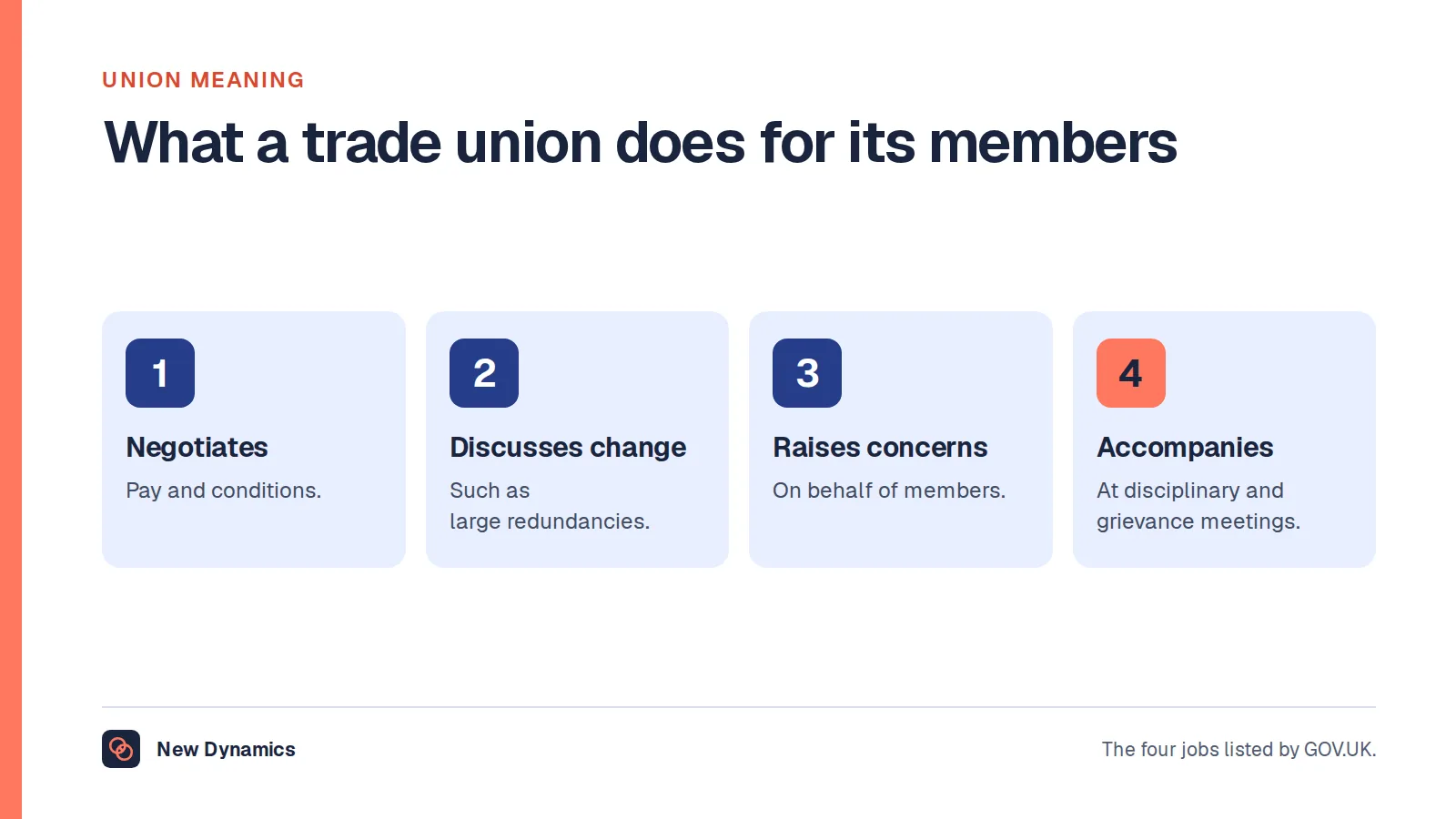
- Union facility time is the time off that trade union representatives take to carry out their union duties. Where an employer recognises an independent trade union, its officials have a legal right to reasonable paid time off for duties and for approved training, under the Trade Union and Labour Relations (Consolidation) Act 1992.
- Members of a recognised union also have a right to reasonable time off for union activities, though the law does not require that time to be paid, and it does not cover industrial action.
- The Employment Rights Act 2025 changed the rules on 30 October 2026: union, learning and equality representatives can now request reasonable facilities, equality representatives gained their own right to time off, and Acas issued a revised Code of Practice. This is general information about Great Britain, not legal advice.
A manager refuses a union rep an afternoon off to prepare for redundancy consultation because "the team is short". The rep goes to the union, the union goes to Acas, and a dispute about one afternoon becomes a dispute about the whole relationship. Most facility time problems start like this, with nobody having agreed in advance what is reasonable.
This article explains union facility time: what trade union representatives are entitled to, what union members are entitled to, what changed on 30 October 2026, and how to agree arrangements that hold up. It covers Great Britain and is general information, not legal advice.
Representatives' time off works best when it is planned like any other commitment, with cover arranged and nobody surprised. See how New Dynamics workflows give recurring tasks an owner and a date, so time away is planned rather than negotiated each time.
For the basics of what a union is and what recognition means, see our posts on trade union meaning and trade union recognition.
What union facility time is
"Facility time" is the common name for the time off that union representatives spend on union duties instead of their usual work. The rights come from the Trade Union and Labour Relations (Consolidation) Act 1992 (TULRCA), and they apply where the employer recognises an independent trade union.
Acas's guidance on the rights of trade union representatives summarises what a union representative has a legal right to:
- "paid time off for certain duties"
- "paid time off for relevant training"
- "access to facilities to carry out certain duties"
- "protection from dismissal and detriment for carrying out trade union duties and activities"
Paid time off for duties and training

Section 168 of TULRCA requires an employer to permit an official of a recognised independent union "to take time off during his working hours" for duties concerned with:
- negotiations with the employer on matters the union is recognised for (collective bargaining);
- functions the employer has agreed the union may perform on those matters;
- information and consultation on collective redundancies and TUPE transfers;
- negotiating certain agreements under the TUPE regulations.
The same section requires time off for training in industrial relations that is relevant to those duties and approved by the TUC or the official's union.
How much time? The law does not set a number of hours. Section 168(3) says the amount, purposes, occasions and conditions are "those that are reasonable in all the circumstances having regard to any relevant provisions of a Code of Practice issued by ACAS."
Is it paid? Yes. Section 169 says the employer "shall pay him for the time taken off pursuant to the permission". Where pay does not vary with the work done, the rep is paid as if they had worked; where it does vary, pay is based on average hourly earnings.
Acas also lists accompanying workers at disciplinary and grievance hearings among a union representative's duties. That right to be accompanied applies whether or not the union is recognised.
What changed on 30 October 2026
The Employment Rights Act 2025 amended these rights, and the changes took full effect on 30 October 2026. Acas summarises them:
- "more representatives have a legal right to facilities, if they request them", which applies to union representatives, union learning representatives and union equality representatives
- "union equality representatives have a legal right to time off for certain duties and training"
The equality representatives' right sits in a new section 168B of TULRCA, "Time off for union equality representatives", inserted by section 65 of the 2025 Act.
Facilities means what a representative needs to do the work. Acas gives "communication tools and meeting rooms" as examples. The amended section 168 requires the employer, where the representative requests it, to provide "such accommodation and other facilities" as is reasonable in all the circumstances, again having regard to the Acas Code.
The burden on a complaint also changed. Under the amended section 168, if a representative complains to an employment tribunal that time off was refused, "it is for the employer to show that the amount of time off which the employee proposed to take was not a reasonable amount of time off."
Acas has published a revised Code of Practice on time off for trade union duties and activities. It "applies from 30 October 2026" and "replaces the version published in January 2010". Acas notes that an employment tribunal will take the Code into account in relevant claims.
This article does not cover the separate rules on publishing facility time data, which mainly affect public sector employers.
Time off for union members
Members of a recognised union also have a right to time off. Section 170 requires the employer to permit time off during working hours for taking part in "any activities of the union" and activities in which the member is acting as a representative of the union. The section is not in the list of time off that section 169 requires to be paid.
There is one firm limit. Section 170(2) says the right "does not extend to activities which themselves consist of industrial action".
Other representatives
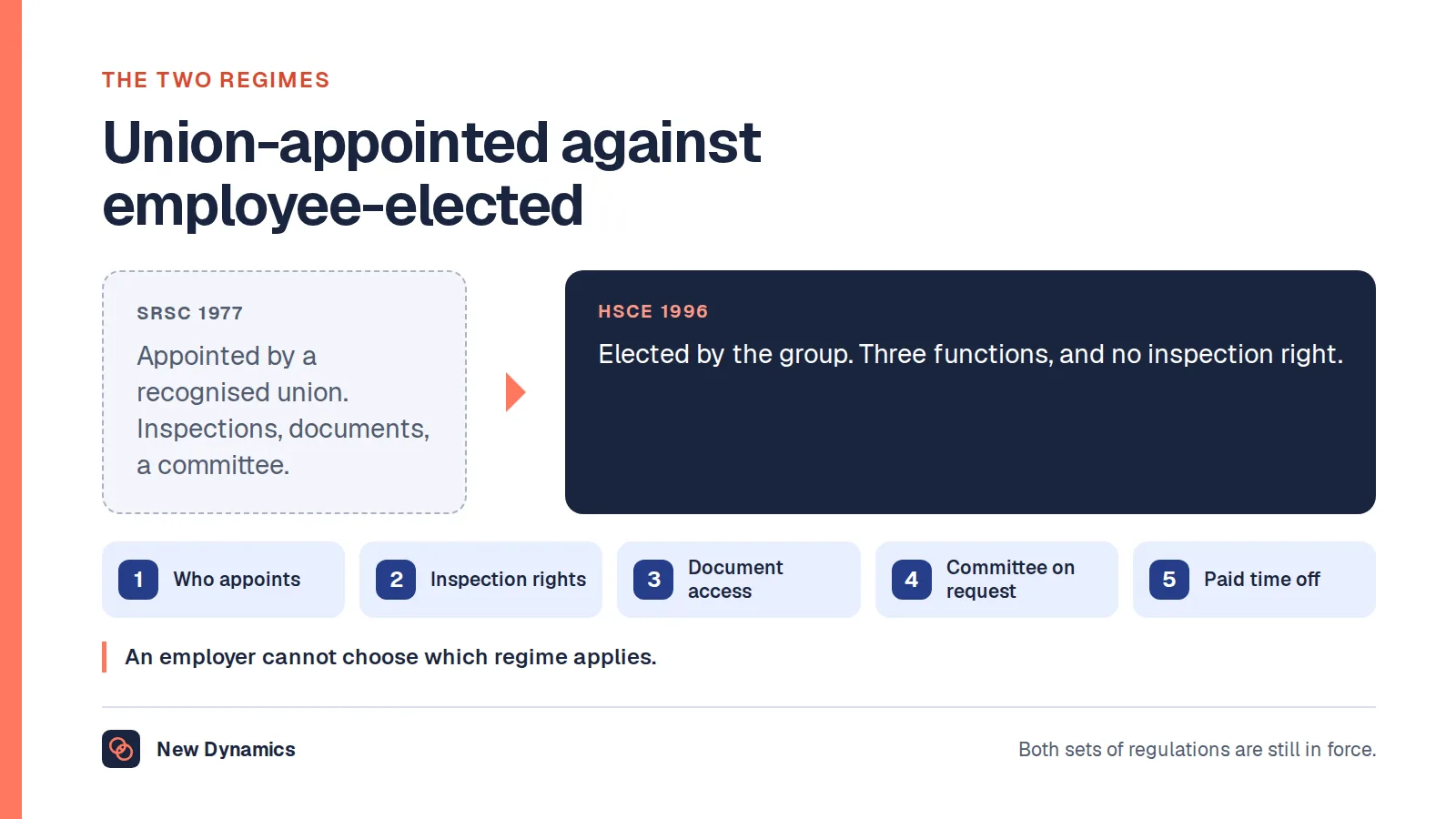
Acas lists several representative roles with legal rights, including union learning representatives, union equality representatives, health and safety representatives, and representatives for TUPE, collective redundancy, information and consultation, and pensions. Each role has its own rights, and a representative with more than one role has the rights of each. For the safety role, see our post on the safety representative.
Acas adds that it is good practice to allow all representatives reasonable time off, training and facilities, even where the law does not require it.
Agreeing facility time that works

Because the law turns on what is "reasonable", most disputes are avoided by agreeing the approach in advance. Acas publishes advice on creating an agreement on time off for representatives. A workable agreement usually covers:
- Which representatives and roles it applies to.
- How time off is requested and approved, and how much notice is usual for routine and urgent duties.
- Cover for the representative's normal work, so their team is not penalised for their role.
- Facilities: meeting space, a confidential way to talk to members, communication tools and access to information.
- Training: how approved courses are booked and paid for.
- Review: when the agreement will be looked at again, especially after the 2026 changes.
Managers need to know the agreement too. Most refusals come from a line manager who did not know the rep had a right to the time.
Frequently asked questions
What is union facility time?
Union facility time is time off that trade union representatives take to carry out union duties, such as collective bargaining and consultation, and to attend relevant training. Where the employer recognises the union, officials have a legal right to reasonable paid time off for these purposes.
How much facility time is a union rep entitled to?
The law does not set a fixed number of hours. The amount must be reasonable in all the circumstances, having regard to the Acas Code of Practice. Employers and unions often agree the details in a written facility time agreement.
Is facility time paid?
Time off for trade union duties and approved training under section 168 must be paid. Time off for members to take part in union activities under section 170 does not have to be paid.
What rights do trade union representatives have?
Acas lists paid time off for certain duties, paid time off for relevant training, access to facilities to carry out certain duties, and protection from dismissal and detriment for carrying out trade union duties and activities. Since 30 October 2026, union, learning and equality representatives can request reasonable facilities.
What changed for union reps in October 2026?
From 30 October 2026, under the Employment Rights Act 2025, more representatives have a legal right to facilities if they request them, union equality representatives gained a right to time off, and Acas's revised Code of Practice on time off applies.
Your next step: check your arrangements against the new rules
- List your representatives and their roles, including any equality representatives.
- Read your current facility time agreement, if you have one, against the revised Acas Code.
- Decide how facilities requests will be made and answered.
- Brief line managers on what reps are entitled to and who to ask before refusing time off.
If union relations are part of a wider restructure, read and download our redundancy and workforce change guide. The guide is free to read, and the PDF uses our short download form.
Want planned time off and cover arrangements that managers can see in one place? Book a New Dynamics demo and bring your current facility time agreement. You can also email contact@new-dynamics.com.