TL;DR
- The opt out is not in regulation 5 any more. Since 17 December 1999 the agreement requirement sits inside regulation 4(1) itself, which now opens "Unless his employer has first obtained the worker's agreement in writing to perform such work". Regulation 5(1) was deleted on the same day, and regulation 5 now supplies only the duration and notice rules.
- Withdrawal is quick and the employer cannot refuse it. Regulation 5(2)(b) makes the agreement "terminable by the worker by giving not less than seven days' notice to his employer in writing", and regulation 5(3) caps any longer notice period written into the agreement at three months.
- No opt out exists for night work or for under 18s. Regulation 6(1) limits a night worker to "an average of eight hours for each 24 hours" and GOV.UK states flatly that "Workers cannot opt out of the limit". Regulation 5A(1) caps a young worker at eight hours a day or 40 hours a week with no averaging and no agreement available.
Most employers think they know the working time opt out. A worker signs something on induction, the 48 hour limit goes away, and the file is never opened again. Almost every part of that is wrong, starting with the citation: guidance across the internet still says the opt out lives in regulation 5 of the Working Time Regulations 1998. It moved in 1999, and the paragraph people cite was deleted.
Below is the opt out read off the regulation text as it now stands: where the agreement sits, how the average works, how a worker gets out and how fast, who cannot opt out at all, the night work rules no agreement reaches, and the two working time questions employers get wrong. It is general information about the position in England, Scotland and Wales, and it is not legal advice.
Opt outs, withdrawal notices and night work assessments are recurring processes with a date and a signature attached. New Dynamics workflows let you shape the stages, forms and approvals around your own process, so the record exists when an inspector asks for it rather than being reconstructed from memory.
Where the working time opt out actually lives
Regulation 4(1) of the Working Time Regulations 1998 now reads, in its in force version: "Unless his employer has first obtained the worker's agreement in writing to perform such work, a worker's working time, including overtime, in any reference period which is applicable in his case shall not exceed an average of 48 hours for each seven days."
That opening clause is the opt out. It replaced the words "Subject to regulation 5" on 17 December 1999, under regulation 3(1)(a) of the Working Time Regulations 1999. The same instrument added the record duty to regulation 4(2), which now requires an employer to "keep up-to-date records of all workers who carry out work to which it does not apply by reason of the fact that the employer has obtained the worker's agreement as mentioned in paragraph (1)".
On the same date, regulation 3(2)(a) deleted paragraphs (1) and (4) of regulation 5. Paragraph (1) used to create the opt out. Paragraph (4) was the old, heavier record requirement, which made the employer log the hours each opted out worker had actually worked in every reference period.
So the citation is regulation 4(1) for the agreement, regulation 4(2) for the record, and regulation 5(2) and (3) for duration and notice. Anyone still quoting regulation 5(1) is quoting a paragraph that has not existed for more than twenty five years.

The 17 week reference period, and when it is longer
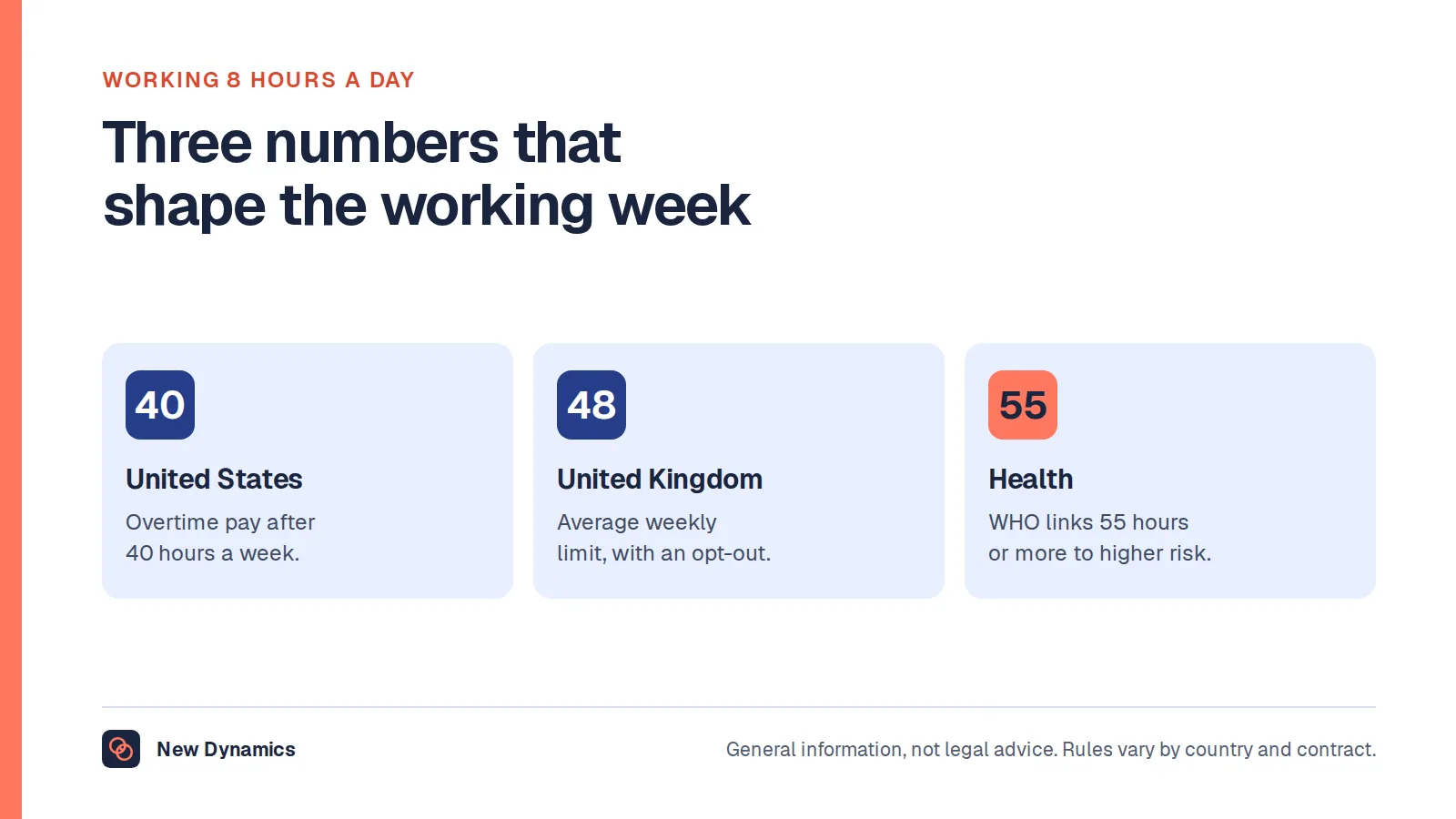
The 48 hour figure is an average, not a weekly ceiling. GOV.UK's guide to maximum weekly working hours puts it plainly: "You cannot work more than 48 hours a week on average - normally averaged over 17 weeks."
Regulation 4(3) supplies the default: either successive 17 week periods where a relevant agreement provides for them, or "in any other case, any period of 17 weeks in the course of his employment". That second limb matters, because without an agreement fixing the periods any rolling 17 weeks can be tested. Regulation 4(4) shortens it for a new starter to the time since they began. Regulation 4(5) substitutes 26 weeks for anyone excluded from certain provisions by regulation 21, and regulation 23(b) lets a collective or workforce agreement substitute "a period not exceeding 52 weeks". GOV.UK gives trainee doctors as its 26 week example and offshore oil and gas as its 52 week one.
One part gets skipped. Under regulation 4(6) and (7), days of annual, sick, maternity, paternity, adoption or parental leave, plus any period covered by an opt out, are "excluded days", replaced in the formula by the same number of working days from immediately after the period. Holiday and sickness do not drag the average down. Acas gives the arithmetic in its guidance on the 48-hour weekly maximum: add the hours worked in the 17 weeks and divide by 17, or by the weeks worked if there are fewer.
What a valid opt out has to do
GOV.UK's page on opting out of the 48 hour week sets the conditions. The worker must be over 18. "You can opt out for a certain period or indefinitely. It must be voluntary and in writing." "Your employer must keep a record that you've opted out." And "Your employer can ask you to opt out, but you cannot be sacked or treated unfairly for refusing."
It publishes model wording too: "I [worker's name] agree that I may work for more than an average of 48 hours a week. If I change my mind, I will give my employer [amount of time - up to 3 months'] notice in writing to end this agreement." Acas offers the same text as a downloadable 48-hour opt-out agreement template, last updated 19 February 2025, and adds the point worth acting on: the opt out "is a written agreement and should be separate from the employment contract". That is the most common defect. A clause everyone signs on day one is hard to describe as voluntary, and it mixes an agreement the worker can cancel in seven days with terms they cannot.
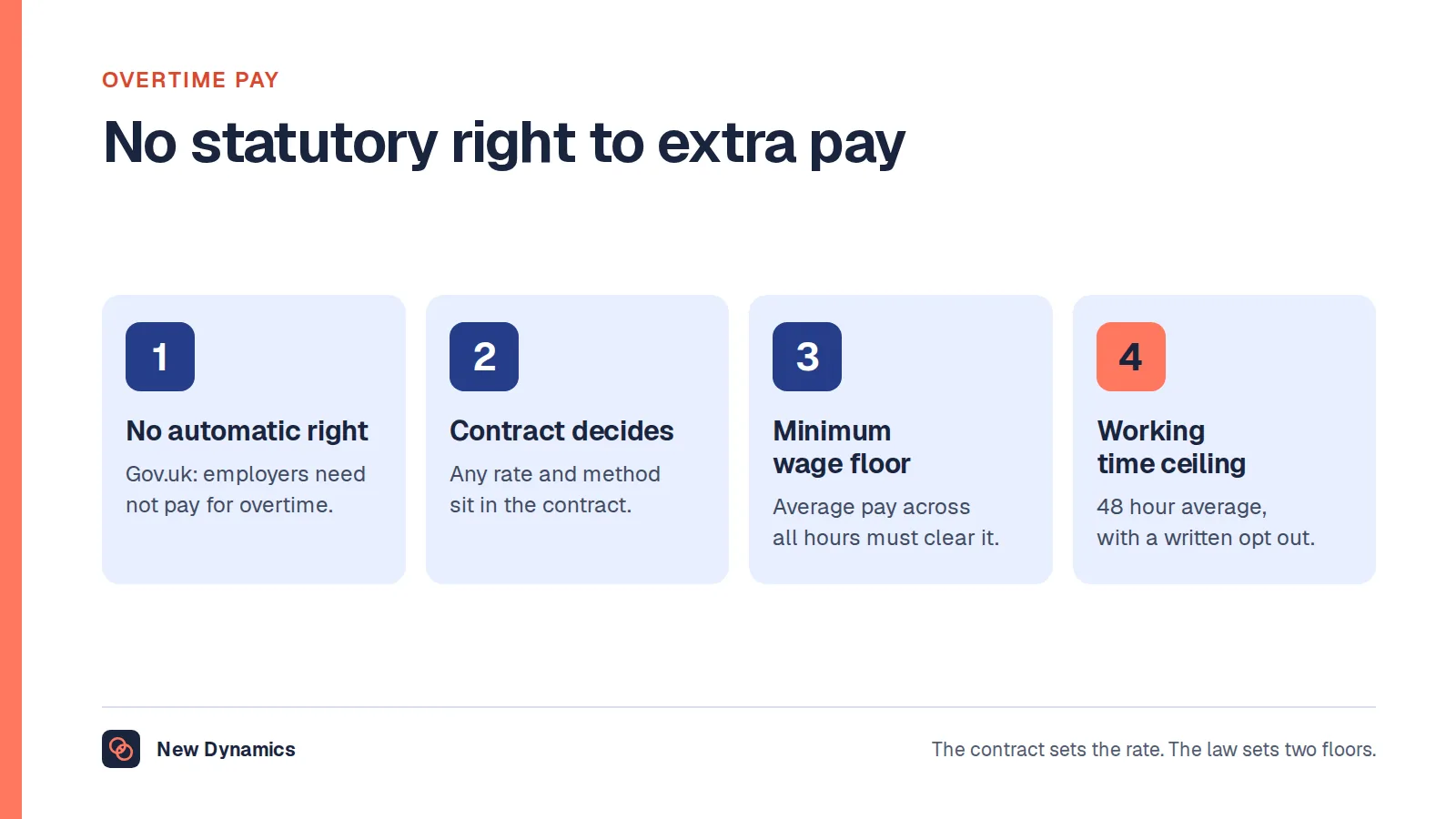
Opting out creates no right to extra pay. Acas states that "employers do not have to offer a higher amount of pay than normal when someone works more hours because they've opted out", although the National Minimum Wage still has to be met. Our post on overtime pay covers where the pay obligation does come from.
Refusing is protected. Section 45A of the Employment Rights Act 1996 gives a worker the right not to be subjected to any detriment on the ground that they "refused (or proposed to refuse) to forgo a right conferred on him by those Regulations", or failed "to enter into, or agree to vary or extend, any other agreement with his employer which is provided for in those Regulations". Section 101A makes a dismissal for the same reason automatically unfair, with no qualifying service.
How a worker withdraws an opt out
Regulation 5(2) says an agreement "may either relate to a specified period or apply indefinitely" and, "subject to any provision in the agreement for a different period of notice, shall be terminable by the worker by giving not less than seven days' notice to his employer in writing". Regulation 5(3) caps the alternative: where the agreement provides for termination after a period of notice, "the notice period provided for shall not exceed three months".
Seven days is the default, three months the ceiling, and anything between has to be written in, so a clause requiring six months is unenforceable to that extent. GOV.UK adds that withdrawal works "even if it's part of your employment contract", and that "Your employer cannot force you to cancel your opt-out agreement". Acas puts the default the same way: if the agreement is silent, "then by law the notice period is 7 days".
An opt out therefore buys an employer at most three months of certainty, and usually one week. A rota that only balances because half the team has opted out is one withdrawal letter away from breaching regulation 4(1).
Who cannot opt out, and who is outside the limit entirely
These are two different groups, and GOV.UK's two lists are easy to conflate.
Workers who cannot opt out. GOV.UK names airline staff, workers on ships or boats, road transport workers (except drivers of vehicles under 3.5 tonnes using GB domestic drivers' hours rules), other staff who travel in and operate vehicles covered by EU drivers' hours rules, and a security guard on a vehicle carrying high value goods. The reason is structural. Regulation 18 takes seafarers, sea fishermen and inland waterways workers out of these Regulations altogether, and takes regulation 4(1) and (2) away from civil aviation workers and, under regulation 18(4), from road transport workers. Those groups have their own instruments, which set hard limits rather than ones an individual can waive.
Workers outside the 48 hour limit anyway. GOV.UK lists six jobs where "You may have to work more than 48 hours a week on average". Four map onto provisions that do remove regulation 4(1): the armed forces, emergency services and police under regulation 18(2)(a); a domestic servant in a private household under regulation 19; seafarers and inland waterways workers under regulation 18(1); and workers whose time "is not measured or predetermined or can be determined by the worker himself" under regulation 20, which names managing executives and family workers.
The other two do not. GOV.UK's "where 24-hour staffing is required" and "in security and surveillance" categories correspond to regulation 21, which disapplies only regulations 6(1), (2) and (7), 10(1), 11(1) and (2) and 12(1). Regulation 4(1) is not in that list, so a security guard or a hospital worker on a round the clock service is still subject to the 48 hour average. What changes is the reference period, 26 weeks under regulation 4(5), and that the night work and rest entitlements fall away with compensatory rest owed under regulation 24 instead. GOV.UK's summary list is looser than the instrument here, and the instrument governs.
Young workers: a limit with no opt out at all
Regulation 5A(1) provides that a young worker's working time "shall not exceed" either "eight hours a day" or "40 hours a week". GOV.UK says the same, and adds that "Your working hours cannot be averaged out if you're under 18." Regulation 5A(2) aggregates hours across employers, so a 17 year old with two jobs is measured on the total, and regulation 5A(3) fixes the week as starting "at midnight between Sunday and Monday". Nothing in the Regulations lifts regulation 5A.
Night workers: the eight hour average, and the free health assessment
A night worker, under regulation 2(1), is a worker "who, as a normal course, works at least three hours of his daily working time during night time", and a person works hours as a normal course "if he works such hours on the majority of days on which he works". Night time is at least seven hours including midnight to 5am, set by a relevant agreement, and in default "the period between 11 p.m. and 6 a.m."
Regulation 6(1) sets the limit: a night worker's normal hours "shall not exceed an average of eight hours for each 24 hours", over the same 17 week default. Regulation 6(7) is harder, and is not an average: where the work "involves special hazards or heavy physical or mental strain", the employer "shall ensure" the worker does not work "more than eight hours in any 24-hour period". Work qualifies, under regulation 6(8), if a collective or workforce agreement identifies it as such or a risk assessment recognises it. GOV.UK's guidance on night working hours is blunt: "Workers cannot opt out of the limit." Regulation 23(a) lets a collective or workforce agreement modify or exclude regulation 6(1), but there is no personal opt out form for night work.
The health assessment duty sits in regulation 7 and is phrased carefully. Before assigning an adult worker to work that will make them a night worker, the employer must have "ensured that the worker will have the opportunity of a free health assessment", unless a still valid earlier one exists. Then, under regulation 7(1)(b), the employer "shall ensure that each night worker employed by him has the opportunity of a free health assessment at regular intervals of whatever duration may be appropriate in his case". Regulation 7(3) defines free as "at no cost to the worker to whom it relates".
The duty is to offer, not to obtain. GOV.UK's health assessments page says "Workers do not have to accept", and tells employers to keep confidential records of the assessments for two years and of "dates when assessments were offered (if a worker did not want one)". That second record is the one that goes missing. Regulation 7(6) adds the consequence: where a registered medical practitioner has advised that a worker is suffering health problems connected with night work, and a suitable day job exists, "the employer shall transfer the worker accordingly". Young workers are barred rather than limited: regulation 6A requires an employer to "ensure that no young worker employed by him works during the restricted period", defined as 10pm to 6am, or 11pm to 7am where the contract provides for work after 10pm.

What counts as working time, and the two questions employers get wrong
Regulation 2(1) defines working time in three limbs: "any period during which he is working, at his employer's disposal and carrying out his activity or duties", any period receiving relevant training, and "any additional period which is to be treated as working time for the purpose of these Regulations under a relevant agreement".
That is all the Regulations say. They do not mention on call time and they do not mention travel, so neither question is settled by the instrument and the answer comes from guidance and from case law. We have not opened the case law for this article, so what follows is what the two official guides state, and where they differ.
On call time
GOV.UK's calculating your working hours page draws a flat line by location. Its list of what counts includes "time spent on call at the workplace". Its list of what does not includes "time you spend on call away from the workplace".
Acas words it as a test rather than a line. Its guidance on being on call, last updated 21 March 2025, says on call time "can count as working time if the worker is doing work that their employer requires them to do under their employment contract", at the workplace "or at a different location, such as working from their own home", and that it does not usually count "if the worker is away from the workplace and can spend the time in any way they choose". It then gives the deciding factor: "It's more likely to count as working time the more control the employer has over the worker's", and lists three things, the worker's activities, location and time.
The two are not the same. GOV.UK's version would exclude a home based on call period in which the worker was in fact called out and worked. Acas's counts the worked part. Acas is the fuller statement, and neither page is law: the Regulations govern, and they give you only the words "at his employer's disposal". Acas adds that sleep in time "usually counts as working time, even if the person spends it asleep", because the worker is required to be at the workplace.
Travel time
Here the guides agree, and the dividing line is whether there is a fixed place of work. GOV.UK counts "time spent travelling if you travel as part of your job, for example sales rep" and "travel between home and work at the start and end of the working day (if you do not have a fixed place of work)", and excludes "travel to and from work (if you have a fixed place of work)" and "travelling outside of normal working hours".
Acas, in its guidance on working time for someone who travels for their job, adds the detail. Travel at work, "from one client to the next" or "from an office to a meeting elsewhere", usually counts. For workers with no fixed place of work, which it calls peripatetic workers and illustrates with care workers, plumbers, teachers working across schools and travelling salespeople, it states that "Travel between home and work is likely to count as working time for peripatetic workers."
The consequence for a 48 hour calculation is large. A care worker making eight home visits a day can add hours that no timesheet records, enough to put a nominal 40 hour contract over the limit.

The records you actually have to keep
The opt out record comes from regulation 4(2): up to date records of everyone whose work is outside the limit because the employer obtained their agreement. No form is prescribed.
The general duty is regulation 9, amended on 1 January 2024 by the Employment Rights (Amendment, Revocation and Transitional Provision) Regulations 2023. Regulation 9(1)(a) now requires records "adequate to show whether the employer has complied with the limits specified in regulations 4(1), 5A(1) and 6(1) and (7) and the requirements in regulations 6A and 7(1) and (2)", retained "for two years from the date on which they were made". The amendment added two paragraphs many policy documents still miss. Regulation 9(2): the records "may be created, maintained and kept in such manner and format as the employer reasonably thinks fit". Regulation 9(3): "An employer need not record each worker's daily working hours in order to comply with paragraph (1) if the employer is able to demonstrate compliance without doing so."
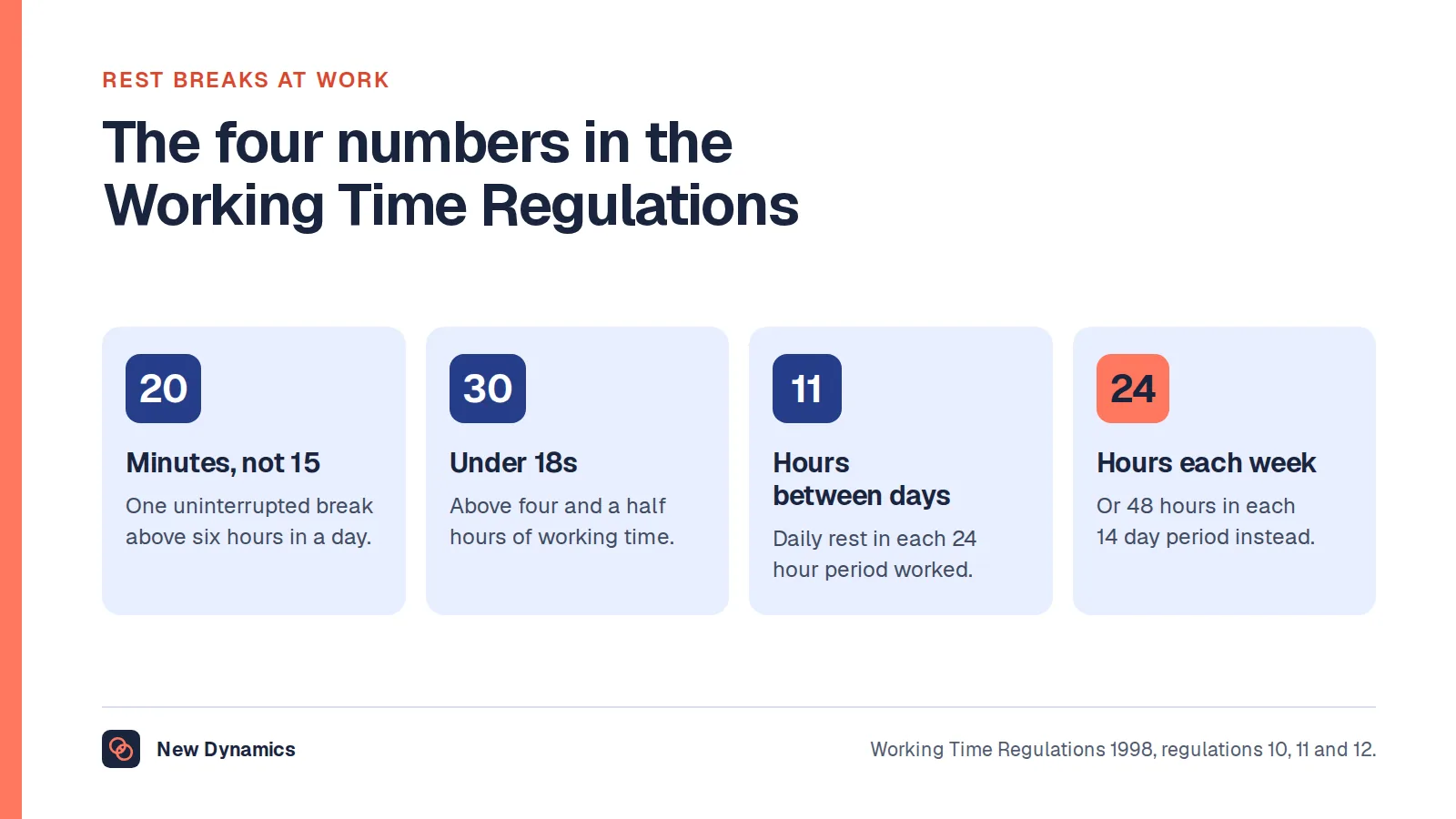
Acas restates the effect: "An employer does not need to keep records of all daily working hours", but must keep records proving the 48 hour maximum is not breached except where there is an opt out, that night work limits are kept, that health assessments have been offered, and that young workers are not working during a restricted period. Note what regulation 9 still leaves out: rest breaks, which we cover in our post on rest breaks at work.
How the limit is enforced, and how it is not
The 48 hour average is not a tribunal claim. Regulation 30 lists the rights a worker can take to an employment tribunal, and they are the rest, leave and holiday pay rights. Regulation 4(1) is not among them. It is enforced criminally instead: regulation 28 makes regulations 4(2), 6(2) and (7), 7 and 9 "relevant requirements", and regulation 29(1) provides that "An employer who fails to comply with any of the relevant requirements" (or with regulation 16B(1)) "shall be guilty of an offence". Acas sets out the practical split: a 48 hour or records failure goes to the Health and Safety Executive or the local authority, while a rest break or holiday complaint goes to a tribunal. What does reach a tribunal is the detriment or dismissal claim under sections 45A and 101A, which is why pressure to sign is the riskiest part of the process.
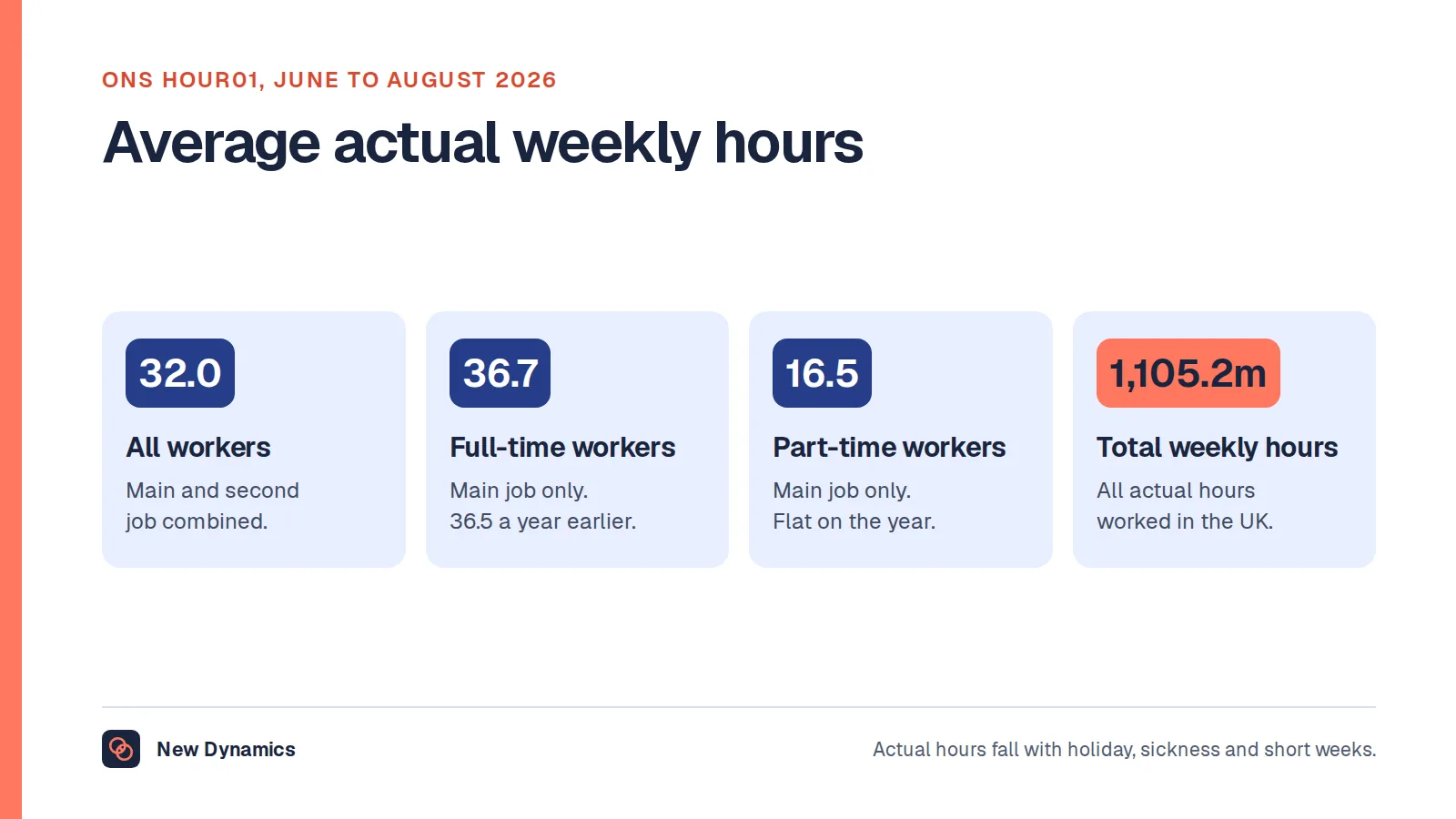
Regulation 4(2) is a health and safety duty for a reason. The HSE's key figures for Great Britain 2024 to 2025 report "964,000 workers suffering work-related stress, depression or anxiety" and "40.1 million working days lost due to work-related illness and workplace injury". Our HR statistics hub collects the wider absence and hours figures with their reference periods, and our post on working hours statistics for the UK covers the ONS series for actual hours worked.
Frequently asked questions
Which regulation is the working time opt out in?
Regulation 4(1) of the Working Time Regulations 1998, which opens "Unless his employer has first obtained the worker's agreement in writing to perform such work". Those words replaced "Subject to regulation 5" on 17 December 1999, and regulation 5(1) was deleted the same day. Regulation 5(2) and (3) survive and govern duration and notice.
How much notice do I give to cancel a 48 hour opt out?
Seven days unless the agreement says otherwise, and never more than three months. Regulation 5(2)(b) makes the agreement terminable by the worker "by giving not less than seven days' notice to his employer in writing", and regulation 5(3) caps a longer contractual period at three months. GOV.UK confirms you can cancel "even if it's part of your employment contract".
Can my employer make me sign a working time opt out?
No. GOV.UK states that "Your employer can ask you to opt out, but you cannot be sacked or treated unfairly for refusing". Section 45A of the Employment Rights Act 1996 protects a worker from detriment for refusing an agreement provided for in the Regulations, and section 101A makes a dismissal for that reason automatically unfair, with no minimum service needed.
Who cannot opt out of the 48 hour week?
GOV.UK names airline staff, workers on ships or boats, road transport workers (with a carve out for drivers of vehicles under 3.5 tonnes on GB domestic rules), other staff operating vehicles under EU drivers' hours rules, and security guards on vehicles carrying high value goods. Those groups fall outside regulation 4 under regulation 18, and their own instruments apply instead.
Can a night worker opt out of the eight hour limit?
Not individually. GOV.UK states that "Workers cannot opt out of the limit". Regulation 6(1) sets an average of eight hours for each 24 hours and contains no agreement clause. A collective or workforce agreement can modify or exclude it under regulation 23(a), but there is no personal opt out form for night work.
Does the employer pay for a night worker's health assessment?
Yes. Regulation 7(1) requires the employer to ensure the worker has "the opportunity of a free health assessment" before assignment and at appropriate intervals afterwards, and regulation 7(3) defines free as "at no cost to the worker to whom it relates". The duty is to offer it. GOV.UK says workers do not have to accept, and tells employers to record the dates assessments were offered.
Does on call time count towards the 48 hour average?
The Regulations do not settle it. Regulation 2(1) defines working time as a period when the worker is "working, at his employer's disposal and carrying out his activity or duties", and says nothing about being on call. GOV.UK counts on call time at the workplace and excludes it away from the workplace. Acas applies a control test and counts work actually done at home. Treat employer control as the deciding factor.
What about travel time?
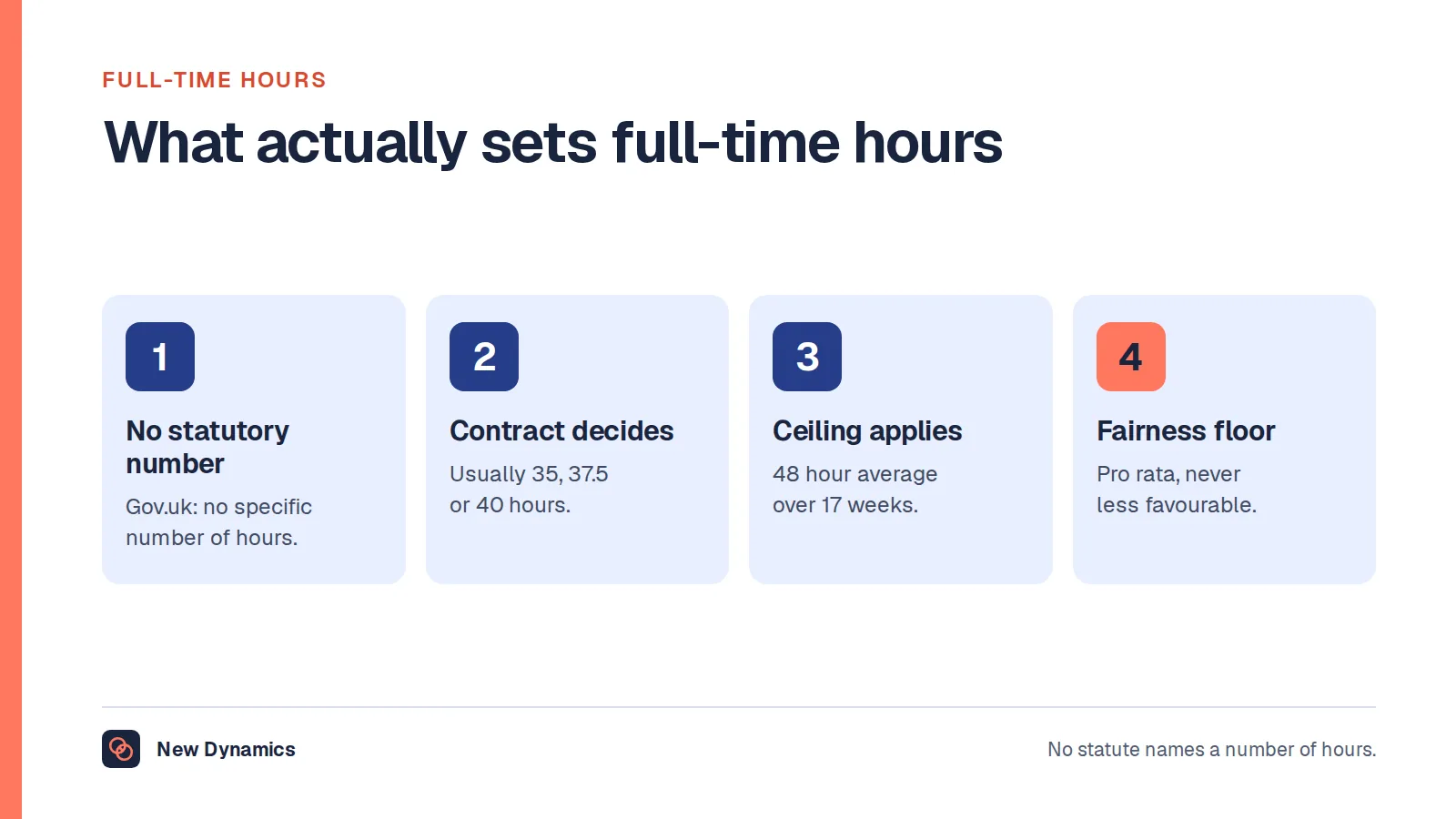
Travel at work counts, such as between clients or from an office to a meeting. A regular commute to a fixed workplace does not. Where there is no fixed place of work, as with care workers or tradespeople, Acas says travel between home and work "is likely to count as working time", and GOV.UK agrees. Our post on full time hours covers how this meets contractual hours.
Your next step: four checks on the opt outs you hold
- Count them, and read one. Can you produce every signed opt out with its date? Regulation 4(2) requires exactly that. If the agreement sits inside the employment contract, move it to its own document, as Acas advises.
- Check the notice clause. Anything over three months is unenforceable to that extent under regulation 5(3). If the agreement is silent, the worker gets seven days.
- Separate the night workers. Anyone regularly working three hours between 11pm and 6am is caught by regulation 6(1), which no opt out touches. Confirm a free health assessment was offered, and that you recorded the offer even where it was declined.
- Recalculate with on call and travel included. Add on call periods where you control the worker's location and time, and travel between appointments for anyone without a fixed workplace. That is where a compliant looking 40 hour contract turns into a breach.
Then write the answers down, in a working time section a manager can apply. Our employee handbook guide covers how to word one, including keeping the opt out separate from the contract. The guide is free to read, and the PDF uses our short download form.
Want opt outs, withdrawal notices and night work assessments running through one recorded process instead of a shared drive? Book a New Dynamics demo and bring your current opt out wording. You can also email contact@new-dynamics.com.