TL;DR
- An automatically unfair dismissal skips the reasonableness test. The ordinary question under section 98 of the Employment Rights Act 1996 is whether the employer acted reasonably. Sections 98B to 105 instead say the employee “shall be regarded for the purposes of this Part as unfairly dismissed” once the reason is proved, and no procedure saves it.
- Section 108(3) switches the two-year qualifying period off for almost every one of them, listing sections 98B, 99, 100, 101, 101A, 102, 103, 103A, 104 and 104A to 104G by name. TUPE is the exception: regulation 7(6) of the 2006 Regulations keeps the qualifying period in place for a transfer-related dismissal.
- The cap goes in two cases only. Section 124(1A) disapplies the limit for dismissals under sections 100, 103A, 105(3) and 105(6A), so health and safety and whistleblowing claims are uncapped while everything else sits under the lower of £123,543 and 52 weeks' pay from 6 April 2026.
Picture the pattern that costs employers most often in this area. A textbook process: written allegations, an investigation, a hearing, the right to be accompanied, a decision by a manager with authority, an appeal heard by somebody else. Every box ticked. The employee had eleven months' service, so nobody thought there was a claim to answer. None of it matters, because the reason for the dismissal was that they had reported a safety failure, and that reason is unfair whatever the process around it.
That is what automatic unfair dismissal means. A short list of reasons where the law does not ask whether the employer behaved reasonably. It asks only what the reason was, and if the reason is on the list the dismissal is unfair. The qualifying period usually falls away with it, which is why the most defensible process in the country can still lose.
This article gives the categories with the statutory section for each, which of them need no qualifying service, where the compensation cap disappears, and what has actually changed in 2026 as against what has only been announced. It describes the law of England, Wales and Scotland, where the Employment Rights Act 1996 applies. Northern Ireland has parallel legislation and different figures. This is general information and not legal advice.
The reason for a dismissal is a question of evidence, and the evidence is usually the record that existed before anyone thought about a tribunal. See how New Dynamics workflows let you define stages, participants and approvals, so the sequence of events is captured as it happens rather than reconstructed afterwards.
What "automatically unfair" actually means
Ordinary unfair dismissal is a two-part question. Section 98 of the 1996 Act asks the employer to show a potentially fair reason, and then section 98(4) asks whether the dismissal is fair, which "depends on whether in the circumstances (including the size and administrative resources of the employer's undertaking) the employer acted reasonably or unreasonably in treating it as a sufficient reason for dismissing the employee". Process, consistency and proportionality all live inside that second part.
The statute then says that the second part can be switched off. Section 98(6)(a) provides that subsection (4) "is subject to sections 98A to 107". That cross reference is the whole of automatic unfair dismissal in one line, and the sections it points at are the list below.
The wording of those sections is near identical, and worth reading closely. Section 103A runs in full: "An employee who is dismissed shall be regarded for the purposes of this Part as unfairly dismissed if the reason (or, if more than one, the principal reason) for the dismissal is that the employee made a protected disclosure."
There is no reasonableness limb. Once the employee establishes that the protected disclosure was the reason, or the principal reason, the finding follows. The employer cannot argue that it was a fair response in the circumstances, because the statute never asks.
GOV.UK's employer guide puts the same point in one sentence on its page on unfair dismissals: "Even if you've acted reasonably, some reasons for dismissal are classed automatically unfair."

The qualifying period, and the list that switches it off
Today an ordinary unfair dismissal claim needs service. Section 108(1) requires an employee to have "been continuously employed for a period of not less than two years ending with the effective date of termination". GOV.UK agrees on its page on eligibility to claim unfair dismissal: "Employees can usually only claim unfair dismissal if they've worked for a qualifying period. This is usually 2 years." The same page adds the exception in one line: "In some cases, the qualifying period is shorter or does not apply. For example, if an employee is claiming for an automatically unfair reason."
Section 108(3) is the provision that matters most in this area, and it is rarely quoted. It is a plain list of the cases where subsection (1) "does not apply". It names, among others, section 98B (jury service), section 99 (leave for family reasons), section 100 (health and safety), section 101 (Sunday working for shop and betting workers), section 101A (working time), section 102 (pension scheme trustees), section 103 (employee representatives), section 103A (protected disclosures), section 104 (asserting a statutory right), section 104A (the national minimum wage), section 104C (flexible working) and section 105 (selection for redundancy on any of those grounds). It also names regulation 7(1) of the Part-time Workers (Prevention of Less Favourable Treatment) Regulations 2000, regulation 6(1) of the Fixed-term Employees (Prevention of Less Favourable Treatment) Regulations 2002 and regulation 17(1) of the Agency Workers Regulations 2010.
Union cases get there by a different route. Section 152(1) of the Trade Union and Labour Relations (Consolidation) Act 1992 makes a dismissal unfair where the reason was that the employee "was, or proposed to become, a member of an independent trade union", had taken part or proposed to take part "in the activities of an independent trade union at an appropriate time", had made use of union services, or was not a member or refused to become one. Section 153 extends it to selection for redundancy on any of those grounds. Section 154 then provides that sections 108(1) and 109(1) of the 1996 Act "do not apply to a dismissal which by virtue of section 152 or 153 is regarded as unfair". Section 239(1) of the same Act does the same job for dismissal for taking protected industrial action under section 238A.
Section 108 is recorded at legislation.gov.uk as up to date with all changes known to be in force on or before 8 November 2026.
The categories, with the section for each
| Reason for dismissal | Provision | Qualifying service needed |
|---|---|---|
| Pregnancy, childbirth, maternity, adoption, paternity, shared parental, parental, neonatal care, carer's and bereavement leave, and time off for dependants | ERA 1996 s.99, with the reasons prescribed by regulations under it, for pregnancy and maternity reg 20(3) of the Maternity and Parental Leave etc Regulations 1999 | None |
| Trade union membership, non-membership, activities or use of union services | TULRCA 1992 s.152(1) | None (s.154) |
| Selection for redundancy on union grounds | TULRCA 1992 s.153 | None (s.154) |
| Taking protected industrial action | TULRCA 1992 s.238A(2)(a) | None (s.239(1)) |
| Health and safety cases, including leaving a place of serious and imminent danger | ERA 1996 s.100(1) | None |
| Making a protected disclosure (whistleblowing) | ERA 1996 s.103A | None |
| Asserting a relevant statutory right | ERA 1996 s.104 | None |
| Working time cases | ERA 1996 s.101A | None |
| The national minimum wage | ERA 1996 s.104A | None |
| Acting as an employee representative, or voting in an election for one | ERA 1996 s.103 | None |
| Acting as a trustee of an occupational pension scheme | ERA 1996 s.102 | None |
| Jury service | ERA 1996 s.98B | None |
| Flexible working | ERA 1996 s.104C | None |
| Enforcing rights as a part-time or fixed-term employee | SI 2000/1551 reg 7(1), SI 2002/2034 reg 6(1) | None |
| Refusing Sunday shop or betting work, where protected or opted out | ERA 1996 s.101 | None |
| A relevant transfer, where the transfer is the sole or principal reason | SI 2006/246 reg 7(1) | Two years, see below |
Three of those rows deserve their exact wording, because the everyday summary of them is wrong.
Family leave works through regulations, not through the Act alone. Section 99 makes a dismissal unfair where "the reason or principal reason for the dismissal is of a prescribed kind, or the dismissal takes place in prescribed circumstances", and section 99(3) limits what can be prescribed to a list that includes pregnancy, childbirth and maternity, adoption, shared parental, carer's, parental, paternity, bereavement and neonatal care leave, and time off under section 57A for dependants. For pregnancy and maternity the prescribing instrument is regulation 20 of the Maternity and Parental Leave etc Regulations 1999, whose paragraph (3) lists reasons connected with "the pregnancy of the employee", "the fact that the employee has given birth to a child" and the taking of maternity or parental leave. Each other kind of leave has its own instrument, so check the one that matches the leave in front of you.
Health and safety is wider than a safety representative's role. Section 100(1) covers an employee who, where there is no representative or committee or where it was not reasonably practicable to use one, "brought to his employer's attention, by reasonable means, circumstances connected with his work which he reasonably believed were harmful or potentially harmful to health or safety". It also covers an employee who, "in circumstances of danger which the employee reasonably believed to be serious and imminent", left or refused to return to the place of work. Only section 100(1)(e), appropriate steps to protect people from danger, carries a defence, and section 100(3) sets it high: that taking those steps was so negligent "that a reasonable employer might have dismissed him for taking (or proposing to take) them".
Asserting a statutory right does not require the employee to be right. Section 104(2) says it is immaterial "whether or not the employee has the right" or "whether or not the right has been infringed", provided the claim is made in good faith. Section 104(3) adds that the employee need not name the right, only make "reasonably clear to the employer what the right claimed to have been infringed was". The list of relevant rights in section 104(4) includes any right under the 1996 Act enforceable at an employment tribunal, the right to statutory notice under section 86, union rights under the 1992 Act, the Working Time Regulations 1998 and the TUPE Regulations 2006.
Part-time and fixed-term status is the row most often misread. GOV.UK's list includes "being a part-time or fixed-term employee". The regulations are narrower than that: regulation 7(3) of the 2000 Regulations and regulation 6(3) of the 2002 Regulations attach to things the employee did, such as bringing proceedings, requesting a written statement, giving evidence, refusing to forgo a right or alleging an infringement. Being part-time is not itself a prescribed reason.

TUPE is the exception, and it catches people out
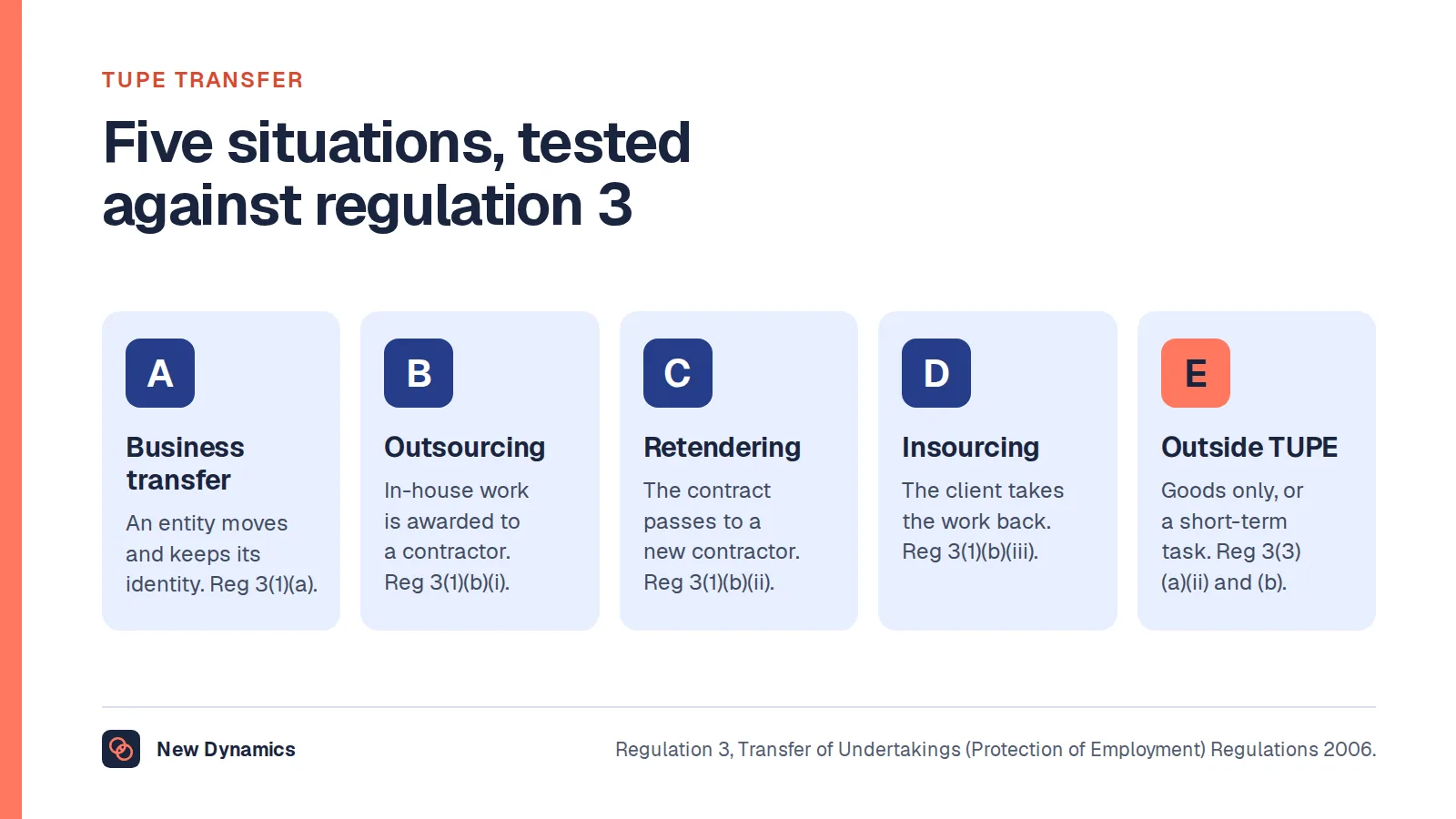
A dismissal where the sole or principal reason is a relevant transfer is automatically unfair under regulation 7(1) of the Transfer of Undertakings (Protection of Employment) Regulations 2006. Where the reason is instead "an economic, technical or organisational reason entailing changes in the workforce", regulation 7(3)(b) pushes it back into the ordinary section 98(4) test.
But regulation 7 is not in the section 108(3) list, and regulation 7(6) says so expressly: paragraph (1) "shall not apply in relation to a dismissal of an employee if the application of section 94 of the 1996 Act to the dismissal of the employee is excluded by or under any provision of the 1996 Act". Section 108 is such a provision. So a transfer-related dismissal is automatically unfair in reason and still needs the ordinary qualifying service to be claimed at all. Our post on a TUPE transfer covers the wider duties.
Where the compensation cap falls away
Most unfair dismissal compensation is capped. Section 124(1ZA) sets the limit on the compensatory award at the lower of "£123,543" and "52 multiplied by a week's pay of the person concerned". That figure was substituted on 6 April 2026 by the Employment Rights (Increase of Limits) Order 2026, SI 2026/310, which raised it from £118,223 and states that it "comes into force on 6th April 2026".
Section 124(1A) is the carve-out, and it is short: subsection (1) "shall not apply to compensation awarded, or a compensatory award made, to a person in a case where he is regarded as unfairly dismissed by virtue of section 100, 103A, 105(3) or 105(6A)". In plain terms, health and safety dismissals, protected disclosure dismissals, and redundancy selections on either of those two grounds. Nothing else. GOV.UK says the same thing from the employer's side: there is a limit on an unfair dismissal award "apart from in cases relating to" health and safety and whistleblowing.
Two other money rules sit alongside it. Section 156(1) of the 1992 Act sets a minimum basic award of "£9,157" where a dismissal is unfair by virtue of section 152(1) or 153, raised from £8,763 by the same Order on 6 April 2026. And section 128 of the 1996 Act allows interim relief, an order continuing the contract until the hearing, but only for dismissals under sections 100(1)(a) and (b), 101A(1)(d), 102(1), 103, 103A and 104F of the 1996 Act, or under paragraph 161(2) of Schedule A1 to the 1992 Act, and only on an application presented "before the end of the period of seven days immediately following the effective date of termination". Seven days is the shortest clock in this area. For figures across the wider HR picture, see our statistics hub.
No qualifying period is not the same as automatically unfair
These two ideas get welded together, and they are different. Section 108(4) removes the qualifying period where the reason "is, or relates to, the employee's political opinions or affiliation". Section 108(5) does the same where the reason "is, or is connected with, the employee's membership of a reserve force". Neither makes the dismissal unfair. The employee can bring the claim from day one, and then the ordinary reasonableness test under section 98 applies as normal.
GOV.UK states the position on political opinion directly: "It is not automatically unfair to dismiss someone because of their political beliefs or political groups they belong to, but a tribunal might find this unfair."
What is in force in 2026, and what is not
Guidance in this area is ageing badly, so check dates on anything you read.
The qualifying period is still two years. Section 25 of the Employment Rights Act 2025 amends section 108 so that "for 'two years' substitute 'six months'". It is six months, not day one, and a day-one unfair dismissal right is not current law. Section 25 was not in force at Royal Assent. The Employment Rights Act 2025 (Commencement No. 4 and Transitional and Saving Provisions) Regulations 2026, SI 2026/559, made on 26 May 2026, bring section 25 into force "on 1st January 2027", with regulation 4 keying it to the effective date of termination: the amendments "do not have effect in any case where the effective date of termination falls before 1st January 2027". GOV.UK reflects it: "From 1 January 2027, most employees will be able to claim unfair dismissal after 6 months."
Section 25(3) also omits section 124 entirely from the same date, so the compensatory award cap goes for every unfair dismissal claim where the effective date of termination falls on or after 1 January 2027. Until then the section 124(1A) carve-out above still does the work.
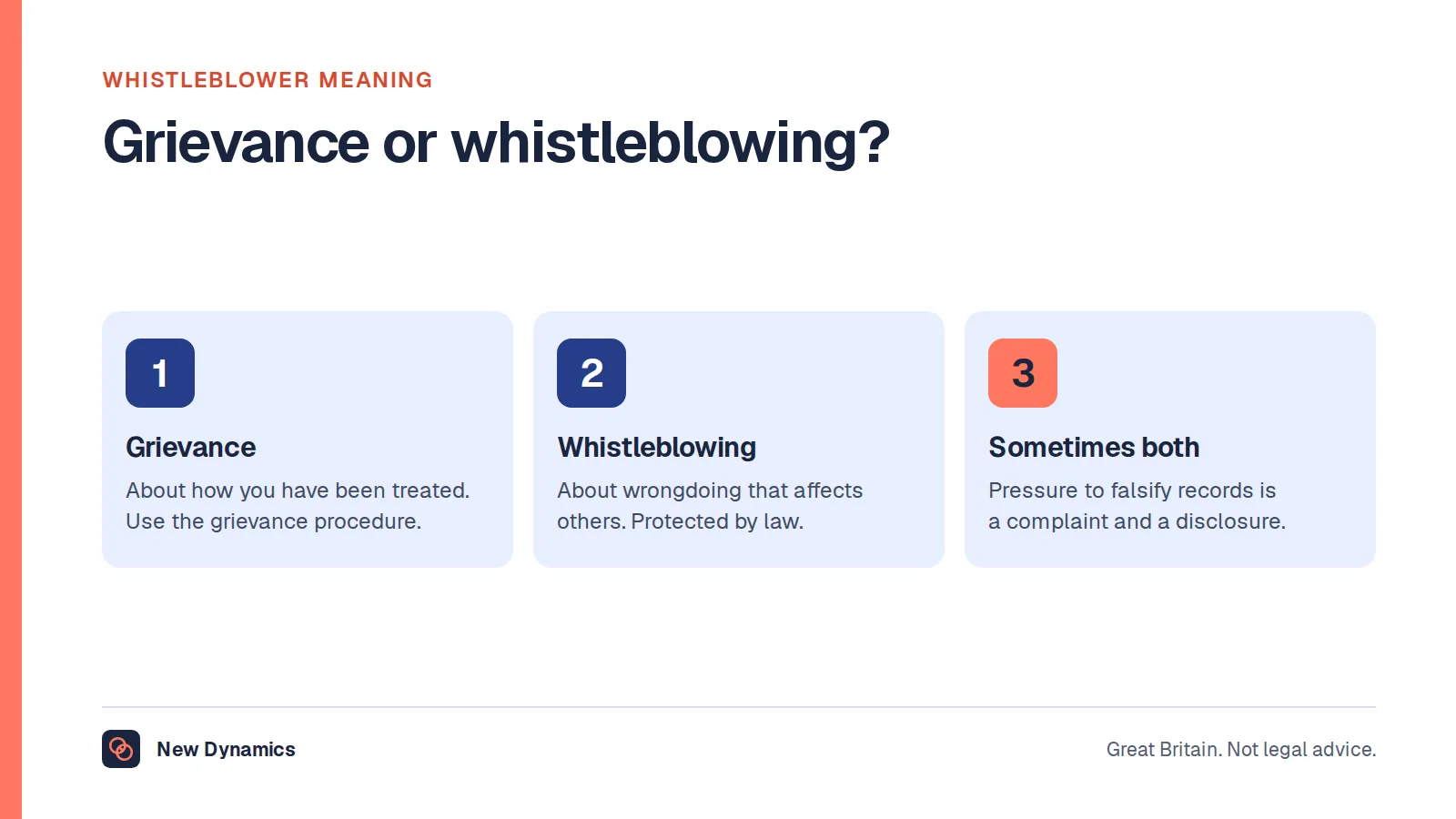
Whistleblowing now covers sexual harassment. Section 23(2) of the 2025 Act inserted a new paragraph into the definition of a qualifying disclosure in section 43B(1) of the 1996 Act: "(da) that sexual harassment has occurred, is occurring or is likely to occur". Section 23 came into force on 6 April 2026 by SI 2026/323, and section 23(3) adds a definition tied to section 26(2) of the Equality Act 2010. A dismissal for raising sexual harassment can therefore be a section 103A dismissal, with no qualifying period and no cap. Our post on the meaning of whistleblower covers the disclosure rules.
The twelve-week limit on industrial action protection has gone. Section 77(3) of the 2025 Act omitted section 238A(2)(b) and subsections (3) to (7D) of the 1992 Act with effect from 18 February 2026 by SI 2026/3. Dismissal for taking protected industrial action is now automatically unfair under section 238A(2)(a) without a protected period. This is worth flagging because GOV.UK's employee-facing page on unfair and constructive dismissal still lists among the situations where dismissal is likely to be unfair that you "took part in legal industrial action that lasted 12 weeks or less". That page is recorded as last updated on 7 April 2020. The amended text of the 1992 Act at legislation.gov.uk governs, and the twelve-week qualification is no longer in the statute.
Fire and rehire is drafted but not yet operative. Section 28 of the 2025 Act inserts a new section 104I into the 1996 Act, making dismissal for refusing a "restricted variation" of contract automatically unfair. The section appears in the live text of the 1996 Act, but only because section 28(3) has been commenced for the narrow purpose of making regulations: SI 2026/3 commenced it "for the purposes of making regulations under sections 104I, 104J(5)(f) and 104K(6)(d) of the 1996 Act", and SI 2026/323 commenced it "for the purposes of making regulations under section 104K(7)(d) of the 1996 Act". Section 28(5), which would add paragraphs (go) and (gp) to section 108(3), has not been commenced at all. So section 104I is not yet a right an employee can claim. Section 26 of the 2025 Act, on dismissal during pregnancy, is in force from 6 January 2026 but is a power to make regulations rather than a new category in itself.
The practical consequence for an employer
A dismissal can be procedurally immaculate and still lose, which reverses the usual order of work. Settle the reason before you build the process.

- Name the reason in writing, before the hearing. If it touches any row in the table above, the reasonableness of the process will not be the issue at tribunal.
- Check what the employee has raised recently. A pay query, a safety concern, a flexible working request, a complaint about hours, a disclosure. Section 104 does not require them to have been right.
- Ignore the length of service as a comfort. Eleven months is no answer in any of these categories.
- Look at the selection criteria in a redundancy. Section 105 makes selection on any of these grounds automatically unfair even where the redundancy itself is genuine.
- Record who decided and on what evidence. Where reason is the whole case, the contemporaneous record is the defence.
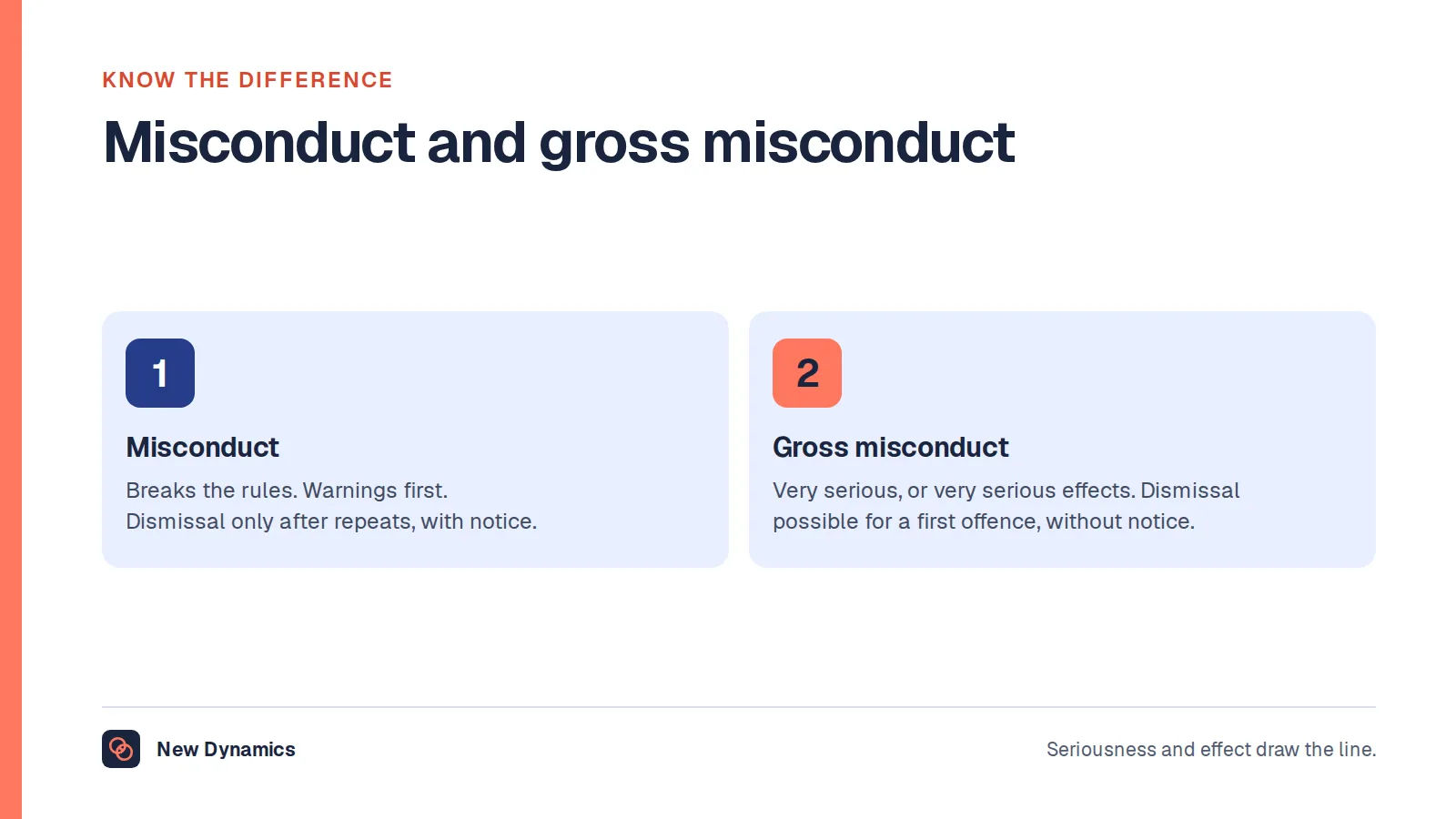
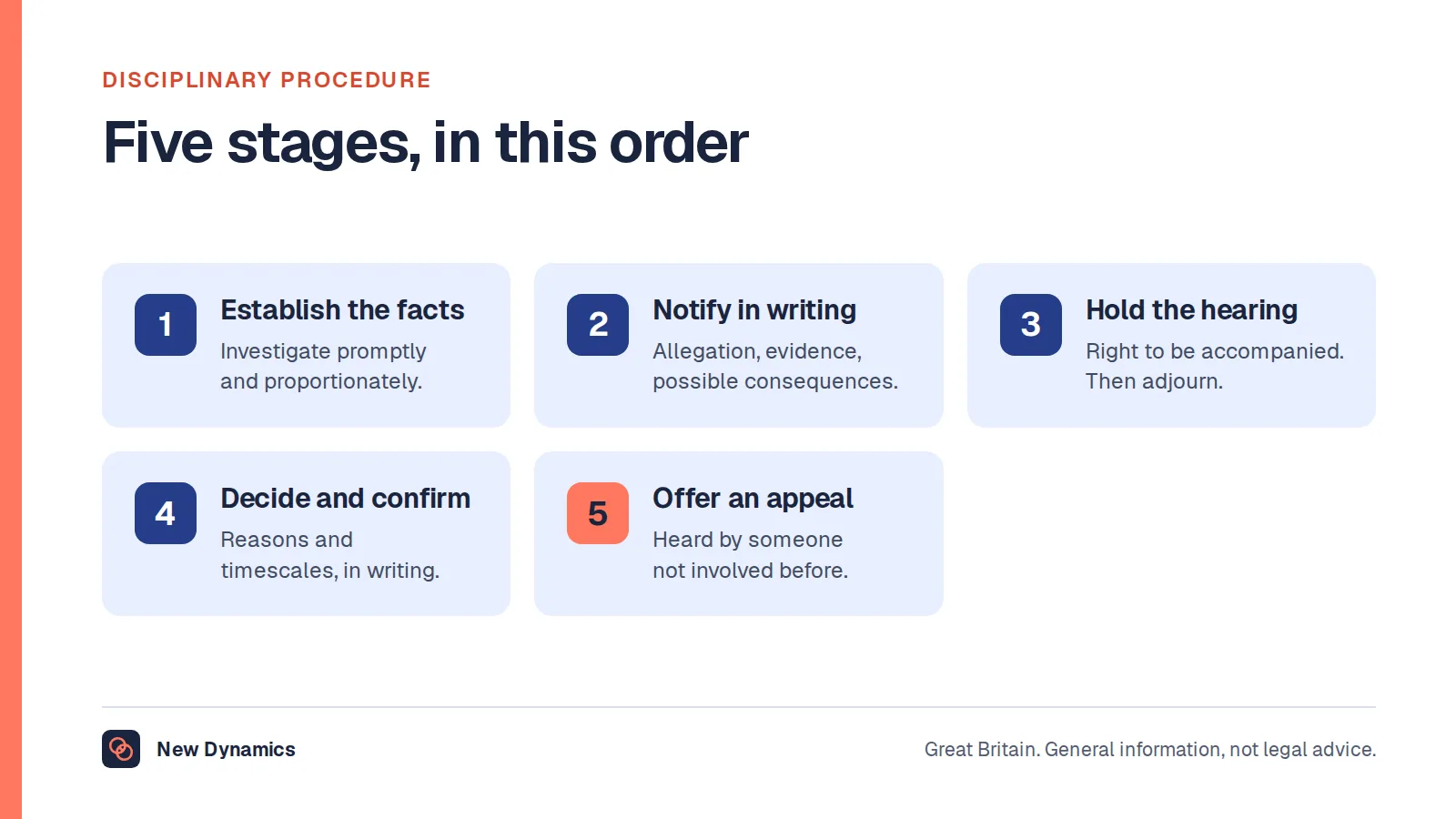
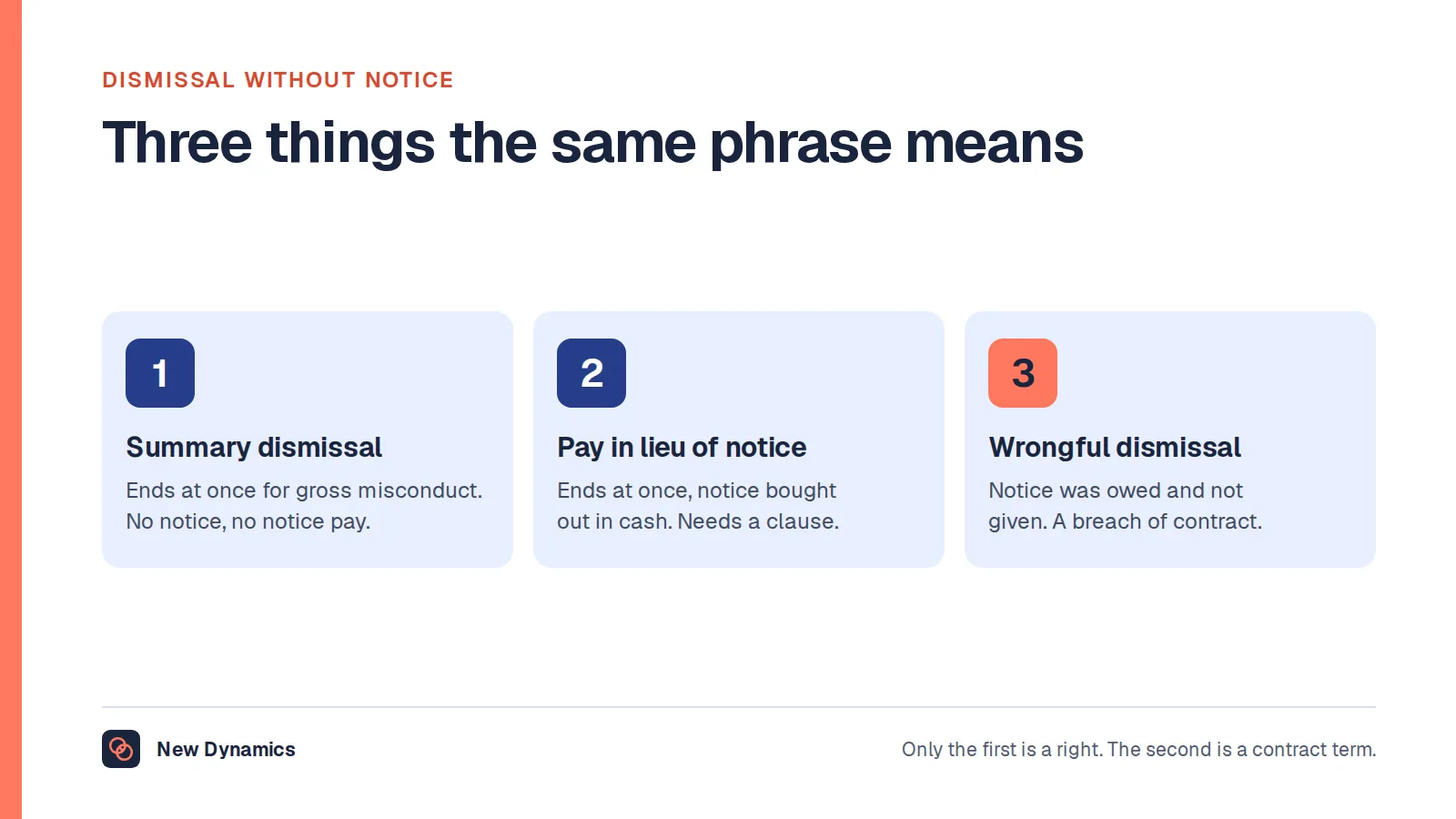
Where the reason is clean, the ordinary rules apply and the process is what decides the case. Our guides to a disciplinary procedure and to gross misconduct cover that, and our post on dismissal without notice covers what is owed on the way out.
Frequently asked questions
What is automatic unfair dismissal?
It is a dismissal for a reason that the Employment Rights Act 1996 and related legislation treat as unfair without asking whether the employer acted reasonably. Sections 98B to 105 of the 1996 Act each say the employee "shall be regarded for the purposes of this Part as unfairly dismissed" once the reason is proved. GOV.UK puts it as: even if you have acted reasonably, some reasons for dismissal are classed automatically unfair.
Do you need two years' service to claim automatic unfair dismissal?
Usually no. Section 108(3) of the 1996 Act lists the cases where the two-year qualifying period in section 108(1) does not apply, covering sections 98B, 99, 100, 101, 101A, 102, 103, 103A, 104, 104A to 104G and 105, plus the part-time, fixed-term and agency worker regulations. Section 154 of the 1992 Act does the same for union-related dismissals.
Which automatically unfair dismissals still need a qualifying period?
The main one is TUPE. Regulation 7 of the 2006 Regulations is not in the section 108(3) list, and regulation 7(6) states that regulation 7(1) does not apply where section 94 of the 1996 Act is excluded by another provision of that Act. So a dismissal whose sole or principal reason is a relevant transfer still needs two years' continuous service to be claimed.
Is unfair dismissal compensation capped in an automatically unfair case?
In most of them, yes. Section 124(1ZA) caps the compensatory award at the lower of £123,543 and 52 weeks' pay, a figure substituted on 6 April 2026 by SI 2026/310. Section 124(1A) disapplies that cap only for dismissals under sections 100, 103A, 105(3) and 105(6A), which means health and safety and protected disclosure cases.
Is there a day-one right to claim unfair dismissal now?
No. Section 108(1) still requires two years. Section 25 of the Employment Rights Act 2025 replaces "two years" with "six months", and SI 2026/559 brings it into force on 1 January 2027, with the change applying by reference to the effective date of termination. Six months is not day one, and the automatic categories already need no qualifying service at all.
Can a dismissal be fair in process and still automatically unfair?
Yes, and that is the point of the rule. The automatic sections do not contain the reasonableness test in section 98(4), so an investigation, a hearing and an appeal do not answer the claim. Where the reason is on the list, the only real argument available to the employer is that the reason was something else.
Your next step
Do one thing this week. Take your last three dismissals and write the real reason for each in one sentence, then check that sentence against the table above. If the sentence names a pay query, a safety concern, a leave request or a complaint, the file needs a second look before anything else. If you are an employee who has been dismissed with under two years' service, write down what you raised with your employer in the weeks before, with dates, and check section 108(3) before accepting that you have no claim.
For dismissal and disciplinary rules written down in one place, read and download our employee handbook guide. The guide is free to read, and the PDF uses our short download form.
Want the reason, the evidence and the decision for every leaver recorded as it happens, with dates and approvals attached? Book a New Dynamics demo and bring your current process. You can also email contact@new-dynamics.com.