TL;DR
- A career assessment test is a questionnaire that helps you to understand your interests, skills, values and preferences, and suggests kinds of work that may suit them. It is a starting point for exploration.
- There are no right or wrong answers, and you cannot pass or fail. That makes it different from the aptitude and psychometric tests that employers use to select candidates.
- Use the results well: choose a reputable tool, answer honestly, read the patterns, check them against real evidence, research the options and talk them through with an adviser or your manager.
“What job would suit me?” is one of the hardest questions to answer from the inside. People ask it at sixteen, at graduation, after a redundancy and, quite often, at forty on a Sunday evening. A career assessment test is one of the few tools that offers a structured way to begin.
This article explains what a career assessment test is, what it measures, how it differs from the tests that employers use in hiring, where to find reputable free tools, what to ask before you take one and how to turn the results into a plan. Some people call them career assessment exams, but nobody passes or fails.
Career conversations work best when they happen regularly and rest on evidence. See how New Dynamics performance reviews bring goals, feedback and development into one fair discussion.
What is a career assessment test?
A career assessment test is a questionnaire about you. It asks what you enjoy, what you are good at and what matters to you. It then reflects the pattern back, usually with a list of job families or careers that match it.
The UK government's National Careers Service describes its own skills assessment in terms that fit almost every tool of this kind: “There are no right or wrong answers when doing a skills assessment. It's a way to understand yourself better and help you think about your next step.”
It lists three reasons to take one. An assessment can help you to:
- find out what motivates you;
- work out careers that do not interest you;
- see what you can do with the skills you have.
The second reason is underrated. Ruling options out with confidence is as useful as ruling them in.
What a career assessment measures: four things
Northern Ireland's official careers guidance, published on nidirect, advises people who are choosing or changing career to begin with self-awareness. “Before looking at specific careers,” it says, “you should spend time thinking about what motivates you as a person.” It names four things to think about.
- Interests. The subjects and activities that hold your attention. nidirect calls looking at the broad areas of work that interest you “an important first step”.
- Skills. What you can do well, including transferable skills. nidirect defines these as “abilities, aptitudes and qualities that can be transferred from one job or activity to another”, such as communication, numeracy and problem-solving.
- Values. What you need work to give you or stand for: security, independence, helping others, status, creativity.
- Preferences. The conditions in which you work best: indoors or out, alone or in a team, steady or varied, and practical matters such as location and hours.
nidirect explains the purpose: “This will help you build a picture of your ideal job and explore which careers match it most closely.”
Most career assessments measure one or more of these four. Some add personality. Read the description of a tool to see which it covers, because an interest questionnaire and a skills audit answer different questions.

Career assessments and selection tests are different
The word “test” causes confusion. Employers also use tests, and those are a different thing.
| Kind of test | Who uses it and why | Right and wrong answers? |
|---|---|---|
| Career assessment | You, to explore what work might suit you | No |
| Aptitude test | Employers and trainers, to judge ability for a kind of work | Usually yes, and often timed |
| Psychometric test | Employers, as one part of a selection decision | Depends on the test |
| Skills test or work sample | Employers, to see whether you can do a task | Yes |
The Cambridge Dictionary defines an aptitude test as “a test to find out if someone has a natural ability for a particular type of work”. It describes a psychometric test as one “designed to show someone's personality, mental ability, opinions, etc.”, often used by companies when they decide whether to employ someone.
Standards matter for tests of this kind. In the UK, the British Psychological Society's Psychological Testing Centre “provides information and services relating to standards in tests and testing for test takers, test users, test developers and members of the public”. It offers qualifications in test use and independent reviews of tests used in occupational and educational settings.
If an employer asks you to take a test, it is a selection test. Prepare for it. If you choose to take one to understand yourself, it is a career assessment. Relax, and be honest.
Where to take a career assessment
Start with free tools from official or non-profit services. They have no reason to sell you anything.
- National Careers Service (England). Its Discover your skills and careers assessment “contains 40 multiple-choice questions” and “takes 5 to 10 minutes to complete”. You get a reference code so that you can come back later. The service has announced that it is changing from 1 October 2026, so check its website for the current arrangements.
- Prospects (UK, run by Jisc). Its Career Planner is aimed at students and graduates. Prospects says that it “matches your skills, motivations and desires” to careers, and suggests taking the results to a university or college careers adviser.
- Careers services in Scotland, Wales and Northern Ireland publish their own tools and offer guidance interviews. nidirect lists the Northern Ireland service.
- Your school, college or university careers service, which may give free access to licensed questionnaires with an adviser to interpret them.
- Your employer. Some organisations offer assessments as part of development programmes.
Outside the UK, look first at the public employment or careers service in your own country.
Both services make the same point about what to do next. The National Careers Service says: “You might want to speak about your results with a careers adviser as they will know about local opportunities.”
Five questions to ask before you take a test
Many career quizzes exist, and quality varies widely. Ask five questions.
- Who made it? A public careers service, a university or a recognised test publisher is a better sign than an anonymous website.
- What does it measure? Interests, skills, values, preferences or personality? A good tool says so plainly.
- What is the evidence? Serious publishers explain how the questionnaire was developed and tested. In the UK, the Psychological Testing Centre publishes independent test reviews.
- What happens to my data? Check whether you must register, what is stored and whether your answers are shared or used for marketing.
- What does it cost? Be wary of a free quiz that charges for the results.

How to use your results: six steps
- Choose a reputable tool, using the five questions above.
- Answer honestly. Describe yourself as you are, not as you think you should be. Nobody is marking it.
- Read the patterns, not the job titles. A suggestion of “park ranger” may simply mean that you like practical, outdoor, independent work. The pattern transfers to many jobs.
- Check against evidence. Compare the results with your own history: the tasks that absorbed you, the feedback that you have had and the work that drained you. Our guide to strengths and weaknesses can help you to describe them.
- Research the options. nidirect calls this opportunity awareness: knowing what careers exist, “what experience, skills and qualities are required” and how competitive they are. Talk to people who do the jobs.
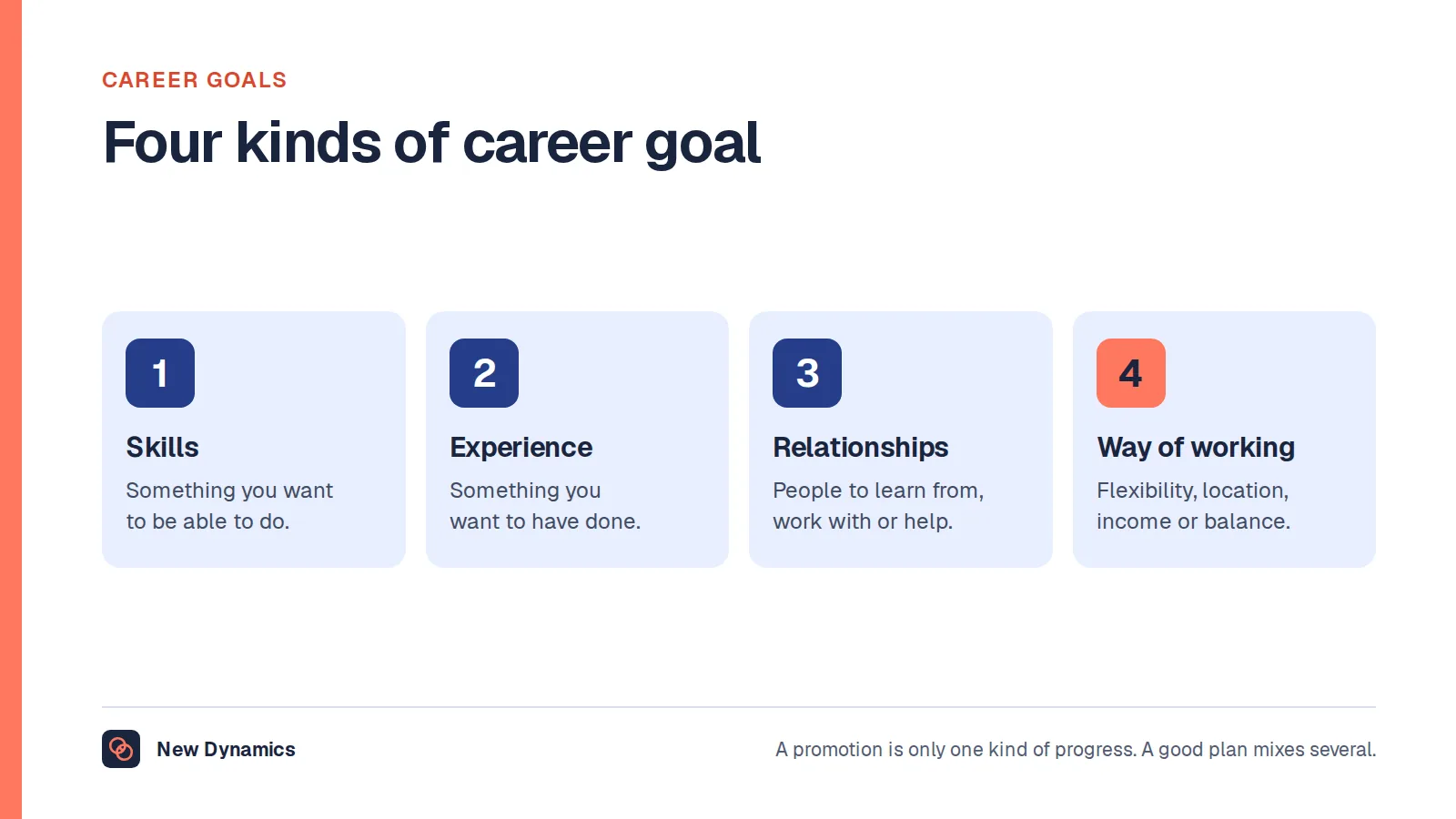
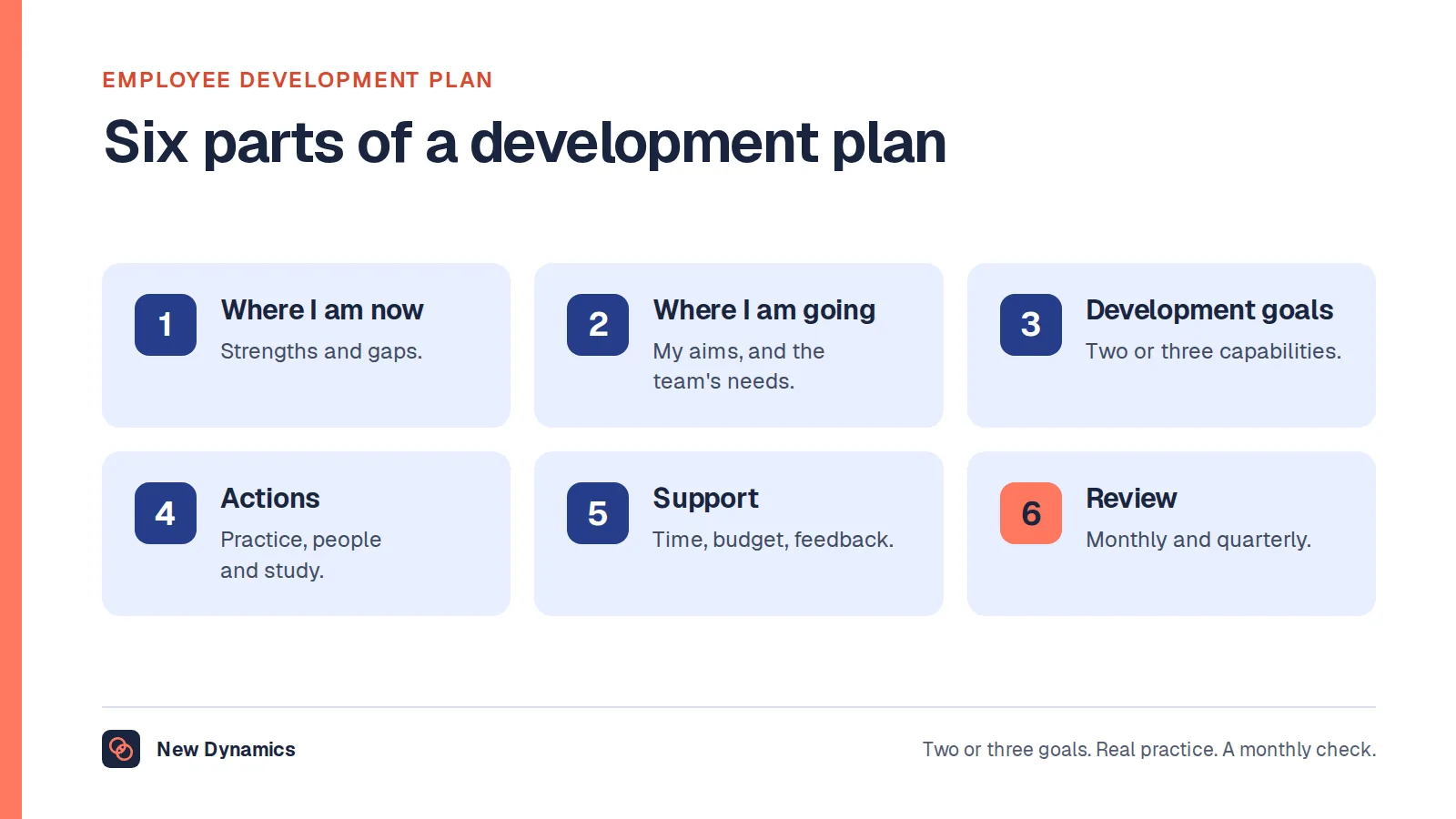
- Talk it through, then test it. Discuss the results with a careers adviser, a mentor or your manager. Then try a small experiment: a project, a short course, a day of shadowing or some volunteering. Turn what you learn into career goals and a short development plan.

For managers and HR teams
Career assessments have a place at work, used with care.
- Use them in development, not selection. A self-report interest questionnaire was not designed to choose between candidates. Selection tests need evidence that they predict performance in the job, and trained users.
- Keep results in the employee's hands. The person decides what to share. A career conversation built on trust produces more than a report in a file.
- Follow the test with a conversation. Ask what surprised them, what rang true and what they would like to try. Our one-to-one meeting questions include a set on development.
- Offer experiments. Stretch projects, shadowing and short secondments let people test an interest cheaply.
- Accept the answer. Sometimes the honest conclusion is that a person's future lies in another team or another employer. People remember how their employer responded.
Common mistakes
Treating the result as a verdict. A questionnaire cannot know your circumstances, your local job market or how much you are willing to retrain.
Taking one test once. Interests and values shift with experience. Repeat the exercise at turning points.
Answering as your ideal self. Aspirational answers produce suggestions for somebody else.
Skipping the research. A match on paper says nothing about pay, entry routes or competition.
Paying for what is free. Public services offer sound tools at no cost.
Doing it alone. The value of an assessment rises when you talk the results through with someone who knows the labour market.
Frequently asked questions
What is a career assessment test?
A career assessment test is a questionnaire that explores your interests, skills, values and preferences, and suggests kinds of work that may match them. There are no right or wrong answers. It is a starting point for exploring careers.
Are career assessment tests accurate?
A well-made assessment describes your interests and preferences consistently, but it cannot predict which job will make you happy. Treat the results as ideas to investigate, and check them against your own experience, research and advice.
Is there a free career assessment test?
Yes. In England, the National Careers Service offers a free assessment of 40 multiple-choice questions that takes 5 to 10 minutes. Prospects offers a free Career Planner for students and graduates. Careers services elsewhere in the UK and in other countries publish their own.
What is the difference between a career assessment and an aptitude test?
A career assessment helps you to explore what work might suit you, and has no right or wrong answers. An aptitude test measures ability for a particular type of work. It usually has correct answers and a time limit, and employers use it in selection.
How long does a career assessment take?
It depends on the tool. The National Careers Service assessment takes 5 to 10 minutes. Fuller assessments that cover skills, values and personality take longer. Allow more time afterwards for reading the results and researching the suggestions.
Can a career test tell me what job to do?
No. It can suggest areas of work that fit your answers, and it can help you to rule options out. The decision also depends on the job market, pay, training routes, your circumstances and what you discover when you try the work.
Your next step: take one, and talk about it
- Choose one free assessment from an official service, and set aside twenty quiet minutes.
- Write down the three patterns that ring true, and one that surprises you.
- Book a conversation with a careers adviser, a mentor or your manager.
- Agree one small experiment for the next month.
For a structured approach to growing careers inside an organisation, read and download our career development guide. The guide is free to read, and the PDF uses our short download form.
Want development goals and career conversations to be part of everyday management? Book a New Dynamics demo and bring your current approach. You can also email contact@new-dynamics.com.