TL;DR
- A carrier is whoever or whatever carries something: risk, goods, calls, or a copy of a gene. Each department uses the word for its own thing, which is why the same question gets four different answers.
- On a benefits policy, the carrier is the insurer. In UK law that firm is the one effecting and carrying out the contract of insurance as principal, which is a different permission from the one a broker holds.
- In transport, the dividing line is whether goods move for hire or reward. In telecoms, carrier pre select is largely historical: Ofcom's current general conditions still define it, but no condition in that document requires anyone to offer it.
Somebody forwards an email asking you to "confirm the carrier". If you work in HR, you reach for the medical cover. If you work in operations, you think of a lorry. If you work in IT, you think of the phone lines. All three of you are right, and only one of you is answering the question that was asked.
This article gives the meaning of carrier in each place an HR or operations reader actually meets it, with the official source for each, and says plainly where a sense is historical rather than current.
Most carrier questions arrive in week one, when a new starter asks who covers them. See how New Dynamics onboarding puts cover, paperwork and first conversations into one visible path.
Carrier definition: the thread through every sense
Strip away the industry and the word is simple. A carrier carries something on behalf of someone else. What changes between senses is only what is being carried.

- An insurance carrier carries risk. You pay a premium; the carrier accepts the possibility of having to pay a claim.
- A transport carrier carries goods or people. You pay a rate; the carrier moves the load and takes responsibility for it while it is in their hands.
- A telecoms carrier carries calls and data. You pay for a service; the carrier moves the traffic across a network.
- A genetic carrier carries a gene variant. Nobody pays anything. The word is borrowed from the same root and means something entirely clinical.
So the fastest way to settle "what is a carrier" in any particular email is to ask what is being carried. Everything else follows from that. The plural causes needless confusion too: carriers is simply more than one of them, and in insurance it usually means the panel of insurers a broker can approach rather than anything more technical.
The rest of this article takes the four senses in the order a benefits or operations reader is likely to need them.
Insurance carrier: the firm that underwrites and pays
This is the sense behind most of the searches. When a benefits document names "the carrier", it means the insurer: the firm that underwrites the policy, sets the terms and pays valid claims out of its own balance sheet.
UK law describes that firm by what it does rather than by the label. The Financial Services and Markets Act 2000 (Regulated Activities) Order 2001 sets out, at article 10, two specified kinds of activity:
"Effecting a contract of insurance as principal is a specified kind of activity."
"Carrying out a contract of insurance as principal is a specified kind of activity."
Two words in there do the work. Effecting is entering into the contract. Carrying out is performing it afterwards, including paying the claims. And as principal means on its own account, not on behalf of somebody else. That last phrase is the whole distinction between a carrier and everyone else in the chain. The carrier is the party whose own money is at risk.
This is general information about the position in the United Kingdom, not legal or regulatory advice, and the law changes.
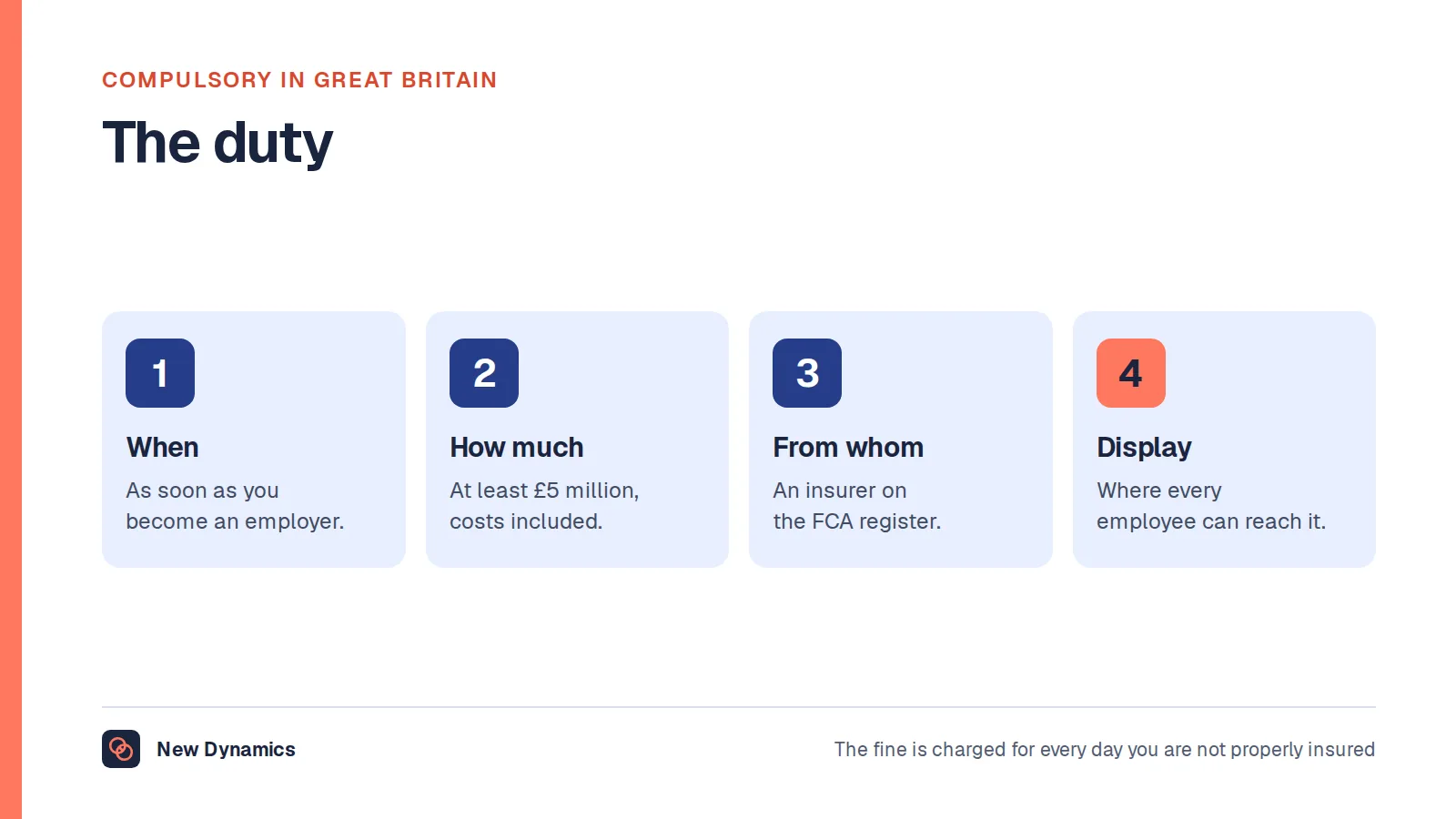
Our post on employers' liability insurance covers the one policy a British employer is legally required to hold, and why the certificate matters.
Carrier, broker and third party administrator
Three different firms can appear on the same benefits arrangement, and a renewal email will happily refer to all three as "the provider". Separating them saves a great deal of time.

The regulator draws the line the same way the law does. In a Freedom of Information response released on 18 December 2023, the Financial Conduct Authority explained how its own records distinguish the two groups: "Firms with active permissions listed under the heading 'Insurance business' are likely to be insurers or reinsurers, while those with active permissions under the heading 'Insurance distribution' are likely to be intermediaries."
The permissions themselves are the giveaway. Under that FCA response, the Insurance business heading covers effecting contracts of insurance and carrying out contracts of insurance. The Insurance distribution heading covers advising on investments for non-investment insurance contracts, arranging deals in investments, making arrangements with a view to transactions in investments, dealing in investments as agent, and assisting in the administration and performance of a contract of insurance.
Read that second list again and you can see the broker and the administrator sitting inside it. Arranging and advising is broking. Assisting in the administration and performance of a contract is scheme administration. Neither is underwriting.
The FCA also adds a caution worth repeating, because it is the reason you cannot simply look a name up and read off a label. It says it "is unable to confirm whether a firm is an insurer / reinsurer or an intermediary beyond specifying which category of permission they currently have", since firms in other sectors can hold insurance distribution permissions too.
So in practice:
- The carrier holds the risk. If a claim is valid, this is the balance sheet it is paid from, and this is the firm whose wording decides whether a claim is valid.
- The broker arranges the cover. It goes to the market for you, compares terms, explains the exclusions and runs the renewal. It does not pay claims.
- The third party administrator runs the scheme day to day: joiners, leavers, membership data, claims handling and member queries. It carries none of the risk itself.
Why this matters when the phone rings: a question about whether something is covered is a question for the carrier's wording. A question about getting better terms at renewal is a question for the broker. A question about why a leaver is still on the membership list is a question for the administrator. Sending each one to the wrong place is how a simple query takes three weeks.
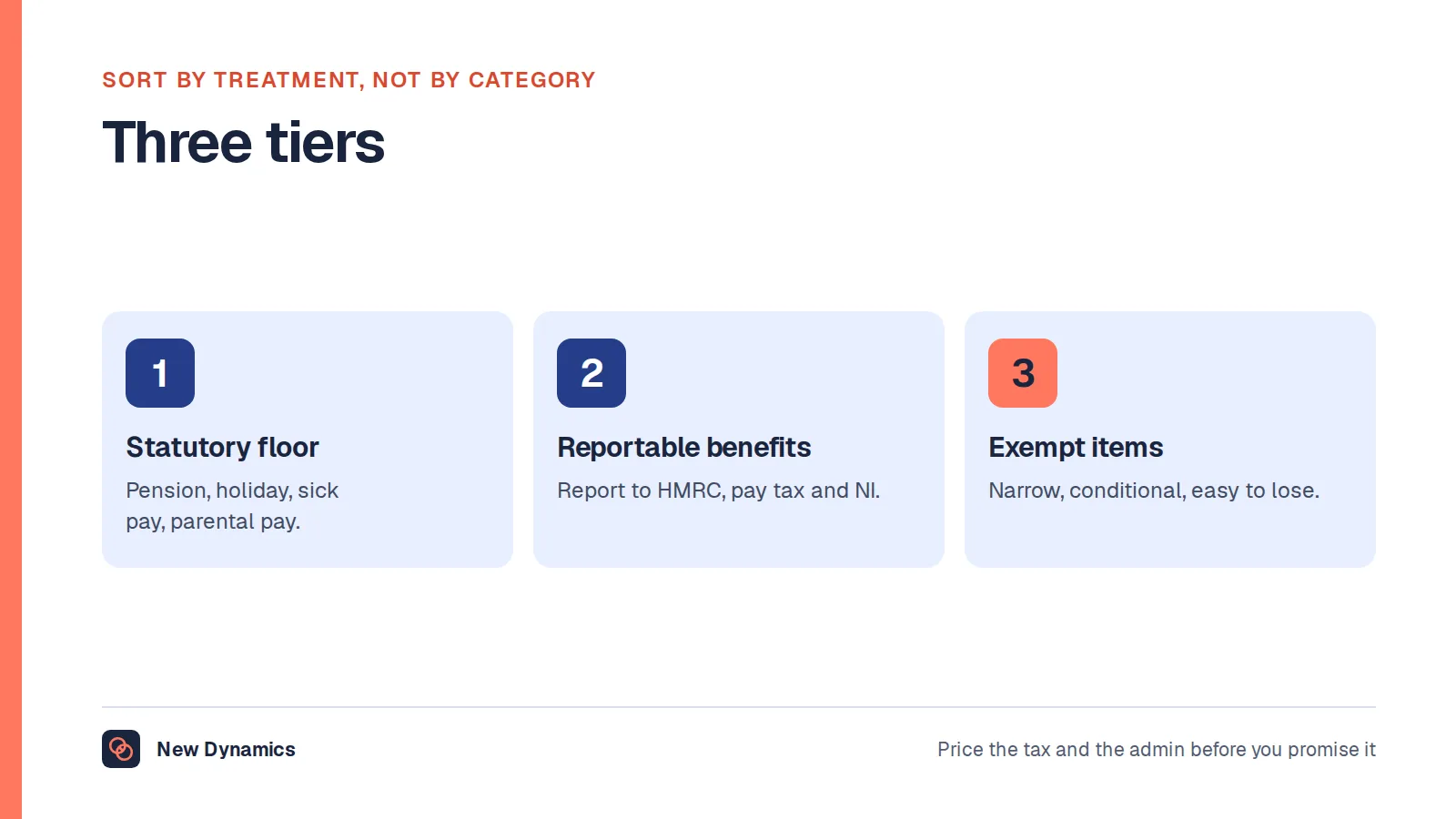
One more practical point. Benefits are promises your organisation makes in writing, and the carrier can change the terms at renewal. If your handbook describes a benefit in detail, check that the description still matches the policy each year. Our post on fringe benefits covers the reporting side of the same arrangements, and the employee benefits guide covers what has to be offered and what is optional.
New Dynamics does not recommend, rank or compare insurers, and this article names none. Your broker is the right route to the market.
Common carrier in transport and logistics
Move to the loading bay and the word changes owner. Here a carrier is a business that moves goods or people, and the interesting question is who it will move them for.

A common carrier is the traditional term for a business that holds itself out as carrying for anyone who pays, within the limits of what it can lawfully and practically handle. It is a common law idea rather than a phrase lifted from a single statute, and it carries consequences: a business that offers carriage to the public generally has historically been held to a stricter responsibility for the goods in its care than one that negotiates each job separately.
A contract carrier also carries for payment, but only for customers it has agreed terms with. It is not offering itself to the public at large. Rates, liability, service levels and routes are set in the contract.
A private fleet is not in the carriage business at all. It is a company's own vehicles moving the company's own goods as part of its own trade.
In Great Britain, operator licensing follows that same distinction almost word for word. Section 3 of the Goods Vehicles (Licensing of Operators) Act 1995 describes two licence types:
A standard licence, in the Act's words, is "an operator's licence under which a goods vehicle may be used on a road for the carriage of goods" either "for hire or reward" or "for or in connection with any trade or business carried on by the holder of the licence". The restricted licence is defined by exclusion:
"A restricted licence is an operator's licence under which a goods vehicle may be used on a road for the carriage of goods for or in connection with any trade or business carried on by the holder of the licence, other than that of carrying goods for hire or reward."
The deciding phrase is hire or reward. Carry other people's goods for payment and you are in standard licence territory, whether you call yourself a common carrier or a contract carrier. Carry only your own goods in connection with your own business and a restricted licence is the one that fits. The 1995 Act applies to Great Britain, and Northern Ireland has its own operator licensing arrangements. Again, general information rather than legal advice; check the current position with the traffic commissioner's published guidance or your own adviser.
The same vocabulary turns up in passenger transport, where an operator carrying passengers for hire or reward needs its own form of licence, and in freight forwarding, where a forwarder may arrange carriage without being the carrier at all. That last one mirrors the broker and carrier split in insurance exactly: one party arranges, another performs.
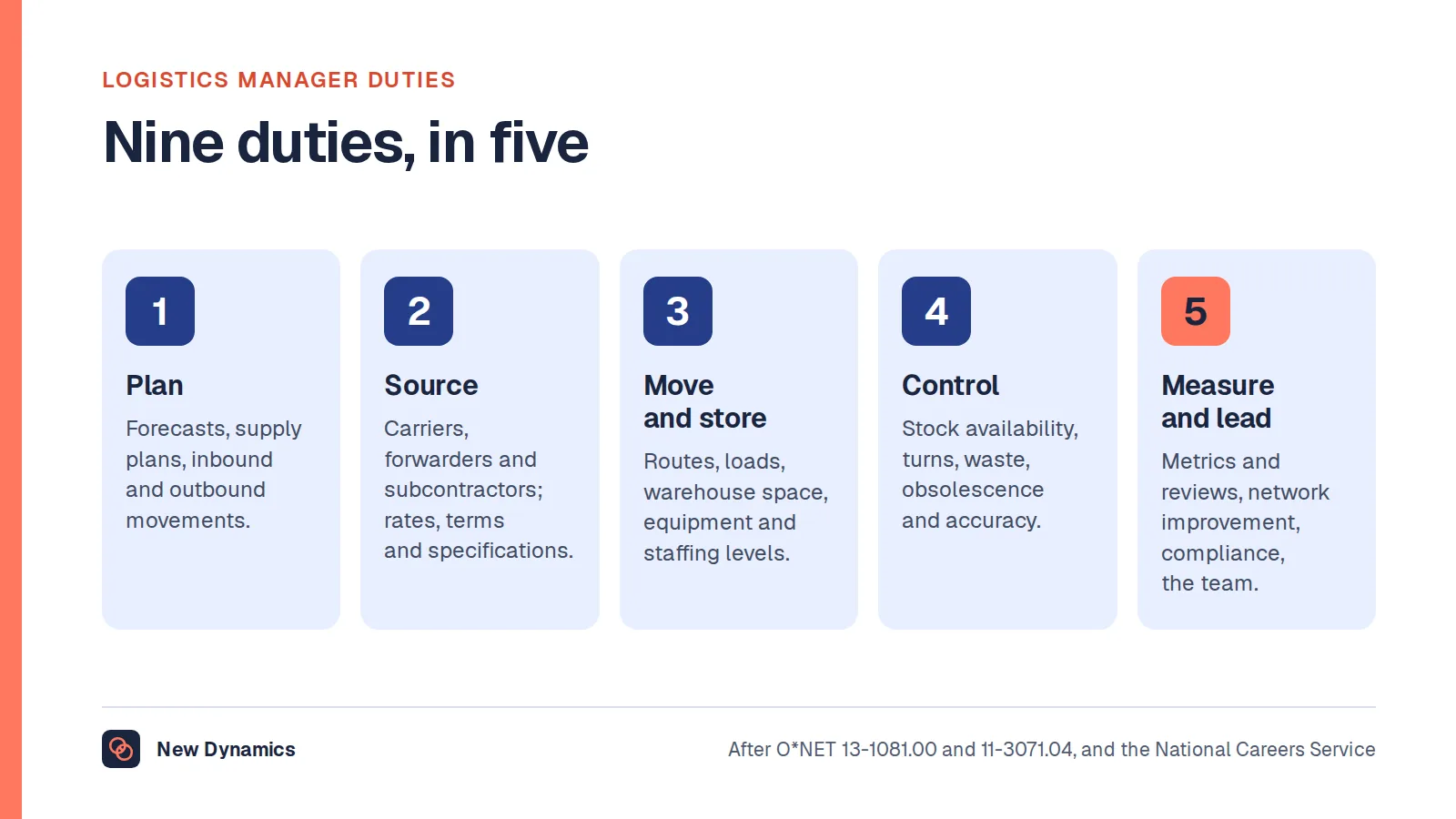
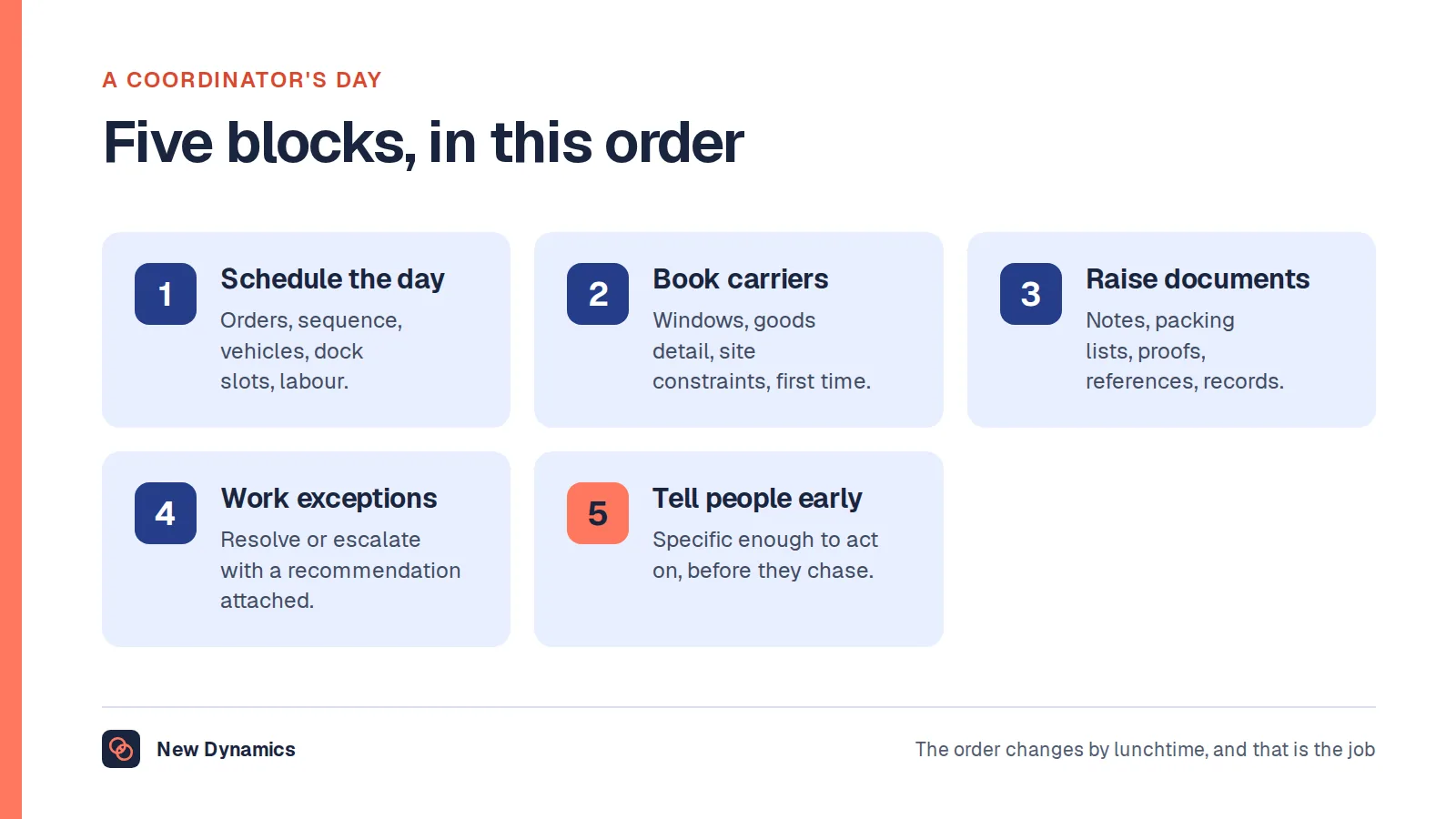
If you are writing or reviewing a role in this area, the duties follow from which of the three arrangements the business actually runs. Our logistics coordinator role post sets out the day to day work, and the logistics manager job description post covers the layer above it, including where a British operation needs a qualified transport manager.
Telecoms carrier, and what carrier pre select was
In telecoms, a carrier is an operator that carries calls or data over a network. The word is used loosely across the industry, and in the United Kingdom the regulatory vocabulary is usually "communications provider" rather than carrier.
Which brings us to the search that keeps appearing: what is carrier pre select.
Carrier pre selection, usually shortened to CPS, was an arrangement on fixed telephone lines. A customer kept their line with the operator that provided it, but arranged for their calls to be routed automatically to a different operator, without dialling an access code or prefix before every call. The point was to let a customer buy the line from one business and the calls from another.
Ofcom's definition is still on the books. The unofficial consolidated version of its General Conditions of Entitlement, with effect from 8 April 2026, includes this in the list of definitions:
"'Carrier Pre-Selection' or 'CPS' means a facility which allows a Customer of a Voice Communications Service to select a provider designated in advance to apply on every occasion where no other providers have been pre-selected for the use of a Telephone Number."
Now the honest part about its status. In the version of Ofcom's General Conditions of Entitlement that we opened, the phrase appears exactly once in the whole document, in that definitions list. No general condition in it requires a provider to offer the facility. A surviving definition is not the same thing as a live obligation.
So the fair way to describe carrier pre select is in the past tense. It was a facility of the analogue fixed line era, when the line and the calls were separable products and indirect access by dialling a prefix was the clumsier alternative. We could not confirm from Ofcom's own published material that it still operates as something a customer can buy today, and the shift of voice services onto broadband has removed much of the arrangement it was designed to solve. If you have met the phrase in a contract, an old invoice or a supplier's documentation, treat it as a legacy term and ask the provider directly what the current arrangement is.
One thing not to do: do not read "carrier pre select" as anything to do with insurance carriers or with a pre selected panel of providers. The phrase belongs to telephony and nowhere else.
Genetic carrier: a word collision, and a boundary
The fourth sense shares nothing with the other three except the word, and it is included here only because the searches collide.
The NHS Genomics Education Programme glossary defines a carrier as "An individual who has a genomic variant associated with a genetic condition, but does not have the condition themselves". The whole point of the term is that being a carrier and having a condition are different things.
This post is not medical information and is not medical advice. If a question about genetic carrier status matters to you or to someone in your team, the people to ask are a GP or a clinical genetics service, not an HR glossary. For an employer, the practical point is narrower and worth stating once: health information about an employee or their family is sensitive personal data, and it is not something to discuss, record or circulate because a word turned up in a search.
Which carrier is meant: three questions that settle it
When the word arrives without context, three questions resolve it in under a minute.
- What is being carried? Risk means insurance. Goods or passengers means transport. Calls or data means telecoms. A gene variant means a clinical conversation you should not be having at work.
- Who is the money moving between? If a premium is being paid, you are in insurance, and the next question is whether the firm named carries the risk or only arranges it. If a rate per load is being paid, you are in transport.
- Is this current or historical? Some carrier vocabulary is live and some is a hangover. Carrier pre select is the clearest example, so if a term sounds dated, check whether the arrangement still exists before you build a process around it.
If the answer is still unclear, say so and ask. "Which carrier do you mean, the insurer or the haulier?" is a short question that prevents a long mistake.
Frequently asked questions
What is a carrier?
Whoever or whatever carries something on behalf of someone else. In insurance it is the firm that underwrites a policy and pays claims. In transport it is a business that moves goods or people. In telecoms it is an operator that carries calls and data. In genetics it is a person with a gene variant who does not have the condition.
What is the difference between a carrier and a broker?
The carrier holds the risk and pays valid claims. The broker arranges the cover and advises on it. The FCA records insurers under permissions headed "Insurance business", which cover effecting and carrying out contracts of insurance, and intermediaries under permissions headed "Insurance distribution", which cover advising, arranging and assisting with administration.
What is a common carrier?
A business that offers to carry goods or people for anyone who pays, within the limits of what it can lawfully handle, rather than only for customers it has negotiated separate terms with. A contract carrier also carries for payment but only for named customers, and a private fleet carries only its operator's own goods.
What is carrier pre select?
Carrier pre selection, or CPS, was an arrangement that let a fixed line customer have calls routed automatically to a different operator from the one providing the line, without dialling a prefix. Ofcom's current general conditions still define it, but no condition in that document requires anyone to offer it, so treat it as a largely historical term.
Do I need to know who my benefits carrier is?
Yes, for two reasons. Questions about whether something is covered are answered by the carrier's policy wording, and the carrier can change the terms at renewal. Knowing which firm underwrites each benefit, and which one only arranges or administers it, means queries reach the right place first time.
Your next step: write down who is who
- List every insured benefit you offer and, beside each, name the carrier, the broker and the administrator. Leave a blank where you do not know, then fill the blanks.
- Check the renewal dates and who owns each conversation internally.
- Compare your handbook wording with the current policy wording for every benefit you describe in detail.
- Fix the vocabulary in internal documents. If a document says "provider", make it say carrier, broker or administrator.
For deciding and describing pay and benefits in a way you can explain to anyone who asks, read and download our compensation policy guide. The guide is free to read, and the PDF uses our short download form.
Want new starters to see who covers them, from day one, without a benefits email thread? Book a New Dynamics demo and bring your current benefits list. You can also email contact@new-dynamics.com.