TL;DR
- A cashier is a person whose job is to take payments from customers, or to receive and pay out money, in a shop, restaurant, bank or office.
- The six main duties are serving customers, scanning and taking payment, handling cash accurately, processing refunds and vouchers, following the rules on restricted sales and security, and balancing the till.
- In the UK, an employer in retail cannot take more than 10% of gross pay in a pay period to cover a till shortfall. On a CV, describe cashier work with numbers: customers served, accuracy and trust.
The cashier is the last person a customer deals with, and often the only one. A queue that moves, a friendly word and the right change leave people with a good impression of the whole business. A slow till, a wrong price or a curt answer can undo everything that happened before it.
This article gives a cashier job description: what a cashier is, the main duties, where cashiers work, the skills that matter and a template that you can adapt. It covers a UK rule on till shortfalls that every retail employer should know. For job seekers, it shows how to describe cashier work on a CV or resume.
People at the till are rarely thanked for the hundred transactions that went right. See how New Dynamics employee recognition makes thanks specific and visible across the whole organisation.
What is a cashier?
The Cambridge Dictionary defines a cashier as “a person whose job is to receive and pay out money in a shop, bank, restaurant, etc.” Its business entry narrows it to “someone whose job is to take payments from customers or give out money in a store, bank, etc.”
In England, cashier is one of the job titles listed under the Retailer apprenticeship standard, along with shop assistant, retail assistant and till clerk. Skills England's summary of that occupation begins: “Helping customers buy products or services”.
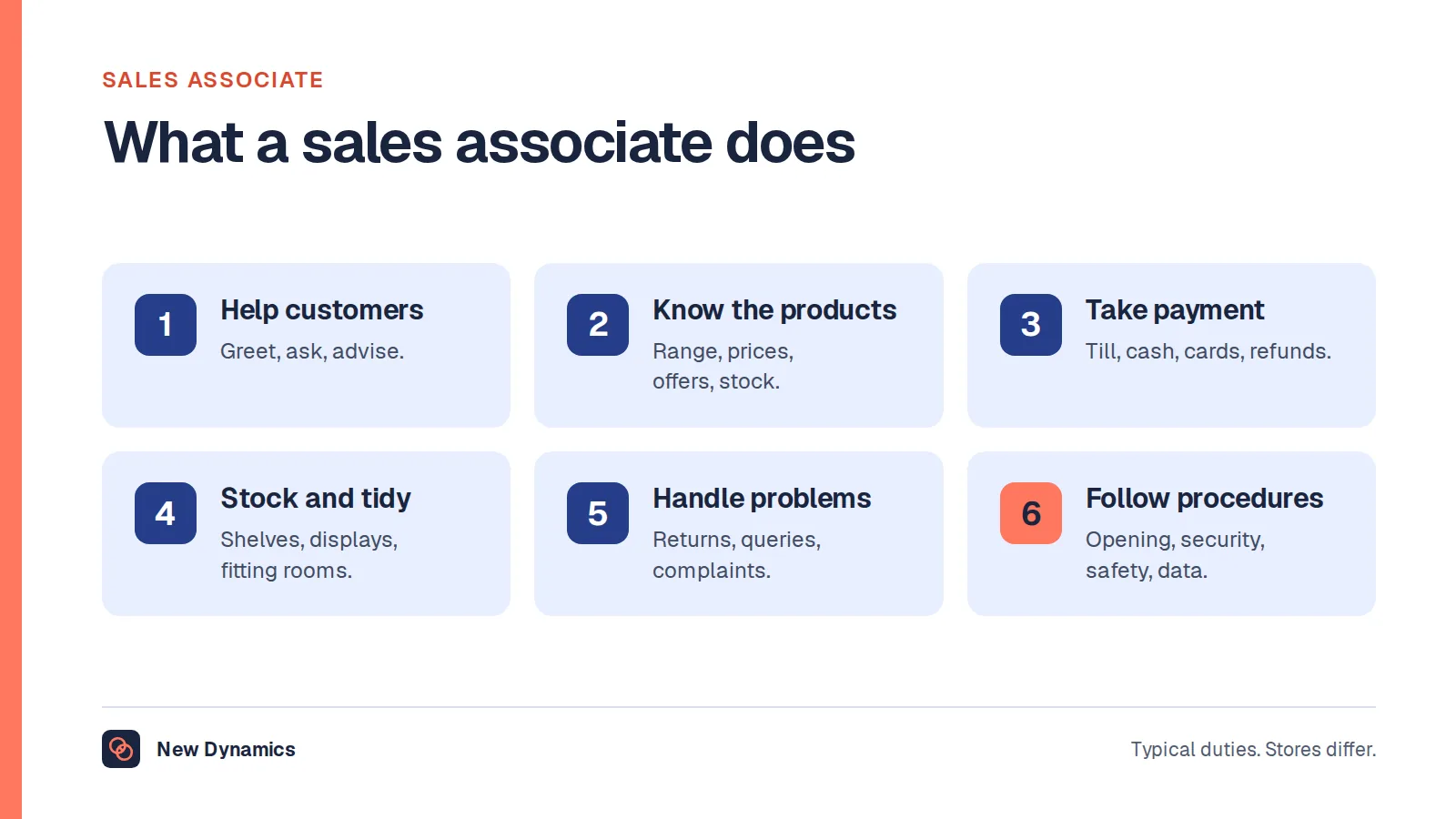
The cashier's work overlaps with that of the sales associate, and in small shops one person does both. The difference is one of emphasis. A cashier's first responsibility is the transaction: fast, accurate and secure. Our guide to the sales associate covers the role on the shop floor.
Where cashiers work
- Shops and supermarkets. At a staffed checkout or a customer service desk, and sometimes looking after a bank of self-service tills.
- Restaurants, cafés and venues. Taking orders and payment at a counter, a kiosk or a box office.
- Banks and offices. Where the role is often called teller, or sits in a cash office that counts and banks the takings.

Cashier duties: six responsibilities
- Serve customers. Greet people, answer questions about prices, offers and stock, and keep the queue moving.
- Scan and take payment. Scan or key in items, apply discounts and loyalty schemes, and take payment by card, phone, cash or voucher.
- Handle cash accurately. Check the float at the start, give the right change, check notes, and keep the drawer in order.
- Process refunds and vouchers. Handle returns, exchanges, gift cards and coupons in line with the store's policy, and call a supervisor when authorisation is needed.
- Follow the rules. Check age for restricted products, follow security procedures, watch for fraud and theft, and protect customers' card details.
- Balance the till. Count the drawer at the end of the shift, reconcile it with the till report, record any difference, and hand over or bank the takings.
Between customers, most cashiers also keep the checkout clean and stocked, replenish nearby shelves and help self-service customers.

Skills of a good cashier
- Accuracy with numbers. Small errors, repeated two hundred times a day, add up.
- Speed without hurry. A steady rhythm, kept up through a long queue.
- A friendly manner, including with the customer who is not friendly back.
- Honesty. The role is a position of trust.
- Concentration through repetitive work.
- Confidence with technology: tills, scanners, card terminals and self-service systems.
- Calm under pressure. A price dispute, a declined card and a queue out of the door, all at once.
- Knowing when to call for help.
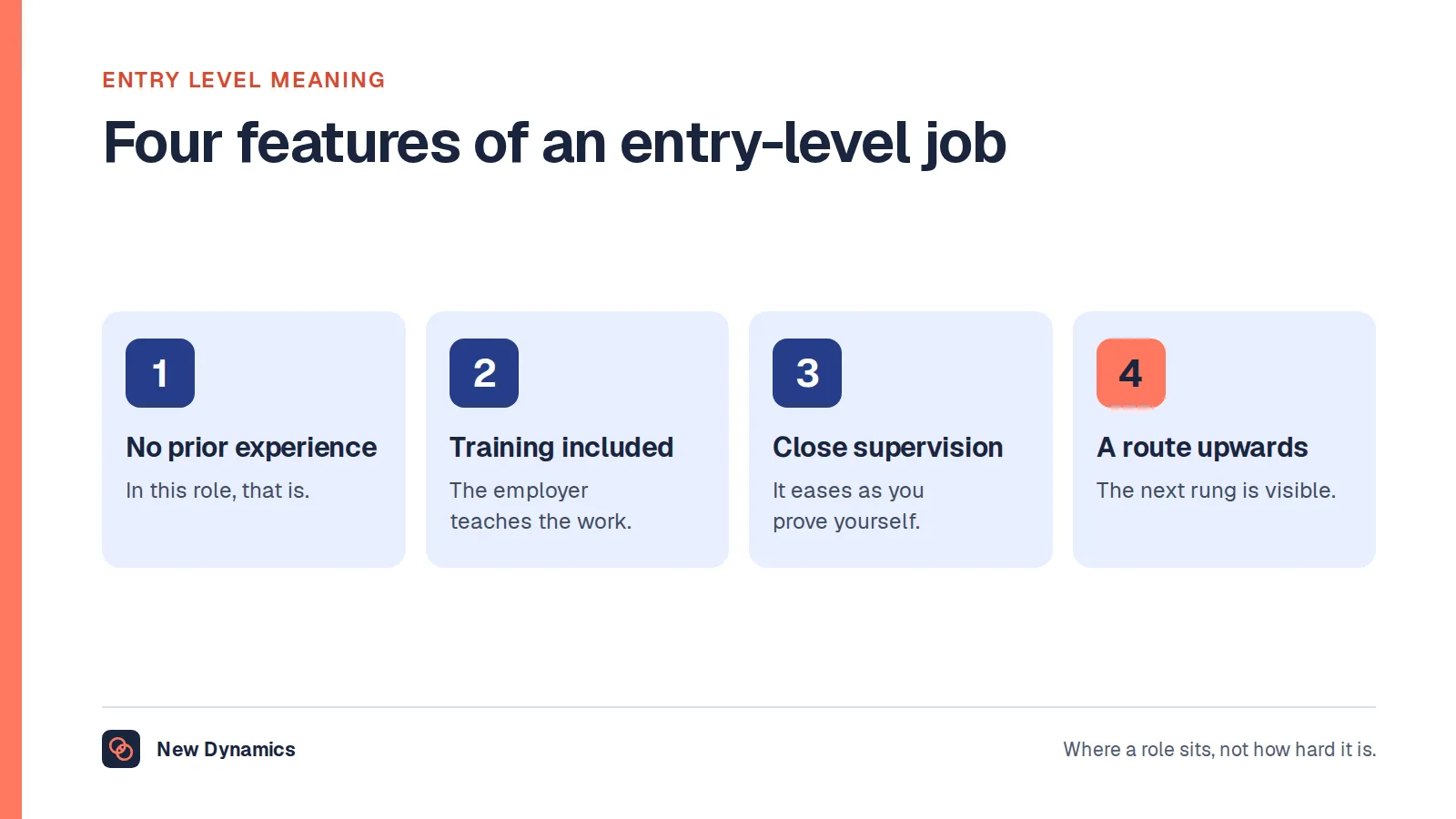
Little of this needs previous experience, which makes cashier work a good first job. Our guide to the meaning of entry level explains what employers should, and should not, ask of a beginner.
Till shortfalls: a UK rule to know
Tills do not always balance, and employers sometimes want to recover the difference from pay. UK law limits this. GOV.UK's guide to deductions from your pay says of people who work in retail: “Your employer cannot take more than 10% from your gross pay (pay before tax and National Insurance) each pay period to cover any shortfalls.”
It gives an example. If there is a shortfall of £50, and the employee is paid £250 gross a week, the employer can take £25 one week and must make another deduction from the next pay for the rest. If the employee leaves, the employer can take the full amount owed from the final pay.
Two conditions sit behind this. GOV.UK says that an employer is not allowed to make a deduction at all unless, for example, the contract says that it can or the employee agrees in writing. And a fair employer asks first why the till was short. A pattern of small differences often points to training or to a fault in the process. This is general information, not legal advice, and other countries have their own rules.
Cashier job description template
Adapt this to your business. Text in square brackets is for you to complete. It was written by our editorial team as a starting point.
Job title: Cashier [or Checkout Assistant, or Till Operator]
Reports to: [Front End Supervisor or Store Manager]
Location and hours: [Store. Contracted hours. Shift pattern, including evenings, weekends and public holidays.]
Purpose of the role: To give customers a fast, accurate and friendly checkout, and to keep the store's takings secure.
Main duties
- Greet customers, answer their questions and keep the queue moving.
- Scan items, apply offers and take payment by card, cash and voucher.
- Give correct change, and keep the cash drawer in order.
- Process returns, exchanges and gift cards according to store policy.
- Check age for restricted products, every time.
- Follow procedures for security, fraud and cash handling.
- Count and reconcile the till at the end of the shift, and report any difference.
- Help customers at self-service tills.
- Keep the checkout area clean, safe and stocked.
Essential
- Accurate with numbers and careful with detail.
- A friendly, patient manner with customers.
- Reliable and honest.
- Willing to work the shift pattern.
Desirable
- Experience in retail, hospitality or another customer-facing job.
- Experience of handling cash.
Pay and benefits: [Hourly rate. Premiums for evenings, Sundays or public holidays, if any. Staff discount.]
Training provided: [Till system, cash handling, restricted sales, security and customer service.]
Note what is missing from the essential list: qualifications and years of experience. Our guide to job requirements explains why a short list brings better applicants.
How to describe cashier work on a CV or resume
Cashier experience is worth more than many people make of it. It shows that an employer trusted you with money and with customers, under pressure. Five tips make the bullet points stronger.
- Start with a verb. Served, processed, balanced, resolved, trained.
- Add a number. Customers per shift, the value of takings handled, the size of the team.
- Show accuracy. A till that balanced, or a low error rate, is evidence.
- Show service. A compliment, a customer survey score, a difficult situation that you settled.
- Show trust. Keys, cashing up, training new starters, covering for a supervisor.
Examples
- Served about 200 customers a shift at a busy supermarket checkout.
- Balanced the till at the end of every shift, with no significant differences in twelve months.
- Processed refunds and exchanges in line with store policy, and resolved most complaints without calling a supervisor.
- Checked age for restricted products on every sale, and passed every test purchase.
- Trained four new cashiers on the till system.
- Trusted to cash up and bank the day's takings at weekends.
Use your own figures. Do not borrow these. An interviewer may ask about any number on the page. For other phrases, see our guide to soft skills on a CV.

Common mistakes
For employers
- Asking for experience. Attitude and accuracy can be seen in a short trial at interview. Experience is not needed.
- Thin training on restricted sales. The cashier carries the risk at the till. Train properly, and refresh it.
- Docking pay for every shortfall without asking why it happened, or without checking the legal limit.
- Measuring only items per minute. Speed targets that ignore accuracy and courtesy produce errors and complaints.
- No breaks in the rota. Concentration fades, and mistakes follow.
For job seekers
- Underselling the job. “Worked on tills” hides what you did.
- Inventing numbers.
Frequently asked questions
What is the job description of a cashier?
A cashier takes payments from customers and handles money in a shop, restaurant, bank or office. The role includes serving customers, scanning items, taking payment, giving change, processing refunds, checking age for restricted products and balancing the till.
What are the main duties and responsibilities of a cashier?
The six main duties are serving customers, scanning and taking payment, handling cash accurately, processing refunds and vouchers, following the rules on restricted sales and security, and balancing the till at the end of the shift.
What skills does a cashier need?
Accuracy with numbers, steady speed, a friendly manner, honesty, concentration, confidence with till technology and calm under pressure. Employers usually train new cashiers on the till system and on store procedures.
Can an employer deduct a till shortage from a cashier's pay?
In the UK, GOV.UK says that an employer in retail cannot take more than 10% of gross pay in each pay period to cover shortfalls, and that deductions need a legal basis, such as a term in the contract. Rules differ in other countries. This is general information, not legal advice.
How do I describe cashier experience on a resume?
Start each bullet with a verb, add a number, and show accuracy, service and trust. For example: “Served about 200 customers a shift, and balanced the till at the end of every shift.” Use your own real figures.
Is cashier an entry-level job?
Usually, yes. Many employers do not ask for qualifications or experience, and train new starters on the job. In England, cashier is one of the job titles covered by the Level 2 Retailer apprenticeship.
Your next step
- If you are hiring: adapt the template, keep the essential list short, and add a five-minute till exercise to the interview.
- If you manage cashiers: check your policy on till shortfalls against the law, and look at your training on restricted sales.
- If you are applying: rewrite your cashier experience as three bullets with real numbers.
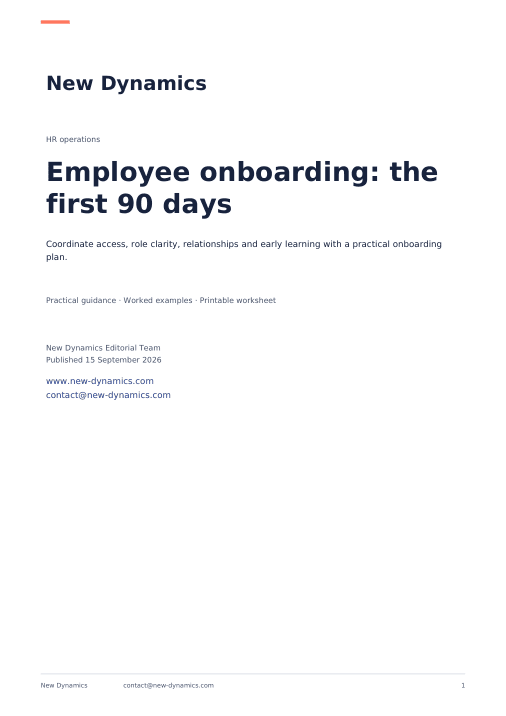
For a fuller approach to the first months, read and download our employee onboarding guide. The guide is free to read, and the PDF uses our short download form.
Want recognition and feedback to reach the people at the till? Book a New Dynamics demo and bring your current approach. You can also email contact@new-dynamics.com.