TL;DR
- A sales associate, also called a retail associate, sales assistant or sales clerk, is a person whose job is to sell goods and help customers in a store.
- Typical duties are helping customers, knowing the products, taking payment, keeping the shop floor stocked and tidy, handling returns and problems, and following store procedures.
- A good job description names the store, the hours and the real demands of the job. Fair goals cover service and standards as well as sales, because an associate cannot control how many people walk in.
Customers rarely meet the chief executive, the buyer or the marketing team. They meet the person on the shop floor who says hello, finds the right size and takes the payment. For most customers, that person is the company.
This article explains what a sales associate is, what retail sales associates do, the skills that matter, and how the job is described in different countries. For employers, it includes a job description template and a section on setting fair goals for people who work on the shop floor.
Shop-floor teams are spread across sites and shifts. See how New Dynamics Goals & OKRs keep priorities visible wherever people are.
What is a sales associate?
A sales associate is a person who sells goods and helps customers in a store. You will meet the title most often in American job adverts. A retail sales associate or retail associate is the same job, with the setting made explicit.
Dictionaries list the role under older names. The Cambridge Dictionary defines a sales assistant as “someone whose job is to sell goods and help customers in a store”. It notes that American English also says sales clerk, and that British English also says shop assistant.
England's official apprenticeship standard for the occupation is called Retailer. Skills England sums up the role in one line: “Helping customers buy products or services from retail organisations such as department stores, garden centres, high street chains, supermarkets and online and mail order businesses.” The job titles that it lists for the occupation include shop assistant, retail assistant, cashier and till clerk.
So the names vary and the job does not. “Associate” is sometimes said to signal that the person is more than a till operator: someone who advises customers and represents the brand. Whether that is true depends on how the employer treats the role.
What does a sales associate do?
Duties vary with the store. A supermarket, a fashion chain, a car showroom and a garden centre ask for different things. Six duties are typical.
- Help customers. Greet people, find out what they need, answer questions and recommend products. This is the heart of the job.
- Know the products. Learn the range, the prices, the offers and the stock position, so that advice is accurate.
- Take payment. Use the till or a handheld device, handle cash and cards correctly, and follow the rules on refunds and age-restricted products.
- Keep the floor stocked and tidy. Unpack deliveries, fill shelves and rails, put out price tickets and displays, and keep fitting rooms and aisles clear.
- Handle returns and problems. Deal with exchanges, complaints and queries calmly, and pass on what cannot be settled on the spot.
- Follow store procedures. Open and close the store, prevent loss, work safely, and protect customers' payment and personal details.
Many stores add online work to this list: picking and packing orders, handling click and collect, and ordering items from other branches for customers.

Skills of a good sales associate
- Listening. Good associates ask, and listen to the answer, before they recommend.
- Product knowledge. Customers can read a label for themselves. They want someone who knows more than the label.
- Accuracy. With cash, prices, stock counts and orders.
- Stamina and pace. The work is done standing, and the busiest hours are other people's leisure time.
- Composure. Queues, complaints and the occasional rude customer are part of the job.
In our view, attitude matters more than experience for this role, because products and systems can be taught. That is a reason to keep the requirements in a job advert short.

Hours, pay and conditions
Retail hours follow customers. Expect evenings, weekends and public holidays, a mix of full-time and part-time contracts, and extra hours at peak seasons. Pay is often hourly. Some stores add commission or a bonus that depends on the sales of the person or the store.
We have not quoted pay rates, because they differ by country, employer and date.
One legal point is specific to shops in the UK. GOV.UK's guidance on Sunday working says that all shop workers “can opt out of Sunday working unless Sunday is the only day they have been employed to work on”. They must give three months' notice. An employer who needs staff to work on Sundays must tell them in writing that they can opt out, within two months of their starting work. GOV.UK adds that an employee “cannot be dismissed or treated unfairly for choosing not to work on Sundays”. This is general information, not legal advice, and other countries have different rules.
Career path
A typical path in a larger retailer runs from sales associate to senior associate or key holder, then to supervisor or team leader, assistant manager and store manager. From there, people move into area management, or into head office roles in buying, merchandising, visual merchandising, training or HR. In England, the Retailer apprenticeship is a Level 2 programme, and gives new entrants a structured start.
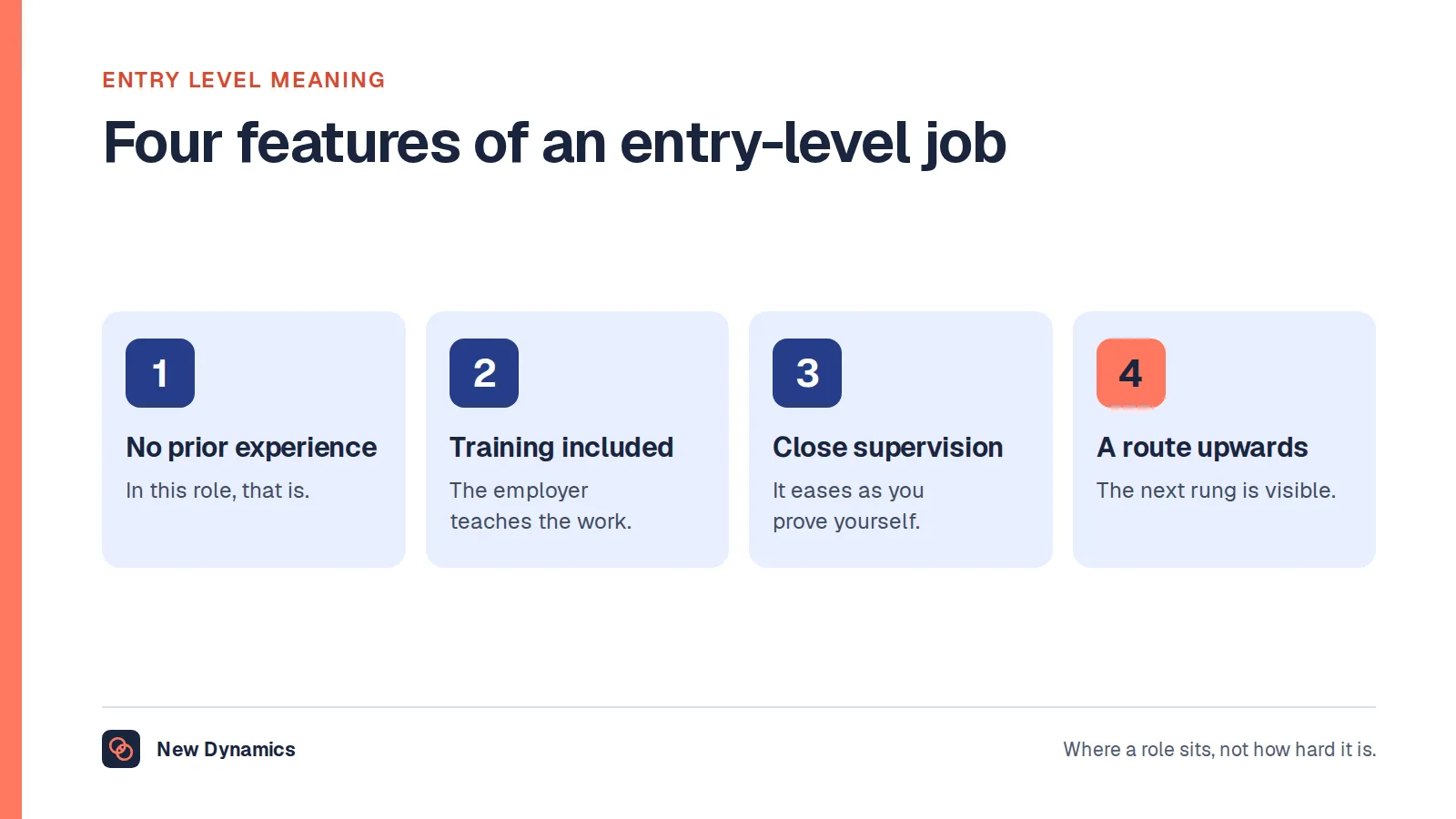
Retail is one of the more open doors into work. Our guide to the meaning of entry level explains what employers should and should not ask of a beginner.
Sales associate job description template
Adapt this to your store. Text in square brackets is for you to complete. It was written by our editorial team as a starting point.
Job title: Sales Associate [or Retail Associate, or Sales Assistant]
Reports to: Store Manager [or Department Supervisor]
Store and hours: [Location. Contracted hours. Shift pattern, including evenings, weekends and public holidays. Peak season expectations.]
Purpose of the role: To give every customer helpful, friendly service, and to keep the store ready for them.
Main duties
- Greet customers, find out what they need and recommend suitable products.
- Keep up to date with the range, prices, promotions and stock availability.
- Process sales, returns and exchanges accurately at the till, following store policy.
- Receive deliveries, replenish stock and keep displays, shelves and fitting rooms tidy.
- Pick, pack and hand over online and click and collect orders. [If applicable.]
- Deal with customer queries and complaints, and refer them to a supervisor when needed.
- Follow procedures for opening and closing, cash handling, loss prevention and age-restricted sales.
- Work safely, including when lifting and moving stock.
- Protect customers' personal and payment information.
- Support colleagues, and help new starters to learn the store.
Essential
- A friendly and helpful manner with customers.
- Reliable, and able to work the agreed shift pattern.
- Comfortable with basic arithmetic and with using a till or handheld device after training.
- Able to meet the physical demands of the role, with reasonable adjustments where needed.
Desirable
- Experience in retail, hospitality or another customer-facing job.
- Knowledge of, or enthusiasm for, [your product category].
Pay and benefits: [Hourly rate. Commission or bonus, and how it is calculated. Staff discount. Premiums, if any, for Sundays or public holidays.]
Training provided: [Induction, product training, till training, health and safety.]
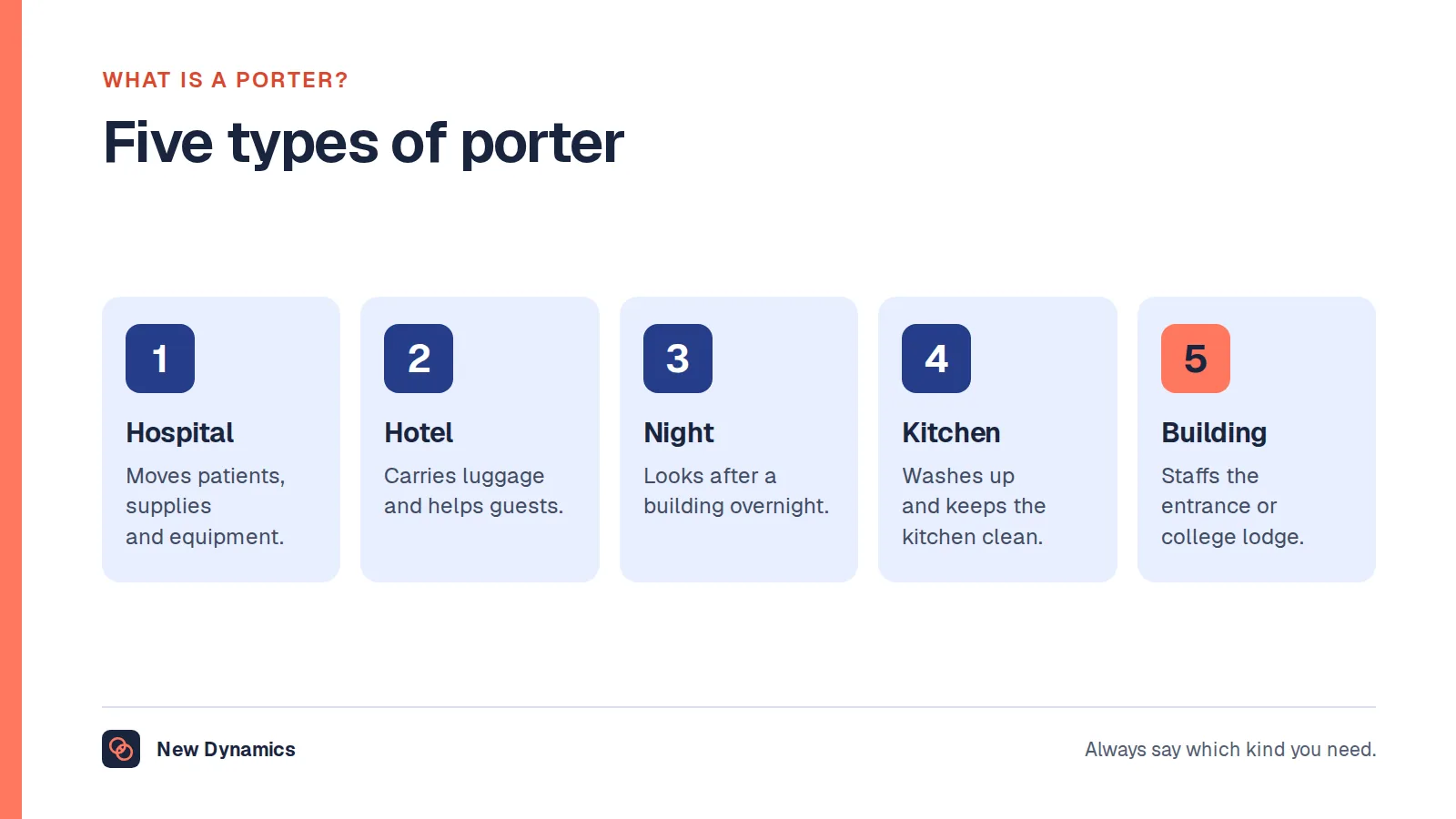
Keep the essential list short. Our guide to job requirements explains why every extra line costs you applicants. If you hire porters or stockroom staff too, see our porter job description.
Setting fair goals for sales associates
An associate cannot control how many people walk through the door, what head office has put on promotion or whether the delivery arrived. Goals that ignore this feel unfair, and people stop trying to meet them. Five things help.
- Targets that they can influence. Measure what the associate does: greeting customers promptly, offering help, items per transaction, accuracy at the till. Use store sales as a team measure.
- Training before targets. Nobody can advise on products that they have never been shown. Give product training, and time to absorb it.
- Frequent feedback. A two-minute conversation after a good or a poor interaction teaches more than an annual review. Be specific.
- Fair rotas. Publish them early, share the unpopular shifts evenly, and respect the right to opt out of Sundays where it applies.
- Recognition. Name the associate whom a customer praised. Thank the person who stayed calm in a difficult queue. Our employee recognition ideas include many that work on a shop floor.
Be careful with individual commission. It is meant to lift sales. It can also set colleagues against each other, and push people to sell customers things that they do not need. If you use it, watch returns and complaints as closely as sales.

Common mistakes
A vague advert. “Sales associate wanted” does not say which store, which hours or what pay. Good candidates skip it.
Asking for experience that the job does not need. You can teach the till. You cannot easily teach warmth.
Hiding the weekend requirement. It wastes everyone's time, and new starters leave when they find out.
Goals on sales alone. See above.
No route upwards. If associates cannot see how to become a supervisor, the ambitious ones will find an employer who shows them.
Treating the role as unskilled. Dealing well with hundreds of strangers a day is a skill. Say so, and pay attention to it.
Frequently asked questions
What is a sales associate?
A sales associate is a person whose job is to sell goods and help customers in a store. The same role is called a retail associate, sales assistant, shop assistant or sales clerk, depending on the country and the employer.
What are the duties and responsibilities of a sales associate?
Typical duties are helping and advising customers, knowing the products, taking payment, keeping the shop floor stocked and tidy, handling returns and complaints, and following store procedures on cash, security and safety.
What is the difference between a sales associate and a retail associate?
There is usually none. Retail associate makes the store setting explicit. Some employers use sales associate for roles that focus on selling, and retail associate for roles that also cover stock, tills and general store work.
What skills does a sales associate need?
The main skills are listening, product knowledge, accuracy with cash and stock, stamina for a job done standing at busy times, and composure with queues and complaints. Employers usually provide training on products and systems.
Do you need qualifications to be a sales associate?
Usually not. It is often an entry-level job, and employers train new starters. In England there is a Level 2 Retailer apprenticeship for people who want a structured start.
Can a shop worker refuse to work on Sundays?
In the UK, GOV.UK says that all shop workers can opt out of Sunday working, unless Sunday is the only day they were employed to work, by giving three months' notice. Rules differ in other countries. This is general information, not legal advice.
Your next step: read your advert as a candidate would
- Check that your sales associate advert names the store, the hours, the pay and the weekend pattern.
- Cut the essential requirements to what the job truly needs.
- Choose two service measures that associates can influence, and use them beside store sales.
- This week, tell one associate exactly what they did well with a customer.
To write goals that people on the shop floor can act on, read and download our SMART goals guide. The guide is free to read, and the PDF uses our short download form.
Want goals, feedback and recognition to reach every store and every shift? Book a New Dynamics demo and bring your current approach. You can also email contact@new-dynamics.com.