TL;DR
- A confidentiality clause in an employment contract protects an employer's confidential information during and after employment. It cannot be used to stop a worker making a protected disclosure, and in England and Wales it cannot stop a victim of crime reporting it to the police, a lawyer or a support service.
- The Employment Rights Act 2025 will also make clauses void in so far as they stop workers disclosing harassment or discrimination, but at the time of writing that provision is in force only for specified purposes, such as making regulations. Sexual harassment has, however, been a qualifying disclosure for whistleblowing since 6 April 2026.
- Intellectual property works differently by type. Copyright in work an employee makes in the course of employment belongs to the employer by default; an employee's invention belongs to the employer only in defined circumstances. This is general information about UK law, not legal advice.
Almost every employment contract has a confidentiality clause, and most are copied from the last one. That is how employers end up with clauses that claim to stop things the law says they cannot stop, and with intellectual property clauses that assume every idea an employee has belongs to the company.
This article explains the confidentiality clause in an employment contract: what it can protect, the disclosures it cannot stop, a change in the Employment Rights Act 2025 that is not yet in force, and how intellectual property clauses work for inventions and copyright. It covers UK law, mainly Great Britain, and is general information, not legal advice.
Contract terms are easiest to get right when they are issued, not when someone leaves. See how New Dynamics onboarding brings contract steps, policies and first-week tasks into one clear path.
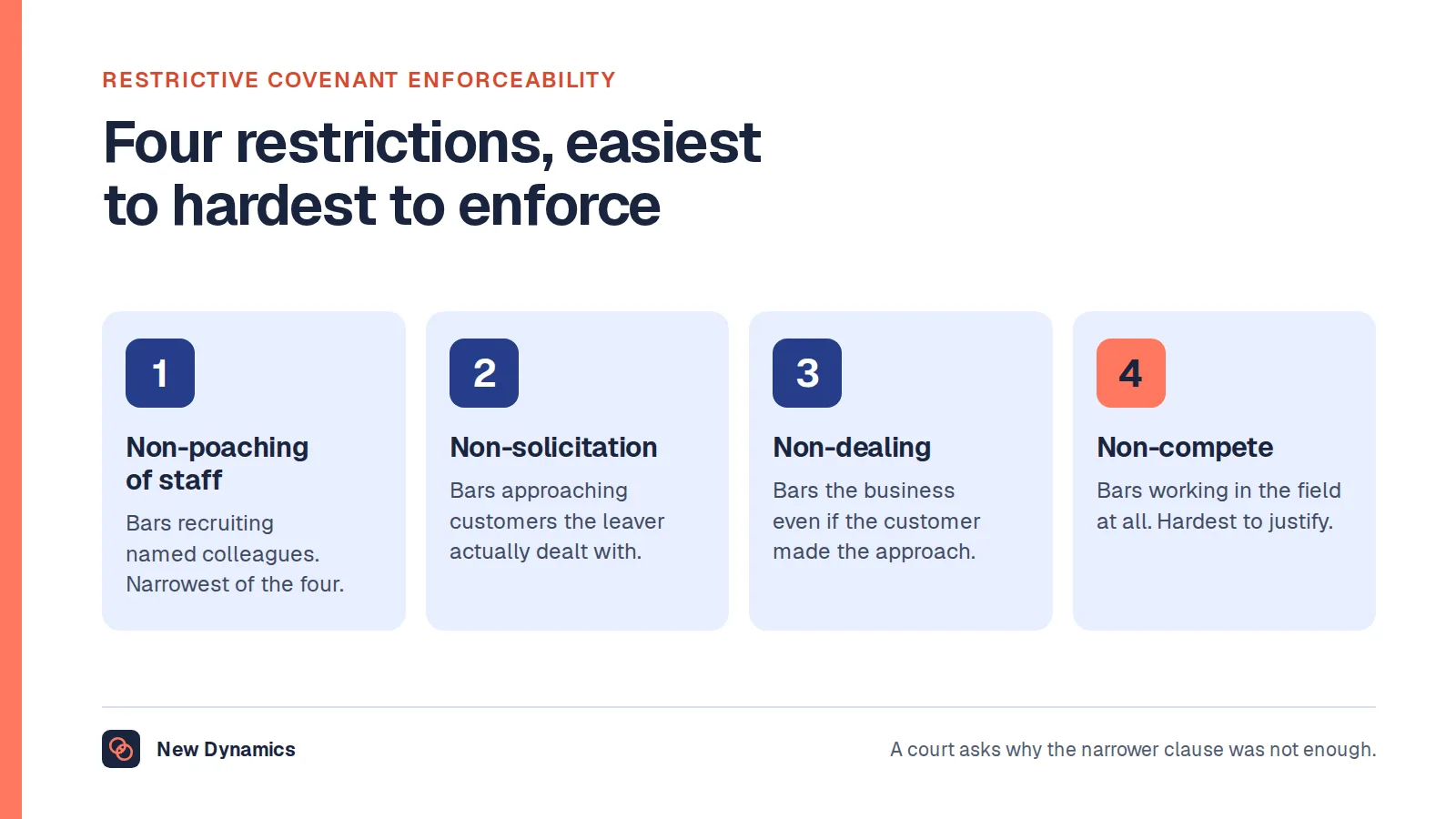
For non-compete and other restrictive covenants, and for protecting trade secrets when a covenant fails, see our post on restrictive covenant enforceability. This article does not repeat that ground.
What a confidentiality clause can protect
A confidentiality clause protects information the employer treats as confidential: customer and pricing data, unpublished plans, technical know-how, and similar. A well drafted clause:
- defines what counts as confidential, with examples, rather than "all information";
- applies during and after employment, and says so;
- excludes information already public, or that the employee knew before;
- requires return or deletion of confidential material when employment ends.
The narrower and clearer the definition, the easier it is to rely on.
What a confidentiality clause cannot stop

Protected disclosures (whistleblowing)
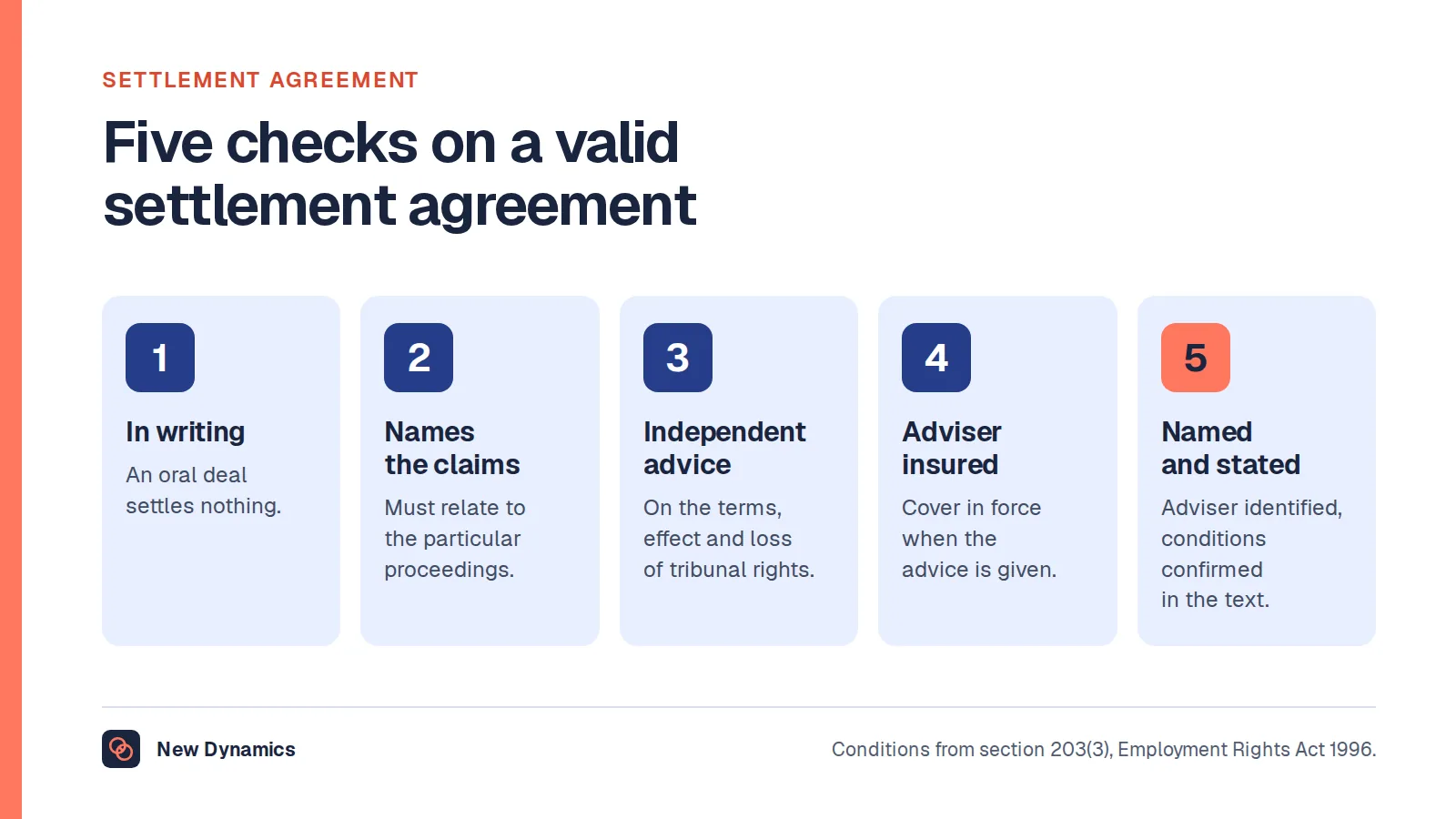
Section 43J of the Employment Rights Act 1996 says: "Any provision in an agreement to which this section applies is void in so far as it purports to preclude the worker from making a protected disclosure." It applies to any agreement between a worker and their employer, including a settlement agreement.
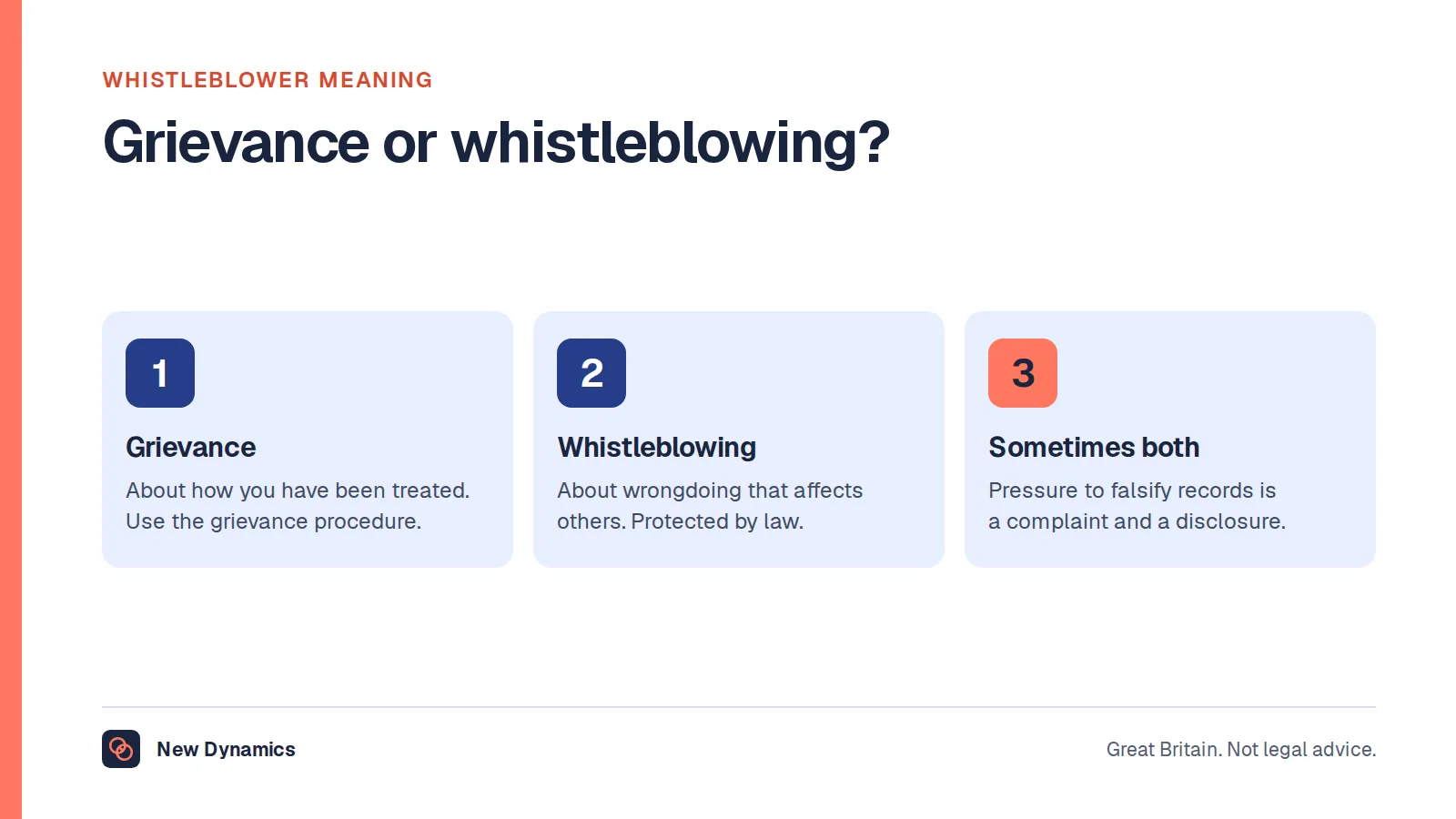
Since 6 April 2026, section 23 of the Employment Rights Act 2025 has added a new category of qualifying disclosure: a disclosure "that sexual harassment has occurred, is occurring or is likely to occur". For the wider rules, see our post on what a whistleblower is.
Reporting crime (England and Wales)
Section 17 of the Victims and Prisoners Act 2024, which extends to England and Wales and has been fully in force since 1 October 2025, says "A provision in an agreement is void in so far as it purports to preclude the making of a disclosure" of the kinds it lists. They include disclosures by a victim, or someone who reasonably believes they are a victim, of the conduct concerned to people with law enforcement functions, to a qualified lawyer, to regulated professionals for support, and to victim support services.
Discussing pay for equal pay purposes
Some pay discussions are also protected; our post on discussing pay at work covers when.
The harassment and discrimination change that is not yet in force
Section 24 of the Employment Rights Act 2025 inserts a new section 202A into the 1996 Act. It provides that a provision in an agreement between an employer and a worker "is void in so far as it purports to preclude the worker from making" an allegation or disclosure about relevant harassment or discrimination, or about the employer's response to it. Regulations can set conditions under which an agreement is excepted from the rule.
At the time of writing, this is not yet in force as a rule employers must follow. legislation.gov.uk records the relevant parts of section 24 as in force only "for specified purposes", which covers making regulations, from 6 January and 6 April 2026. Check the commencement position before relying on it either way, and draft new agreements with it in mind.
Intellectual property: who owns what

An intellectual property clause usually tries to confirm that work created for the employer belongs to the employer. The law already does some of that, but differently for different kinds of IP.
Copyright: the employer by default
Section 11 of the Copyright, Designs and Patents Act 1988 says that where a literary, dramatic, musical or artistic work, or a film, "is made by an employee in the course of his employment, his employer is the first owner of any copyright in the work subject to any agreement to the contrary."
So for copyright the default already favours the employer, for work made in the course of employment. A clause mainly matters for work at the edges, and for contractors, who are not employees.
Inventions: the employer only in defined cases
Section 39 of the Patents Act 1977 is narrower. An employee's invention belongs to the employer if it was made in the course of the employee's normal duties, or duties specifically assigned to them, where an invention "might reasonably be expected to result", or if the employee had "a special obligation to further the interests of the employer's undertaking". Otherwise, "Any other invention made by an employee shall, as between him and his employer, be taken for those purposes to belong to the employee."
Section 40 also lets an employee apply for compensation where an invention belonging to the employer, or its patent, is "of outstanding benefit to the employer".
The common drafting error is to write a clause that assumes every invention belongs to the employer, as copyright largely does. For inventions, the Act sets the starting point, and an employer cannot simply claim everything an employee invents.
Drafting checklist
- Define confidential information with examples, and exclude what is public.
- Say plainly what the clause does not prevent: protected disclosures, reporting crime, and anything else the law protects. Clear carve-outs build trust and avoid an unenforceable clause.
- Watch the harassment and discrimination change and update templates when it comes into force.
- Separate copyright and inventions in the IP clause, and do not overreach on inventions.
- Cover contractors separately, because the employee defaults do not apply to them.
- Review settlement agreement templates against the same limits.
Frequently asked questions
Can a confidentiality clause stop whistleblowing?
No. Section 43J of the Employment Rights Act 1996 makes any provision void in so far as it purports to preclude a worker from making a protected disclosure. Since 6 April 2026, a disclosure that sexual harassment has occurred, is occurring or is likely to occur can be a qualifying disclosure.
Are NDAs about harassment banned?
Not yet. The Employment Rights Act 2025 inserts a new section 202A that will make such provisions void, but at the time of writing it is in force only for specified purposes, such as making regulations. Separately, in England and Wales, a confidentiality clause cannot stop a victim of crime making the disclosures listed in section 17 of the Victims and Prisoners Act 2024.
Who owns intellectual property created by an employee?
For copyright, the employer is the first owner of work an employee makes in the course of employment, unless agreed otherwise. For inventions, the employer owns them only in the circumstances set out in section 39 of the Patents Act 1977; otherwise they belong to the employee.
Does a confidentiality clause still apply after an employee leaves?
It can, if the clause says so and the information is genuinely confidential. Our post on restrictive covenant enforceability covers how confidential information is protected after employment.
Do I need an IP clause if the law already gives copyright to the employer?
Usually yes, to cover work outside the obvious course of employment, to deal with inventions clearly and fairly, and to set out practical steps such as disclosure and registration. Contractors need their own terms.
Your next step: read your template clause
- Check it defines confidential information, rather than claiming "everything".
- Add clear carve-outs for protected disclosures and reporting crime.
- Split the IP clause into copyright and inventions.
- Diary a review for when the harassment and discrimination rule comes into force.
For a structured approach to policies and contract terms, read and download our employee handbook guide. The guide is free to read, and the PDF uses our short download form.
Want contract and policy steps tracked from offer to first day? Book a New Dynamics demo and bring your current contract template. You can also email contact@new-dynamics.com.