TL;DR
- United States: section 7 of the National Labor Relations Act gives employees the right to engage in 'other concerted activities for the purpose of collective bargaining or other mutual aid or protection', with no mention of a union, and section 8(a)(1) makes interference with that right an unfair labor practice.
- United Kingdom: section 77 of the Equality Act 2010 is far narrower. A pay confidentiality term is unenforceable only 'in so far as' the person makes or seeks a relevant pay disclosure, meaning one made to find out whether pay is connected to a protected characteristic.
- The federal contractor pay transparency provisions at 41 CFR 60-1.35 were rescinded with the rest of the Executive Order 11246 regulations, effective 26 October 2026, which leaves section 7 and state law doing that work in the United States.
An employee tells a colleague what they earn. A payslip gets forwarded. A manager hears about it, opens the handbook, and finds a line saying pay is confidential. The question that follows is always the same: can we enforce that?
The answer depends on which country the employee works in, and in both of the countries covered here it is narrower than most handbooks assume. The mechanisms are completely different. In the United States the protection comes from collective labour law and is broad. In the United Kingdom it comes from discrimination law and is specific to one purpose. They land in a similar practical place, which is that a blanket ban on discussing pay at work is not something an employer should rely on, but they get there by different routes, and the routes matter when you are deciding what to write in a policy.
Pay differences are much easier to defend when the reason for each one already exists in writing. See how New Dynamics performance reviews keep the year's goals, feedback and ratings attached to the cycle, so a pay decision has a record behind it rather than a reconstruction after the fact.
This is general information, not legal advice. Every statement below is labelled with the country it applies to, because applying one country's rule in the other is the most common way this goes wrong. Both systems turn on facts and on decided cases. Take advice from an employment lawyer in the relevant country, and read the primary sources linked here rather than any summary, this one included.

United States: section 7 of the National Labor Relations Act
Jurisdiction: United States, private sector employers covered by the National Labor Relations Act.
The relevant words are in section 7 of the Act, codified at 29 U.S.C. 157. The United States Code text published by the Government Publishing Office reads, in full:
"Employees shall have the right to self-organization, to form, join, or assist labor organizations, to bargain collectively through representatives of their own choosing, and to engage in other concerted activities for the purpose of collective bargaining or other mutual aid or protection, and shall also have the right to refrain from any or all of such activities except to the extent that such right may be affected by an agreement requiring membership in a labor organization as a condition of employment as authorized in section 158(a)(3) of this title."
Read that sentence again and notice what it does not say. It does not say the employees must belong to a union. It does not say there must be a union in the workplace. The phrase doing the work is "other concerted activities for the purpose of collective bargaining or other mutual aid or protection". Comparing wages is how employees find out whether they have a shared problem about terms, which is the first step of acting together about them, and that is the basis on which pay discussion sits inside section 7 even in a workplace with no union and no interest in having one.
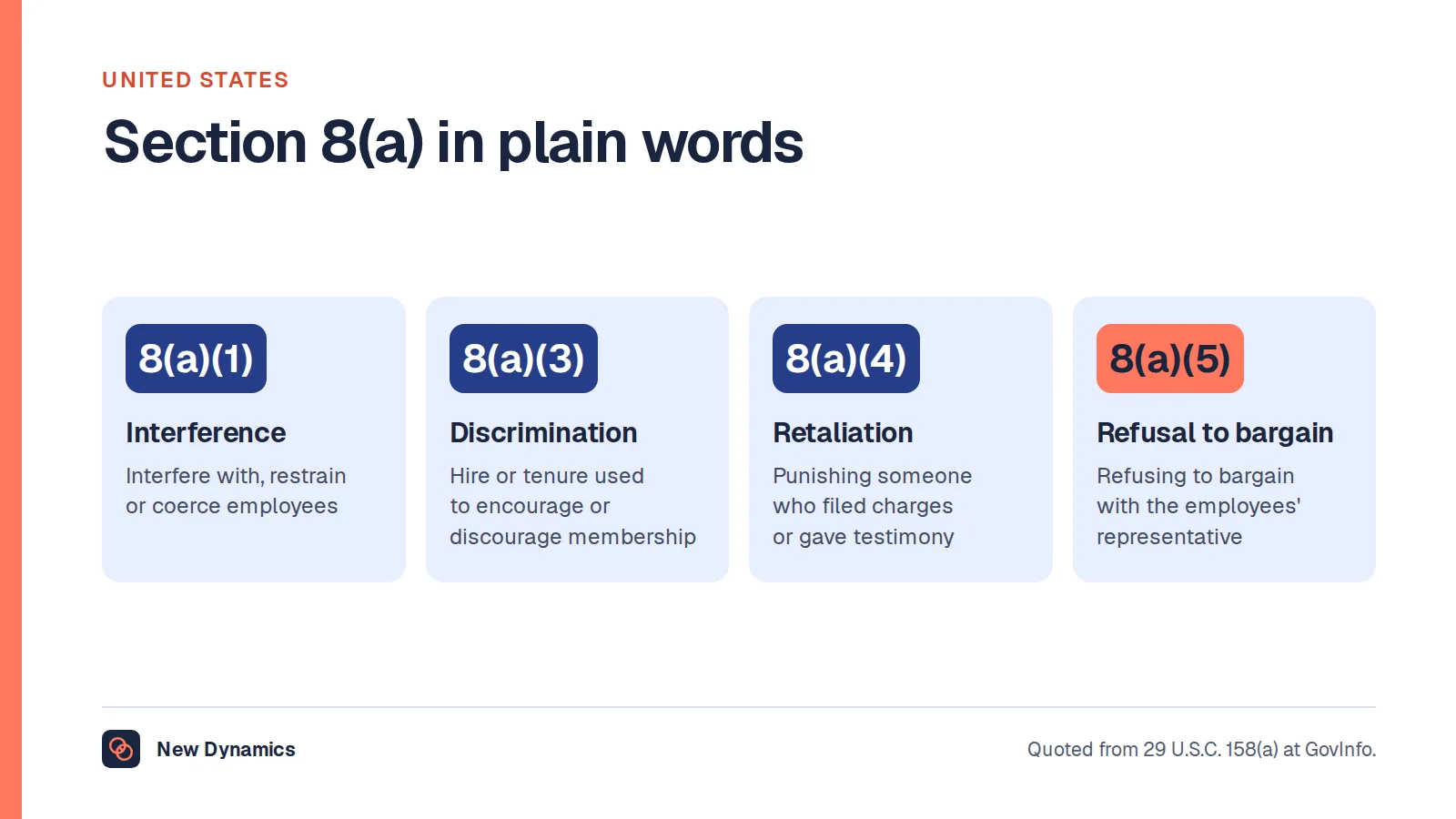
The enforcement route is section 8(a)(1), codified at 29 U.S.C. 158. It makes it an unfair labor practice for an employer "to interfere with, restrain, or coerce employees in the exercise of the rights guaranteed in section 157 of this title". A written rule can do that on its own, before anyone is disciplined under it. That is the mechanism by which a pay secrecy rule or a confidentiality clause in a handbook becomes a legal problem rather than merely an unpopular one. Our post on the unfair labor practice covers how a charge is brought and what the section 8 lists contain.
Who is covered, and who is not
This is the part most summaries skip, and it decides a lot of real cases. The protection runs to "employees" as the Act defines them. Section 2(3), at 29 U.S.C. 152, states that the term "shall not include any individual employed as an agricultural laborer, or in the domestic service of any family or person at his home, or any individual employed by his parent or spouse, or any individual having the status of an independent contractor, or any individual employed as a supervisor, or any individual employed by an employer subject to the Railway Labor Act".
Supervisors are the exclusion that catches employers out, because the statutory definition is wider than a job title. Section 2(11) defines a supervisor as "any individual having authority, in the interest of the employer, to hire, transfer, suspend, lay off, recall, promote, discharge, assign, reward, or discipline other employees, or responsibly to direct them, or to adjust their grievances, or effectively to recommend such action", provided the authority is not "of a merely routine or clerical nature, but requires the use of independent judgment". A team leader with real authority to recommend a pay rise may well be a supervisor for this purpose, and section 7 does not protect their pay discussions.
The definition of "employer" excludes people too. Section 2(2) says the term "shall not include the United States or any wholly owned Government corporation, or any Federal Reserve Bank, or any State or political subdivision thereof". Federal, state and local government employees are therefore outside the Act, and their position comes from other statutes.

What this means for a handbook rule
There is no provision in the Code of Federal Regulations setting out the test the Board applies to the wording of a written work rule. That test comes from the Board's own decided cases, published by the Board itself, and nothing from those decisions is quoted here, so treat the statute as the floor and read the Board's material directly before relying on it. The floor is clear enough on its own: a written rule that interferes with, restrains or coerces employees in the exercise of section 7 rights is the thing section 8(a)(1) prohibits, whether or not anybody has yet been disciplined under it. A handbook clause saying pay is confidential, applied to every employee, is precisely the kind of rule that question gets asked about.
The federal contractor route has gone
One source of United States pay transparency protection no longer exists, and this is recent enough that older guidance still describes it as current. The pay transparency provisions for federal contractors sat at 41 CFR 60-1.35, made under Executive Order 11246. Executive Order 11246 was revoked by Executive Order 14173 on 21 January 2025, and the Department of Labor then rescinded its implementing regulations. The final rule, Rescission of Executive Order 11246 Implementing Regulations at 91 FR 54444, published on 21 August 2026, states that "the Department is rescinding the E.O. 11246 implementing regulations in their entirety" and that "the pay transparency provisions at 41 CFR 60-1.4(a)(3), 60-1.4(b)(1)(3) and 60-1.35 are also part of this rescission". The rule is effective on 26 October 2026, and the Electronic Code of Federal Regulations now lists parts 60-1 to 60-4 of title 41 as reserved.
State pay transparency laws
Jurisdiction: United States, individual states. A growing number of states have their own pay transparency statutes. They do different things: some require a pay range in a job advertisement, some require it on request during hiring, and several separately bar an employer from penalising an employee for discussing pay. The detail, the employer size threshold and the enforcement body all vary by state, and no federal agency publishes a consolidated list of them. The only reliable check is the statute of the state where the employee actually works, read at that state's own legislature or labour department, rather than a table compiled by a third party.
United Kingdom: section 77 of the Equality Act 2010
Jurisdiction: England, Wales and Scotland. Section 77 carries the extent marking E+W+S on legislation.gov.uk. Northern Ireland has separate equality legislation and is not covered by it.
The British position is narrower than the American one, and the difference is the interesting part. Section 77 of the Equality Act 2010, headed "Discussions about pay", does not make a pay confidentiality clause void. It makes it unenforceable for one purpose. Subsection (1) provides:
"A term of a person's work that purports to prevent or restrict the person (P) from disclosing or seeking to disclose information about the terms of P's work is unenforceable against P in so far as P makes or seeks to make a relevant pay disclosure."
Subsection (2) does the same for asking somebody else, and extends it beyond current staff: a term restricting P "from seeking disclosure of information from a colleague about the terms of the colleague's work is unenforceable against P in so far as P seeks a relevant pay disclosure from the colleague", and "'colleague' includes a former colleague in relation to the work in question."
Everything then turns on the definition in subsection (3). A disclosure is a relevant pay disclosure "if made for the purpose of enabling the person who makes it, or the person to whom it is made, to find out whether or to what extent there is, in relation to the work in question, a connection between pay and having (or not having) a particular protected characteristic."
That is a purpose test, and it is a real limit. Two colleagues comparing salaries out of ordinary curiosity are not making a relevant pay disclosure. Two colleagues comparing salaries because one of them suspects that women on the grade are paid less are. The same conversation can fall on either side of the line depending on why it is being had.
The victimisation half, which is the part with teeth
Section 77(4) treats three things as protected acts: "seeking a disclosure that would be a relevant pay disclosure", "making or seeking to make a relevant pay disclosure", and "receiving information disclosed in a relevant pay disclosure". Subsection (5) routes those into the victimisation provisions, stating that "the relevant victimisation provision is, in relation to a description of work specified in the first column of the table, section 27 so far as it applies for the purposes of a provision mentioned in the second column". For employment, the table points to section 39(3) or (4).
So there are two separate wrongs available to an employer here. Trying to enforce the clause against a relevant pay disclosure fails. Disciplining, demoting or sacking somebody for asking, telling or listening is a victimisation claim in its own right, and it does not depend on the underlying pay complaint being correct.
What section 77 does not do
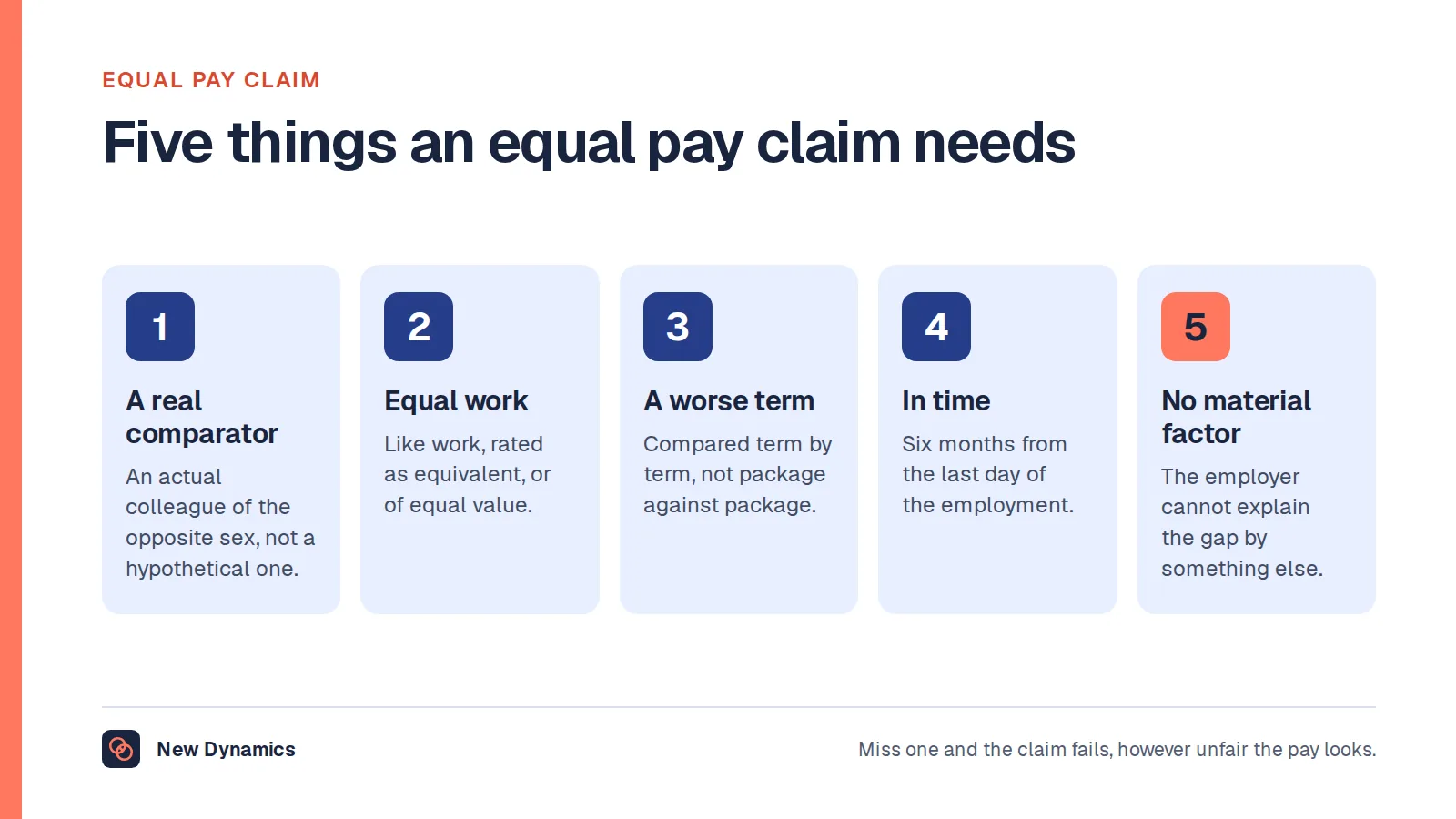
It does not make a general confidentiality term void for all purposes. If a contract says an employee must not publish the firm's salary bands on social media, section 77 does not touch that, because the restriction is not being used against a relevant pay disclosure. British employers sometimes read section 77 as having abolished pay secrecy clauses. It has not. It has made them useless for the one purpose an employer most wants to use them for, which is stopping an employee from finding out whether a pay difference is a discrimination problem. Our post on equal pay claims covers what happens next, including the comparator and how far back arrears can run.
Neither GOV.UK nor Acas publishes a page specifically on whether a pay secrecy clause can be enforced. Acas covers the neighbouring ground, which is answering questions about equal pay, and says plainly that "by law you do not have to answer their questions about equal pay and terms and conditions. However, you should do so to try to resolve the problem and avoid possible legal action."
The reporting duty is a different duty
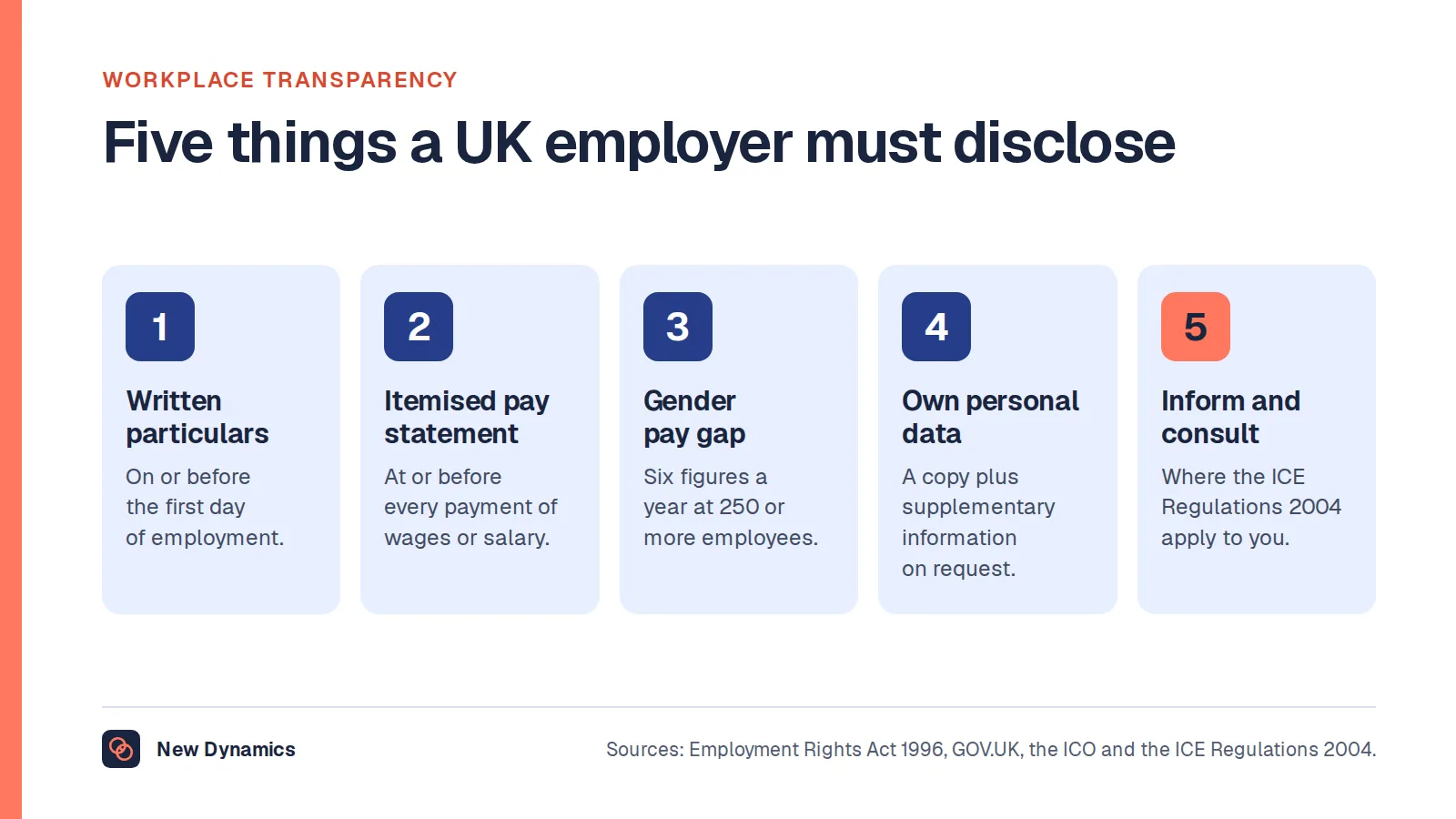
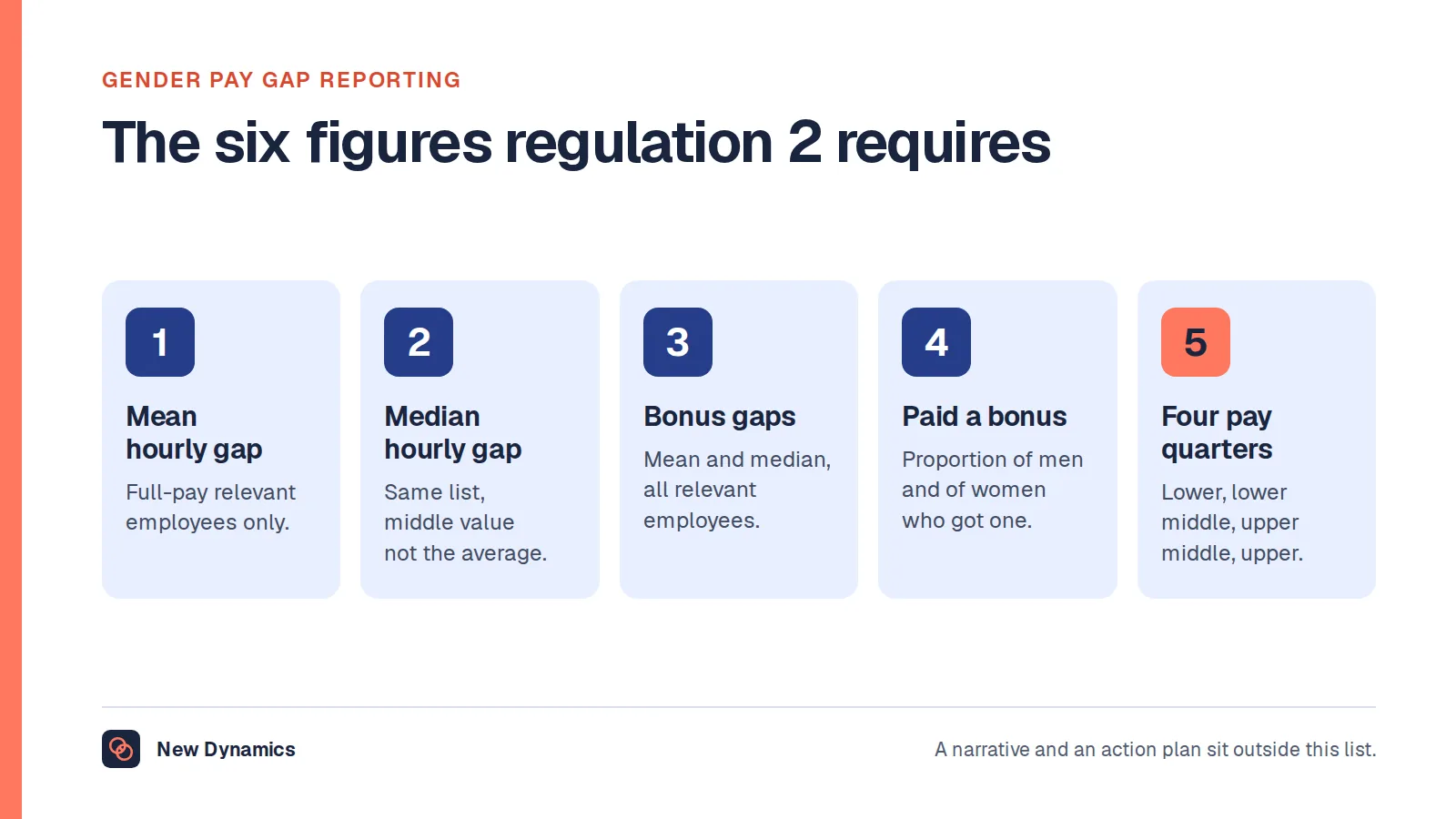
Jurisdiction: Great Britain. Gender pay gap reporting is not a pay secrecy rule and does not reach individual salaries, so keep the two apart. Regulation 1(2) of the Equality Act 2010 (Gender Pay Gap Information) Regulations 2017 defines a "relevant employer" as "an employer who has 250 or more employees on the snapshot date", and regulation 2 sets out the figures that must be published. Note that Acas's equal pay law page, last updated on 7 November 2024, words the threshold as "more than 250 staff"; the regulations say 250 or more, and the regulations govern. Our post on gender pay gap reporting covers the snapshot dates and the six figures. The Employment Rights Act 2025 inserts new subsections into section 78 of the Equality Act 2010, and legislation.gov.uk still lists those as changes yet to be applied.
Why a pay secrecy rule tends to create the problem it was written to avoid
Jurisdiction: both. A confidentiality clause does not stop people comparing pay. It stops the employer hearing about the comparison. The difference goes unexplained for years, interest and arrears accumulate, and the first formal notice the employer gets is a grievance or a claim rather than a question it could have answered in a week.
The gap the clause hides is also smaller than people assume, which makes it more answerable. The Office for National Statistics release Gender pay gap in the UK: 2026, published on 22 October 2026, reports that the gender pay gap for full-time employees "was 6.8% in April 2026, down from 7.2% in April 2025", with median hourly earnings excluding overtime for full-time employee jobs at £21.51 for men and £20.05 for women. For the wider picture, see our statistics hub.
No official source in either country publishes a figure for how many employers operate a pay secrecy rule, or how many pay complaints began as an overheard conversation. There is no number to give here, so none is given.
Acas puts the preventive case in one line on its equal pay guidance: "Employers can prevent many equal pay issues by being clear and open with staff about pay and contractual terms and conditions." Its practical list for reducing the risk includes having up to date job descriptions that accurately describe the work, making sure "that men and women who do the same work do not have different job titles", and being consistent when deciding pay, "for example have one pay structure for the organisation and limit who can decide on salaries for new staff".
What to do instead

- Delete the blanket clause. Replace "you must not discuss your pay" with the narrower confidentiality you actually need, which is usually about other people's personal data and about commercially sensitive information, not about the employee's own terms.
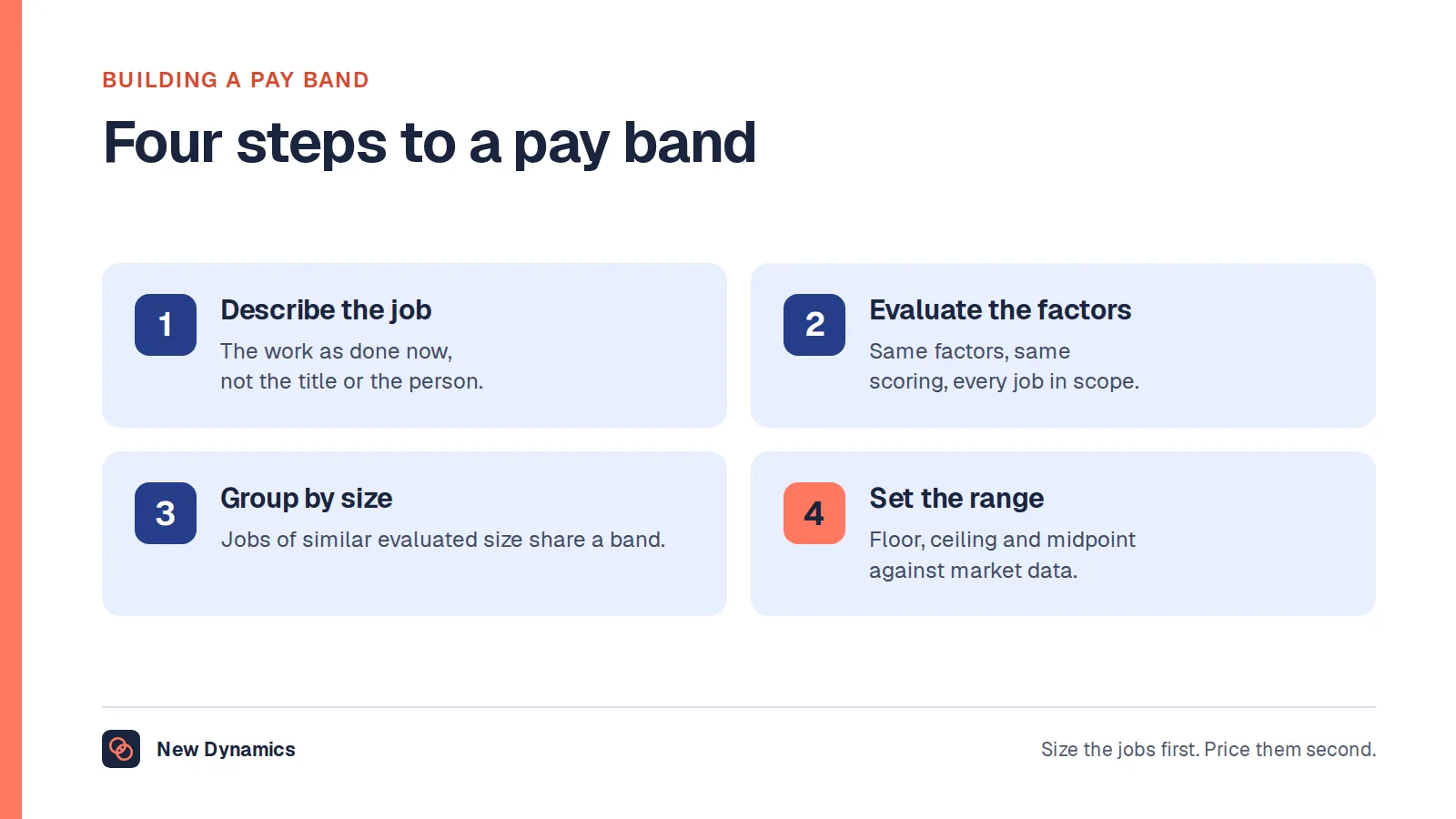
- Build a structure you can explain out loud. Grades, a range per grade, and a written basis for where somebody sits in the range. Acas recommends one pay structure for the organisation with limited authority to set salaries for new starters. Our post on pay bands and job evaluation covers the mechanics.
- Use the same criteria for everyone. Decide what moves pay (scope of role, assessed performance, scarce skills, location) before the review, apply the same list to every person, and keep the evidence.
- Record a reason for every difference, when you make it. A reason written at the time is evidence. A reason reconstructed two years later during a grievance is not. If no written reason exists for a difference, you have found the real problem, and you have found it early.
- Answer the question when it is asked. In the United Kingdom a refusal is not unlawful on its own, but Acas advises answering, and a tribunal may take a non-response into account. In the United States, punishing the asking is where the legal exposure sits.
For the policy that sits behind all of this, read and download our compensation policy guide. The guide is free to read, and the PDF uses our short download form.
Frequently asked questions
Can my employer stop me discussing pay at work?
In the United States, a private sector employer covered by the National Labor Relations Act generally cannot, because section 7 protects concerted activity about terms and section 8(a)(1) makes interference an unfair labor practice. In the United Kingdom, a confidentiality term is unenforceable only in so far as you make or seek a relevant pay disclosure under section 77 of the Equality Act 2010.
What does the National Labor Relations Board say about discussing wages?
The Board enforces section 7 of the National Labor Relations Act, which gives employees the right "to engage in other concerted activities for the purpose of collective bargaining or other mutual aid or protection". Nothing in that wording requires a union, which is why the right applies in non-union workplaces. The Board works out what that means for a particular handbook rule in its own decided cases rather than in a regulation, and none of those decisions is quoted here.
Is it illegal to discuss pay?
No, in neither country. The question is the reverse: whether an employer may penalise the discussion. In the United States that is where section 8(a)(1) bites. In the United Kingdom, section 77(4) of the Equality Act 2010 makes seeking, making and receiving a relevant pay disclosure protected acts, so penalising someone for one is victimisation.
Who is not protected by section 7 in the United States?
Section 2(3) of the Act excludes supervisors, independent contractors, agricultural labourers, people in domestic service in a private home, anyone employed by a parent or spouse, and employees of employers covered by the Railway Labor Act. Section 2(2) excludes federal, state and local government as employers. Supervisor status depends on the statutory test in section 2(11), not on a job title.
Is a pay secrecy clause void in the United Kingdom?
No. Section 77 of the Equality Act 2010 makes such a term unenforceable "in so far as" the person makes or seeks a relevant pay disclosure, which means a disclosure made to find out whether pay is connected to a protected characteristic. Outside that purpose the term is untouched by section 77, so it is unenforceable for one purpose rather than void for all.
Does gender pay gap reporting mean employees can see individual salaries?
No. That duty is separate. The 2017 regulations require a relevant employer, defined as one with 250 or more employees on the snapshot date, to publish six statistical figures about its workforce. Nothing in them requires or permits the publication of an individual's pay.
Your next step: find the clause and the reasons
- Search your contract template and handbook for the words confidential, salary and remuneration, and read what the clause actually prohibits.
- Rewrite it so it protects other people's data and commercially sensitive information, and says nothing about an employee discussing their own terms.
- Take one grade where men and women do the same or similar work, list every person's pay, and find the written reason for each difference.
- Where there is no written reason, write one now or change the pay. Those are the only two options that improve your position.
- If you employ people in both countries, write the rule twice and label each one, because a single global policy will be unlawful in one place and beside the point in the other.
Want pay decisions to rest on evidence that already exists rather than being reconstructed in a grievance meeting? Book a New Dynamics demo and bring your current pay review form. You can also email contact@new-dynamics.com.