TL;DR
- Unfair labor practice is American terminology. It means conduct listed in section 8 of the National Labor Relations Act: section 8(a) for employers, section 8(b) for unions. The National Labor Relations Board enforces it through a charge, a complaint and a hearing.
- A ULP strike is a strike caused by the employer's own unfair labor practices, which is treated differently from an economic strike over pay or terms. The difference shows up in what happens to the strikers afterwards.
- British law has no unfair labour practice. It protects the same ground through trade union detriment and dismissal rights, inducement and blacklisting rules, statutory recognition through the Central Arbitration Committee, and claims to an employment tribunal.
Unfair labor practice is American terminology, and the American spelling is part of the term. It does not mean unfair management in general. It means conduct that appears on a list written into the National Labor Relations Act and enforced by a federal agency, the National Labor Relations Board. Americans shorten it to ULP.
If you manage people in Great Britain, that phrase appears nowhere in the law you are subject to. The same ground is protected here, but by different statutes, under different names, and before an employment tribunal rather than a labour board. This article names the jurisdiction in every section, because mixing them is how managers act on the wrong summary.
Most ULPs start as a conversation, held by a manager who has just heard that people are organising. See how New Dynamics continuous feedback gives employees a recorded channel, so a collective concern is heard as a work problem before it becomes a legal one.
This is general information, not legal advice. Both systems turn on facts and on decided cases, and the British provisions below changed during 2026. Take advice from an employment lawyer in the relevant country before you act, and read the sources linked here rather than any summary, this one included.
What is an unfair labor practice?
Jurisdiction: United States, private sector employers covered by the National Labor Relations Act.
An unfair labor practice is conduct that section 8 of that Act declares unlawful. Section 8 is codified at 29 U.S.C. 158, and its opening words are the definition: "It shall be an unfair labor practice for an employer", followed by five paragraphs, then "It shall be an unfair labor practice for a labor organization or its agents", followed by seven more.
So answering what is unfair labor practice is not a judgement about fairness. Either the conduct is on the list, or it is not.
Nearly all of the list protects one thing, set out in section 7 at 29 U.S.C. 157:
"Employees shall have the right to self-organization, to form, join, or assist labor organizations, to bargain collectively through representatives of their own choosing, and to engage in other concerted activities for the purpose of collective bargaining or other mutual aid or protection, and shall also have the right to refrain from any or all of such activities".
Two phrases carry the weight. "Other concerted activities" reaches beyond unions, so employees acting together about their conditions can be protected where no union exists. The right "to refrain" runs the other way, which is why section 8 also has a union list.
One note on sources. The Board's own guidance is where American readers usually start, but nlrb.gov would not load while this was written. Every American provision here comes from the statute at GovInfo or the regulations at the eCFR.
What are unfair labor practices by an employer? Section 8(a)
Jurisdiction: United States. All five paragraphs are quoted from 29 U.S.C. 158(a), with the section's long provisos summarised or omitted.

Section 8(a)(1): interference with employee rights
It is an unfair labor practice for an employer "to interfere with, restrain, or coerce employees in the exercise of the rights guaranteed in section 157 of this title". This is the broadest paragraph. It needs no union, no ballot and no dismissal, only conduct that interferes with section 7 rights.
Section 8(a)(2): dominating or supporting a labor organization
It is unlawful "to dominate or interfere with the formation or administration of any labor organization or contribute financial or other support to it". The target is the company union: a staff body set up or funded by the employer and presented as the employees' own.
Section 8(a)(3): discrimination over union membership
It is unlawful "by discrimination in regard to hire or tenure of employment or any term or condition of employment to encourage or discourage membership in any labor organization". Long provisos about union security agreements follow. Note the two directions: rewarding union members and punishing them can both fall inside it.
Section 8(a)(4): retaliation for charges or testimony
It is unlawful "to discharge or otherwise discriminate against an employee because he has filed charges or given testimony under this subchapter".
Section 8(a)(5): refusing to bargain
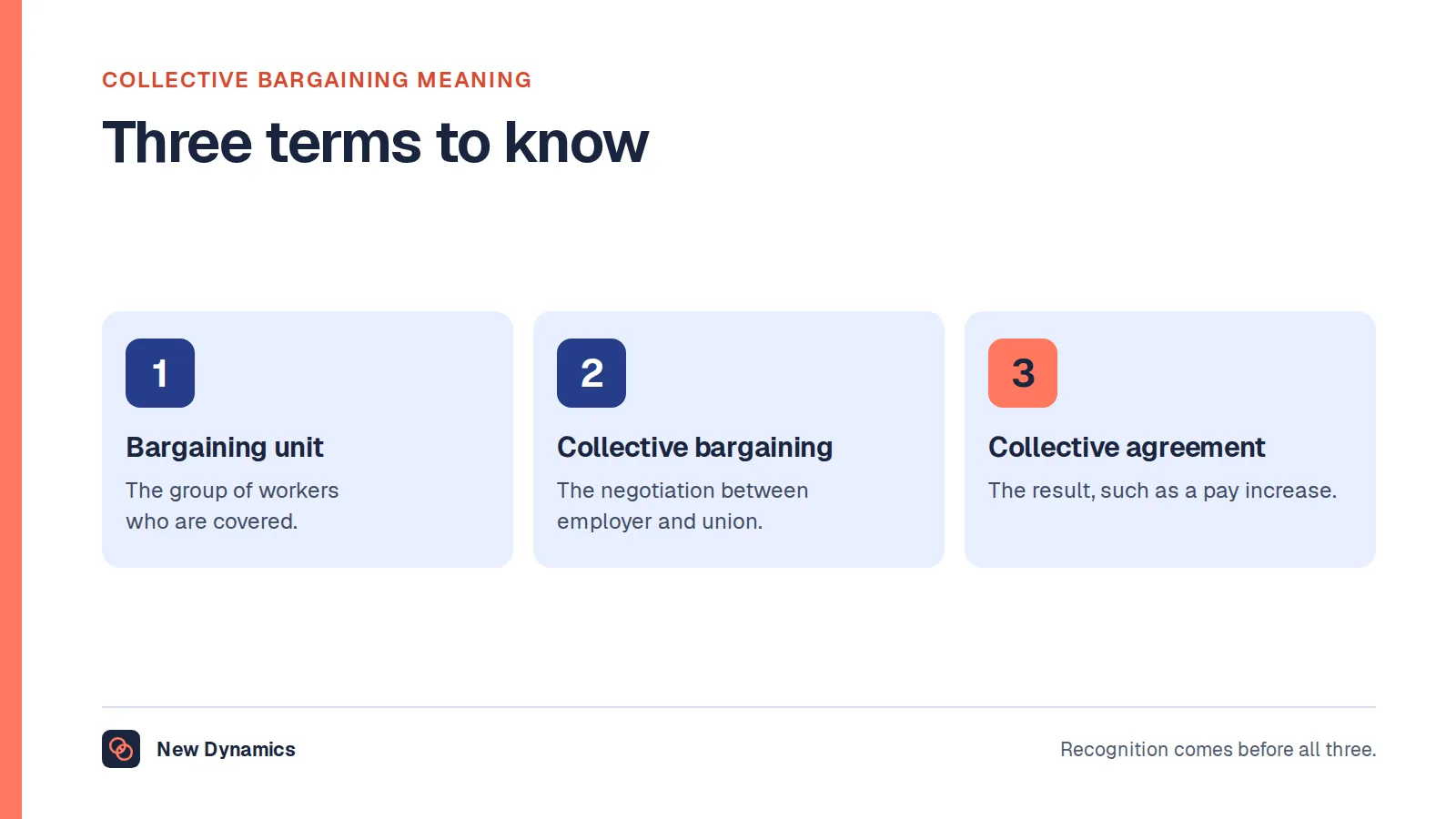
It is unlawful "to refuse to bargain collectively with the representatives of his employees, subject to the provisions of section 159(a) of this title". Our guide to collective bargaining quotes the statutory definition in full. The duty is to meet and confer in good faith. It does not compel either side to agree.
Unfair labor practices examples: four things that get managers into trouble
Jurisdiction: United States. How the general words above apply to a conversation has been worked out in Board and court decisions this article does not summarise. Each pattern below is tied to the statute, not to a promised outcome.
Interrogating staff about organising
A manager hears that employees have been talking to a union and starts asking questions. Who called the meeting. Who signed something. Whether a named colleague is involved.
The hook is section 8(a)(1), because questioning of that kind can restrain employees in exercising a section 7 right. The practical point is simpler: there is no version of that conversation you need to have.
Threatening consequences
Saying that the site will close, that hours or a bonus will go, or that a named person will not be promoted, if employees organise or vote a particular way. Again, section 8(a)(1). Predictions, opinions and threats sit on a spectrum litigated for decades, so take advice before speaking.
Promising benefits to discourage organising
The mirror image, and the one managers least expect to be a problem. Announcing a pay review, a new benefit or a sudden improvement, timed to discourage organising, can interfere with the same section 7 rights as a threat, and section 8(a)(3) covers discrimination over any "term or condition of employment" to "encourage or discourage membership in any labor organization". The record of when a pay decision was taken is worth more than anything you say later.
Retaliating against someone who raised a collective concern
An employee speaks up for a group, and afterwards the shifts change, the appraisal rating drops or a probation period is extended. Two paragraphs are in play: 8(a)(3) on tenure and terms, and 8(a)(4) on charges and testimony.
The remedy has a limit: section 10(c) says no Board order shall require the reinstatement of anyone "suspended or discharged for cause". That only helps an employer who can show the cause, which means contemporaneous records and the same standard applied to everyone else. Our performance improvement guide sets out that discipline.
Unfair labor practices by a union: section 8(b)
Jurisdiction: United States, quoted from 29 U.S.C. 158(b). The paragraph opens: "It shall be an unfair labor practice for a labor organization or its agents".
- 8(b)(1): "to restrain or coerce (A) employees in the exercise of the rights guaranteed in section 157 of this title", subject to a proviso preserving a union's own membership rules, or "(B) an employer in the selection of his representatives" for bargaining or grievances.
- 8(b)(2): "to cause or attempt to cause an employer to discriminate against an employee in violation of subsection (a)(3)".
- 8(b)(3): "to refuse to bargain collectively with an employer". The good-faith duty runs both ways.
- 8(b)(4): strikes, refusals to handle goods and coercing any person, where an object is one of four listed in (A) to (D), such as forcing a person "to cease doing business with any other person". Ordinary primary action is protected: nothing in clause (B) makes "any primary strike or primary picketing" unlawful.
Paragraphs 8(b)(5) to 8(b)(7) cover excessive fees, featherbedding and recognitional picketing. American law regulates both sides in one place and sends both to the same agency; no single British statute does that.
What is a ULP charge, and how does it proceed at the NLRB?
Jurisdiction: United States, from 29 U.S.C. 160 and the Board's procedural rules.

A ULP charge is the document that starts a case. It is an allegation, not a finding. Section 10(a) empowers the Board "to prevent any person from engaging in any unfair labor practice (listed in section 158 of this title) affecting commerce", and under the procedural rules it is a regional office of the Board, not the person who complained, that issues any complaint.
Who may file is unusually broad. 29 CFR 102.9 provides that "Any person may file a charge alleging that any person has engaged in or is engaging in any unfair labor practice affecting commerce."
The time limit is in the statute. Section 10(b) provides that "no complaint shall issue based upon any unfair labor practice occurring more than six months prior to the filing of the charge with the Board and the service of a copy thereof upon the person against whom such charge is made", with an exception for someone prevented from filing "by reason of service in the armed forces".
From there:
- The charge is investigated by one of the Board's regional offices.
- A complaint may issue. Under 29 CFR 102.15 it must describe the acts alleged, with dates and places, and contain "a Notice of Hearing before an Administrative Law Judge at a fixed place and at a time not less than 14 days after the service of the complaint".
- The respondent answers. Section 10(b) gives it the right "to file an answer ... and to appear in person or otherwise and give testimony".
- A hearing is held, before an administrative law judge.
- The Board can order a remedy, including, under section 10(c), "to take such affirmative action including reinstatement of employees with or without back pay".
A charge is cheap to file, quick to become public and slow to resolve.
What is a ULP strike, and why reinstatement turns on it
Jurisdiction: United States.
A ULP strike is a strike caused by the employer's own unfair labor practices, rather than by a disagreement over pay, hours or terms. A strike of that second kind is an economic strike. The labels describe the cause of the walkout, and American law attaches consequences to that cause.
Two statutory points first. Strikers do not stop being employees: the definition at 29 U.S.C. 152(3) includes "any individual whose work has ceased as a consequence of, or in connection with, any current labor dispute or because of any unfair labor practice, and who has not obtained any other regular and substantially equivalent employment". And the Act does not remove the right to strike: section 13, at 29 U.S.C. 163, says nothing in it shall be construed "so as either to interfere with or impede or diminish in any way the right to strike".

The consequence readers are looking for comes from case law. In National Labor Relations Board v. Mackay Radio and Telegraph Co., 304 U.S. 333 (1938), the Supreme Court held at pages 345 and 346 that carrying on the business during a strike was not itself unlawful. The United States Reports, digitised by the Library of Congress, record the words. The 1938 report spells employees as "employes":
"Nor was it an unfair labor practice to replace the striking employes with others in an effort to carry on the business."
The Court added that "an employer, guilty of no act denounced by the statute", has not lost the right to continue the business "by supplying places left vacant by strikers". Read that qualification, because it is the hinge. The same opinion then held that this employer had crossed a line in how it took people back: "the strikers retained, under the Act, the status of employes. Any such discrimination in putting them back to work is, therefore, prohibited by § 8."
That is why the distinction matters. Where the strike is economic and the employer has committed no unfair labor practice, the argument is about keeping the business running and about whether the return to work was handled without discrimination. Where the employer's own unlawful conduct caused the strike, it is not in that position, and section 10(c) remedies are in play.
This article will not give you the rule for your own case. Reinstatement rights for economic and for unfair labor practice strikers, including recall rights and the treatment of replacements, sit in later decisions that could not be opened and quoted here. If you are near this question, instruct an American labour lawyer.
The British equivalent: the concept exists, the name does not
Jurisdiction: Great Britain, meaning England, Wales and Scotland. Northern Ireland has its own industrial relations law and institutions, which this article does not cover.
There is no unfair labour practice in British law. The phrase is not in the statute book, and a manager who tells a tribunal that something was "an unfair labour practice" has said nothing legally meaningful. What exists instead is a set of specific rights, mostly in the Trade Union and Labour Relations (Consolidation) Act 1992.
The context is not small. The Department for Business and Trade's bulletin on trade union membership, published on 28 May 2026 and measured in the fourth quarter of each year, reports that union members among UK employees "rose by 192,000 on the year to 6.6 million". Our HR statistics hub collects figures like this.
Detriment and dismissal
The nearest thing to section 8(a)(1) is section 146(1) of the 1992 Act, which gives a worker "the right not to be subjected to any detriment as an individual by any act, or any deliberate failure to act, by his employer if the act or failure takes place for the sole or main purpose of" preventing or deterring them from union membership, from union activities "at an appropriate time", or from using trade union services, or "penalising him for doing so". An appropriate time means outside working hours, or within them where the employer has agreed.
Dismissal is separate. Section 152(1) provides that a dismissal "shall be regarded as unfair if the reason for it (or, if more than one, the principal reason) was that the employee" was or proposed to become a union member, had taken part in union activities at an appropriate time, had used trade union services, or "was not a member of any trade union". The shape matches the American list, including protection for the employee who wants no part of a union.
Inducements and refusal of employment
Promising a benefit to discourage union activity has its own provision. Section 145A(1) gives a worker "the right not to have an offer made to him by his employer for the sole or main purpose of inducing the worker" not to join an independent trade union, not to take part in its activities at an appropriate time, or not to use its services. Section 145B covers inducements relating to collective bargaining, and section 137(1) makes it "unlawful to refuse a person employment" because they are, or are not, a union member.
Blacklisting
Here Great Britain has a regulation where the United States has case law. Regulation 3 of the Employment Relations Act 1999 (Blacklists) Regulations 2010 provides: "Subject to regulation 4, no person shall compile, use, sell or supply a prohibited list." A prohibited list holds details of union members or of people taking part in union activities, and "is compiled with a view to being used by employers or employment agencies for the purposes of discrimination in relation to recruitment or in relation to the treatment of workers". In practice: a spreadsheet of who is in the union, kept so hiring managers can use it, is what these regulations prohibit.
Trade union recognition through the Central Arbitration Committee
Jurisdiction: Great Britain.
The American question "must this employer bargain?" is answered through certification and section 8(a)(5). The British route is recognition, and where it is not given voluntarily, a statutory procedure before the Central Arbitration Committee, the CAC.
GOV.UK's guidance for employers on trade union recognition puts the voluntary route first: "The union must ask you to recognise them voluntarily", and "if you agree to the request then the union is recognised". Otherwise: "If you do not want to recognise the union and have more than 21 workers, they can apply for statutory recognition from the Central Arbitration Committee (CAC)." A union applying needs "at least 10% union membership within the proposed bargaining unit".
The detailed procedure is in Schedule A1 to the 1992 Act, and this part of the law moved in 2026. On the ballot result, paragraph 29(3) now reads: "If the result is that the union is (or unions are) supported by a majority of the workers voting, the CAC must issue a declaration that the union is (or unions are) recognised as entitled to conduct collective bargaining on behalf of the bargaining unit." Sub-paragraphs (5) to (7) appear as omitted, the note recording: "Sch. A1 para. 29(5)-(7) omitted (6.4.2026) by virtue of Employment Rights Act 2025 (c. 36), s. 159(3), Sch. 6 para. 19(4); S.I. 2026/323, reg. 3(1)(27)(c)(ii)".
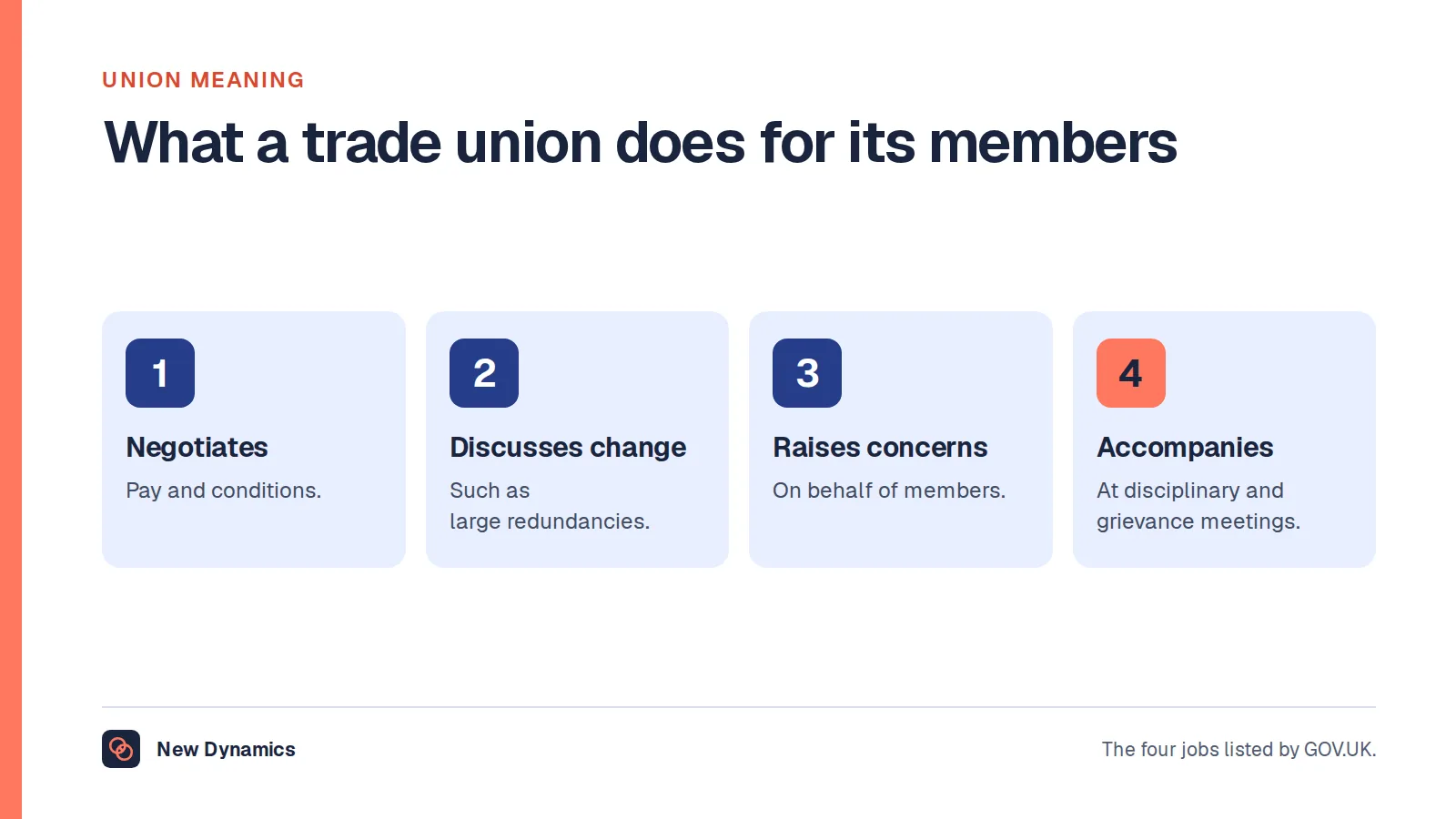
If older guidance disagrees, this is why. Read the paragraph and take advice. Our article on what a union is covers the duties that follow recognition.
Protected industrial action, the tribunal, and what changed in 2026
Jurisdiction: Great Britain.
Where an American reader asks whether a strike was a ULP strike or an economic strike, a British reader asks whether the industrial action was protected. The terms are not translations of each other.
Acas, the Advisory, Conciliation and Arbitration Service, states the basics on its page about strikes and industrial action. For action to be official, "trade unions must hold a ballot for their members", and "Anyone with the legal status of employee is protected from unfair dismissal if they take part in official industrial action."
The statutory definition is narrow. Section 238A(1) provides: "For the purposes of this section an employee takes protected industrial action if he commits an act which, or a series of acts each of which, he is induced to commit by an act which by virtue of section 219 is not actionable in tort." Section 238A(2) then treats a dismissed employee as unfairly dismissed where "the reason (or, if more than one, the principal reason) for the dismissal is that the employee took protected industrial action".
This is the provision that changed. The current revised text of section 238A is dated 18 February 2026, and subsections (3) to (7D) now appear as omitted, the note recording: "S. 238A(3)-(7D) omitted (18.2.2026) by virtue of Employment Rights Act 2025 (c. 36), ss. 77(3)(b), 159(3); S.I. 2026/3, reg. 3(8) (with Sch. 2 para. 11)". Those subsections qualified the protection by reference to a period of time, so anyone working from a pre-2026 summary, on this site or anywhere else, should read the current section rather than assume the old arithmetic applies. The page also lists "Changes and effects yet to be applied to Section 238A", a further reason to read it directly.
Detriment short of dismissal is separate. GOV.UK, on your employment rights during industrial action, states that "If you take part in protected industrial action, your employer must not put you at a disadvantage if their sole or main purpose is to penalise you for taking part".
There is no British labour board. A worker claims in the employment tribunal, and the clock is short. Acas, on employment tribunals, states that "You must notify Acas within the time limit", and that "You might only have 3 months minus 1 day from the date the problem at work happened". Set that beside the six months in section 10(b) of the American statute: shorter clock, different forum, and a claim brought by the worker rather than by an agency that takes the case over.
The overlap: plain instructions for managers in both countries
Jurisdiction: both. Each instruction keeps you clear of the American provision and the British one named beside it. None of it replaces advice on a specific situation: in a live dispute, ask before you speak.
- Do not ask who is organising. No list, no names, no "just between us". US: section 8(a)(1). GB: section 146, and the Blacklists Regulations if it is written down.
- Do not threaten consequences for organising or for voting a particular way. No closures, no lost hours, no lost promotions. US: section 8(a)(1). GB: section 146, because a threat carried out is a detriment and the threat itself is evidence of purpose.
- Do not promise or announce a benefit to head off organising. US: sections 8(a)(1) and 8(a)(3). GB: sections 145A and 145B.
- Do not treat a union member or representative differently in anything you control: shifts, overtime, training, ratings, pay, or who gets the interesting work. US: section 8(a)(3). GB: sections 146 and 152.
- Do not keep a record of who is in the union. If you have one, it should not exist. GB: Blacklists Regulations, regulation 3. US: section 8(a)(3), if it reaches a decision.
- Do not ask about union membership when recruiting. GB: section 137. US: section 8(a)(3), which covers discrimination "in regard to hire".
- Do not punish anyone for complaining, including collectively: raising a concern with an agency, giving evidence, signing a group letter. US: section 8(a)(4) and the concerted activity limb of section 7. GB: section 146, plus unfair dismissal and whistleblowing protection.
- Do decide, record and date. Write down what you decided, when, why and on what evidence, before any dispute starts. Both countries ask what the reason was, and both give an employer the "for cause" argument only if it can be evidenced.
- Do keep bargaining in good faith once you are in it. US: section 8(a)(5). GB: the duties that follow recognition.
- Do separate the dispute from everyday management. Appraisals and disciplinary procedure still run, on the same standard, for everyone. Changing the standard for the people in the dispute is how a lawful decision starts to look unlawful.
The pattern is identical in both jurisdictions. The law asks about your purpose and about the difference in treatment, and both are proved from what you did and recorded. Routine employee relations and an honest grievance route are the practical defence: they produce the record, and usually resolve the problem first.
Frequently asked questions
What is an unfair labor practice?
An unfair labor practice is conduct by an employer or a union that section 8 of the American National Labor Relations Act makes unlawful. Section 8(a) lists five employer practices: interfering with employees' rights, dominating a labor organization, discriminating over union membership, retaliating over charges or testimony, and refusing to bargain. Section 8(b) lists union practices. The term has no British equivalent.
What does ULP stand for?
ULP is the usual American abbreviation for unfair labor practice. A ULP charge starts a case at the National Labor Relations Board, and a ULP strike is a strike caused by the employer's unfair labor practices.
What is a ULP strike, and how does it differ from an economic strike?
A ULP strike is caused by the employer's own unfair labor practices. An economic strike is about pay, hours or terms. In the United States the difference goes to what happens afterwards, because the Supreme Court held in 1938 that an employer guilty of no act denounced by the statute may carry on its business during a strike. An employer whose own unlawful conduct caused the strike is not in that position. The detail sits in later decisions, so take advice.
How long do you have to file a ULP charge?
Six months, in effect. Section 10(b) of the National Labor Relations Act says no complaint shall issue based on an unfair labor practice occurring more than six months before the charge was filed and served, with an exception for armed forces service. That is American law only. In Great Britain, Acas says you might only have 3 months minus 1 day to notify it about a tribunal claim.
Do unfair labour practices exist in UK law?
Not under that name. Great Britain protects the same ground through specific rights, chiefly in the Trade Union and Labour Relations (Consolidation) Act 1992: detriment and dismissal protection for union membership and activities, rules on inducements and refusal of employment, the Blacklists Regulations 2010, and statutory recognition through the Central Arbitration Committee. Claims go to an employment tribunal.
Can an employee be dismissed for taking part in a strike in Great Britain?
Section 238A of the 1992 Act makes a dismissal unfair where the principal reason is that the employee took protected industrial action, and legislation.gov.uk now shows subsections (3) to (7D) of it as omitted by the Employment Rights Act 2025 from 18 February 2026. That change is recent, so read the current section and take advice rather than any summary of the previous position.
Your next step
Take the habit rather than the citations. Decide, record and date, because the question a manager is eventually asked is why a decision was made, and whether the same standard applied to everyone.
So, two steps. Write down what managers should and should not say if organising starts, and have an employment lawyer in the relevant country check it before you need it. Our employee handbook guide covers setting a written standard that holds up when a dispute arrives. The guide is free to read, and the PDF uses our short download form.
Then make sure concerns reach a manager early, through a channel that leaves a record. Book a New Dynamics demo and bring the review and feedback process you run today, or email contact@new-dynamics.com.
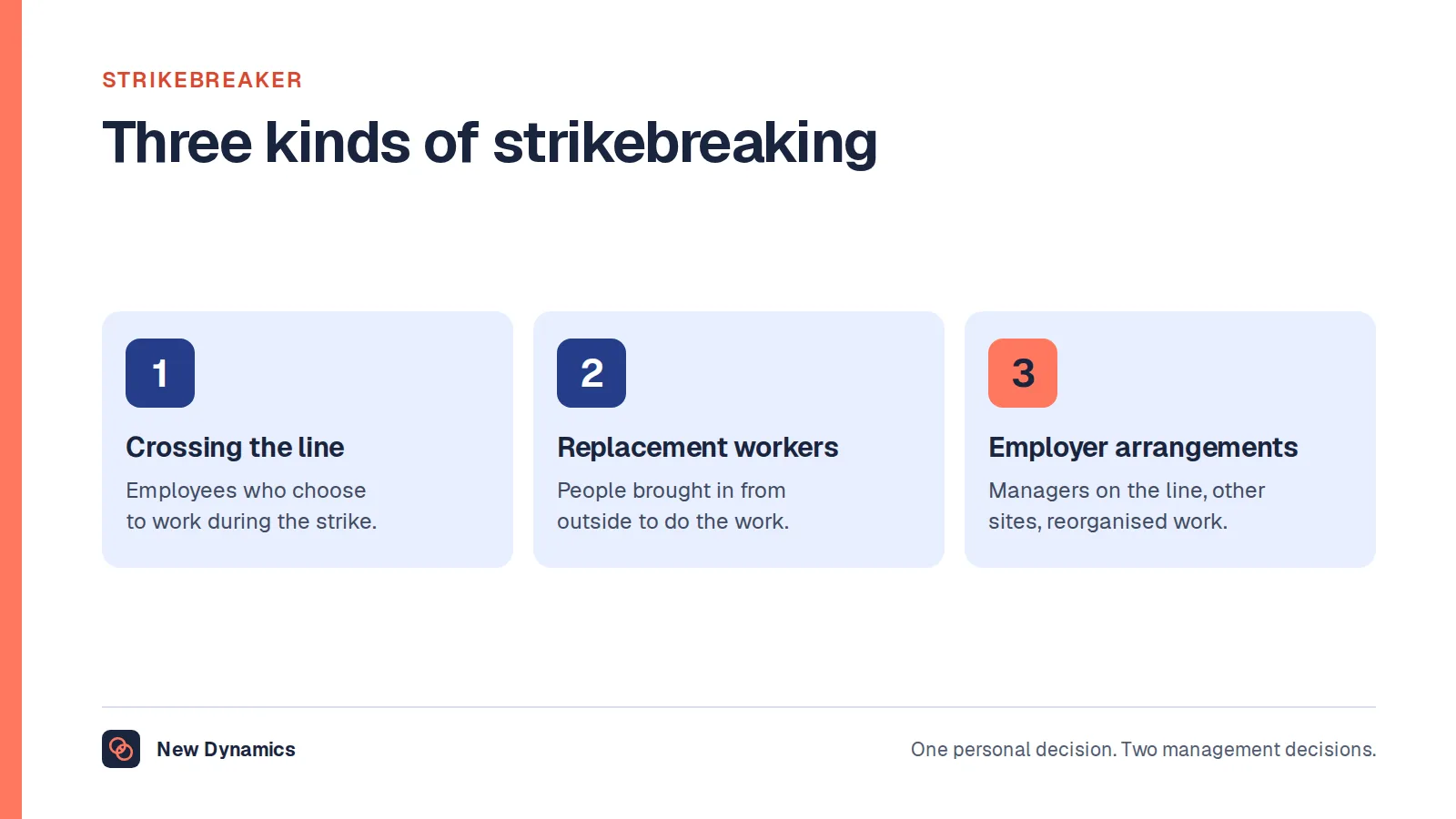
For the surrounding vocabulary, read our articles on collective bargaining, what a trade union is and the word strikebreaker. This article is general information and not legal advice.