TL;DR
- Form 1120-S is a United States federal return and nothing else. The IRS says to "Use Form 1120-S to report the income, gains, losses, deductions, credits, and other information of a domestic corporation or other entity for any tax year covered by an election to be an S corporation". It is also the most-filed business income tax return in the country: 6,154,614 of them were filed in fiscal year 2025, against 5,215,815 partnership returns and 2,350,205 for the whole rest of the Form 1120 series.
- The company files, the owners pay. The 2025 instructions put it plainly: "Shareholders are liable for tax on their shares of the corporation's income" and "must include their share of the income on their tax return whether or not it is distributed to them". That is why Schedule K-1 matters more to a shareholder than the return itself.
- There is no one address to mail it to. Routing turns on the state of the principal business, office or agency and then on whether total assets reach $10 million or Schedule M-3 is filed. Separately, an S corporation filing 10 or more returns of any type in the calendar year is required to e-file. General information about the United States federal rules, not legal or tax advice.
Form 1120-S is a United States federal tax return, and everything below is about the American system. Its full title is the U.S. Income Tax Return for an S Corporation, it exists only in the American system, there is no British equivalent of it, and if you are reading this from the United Kingdom about a company you own then this is not your return. It is general information, not legal or tax advice.
The question people arrive with is usually the envelope. Someone searches for the address to post an S corporation return to, finds a single address on a results page, and puts it in the mail. There is no single address. The Internal Revenue Service routes Form 1120-S by the state the business operates from and then by the size of its balance sheet, and the wrong service centre is a delay you will not hear about until a notice arrives.
A filing deadline is an ownership problem before it is a tax problem. See how New Dynamics workflows give an annual task one owner, one date and a visible status.
What Form 1120-S is, and who files it
The IRS states the purpose of the form in one sentence on its About Form 1120-S page: "Use Form 1120-S to report the income, gains, losses, deductions, credits, etc., of a domestic corporation or other entity for any tax year covered by an election to be an S corporation."
The test for who must file is just as narrow. Under Who Must File, the Instructions for Form 1120-S say a corporation or other entity must file it if "(a) it elected to be an S corporation by filing Form 2553, (b) the IRS accepted the election, and (c) the election remains in effect". Three conditions, all of them required. The same section adds the instruction people most often get wrong in a first year: "Don't file Form 1120-S for any tax year before the year the election takes effect."
This is not a form you can choose to file because the label sounds right. Without an accepted election, a corporation files in the Form 1120 series instead.

The Form 2553 election, briefly
S corporation status is an election, not a type of company you register. It is made on Form 2553, Election by a Small Business Corporation, and the Instructions for Form 1120-S are blunt about the order of events: "Don't file Form 1120-S unless the corporation has filed or is attaching Form 2553."
The Instructions for Form 2553 set out the tests. An entity may elect only if it is a domestic corporation or a domestic entity eligible to be treated as one, it "has no more than 100 shareholders" (with spouses and family members able to count as one shareholder), its only shareholders are individuals, estates, certain exempt organisations or certain trusts, it "has no nonresident alien shareholders", it "has only one class of stock (disregarding differences in voting rights)", it is not an ineligible corporation such as a bank using the reserve method for bad debts or an insurance company taxed under subchapter L, and it uses a permitted tax year.
Timing is strict. Form 2553 must be filed "No more than 2 months and 15 days after the beginning of the tax year the election is to take effect", or at any time in the preceding tax year. The Form 1120-S instructions note that a Form 2553 filed alongside Form 1120-S "will generally be a late election", though relief for late elections exists with reasonable cause.
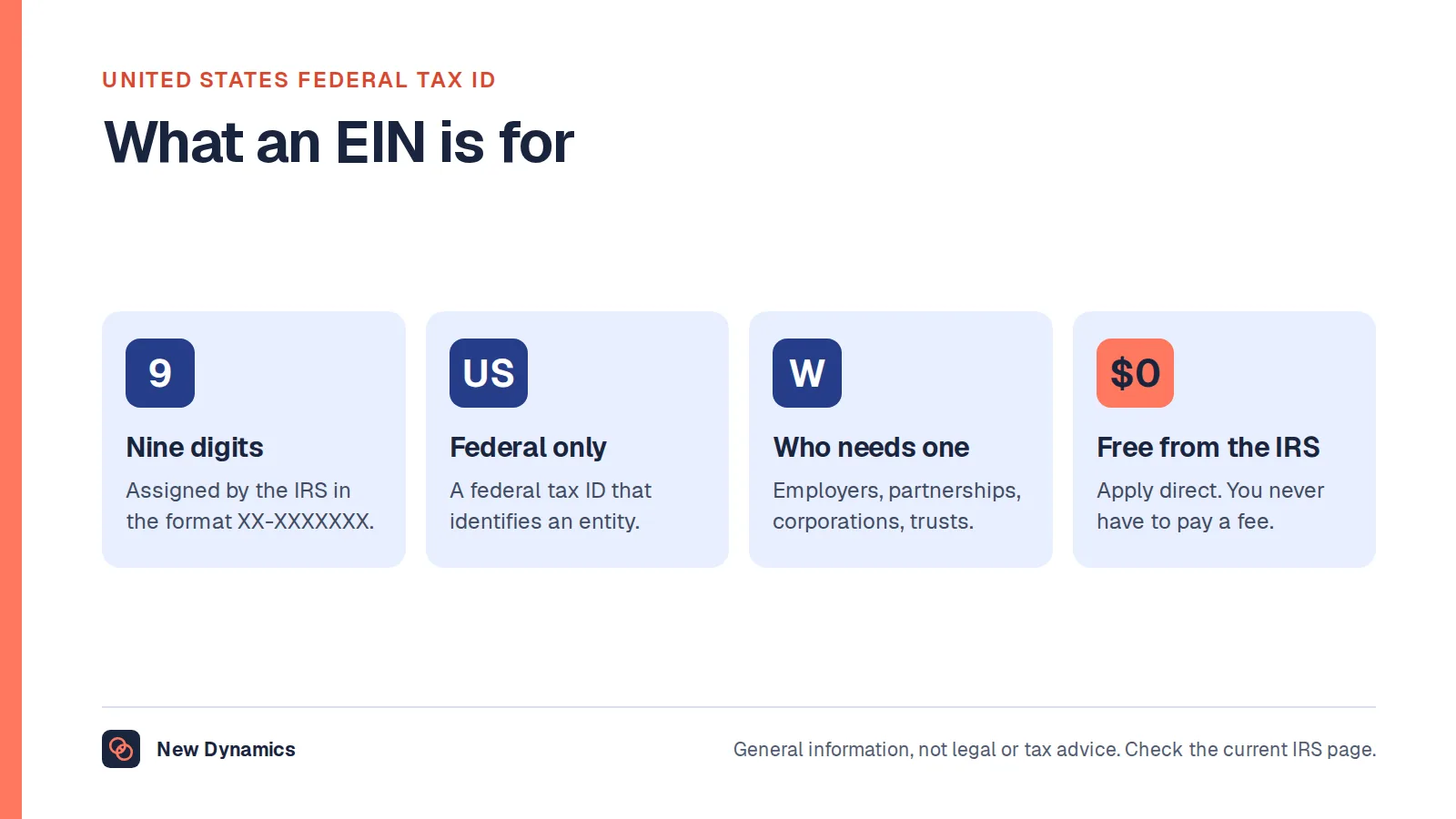
Every S corporation also needs an employer identification number before any of this works. Our post on the employer identification number covers how the EIN is issued and confirmed.
Pass-through: the corporation files, the shareholders pay
This is the point of the whole structure. The 2025 instructions, under Purpose of Schedules, state it in three sentences: "The corporation is liable for taxes on lines 23a, 23b, and 23c on Form 1120-S, page 1. Shareholders are liable for tax on their shares of the corporation's income (reduced by any taxes paid by the corporation on income). Shareholders must include their share of the income on their tax return whether or not it is distributed to them."
Read the last clause twice. A shareholder is taxed on a share of profit that was never paid out. The corporation's own federal income tax liability on an ordinary year is usually nothing, but "usually" is doing real work there. Lines 23a to 23c carry three specific entity-level taxes: the excess net passive income tax, the LIFO recapture tax and the built-in gains tax. The instructions also require estimated tax instalments where the total of the built-in gains tax, the excess net passive income tax and the investment credit recapture tax "is $500 or more".
One more line from the same passage is worth keeping, because it is the practical difference between an S corporation and a partnership: "Unlike most partnership income, S corporation income isn't self-employment income and isn't subject to self-employment tax." For the wider split between the taxes a business withholds and the taxes it owes, see our post on payroll tax against income tax.
Schedule K-1: the part that reaches a person
Form 1120-S is the corporation's return. Schedule K-1 (Form 1120-S), Shareholder's Share of Income, Deductions, Credits, etc., is the document that lands on an individual's desk and changes their personal filing.
The instructions describe the mechanics simply: "Schedule K-1 shows each shareholder's separate share. Attach a copy of each Schedule K-1 to the Form 1120-S filed with the IRS. Keep a copy for the corporation's records and give each shareholder a copy." The corporation must also hand over the shareholder instructions, or item-by-item instructions for everything reported.
Getting this wrong is expensive per shareholder rather than per return. For each failure to furnish a Schedule K-1 (and Schedule K-3 where it applies) when due, or to include the required information, the 2025 instructions say "a $340 penalty may be imposed with respect to each Schedule K-1". If the failure to report correct information is intentionally disregarded, each $340 penalty "is increased to $680 or, if greater, 10% of the aggregate amount of items required to be reported". A five-shareholder company that misses the K-1s is looking at five penalties, not one. The penalty is not imposed where the corporation can show reasonable cause.
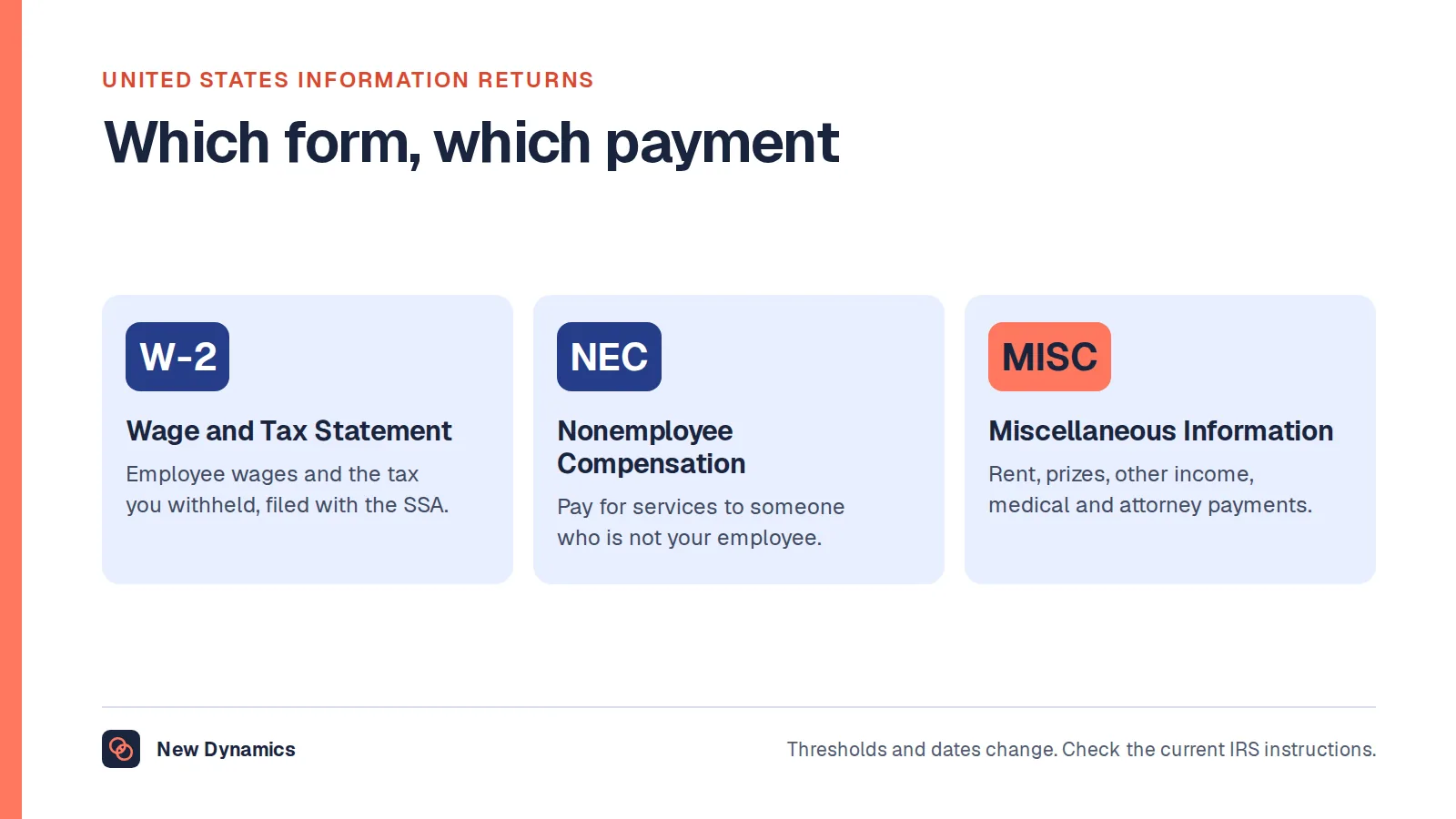
Schedule K-1 is not an information return in the Form 1099 family, though people file them in the same mental drawer. Our post on IRS information returns explains what does belong in that group.

When Form 1120-S is due, and the Form 7004 extension
The general rule, as the instructions word it under When To File, is that an S corporation must generally file Form 1120-S by the 15th day of the third month after the end of its tax year. For the 2025 return the instructions name the date outright: "For calendar year corporations, the due date is March 16, 2026 (March 15th falls on Sunday)." A dissolved corporation "must generally file by the 15th day of the 3rd month after the date it dissolved", and where a due date lands on a Saturday, Sunday or legal holiday the corporation "can file on the next day that isn't a Saturday, Sunday, or legal holiday".
Name the revision you are working from. These instructions are the ones for tax year 2025, and they say to "File the 2025 return for calendar year 2025 and fiscal years that begin in 2025 and end in 2026". The date moves every year, so check the instructions for the year you are filing rather than carrying last year's date forward.
For more time, the instructions direct you to Form 7004, Application for Automatic Extension of Time To File Certain Business Income Tax, Information, and Other Returns, filed "by the regular due date of the return". The Instructions for Form 7004 state that "The automatic extension period for time to file is generally 6 months", with exceptions that apply to certain Form 1041 filers and to C corporations with tax years ending June 30, neither of which touches an S corporation. The same instructions add the warning that catches people out: "Form 7004 does not extend the time to pay any tax due."
The late filing penalty, as the IRS states it
The penalty is charged per shareholder per month, which is why it grows faster than people expect. The 2025 instructions, under Late filing of return, give the rule as follows.
"For returns on which no tax is due, the penalty is $255 for each month or part of a month (up to 12 months) the return is late or doesn't include the required information, multiplied by the total number of persons who were shareholders in the corporation during any part of the corporation's tax year for which the return is due."
Where tax is due, "the penalty is the amount stated above plus 5% of the unpaid tax for each month or part of a month the return is late, up to a maximum of 25% of the unpaid tax". And there is a floor: "The minimum penalty for a tax return required to be filed in 2026 that is more than 60 days late is the smaller of the tax due or $525." The What's New section flags that figure as an increase for returns required to be filed in 2026.
Both the $255 monthly amount and the $525 minimum are adjusted and restated in each year's instructions, so treat them as the 2025 revision figures and check the current instructions before quoting them to anyone. Unpaid tax attracts its own charge, "generally ½ of 1% of the unpaid tax for each month or part of a month the tax isn't paid, up to a maximum of 25%". Each of these is lifted where the failure "is due to reasonable cause".
Where to mail Form 1120-S
Here is the rule the search results usually flatten into one address. The IRS Where to file your taxes for Form 1120-S page, reviewed on 27 August 2026, routes the return on two questions: where "the corporation's principal business, office, or agency is located", and what "the total assets at the end of the tax year are". Both answers are needed before you address an envelope.
- Connecticut, Delaware, the District of Columbia, Georgia, Illinois, Indiana, Kentucky, Maine, Maryland, Massachusetts, Michigan, New Hampshire, New Jersey, New York, North Carolina, Ohio, Pennsylvania, Rhode Island, South Carolina, Tennessee, Vermont, Virginia, West Virginia and Wisconsin, with total assets "Less than $10 million and Schedule M-3 is not filed": Department of the Treasury, Internal Revenue Service, Kansas City, MO 64999-0013.
- Any of those same locations, with "$10 million or more or Schedule M-3 is filed": Department of the Treasury, Internal Revenue Service, Ogden, UT 84201-0013. The instructions state this threshold slightly more precisely, as "$10 million or more, or less than $10 million and Schedule M-3 is filed".
- Alabama, Alaska, Arizona, Arkansas, California, Colorado, Florida, Hawaii, Idaho, Iowa, Kansas, Louisiana, Minnesota, Mississippi, Missouri, Montana, Nebraska, Nevada, New Mexico, North Dakota, Oklahoma, Oregon, South Dakota, Texas, Utah, Washington and Wyoming, at "Any amount" of total assets: Department of the Treasury, Internal Revenue Service, Ogden, UT 84201-0013.
- A foreign country or U.S. possession, at "Any amount": Internal Revenue Service, P.O. Box 409101, Ogden, UT 84409. The instructions use the phrase "A foreign country or U.S. territory" for the same row.
So twenty-three states and the District of Columbia can go to Kansas City, but only while the balance sheet stays under $10 million and no Schedule M-3 is attached. The other twenty-seven states go to Ogden whatever the figures. Schedule M-3 is the Net Income (Loss) Reconciliation for S Corporations With Total Assets of $10 Million or More, so if you are filing it you have already answered the asset question.
Two practical notes from the instructions. Designated private delivery services can meet the "timely mailing as timely filing" rule, with the current list at IRS.gov/PDS, but "Private delivery services can't deliver items to P.O. boxes. You must use the U.S. Postal Service to mail any item to an IRS P.O. box address." That applies squarely to the foreign and territory row above. Addresses are also changed from time to time, so open the Where to File page on the day you post.

Most S corporations are not allowed to mail it
Before you address anything, check whether paper is even an option. The instructions state that "For returns filed on or after January 1, 2024, S corporations are required to e-file Form 1120-S if they file 10 or more returns of any type during the calendar year (including income tax, employment tax, excise tax, and information returns)", citing Regulations section 301.6037-2. A waiver can be requested.
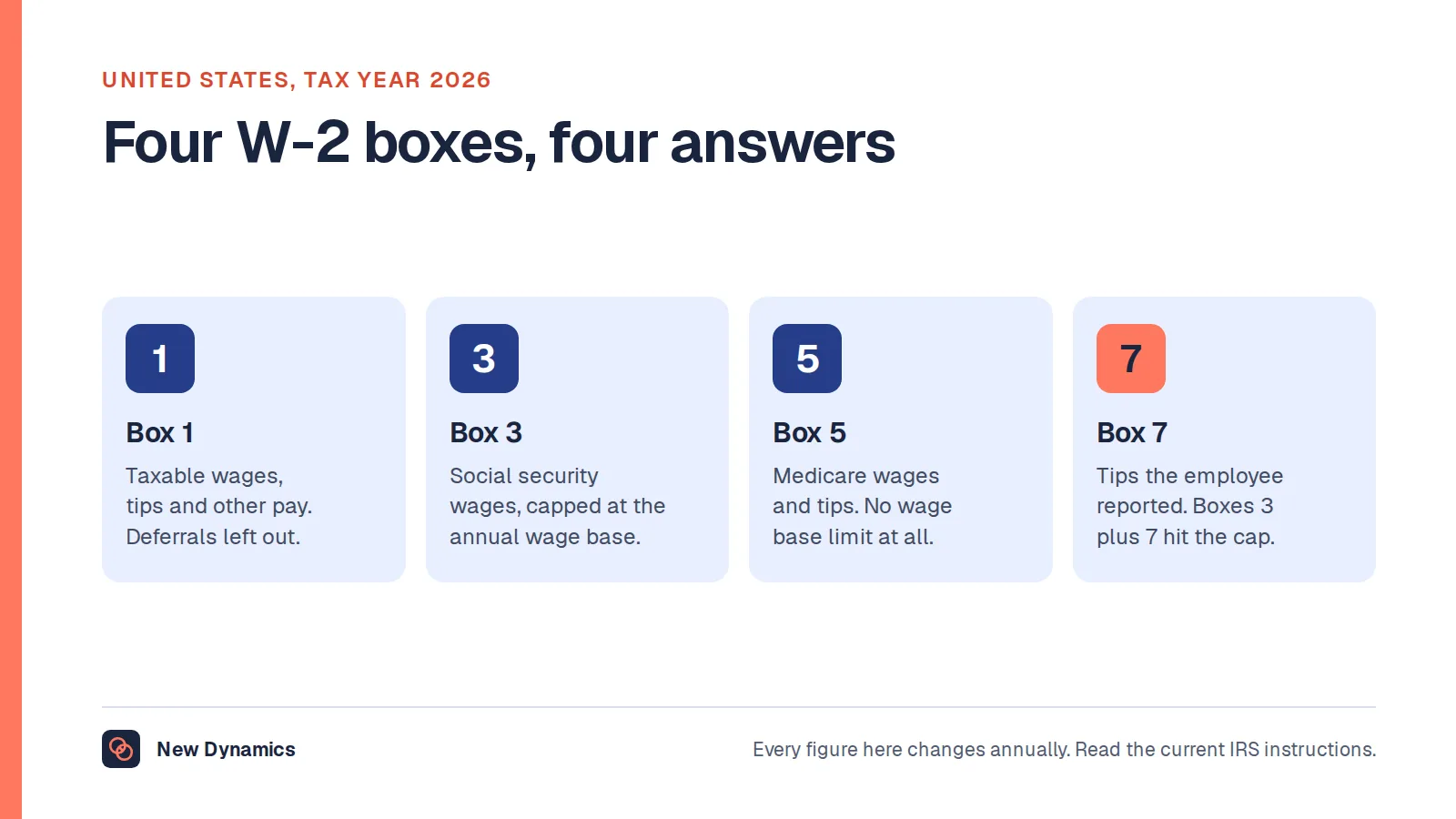
Ten of anything is a low bar. A company with a handful of employees is already filing quarterly employment tax returns and a W-2 for every person, and those count. Our post on the W2 form covers that side of the year end.
The line this touches inside a people team
One Form 1120-S entry is a payroll question rather than an accounting one. Against line 7, Compensation of Officers, the instructions carry a caution: "Distributions and other payments by an S corporation to a corporate officer must be treated as wages to the extent the amounts are reasonable compensation for services rendered to the corporation."
That is the reasonable compensation rule, and it is why an owner-director of an S corporation cannot take everything as a distribution. Where total receipts are $500,000 or more, the corporation completes Form 1125-E, Compensation of Officers, and carries the total to line 7. Fringe benefits for officers and employees owning more than 2% of the stock are included there and also reported as wages in box 1 of the Form W-2. Health insurance for a more-than-2% shareholder goes in box 14 as an information item.
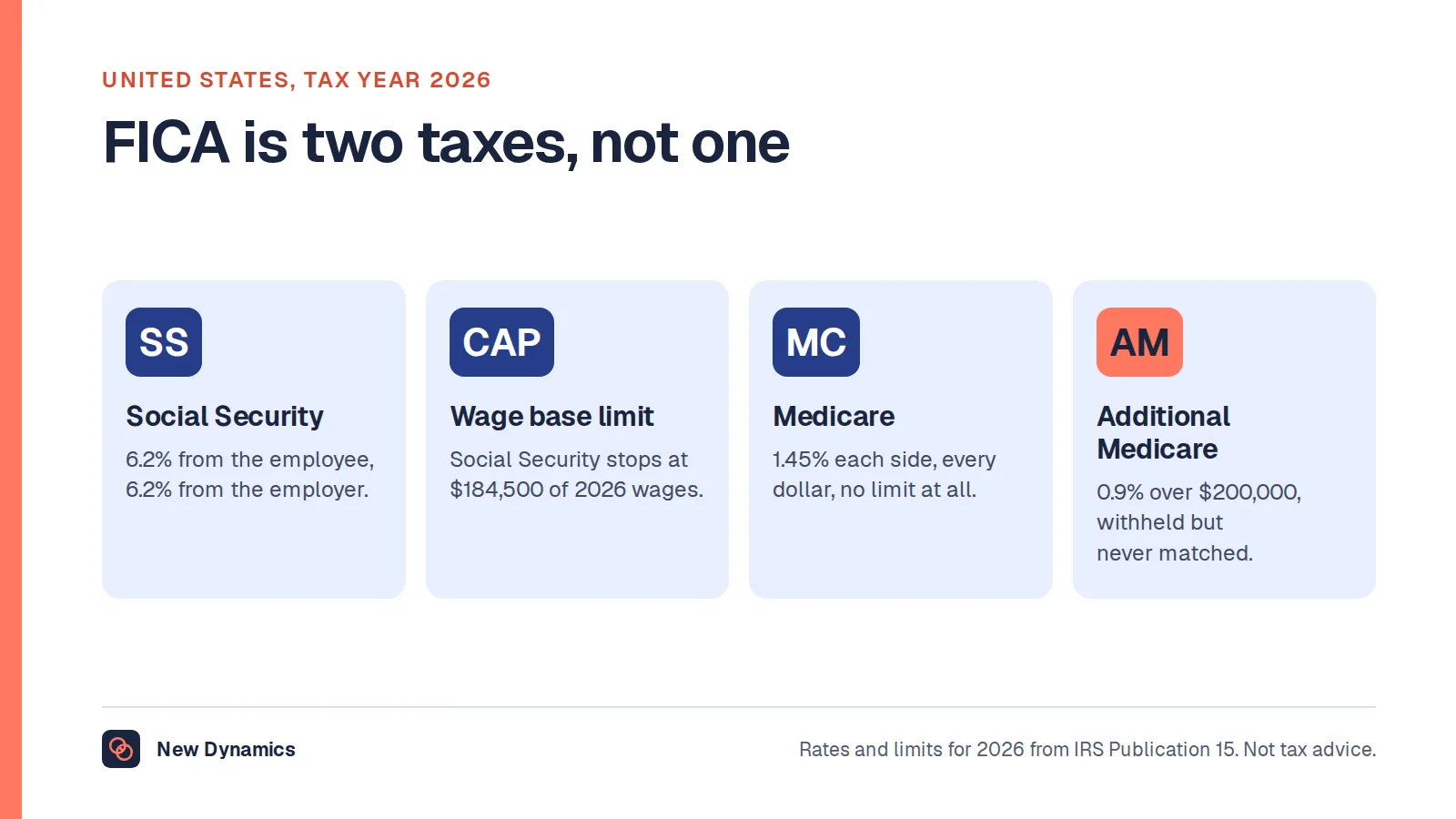
How much of that officer pay is wages is a decision someone has to be able to explain later. Our post on how FICA is calculated covers what then comes off those wages, and the statistics hub holds the wider figures we keep dated.
How many of these are filed, and why that matters
The S corporation return is not a niche form. IRS Data Book Table 1-2, Number of Returns and Other Forms Filed, by Type, Fiscal Years 2024 and 2025, records 6,154,614 Form 1120-S filings in fiscal year 2025, up 1.2% from 6,080,370 in fiscal year 2024. In the same year there were 5,215,815 partnership returns on Form 1065 and 2,350,205 returns across the rest of the Form 1120 series, which the table groups as "C or other corporation".
That makes Form 1120-S the most-filed business income tax return in the United States. The IRS has said for a long time that this is the pattern: its S corporation statistics page notes that "S corporations became the most common corporate entity type in 1997". The practical consequence is that a very large number of small companies are each responsible for a return, a stack of Schedule K-1s and a per-shareholder penalty if they slip.
Frequently asked questions
What is Form 1120-S?
Form 1120-S is the United States federal return called the U.S. Income Tax Return for an S Corporation. The IRS says to use it "to report the income, gains, losses, deductions, credits, etc., of a domestic corporation or other entity for any tax year covered by an election to be an S corporation". The corporation files it, and each shareholder receives a Schedule K-1 showing their share.
Where do I mail Form 1120-S?
It depends on two things, so there is no single address. The IRS Where to File page routes the return by the state of the corporation's principal business, office or agency, and then by total assets at the end of the tax year. Twenty-three states and the District of Columbia use Kansas City, MO 64999-0013 while assets are under $10 million and no Schedule M-3 is filed, and Ogden, UT 84201-0013 otherwise. The other twenty-seven states use Ogden at any asset level. Foreign and possession filers use P.O. Box 409101, Ogden, UT 84409. Check the IRS page before posting.
When is Form 1120-S due?
Generally by the 15th day of the third month after the end of the corporation's tax year. The 2025 instructions give the calendar year date as March 16, 2026, because March 15 fell on a Sunday. A dissolved corporation files by the 15th day of the third month after the date it dissolved. The date shifts each year, so read the instructions for the year you are filing.
Can I get an extension for Form 1120-S?
Yes, on Form 7004, filed by the regular due date of the return. The Instructions for Form 7004 say "The automatic extension period for time to file is generally 6 months", and the exceptions listed do not apply to an S corporation. It buys filing time only: "Form 7004 does not extend the time to pay any tax due."
What is the penalty for filing Form 1120-S late?
Per shareholder, per month. For returns with no tax due, the 2025 instructions set the penalty at "$255 for each month or part of a month (up to 12 months) the return is late", multiplied by the number of people who were shareholders during any part of the tax year. Where tax is due, add 5% of the unpaid tax a month to a maximum of 25%. The minimum for a return required to be filed in 2026 and more than 60 days late is the smaller of the tax due or $525. Reasonable cause can excuse each failure, and the amounts are restated annually.
Does the S corporation itself pay income tax?
Mostly not. The instructions say "Shareholders are liable for tax on their shares of the corporation's income" and must include that share on their own return "whether or not it is distributed to them". The corporation is liable for the taxes on lines 23a to 23c of page 1, which are the excess net passive income tax, the LIFO recapture tax and the built-in gains tax.
What is the difference between Form 1120 and Form 1120-S?
The election. Form 1120-S is filed only for a tax year "covered by an election to be an S corporation" made on Form 2553 and accepted by the IRS. Without that election, a corporation files in the Form 1120 series and is taxed at the entity level. Form 1120-S passes the items through to shareholders on Schedule K-1 instead.
Do I need to file Form 2553 before Form 1120-S?
Yes. The instructions say "Don't file Form 1120-S unless the corporation has filed or is attaching Form 2553", and not to file Form 1120-S for any tax year before the year the election takes effect. Form 2553 is due no more than 2 months and 15 days after the start of the tax year the election is to take effect, and a Form 2553 attached to Form 1120-S "will generally be a late election", for which relief may be available.
Your next step: settle the address and the owner before March
Jurisdiction: United States federal tax. General information, not legal or tax advice.
- Check whether you are allowed to mail it at all. Ten or more returns of any type in the calendar year makes e-filing compulsory, and employment tax returns and W-2s count towards the ten.
- Answer both routing questions in writing. The state of the principal business, office or agency, and total assets at the end of the tax year. Then open the IRS Where to File page on the day you post, because service centre addresses change.
- Put the Schedule K-1 list next to the return date. The per-shareholder penalty makes the K-1s the expensive part of a late filing, not the return.
- File Form 7004 by the regular due date, not after it. Six months of filing time, no payment time.
- Name the officer compensation figure and the reason for it. Reasonable compensation for services has to be defensible, and the number is easier to defend when the evidence behind it already exists.
- Re-read the current instructions every year. The due date, the $255 monthly amount, the $525 minimum and the $340 Schedule K-1 penalty are all restated annually.
For a way of setting and recording pay that you can explain to the person affected, read and download our compensation policy guide. The guide is free to read, and the PDF uses our short download form.
Want every annual filing task to carry an owner, a due date and a visible status instead of a reminder in somebody's inbox? Book a New Dynamics demo and bring your filing calendar. You can also email contact@new-dynamics.com.