TL;DR
- An EIN is American. The IRS describes it as "a federal tax ID number for businesses, tax-exempt organizations and other entities", and it is nine digits long. Federal tax ID number, employer ID number and business tax ID all name the same thing, which is why the search results look like four separate topics.
- The IRS route is free. Its own page says: "Beware of websites that charge for an EIN. You never have to pay a fee for an EIN." This site does not recommend or rank any provider, and you do not need one to apply.
- The CP 575 is the notice issued when the number is assigned; Letter 147C confirms an EIN previously assigned, so it is what you request once the CP 575 has gone. There is no UK EIN: the nearest references are the PAYE reference, the Accounts Office reference, the Corporation Tax UTR, the VAT registration number and the Companies House company number. General information, not legal or tax advice.
A bank asks for your EIN confirmation letter. A payroll provider asks for a CP 575. Somebody in finance says you need a 147C instead, nobody can find the original notice, and a search for help returns companies offering to get you a number for a fee.
It is worth saying plainly at the start: the employer identification number is American. It belongs to the United States federal tax system, it is issued by the Internal Revenue Service, and there is no UK version of it. A British reader can skip to the final section, where five references do the job of one American number.
Setting up an entity is a sequence of dated tasks. See how New Dynamics workflows give each step an owner and a due date.
This is general information about United States and United Kingdom tax and registration rules, not legal or tax advice. Every quotation below is taken from the page that publishes it, read on 6 November 2026, and the details change. Nothing here publishes a real organisation's tax reference, and nothing here recommends a provider.
What an employer identification number is

Jurisdiction: United States. An EIN identifies a business entity to the IRS in the way a Social Security number identifies a person. The IRS employer identification number page, last reviewed on 17 July 2026, opens with the whole definition in one line: "An EIN is a federal tax ID number for businesses, tax-exempt organizations and other entities."
That answers the commonest question here: whether an EIN and a federal tax ID number are two different things. They are not. The IRS taxpayer identification numbers page, last reviewed on 11 June 2026, says so directly: "An Employer Identification Number (EIN) is also known as a federal tax identification number, and is used to identify a business entity." EIN, employer ID number, federal tax ID and business tax ID all name the same nine digits.
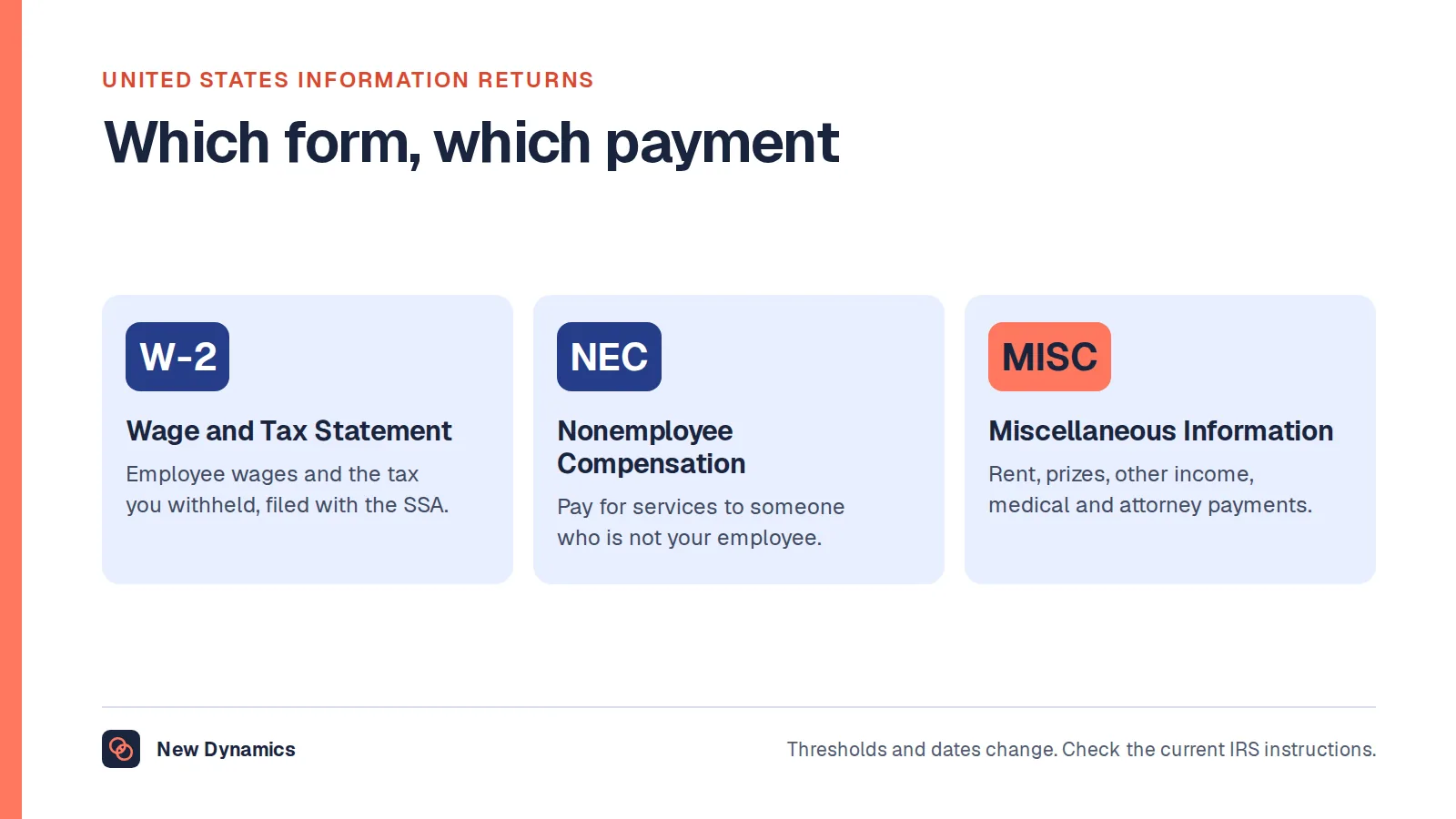
The word "employer" is the misleading part. The same page notes the number "is also used by estates and trusts", and plenty of entities hold one without running a payroll. In practice it identifies the entity on anything you send the federal government about its money: employment tax returns, the information returns about payments to other people, and the business bank account underneath. Our post on IRS information returns covers those filings, and Form W-2 the statement that carries the number into each employee's tax return.
Two cautions matter from the start. The Instructions for Form SS-4, revision 12-2025, are blunt about misuse: "An EIN is for use in connection with your business activities only." And on quantity: "A business entity should have only one EIN."
Who needs an EIN, and who does not
One case trips up payroll regularly. A single member LLC is ignored for income tax but not for employment tax, so it needs its own number: see disregarded entity.
Jurisdiction: United States. The IRS publishes a short list of federal triggers. You need an EIN if you:
- Have employees.
- Will need to pay employment, excise or alcohol, tobacco, and firearms taxes.
- Withhold taxes on income, other than wages, paid to a non-resident alien.
Some structures need a number whatever they do. You "also need an EIN to operate any of these entities", the page says, naming a partnership, a limited liability company, a corporation, a tax-exempt organisation, an estate, a retirement plan and a trust "(except certain grantor-owned revocable trusts)".
The sole proprietor is the case worth being clear about. A sole proprietor with no employees, no excise liability and no withholding on non-wage payments to a non-resident alien often does not need an EIN at all for federal tax purposes. The IRS sole proprietorships page, last reviewed on 28 June 2026, describes the person first: "A sole proprietor is someone who owns an unincorporated business by themselves." Their income tax arrives on Form 1040 with Schedule C, under their own Social Security number.
For anyone who does need one, the Form SS-4 instructions set the quantity rule: "Generally, a sole proprietor should file only one Form SS-4 and needs only one EIN, regardless of the number of businesses operated as a sole proprietorship or trade names under which a business operates." Three trading names and one person is one EIN, not three. "However, if a sole proprietorship incorporates or enters into a partnership, a new EIN is required."
You may want one when you do not need one. The EIN page allows it: "If you don't need an EIN for federal tax purposes, you can still request one for banking or state tax purposes." The instructions provide a box for exactly that, "Check this box if you're requesting an EIN for banking purposes only", and many sole proprietors apply for that reason alone.
If you already have one, hiring does not create a second. The instructions: "Don't apply if you already have an EIN and are only hiring employees." Group structures are the opposite case: "each corporation in an affiliated group must have its own EIN".
What a federal tax ID number looks like
Jurisdiction: United States. The answer here is structural rather than illustrative, because publishing a real organisation's number would publish somebody's tax reference.
Nine digits, in two parts. IRS Publication 1635, Understanding Your EIN, revision 2-2014, gives the shape: "An Employer Identification Number (EIN) is a nine-digit number that IRS assigns in the following format: XX-XXXXXXX." Two digits, a hyphen, then seven. The same digit count as a Social Security number, grouped two and seven instead of three, two and four.
The IRS publishes its own example, and it is the safe one to use. The About Form SS-4 page, last reviewed on 27 August 2026, writes it out: "An EIN is a 9-digit number (for example, 12-3456789) assigned to employers, sole proprietors, corporations, partnerships, estates, trusts, certain individuals, and other entities for tax filing and reporting purposes." If you need an example of a federal tax ID number for a form layout or a test record, use that illustration rather than a number copied off a real invoice.
The first two digits are not random. The IRS page on how EINs are assigned and valid EIN prefixes, last reviewed on 4 November 2026, explains: "The first two digits of your EIN show the IRS campus that assigned it or if you applied online." It lists the valid prefixes per campus. Useful for checking that a prefix is real, useless for guessing anybody's number.
What it does not look like is an ITIN, which "is a 9-digit number, beginning with the number "9", formatted like an SSN (NNN-NN-NNNN)". Same count, different grouping, different purpose.
How to get an EIN, and why the IRS route is free
Jurisdiction: United States. First the free point, because the search results obscure it. The IRS get an employer identification number page, last reviewed on 16 October 2026, carries a warning of its own: "Beware of websites that charge for an EIN. You never have to pay a fee for an EIN." The main EIN page says the same from the other direction: "You can get an EIN for free directly from the IRS in minutes."
Several searches that reach a page like this want a service to obtain a number for a fee. We are not going to name, rank or price one: the federal route is free and run by the agency that issues the number.
Form the entity first. The EIN page puts this before the application: "If you're creating a legal entity (LLC, partnership, corporation), register it with your state before you apply for an EIN." Skip it and, per the get-an-EIN page, "your EIN application may be delayed". Tax-exempt organisations are told to wait "until your organization is legally formed".
Then pick a channel. For an applicant whose principal place of business is in the United States:
- Online. "Apply online . Get an EIN now, free, direct from the IRS." The session is unforgiving: "Complete the application in one session. You can't save it for later", and "It expires after 15 minutes of inactivity, and you'll need to start over." Then the step people skip, "Print your EIN confirmation letter for your records."
- By fax. Fax Form SS-4 to the number on the EIN page, and "the IRS will fax a cover sheet with the EIN back to you in about 4 business days". One change if you learned this years ago: "We no longer provide the Form SS-4 notated with the EIN."
- By post. Mail Form SS-4 to the EIN Operation address: "You'll get your EIN in approximately 4 weeks."
Telephone is for international applicants only. The Form SS-4 instructions: "The IRS no longer issues EINs by telephone for domestic taxpayers."
One a day. The get-an-EIN page: "You can apply for only 1 EIN per responsible party per day." And if a deadline arrives before the number does: "If your tax return is due and you haven't received your EIN, write "Applied For" and the date that you applied for it in the space shown for the number."
The CP 575, the confirmation notice issued once

Jurisdiction: United States. The CP 575 is the notice the IRS issues when it assigns an EIN. It confirms the number, the legal name it was issued to and the address on file, which is why banks, payroll providers and licensing bodies ask for it: it ties a number to a name in the IRS's words rather than yours.
It is issued once, at assignment, and an online applicant can easily close the window without saving it. Hence that instruction to print the confirmation letter.
There is now a digital version, and its exact status matters. The EIN page: "Eligible Business Tax Account users can download a digital CP575, Employer Identification Number Verification Notice in BTA. It can be used as a substitute for the original CP575A-J notice series and Letter 147C, EIN Previously Assigned." The IRS Business Tax Account page, last reviewed on 16 October 2026, puts it in its own words: "The new CP575 notice is a substitute for the CP575A-J notice series and Letter 147C. Use it to provide confirmation of your EIN."
So "CP 575" now names two things: the original assignment notice in the CP575A-J series, and a downloadable verification notice that stands in for it. If a bank's form asks for "form CP575" or a "CP575 EIN confirmation letter issued by the IRS", either document answers the request. Eligibility is not universal: the Business Tax Account page notes the account "isn't yet available for limited liability companies (LLCs) that file as sole proprietors with Schedule C or Schedule F (Form 1040)". Check the current page, because this is the fastest-moving part of the subject.
Do not publish the notice itself: it shows a real entity's EIN, legal name and address, and most of what circulates as a "CP575 example" is somebody's actual paperwork.
Letter 147C, and why you ask for one
Jurisdiction: United States. Letter 147C is the IRS's confirmation of an EIN it has already issued. The EIN page names it in full, instructing you to call the business and specialty tax line and "Request Letter 147C, EIN Previously Assigned."
That subtitle is the definition. A CP 575 confirms a number the IRS has just assigned. Letter 147C confirms a number already assigned to an entity. From a bank's point of view the purpose is identical. So the answer to "what is a 147C letter" is: the replacement confirmation you request once the CP 575 has gone.
The spellings that circulate, 147c form, LTR 147C, LTR147C, letter 147C and the 147C document, are the same letter. There is no Form 147C to download and complete: it is a notice the IRS sends, not a form you file.
How to request it. The EIN page gives three routes, best taken in order of effort:
- "Request an Entity transcript." The page points to the business tax transcript service.
- Download the digital CP575 from Business Tax Account, where eligible. Faster than a call, same job.
- Call the business and specialty tax line and ask for Letter 147C. The number given for a missing EIN is 800-829-4933, "Monday to Friday 7 a.m. - 7p.m. local time".
Expect an identity check. On finding a lost number the page says: "We'll verify your identity and provide the number over the phone if you're authorized to receive it." Needing the number for a form is not the same as being authorised on the account, which is where a request most often stalls.
What a 147C letter looks like, structurally: IRS letterhead, the letter number, the entity's legal name as the IRS holds it, the address on file, and the EIN. We publish no filled example, for the same reason as the CP 575.
When a bank or payroll provider asks for proof

Jurisdiction: United States. The request usually arrives with a form number in it, and that number is often the wrong one for your situation. Work it in this order.
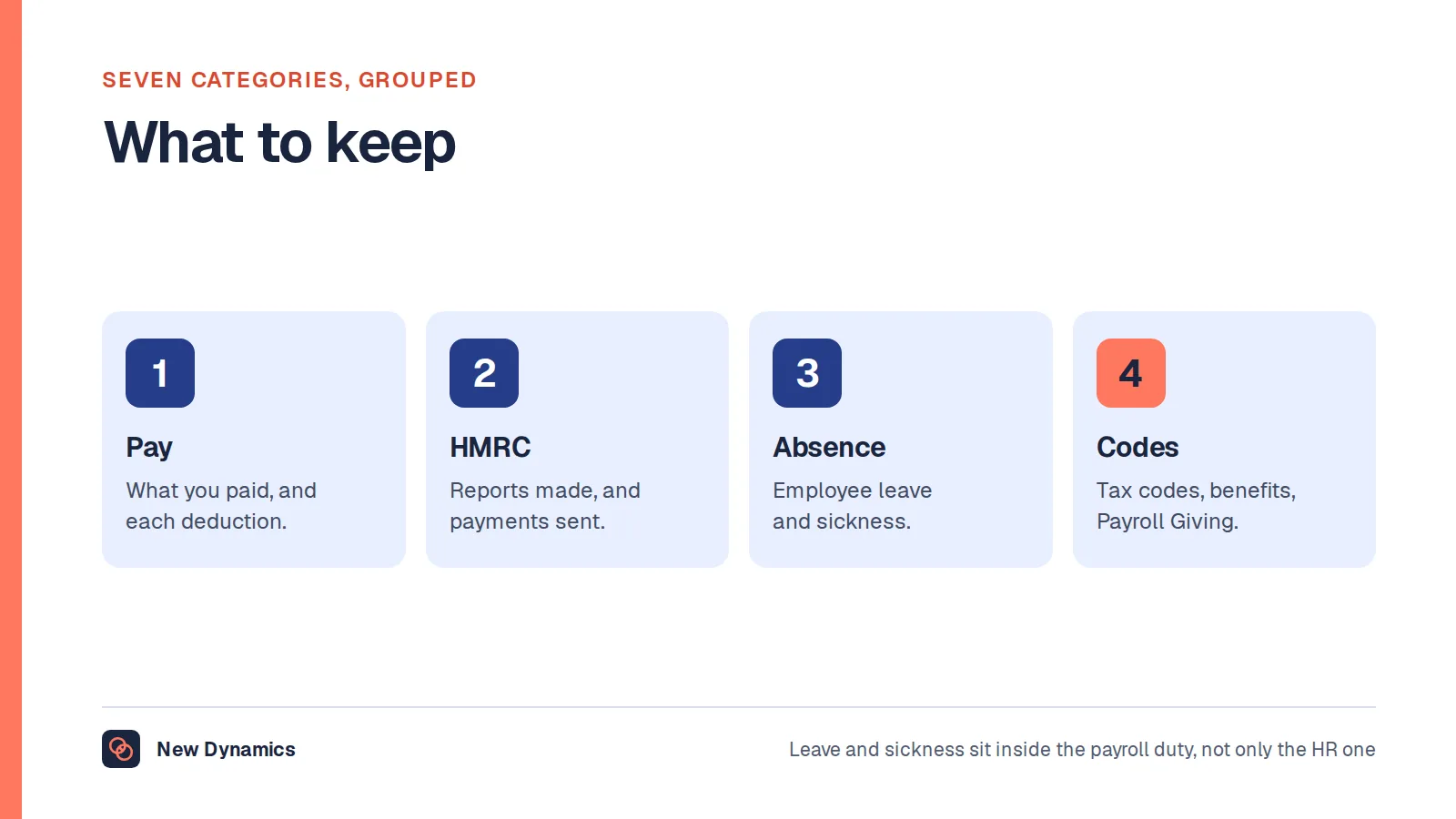
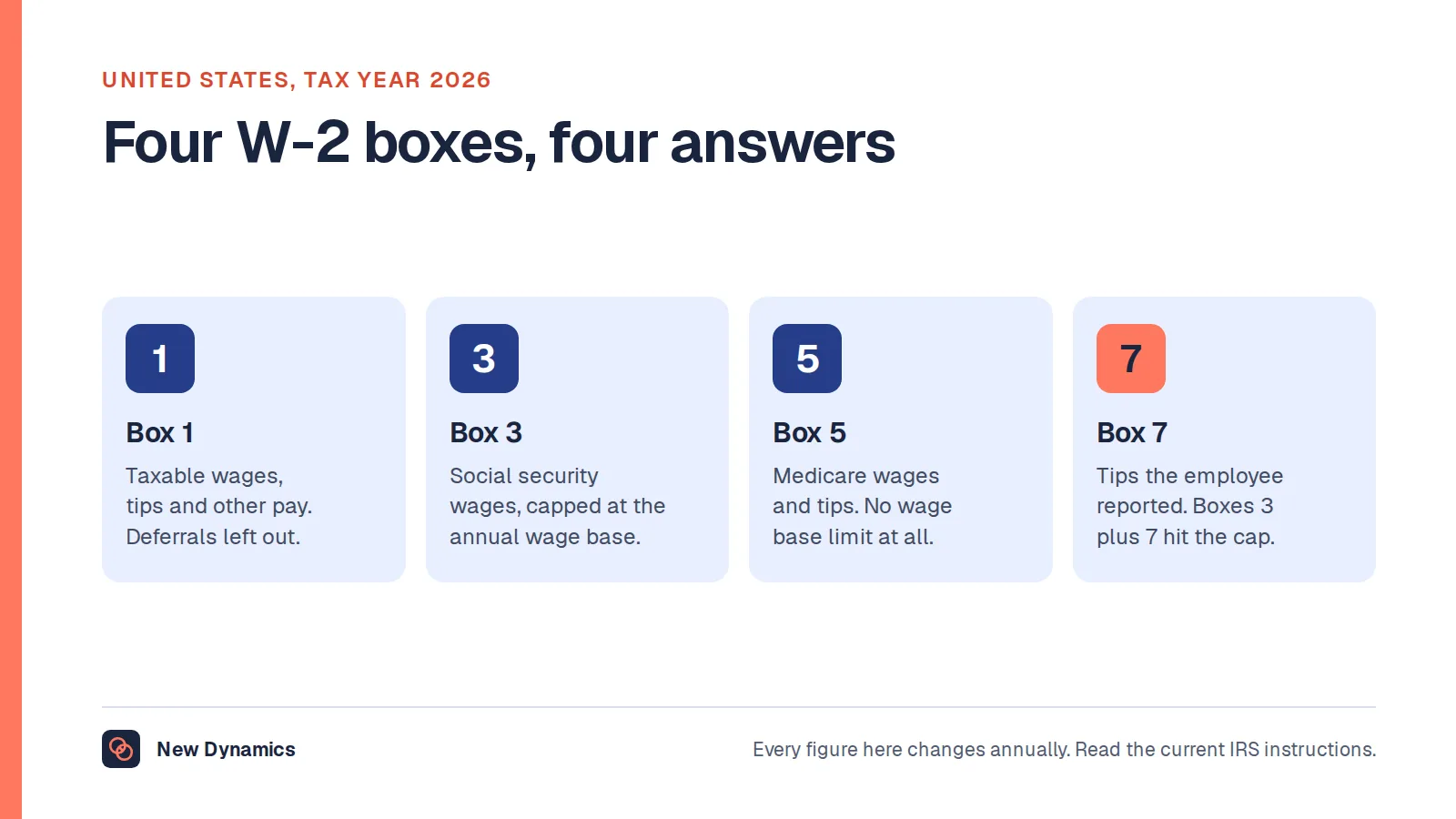
Find the number itself. The EIN page lists where a missing one turns up: "Look for it on the notice we issued when you applied for an EIN", "Contact the bank that has your business account", "Check with agencies where you've applied for state or local licenses" and "Look on past business tax returns". It also appears on every Form W-2 your payroll has issued. Our post on payroll records covers what to keep and for how long.
Decide whether they need the number or a document. Many requests are satisfied by the number alone. Where evidence is required, the EIN page states the position in a line: "There are 3 ways to confirm your EIN:", followed by the entity transcript, the digital CP575 and Letter 147C.
Give them the legal name exactly as the IRS holds it. A mismatch between a trading name and the registered legal name is the commonest reason a verification fails, and the IRS version may look odd: "IRS systems allow only letters (A-Z), numbers (0-9), hyphens (-), and ampersands (&) in business names". A legal name containing a full stop or an apostrophe is held without it, and that is the spelling matched against.
Allow for the lag on a new number. The EIN page says "You can use your EIN immediately for most business needs", including opening a bank account, but tells you to "Wait up to 2 weeks to" pass an "IRS Taxpayer ID Number (TIN) Matching Program" or to e-file. On a new entity, that explains the failure before anybody investigates.
Multiple numbers have a published remedy. The EIN page: "If you have more than one EIN and aren't sure which to use, call the Business and Specialty Tax Line" and "we'll tell you which number to use." It is equally clear after an acquisition: "Don't use the prior employer's EIN."
The responsible party, and when the EIN itself changes
Jurisdiction: United States. Every EIN application names a person. The IRS responsible parties and nominees page, last reviewed on 22 August 2026, defines the role: "A responsible party is someone who owns, controls or exercises effective control over a business ... and directly or indirectly manages its funds and assets."
It has to be a human being. The same page: "Your responsible party must be a person, not an entity. The only exception is for government entities." Who that is follows the structure: the principal officer for a corporation, the general partner for a partnership, the "Grantor, owner or trustor" for a trust. Where more than one qualifies, "list the person you want the IRS to recognize".
A nominee cannot do it. The EIN page states the rule, "Nominees are not authorized to apply for an EIN", and the responsible parties page the harm: "Listing a nominee could disclose your information to an unauthorized person." Identify the real responsible party before applying.
The 60 day rule is the part that gets missed. The About Form SS-4 page carries it as a standing note: "Changes in responsible parties must be reported to the IRS within 60 days." The mechanism is Form 8822-B, and there is a follow-up that saves guesswork: "If you haven't received our confirmation letter of your change within 60 days, mail a copy of your Form 8822-B and write "Second Request" on it." In practice this is housekeeping, and the named person is often an officer who left two reorganisations ago. Our post on the payroll process covers the recurring cycle; this is a change-driven task, the kind that falls through.
Changing the person does not change the number. The EIN page: "You don't need a new EIN to change your business name , address or responsible party." What does force a new one, per the IRS do you need a new EIN page, last reviewed on 21 July 2026, is structural: "You need a new EIN, in general, when you change your entity's ownership or structure." A sole proprietor needs a new number on incorporating or forming a partnership, not on changing name.
You cannot cancel an EIN. The IRS page on canceling an EIN, last reviewed on 6 November 2026, is unambiguous: "If you no longer need your employer identification number (EIN), we can't cancel it, but we can deactivate it", because "Once we assign an EIN to a business entity, it becomes that entity's permanent federal taxpayer ID number."
EIN against SSN, ITIN and a state tax ID
Jurisdiction: United States. Four numbers, and a lot of avoidable confusion.
EIN against SSN. An EIN identifies an entity; a Social Security number identifies a person and comes from a different agency. The taxpayer identification numbers page makes the split: "A Social Security number (SSN) is issued by the SSA whereas all other TINs are issued by the IRS." They are not interchangeable either way: the instructions say "Don't use your EIN in place of your social security number (SSN)", and a responsible party supplies their own SSN or ITIN to obtain the entity's EIN, not the reverse.
EIN against ITIN. The IRS individual taxpayer identification number page, last reviewed on 28 October 2026, defines it: "An ITIN is a 9-digit number the IRS issues if you need a U.S. taxpayer identification number for federal tax purposes, but you aren't eligible for a Social Security number (SSN)." It is personal, not corporate, and the page is firm: an ITIN does not "Authorize you to work legally in the U.S." and does not "Serve as identification outside the federal tax system". An individual may hold an ITIN and be the responsible party for an entity holding an EIN.
EIN against a state tax ID. A federal EIN is not a state registration. States run their own employer and sales tax registrations with their own numbers, and the EIN page draws the line from the federal side: "If you don't need an EIN for federal tax purposes, you can still request one for banking or state tax purposes." Register separately with the relevant state agency for withholding and unemployment insurance. This article covers the federal number only.
EIN against a payroll tax account. An EIN is an identifier, not a liability: holding one does not make you an employer. Our posts on payroll tax against income tax and new employee forms cover what follows once you do employ somebody.
The British comparison: no EIN, and five references instead
Jurisdiction: United Kingdom. The honest answer first: there is no UK EIN. No single British reference does what the American number does, because the United Kingdom splits the job across HMRC and Companies House and gives a different reference to each function. Asking a UK employer for "your EIN" produces a pause, then a question about which number you actually need.
The employer PAYE reference, for payroll. The closest functional equivalent. GOV.UK's guidance on registering as an employer, read on 6 November 2026, sets the trigger: "You normally need to register as an employer with HM Revenue and Customs (HMRC) when you start employing staff, or using subcontractors for construction work." It adds the case people assume is exempt: "You must register even if you're only employing yourself, for example as the only director of a limited company." And the timing: "You must register before the first payday to get your employer PAYE reference number."
The Accounts Office reference, for paying HMRC. Registration produces a second reference, and the two are not interchangeable. GOV.UK's guidance on paying employers' PAYE by Direct Debit says: "You'll need to use your 13-character accounts office reference number as the payment reference", found in the HMRC online account or on the registration letter.
The Corporation Tax UTR, for company tax. GOV.UK's guidance on finding your UTR number explains where it comes from: "You get a Unique Taxpayer Reference (UTR) when you: register for Self Assessment, set up a limited company". The format is one line: "It's a 10-digit number. It might just be called 'tax reference'." Lost it? "You can request your Corporation Tax UTR online . HMRC will send it to the business address that's registered with Companies House." That is the nearest British analogue to Letter 147C, posted rather than read out to a caller.
The VAT registration number, for VAT. This has no American counterpart, because there is no federal VAT. GOV.UK's register for VAT guidance sets the threshold: "You must register if either: your total taxable turnover for the last 12 months goes over £90,000 (the VAT threshold)" or you expect to pass it in the next 30 days. Below it, "You can choose to register for VAT if your turnover is less than £90,000 ('voluntary registration')." GOV.UK's guidance on charging, reclaiming and recording VAT then requires that "invoices must include your VAT number". Unlike an EIN it is publicly verifiable, through GOV.UK's check a UK VAT number service.
The company number, for the register. A Companies House company registration number identifies the company as a legal entity, the part of the EIN's job about existence rather than tax. GOV.UK's guidance on signs, stationery and promotional material makes it a publication requirement: "On business letters, order forms and websites, you must show: the company's registered number, its registered office address, where the company is registered". An EIN is held close and a company number is deliberately public, the sharpest difference in the comparison.
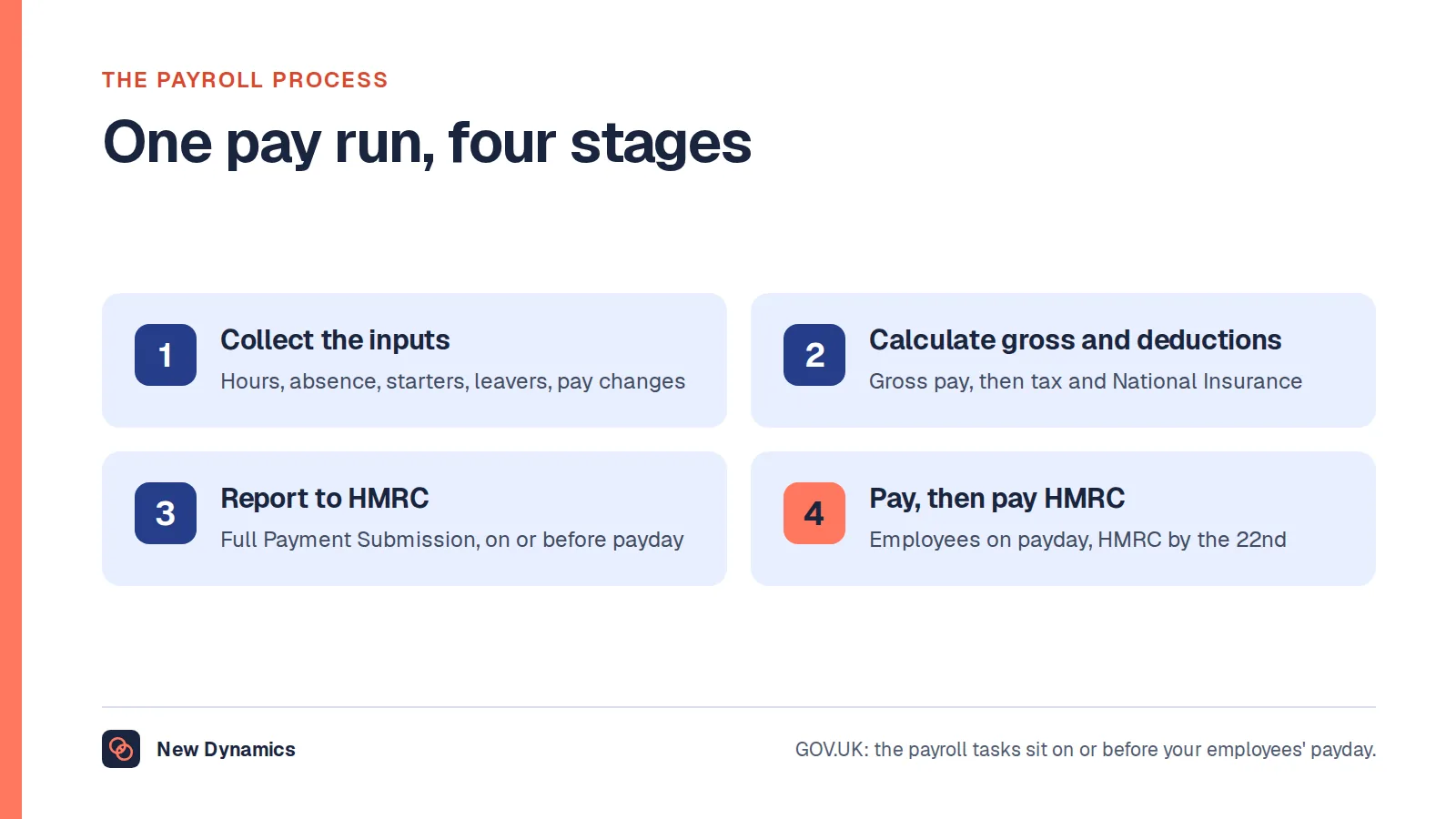
Why Britain needs no CP 575. PAYE reporting is continuous rather than annual, and references are recovered through the employer's own HMRC account. GOV.UK's guidance on running payroll says that every payday you must "Report their pay and deductions to HMRC in a Full Payment Submission (FPS)." Our posts on the payroll process and payroll records cover the British cycle, and employment status who belongs in that payroll. So the EIN splits four ways, with the VAT number alongside, and the CP 575 and Letter 147C map onto nothing. None of this is legal or tax advice.
Frequently asked questions
What is an employer identification number?
It is the United States federal tax identification number for a business entity. The IRS describes an EIN as "a federal tax ID number for businesses, tax-exempt organizations and other entities", and confirms it "is also known as a federal tax identification number". It is nine digits, it identifies an entity rather than a person, and a business entity "should have only one EIN".
What does a federal tax ID number look like?
Nine digits in two groups. IRS Publication 1635 gives the format as "a nine-digit number that IRS assigns in the following format: XX-XXXXXXX", and the IRS illustrates it on its About Form SS-4 page as "a 9-digit number (for example, 12-3456789)". Use that illustration rather than a real organisation's number. The first two digits "show the IRS campus that assigned it or if you applied online".
What is a 147C letter from the IRS?
It is the IRS's confirmation of an EIN already issued, which is what you request when the original CP 575 notice cannot be found. The IRS names it in full as "Letter 147C, EIN Previously Assigned" and tells you to request it from its business and specialty tax line. There is no Form 147C to fill in: it is a letter the IRS sends, not a form you file.
What is Form CP 575?
The CP 575 is the notice the IRS issues when it assigns an EIN, confirming the number and the legal name it was issued to. It is issued once, which is why so many people ask for Letter 147C instead. There is now a digital version, which the IRS says "can be used as a substitute for the original CP575A-J notice series and Letter 147C".
How do you get an EIN, and does it cost anything?
Apply directly to the IRS, free. Its own guidance says "You can get an EIN for free directly from the IRS in minutes" and warns readers to "Beware of websites that charge for an EIN. You never have to pay a fee for an EIN." Register the entity with your state first, then apply online, by fax or by post. Note that "You can apply for only 1 EIN per responsible party per day." This site does not recommend filing services.
Does the United Kingdom have an EIN?
No. UK employers get an employer PAYE reference from HMRC, which GOV.UK says you must obtain "before the first payday", plus a separate "13-character accounts office reference number" for paying the PAYE bill. A company also has a 10-digit Corporation Tax UTR, a Companies House company number and, if registered, a VAT number. Five references, five jobs, no CP 575 equivalent.
Your next step: find the number, then protect the document
Jurisdiction: any. General information, not legal or tax advice.
- Write the EIN down somewhere finance and HR can both reach it, with the legal name exactly as the IRS holds it. Most proof requests are really name-match requests.
- Find the confirmation document now, not when a bank asks. If the CP 575 has gone, check whether the entity can download the digital CP575 notice.
- Check who the IRS thinks your responsible party is. Changes must be reported within 60 days on Form 8822-B.
- Never pay for an EIN. The IRS issues it free and says so on its own page.
- If you operate in both countries, keep the two reference lists separate in writing. A UK manager asked for an EIN is where this confusion starts.
For a way of setting pay and engagement terms that you can explain to the person affected, read and download our compensation policy guide. The guide is free to read, and the PDF uses our short download form.
Want every registration, filing and change-of-details task to have an owner, a due date and a visible status rather than a note in somebody's inbox? Book a New Dynamics demo and bring your current setup checklist. You can also email contact@new-dynamics.com.