TL;DR
- In the UK, official figures from the Office for National Statistics for April 2025 put median full-time pay at about £26,900 a year for HR administrative roles, £35,200 for HR and industrial relations officers and £57,500 for HR managers and directors, against £39,039 for all full-time employees.
- The ranges are wide. A quarter of full-time HR managers and directors earned under £43,700 and a quarter earned over £78,700. Level, sector, location, organisation size and qualifications move HR pay more than the HR label does.
- The figures are provisional survey estimates for employee jobs, dated April 2025, and they change every year. Use them to place an offer or a request in context, not as a rate card, and check the latest release before you negotiate.
“How much does human resources make?” has no single answer, because human resources is not one job. An HR administrator processing starters and leavers, an HR officer running recruitment and employee relations, and an HR director on the executive team are paid in three different ranges, and within each range the spread is wide.
This article answers the question with the official UK figures. It gives the median and the spread of pay for the three HR occupations that the Office for National Statistics reports on, explains what the figures do and do not cover, sets out what moves HR pay, and suggests how to use the numbers to judge an offer or make a case. The figures are UK data for April 2025; other countries publish their own.
Pay decisions should rest on evidence about the work, not on who asks loudest. See how New Dynamics performance reviews bring goals, feedback and development into one fair discussion.
HR pay in the UK: the official figures
The Office for National Statistics publishes the Annual Survey of Hours and Earnings (ASHE), the UK's main source of earnings by occupation. Its bulletin on employee earnings in the UK reports that “Median gross annual earnings for full-time employees were £39,039 in April 2025, compared with £37,439 in April 2024, which is an increase of 4.3%.” All estimates for 2025 are provisional.
The occupation tables that accompany the bulletin, ASHE Table 14, give gross annual pay for full-time employee jobs by occupation. Three of those occupations are HR. The figures below are from Table 14.7a for April 2025, rounded to the nearest £100, with the ONS occupation titles.
| Occupation (full-time employee jobs, UK, April 2025) | 10th percentile | Lower quartile | Median | Upper quartile |
|---|---|---|---|---|
| Human resources administrative occupations | £23,500 | £24,800 | £26,900 | £31,800 |
| Human resources and industrial relations officers | £25,300 | £29,100 | £35,200 | £43,700 |
| Human resource managers and directors | £32,700 | £43,700 | £57,500 | £78,700 |
| All full-time employees | £24,000 | £29,300 | £39,000 | £54,000 |
Read the table like this. The median is the point at which half of jobs pay more and half pay less; ONS prefers it to the mean because a few very high earners pull the mean up. The lower and upper quartiles mark the points below which a quarter and three quarters of jobs fall. So half of full-time HR officers earned between about £29,100 and £43,700, and half of HR managers and directors earned between about £43,700 and £78,700. The mean was higher in every HR group: about £28,400 for administrative roles, £40,000 for officers and £69,000 for managers and directors, which tells you that each group has a long tail of well-paid jobs.

What the figures cover, and what they do not
- Employee jobs only. ASHE does not cover the self-employed, so interim and freelance HR consultants are not in these numbers.
- Full-time only, in the table above. ONS also publishes part-time figures, which are lower because they are annual pay for fewer hours: a median of about £21,300 for part-time HR officers and £33,700 for part-time HR managers and directors in April 2025.
- Survey estimates. ONS publishes a coefficient of variation for every figure. The medians for all three HR groups are within the range ONS treats as reasonably precise, but the administrative group is a small sample, so treat its figures as a guide.
- Occupation, not title. The ONS groups are defined by what the job involves, not by what the employer calls it. A “people partner” is an HR officer or manager depending on the work.
- April 2025, provisional. Pay moved by 4.3% at the median across all employees in the year to April 2025, and HR managers and directors saw a larger rise. The next release will be different.
How the official figures compare with careers advice
Prospects, the UK graduate careers service, gives ranges in its human resources officer job profile that sit close to the ONS distribution: “Salaries for human resources officers in the UK typically range from £25,000 to £40,000, rising to £45,000 with more experience.” It puts HR assistants at around £24,000, rising to £29,000 with experience, HR managers between £58,000 and £63,000, and says “HR director salaries can be in excess of £130,000.”
The two sources agree on the shape. Administrative roles cluster in the mid-twenties, officers in the high twenties to low forties, managers in the fifties and sixties, and directors far above that, which is why the ONS group that combines managers and directors has such a high upper quartile.
What moves HR pay
Five things explain most of the spread inside each range.
- Level and scope. Administrator, officer or adviser, manager, head of, director. Our guide to human resources jobs and their duties sets out each rung. Each step roughly changes the range, and the size of the team and budget within a level matters too.
- Sector. Financial and professional services, technology and large corporates tend to pay above the median for the same HR job; charities, small businesses and parts of the public sector tend to pay below it, sometimes with better pensions or leave.
- Location. London and the South East pay more, and cost more. ASHE publishes the same tables by region.
- Specialism. Reward, employee relations, talent acquisition and people analytics can pay differently from generalist roles at the same level, depending on demand.
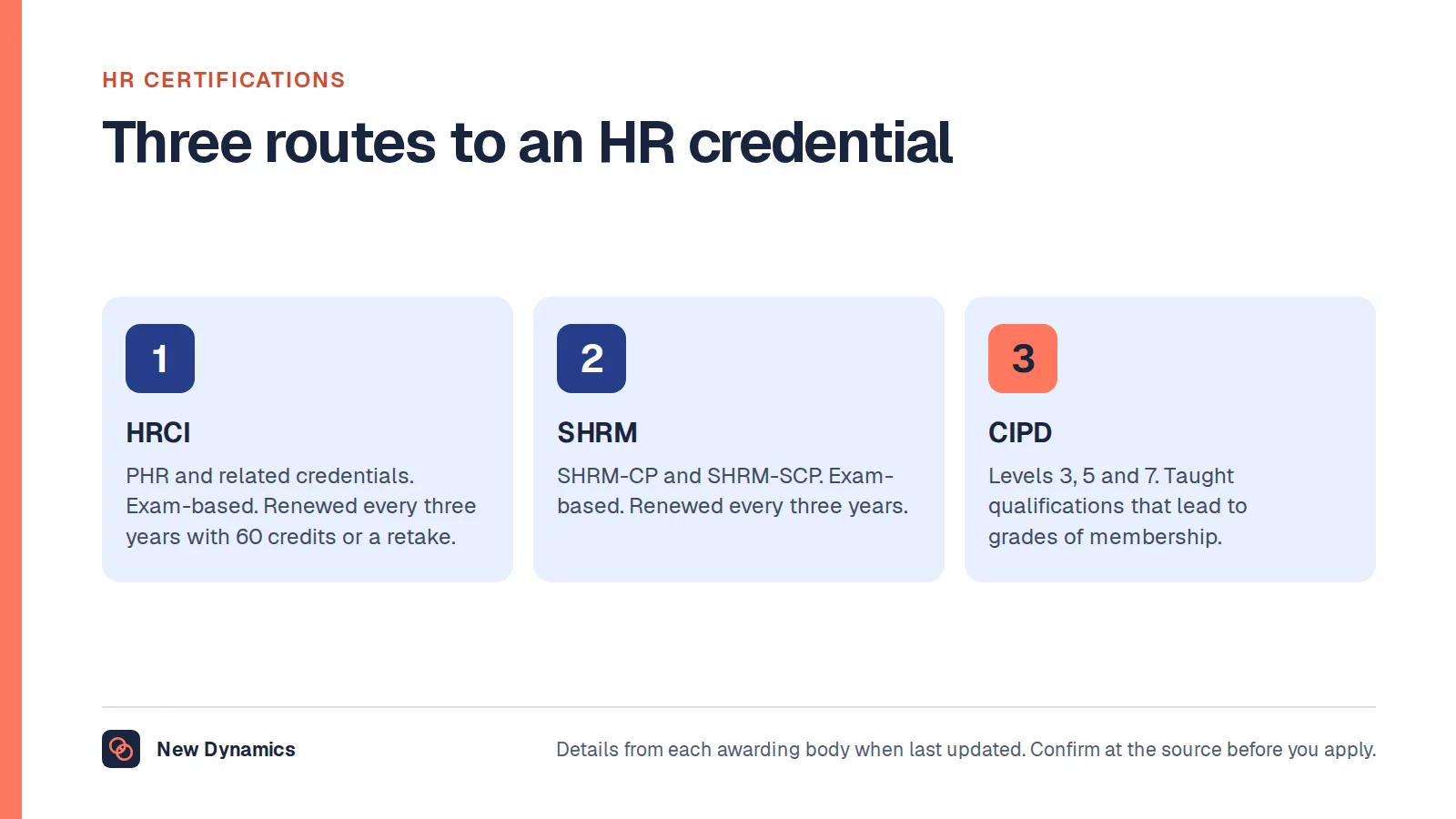
- Qualifications and evidence. In the UK a CIPD qualification is the usual professional route, and our comparison of HR certifications covers the main credentials. More than the certificate, employers pay for a record: a reorganisation delivered, a tribunal avoided, turnover reduced.

How to use the figures
If you are judging an offer. Find the ONS occupation that matches the work, not the title. Place the offer in the distribution. An HR officer offer at £30,000 is around the lower quartile; at £42,000 it is near the upper quartile. Then adjust for sector, location and what else the package contains.
If you are asking for a rise. Bring the occupation figure, the percentile you sit at, and evidence of what you have delivered since your pay was last set. A manager can act on evidence; a manager cannot act on a feeling of being underpaid. Our guide to performance calibration explains how fair pay decisions are made across a team.
If you are setting pay for an HR role. Benchmark against the ONS occupation, decide where in the distribution you intend to pay and why, and write the range into the advert. Candidates read silence about pay as a low offer.
If you are outside the UK. ASHE covers the United Kingdom only. Government statistical agencies elsewhere publish comparable occupational pay data, and the ranges differ widely by country. What does not differ is the shape: administrator, officer, manager, director.
Is HR well paid?
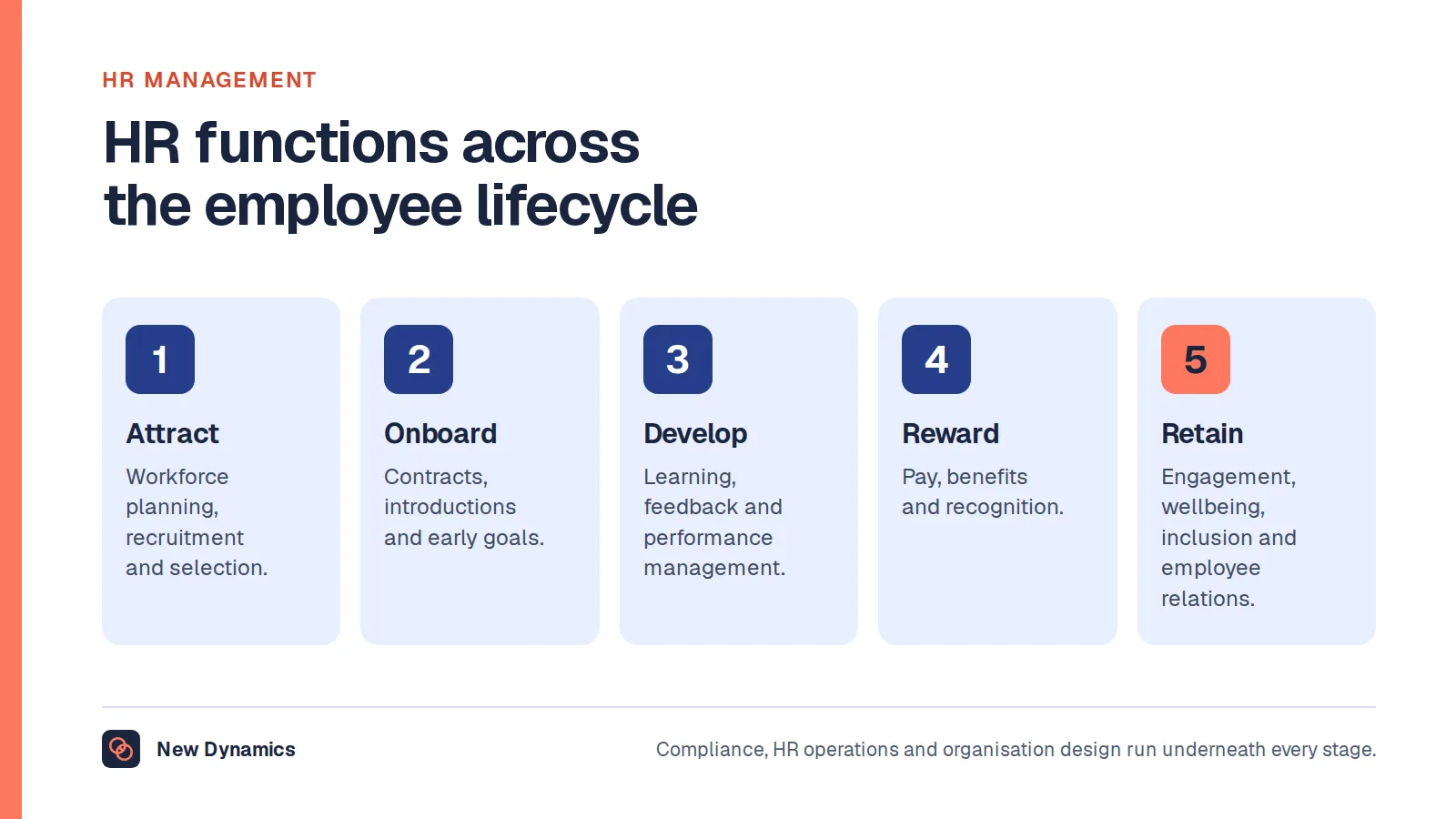
Against the whole workforce, HR administrative roles pay below the all-employee median, HR officers a little below it, and HR managers and directors well above it. At the median, an HR manager or director earned about £18,500 a year more than the median full-time employee in April 2025. The route from administrator to director exists in most large organisations, and the pay follows the responsibility. Our guide to HR management describes the functions that responsibility covers.

Frequently asked questions
How much does human resources make in the UK?
According to the ONS Annual Survey of Hours and Earnings for April 2025, median full-time pay was about £26,900 for HR administrative occupations, £35,200 for HR and industrial relations officers and £57,500 for HR managers and directors. The figures are provisional and cover employee jobs only.
How much does an HR manager make?
The ONS group human resource managers and directors had a median of about £57,500 for full-time employee jobs in April 2025, with a lower quartile of £43,700 and an upper quartile of £78,700. Prospects puts HR managers at £58,000 to £63,000 and HR directors in excess of £130,000.
How much does an HR officer or HR adviser make?
The ONS group human resources and industrial relations officers had a median of about £35,200 for full-time employee jobs in April 2025, with half of jobs between about £29,100 and £43,700. Prospects gives a typical range of £25,000 to £40,000, rising to £45,000 with experience.
How much does an HR assistant or administrator make?
The ONS group human resources administrative occupations had a median of about £26,900 for full-time employee jobs in April 2025. Prospects puts HR assistants at around £24,000, rising to £29,000 with experience. The ONS sample for this group is small, so treat the figures as a guide.
Do HR professionals earn more than average?
It depends on the level. In April 2025 the median for all full-time employees was £39,039. HR administrative roles and HR officers were below that at the median; HR managers and directors were well above it.
Where do the HR salary figures come from?
From the Office for National Statistics' Annual Survey of Hours and Earnings, which reports pay for employee jobs in the UK by occupation, and from the Prospects human resources officer job profile. ONS figures for 2025 are provisional and the survey is updated every year, so check the latest release.
Your next step: place the number before you discuss it
- Match the job to the ONS occupation by what the work involves.
- Note the median and the quartiles for that occupation.
- Adjust for sector, location and specialism, and write down why.
- Bring evidence of what the role has delivered, or will deliver.
To make pay and performance decisions consistent across a team, read and download our performance calibration guide. The guide is free to read, and the PDF uses our short download form.
Want reviews, goals and feedback that give pay decisions a fair evidence base? Book a New Dynamics demo and bring your current process. You can also email contact@new-dynamics.com.