TL;DR
- An incident statement records what one person saw, heard or did, in sequence, with the date and time of the incident and the date and time of writing. Acas asks for a signature, and says the witness should be able to check the wording before they give one.
- The single most common failure is writing a conclusion instead of an observation. “He was aggressive” is a judgement somebody else has to make. “He raised his voice and said these words, from the doorway” is evidence they can make it on.
- A statement about a named colleague is personal data about two people at once. The person it describes can ask to see it, and the ICO says an employer must respond without undue delay and at the latest within one month.
Somebody has asked you to write down what happened. It may have been put to you as a favour, or as paperwork to clear before the end of the shift. It is neither. What you write becomes evidence. It can be attached to an investigation report, read at a disciplinary hearing, handed to the person it describes, and quoted back to you much later by people who were never there.
That cuts both ways, which is why it is worth twenty careful minutes. A statement written properly protects its author as much as it serves the case. One written in a hurry, mixing what you saw with what you assumed, is how a sound case falls apart or an unfair outcome survives.
This article covers how to write an incident statement: what the document is for, where it ends up, the distinction that decides whether it is any use, what goes in it and in what order, what to leave out, and how to sign and change it. The second half is for the manager or investigator collecting statements: how to ask without shaping the answer, confidentiality, and the data protection point that catches most employers out.
It describes the position in Great Britain in general terms and is general information rather than legal advice. Northern Ireland has its own statutory code and tribunal route, and is flagged below.
Collecting statements is a sequence of small tasks (ask, meet, type, check, sign, file) and it fails at the joins. See how New Dynamics workflows give each step an owner and a due date instead of an intention.
What an incident statement is, and where it ends up
Three phrases describe one document: incident statement, statement of an incident, and witness statement. In UK workplace practice all three mean a signed, dated account by one person of what they saw, heard or did.
Acas, which publishes the statutory Code of Practice behind discipline and grievance in Great Britain, uses the term witness statement. Its guidance on investigations where there are witnesses opens on the stakes: “Witnesses can give important evidence to help decide the outcome of a disciplinary or grievance case.”
There are two routes to one. Acas says the investigator can gather the information by either “asking them to write a witness statement” or “holding a meeting to discuss what they know or saw”. Where it is a meeting, the notes become the document: “At the end of the meeting, the witness should review and sign the notes.” Hence the definition: “A witness statement is usually a signed copy of the notes from an investigation meeting.”
Then it travels. It normally goes into the investigation report, which Acas says the employer should share with the worker. In a disciplinary case it goes into the hearing pack, because Acas's guidance on the disciplinary hearing says that in good time beforehand the employer should put in writing to the employee “the alleged misconduct or performance issue” and “any evidence from the investigation”. If the matter reaches a tribunal, GOV.UK's guide to making a claim to an employment tribunal tells claimants they will need “evidence that supports your case, such as emails or witness statements”.
Our guide to workplace investigations covers the surrounding process. No official UK body publishes a figure for how many workplace statements are written each year, so this article quotes none; where published employment numbers do exist, our HR statistics hub collects them.
What you saw, and what you concluded
This is the whole job, and where almost every weak statement fails.
A conclusion is a judgement about meaning, motive or character. An observation is something a camera or a microphone could have captured. Statements fail because people write the conclusion and leave out the observation behind it, which removes the only material anybody else can decide on.
Two lines about the same thirty seconds:
- A conclusion. “He was aggressive and was clearly trying to intimidate her.”
- An observation. “He raised his voice and said ‘you will regret this’, standing in the doorway about a metre from her.”
The first tells the reader what to think and gives them nothing to think with. It also exposes the writer, whose only answer to “how do you know” is usually that it was an impression. The second can be tested, corroborated or challenged.

Acas puts the same discipline on the investigator. Its guidance on carrying out an investigation says the person investigating should “not try to prove guilt, but get evidence from both sides”, and “should consider both the evidence that supports and does not support the allegations”. A statement made of conclusions gives them nothing in either direction.
Three habits hold the line. Write verbs rather than adjectives: shouted, walked out, stepped between them. Say how you know, because Acas asks witnesses to record “how they were able to become aware of the issues”, and seeing something, hearing it across a room and being told later are three different kinds of evidence. And where you are describing a state rather than an act, describe the signs: not “she was drunk” but “her speech was slurred and she needed to hold the rail on the stairs”.
For the writer: what goes in, and in what order
Acas sets out what a witness should be asked to write, which is the best available checklist for anyone facing a blank page. The investigator should ask the witness to write:
- “their name and, where applicable, job title”;
- “the date, place and time of any relevant issues”;
- “what they saw, heard or know”;
- “how they were able to become aware of the issues”;
- “answers to specific questions, if needed”;
- “the date and time of writing their statement”;
- “their signature”.

Who you are. Full name, job title, site or team. If you are not an employee, say what you are: a contractor, a delivery driver, a customer.
When and where. The date, the time as closely as you can fix it, and the place. “About 10:20” beats a false precision of 10:17 and is far better than “that morning”. Say where you were standing, because that is what makes the rest credible.
What happened, in sequence. Start before the incident and finish after it, one fact per sentence, in the order things happened: who arrived first, what was said before the voices rose, who else came in, when it stopped. Sequence is the part people compress and the part an investigator has to come back for.
What was said, in the actual words. Put remembered words in quotation marks and say they are the words as you remember them. Swearing goes in as it was said, because cleaning it up changes the evidence. If you only remember the gist, say so, and never reconstruct a sentence you did not hear.
What you did. Intervened, called someone, walked away, made a note, reported it and to whom. That anchors your account to records such as a call log.
Who else was there. Names where you know them, roles where you do not.
Write it while it is fresh, and date it
Acas's guidance on preparing to investigate gives the reason for speed: start as soon as possible, partly because “people might remember a situation more clearly the sooner they're asked about it.”
The same applies to the writing. Memory does not simply fade, it reorganises, reshaped by what colleagues said in the car park and by what you have since learned about who is being blamed. Two dates belong in the document: the incident, and the writing. Acas asks for the second specifically, because it shows how long the gap was. If the gap is long, explain it, and say whether you are working from a note made at the time. If you did make one, keep it and do not tidy it up.

If you cannot remember, or did not see it
Say so, in the statement. “I do not remember whether the door was open” is a strong sentence. A statement with three honest gaps survives questioning; one invented detail contaminates everything around it.
If you did not see it yourself, write that explicitly: “I did not see this. At about 11:00 a colleague told me it had happened, and this is what they told me.” Second-hand information is worth having, because it tells the investigator whom to speak to. It only becomes damaging when presented as if you saw it.
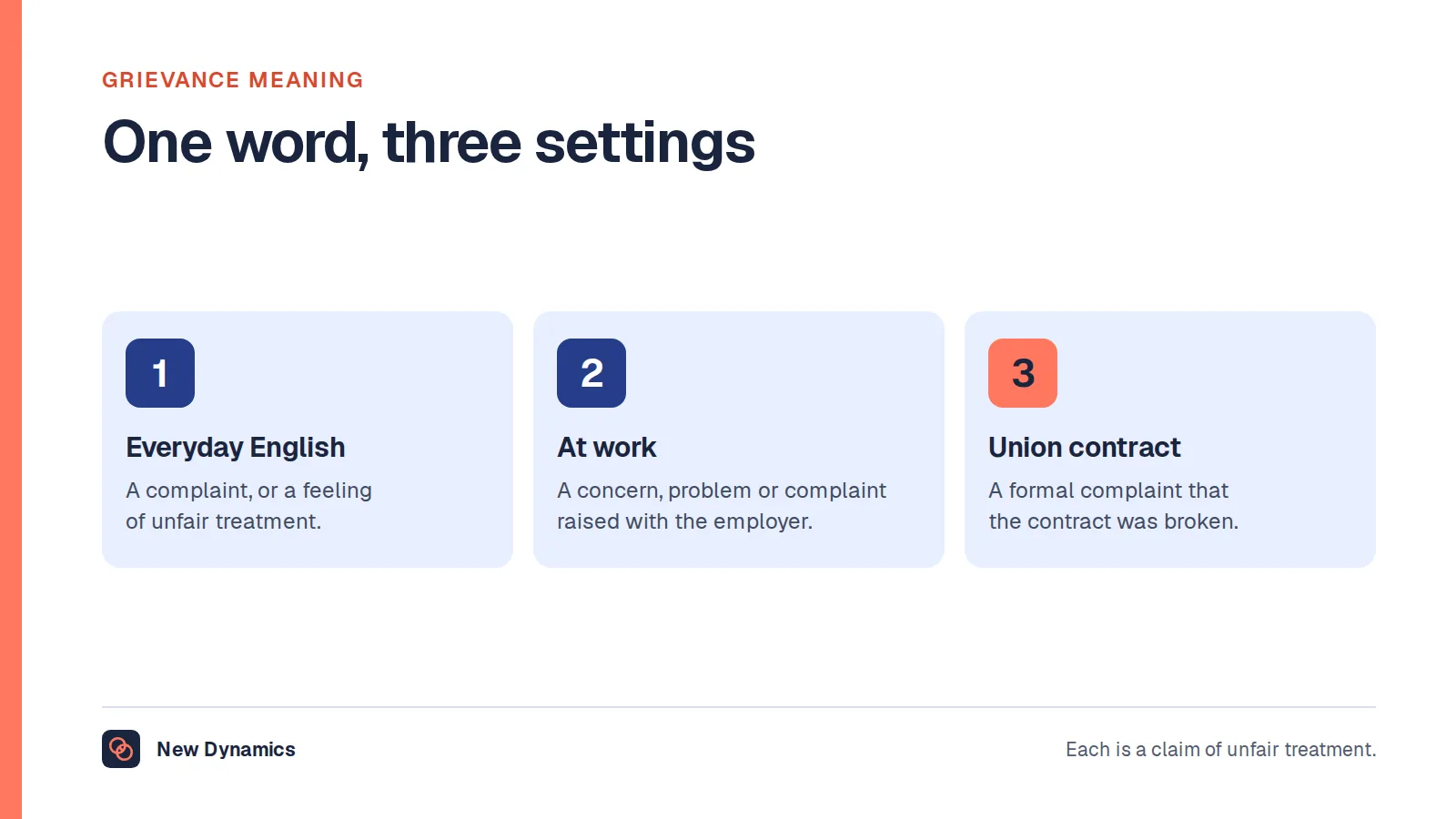
If you are raising a complaint rather than acting as a witness, your statement is still an account and not an argument, inside the procedure our post on what grievance means describes.
A generic example
The example below is generic. The names, site, date and times are placeholders and the wording exists to show the structure. Use the shape, not the content.
Statement of A. Worker, Warehouse Operative, Bay 3
I have been asked to write down what I saw on the morning of Tuesday 14 October 2025. I am writing this at 15:40 the same day.
- At about 10:15 I was working at the pick face in Bay 3. I could see the whole loading bay from where I stood, about eight metres away.
- At about 10:20 Colleague B came into the bay and said to the duty manager, “this is the third time this week”. I heard this clearly.
- The duty manager replied. I could not hear what was said, because a forklift was reversing behind me.
- Colleague B then raised their voice and said, “you will regret this”. These are the words as I remember them. Colleague B stood in the doorway about a metre from the duty manager and did not move towards them.
- Nobody touched anybody at any point while I was watching.
- Colleague B walked out through the roller door. At about 10:25 I asked the duty manager if they were all right and they said they were.
- Colleague C was stacking pallets about fifteen metres away and may have seen some of this.
- I do not know what the three times this week referred to.
Signed: A. Worker. Date and time: 14 October 2025, 15:40
A reader can follow a sequence, place the writer in space, separate what was heard from what was not, and see where the knowledge stops. Point 3 is the most valuable line, because it admits a gap instead of filling one. Point 5 is a negative fact, and negative facts often decide a case. What is missing is deliberate: no view on who was in the right, no guess at the duty manager's reply, and no description of the atmosphere.
What to leave out
A statement gets weaker as it gets longer, because most of what gets added is not evidence.
- Speculation about motive. Why somebody did something is almost never available to a witness, and guessing invites a reader to discount the rest.
- Other people's opinions. “Everyone in the team thinks he is a bully” evidences nothing except that you have been discussing it.
- Old grudges and history. If there is relevant history, say what you personally saw and when. Acas tells investigators writing the investigation report to “be objective” and to “stick to the facts”, and the raw material has to meet the same standard.
- Medical guesses. Do not write that someone was drunk, on drugs or having a breakdown. Describe what you saw. A clinical conclusion from a non-clinician is unreliable, and if it concerns a disability it can do damage nobody intended.
- Legal conclusions. Harassment, assault, gross misconduct, discrimination and negligence are findings for somebody else to make against a defined test. Write the conduct, not the label. Our post on gross misconduct shows how far apart the word and the finding can be.
- Anything you were told to include. If a manager suggested wording and you do not independently remember it that way, it does not go in.
Checking it, signing it, and changing it later
You are entitled to read it before you sign it. Acas's guidance on investigation meetings says that at the end of a meeting the investigator should “explain that they will be provided with a copy of their witness statement shortly, for them to check and confirm that it is accurate.”
Check the names and spellings, the times and the sequence, whether a word you did not use has crept in (particularly an adjective), and whether anything you know only second hand now reads as first hand.
Signing confirms accuracy, and Acas also says “The witness should have reasonable time to give the statement.” A typed page and a pen before the end of a shift is not reasonable time.
If you remember more, or spot an error, you can change it. Acas is explicit: “A witness should be allowed to amend their statement. They should sign any changes they make.” Do it openly, as a dated addendum or a signed correction, rather than quietly producing a second clean version. Acas adds that if an investigator “believes the changes contradict what was first said, they might note this. They could also include both statements in their report.”
If you do not want to sign, say why. Acas tells investigators to “try to find out the reason and resolve the issue”, and that otherwise they “should still include the statement in their report” while stating that the witness did not confirm it was accurate. An unsigned statement still carries weight, with a question mark.
If it is used in a disciplinary hearing or a tribunal
Assume the person it describes will read it. Acas says that if an employer takes further action, “they should give the worker under investigation a copy of written evidence. This might include witness statements.” Nobody can answer a case they have not seen.
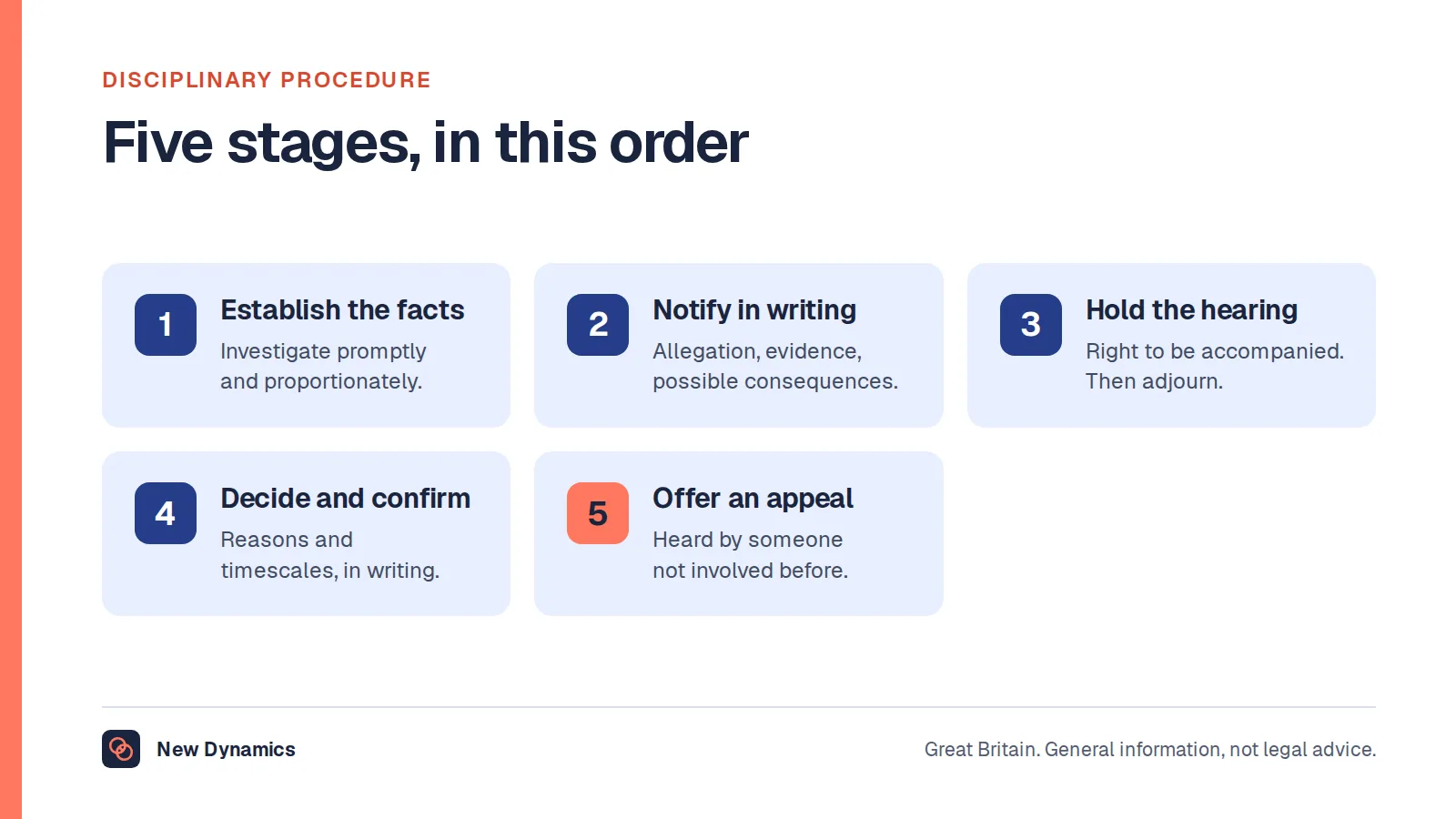
At a hearing the employee is entitled to engage with your account. Acas says they should be given the chance to “answer any allegations”, “ask questions”, “show evidence”, “call relevant witnesses” and “respond to any information given by witnesses”. Usually your written statement is discussed rather than you being questioned, but you may be asked to attend. The investigator's role there is narrower than managers assume: Acas says that if an investigator attends a disciplinary hearing, “they should only be there to give facts. They should not be there to give their opinion or present the case against the worker.” Our post on the disciplinary procedure sets out the stages.
If the matter becomes a tribunal claim, written evidence moves to the centre. GOV.UK's guide to going to a tribunal hearing tells parties: “You must have all the documents you're using to support your case with you.” It confirms that “You can also call witnesses to give evidence”, and that a party will usually be asked questions by “the judge” and by “the respondent”.
A statement written in a warehouse in October can therefore be read in a hearing room long afterwards by people with no knowledge of the site or the personalities. That is the audience to write for: short sentences, named people, fixed times, no unexplained acronyms.
Jurisdiction matters. The Acas Code and the guidance quoted here apply in Great Britain. GOV.UK states plainly that “There's a different way to make a claim to an employment tribunal in Northern Ireland”, which has its own tribunal system and statutory code. This remains general information, not legal advice, and an individual case needs advice on its own facts.
For the investigator: asking without leading the witness
A leading question contaminates the answer it produces. You cannot un-ask it, and once a witness has adopted your wording the independent account has gone.
Acas's instruction is short. During the meeting an investigator should “ask questions to gather the facts”, “ask questions in a neutral, non-confrontational way”, “record replies and any refusals to reply”, and “look for evidence that supports the information provided”.
Five rules carry most of the weight.
- Open, then narrow. Begin with “tell me what you saw, from the beginning”, and let the witness run out of account before asking anything specific.
- Do not supply the allegation's wording. “Did he threaten her?” offers a legal conclusion to agree with. Ask what he said and what he did.
- Do not show one witness another's statement. It converts independent recollection into agreement and destroys the corroboration you wanted.
- Never hand over a draft to sign. Write from the notes, invite corrections, let them stand. A statement in the investigator's voice looks exactly like what it is.
Where you ask in writing instead, keep the request neutral: say what the statement is for, give the date and place rather than a characterisation of the event, ask the open question, set out the structure Acas asks for, and give a realistic deadline. Do not attach the allegation and do not include a model paragraph. Acas publishes investigation plan and report templates free of charge, and the report template includes a section for witness statements.
Before a meeting, Acas says to “let them know in writing”, “book a private room, where you are unlikely to be interrupted”, and “give them reasonable notice”. At the start, explain who is present and why, your own role, “the need for confidentiality during the investigation”, that “a witness statement might be used in an investigation report”, and “who will see witness statements”. That last item is the one most often skipped and the one witnesses care about most. Acas also notes that “In a disciplinary investigation meeting, there is no legal right to be accompanied. But it's good practice for employers to allow it.”
Confidentiality, reluctance and anonymity
Acas gives four reasons an investigation should usually be kept confidential, and one is specific to statements: it helps “reduce the risk of witnesses discussing or agreeing what their evidence should be”. The others are to limit the impact on everyone involved, to maintain working relationships, and to follow data protection law. Acas adds that “a worker should be allowed to discuss the investigation with a trade union or workplace representative, where they have one”.
Reluctance is common and usually rational. Acas tells investigators to “explore the reason a witness is reluctant to give evidence”, to “provide reassurance”, and to “try to resolve any concerns they have”. Most reluctance comes down to two fears: that the person described will read the statement in the writer's own words, and that there will be consequences on next week's rota. Answer both honestly, and do not promise secrecy you cannot deliver.
On anonymity Acas is restrictive: “Where possible, investigators should avoid anonymous witness statements. This is so the person under investigation can fairly question any evidence against them.” An investigator “should only make a witness statement anonymous in exceptional circumstances”, for example “if a witness genuinely fears revenge action”, and “should explain that employers might have to share witness names if there are legal proceedings”. In a small team, removing identifying details is often impossible, and saying so beats an anonymity that will not hold.
If many people saw the same thing, Acas says the investigator should “talk to some of the witnesses” and “check whether they're broadly saying the same thing”, and need not speak to everybody unless “there are significant differences in what the witnesses say”.
One statement, two sets of personal data
Most employers get this wrong, and it lands months later.
The ICO's guidance on what personal data means quotes the legal definition: “‘personal data’ means any information relating to an identified or identifiable natural person”. A statement naming a colleague and describing what they did is therefore personal data about that colleague, and about its author. One document, two data subjects. The ICO says so directly in its guidance on information about other people in a subject access request: “Personal information can relate to more than one person. Therefore, responding to a SAR may involve providing information that relates to both the requester and another person.”
So the person described can ask for it. Acas confirms the route: where an employer does not share statements, “the worker under investigation can ask for them. Workers have a right under data protection law (UK GDPR) to request information their employer holds about them.” The ICO adds the clock: a response is due “without undue delay and at the latest within one month”.
That does not mean handing over everything. The ICO sets the balance: “You do not have to provide information in response to a SAR, to the extent that this would reveal information about another person, unless: the other person has consented to the disclosure; or it is reasonable to disclose the information without their consent.” It calls this “the ‘rights of others’ exemption (and sometimes as the ‘third-party data’ exemption)”.
Three consequences follow.
- Do not promise a statement will never be seen. You cannot guarantee it, and a broken promise is worse than a caveat.
- Consent from a witness is not a simple fix. The ICO lists circumstances where asking may not be appropriate, including where “the third party cannot give their consent freely because there is an imbalance of power between you and them (for example, if they are your employee)”.
- Redaction is the usual answer, not refusal. Acas says an employer should “look at alternative ways to share the witness statement. For example, removing names or redacting information.” It also says someone named in an investigation report has “the right to see any parts that: have information about them” or “depended on information they gave”.
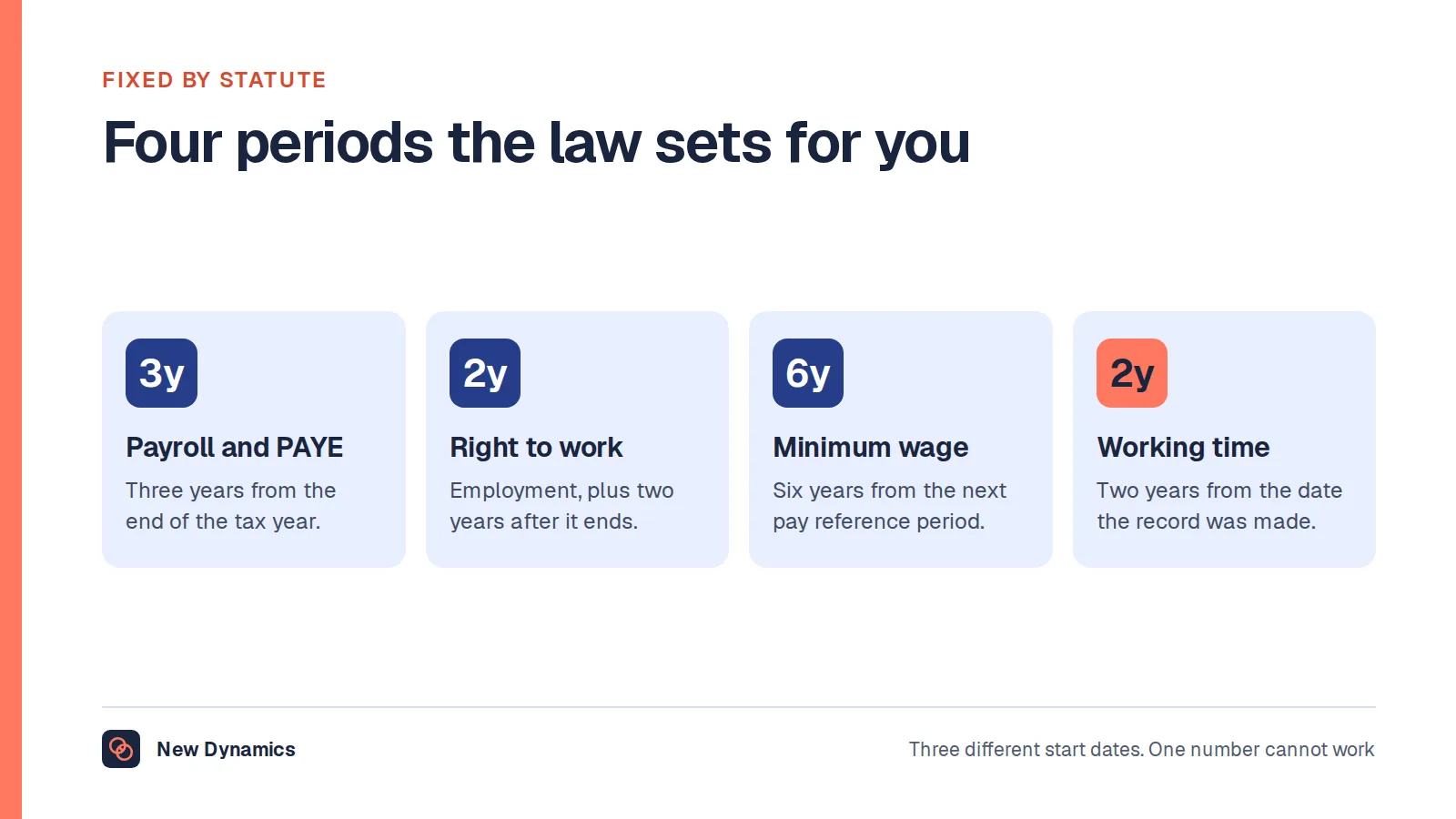
Acas says the employer should keep investigation reports “in case there are any questions in the future”, should store one containing people's details securely, and “should only allow access when necessary”. Our post on employee records retention covers setting a schedule that holds up. The working rule: write every statement as though the person it describes will read it.
If someone was injured: the accident book and RIDDOR
Where the incident involved an injury, a separate set of records applies.
HSE's page for the accident book describes it as “an essential document for employers and employees, who are required by law to record and report details of specified work-related injuries and incidents”. HSE's guidance on what records you need to keep is specific: “You must keep a record of any reportable injury, over-seven day injury, disease or dangerous occurrence.” Where no copy of the online report is kept, “your records must include the date and method of reporting; the date, time and place of the event; personal details of those involved; and a brief description of the nature of the event or disease”.
An accident book entry is not a witness statement and does not replace one. A witness statement is not a RIDDOR report and does not discharge any reporting duty. Where an incident is both a safety matter and a conduct matter, expect two parallel records. Our post on workplace safety tips covers the preventive side. This is general information rather than legal advice, and reporting duties turn on detail specific to the event and the sector.
Frequently asked questions
How do you write an incident statement?
Write your name and job title, the date, time and place of the incident, then what you saw, heard or did in the order it happened, one fact per sentence. Quote the actual words if you remember them, say how you came to know anything you did not see, name anyone else who was there, then add the date and time of writing and sign it.
What should an incident statement include?
Acas asks for the witness's name and job title where applicable, the date, place and time of the relevant issues, what they saw, heard or know, how they became aware of it, answers to any specific questions, the date and time of writing, and their signature. Anything beyond that, such as opinions about motive, usually weakens it.
Is a witness statement at work the same as an incident statement?
In practice, yes. Acas uses the term witness statement and describes it as usually a signed copy of the notes from an investigation meeting. Incident statement and statement of an incident mean the same document: a signed, dated, first-hand account of what one person saw, heard or did.
Can I change my statement after I have signed it?
Yes. Acas says a witness should be allowed to amend their statement and should sign any changes they make. Make the change openly, with a date, rather than producing a replacement version. If the investigator thinks a change contradicts what was first said, they may note that and include both versions.
Will the person I named be shown my statement?
Often, yes. Acas says that if an employer takes further action, the worker under investigation should be given a copy of the written evidence, which may include witness statements. The person can also make a subject access request, and the ICO requires a response within one month, though names and third-party details may be redacted.
Do I have to write a statement if I am asked?
There is usually no legal duty on a colleague to give one, and Acas tells investigators to explore the reasons behind any reluctance, provide reassurance and try to resolve the concerns. If you refuse to sign, the investigator may still include the account with a note that you did not confirm its accuracy. Check your employer's policy, and take advice if you are worried.
Your next step: fix the five minutes before the statement is written
- If you are writing one, set aside twenty minutes today rather than tomorrow, and write the sequence before anything else.
- Read the draft once with one question: could a camera have recorded this sentence? Rewrite whatever fails.
- Add the date and time of writing, and keep any note you made at the time, unedited.
- If you are collecting statements, decide before the first meeting what you will say about confidentiality and who will see the statement.
- Check your retention schedule covers investigation files, and who has access to the folder they sit in.
For the data protection side of statements, access requests and retention in one place, read and download our employee data protection guide. The guide is free to read, and the PDF uses our short download form.
Want each step of a case (asked, met, typed, checked, signed, filed) to have an owner and a date instead of an intention? Book a New Dynamics demo and bring your current procedure. You can also email contact@new-dynamics.com.