TL;DR
- Empowerment is the transfer of authority to decide. The liability does not transfer with it. Section 109(1) of the Equality Act 2010 says anything done by an employee in the course of their employment “must be treated as also done by the employer”.
- Some duties cannot be delegated at all. Section 2(1) of the Health and Safety at Work etc. Act 1974 puts the duty on the employer, and the Health and Safety Executive says case law has confirmed that directors cannot avoid a neglect charge under section 37 “by arranging their organisation's business so as to leave them ignorant”.
- No official UK source publishes a figure for what empowerment does to engagement, productivity or retention. We do not borrow one from a vendor survey, so this post deals in rules and thresholds instead.
Ask what leadership empowerment means and you usually get adjectives. Trust. Autonomy. Ownership. None of them tell a manager what to do differently on Monday, and none of them survive the first time an empowered decision goes wrong.
There is a harder definition available. Empowerment is the transfer of authority to decide. Once you put it that way, it stops being a mood and becomes a question with answers: which decisions move, which cannot move, what the employer is still answerable for, and what has to be in place before the handover. This article answers those for the United Kingdom. It is general information and not legal advice.
Authority is easier to delegate when everyone can see who holds it. New Dynamics org charts show the reporting line alongside the project and support relationships, so a decision has a named owner rather than an assumption.
What leadership empowerment actually means
Strip out the adjectives and empowerment is made of four transfers, each of which can be granted or withheld separately:
- The decision. The person chooses the outcome, not just the route to it.
- The method. The person chooses how the work is done.
- The resource. The person can commit money, time or other people's effort up to a stated limit.
- The voice. The person's view changes what the organisation does, rather than being collected and filed.
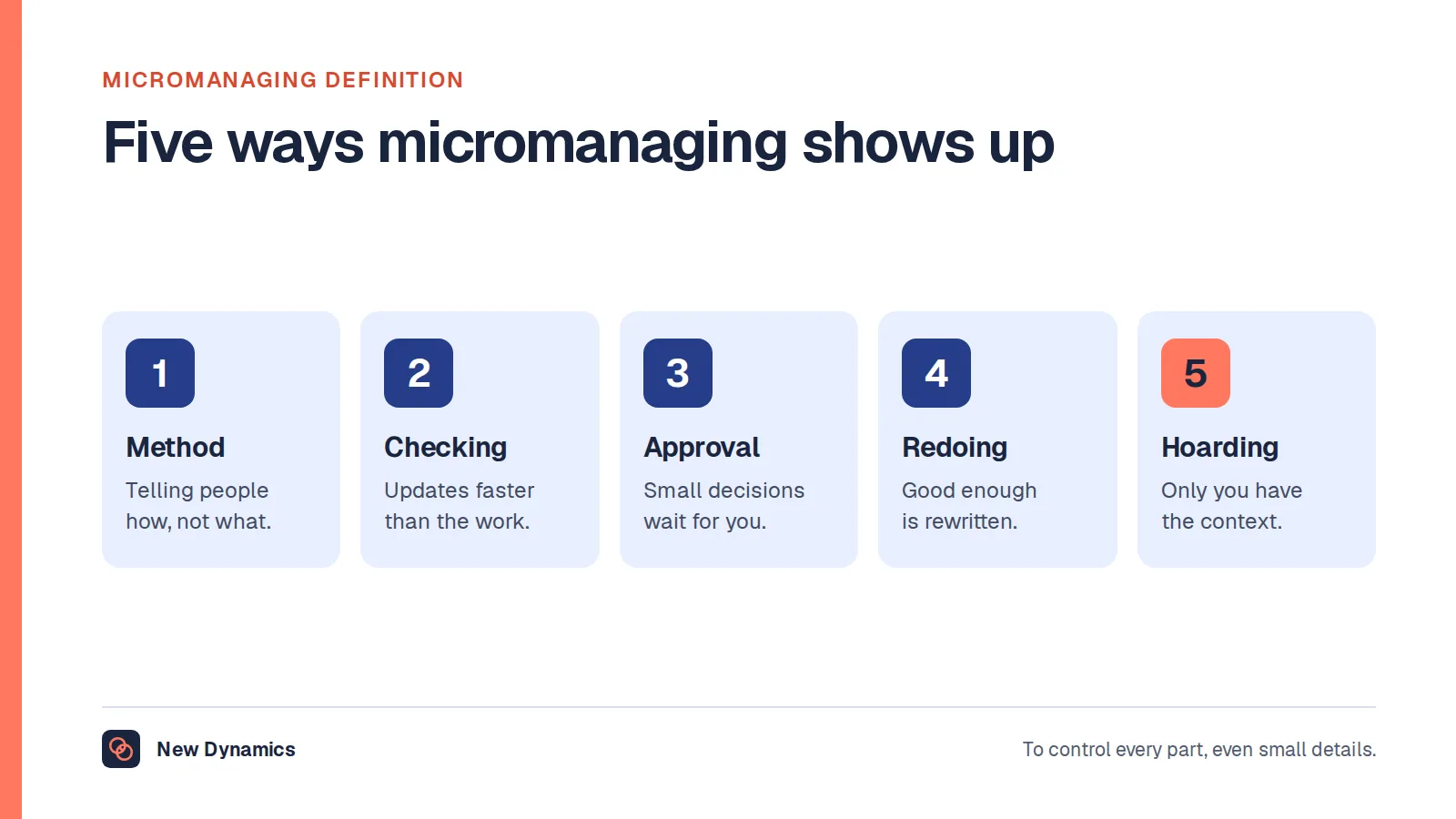
A manager who hands over the method but keeps the decision has delegated a task, not authority. That is ordinary delegation and often correct. A manager who hands over the decision but no resource has created someone who can be blamed and cannot act. Our post on micromanaging covers the opposite failure, where the method is formally delegated and then taken back one instruction at a time.
Acas is useful here because it draws the same line about consultation that applies to empowerment generally. On its guidance on consulting employees and representatives, updated on 30 October 2026, it distinguishes consultation from collective bargaining: "With consultation, the responsibility for decision-making remains with the employer." Asking for views is not the same as moving the decision. Both are legitimate. Calling the first one empowerment is how trust gets spent.

The employer stays liable: Equality Act 2010 section 109
This is the part most writing on empowerment leaves out, and it is the reason the topic has any teeth.
Section 109 of the Equality Act 2010 is headed Liability of employers and principals. Subsection (1) reads: "Anything done by a person (A) in the course of A's employment must be treated as also done by the employer." Subsection (3) closes the obvious escape route: "It does not matter whether that thing is done with the employer's or principal's knowledge or approval."
So when you empower someone to choose the promotion shortlist, who gets the overtime, who is let go in a restructure, or how a complaint is handled, the organisation is treated in law as having done whatever they do. Not knowing is not a defence. Acas puts the practical version on its guidance on vicarious liability: "The law (Equality Act 2010) says a worker and an employer could both be held responsible if the discrimination happens 'in the course of employment'. This means something that's linked to work."
There is a defence, and it is the whole argument for doing empowerment properly rather than loosely. Section 109(4) says that in proceedings against the employer it is "a defence for B to show that B took all reasonable steps to prevent A" from doing that thing, "or from doing anything of that description". Reasonable steps are things you can point to: a current policy, training the person actually attended, a complaint route they were told about, and a response when something was raised. Acas lists the same ingredients on its guidance on preventing discrimination, including to "put policies and procedures in place and keep them up to date" and "inform and train your staff and managers".
Read that defence as a specification for empowerment. An untrained manager handed a hiring decision is not an empowered employee. They are an uncovered liability.
Duties you cannot delegate at all
Some obligations sit on the employer by name, and no amount of internal devolution moves them.
Section 2(1) of the Health and Safety at Work etc. Act 1974 reads: "It shall be the duty of every employer to ensure, so far as is reasonably practicable, the health, safety and welfare at work of all his employees." Section 2(2)(c) spells out that this duty extends to "the provision of such information, instruction, training and supervision as is necessary". Training is not a nice addition to empowerment. It is named in the statute.
Section 2(3) requires every employer, except in prescribed cases, to prepare and revise "a written statement of his general policy with respect to the health and safety at work of his employees". The Health and Safety Executive states on its guidance on legislation on leading health and safety that organisations must "have a written health and safety policy if they employ 5 or more people".
Employees carry duties too, which is why empowerment is not a transfer of responsibility to a single point. Section 7 of the same Act makes it "the duty of every employee while at work to take reasonable care for the health and safety of himself and of other persons who may be affected by his acts or omissions at work".
And the escape route is explicitly closed at the top. On the same HSE page, under liability of individual board members, the guidance says that if an offence is attributable to neglect by a director or manager then "that person (as well as the organisation) can be prosecuted under section 37 of the Health and Safety at Work etc Act 1974", and adds: "Case law has confirmed that directors cannot avoid a charge of neglect under section 37 by arranging their organisation's business so as to leave them ignorant of circumstances which would trigger their obligation to address health and safety breaches."
Deliberate ignorance is the failure mode that calls itself empowerment. The law has already named it.
Where empowerment becomes a consultation question
Pushing decisions down is a change to how the organisation is run, and past a certain size employees have a statutory route to be told about it.
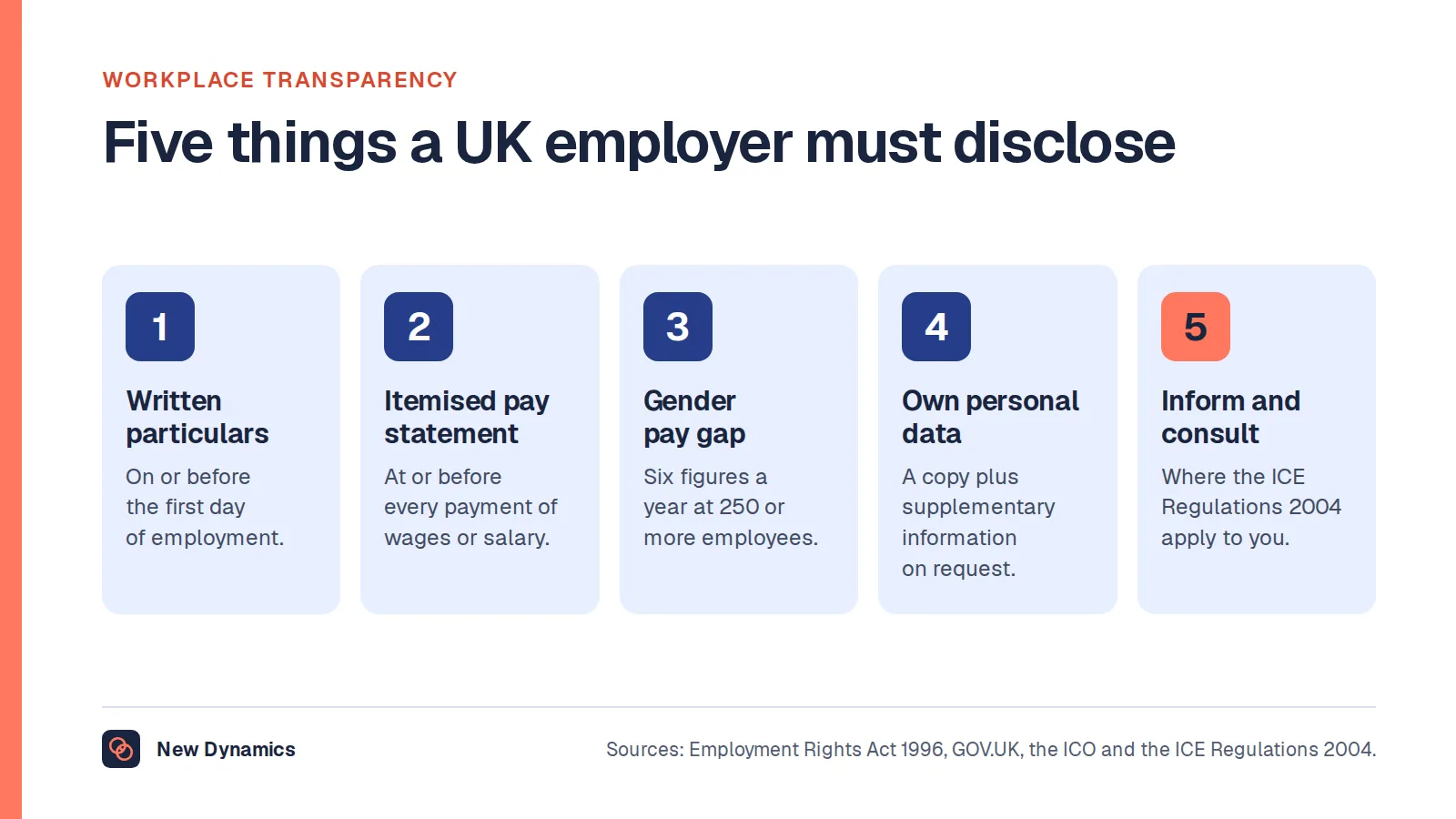
The Information and Consultation of Employees Regulations 2004 apply by employee count. Schedule 1 to the Regulations sets the thresholds: at least 150 employees from 6 April 2005, at least 100 from 6 April 2007, and at least 50 from 6 April 2008. Acas states the effect plainly on its guidance on when consultation is legally required: "If there are 50 or more employees in the organisation, they have the right to request a formal agreement to be informed and consulted on important matters and decisions."
The request has a shape. Regulation 7(2) requires a request from "at least 10% of the employees in the undertaking", either as one request or as separate requests made within six months. Regulation 7(3) caps and floors that percentage: where 10% would mean fewer than 15 or more than 2,500 employees, the figure of 15 or 2,500 applies instead. Regulation 7(4) requires each request to be in writing and to specify the names of the employees making it and the date it was sent.
An employer that devolves decisions enthusiastically and informs nobody has not empowered the workforce. It has made a structural change that 10% of its employees can now ask to be consulted about. Our post on workplace transparency covers what gets shared and how.
What to put in place before you delegate authority
Four things, and all four before the handover rather than after the first problem.

- Name the decision. Write the sentence. "You decide which candidate we hire for this role." Not "you own recruitment." A decision you cannot write in one sentence has not been delegated, it has been implied.
- State the limit. Every delegated authority has a boundary: a spend figure, a grade, a category of case, a time window. Say the number. The limit is what makes the authority real, because inside it nobody can overrule the person.
- Give the training the statute already asks for. Section 2(2)(c) of the 1974 Act names information, instruction, training and supervision. Section 109(4) of the Equality Act 2010 rewards it. If the decision touches pay, selection, discipline or safety, the training is the price of the delegation.
- Agree the route back. Name the cases that come back to you and the person they go to when you are away. A route back is not a loss of authority. It is the thing that lets someone use authority without waiting for permission.
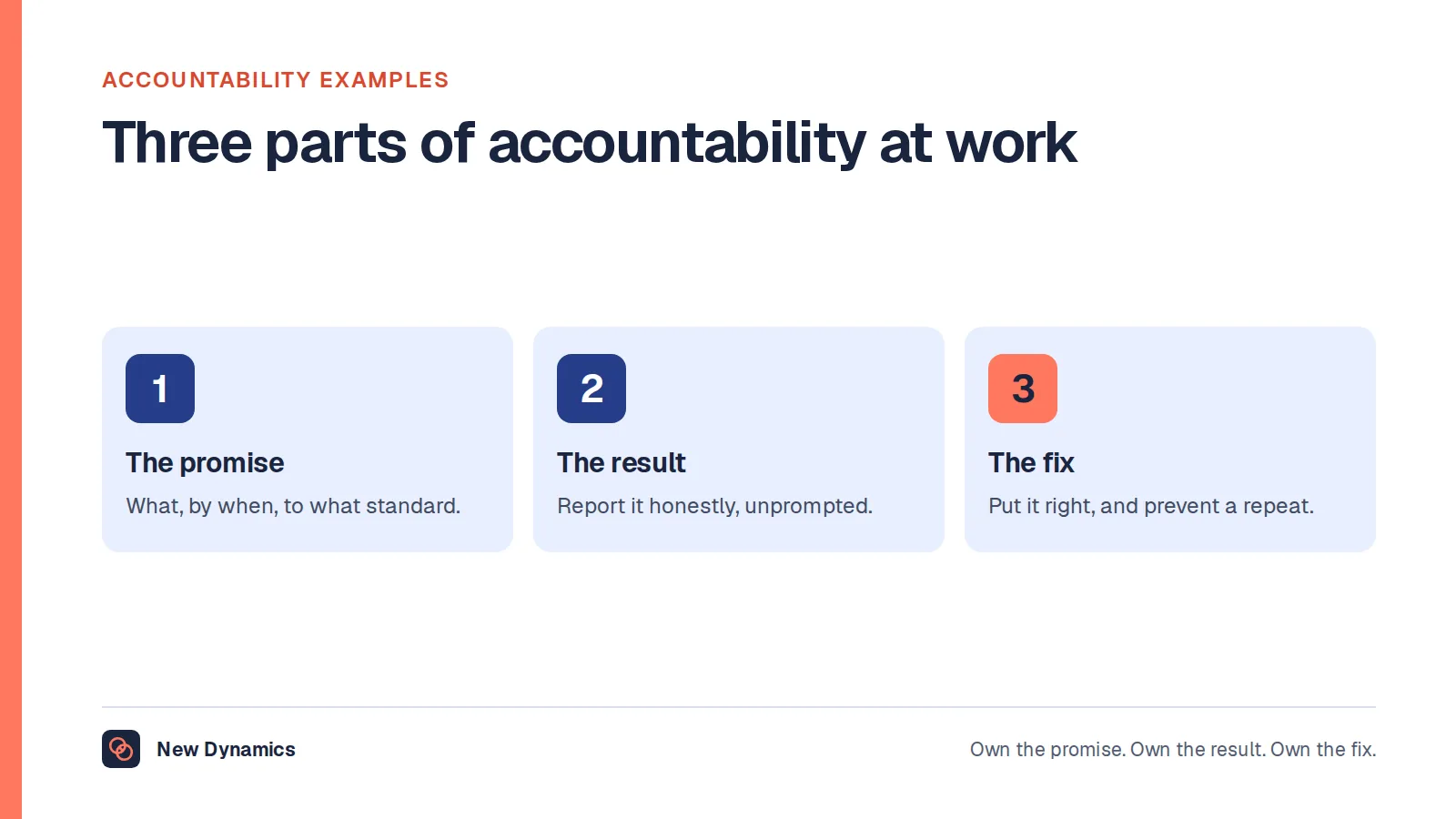
Then record it somewhere other than one manager's memory. Our post on accountability examples covers what a workable record looks like.
Empowerment or abandonment: how to tell
The two look identical from the outside on a good week. They differ on a bad one.
| Question | Empowerment | Abandonment |
|---|---|---|
| Is the decision written down? | Yes, as one sentence with a limit | It is "yours now" |
| Was training given first? | Yes, before the authority | Offered after the first mistake |
| What happens when it goes wrong? | The manager owns the outcome with them | The person is named in the post-mortem |
| Can the person commit resource? | Yes, up to a stated figure | Every spend still needs a signature |
| Who answers to a tribunal or regulator? | The employer, which is why support exists | The employer, which nobody has thought about |
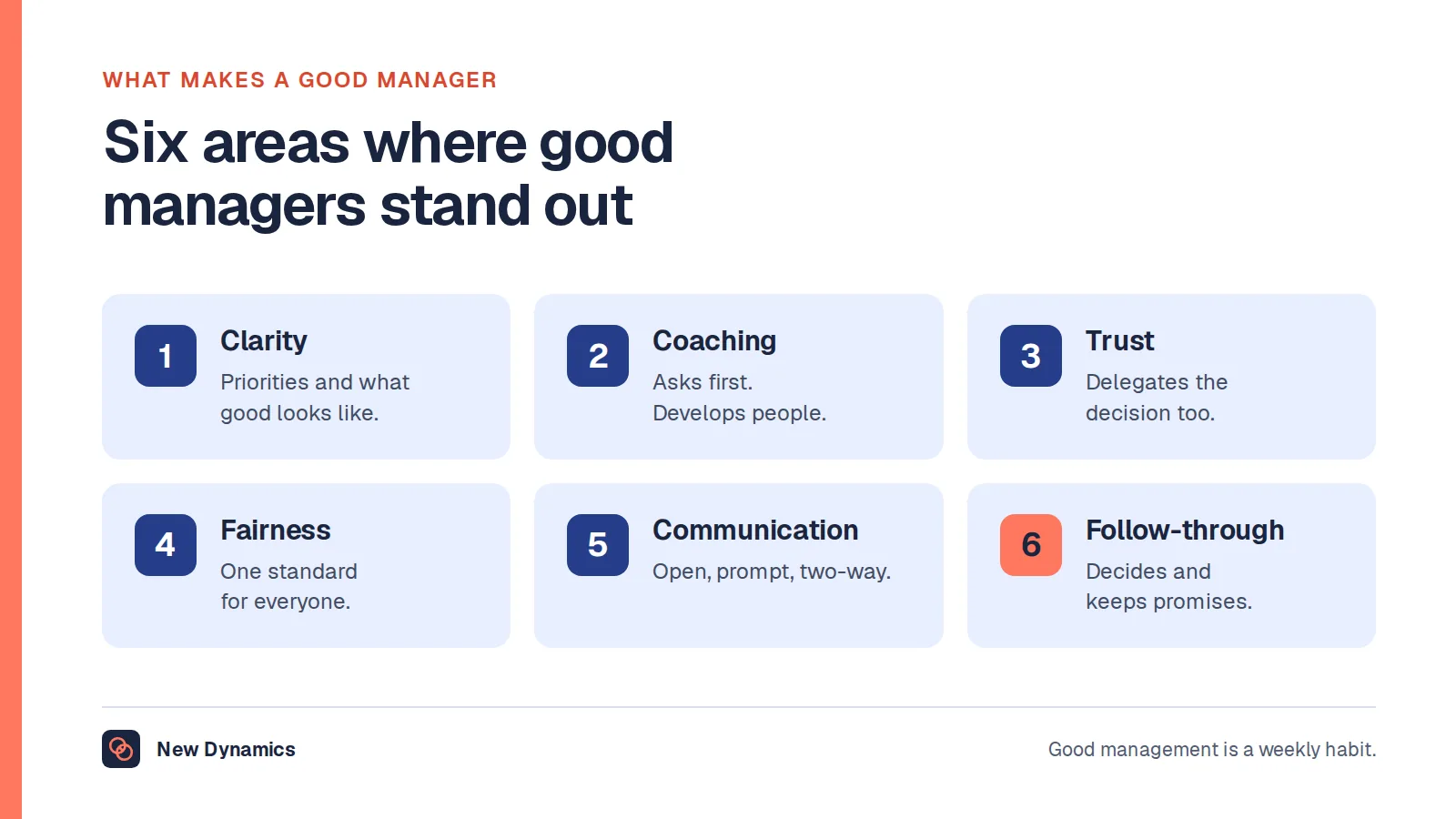
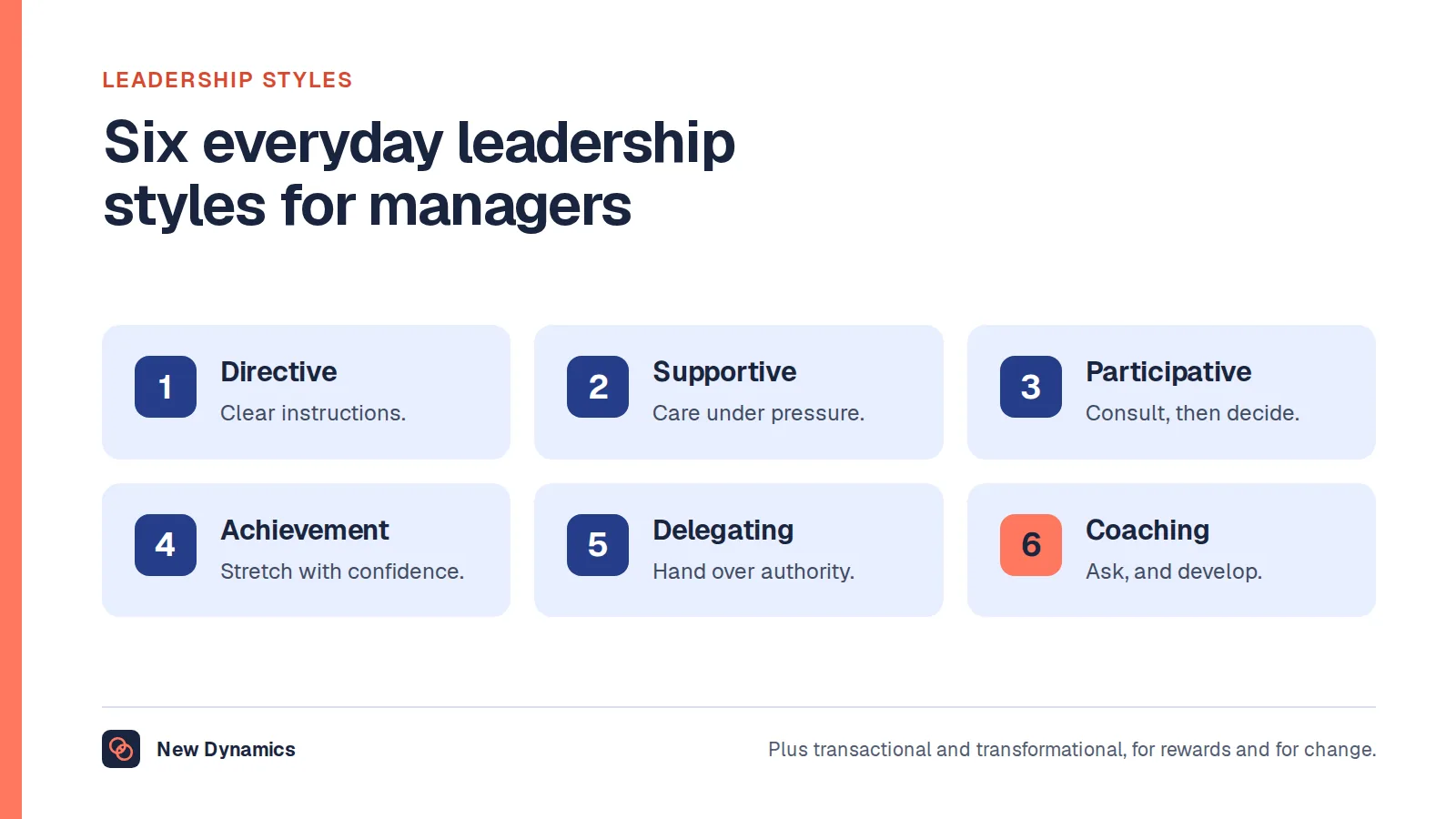
The last row does not change between the columns. That is the point. The employer answers either way, so the only question is whether it set the person up to decide well. Our posts on leadership styles and what makes a good manager deal with the choice between modes; this post is about what has to be true before the delegating mode is honest.
What the evidence does and does not say
We looked for a UK official figure on the effect of empowerment on engagement, productivity or retention. There is not one. No Office for National Statistics release, Acas publication or GOV.UK page measures empowerment as a variable and reports its effect, and the numbers that circulate on this topic come from vendor and consultancy surveys with undisclosed samples. We do not quote those, so there is no percentage in this article.
What is published is better than a percentage anyway, because it is enforceable. Acas states on its guidance on performance management, updated on 23 June 2026, that objectives should be "specific, by being clear about what the employee will actually do" and "measurable, so you know whether they've been achieved". That is the standard a delegated decision should meet too. For the figures that are published on related subjects, see our HR statistics hub.
Frequently asked questions
What is leadership empowerment?
Leadership empowerment is the transfer of authority to decide from a manager to the people doing the work. In practice it covers four separate things that can be granted or withheld independently: the decision itself, the method, the resource the person can commit, and whether their view changes what the organisation does.
What is the difference between empowerment and delegation?
Delegation usually moves a task and the method for doing it, while the manager keeps the decision. Empowerment moves the decision. Both are legitimate choices, but calling the first one empowerment misleads the person and tends to end in the authority being taken back.
Is an employer still liable for a decision an empowered employee makes?
Yes. Section 109(1) of the Equality Act 2010 provides that anything done by a person in the course of their employment must be treated as also done by the employer, and section 109(3) states that it does not matter whether it was done with the employer's knowledge or approval. Section 109(4) gives the employer a defence if it can show it took all reasonable steps to prevent it.
Which responsibilities cannot be delegated?
Statutory duties placed on the employer by name. Section 2(1) of the Health and Safety at Work etc. Act 1974 puts the duty to ensure health, safety and welfare on the employer, and section 2(3) requires a written health and safety policy. The Health and Safety Executive says a written policy is needed where an organisation employs 5 or more people.
Do we have to consult employees before pushing decisions down?
Possibly, depending on size. Schedule 1 to the Information and Consultation of Employees Regulations 2004 brought undertakings with at least 50 employees within scope from 6 April 2008. Acas states that where there are 50 or more employees they have the right to request a formal agreement to be informed and consulted on important matters and decisions.
Does empowerment improve engagement or productivity?
No official United Kingdom source publishes a figure for that effect, so we do not give one. The figures in circulation come from vendor and consultancy surveys rather than from the Office for National Statistics, Acas or GOV.UK, and we treat them as unusable.
How do I tell whether I have empowered someone or abandoned them?
Ask what happens when the decision goes wrong. If the plan is that you own the outcome alongside the person, you empowered them. If the plan is that their name appears in the explanation, you did not.
Your next step: write one sentence this week
- Pick one decision you currently make that someone closer to the work could make better. Write it as one sentence beginning "You decide".
- Put a number on the limit: a spend figure, a grade, a case type or a date range. If you cannot name the limit, you have not worked out the authority yet.
- Check what training the decision needs before it moves, particularly if it touches pay, selection, discipline or safety. Book it before the handover, not after.
- Name the two or three cases that still come back to you, and who covers them when you are away.
- Record all four in the same place as the person's goals, so the next manager inherits the authority rather than guessing at it.
For the conversation that keeps a delegated decision on track, read and download our manager one-to-one guide. The guide is free to read, and the PDF uses our short download form.
Want the authority behind a decision recorded where the review already lives, instead of in one manager's memory? Book a New Dynamics demo and bring one decision you are thinking of moving. You can also email contact@new-dynamics.com.